REVIEW · KATHMANDU
Kathmandu: 1-Hour Scenic Flight Over Mount Everest
Book on GetYourGuide →Operated by Outshine Adventure Pvt Ltd · Bookable on GetYourGuide
Everest gets real at 30,000 feet. I love that you get a guaranteed window seat and that the crew helps you identify mountains using an onboard mountain map.
You’re paying for a very specific kind of Nepal memory: fast access to the high Himalaya look, without the days of trekking.
One thing to plan around is weather and visibility, since the flight depends on good conditions. Also, pickup timing can be tight early in the morning, so be ready for a quick start.
In This Review
- Key Things That Make This Flight Special
- A One-Hour Kathmandu Everest Flight That Feels Like a Front Row Seat
- Kathmandu Pickup: Lalitpur or Kathmandu, and Why Morning Timing Matters
- What the Aircraft Route Is Really Like: Taking Off From Kathmandu and Heading East
- The Everest Moment: How You See the World’s Highest Peak From Above
- Namche Bazaar, Tengboche, and Ama Dablam: The Views That Feel Close to Real Life
- Onboard Experience: Window Seats, Crew Guidance, and Mountain Maps
- Duration and Group Size: How This Stays Manageable
- Price and Value: What $140 Buys You in the Himalaya
- What’s Included (and What to Plan for Outside the Package)
- Weather Reality: When Visibility Changes the Experience
- Who This Flight Fits Best (and Who Might Want Something Else)
- Should You Book This Kathmandu Everest Scenic Flight?
- FAQ
- How long is the Kathmandu: 1-Hour Scenic Flight Over Mount Everest?
- What does the price include?
- Do I get a window seat?
- Where do pickup and drop-off happen?
- Is food or drinks included?
- What do I need to bring?
- Is the flight wheelchair accessible?
- Do I need good weather for this to run?
- What happens if the flight is canceled due to weather?
Key Things That Make This Flight Special
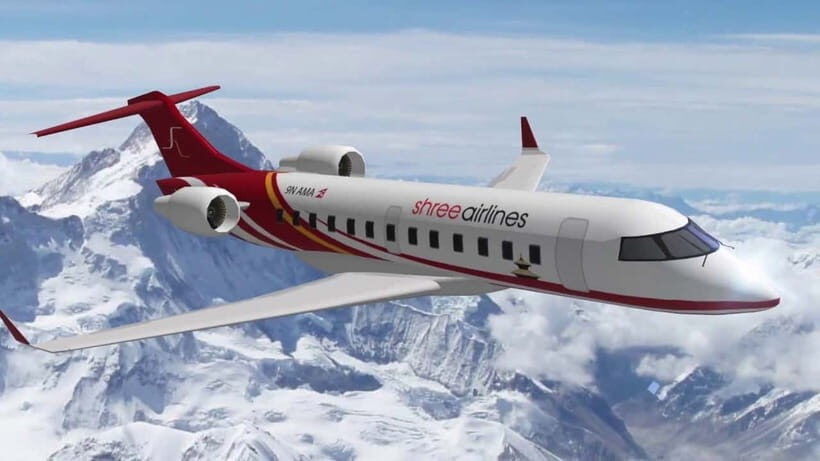
- Guaranteed window seat so you’re not stuck staring at your own knees while the peaks appear
- Mountain-spotting support from the cabin crew with a visual guide of what you’re seeing
- Side-of-plane views that change the show: left for Shishapangma and right for peaks in the Kathmandu Valley
- Namche Bazaar from above, plus aerial views of Tengboche and Ama Dablam
- Short and focused: about 1 hour in the air, so it fits a tight schedule
A One-Hour Kathmandu Everest Flight That Feels Like a Front Row Seat
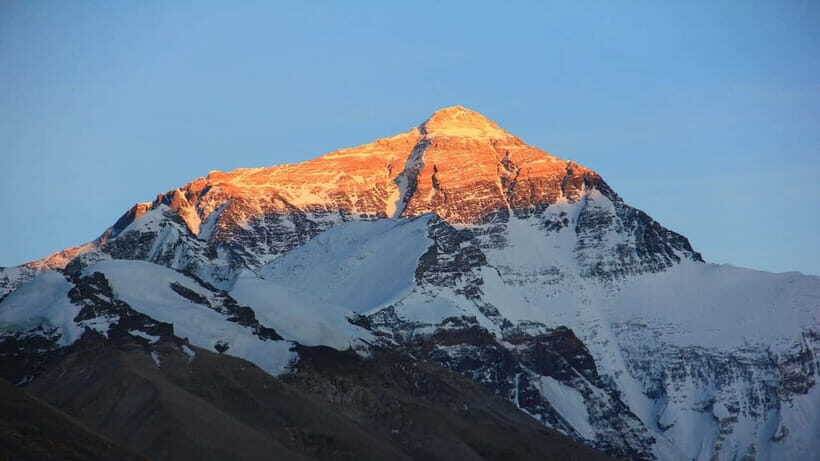
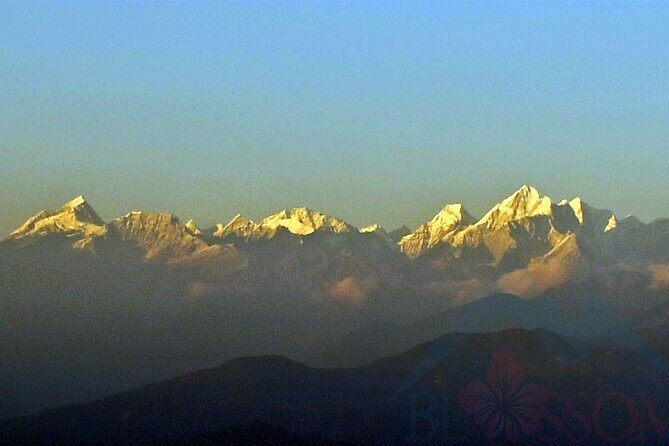
If you only have a day (or a half-day that you can protect), this is one of the most time-efficient ways to see Mount Everest and the surrounding Himalayan wall. The best part isn’t just the height of the peaks. It’s the way the whole region reads from the air: glaciers, ridgelines, rock-and-ice massifs, and valley shapes that are hard to understand from the ground.
I like that the experience is built around clear viewing and quick “peak recognition” moments. You’re not waiting for long hikes or changing buses mid-day. You’re in the aircraft at sunrise timing and the whole plan is designed to maximize what you can spot in that 1-hour window.
You can also read our reviews of more tours and experiences in Kathmandu
Kathmandu Pickup: Lalitpur or Kathmandu, and Why Morning Timing Matters
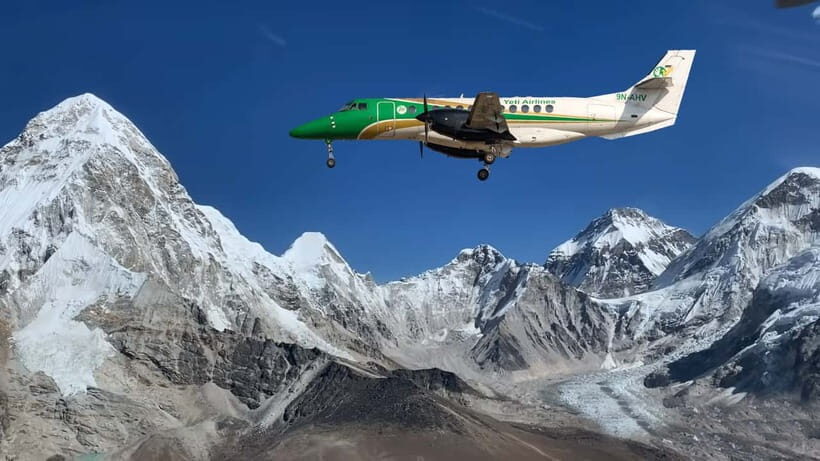
Your day typically starts with hotel pickup options in Kathmandu or Lalitpur, followed by transfer to Tribhuvan International Airport. This matters because early flights aren’t forgiving. One participant had a driver arrive an hour early and had to get their elderly father ready on the spot, which is a good reminder: set a clear morning plan with your group and keep phones charged.
On the route to the airport, you can expect scenic views, and the overall flow is designed to get you in the air while the light is most photogenic. If you’re traveling with someone who moves slowly in the morning, I’d treat pickup as a “be ready earlier than you think” situation.
What the Aircraft Route Is Really Like: Taking Off From Kathmandu and Heading East
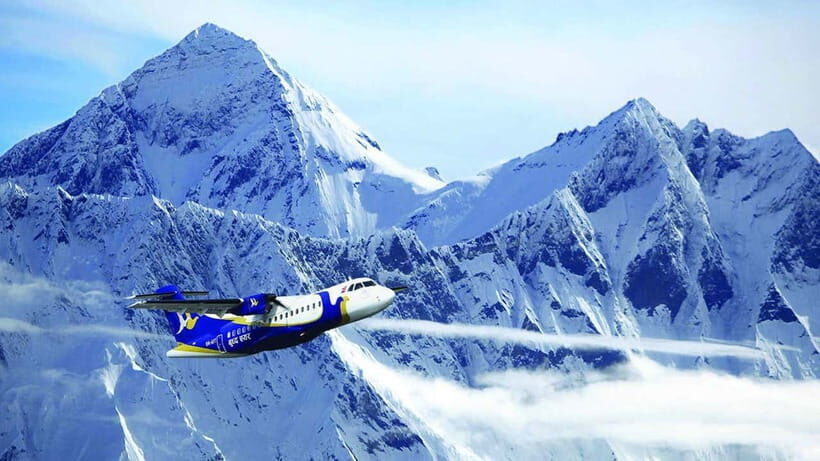
Once you lift off from Kathmandu Airport, the flight heads east, cruising over the massive Himalayan terrain. The key detail is that the highlights are tied to where your seat is relative to the direction of travel.
Here’s how to think about it:
- If you’re on the far left, you should be looking for Gosaithan (also called Shishapangma) at about 8,013 meters.
- As you continue, you may see the pyramid-shaped Dorje Lhakpa in the Langtang Himal area.
- On the right side, keep your eyes out for the Phurbi-Chyachu summit in the Kathmandu Valley region.
This is why the “window seat guaranteed” part is so important. It’s not a marketing line—it directly affects whether you get a clean view of the peaks when they appear.
The Everest Moment: How You See the World’s Highest Peak From Above
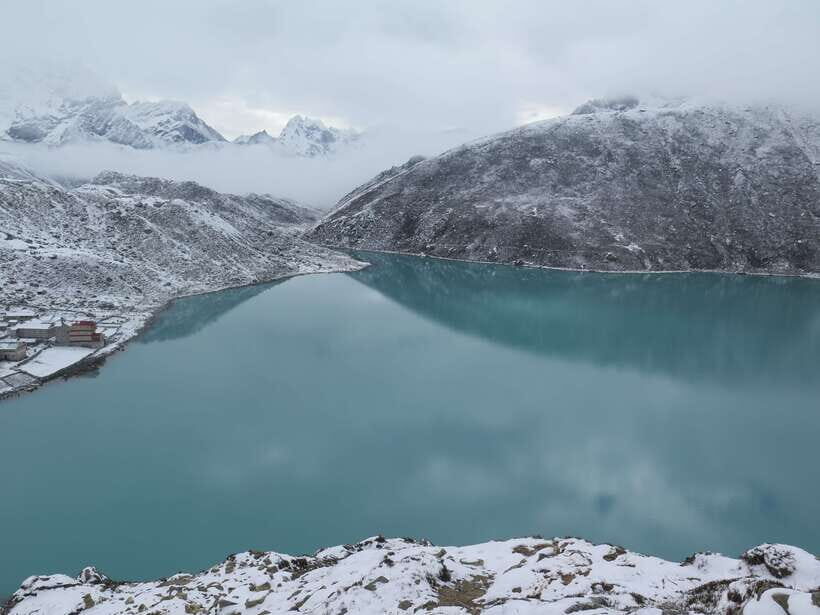
You’re not landing in the Khumbu region or walking near Everest. You’re seeing Everest as part of a giant wall of mountain massifs, which is exactly why this can be so emotional even if you’re a first-time visitor.
From above, the mountain scale gets easier to grasp. Everest doesn’t look like a single point; it looks like a dominant feature inside a bigger geometry of ridges and valleys. You also get the glacier textures and the rocky/icy contrasts in one frame, which is difficult to replicate with photos from street level.
If visibility is good, that panoramic feeling is the payoff. If visibility is limited, you may still see shape and snow lines, but the crispness of summit detail can suffer. Either way, the view works as a “big picture” orientation tool for anyone who plans to trek later.
Namche Bazaar, Tengboche, and Ama Dablam: The Views That Feel Close to Real Life
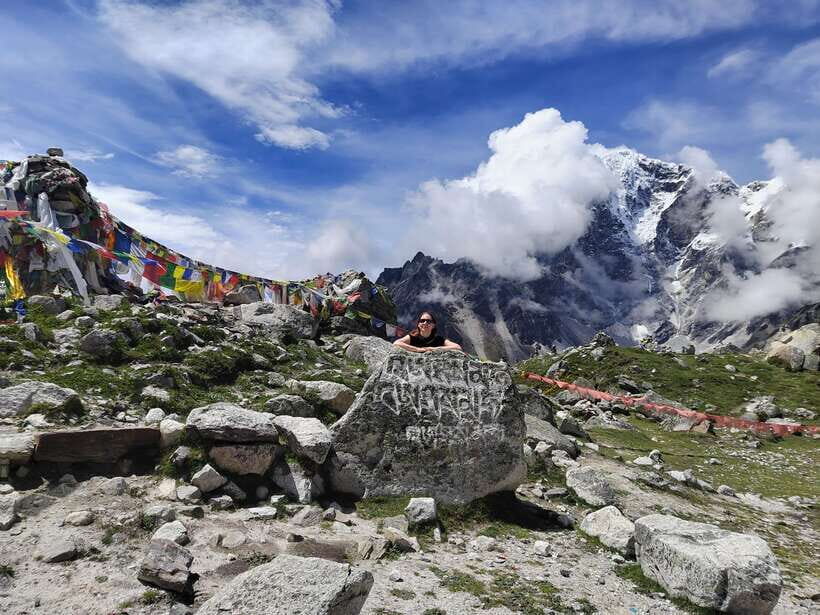
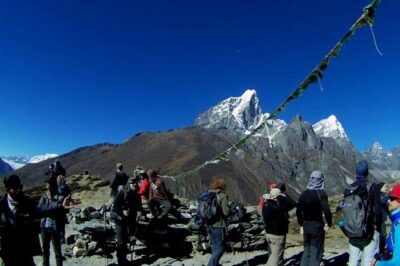
One of the most satisfying moments comes when the flight goes over recognizable Himalayan names. You’ll get aerial views of Namche Bazaar, and you may also spot Tengboche and Ama Dablam.
Why that matters: these places are more than dots on a map. Seeing them from above helps you understand what travelers talk about on the ground—valleys that funnel travel, ridgelines that control where settlements sit, and why weather can change quickly in mountain regions. Even if you never trek, those visual connections make the Himalaya feel less abstract.
And there’s a bonus effect: these landmarks help you steer your gaze during the hour. The cabin crew’s mountain identification support makes the experience easier to follow, so you’re not just looking out randomly until something dramatic appears.

Onboard Experience: Window Seats, Crew Guidance, and Mountain Maps
This flight is short, so the onboard experience is tightly focused. The operator includes windows-seat guaranteed, and the cabin team helps passengers identify mountains. People have described receiving a visual guide and having staff move around to help each side of the plane match what they see to the mountain names.
That guidance is a big deal for two reasons:
- You don’t need prior Everest knowledge to enjoy the experience.
- You get more accurate “spotting,” which turns the hour into a kind of guided mountain lesson.
A practical note from past passengers: some aircraft configurations may place seats behind a propeller. Even then, the mountains are still visible because the plane flies high enough that the mountain range sits beneath the propeller arc. If you’re sensitive to sound or motion, you might find it comforting that some flights are operated with turbine aircraft noted as quieter and smooth by at least one passenger.
Duration and Group Size: How This Stays Manageable
The flight is listed as 1 hour, and the overall group size is described as 16–30 travelers, depending on aircraft capacity. That’s a good range for a short experience. It usually keeps the cabin from feeling chaotic while still allowing the tour to run efficiently.
Because the flight is so brief, there isn’t much time for “oops moments.” You’ll want to use the window time wisely. If you care about photos, I’d plan to be ready before the best light hits—no digging through your bag mid-peak.
Price and Value: What $140 Buys You in the Himalaya
At $140 per person for a 1-hour Everest-and-Himalaya flight, you’re paying for something very specific: access to a high-altitude panorama without committing to trekking logistics.
Here’s the honest value equation I see:
- You’re buying time. One hour overhead can scratch the Everest itch when you’re short on days.
- You’re buying structure. Crew guidance and a clear route make the experience easier to understand.
- You’re also buying certainty of window access. That one detail can make the difference between a great trip and a “we were there, but…” feeling.
The main question for you is what you want your Nepal days to do. If you want a quick Everest hit, this price can feel reasonable. If you’re planning a full trek anyway, you might consider this as an optional add-on rather than the centerpiece.
What’s Included (and What to Plan for Outside the Package)
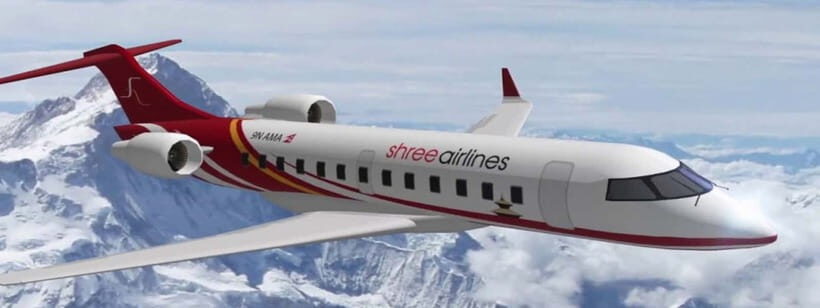
Included items are straightforward:
- 1-hour mountain flight with panoramic views of Everest and the Himalayas
- Windows Seat Guaranteed
- Trip completion certificate
- Optional ground transportation if you select that transportation option (with pickup/drop-off for Kathmandu or Lalitpur)
Not included:
- Food and drinks
Because the flight is early-day oriented, I’d treat it like a morning outing. If you have dietary needs or you’ll be traveling from a place without easy breakfast access, plan your food accordingly.
You also need a passport or ID card.
Weather Reality: When Visibility Changes the Experience
This is a weather-dependent experience. The planning assumption is good conditions, especially for clear summit views. If the flight is canceled due to poor weather, you’re offered a different date.
One practical thing to know: if a cancellation happens due to weather, you may be responsible for the airport transfer charge. So if you’re budgeting tightly, keep a little cushion for the possibility of needing to redo travel to the airport.
Also, even with good morning timing, clouds can roll in. On clear skies, you can get very crisp views and minimal turbulence is often reported. On less cooperative days, you may still see the mountain shapes and snow lines, just with fewer postcard-perfect summit angles.
Who This Flight Fits Best (and Who Might Want Something Else)
This works especially well if:
- You’re short on time in Kathmandu and want Everest in one protected, guided chunk
- You’re traveling with family members who might not handle trekking days
- You want a high-altitude orientation for future plans, even if you’re not trekking right away
It might be less ideal if:
- You’re only interested in close-up ground-level Everest views (this is overhead viewing)
- You hate uncertainty from weather and would rather pay for something not dependent on visibility
Should You Book This Kathmandu Everest Scenic Flight?
I’d book it if you want the fastest route to a true Everest-feeling moment with guaranteed window access and active crew help in identifying peaks. It’s also a strong choice for mixed-age groups because the effort level is light and the experience is concentrated into that 1-hour flight.
I’d think twice if your schedule is extremely inflexible or you can’t handle the possibility of a weather-related change. In the Himalaya, Mother Nature runs the timetable.
If you’re the type of traveler who enjoys clear viewpoints, mountain spotting, and the satisfaction of naming peaks as you see them, this flight can be a smart, high-value use of your time in Nepal.
FAQ
How long is the Kathmandu: 1-Hour Scenic Flight Over Mount Everest?
The flight duration is 1 hour.
What does the price include?
It includes the 1-hour mountain flight with panoramic views of Everest and the Himalayas, a windows seat guaranteed, a trip completion certificate, and ground transportation if you select the optional transportation.
Do I get a window seat?
Yes, windows seat guaranteed is included.
Where do pickup and drop-off happen?
Pickup and drop-off options include Kathmandu and Lalitpur.
Is food or drinks included?
No. Food and drinks are not included.
What do I need to bring?
Bring a passport or ID card.
Is the flight wheelchair accessible?
Yes, the experience is listed as wheelchair accessible.
Do I need good weather for this to run?
Yes. The experience requires good weather. If it’s canceled due to poor weather, you’ll be offered a different date.
What happens if the flight is canceled due to weather?
If the flight is canceled due to weather, you’ll be offered a different date, and you may be responsible for covering the airport transfer charge.