REVIEW · KATHMANDU
Private Kathmandu Sightseeing Tour | UNESCO World Heritage sites
Book on Viator →Operated by Breakfree Adventures Pvt. Ltd. · Bookable on Viator
UNESCO in one day can sound hectic. This private Kathmandu tour turns it into a clear route with hotel pickup and guided context. You choose 2, 4, or 7 UNESCO stops, so you can match the day to your energy and time.
I love the door-to-door convenience. It spares you from meeting-point chaos and helps you get straight into the sights. I also like the storytelling from English-speaking guides like Dipesh, Deepak, and Bidhya, who explain what you are seeing instead of just naming it.
One possible drawback: entrance fees are extra, and the longer 7-site day means more hours on the road. If you dislike driving between neighborhoods, choose the 2-site or 4-site option.
In This Review
- Key highlights at a glance
- Why This Private Kathmandu UNESCO Day Makes Sense
- Hotel Pickup and the Real Value of a Private Vehicle
- Entrance Fees: What You Pay On-Site (And Why It Still Works)
- Temple Entry Rules You Should Plan Around
- Stop 1: Swaymbhunath (Monkey Temple) and the Start-of-Day Lift
- Stop 2: Boudhanath Stupa and Where to Take a Breather
- Stop 3 and 4: Pashupatinath Temple, Rituals, and Respectful Watching
- Stop 5: Patan Durbar Square and the Power of City-Center Craft
- Stop 6: Patan Museum for Context (Plus Time to Sit)
- Patan Gate and the Quick Reality Check About City Layout
- Thamel Stop: Where the Day Fits Real Life
- Longer Route Add-On: Changu Narayan Temple
- Bhaktapur Durbar Square: More Time, More Atmosphere
- Kathmandu Durbar Square: Closing With a City-Scale Landmark
- The Guide Makes or Breaks This Day
- How to Choose 2, 4, or 7 UNESCO Sites Without Getting Tired
- Should You Book This Private Kathmandu UNESCO Tour?
- FAQ
- FAQ
- Which UNESCO World Heritage sites are included?
- Can I choose how many UNESCO sites to visit?
- How long does the tour take?
- Is hotel pickup and drop-off included?
- Are monument entry fees included?
- How much are the UNESCO monument entry fees?
- Do I need to pay in advance?
- Can I take a lunch break during the tour?
- Is this tour really private?
- Are there any restrictions for entering temple premises?
- Is free cancellation available?
Key highlights at a glance
- Hotel pickup and drop-off: you start and end at your hotel instead of hunting for a meeting point
- English-speaking guide commentary: your guide explains religion, history, and rituals as you go
- Flexible UNESCO choices: 2, 4, or 7 sites lets you control pacing
- Door-to-temple logistics handled: private air-conditioned vehicle keeps the day practical
- Cultural stops beyond temples: Patan, Bhaktapur, Thamel, and Kathmandu Durbar Square add variety
Why This Private Kathmandu UNESCO Day Makes Sense
Kathmandu is packed with places people talk about in guidebooks, but it is also a city where time can disappear in traffic and directions. This tour is designed to prevent that. You get a private route, a driver, and a guide who keeps the day moving while still leaving room to look closely.
The best value here is not the number of temples. It is the combination: private transport plus on-the-ground explanations. When guides like Shankar or Shyam are steering the day, you are not just taking photos. You learn what each site means, and you understand the culture around it.
You can also read our reviews of more private tours in Kathmandu


Hotel Pickup and the Real Value of a Private Vehicle
Hotel pickup and drop-off sounds basic, but in Kathmandu it is a big deal. Instead of coordinating taxis, arguing with your phone map, or waiting in the wrong place, your day starts with a car that comes to you.
The tour includes private transportation with air conditioning, which is a comfort win during longer travel blocks in the valley. In reviews, drivers like Sajan or Sujan are praised for handling the busy traffic steadily, which matters when you are trying to see 2–7 UNESCO stops in one day.
Entrance Fees: What You Pay On-Site (And Why It Still Works)
The tour price is low, but monument entry fees are not included. Your guide will handle your timing, but you’ll pay at each site in Nepalese rupees. The posted fee schedule is:
- NPR 1400 for 2 UNESCO sites
- NPR 2600 for 4 UNESCO sites
- About NPR 5800 to NPR 6000 for 7 UNESCO sites (the information is listed slightly differently in two places)
Even with those extras, the value holds for a simple reason: you are not buying just access. You are buying transport + a professional guide + a structured route. For a first visit, that combination is often cheaper than trying to piece the day together independently with multiple drivers and no context.
Also, one stop is listed as free: Swayambhu (on the longer route). That can help a bit on the total cost.
Temple Entry Rules You Should Plan Around
There is one important rule you need to know before you book: only Nepali and Indian nationals of the Hindu faith are permitted to enter the inner premises of Hindu temples during the tour.
What that means for you in practice is access can differ depending on the site and the area you want to enter. You can still visit and observe, but you may not be able to go into the most restricted inner spaces at Hindu temples. Your guide should be able to set expectations clearly before you line up anywhere.
Stop 1: Swaymbhunath (Monkey Temple) and the Start-of-Day Lift
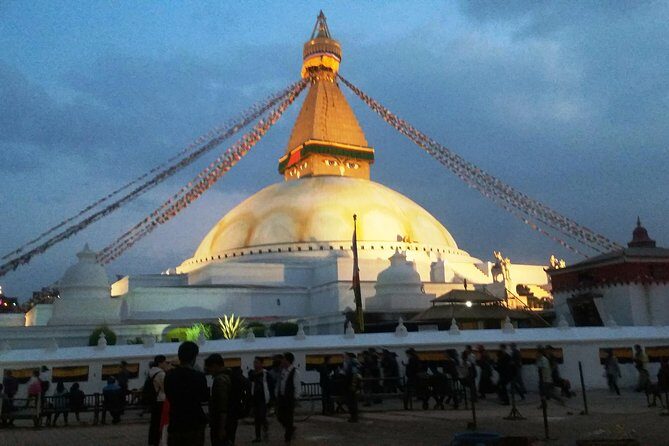
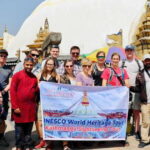
Swaymbhunath is where many people get their bearings in the Kathmandu Valley. On this tour, it is a short stop, around 30 minutes, and the admission ticket is listed as not included.
What makes it a good early start is pacing. You get a major landmark, you walk through the core area, and you begin learning how Kathmandu blends Hindu and Buddhist symbolism. Since the stop is brief, it works well even if you are dealing with jet lag.
A practical drawback: 30 minutes goes fast. If you want extra time for slow wandering, make sure your guide knows early on so they can adjust the day.
You can also read our reviews of more historical tours in Kathmandu

Stop 2: Boudhanath Stupa and Where to Take a Breather
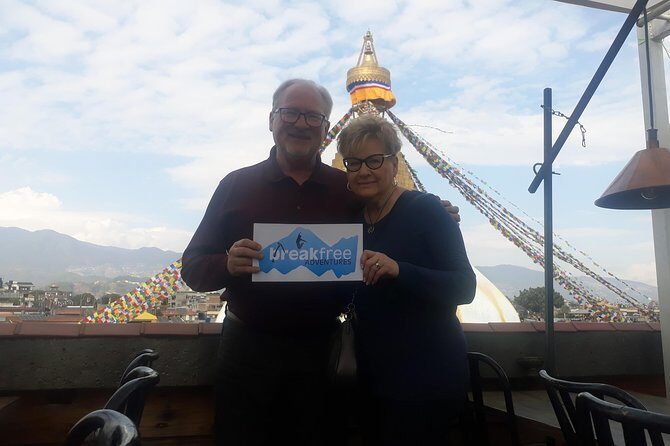
Boudhanath Stupa is the next big anchor, usually about 1 hour. This is the kind of place where you can feel the rhythm of daily religious life without needing to understand every detail immediately.
For this tour, it is a solid mid-morning to early-afternoon stop because you get time to slow down after the first temple circuit. In at least one case, the day included lunch at a rooftop cafe overlooking Boudhanath, and that kind of break can make the rest of the itinerary feel less like a checklist.
One consideration: like many sacred sites, it can get busy. If you want quieter moments, ask your guide about the best time during your hour at the stupa.
Stop 3 and 4: Pashupatinath Temple, Rituals, and Respectful Watching
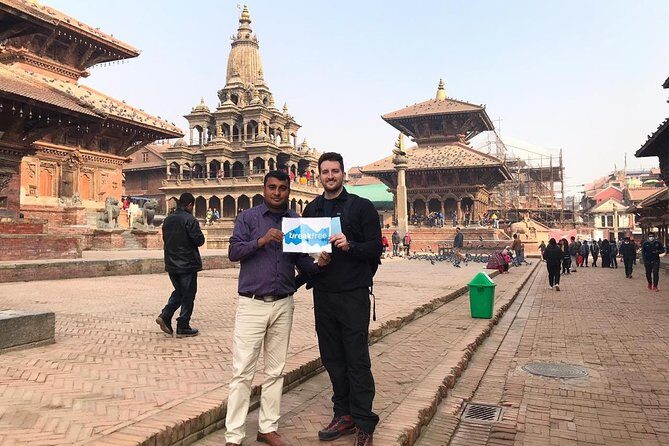
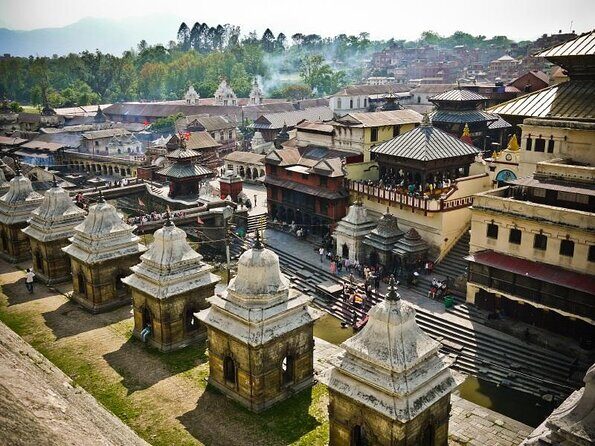
Pashupatinath is visited for about 1 hour on the standard route, and it appears twice in the provided stop list. That can happen when a longer day needs extra time at a single anchor site, or when the operator adjusts the pacing.
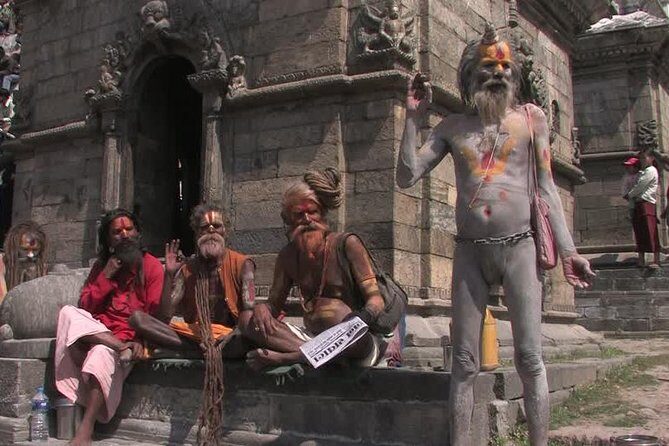
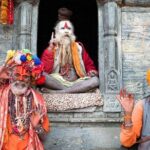
This is also the place where you are most likely to see religious action happening around the temple complex. One guide named Dipesh is mentioned as patiently waiting to witness an Hindu cremation ceremony when timing lined up. That’s the kind of thing you cannot force, but you can benefit from when your guide is flexible and respectful.
Access note matters again here because Pashupatinath is a Hindu temple complex. You may be limited to certain areas depending on the rule about entering inner premises. Your guide should help you stay within the boundaries while still seeing what you came for.
Stop 5: Patan Durbar Square and the Power of City-Center Craft

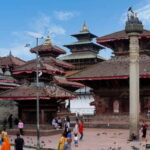
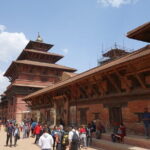
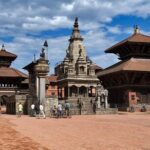
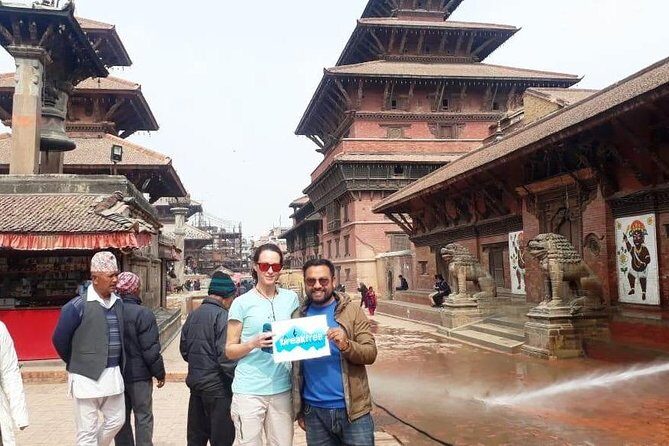
Patan Durbar Square is scheduled for about 1 hour. This stop changes the mood of the day because it feels less like a single monument visit and more like stepping into a living historic district.
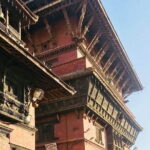
Patan is often a favorite for people who enjoy architecture and craftsmanship. You get a chance to see how royal-era public spaces functioned, and the guide can connect what you see in the square to broader Kathmandu Valley culture.
If you only have a 2-site plan, you’ll have to decide whether Patan Durbar Square is worth it compared to the stupa or the temple. If you do have the 4-site or 7-site option, Patan is a strong choice because it adds variety.
Stop 6: Patan Museum for Context (Plus Time to Sit)
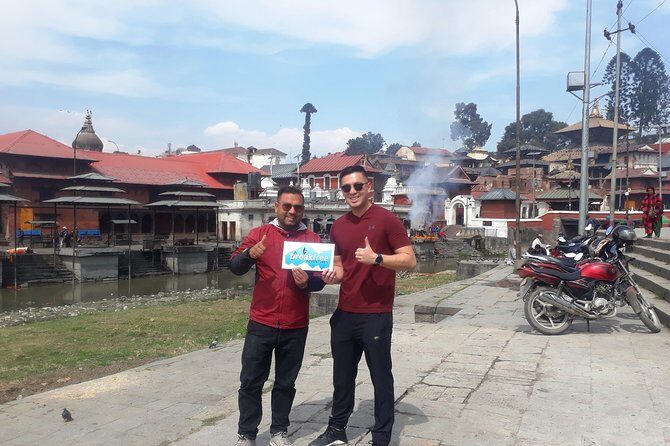
After the Durbar Square, you can stop at Patan Museum for about 30 minutes. The museum is described as a collection of old palaces, courtyards, temples, and Sundari chowk.
This is a smart move in a day that otherwise consists of religious landmarks. A museum stop gives your brain the backstory that makes the outdoor sites easier to interpret. Even if 30 minutes sounds short, it can be enough to connect symbols and styles across locations.
A drawback: if you are not a museum person, you might wish you had that time at a nearby temple or in the market streets. Still, for first-time visitors, this museum slot often improves understanding more than another quick stop would.
Patan Gate and the Quick Reality Check About City Layout
The tour also lists Patan gate as the entrance to the city of Patan. This is the kind of stop that can feel small, but it helps you understand where you are in the wider valley. It also keeps the day from feeling like disconnected photos.
In a practical sense, it is useful. City gates and entry points often give you a sense of boundaries and routes. That helps later when you want to explore on your own.
Thamel Stop: Where the Day Fits Real Life
The itinerary includes Thamel, the central tourist hub with restaurants, pubs, hotels, and shops. Even if the stop is brief, it is useful for orientation.
This is also the area you’ll likely use for lunch or a quick reset. The tour specifically notes that you can take a lunch break during the day and ask your guide for recommendations. If you are trying to avoid touristy traps, using your guide’s local suggestion beats guessing on the spot.
Longer Route Add-On: Changu Narayan Temple
On the extended options, the tour includes Changu Narayan Temple (about 30 minutes). It is listed as a UNESCO site, and the admission ticket is not included.
Changu Narayan is a good “extra” stop because it shifts the day slightly away from the biggest Kathmandu anchors. The short time makes it manageable even when you are doing 7 sites, and it offers another layer of the valley’s religious landscape.
Bhaktapur Durbar Square: More Time, More Atmosphere
For the longer route, you get Bhaktapur Durbar Square for about 2 hours. This is one of the best-paced parts of the day because it includes more time than many other stops.
Bhaktapur gives a more settled feel compared to the busiest central Kathmandu areas. For people who like to walk and look, two hours can be enough to enjoy details without feeling rushed.
Tradeoff: it takes time to get there and to return. If you choose the 7-site option, accept that you are buying a full day plan, not a short highlight tour.
Kathmandu Durbar Square: Closing With a City-Scale Landmark
The final Kathmandu anchor is Kathmandu Durbar Square, scheduled for about 30 minutes. It is another UNESCO site stop.
This closing stop is useful because it ties the day back to the capital’s historic core. You finish with a sense of scale: the valley sites are not isolated. They are connected by shared culture, patronage, and the long timeline of Nepal’s cities.
Drawback: 30 minutes can feel tight if you want to linger. If this stop is the one you care about most, choose fewer total UNESCO sites earlier in the day so you have more breathing room at the end.
The Guide Makes or Breaks This Day
Here is the pattern you’ll notice: the most glowing feedback is about the guides and their communication. Names like Dipesh, Deepak, Bidhya, Shankar, Mukesh, Razz, and Kabin show up in the guide lineup mentioned with praise for explaining the significance of each location.
That matters because the sites are layered. A stupa, a temple complex, and a durbar square can look similar at first glance, but they carry different meanings. A strong guide helps you see those differences.
I also like the flexibility element. Several guides are described as adapting timing, adjusting pace, and even helping with small extra interests. One guide is mentioned as arranging an unexpected monastery visit for someone who liked monasteries. Another guide added local yogurt as a small food moment. Those details make the day feel personal, not robotic.
One more thing: drivers are part of this too. When traffic is intense, a steady driver reduces stress and keeps you from feeling like you’re sprinting.
How to Choose 2, 4, or 7 UNESCO Sites Without Getting Tired
This is the decision point that makes the tour fit your style.
- If you want a quick introduction: choose 2 UNESCO sites. You get the biggest impressions with less driving and fewer timed stops.
- If you want the balance: choose 4 UNESCO sites. This option tends to work well for a first visit, especially if you like guided explanations but also want time to breathe between locations.
- If you love the marathon plan: choose 7 UNESCO sites. You’ll cover the Kathmandu Valley anchors plus Bhaktapur and Changu Narayan. It is memorable, but it is a long day with more road time.
A simple rule: if you hate being in a car, pick fewer sites. If you love structure and want to check the major UNESCO boxes fast, the longer route delivers.
Should You Book This Private Kathmandu UNESCO Tour?
If it matches your priorities, I’d book it. You are getting a private day with hotel pickup, air-conditioned transport, and English-speaking guide commentary that helps you understand what you are seeing at Pashupatinath, Boudhanath, Swaymbhunath, Patan, Bhaktapur, and Kathmandu Durbar Square.
You might skip it only if you want a totally unstructured day or you strongly dislike driving and timed stops. Also, if you are not eligible to enter inner premises of Hindu temples, keep expectations realistic about what you can access inside restricted areas.
FAQ
FAQ
Which UNESCO World Heritage sites are included?
The tour includes UNESCO sites such as Swaymbhunath, Boudhanath Stupa, Pashupatinath Temple, Patan Durbar Square, Changu Narayan Temple, Bhaktapur Durbar Square, and Kathmandu Durbar Square, with which ones included depending on whether you choose 2, 4, or 7 sites.
Can I choose how many UNESCO sites to visit?
Yes. You can choose options that cover 2, 4, or 7 UNESCO sites.
How long does the tour take?
The duration is listed as approximately 4 to 10 hours, depending on the option you select.
Is hotel pickup and drop-off included?
Yes. Hotel pickup and drop-off are included by private vehicle, with complimentary service for hotels in Kathmandu city centers.
Are monument entry fees included?
No. Monument entry fees are not included and are paid at the sites in Nepalese rupees.
How much are the UNESCO monument entry fees?
The posted fee schedule is NPR 1400 for 2 sites, NPR 2600 for 4 sites, and about NPR 5800–6000 for 7 sites depending on the fee listing.
Do I need to pay in advance?
Entrance fees are described as payable at the entrance of each site, in Nepalese rupees.
Can I take a lunch break during the tour?
Yes. The tour notes that you can take a lunch break and should consult your guide for recommendations.
Is this tour really private?
Yes. It is described as a private tour/activity, and only your group participates.
Are there any restrictions for entering temple premises?
Yes. Only Nepali and Indian nationals of the Hindu faith are permitted to enter the inner premises of Hindu temples during the tour.
Is free cancellation available?
Yes. You can cancel for a full refund if you cancel up to 24 hours in advance of the experience start time.