REVIEW · KATHMANDU
City tour of Bhaktapur and Patan Durbar Square
Book on Viator →Operated by Himalayan Planet Adventures · Bookable on Viator
Bhaktapur and Patan feel like two chapters of the same story. I love Bhaktapur Durbar Square for its preserved Newari craftsmanship, and I love Patan’s Patan Museum for making the temples click. One possible drawback: it’s an 8-hour day and you’ll need to budget for entry fees on top of the tour price.
What makes this one work is the pacing and the comfort level: you get a private day trip with hotel pickup and drop-off inside the Kathmandu ring road area (including Boudha). In my mind, that matters because you spend more time on the UNESCO sites and less time negotiating transport. Guides I’ve seen highlighted include Shanti and Kabita, and both show up as the kind who connect what you’re seeing to how the city was run.
There’s also a reality check baked in: some of these sites took significant damage in the 2015 earthquakes, so you may see restoration work or partial areas depending on what’s been repaired. Still, the core details—carving, layout, and the royal temple vibe—come through fast, especially if you like architecture and sacred-city atmosphere.
In This Review
- Key points before you go
- Bhaktapur and Patan in one long day: how the route feels
- Patan Durbar Square: royal courtyards and the Krishna Mandir
- Patan Museum: Newari art that makes the temples click
- The in-between sacred stops: Dattatreya and Nyatapole areas
- Bhaktapur Durbar Square: the royal heart you can actually read
- 55 Window Palace: the masterpiece moment
- Nyatapola Temple: the tallest pagoda feeling
- Dattatreya Temple at Dattatreya Square
- Price and tickets: what $110 really buys
- Your guide matters: Shanti and Kabita as a good sign
- Who this tour suits best (and who should skip)
- Should you book this Bhaktapur and Patan day trip?
- FAQ
- How long is the Bhaktapur and Patan Durbar Square city tour?
- What does the tour cost?
- Is hotel pickup and drop-off included?
- Is this tour private?
- Are admission tickets included?
- Which parts have free admission?
- What sites are included in the day?
- What if I need to cancel?
Key points before you go
- Private pace with hotel transfers: you’re not stuck with a rigid crowd schedule.
- UNESCO sites in two cities: Bhaktapur and Patan Durbar Square both make a strong case for the Kathmandu Valley story.
- Patan Museum adds context: it helps you understand the Newari art behind what you’re walking through.
- A “royal palaces + temples” mix: from Bhaktapur’s 55 Window Palace to Nyatapola’s dramatic pagoda form.
- Some stops are free: Krishna Mandir, 55 Window Palace, Nyatapola Temple, and Dattatreya Temple don’t require extra site admission.
Bhaktapur and Patan in one long day: how the route feels
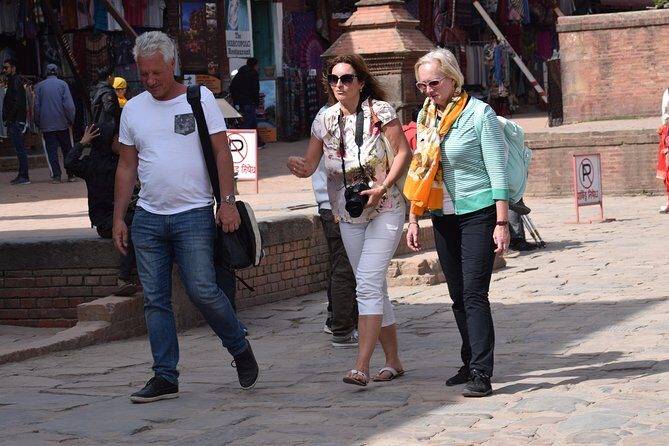
This is a full Kathmandu Valley city day that targets the two most “readable” historical centers: Bhaktapur (the medieval Newar capital) and Lalitpur, home to Patan. The timing is designed around several short guided stops rather than one long “sit and watch” segment, so you stay engaged.
The transport is a private vehicle, and that’s not a minor detail here. The biggest time sink in the Valley is usually getting to the right spots without wasting hours. With pickup and drop-off from your hotel inside the ring road area (including Boudha), you can focus on the sites.
You’ll also be moving between locations that each have their own sacred identity. The day links Patan’s royal heart with Bhaktapur’s temple-and-palace concentration, and the routing includes stops at Dattatreya Square and the Nyatpole Temple Square area along the way. That creates a smoother “this is a living religious landscape” feeling.
One practical note: this is not a slow, lazy stroll day. You’re outdoors for much of it, and you’ll be looking up a lot—so bring sun protection and wear shoes you trust on uneven stone surfaces.
You can also read our reviews of more city tours in Kathmandu
Patan Durbar Square: royal courtyards and the Krishna Mandir
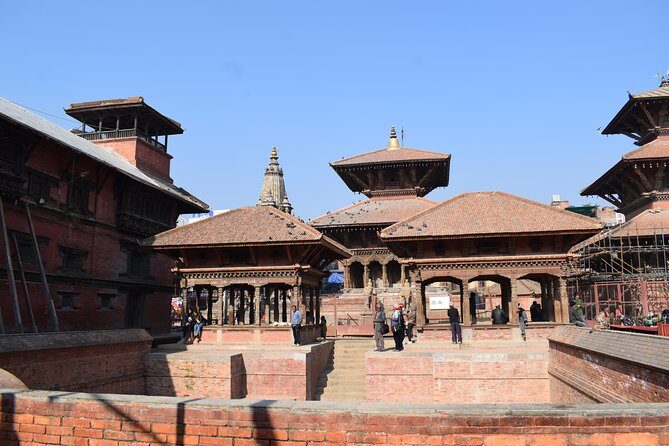
Your day starts in Patan Durbar Square, a major UNESCO site and one of the Kathmandu Valley’s iconic royal squares. Expect it to feel theatrical: dense temple fronts, palace-like stonework, and a layout that still reads like a seat of power.
You’ll spend about an hour here with your guide. That’s enough time to get oriented, hit the key structures, and still absorb the finer details that make Patan special rather than just seeing a “big square with temples.” If you’re the type who likes architecture more than gift shops, this is a good match.
A highlight within the square is the Krishna Mandir (also known as Chayasim Deval). You get a shorter stop—around 10 minutes—with free admission listed for this part. The point isn’t length; it’s focus. You’ll want to pause, look closely at the craftsmanship, and then keep moving so the day doesn’t turn into one long stare.
What I like about this stop: Patan’s feel is more “royal and composed” than chaotic. The square rewards careful looking, and a good guide helps you spot what to prioritize so you don’t miss the best bits.
What to consider: if you’re sensitive to crowds or noise, Durbar Squares can be busy. The upside is your guide controls the tempo, and private format means you can linger when it makes sense.
Patan Museum: Newari art that makes the temples click
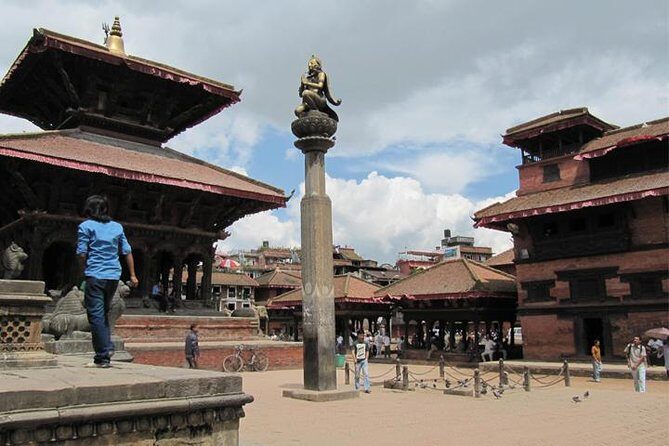
If you care about meaning (not just photos), Patan Museum is the smartest add-on in the whole day. The visit is short—about 15 minutes—but it’s positioned as a bridge between what you see on the street and what the carvings and objects represent.
Patan Museum is widely respected in South Asia, and the core value here is Newari art context. When you’ve just walked around royal architecture, the museum helps you connect the dots: style, symbolism, and the way craft traditions support religious life.
The day’s structure makes this practical. You see the outdoor royal setting first, then you go inside to understand the art language behind it. When you head to other squares afterward, you’ll notice patterns faster—what’s decorative versus what’s meaningful, what’s repeated because it’s important, and what’s unique because it’s tied to a specific tradition.
A small drawback: because the museum time is brief and admission isn’t included, you’ll want to go in with the right mindset. This isn’t a half-day museum deep study. Think of it as “fast context” so you get more out of the street stops that follow.
The in-between sacred stops: Dattatreya and Nyatapole areas
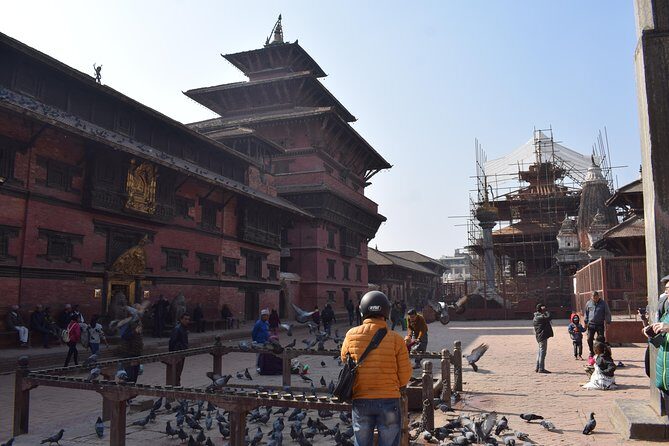
Between Patan and Bhaktapur, the route includes stops at Dattatreya Square and the Nyatpole Temple Square area. These aren’t the headline Durbar Squares, but that’s exactly why they work. They break up the day and reinforce that the Valley is layered with religious nodes, not just grand royal complexes.
Dattatreya Square matters because it anchors a specific temple focus in the Bhaktapur side of the route later in the day as well. The day doesn’t feel like random back-and-forth; it feels like a guided walk through connected sacred geography.
Nyatpole Temple Square helps you shift your attention from royal palaces to tall, iconic temple silhouettes. That sets you up for Bhaktapur’s most dramatic views later, so the big structures at the end of the day land with more impact.
Why this matters for your experience: these smaller stops give you breathing room. You’re still learning and looking, but the pacing is kinder than stacking only major squares back-to-back.
Bhaktapur Durbar Square: the royal heart you can actually read
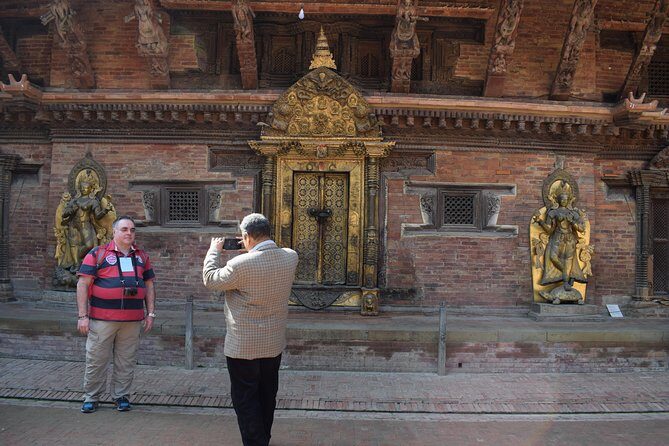
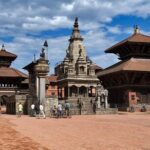
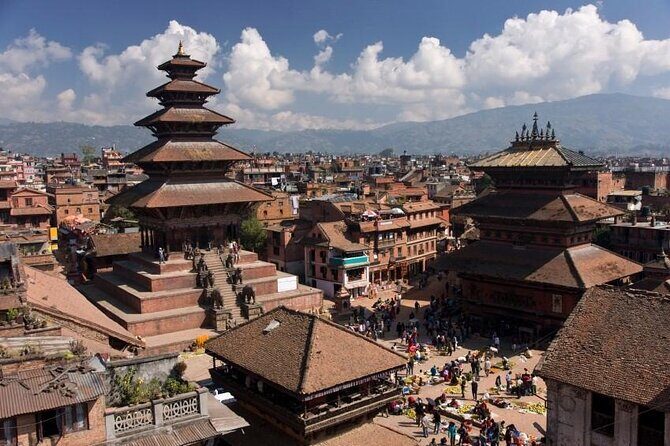
Bhaktapur Durbar Square is where the day turns serious. It’s a UNESCO site many people consider the grandest and most beautiful of the Kathmandu Valley’s three royal cities, and you’ll feel why once you’re inside the stone-and-temple world.
You’ll spend about an hour here on a guided visit. That hour is well used if you treat it like a guided “royal city overview.” The guide’s job is to help you recognize what belongs to the palace system and what belongs to the temple system, because Bhaktapur blends both.
This stop is also where the earthquake reality becomes part of the visual experience. The tour notes that some sites suffered significant damage in the 2015 earthquakes, so you may see restoration and uneven continuity. That can be sobering, but it’s also honest: you’re seeing a city that has been rebuilding.
What I’d watch for: don’t only take in the big monuments. Spend a few moments on the surfaces—doorways, corners, and the way structures relate to each other. Bhaktapur rewards slow looking, even if the clock doesn’t.




55 Window Palace: the masterpiece moment
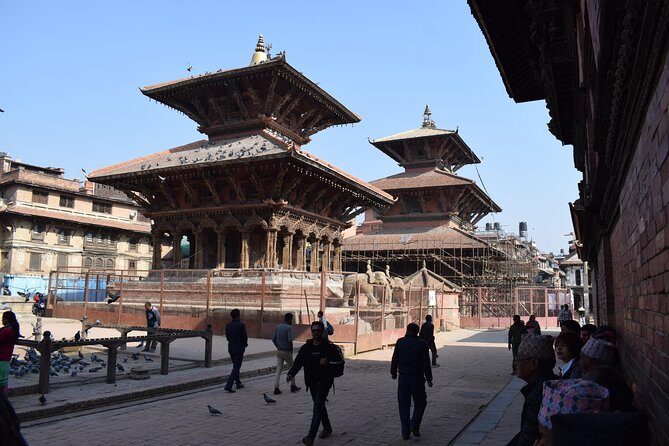
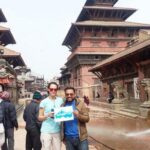
One of Bhaktapur’s most iconic sights is the 55 Window Palace, also called Pachpanna Jhyale Durbar. You’ll have about 15 minutes for it, and this one is listed as free admission.
This is the kind of stop where the architecture does the talking. The palace stands as a visual symbol of Bhaktapur’s royal identity, and seeing it in person is different from seeing it in photos because you start to notice the layout logic and the density of details.
Even with a short time window, I suggest you do this in two passes: first, look at the whole facade so you get the rhythm. Then look at the smaller sections so your brain learns the pattern.
Value angle: because this is free, it’s one of the best “time-to-wow” stops of the day. It gives you a major highlight without extra entry hassle.
Nyatapola Temple: the tallest pagoda feeling
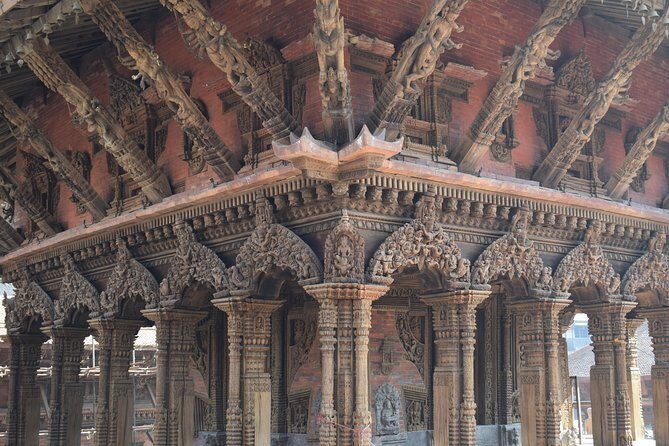
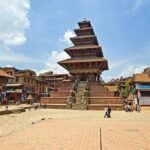
Nyatapola Temple is the signature icon of Bhaktapur. It’s famously the “5-story temple” and is described as the tallest pagoda in Nepal. You’ll get a shorter stop—around 10 minutes—with free admission listed.
This is one of those spots where standing in the right place really matters. You’ll want your guide to point out the structure cues—how the pagoda tiers read, and why the silhouette is such a landmark within the city.
Why you’ll probably like it: it’s the kind of temple that forces your body to do the looking. You naturally tilt your head upward, and that physical act helps you take in the design rather than just snap a photo and move on.
What to consider: because it’s brief, don’t let it become a rushed photo stop. If you want the best experience, plan to spend those 10 minutes actually examining the tiers.
Dattatreya Temple at Dattatreya Square
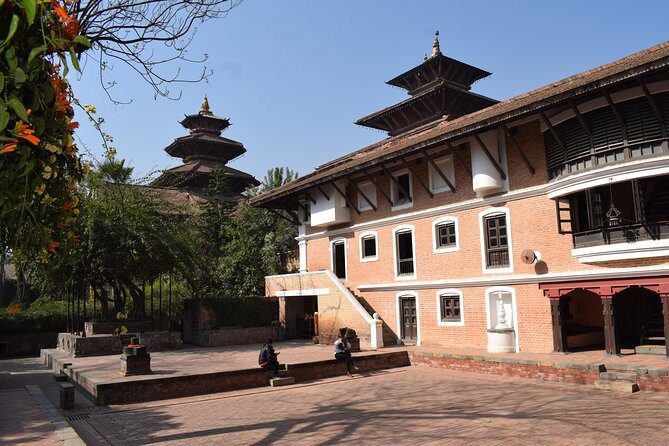
The day also includes Dattatreya Temple in Bhaktapur’s historic Dattatreya Square. It’s a massive 15th-century pagoda and described as one of the oldest in the valley, with Newari craftsmanship that shows up in the details.
Your time here is about 15 minutes, and it’s listed as free admission. This makes it a great wrap-up stop: not because it’s smaller, but because it gives you another strong example of how Newari artisans built sacred architecture that lasts.
Dattatreya Temple also connects back to the route’s earlier Dattatreya Square stop. So by the time you reach this final temple focus, you’ll already know you’re looking at the same sacred naming and geographic logic.
Earthquake note: if restoration is visible in the area, treat it as part of the current reality rather than a deal-breaker. You’re seeing an actively preserved religious landscape.
Price and tickets: what $110 really buys
The tour price is $110 per person for about 8 hours, and that includes a professional guide plus private transport by vehicle. It also includes pickup and drop-off from your hotel inside the ring road area (including Boudha), plus mobile ticketing.
Entry fees are not included, and the tour guidance estimates around USD 20–30 per person for admissions. That estimate matters because it changes the real all-in cost. If you’re budget-minded, plan on entry fees and bring enough money/means to cover them without stress.
Food and drinks are also not included. That’s common for full-day city tours, but it’s worth planning around. You’ll want water during the day and a simple snack strategy so you don’t feel cranky during temple hours.
Value check: where this tour shines is the combination of private format and targeted highlights. You’re paying for a route that hits UNESCO sites in two cities without losing hours to indecision or transit delays.
Your guide matters: Shanti and Kabita as a good sign
The best part of this experience, as it comes through in feedback, is how guides bring structure to the chaos of a historic city. I’ve seen Shanti and Kabita highlighted for being engaging and for explaining what you’re seeing in a way that makes the walk feel purposeful.
In practice, that means the guide helps you know where to look and what questions to ask in your own head. Instead of guessing whether a detail is important, you get a quick explanation and then you’re free to look at the carvings with better eyes.
The private setup also helps: you can ask for slight changes in pacing so you get the monuments you care about most. If one area feels too crowded, you can adjust without derailing the whole day.
One consideration: because the itinerary is fixed around a set number of stops, your guide can’t turn this into a custom “only museums” or “only temples” marathon. It’s guided sightseeing with smart coverage, not a free-form wandering day.
Who this tour suits best (and who should skip)
This is a great fit if you want a guided, organized introduction to two of the Kathmandu Valley’s most important royal and sacred centers. You’ll love it if you enjoy architecture, temple forms, palace-era craftsmanship, and the way Newari art ties it all together.
It also makes sense if you prefer private logistics. Hotel transfers, private vehicle transport, and a route that stays focused on the main hits are ideal when you don’t want to spend half your day planning how to get across the valley.
Skip or reconsider if:
- You want a super relaxed day with lots of free time to wander without structure.
- You’re hoping all sights are included with zero extra spending; admissions are not included.
- You dislike walking and looking up at temple structures for long stretches.
For many people, though, this is exactly the sweet spot: enough time to see real highlights, without turning it into an all-week learning program.
Should you book this Bhaktapur and Patan day trip?
I’d book it if your goal is to see Bhaktapur and Patan Durbar Square in one day with context. The mix works: royal squares, a quick but meaningful museum stop, and temple icons like Krishna Mandir, 55 Window Palace, Nyatapola Temple, and Dattatreya Temple.
Book it with realistic expectations. Budget for admissions (around USD 20–30 per person estimate), plan for food and water on your own, and wear shoes that handle outdoor stone.
If the idea of seeing the 2015 earthquake restoration reality bothers you, it might still be worth it, but go in with a patient mindset. You’re not just viewing monuments; you’re watching a living city keep its cultural identity alive while it rebuilds.
One extra tip: if you’re choosing a time based on light, aim for a morning start when possible. These squares photograph better and your brain is fresher before you hit the bigger temple silhouettes.
FAQ
How long is the Bhaktapur and Patan Durbar Square city tour?
The tour runs about 8 hours.
What does the tour cost?
It costs $110.00 per person.
Is hotel pickup and drop-off included?
Yes. Pickup and drop-off are included, and the pickup is offered from hotels inside the ring road area (including Boudha).
Is this tour private?
Yes. It’s listed as a private tour/activity, and only your group participates.
Are admission tickets included?
No. Admission fees are not included, with an entry fee estimate of about USD 20–30 per person.
Which parts have free admission?
The Krishna Mandir (Chayasim Deval), 55 Window Palace, Nyatapola Temple, and Dattatreya Temple are listed as free admission.
What sites are included in the day?
You’ll visit Patan Durbar Square, Patan Museum, Krishna Mandir (Chayasim Deval), Bhaktapur Durbar Square, 55 Window Palace, Nyatapola Temple, and Dattatreya Temple (in Dattatreya Square), plus the Dattatreya Square and Nyatpole Temple Square areas along the way.
What if I need to cancel?
You can cancel for free up to 24 hours in advance for a full refund. If you cancel less than 24 hours before the start time, the amount paid won’t be refunded.