REVIEW · KATHMANDU
From Kathmandu: Everest Flight with Window Seat and Transfer
Book on Viator →Operated by Cordial Trek Pvt. Ltd. · Bookable on Viator
One window seat above the Himalayas beats most sightseeing. This Everest flight is a simple early-morning plan with hotel pickup and a guaranteed window seat, built around one thrilling goal: see Mt. Everest and other giants from the air as you pass over the eastern Himalaya. It’s also year-round service, so you’re not stuck only in peak season.
My favorite part is how the timing keeps it doable: you’re only in the air about 50 minutes to an hour, yet the route still lines up multiple famous sights. The main consideration is weather. This flight depends on good conditions, and if visibility is poor, your views and photo chances take the hit.
In This Review
- Key things to know before you fly over Everest
- Why this Everest flight from Kathmandu fits real schedules
- The 5:30am meet time, hotel pickup, and what happens at the airport
- The one-hour flight: your best odds for clear Everest views
- Seeing Mount Everest (Sagarmatha) from above: what you’re actually looking for
- Namche Bazaar from the plane: why a trekking town is on your route
- Sagarmatha National Park: the protected backbone you’re flying over
- Makalu Barun National Park and the east-to-return sweep
- Photo tips that actually help through plane windows
- Price and value: is $69 a smart deal or just a cheap thrill?
- Who should book this Everest flight from Cordial Trek Pvt. Ltd., and who shouldn’t
- Should you book this Everest flight from Kathmandu?
- FAQ
- What time does this Everest flight start?
- How long is the flight time, and how long is the whole outing?
- Is a window seat included?
- Does the tour include hotel pickup and drop-off?
- What does the price include?
- What should I know about weather?
Key things to know before you fly over Everest
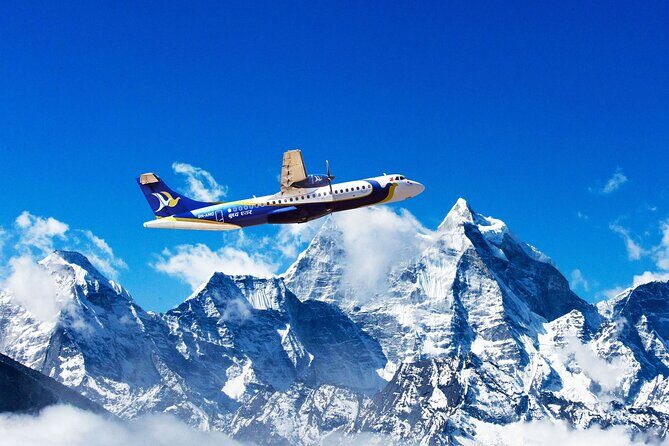
- Guaranteed window seat means less seat-wrangling and more time staring out at the peaks
- Early start from Kathmandu (meet at 5:30am) keeps you ahead of crowds and gives you the best shot at clear skies
- Hotel pickup and drop-off inside Kathmandu Valley makes the airport part much less stressful
- Second look on the return helps you reframe photos when the plane turns and you pass the scenery again
- Route hits Everest plus the Langtang and Chamlang areas plus the surrounding protected parks from above
- You’ll still need to budget for food and drinks during the outing
Why this Everest flight from Kathmandu fits real schedules
If you want Everest without committing to days of trekking, this is the cleanest option. It’s basically a fast aerial tour that starts early, gets you airborne for roughly an hour, then gets you back into Kathmandu the same morning.
You’re not going “somewhere else” in the usual travel sense. You’re staying in Kathmandu and letting the mountains come to you—high-altitude views, big geography, and the kind of scale that ground sightseeing can’t match. The route also focuses on the eastern side of Nepal, which matters because those ridgelines and peak lines are what you’ll see during the flight’s approach and return.
This flight also has a practical advantage: the total outing is listed as about 2 to 3 hours. So even if you hate long travel days, you can still fit this into a sightseeing block.
You can also read our reviews of more tours and experiences in Kathmandu
The 5:30am meet time, hotel pickup, and what happens at the airport
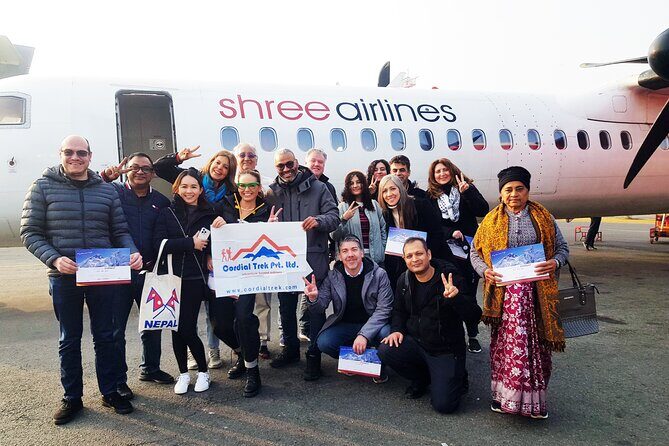
Plan to treat the morning like an organized scramble. Start time is 5:30am, and pickup plus drop-off is included within Kathmandu Valley, so you won’t be hunting for a taxi at dawn. The outing also includes airport tax, which helps keep the “small surprises” down.
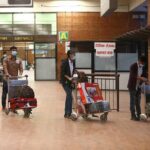
At the airport, you should expect some friction. One common issue to watch for is check-in chaos: longer lines, occasional computer problems, and the general feeling that things can move slowly right up until boarding. The good news is that this tour includes someone to guide you through the airline process, and that support can save time when the process gets confusing.
Also, pay attention to your window-seat reality. A dirty window can ruin photos fast. If you care about pictures, do what you can to pick a clean-looking pane once you’re seated and keep your expectations realistic about smudges and reflections.
Group size is capped at 35 travelers, which is fairly reasonable for a morning operation. Still, this is not a quiet private charter. You’ll be sharing the airport and boarding flow with other people chasing the same sunrise views.
The one-hour flight: your best odds for clear Everest views
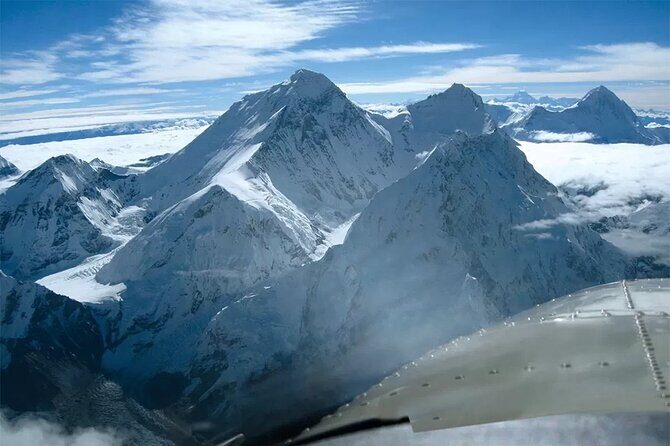
The flight itself is typically 50 minutes up to an hour. That’s long enough to enjoy the view and short enough that you’re not stuck in a slow routine. It also means you don’t have to plan for a full day of weather dependence—though you still must plan for it.
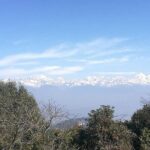
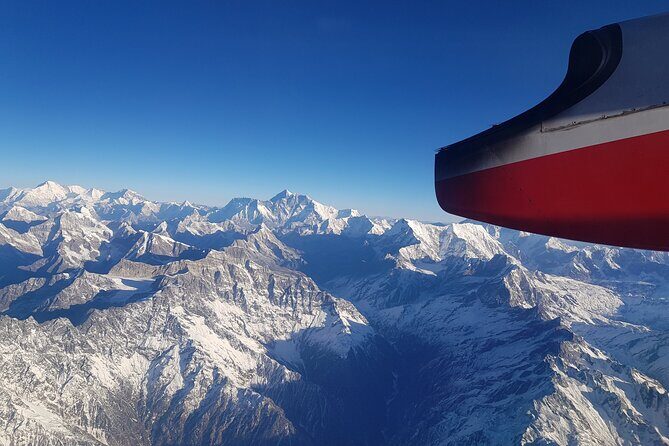
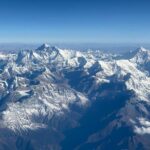
The flight highlights an impressive set of peaks to the east of Nepal. You’ll start seeing the route from near the Langtang Lirung area, then the plane continues toward Mt. Everest, and further on toward Chamlang. Expect the pilot to treat this like a scenic loop: once the plane passes the main sights, it turns and passengers get a second look on the return to Kathmandu.
That second pass is more valuable than it sounds. From a single angle, glare and cloud layers can hide details. With another pass, you get a chance to adjust your timing, refocus your lens, and catch a clearer line when the plane changes position.
One more reality check: you’ll be looking through plane windows, and Everest is far. This isn’t the same as seeing the mountain from near base camp. What makes this experience work is clean timing and your willingness to enjoy the view even if your photos aren’t National Geographic perfect.
Seeing Mount Everest (Sagarmatha) from above: what you’re actually looking for
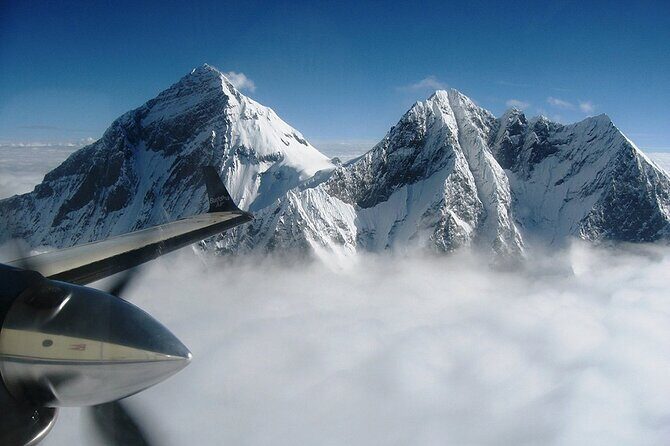
Mt. Everest is 8848 meters high, and in Nepal it’s also known as Sagarmatha. It sits in the Himalayas on the border between Nepal and Tibet (China). From the air, you’re not only chasing a single peak. You’re also seeing how Everest sits inside an entire wall of mountains, valleys, and ridgelines.
What you’ll want to watch for during the Everest portion:
- The moment the peak lines up clearly against the surrounding slopes (this is often when clouds briefly move)
- The scale shift when you compare Everest’s mass to nearby peaks
- The color and snow edge—on clear mornings, the snow outline tends to look crisp
If your mental image of Everest is a single iconic pyramid, the flight can correct that. From above, it becomes part of a bigger system of ranges. You’ll understand faster why so many trekking routes funnel people into the Everest region.
The biggest key to enjoying this section is attitude. The flight is short, so your job is to look with intention. Don’t spend the entire time reading your phone screen. When Everest shows up, look long enough to let your brain register the scale.
Namche Bazaar from the plane: why a trekking town is on your route
Namche Bazaar is one of the most famous waypoints on the Everest trekking route. Even though this experience is an aerial flight (not a walking tour), you’ll still get a sense of why Namche matters—because it sits in a geography that funnels movement through the area.
From above, you may not get street-level detail. But you can often make out the bigger patterns: how settlements cluster, how routes cut through valleys, and how terrain shapes daily life. That’s the “aha” moment people usually take from Namche in this setting: you don’t just see a mountain. You see how humans have adapted to living under it.
If you’re also thinking about trekking later, this part can help you build a mental map. Even if the flight is brief, seeing the general layout can make future hikes feel less like a mystery.

Sagarmatha National Park: the protected backbone you’re flying over
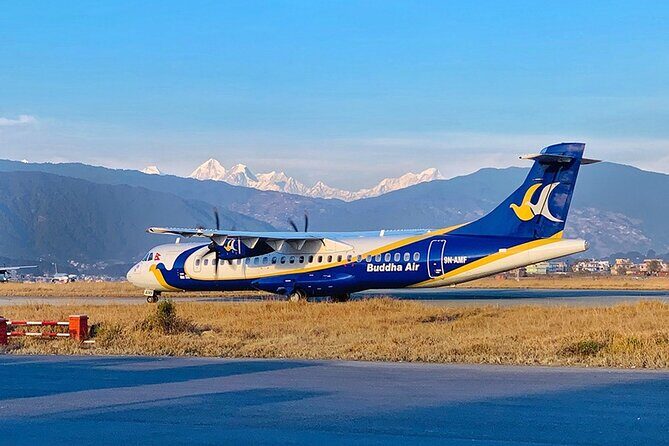
Sagarmatha National Park is dominated by the Everest area and covers 1148 km². From the air, the park setting matters because it explains what you’re looking at. You’re not just flying over dramatic peaks. You’re flying over a protected region whose entire identity is shaped by high mountains, glacial systems, and complex terrain.
During this flight, Sagarmatha National Park is part of the sightseeing arc—so think of it as the “ecosystem layer” behind the iconic summit. Even if you can’t read facts out the window, you can connect the dots between what you’re seeing (peaks and valleys) and why it’s preserved.
Practical note: if clouds break in and out, you might catch glimpses of the park’s shape through gaps in the weather. Those breaks can happen quickly, so once you’re airborne, keep your eyes up and be ready to switch from casual looking to focused scanning.
Makalu Barun National Park and the east-to-return sweep
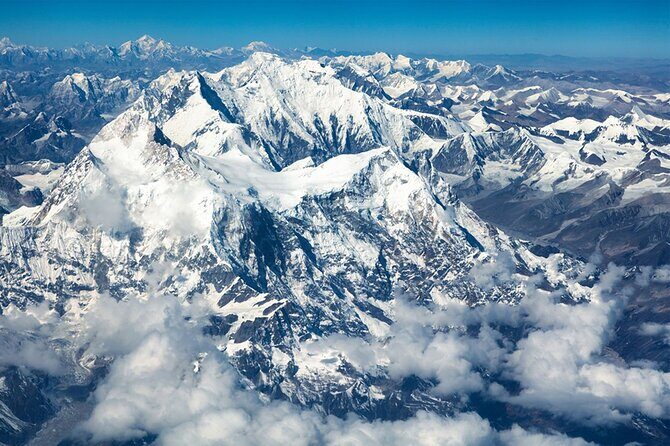
On the eastern side of the Himalayas, Makalu Barun National Park is the next major protected area highlighted on the route. It was established in 1992 as an eastern extension of Sagarmatha National Park. From the air, you’ll experience it less like a “place to explore” and more like a huge scenic corridor linking multiple big mountain systems.
This is where the flight’s design shines. Your route isn’t one straight line. It’s shaped so you pass over different mountain regions and then return, with that second look created by the plane’s turn.
If you’re the type who likes finishing strong, this part often delivers the best “compare and contrast” moment. You can watch how mountain colors and layers shift as the plane changes position. You also get a stronger feel for how Everest fits into a wider Himalayan wall.
And yes, it’s still short. You’re not collecting souvenirs from national park gates. You’re collecting scale and perspective. That’s the deal.
Photo tips that actually help through plane windows
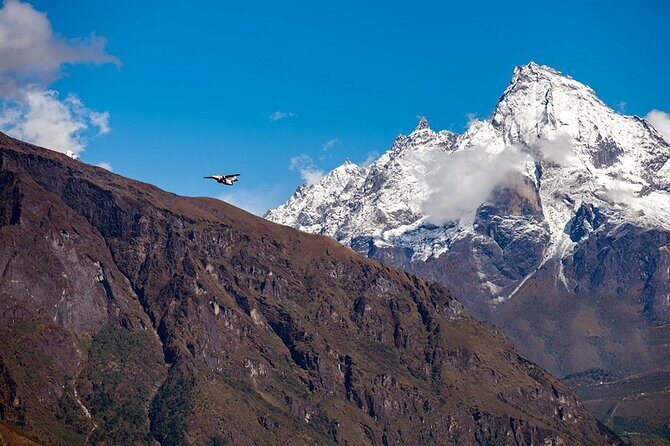
I’ll be blunt: window photos can be frustrating. Windows can be smudged. Reflections can ruin contrast. And distance makes everything look smaller than it feels.
Here’s what helps most:
- Set your expectations for the window: you’re capturing a memory more than an ultra-sharp summit shot
- Use bursts and quick adjustments when clouds open and close
- Avoid shiny reflections by adjusting your angle (turn your camera slightly rather than snapping straight on)
- Prioritize the second pass after the plane turns; you often get a better alignment
If you’re serious about photography, you’ll still want the best seat you can get. The tour guarantees a window seat, which is huge. It doesn’t guarantee perfect glass, but it does remove the biggest variable—being stuck in an aisle.
Price and value: is $69 a smart deal or just a cheap thrill?
At $69 per person, this flight sits in the “accessible splurge” category. Whether it’s a good value depends on what you compare it to.
Here’s what you’re getting for that money:
- Hotel pickup and drop-off within Kathmandu Valley
- Guaranteed window seat
- Airport tax included
- The flight portion (about 50 minutes to an hour)
- An adventure certificate
- A mobile ticket approach
What you’re not getting:
- Food and drinks, so you’ll need to grab something before or after the flight
- Optional tipping for your driver (if you choose to do it)
To decide if it’s worth it for you, compare the total cost of doing it alone: the airport time, transport, booking hassles, and the risk of not getting a window. The guaranteed window seat plus pickup is what pushes this into “good value” territory for many people.
One more value angle: time. If you only have a short Kathmandu visit, this is a fast way to connect with the Everest story. It’s not a trek, but it can be a powerful first chapter.
Who should book this Everest flight from Cordial Trek Pvt. Ltd., and who shouldn’t
This experience makes the most sense if you:
- Want Everest views without hiking
- Have limited time in Kathmandu
- Prefer guided logistics (pickup, process support, and a structured flight plan)
- Like the idea of seeing multiple areas (Everest plus the broader eastern peak region) in one outing
It may not be the best fit if:
- You need long, on-the-ground exploration time
- You’re the kind of person who will be upset if weather limits visibility
- You want hands-on guide storytelling at each exact location on foot (this is mainly viewed from the aircraft)
Also, consider your morning energy. Starting around 5:30am is not optional. If you’re a slow-starter, plan your evening earlier so you’re awake and ready to go.
Should you book this Everest flight from Kathmandu?
I’d book it if you want a high-impact Everest experience that fits a morning schedule. The combination of guaranteed window seat, hotel pickup/drop-off, and a route designed for a second look makes it a smart way to turn Kathmandu time into real mountain perspective.
I’d skip or at least rethink if you’re chasing perfect summit photos no matter what. Plane windows, distance, and weather are real variables. If you can accept that the value is scale and sight—not guaranteed postcard clarity—this flight is a strong deal.
If you do book, go in ready to look hard, not just pass time. When the mountain appears, your attention is the secret ingredient.
FAQ
What time does this Everest flight start?
Start time is listed as 5:30am. Hotel pickup and drop-off are included within Kathmandu Valley.
How long is the flight time, and how long is the whole outing?
The flight portion is typically about 50 minutes to an hour, and the overall experience is listed as about 2 to 3 hours.
Is a window seat included?
Yes. The tour includes a guaranteed window seat.
Does the tour include hotel pickup and drop-off?
Yes. Private transportation with pickup and drop-off from hotels inside Kathmandu Valley is included.
What does the price include?
Included items are private transportation, pickup and drop-off, about an hour-long mountain flight, guaranteed window seat, adventure certificate, and airport tax.
What should I know about weather?
This experience requires good weather. If it’s canceled due to poor weather, you’ll be offered a different date or a full refund.