If you like your Kathmandu with sweat and scenery, this ride fits. The route strings together Sankhu village, the Himalayan viewpoint at Nagarkot, and a quick stop in Bhaktapur before rolling back to Thamel. You start around 1,300 meters and end up near a 2,100-meter viewpoint area, with plenty of uphill effort along the way.
Two things I like a lot are the ride structure and the support. First, the route is built for serious riders, with a one-way distance of 35 km and a climb that takes you up to Nagarkot’s viewpoint area. Second, you get a front suspension Giant or Fuji bike plus a helmet, along with a local guide who’s also an expert mechanic—so you’re not just dropped with a bike and a prayer.
One possible drawback is simple: this is not a casual sightseeing cycle. You should expect a tough physical day, and you’ll want to arrive with strong fitness and riding skills.
In This Review
- Key things to know before you ride
- From Thamel out toward Sankhu: a village start that matters
- Nagarkot is the payoff: big views, short time, strong reason
- The Bhaktapur stop: quick medieval flavor on the way back
- The ride itself: 35 km one-way and how to pace advanced effort
- Bikes, helmets, and the hidden value of having a mechanic
- Getting there in Kathmandu: pickup and mobile ticket flow
- Price and value: $165 for a pro-level, full-day ride
- Who this tour suits (and who should skip it)
- Should you book Kathmandu Extreme Mountain Biking Day Tour?
- FAQ
- Is pickup included?
- How long is the tour?
- How far will I ride?
- What altitude range does the ride include?
- What bike and helmet do I get?
- What’s included in the price?
- What’s not included?
- Do I need a national park permit?
- Is this tour refundable?
- Is it private?
Key things to know before you ride
- Pro-level route with real elevation: Start at about 1,300 m and reach around 2,100 m near Nagarkot’s viewpoint area.
- 35 km one-way riding: Plan your day around distance, not just stops and photos.
- Front suspension bikes (Giant or Fuji): Built to help on uneven surfaces, but you still need advanced control.
- Short, focused breaks: Sankhu, Nagarkot, and Bhaktapur are brief stops rather than long hangouts.
- Guide + expert mechanic: Built-in troubleshooting support if something goes wrong mid-ride.
- Private group: Only your group rides together, which helps the day feel smoother and more paced.
From Thamel out toward Sankhu: a village start that matters
Most Kathmandu days either stay in the city center or scatter into busy traffic. This one starts you in Thamel first, then sends you north-east toward Sankhu. Thamel is the obvious starting point for a reason: it’s where riders naturally gather, paperwork and meet-ups are easy, and you’re not trying to hunt down a van in the dark.
Sankhu is about 17 km from Kathmandu, and it’s an old Newari town. The stop is short—around 10 minutes—so don’t plan on turning it into a full cultural visit. What you can do in that window is get your bearings. If you’re new to riding in this kind of terrain, that quick break is when you check your bike fit, tighten what needs tightening, and mentally shift from Kathmandu pace to ride pace.
What makes Sankhu a good first stop is that it breaks the day into chapters. You start from the city, transition to village roads, and get a taste of the area before the real viewpoint push. If you’re the type who likes seeing how places connect, you’ll appreciate how the route moves from urban Kathmandu energy into older settlements.
You can also read our reviews of more cycling tours in Kathmandu
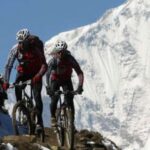
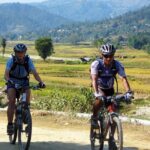
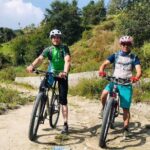
Nagarkot is the payoff: big views, short time, strong reason
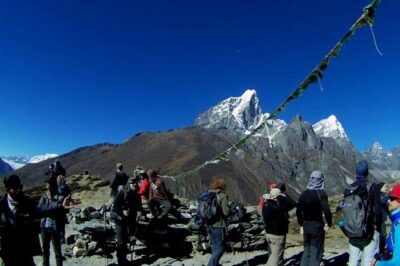
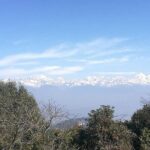
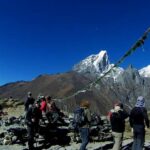
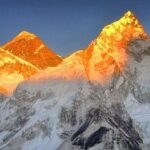
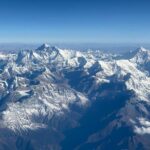
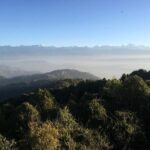
Nagarkot is the star name on the map, and it’s earned. This is a popular Himalayan viewpoint, and on a clear day you can see mountain scenery that can even reach as far as Mt. Everest in the distance. That’s the kind of view that makes uphill effort feel like a down payment.
The Nagarkot stop is about 30 minutes, and that time limit is important. You won’t have a long lunch-and-linger window here. Instead, you should treat it like a viewpoint reset. Wear the same riding layers you’ve been using and be ready to move quickly when you get to the viewing area. You’re going to want your photos, a breath of air, and a quick look around before you’re back on the bike.
Here’s the practical trick: if the sky is clear, don’t spend your first five minutes fussing with gear. Find your best viewing angle fast, take the photos, and then use the rest of the time to enjoy what you’re actually seeing. In a ride like this, that 30 minutes can be the emotional highlight.
Also, remember the altitude. The ride climbs up to Nagarkot around 1,950 meters, with the viewpoint area near 2,100 meters. Even if you’re fit, that kind of climb can make your breathing feel different. You’ll be glad you didn’t show up treating this like an easy flat spin.
The Bhaktapur stop: quick medieval flavor on the way back
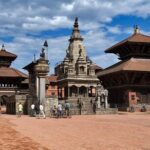
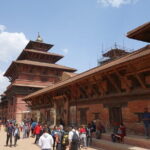
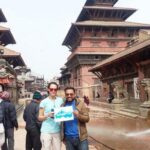
Bhaktapur is your medieval city break, with UNESCO World Heritage status. The stop is brief again—around 30 minutes—so this is not a full city tour day. It’s more like a ride-friendly taste of a place that feels like it hasn’t changed much.
Why this works on a mountain biking itinerary is timing. You’re already on a schedule shaped by distance and elevation. After the big viewpoint push, a short Bhaktapur pause gives you a mental reset without stealing too much energy from the ride back toward Thamel.
In that 30 minutes, keep it simple:
- Walk slowly, take in the older streetscape feel.
- If there’s an easy-to-reach landmark area, focus on one or two quick sights.
- Don’t over-plan. You’re here to refresh, not to turn the ride into a separate travel day.
If you like cities that feel lived-in and built around long-standing traditions, Bhaktapur can be a satisfying contrast to the mountain views. It gives your brain a different kind of reward after all that physical effort.
The ride itself: 35 km one-way and how to pace advanced effort
The route is built around a one-way distance of 35 km. That means you’re not just climbing once for a quick scenic break and then coasting all the way back. This is a full-day rhythm of effort, recovery, then effort again. Even though the tour is listed as around 6 hours, plan closer to an 8-9 hour full round-trip experience. The difference likely comes from biking pace, stop timing, and the reality of breaks when you’re dealing with altitude and distance.
The ascent is part of the story. You start around 1,300 meters and climb up to Nagarkot and its viewpoint area near 2,100 meters. That’s a big enough altitude jump that you’ll feel it in your legs and breathing, especially if you’re not used to sustained climbing.
This is why the tour is designed for professional-level riders. “Advanced” here isn’t just about not falling off. You’ll want control on uneven surfaces, the ability to manage sustained climbs, and the stamina to handle a long riding window without burning out early.
My advice for making this ride feel like an adventure instead of a suffering test: start the day a little more conservatively than you think you can. Save the pushing for when your body is warm and you’ve found your breathing rhythm. If you go hard too early, you’ll pay for it later, right when the day is still long.
If you’re an experienced rider, you’ll also appreciate that you’re not doing this on a random rental bike. The front suspension on the Giant or Fuji helps smooth things out, but it won’t replace good technique. Use the suspension to absorb small impacts and stay relaxed in your upper body.
Bikes, helmets, and the hidden value of having a mechanic
Included in the price is a local guide plus an expert mechanic. That matters more than people think, especially on a route that’s long and demanding. A breakdown on a quiet road is annoying. A breakdown during a long uphill day can derail the whole experience.
You also get a customized front suspension bike from Giant or Fuji, along with a helmet. That’s a real quality-of-life point. Even if you’re picky about bikes, the included gear removes a major uncertainty: you’re showing up knowing the bike is matched to the route type.
Another value driver is the private setup. You’ll only be riding with your own group. That usually means less waiting, more consistent pacing, and fewer interruptions. For a ride where timing matters, that’s a quiet advantage.
One more useful detail: admission fees for the key stops are listed as free (Sankhu, Nagarkot, and Bhaktapur). That’s not the biggest cost of a day like this, but it helps you travel with fewer mental tabs open.

Getting there in Kathmandu: pickup and mobile ticket flow
The tour offers pickup, which is especially helpful in a city like Kathmandu where getting across town can be unpredictable. If you’re staying in Thamel, you’re already near the natural meeting point anyway, but pickup still reduces friction.
You also get a mobile ticket. That makes check-in straightforward and cuts down on the classic problem of losing paper confirmations when you’re about to leave on an active day.
The day starts from Thamel, so if you’re packing, keep your essentials simple and keep your hands free. You’re going to be outside, moving, and climbing. Any extra bulk you bring can become a nuisance later.
Price and value: $165 for a pro-level, full-day ride
At $165 per person, this is not a budget “try cycling once” option. But it’s also not just you renting a bike and hoping the day goes fine. You’re paying for a package that includes a guide/expert mechanic, a front suspension bike (Giant or Fuji) and helmet, plus all taxes and service charge.
For value, the key question is what you’d otherwise have to solve yourself:
- Bike sourcing and matching to a demanding route
- A guide who can manage the ride plan and keep things moving
- Mechanical support
- The time and logistics of getting to and between major stops
If you’d have to organize most of that alone, $165 starts to look reasonable for what is essentially a pro-focused mountain biking day across multiple major points in the valley.
Also, it’s private. In practice, that often means better coordination for a group that’s already taking on a tough ride. That kind of smoothness has real value when you’re dealing with distance and altitude.
Finally, the ride is booked about 11 days in advance on average. If you want a specific date, don’t wait until the last minute.
Who this tour suits (and who should skip it)
This tour is designed for professional-level riders seeking a challenging and rewarding experience. You should also have strong physical fitness. If you’re new to mountain biking, this is likely the wrong first outing.
I’d especially recommend it if you:
- Already ride regularly and understand sustained climbing effort
- Want big scenery rewards, not just local cycling loops
- Prefer a guided plan with mechanic support
- Enjoy route days where culture shows up briefly at key points
I’d be cautious or skip if you:
- Think you can handle hills as long as the bike has gears
- Don’t have advanced riding skills for uneven terrain
- Want a relaxed sightseeing day with long breaks and slow walking
- Need lots of meal support, because meals are not included
Should you book Kathmandu Extreme Mountain Biking Day Tour?
If you’re an advanced rider and you want a Kathmandu day that feels genuinely active, this is a strong pick. The route has clear payoff: a climb to Nagarkot and viewpoint area near 2,100 meters, plus a couple of meaningful stops (Sankhu and Bhaktapur) that break up the ride without turning it into a multi-day program.
Book it if you’re ready for distance and effort, and you’ll treat the short stops as exactly that—quick breaks for views and context.
Skip it if you’re hoping for an easy cultural cycle. This is built for riders who want the challenge and can handle a full day of climbing and long riding distance.
If you want to maximize your odds of a great day, plan for the physical demand, pack smart, and show up ready to ride—not just ready to look.
FAQ
Is pickup included?
Yes. Pickup is offered, and the tour starts from Thamel.
How long is the tour?
It’s listed as about 6 hours, but the full-day ride is also described as an 8-9 hour round-trip experience. Plan for a long day.
How far will I ride?
The route covers a one-way distance of 35 km.
What altitude range does the ride include?
You start around 1,300 meters in Kathmandu, climb to Nagarkot around 1,950 meters, and reach a viewpoint area near 2,100 meters.
What bike and helmet do I get?
You get a customized Giant or Fuji front suspension bike and a helmet.
What’s included in the price?
A local guide/expert mechanic, the bike and helmet, and all taxes and service charge.
What’s not included?
Meals, travel insurance, evacuation/medical expenses, and related transfers. Bike clothing and any support vehicle are also not included.
Do I need a national park permit?
A national park permit is listed as not included if applicable.
Is this tour refundable?
No. It’s non-refundable and cannot be changed for any reason.
Is it private?
Yes. It’s a private tour/activity, and only your group participates.