REVIEW · KATHMANDU
Nepal in Luxury: Kathmandu, Chitwan & Pokhara Escape – 8 Days
Book on Viator →Operated by Luxury Holidays Nepal Pvt. Ltd. · Bookable on Viator
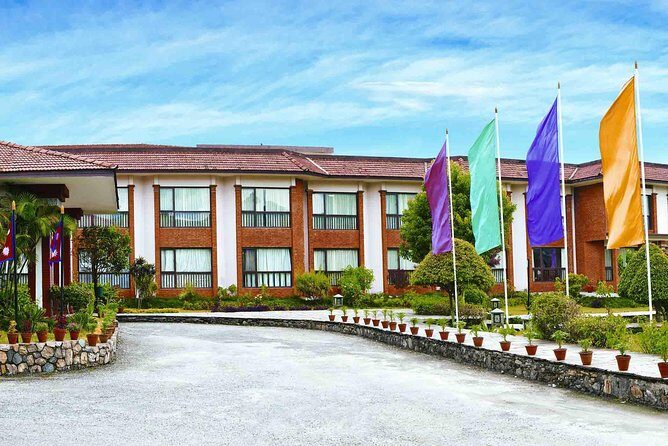
Skip the travel stress in Nepal. This 8-day luxury run strings together Kathmandu, Chitwan, and Pokhara with private driving and planned guiding, so you spend less time figuring things out and more time watching real life roll by. You’ll get 5-star-style comfort across all three places, plus hands-on nature and culture.
I especially like the way Chitwan is handled with two full, packed days and all-in meals included at the resort—your safari time doesn’t feel like a rushed add-on. And in Kathmandu, you hit the big spiritual landmarks in a smooth sequence: Swayambhunath with its monkey crowd, the Pashupatinath Shiva temple on the Bagmati River, and Boudhanath Stupa with prayer wheels in motion.
One consideration: the trip is sold as flexible, but there have been reports of poor communication and difficulty making changes once you’re already there. Also, check upfront about any site entrance fees, since the itinerary lists many admissions as free while the offer also says monument entrance fees aren’t included.
In This Review
- Key highlights you’ll care about
- Arrival in Kathmandu: getting oriented without the chaos
- Kathmandu temple day: Swayambhunath, Pashupatinath, Boudhanath, Patan Durbar Square
- Swayambhunath (Monkey Temple)
- Pashupatinath Temple
- Boudhanath Stupa
- Patan Durbar Square (Lalitpur)
- Chitwan National Park safari: what the two all-inclusive days really give you
- Safari day: jeep or elephant-back, plus more than just spotting animals
- Meals that keep the day from falling apart
- Pokhara after safari: lake time is not wasted time
- Pokhara sights in practical order: temples, caves, and gorge views
- Bindhyabasini Temple
- Devi’s Fall
- Gupteswar Gupha (cave stop)
- Phewa Tal and Barahi Island Temple
- Seti River Gorge
- The return drive and farewell dinner: ending on a human note
- Price and value: is $999 reasonable for this style of luxury?
- Who this Nepal luxury plan fits best
- Should you book Nepal in Luxury: Kathmandu, Chitwan & Pokhara Escape?
- FAQ
- What cities does the tour include?
- How long is the tour?
- Is pickup included?
- What is included in the price?
- What’s not included?
- How does the visa on arrival work?
- What time and where does the tour start?
- What happens on safari in Chitwan?
- What is the cancellation policy?
Key highlights you’ll care about
- Private transport door-to-hotel ease across Kathmandu, Chitwan, and Pokhara, so the roads don’t steal your energy.
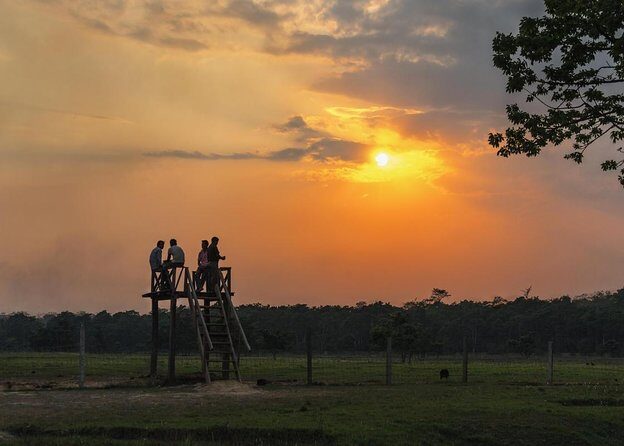
- Two all-inclusive Chitwan days with safari options, canoeing, and included meals at the resort.
- Big-ticket Kathmandu sights grouped efficiently: Swayambhunath, Pashupatinath, Boudhanath, and Patan Durbar Square.
- Pokhara lakeside pacing after jungle days, with time to wander and then guided stops at major attractions.
- Tharu cultural program in Chitwan and a farewell dinner in Kathmandu with cultural dance.
Arrival in Kathmandu: getting oriented without the chaos
Your first win on this trip starts at Tribhuvan International Airport. After you handle visa on arrival (or apply online for a faster process), you’ll meet a representative outside the exit area holding a Luxury Holidays Nepal banner. From there it’s straight to your hotel in a private vehicle, not a confusing mix of buses, lines, and guesswork.
Once you check in, you’ll have a pre-trip meeting at the hotel. That matters more than people think. Nepal is a country of layers—temples, different neighborhoods, and practical timing around traffic and crowds—so being briefed early helps you keep your bearings on Day 1 instead of playing catch-up.
For your evening, the itinerary keeps it loose. That’s good. Kathmandu can feel intense at first; having time to decompress before the temple day lets you enjoy it instead of just surviving it.
You can also read our reviews of more tours and experiences in Kathmandu
Kathmandu temple day: Swayambhunath, Pashupatinath, Boudhanath, Patan Durbar Square
Day 2 is a full-on Kathmandu sweep, and it’s one of the best parts of the whole 8 days. You’ll have an English-speaking guide for the guided sightseeing, and the order makes sense: start with viewpoints and temple energy, move to riverfront devotion, then end with Buddhist stupa calm and Newari architecture.
Swayambhunath (Monkey Temple)
You’ll go up to Swyambhu Mahachaitya on a hillock with wide views over the valley. The place earns the Monkey Temple nickname for a reason: monkeys really are a constant presence in the area. It’s an easy stop to enjoy even if you’re not a hardcore temple person, because it’s visual and immediate.
Practical tip: go slowly and keep an eye on your personal items. The monkeys may not plan your day, but they’ll definitely try to join it.
Pashupatinath Temple
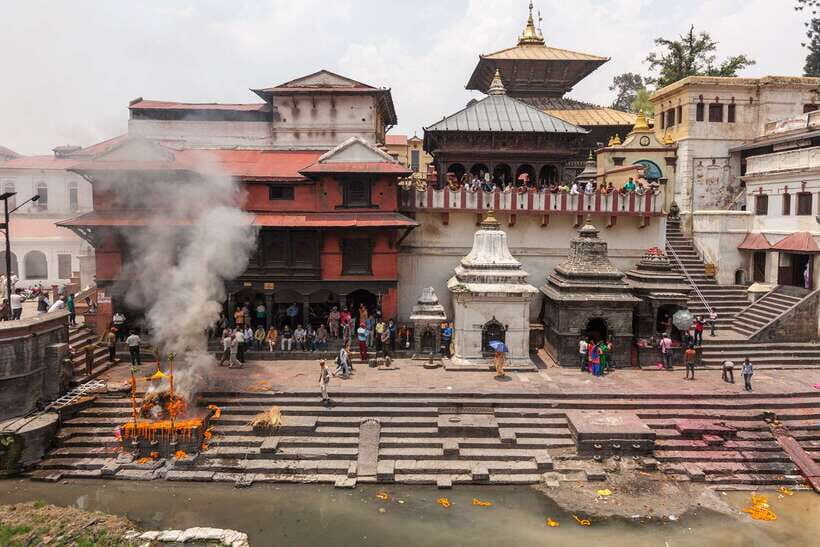
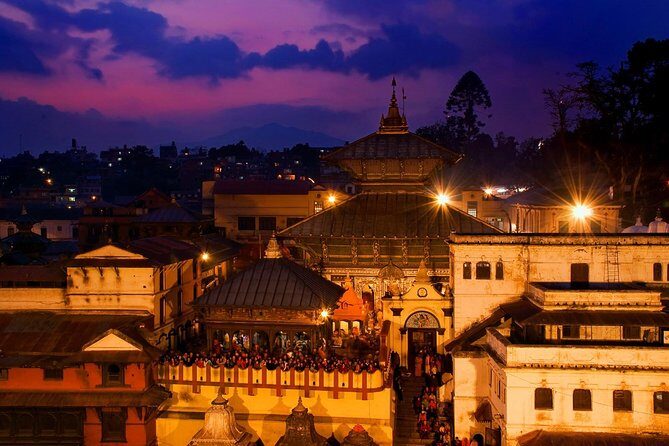
Next is Pashupatinath, one of Nepal’s holiest Hindu temples dedicated to Shiva, sitting on the eastern outskirts of Kathmandu along the Bagmati River. This is less about a single viewpoint and more about the sense that you’re watching a living religious world at work.
If you’re sensitive to strong sights and smells, come prepared. But if you want authentic, this is it—this isn’t a themed attraction.
Boudhanath Stupa
Then you’ll reach Boudhanath Stupa, a 5th-century Buddhist stupa with the famous “eyes” facing the cardinal directions. You’ll see pilgrims from Tibet moving around the stupa while spinning prayer wheels. It creates a rhythm you can feel: slow feet, steady motion, lots of quiet focus.
Even if you’re tired, this stop helps reset your brain. It’s a strong contrast from the intensity of the riverfront temple scene.

Patan Durbar Square (Lalitpur)
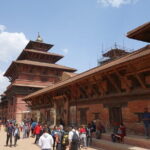
Finally, you’ll visit Patan Durbar Square, showcasing Newari architecture that reached a peak during the Malla kings. It’s a more architectural kind of wonder than a single “wow” landmark, and it’s great for wandering afterward.
The itinerary also gives you some free time and shopping nearby your hotel. That’s a smart design: once you’ve seen the big monuments, you can look for small crafts and souvenirs with the guide’s context still fresh in your mind.
Chitwan National Park safari: what the two all-inclusive days really give you
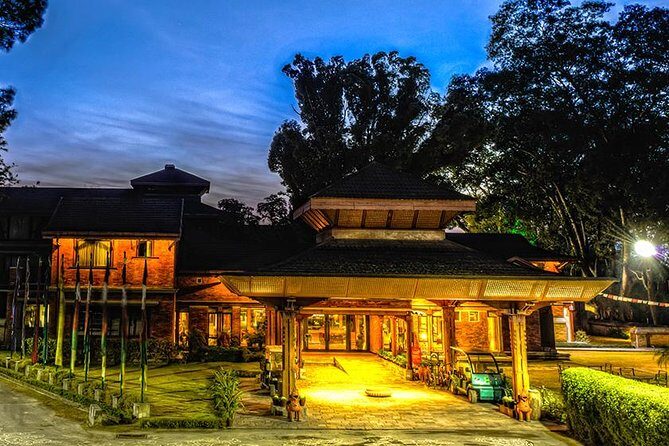
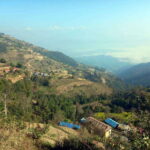
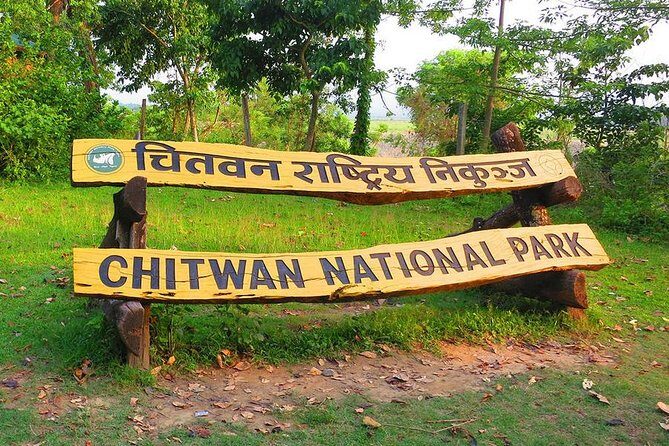
Chitwan is where the trip shifts from temples and cities to real animal country. You’ll drive from Kathmandu to Chitwan after breakfast, and the drive itself is part scenery: rivers, terraced hillsides, and villages along the way.
When you arrive, you’ll check in and get a briefing about jungle activities. Then you’re off to a Tharu village option and a cultural program featuring a traditional Tharu stick dance in the evening. This is a good mix: you don’t just do “safari, sleep, repeat.” You get some context for the people who live next to the wildlife.
Safari day: jeep or elephant-back, plus more than just spotting animals
On your main Chitwan safari day, you’ll have options for getting into the park: jeep or elephant-back. The itinerary also lists classic wildlife possibilities: one-horned rhinos, deer, monkeys, wild boars, and—if luck is on your side—Bengal tigers.
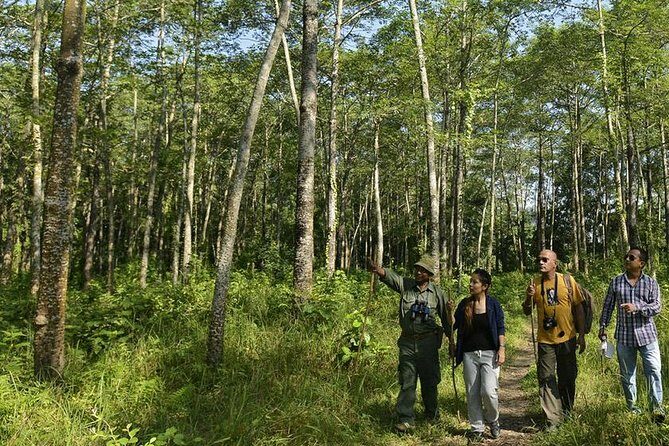
Important reality check: no safari can promise specific animals. But the value here is that you’re not doing one quick outing. You’re getting multiple ways to explore: a jungle walk with a nature guide, canoeing on the Rapti River, and a visit to the elephant breeding center.
From a travel-planning point of view, that variety is key. If wildlife is quiet on one route, you still have other activities that keep the day full.
Meals that keep the day from falling apart
Lunch and dinner are provided at the resort, and you’ll sleep in Chitwan for two nights total. This “two-night base” style is one of the best parts of the offer because it reduces the chaos factor. You’re not rushing back and forth to match schedules. Your day is built around the park.
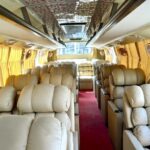
If you care about comfort, it also helps. You’re traveling on roads that can be rough; having a stable resort rhythm in between makes everything feel smoother.
Pokhara after safari: lake time is not wasted time
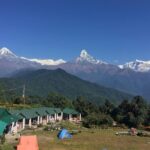
After Chitwan, you’ll drive to Pokhara, Nepal’s lake city below the Annapurna mountain range. The drive is scenic, but more importantly, it’s a transition day. Chitwan is focused and active; Pokhara gives you breathing space.
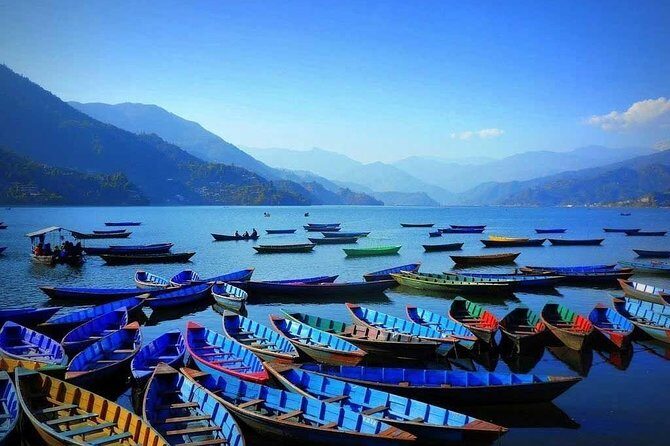
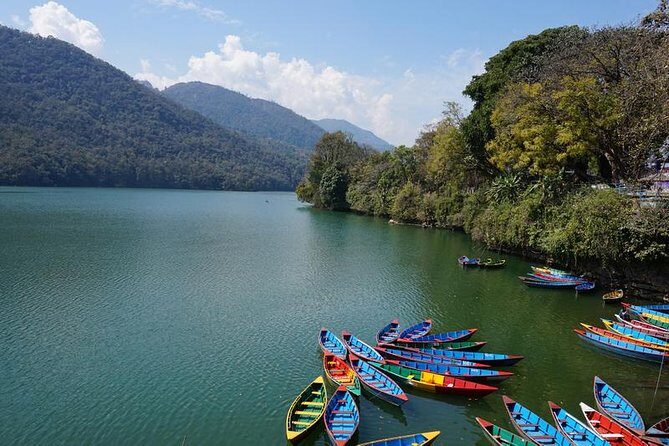
Once you arrive, you check into your hotel and get a relaxed afternoon. The itinerary specifically leaves time for the lakeside area, cozy cafés, or a walk along Phewa Lake. That matters because it helps you absorb what you just did. Safari days are intense. A slow Pokhara afternoon feels like turning the volume down.
If you’re the type who likes photos, you’ll also like the overall light in Pokhara. The reflections and views are a big part of why people keep returning.
Pokhara sights in practical order: temples, caves, and gorge views
Day 6 is a structured loop around Pokhara’s major attractions, and the sequence is built so you’re not zig-zagging endlessly. You’ll have guided stops, but you won’t feel trapped indoors.
Bindhyabasini Temple
You’ll start at Shree Bindhyabasini Temple, in the center of the religious old bazaar. It’s dedicated to Goddess Bhagwati. This isn’t a long sightseeing sprint; it’s a quick, meaningful stop that helps you understand the local spiritual pulse beyond just the lakes.
Devi’s Fall
Next is Devi’s Fall, locally known as Patale Chhango. A stream flowing from Fewa Lake collapses into a gorge and drops through potholes. It’s popular for a reason: it looks dramatic and it’s easy to understand as a natural phenomenon.
You’ll want to be mindful of footing, since these types of viewing areas often involve uneven ground.
Gupteswar Gupha (cave stop)
Then comes Gupteswar Cave, also called Gupteshwor Cave. The entrance is near Devi’s Fall, and the cave is almost 3 kilometers long, with some crawl-through passages. The itinerary describes large hall-sized rooms and narrow sections.
This is a cool stop if you like caves, but keep expectations realistic. Caves are dark, humid, and physical in places. Wear shoes that are comfortable for uneven surfaces and don’t plan on this being a quick hallway photo stop.
Phewa Tal and Barahi Island Temple
After the cave, you’ll reach Phewa Tal (Phewa Lake). It’s the second largest lake in the kingdom, and you’ll see the Barahi Island Temple in the middle. The itinerary highlights that reflections of Machhapuchhare and Annapurna can be seen on calm days, and that the thick forest slopes sit nearby.
Even if reflections aren’t perfect that day, the lake setting still works. It’s a visual reset before the final stop.
Seti River Gorge
Finally, you’ll view the Seti River Gorge, carved by Seti-Gandaki. The itinerary describes viewpoints from bridges like K.I. Singh bridge and others, where you can see the deep gorge and the river’s rush.
This stop is less about standing in one place forever and more about looking from the right viewing points. If it’s windy or your timing is tight, you might only get a short window—still worth it.
The return drive and farewell dinner: ending on a human note
On Day 7, you’ll return to Kathmandu by road. The drive winds through riverside villages and terraced hills, giving you a glimpse of rural life. When you arrive, you check in and relax.
That night, you’ll have a farewell dinner at a traditional Nepali restaurant featuring authentic cuisine and a cultural dance performance. This is a nice close because it’s not another major monument. It’s the social side of the trip—food, music, and a reminder that Nepal isn’t just temples and wildlife.
On Day 8, you’ll have free time depending on your flight schedule, then a private transfer to Tribhuvan International Airport. The trip even reminds you to plan for your international flight by arriving at least 3 hours early.
Price and value: is $999 reasonable for this style of luxury?
At $999 per person, the big question is what you’re getting for your money besides a fancy hotel label.
Here’s what the offer includes that drives real value:
- Private transportation throughout (not sharing cars or jumping between random transit).
- Guided sightseeing with an English-speaking guide in Kathmandu and Pokhara.
- A Chitwan plan built around two all-inclusive nights, including safari activities and meals at the resort.
- 4-star or 5-star hotels in Kathmandu, Pokhara, and Chitwan, plus daily breakfast.
- The itinerary lists all government taxes and official expenses.
What’s not included (important for budgeting):
- International airfare and the visa fee (though you can obtain a visa on arrival).
- Lunch and dinner in Kathmandu and Pokhara, plus personal expenses like drinks and laundry.
- Monument entrance fees (the itinerary also lists many admissions as free, so confirm on the day).
So the value case is strongest if you want:
- low-stress logistics,
- comfort during road travel,
- and a safari that isn’t just one short half-day.
If you’re a flexible independent traveler who enjoys building your own schedule, you might be able to spend less. But if you prefer someone else to do the stitching, this price is in line with that convenience.
Who this Nepal luxury plan fits best
This is a good match if you:
- want guided culture without having to chase bus routes,
- want a safari that feels like a proper outing (two nights in the park area),
- and prefer private transport over hop-on/hop-off travel.
It’s also a reasonable choice if you don’t want to deal with language barriers in temple areas or when organizing activities in Chitwan.
It may not fit you as well if you:
- need frequent itinerary changes on the fly (there are reports of weak communication in that area),
- or you’re the type who wants full DIY freedom and lots of spontaneity every day.
Should you book Nepal in Luxury: Kathmandu, Chitwan & Pokhara Escape?
I’d book this if you want a smooth, comfortable route through three of Nepal’s most famous stops, with the safari part handled like a real experience (not a checkbox). The combination of guided temple touring in Kathmandu, two Chitwan nights with included meals, and then a relaxed Pokhara follow-up is a smart flow.
Before you hit confirm, do two quick things:
- Ask the operator to clearly confirm any monument entrance fees that might still apply.
- Send your questions in writing early and be specific about what flexibility you’re expecting, since communication issues have been flagged.
If you want luxury that mostly shows up as less hassle, you’ll probably feel at home on this one.
FAQ
What cities does the tour include?
It covers Kathmandu, Chitwan, and Pokhara. The route is designed around those three locations over about 8 days.
How long is the tour?
The duration is listed as 8 days (approx.), with 7 nights.
Is pickup included?
Pickup is offered. You’ll also receive airport transfers at the start and end of the tour in private vehicles.
What is included in the price?
The package includes private transportation, 4-star or 5-star hotel accommodations, daily breakfast, full board in Chitwan, guided sightseeing in Kathmandu and Pokhara with an English-speaking guide, jungle activities in Chitwan National Park, and all government taxes and official expenses.
What’s not included?
International airfare is not included. The Nepal entry visa fee is also not included (it can be obtained on arrival). Lunch and dinner in Kathmandu and Pokhara are not included, along with personal expenses, monument entrance fees, travel insurance, and Everest flight & domestic flights.
How does the visa on arrival work?
You can obtain a visa on arrival by handling immigration and paying the fee. The prices listed are 15 days (USD 30), 30 days (USD 50), and 90 days (USD 125). There’s also an option to apply online before you arrive for a faster process.
What time and where does the tour start?
It starts at Tribhuvan International Airport, Ring Rd, काठमाडौँ 44600, Nepal, with a start time of 10:00 am.
What happens on safari in Chitwan?
The Chitwan portion includes jungle activities such as safari by jeep or elephant-back, canoeing on the Rapti River, a jungle walk with a nature guide, and a visit to the elephant breeding center. Lunch and dinner are provided at the resort.
What is the cancellation policy?
Cancellation is free. You can cancel up to 24 hours in advance for a full refund. Changes made less than 24 hours before the experience start time won’t be accepted. Cut-off times are based on the local time of the experience.