REVIEW · KATHMANDU
Explore Kathmandu in 2 Days: UNESCO Sites & Nagarkot Sunrise Tour
Book on Viator →Operated by Attractive Travels and Tours Pvt. Ltd. · Bookable on Viator
Sunrise over the Himalaya starts early here. This 2-day Kathmandu tour stacks major UNESCO sights with a Nagarkot sunrise morning and a hands-on Thanka art stop, so you see sacred places, city craftsmanship, and mountain views without endless planning.
What I like most is the tight, guided flow through places that can feel overwhelming on your own. You also get a professional guide picked up by tourist car, and the name Prakash shows up in feedback as someone who keeps things both informative and fun while maintaining good timing and communication.
One heads-up: the schedule asks for an early start, with Nagarkot departing around 4am plus temple stairs and walking. If you’re not into mornings or you want a slow pace, plan accordingly.
In This Review
- Key Highlights You’ll Care About
- Kathmandu in Two Days: Why This Route Works
- Day 1: Patience, Stupas, and Patan’s Craftsmanship
- Pashupatinath Temple and the Bagmati river edge
- Boudhanath Stupa: Tibetan influence in the middle of the city
- Swayambhunath (Monkey Temple) and the stair climb
- Patan Durbar Square: Newar architecture at its most skilled
- Golden Temple (Hiranya Varna Mahavihar)
- Boudha Stupa Thanka Center: a small art lesson, not a hard sell
- Day 2: Nagarkot Sunrise, then Bhaktapur’s “Living Museum” Feel
- The Nagarkot departure around 4am
- Bhaktapur Durbar Square: quieter, more intricate, more “local”
- Nyatapola Temple and the temple style you can actually spot
- Dattatreya Temple and a three-God link
- Pottery Square: a quick craft-and-shopping break
- What’s Included vs. What Costs Extra (And How Much It Really Matters)
- Your $100 includes the “moving parts”
- UNESCO entrance fees: budget this up front
- Meals and drinks: plan for your own choices
- Gratuities: keep it simple
- The Guide Factor: On-Time, Explanations, and a Friendlier Day
- Who This Tour Suits Best (And Who Might Prefer Something Else)
- Quick Practical Advice Before You Go
- Should You Book This Kathmandu UNESCO and Nagarkot Sunrise Tour?
- FAQ
- How much does the tour cost?
- How long is the Kathmandu and Nagarkot tour?
- Is hotel pickup and drop-off included?
- What UNESCO sites are visited on this tour?
- Are meals included in the price?
- Are UNESCO entrance fees included?
- Is the Nagarkot sunrise part included?
- Is there a Thanka art stop?
- What about tipping and gratuities?
Key Highlights You’ll Care About
- Nagarkot at sunrise: a dedicated early-morning ride to chase Himalaya views
- UNESCO in a smart order: Pashupatinath, Boudhanath, Swayambhunath, Patan Durbar Square, Bhaktapur
- Newar craftsmanship at Patan Durbar Square: wood and stone carvings, plus the Golden Temple
- Sacred stupa atmosphere: Tibetan-influenced space around Boudhanath
- Thanka art learning stop: a short visit to a Thanka art school with natural-color painting explained
- Local temples in Bhaktapur: Nyatapola Temple and Dattatreya Temple after breakfast
Kathmandu in Two Days: Why This Route Works
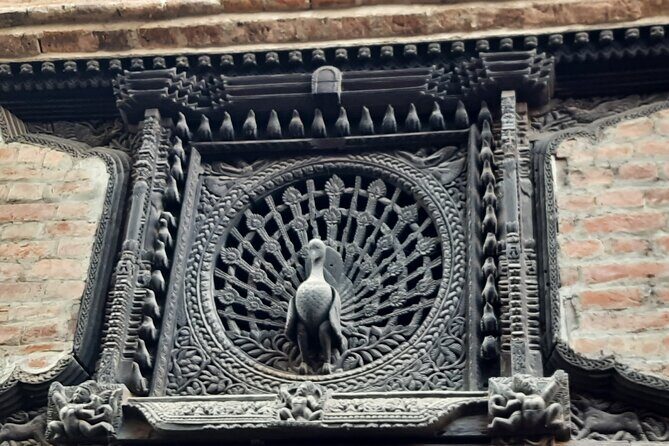
Kathmandu Valley is not the kind of place you casually “sample.” Temples, squares, and stupa complexes can take over your whole day if you’re bouncing around without a plan. This tour does the planning for you by grouping the big UNESCO stops into two focused days—then pairing them with the one thing most people really hope for: a clear sunrise-and-mountains moment from Nagarkot.
You also get the practical benefit of hotel pickup and drop by tourist car, with a guide who can explain what you’re seeing while you’re moving. That matters because a lot of the details in Kathmandu are tied to symbolism—especially around the big Hindu temples and the stupa world.
Finally, this isn’t just temples-and-photos. You also get a creative cultural stop for Thanka painting, plus a short visit connected to singing and healing bowls. Even if you’re not into spiritual practices, it helps you understand how these arts and rituals live inside everyday Nepal.
You can also read our reviews of more tours and experiences in Kathmandu
Day 1: Patience, Stupas, and Patan’s Craftsmanship
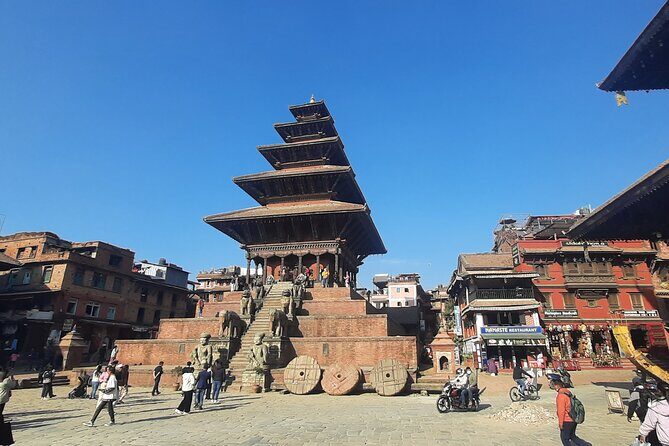
Day 1 is built around the spiritual spine of Kathmandu Valley. You’ll start with Pashupatinath, then move through the famous stupa landscapes, and finish in Patan where the architecture is all about skill—woodwork, stone carvings, and the layered feel of Malla-era palaces.
Pashupatinath Temple and the Bagmati river edge
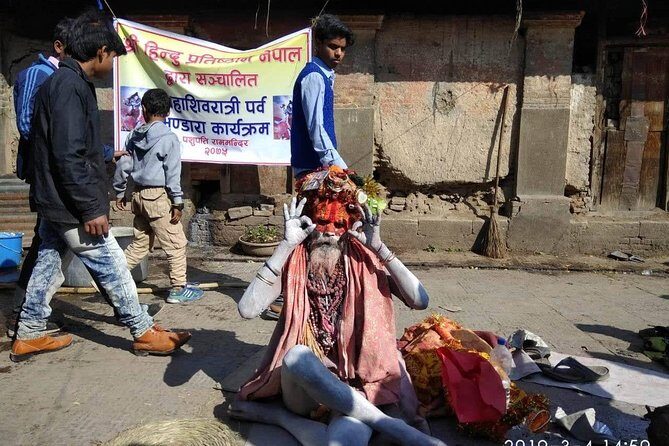
Pashupatinath is one of the biggest Hindu pilgrimage anchors in Kathmandu. Expect a major Shiva focus and the distinctive atmosphere of a temple complex set beside the Bagmati River.
This is also where you’ll see the cultural reality of Hindu cremation ceremonies happening openly along the riverbank. If you’re sensitive to that kind of sight, give yourself a little time to watch from a respectful distance, and don’t feel rushed. A guide helps here because they can point out what you should observe and what you should avoid doing.
Boudhanath Stupa: Tibetan influence in the middle of the city
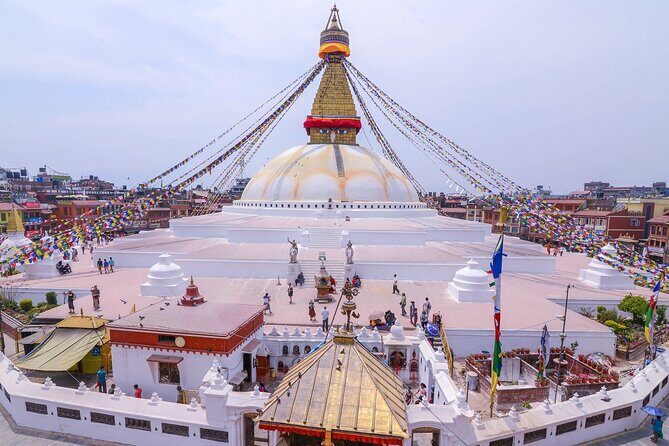
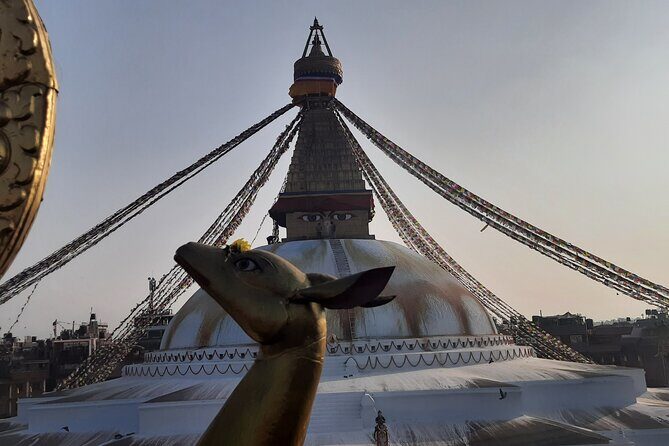
From Pashupatinath, the mood changes quickly. Boudhanath Stupa is massive, and the tour highlights the surrounding monasteries and the clear Tibetan cultural influence in this area. This stop is often where people notice Kathmandu’s diversity most: you go from Hindu temple intensity to Buddhist stupa calm.
Plan for lingering. Two hours sounds long, but it takes time to absorb the surrounding structures, the flow of worshipers, and the way the stupa dominates the scene. If you like photography, this is one of the better places for angles and close-up details—without needing to sprint between sights.
Swayambhunath (Monkey Temple) and the stair climb
Next up is Swayambhunath, known as the Monkey Temple. The main stupa sits on a hill, which means a stair climb. This is one of those places where the journey up is part of the experience—views and temple activity gradually open up as you climb.
The key practical point: wear shoes you can trust on stairs and uneven ground. Even if the climb doesn’t sound dramatic, Kathmandu stairs add up fast when you’re already walking all day.
You can also read our reviews of more tours and experiences in Kathmandu

Patan Durbar Square: Newar architecture at its most skilled
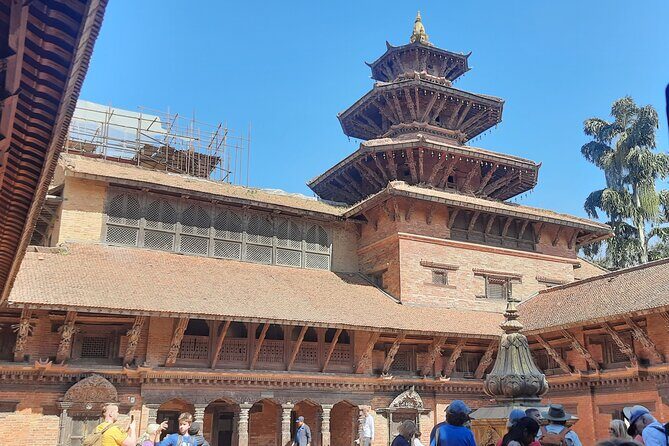
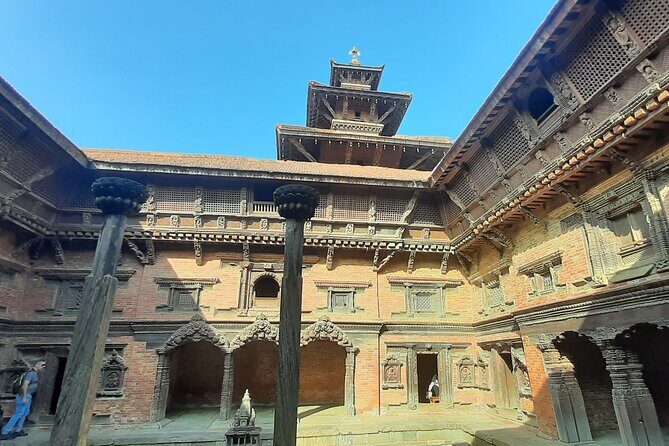
Now you land in Patan (Lalitpur), where the tour leans into something Kathmandu does better than most places: hand-crafted detail. Patan Durbar Square is presented as a showcase of Newar architecture, including wood and stone carvings of Hindu and Buddhist idols embedded in temple walls.
If you want a memorable “wow” moment, focus on the small stuff. The tour emphasizes windows, carved wood, and stonework tied to the Malla kings’ era. The Golden Temple stop next builds on this theme—Patan isn’t just pretty; it’s impressive because of the craftsmanship.
Golden Temple (Hiranya Varna Mahavihar)
In Patan, you’ll visit the Golden Temple, officially known as Hiranya Varna Mahavihar, named because the front part was plated in gold-colored material. This is a shorter stop, around 30 minutes, so use that time intentionally.
Go in expecting to notice surfaces, edges, and how the temple fits into the Durbar Square setting. If you treat this as a quick photo break only, you’ll miss why people care about it.
Boudha Stupa Thanka Center: a small art lesson, not a hard sell
The last Day 1 stop is a Thanka art school and related painting concept session. The tour describes Thanka work as painting on cotton cloth using natural colors, with common design themes like mandalas and Buddha-life story artwork.
This is valuable for a simple reason: it gives you a way to “read” what you might see later on temple walls and in Buddhist art. And unlike some sightseeing-only experiences, this adds a hands-on learning flavor even if you don’t sit and paint yourself.
Day 2: Nagarkot Sunrise, then Bhaktapur’s “Living Museum” Feel
Day 2 is where the itinerary pays off for most people. You’re chasing sunrise in the Himalaya foothills, then shifting to Bhaktapur’s famous Durbar Square area and major temples. The pacing is deliberate: early morning views, then a more grounded morning exploring.
The Nagarkot departure around 4am
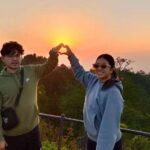
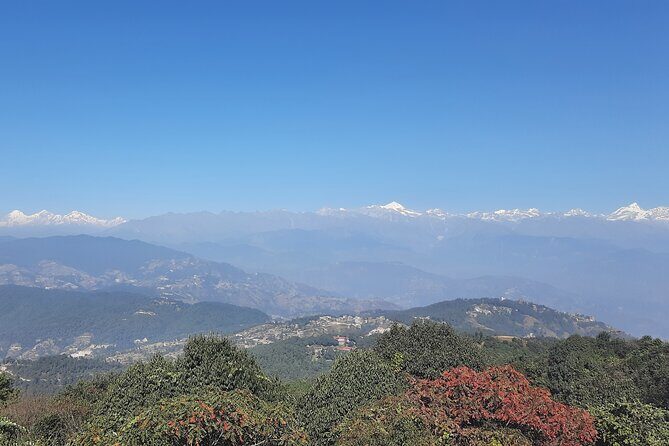
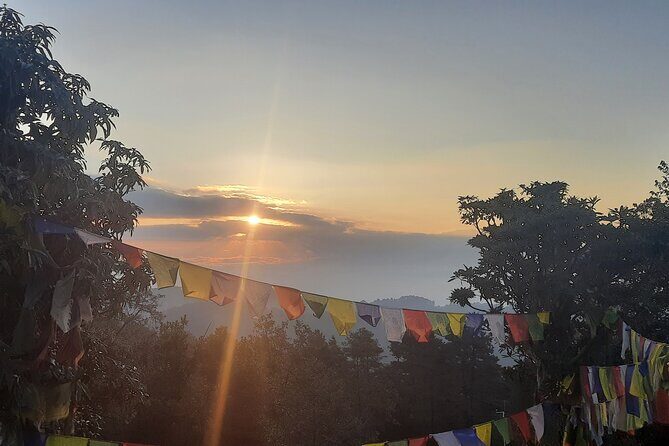
The tour sets you up for the sunrise run with an early start, ready to go around 4am. The drive is about 1 hour 30 minutes (around 35 km) from Kathmandu.
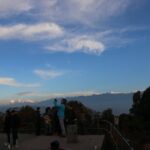
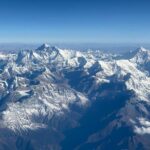
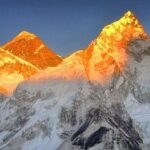
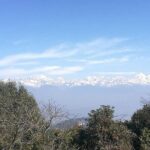
The view goal is big: sunrise plus Himalaya views that can include Mt. Everest and other mountains. You’ll also get sweeping views of Kathmandu Valley and Bhaktapur city. Since mountains depend on weather and visibility, keep expectations flexible—but you’re doing the right thing by going at sunrise instead of late morning.
One practical tip: bring something warm. Early mornings at higher elevations can feel cold even when the city later warms up.
Bhaktapur Durbar Square: quieter, more intricate, more “local”
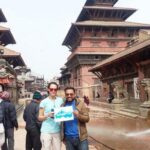
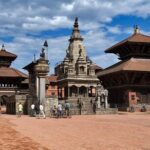
After breakfast, the tour moves to Bhaktapur, described as an ancient city of devotees and often called a living museum. The main highlight here is Bhaktapur Durbar Square UNESCO area, approached as one of the most unique stops on the route.
You’ll see multiple major squares in Bhaktapur (the tour mentions four major squares). Bhaktapur often feels slower and more “whole” than Kathmandu, and this part of the itinerary leans into that by giving you time to look rather than sprinting.
Nyatapola Temple and the temple style you can actually spot
Next is Nyatapola Temple, highlighted as the tallest temple in Bhaktapur. It’s dedicated to Goddess Siddhi Laxmi, and the tour notes it as an example of Nepali-style pagoda architecture. Even if you don’t memorize details, you’ll notice the stacked form and the strong visual identity of the site.
This stop pairs nearby with the Bhairab Temple, so you’re not walking to an empty viewpoint. The area feels like a cluster of related sacred spaces.
Dattatreya Temple and a three-God link
You’ll also visit the Dattatreya Temple, dedicated to Dattatreya, described as a mixed incarnation of Brahma, Vishnu, and Shiva. That’s a key spiritual detail because it helps you understand why people keep returning to this kind of place—temple art and temple names reflect the way Hindu belief blends different ideas.
Pottery Square: a quick craft-and-shopping break
Finally, the tour includes Pottery Square, with a focus on hand-made pottery and the chance to pick up souvenirs. The stop is short (about 20 minutes), but it gives you a practical way to take something home that feels tied to the place rather than a generic tourist shop.
If shopping is important to you, keep an eye on timing: you don’t have hours here, so decide what you want before you wander too far.
What’s Included vs. What Costs Extra (And How Much It Really Matters)
This is where value becomes clearer than just looking at the $100 price tag.
Your $100 includes the “moving parts”
For around $100 per person, you’re getting:
- Hotel pickup and drop in a tourist car
- A professional guide
- Visit to the Thanka art school
- Visit to a singing and healing bowl center
- One bottle of water per person
- Mobile ticket (so you’re not juggling printed documents)
The real value here is that you’re not just buying a list of sights. You’re buying the logistics of getting between major areas, and the guide support to make those places make sense.
UNESCO entrance fees: budget this up front
Entrance fees are not included. The tour states an entrance fee for 5 UNESCO World Heritage Sites totaling NPR 4600 or USD 35 per person.
So your “all-in” travel math is basically:
- Tour price: $100
- Plus UNESCO fees: about $35
- Meals: paid by you
- Gratuities: expected
That UNESCO figure is significant, but it also signals you’re not dealing with a couple random temples. You’re covering a UNESCO-heavy itinerary, which is often exactly what costs more when done independently.
Meals and drinks: plan for your own choices
Meals aren’t included. Kathmandu can be budget-friendly, but food costs add up over two days. I suggest you treat meals as a flexible budget line so you don’t feel stressed mid-tour.
Gratuities: keep it simple
The tour notes tipping is expected. Nepal commonly uses gratuities to round out guide and driver compensation, so I’d set aside a reasonable tip amount before you go.
The Guide Factor: On-Time, Explanations, and a Friendlier Day
One of the strongest signals from feedback is that the guide experience matters. The name Prakash comes up in reviews, with praise for making the trip both more interesting and fun. Other notes also highlight on-time service and strong communication, which matters a lot when you’re starting around 4am for Nagarkot.
Even if you don’t get the same guide, use this as a decision check for the provider: you want someone who can handle the pace, explain what you’re seeing at each stop, and keep the day running without scrambling.
Who This Tour Suits Best (And Who Might Prefer Something Else)
This itinerary fits best if you:
- Want UNESCO sites plus real cultural variety in a short time
- Like guided context so temples and stupas don’t feel like scenery without meaning
- Can handle an early morning and some stairs (especially at Swayambhunath)
- Enjoy craft culture, not just photos (Thanka art stop and bowl center visit)
It might be less ideal if you:
- Want a fully unhurried pace
- Prefer to roam at your own rhythm without early departures
- Have very limited tolerance for stair-heavy temple areas
If your goal is to see Kathmandu Valley highlights without spending your vacation building a route, this does the heavy lifting for you.
Quick Practical Advice Before You Go
A few things I’d keep in mind so the tour feels smooth instead of rushed.
- Wear shoes built for temple stairs and uneven ground.
- Keep a light layer for the Nagarkot early morning.
- Plan your day-one energy for lots of walking between religious sites.
- Budget for the UNESCO entrance fees plus meals and tipping so you aren’t surprised at checkout.
- Bring a water bottle mindset even with the included bottle—especially if you run warm during long temple days.
Should You Book This Kathmandu UNESCO and Nagarkot Sunrise Tour?
I think it’s a strong booking if you want a one-call solution to a high-demand itinerary: UNESCO temples and squares in Kathmandu Valley plus a sunrise chase at Nagarkot and a Bhaktapur follow-up. The included guide, pickup/drop, and Thanka stop turn it from “checklist sightseeing” into a more connected experience.
Book it if your schedule is tight and you want maximum cultural payoff per day. I’d hesitate only if early mornings and temple stairs are deal-breakers for you, or if you’d rather spend your two days moving at a slower personal pace.
FAQ
How much does the tour cost?
The price is $100.00 per person.
How long is the Kathmandu and Nagarkot tour?
It runs for about 2 days.
Is hotel pickup and drop-off included?
Yes. The tour includes hotel pickup and drop by tourist car.
What UNESCO sites are visited on this tour?
The tour includes visits to UNESCO World Heritage Sites: Pashupatinath Temple area, Boudhanath Stupa, Swayambhunath, Patan Durbar Square, and Bhaktapur Durbar Square.
Are meals included in the price?
No. Meals are not included, and you’ll pay for food and drinks yourself.
Are UNESCO entrance fees included?
No. Entrance fees are not included. The tour lists a total UNESCO entrance fee of NPR 4600 or USD 35 per person for 5 UNESCO sites.
Is the Nagarkot sunrise part included?
Yes. The tour includes Nagarkot sunrise and Himalayas viewpoints, departing early (about 4am).
Is there a Thanka art stop?
Yes. A traditional Thanka art school visit is included.
What about tipping and gratuities?
Gratuities are not included, but tipping is expected in Nepal.