REVIEW · KATHMANDU
Private Bhaktapur and Nagarkot Day Tour From Kathmandu
Book on Viator →Operated by Breakfree Adventures Pvt. Ltd. · Bookable on Viator
Bhaktapur and Nagarkot in one day beats slow sightseeing. You’ll walk Newari temples and palaces in Bhaktapur Durbar Square, then switch to hill-station viewpoints where, on clear days, the Himalayas can feel right on top of you. It’s a compact day that’s still broken into real, on-the-ground stops.
I love two things here: first, the smooth private hotel pickup/drop-off with air-conditioned transport, so you’re not fighting public buses. Second, the guide-led pacing—Bhaktapur gets about two hours in the Durbar Square area, plus focused breaks for major sights like the 55 Window Palace and Nyatapola Temple.
One consideration: Nagarkot is all about the weather. Even in good season, fog or clouds can wipe out the mountain views, and the ride up can be bumpy and slow with traffic on the way back.
In This Review
- Key highlights worth getting excited about
- Why this Bhaktapur and Nagarkot day tour is such a smart use of time
- The logistics that make the day feel easy (pickup, AC, and a real guide)
- Bhaktapur Durbar Square: medieval power, in walking distance
- 55 Window Palace: the detail spot you’ll be glad you didn’t rush
- Nyatapola Temple: five storeys, lots of visual drama
- Pottery Square and Dattatreya Temple: the quieter Newari moments
- Nagarkot: viewpoints are the product, so manage weather expectations
- How to plan for sunrise or sunset without losing your schedule
- The drive time reality: bumpy roads and traffic on the return
- Shopping and food: keep it optional and it stays fun
- How long the day really is (and where your time goes)
- Who should book this tour—and who might want a different plan
- Should you book it? My practical take
- FAQ
- FAQ
- How long is the Bhaktapur and Nagarkot day tour?
- What does the $20 per person price include?
- What is not included in the price?
- Do I get a private group for this tour?
- Can I see the Himalayas from Nagarkot during the tour?
- Is sunrise or sunset possible from Nagarkot?
- What stops will we visit in Bhaktapur?
- Do I get time to shop for handicrafts?
Key highlights worth getting excited about
- UNESCO-level Bhaktapur Durbar Square with time to actually wander and take photos
- Newari architecture hits: 55 Window Palace, Nyatapola Temple, and multiple temples
- Nagarkot View Tower for the best odds at seeing Everest and the wider range on clear days
- Private vehicle + English-speaking guide, so you can ask questions and move at a sensible pace
- Free time for handicraft shopping without turning the day into a shopping trip
- Customizable timing, including sunrise or sunset plans if you ask in advance
Why this Bhaktapur and Nagarkot day tour is such a smart use of time
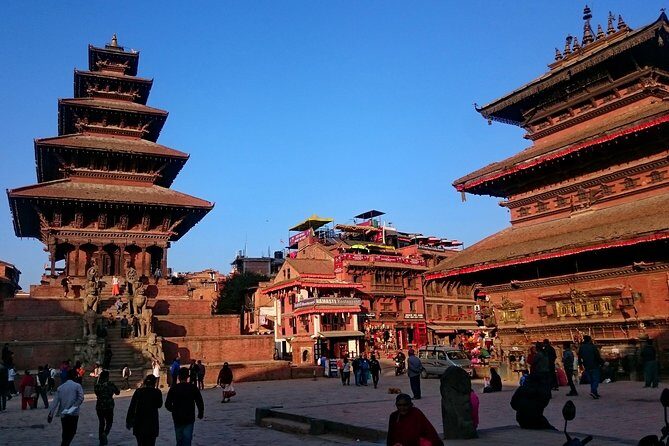
If you only have one free day near Kathmandu, this combo is hard to beat. Bhaktapur gives you a medieval city feeling—temples, palace details, and carved stonework—while Nagarkot adds the big-sky “wait, wow” moment when the clouds behave.
The private format matters. You’re not waiting around for a bus, and you’re not packed in with strangers while your guide tries to explain why the place is important. With pickup from your hotel and an English-speaking guide, you can keep the day moving but still enjoy the stops.
The price is also refreshingly straightforward for a private outing: it’s listed at $20 per person, with taxes included. The catch (and it’s normal in Nepal) is that monument entrance fees aren’t included, so you should budget for that separately.
You can also read our reviews of more private tours in Kathmandu


The logistics that make the day feel easy (pickup, AC, and a real guide)
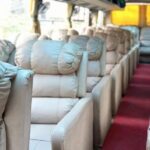
This is built for people who don’t want their day trip to feel like a production. You get hotel pickup and drop-off by private vehicle, and the ride is described as air-conditioned. You also get a professional English-speaking guide, which is a big deal in Bhaktapur where the carvings and symbols can turn confusing fast without context.
Many guides are also praised for staying organized and friendly. You’ll see comments about guides like Deepak and Vidya for making the day feel smooth, and about guides such as Shankar for careful explanations and checking in on comfort. That kind of attention is exactly what makes a short 5–6 hour day work.
You should also plan for typical Kathmandu traffic. Even when the sightseeing is well paced, the return drive can turn into a time sink, so it helps to keep dinner plans flexible.
Bhaktapur Durbar Square: medieval power, in walking distance
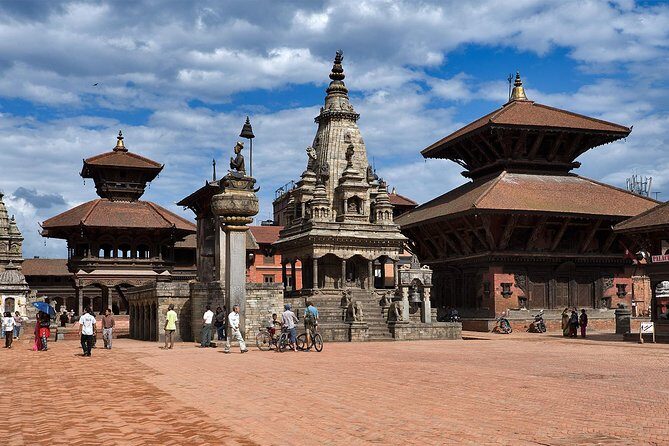
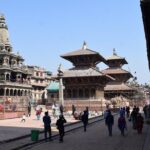
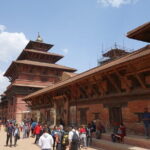
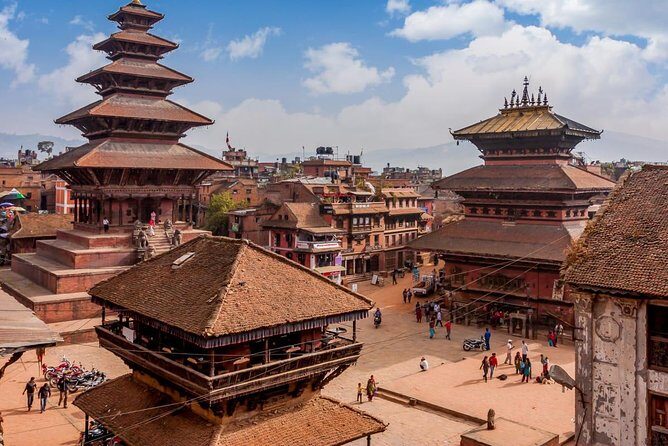
Bhaktapur Durbar Square is the anchor of the day, with about two hours in the area. This is where the city’s old royal center shows its scale. You’ll be walking among stone details and temple-adjacent spaces that make sense best when someone points out what you’re looking at.
In plain terms: you’re not just sightseeing. You’re reading the city. The best way to enjoy it is to slow down at the spots your guide highlights—palace elements, temple features, and carved surfaces—then take a few minutes to just look without a camera in your face.
A common theme in the feedback is that the Durbar Square experience feels special because the guide explains what matters. People mention it as UNESCO-level and “a world treasure” kind of feeling—plus the photos don’t do it justice, because scale and texture matter here.
Admission note: the tour price doesn’t include monument entrance permits and fees. You’ll see a figure of 2000 Rupees per person mentioned for entrance.
55 Window Palace: the detail spot you’ll be glad you didn’t rush
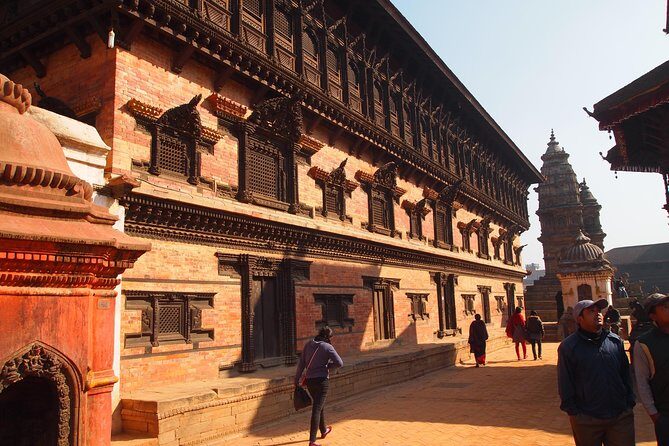
Right inside the Durbar Square zone, you’ll spend about 30 minutes at the 55 Window Palace (Palace of Fifty-Five Windows). It’s built by King Bhupatindra Malla, and the building still gives off that “how did they do this?” vibe.
What I like about this stop is that it’s not a generic landmark. It’s specific. You can stand in one place and notice the craftsmanship rhythm—windows, symmetry, and palace-like form—without needing to understand every historical detail.
If you care about design, this is one of your best photo-to-time ratios. Even if clouds cover the far distance later, this part of the day will still deliver.
Nyatapola Temple: five storeys, lots of visual drama
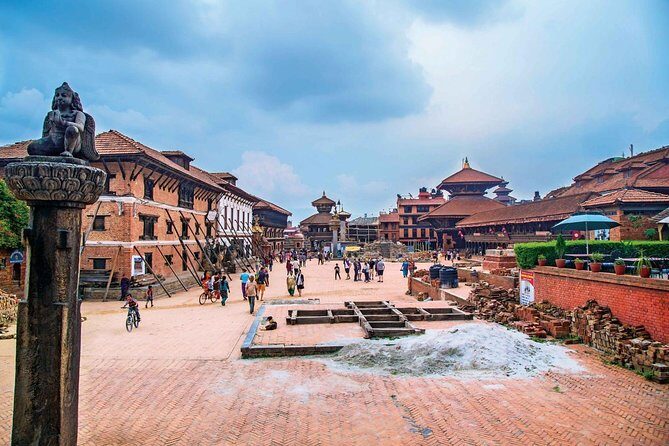
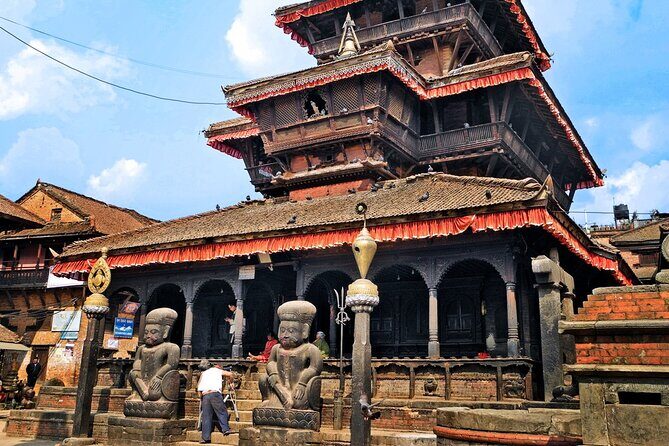
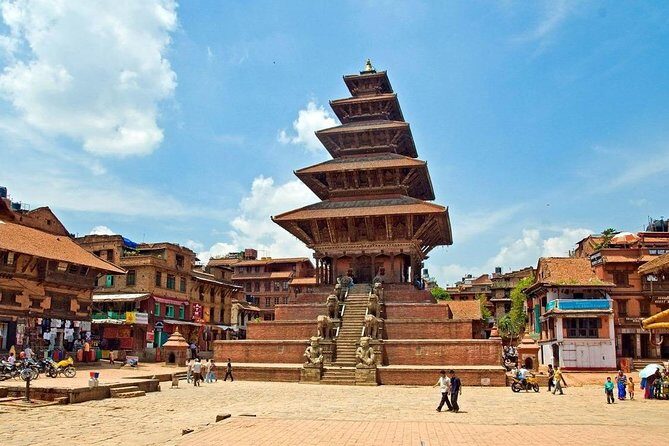
Nyatapola Temple is another core stop, with about 30 minutes here. It’s a five-storeyed Hindu temple in pagoda style, erected by Bhupatindra Malla.
This is a good spot to pause and look up. The temple shape reads strongly from different angles, and the tiers pull your eyes upward like a natural guide. It’s also a place where a guide’s explanation can make the symbols click, turning “nice temple” into something you remember.
In reviews, people often call Bhaktapur “amazing” and highlight the temples as a big reason why the day works. If you’re a history-and-architecture type, Nyatapola is the kind of stop that earns its time.

Pottery Square and Dattatreya Temple: the quieter Newari moments
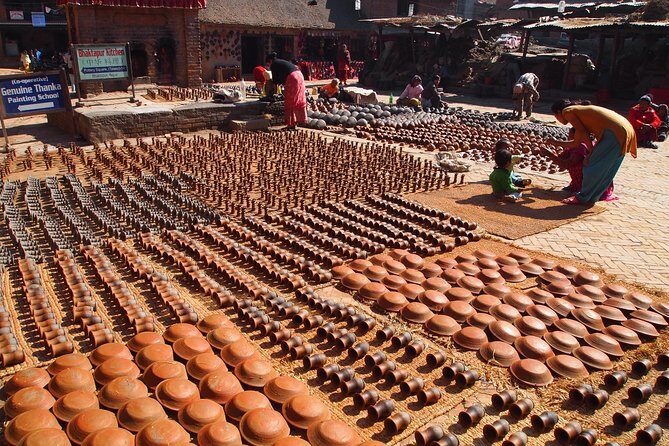
The day also includes small, practical stops that add real texture. Pottery Square is about 30 minutes, down shop-lined alleyways leading to Taumadhi Tole. You’ll see potter’s wheels and rows of clay pots drying.
This part of Bhaktapur feels like the city’s daily life moving in the background of the major monuments. It’s also a nice change of pace if you’ve been temple-thrill all morning and want something more hands-on and everyday.
Then you have Dattatreya Temple, about 30 minutes, at the east end of Tachupal Tole. It was originally built in 1427, and it’s said to have used timber from a single tree. Even if you don’t chase that fact like a trivia hunter, it helps you appreciate why old Nepal architecture has a sense of solidity.
Nagarkot: viewpoints are the product, so manage weather expectations
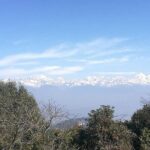
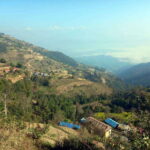
Nagarkot is described as a popular hill station and Himalayan viewpoint closer to Kathmandu. The tour includes about one hour at Nagarkot plus a stop at the Nagarkot View Tower for about 30 minutes.
Here’s the honest truth: the views are conditional. The info states that mountain views are only visible on clear days without clouds. On paper, you might even catch views all the way toward Mt. Everest, but you should treat that as a possibility, not a promise.
This matches the real-world pattern in feedback. Some people were lucky with clear skies and saw impressive ranges. Others arrived in foggy or hazy conditions and felt like the money would have been better spent elsewhere. That does not mean the tour is bad—it means Nagarkot is a weather lottery.
Practical tip: if the day starts cloudy, it’s smart to keep expectations flexible. Your best approach is to enjoy the viewpoint stop as a serene hill break even if the mountains hide.
How to plan for sunrise or sunset without losing your schedule
Nagarkot is famous for sunrise and sunset. The tour notes that if you want sunrise or sunset, you should inform in advance so they can arrange the pick-up time.
So what should you do? If you’re set on a golden-hour payoff, choose a day when the forecast looks better and tell the operator you want the early timing. Also remember that clouds can still ruin the show, but at least you’re giving yourself the best chance.
Even in less-than-perfect conditions, the hill ride itself can be a highlight. People talk about the drive up the mountain and the changing views, even when the distant peaks were missing.
The drive time reality: bumpy roads and traffic on the return
The Kathmandu valley commute can be slower than the sightseeing. One review-like takeaway you should plan around: traffic can build on the way back, and you might find the return takes longer than the forward trip.
Also, the ride to Nagarkot is described as having practically no road or very bad condition in some cases, which can make it bumpy. If you get motion sick easily, it’s worth taking that seriously. The tour uses a private vehicle, but comfort can’t fully erase road conditions.
If you’re traveling with kids or someone who gets uncomfortable on winding roads, build in patience. The upside is that the day is shorter—5 to 6 hours—so you’re not trapped for an entire afternoon.
Shopping and food: keep it optional and it stays fun
The tour overview includes free time to shop for handicrafts. That’s a good add-on if you treat it like a browse, not a must-do stop.
Bhaktapur is one of those places where you can find souvenirs that feel tied to the city—especially if you’re paying attention to carved wood, temple-inspired items, and simple local crafts rather than generic trinkets. If you want to keep the day relaxed, use the shopping window for quick browsing and choose one or two items you truly like.
On the food side, nothing is listed as included, so you’ll need to plan meals on your own. That’s fine because you’re not stuck eating a set menu at a set time. It does mean you should think ahead if you’re hungry during the commute.
How long the day really is (and where your time goes)
The tour duration is listed as 5 to 6 hours. In that window, Bhaktapur takes most of your walking time, and Nagarkot is a viewpoint-style stop.
A typical flow looks like this:
- Time in Bhaktapur Durbar Square first, with time to wander
- Then palace and temple stops (55 Window Palace, Nyatapola)
- Then the pottery and Dattatreya Temple details
- Finally, the Nagarkot viewpoint sequence (Nagarkot + View Tower)
If you like structure, this schedule is a win. If you want a slow, long wander through one place, this might feel like you’re moving. Still, the day is built to cover the big hits without spending your whole trip in transit.
Who should book this tour—and who might want a different plan
This tour is best for you if:
- You want Bhaktapur’s architecture and temples in one day
- You like a private guided experience instead of self-guided chaos
- You care about both culture in the city and a Himalayan viewpoint break
- You’re traveling with people who want comfort on the ride (private AC transport helps)
You might consider a different day plan if:
- Clear mountain views are your top priority and you hate weather uncertainty
- You’re very sensitive to bumpy roads or motion
- You’ll be disappointed if Nagarkot doesn’t deliver peak panorama conditions that day
Should you book it? My practical take
I’d book this tour if you want a high-value day that mixes UNESCO Bhaktapur culture with a realistic shot at Himalayan views. The private pickup, English-speaking guide, and focused stops make the 5–6 hour format work, and it’s priced reasonably for what you get.
But if you’re going purely for Everest-style bragging rights, be smart about expectations. Nagarkot is weather-dependent. Your best move is to go with the mindset that Bhaktapur alone is worth the trip, and Nagarkot is the bonus.
FAQ
FAQ
How long is the Bhaktapur and Nagarkot day tour?
It’s listed as about 5 to 6 hours.
What does the $20 per person price include?
The tour includes hotel pickup and drop-off, a professional English-speaking guide, private air-conditioned transportation, and all taxes.
What is not included in the price?
Monuments entrance permits and fees are not included (2000 Rupees per person). Meals and drinks and gratuities for the guide and driver are also not included.
Do I get a private group for this tour?
Yes. It’s a private tour/activity, so only your group participates.
Can I see the Himalayas from Nagarkot during the tour?
You can see panoramic views only when the weather is clear and without clouds. Everest views are possible on clear days, but not guaranteed.
Is sunrise or sunset possible from Nagarkot?
Yes. Nagarkot is famous for sunrise and sunset. If you want either, inform in advance so the provider can adjust your pick-up time.
What stops will we visit in Bhaktapur?
You’ll visit Bhaktapur Durbar Square, the 55 Window Palace, Nyatapola Temple, Pottery Square, and Dattatreya Temple.
Do I get time to shop for handicrafts?
Yes. The tour overview notes free time to shop for handicrafts.