REVIEW · KATHMANDU
Kathmandu: Full Day Top 4 UNESCO Tour with Lunch – Private/Group
Book on Viator →Operated by Luxury Holidays Nepal Pvt. Ltd. · Bookable on Viator
Four UNESCO stops, one well-run day.
This is a tight Kathmandu Valley circuit that hits major UNESCO sites without wasting hours in transit. I especially like the included lunch (handy when you’re moving fast) and the way the day stays structured enough to cover Swayambhunath, Patan Durbar Square, Pashupatinath, and Boudhanath in about 5–6 hours. One heads-up: entrance fees are not included in the basic setup, so you’ll need to budget extra unless you choose the all-inclusive option.
You’ll also get the comfort piece: round-trip transportation, an air-conditioned vehicle, and an English-speaking guide. Guide names that often come up include Sumit, Anon, Shanti, Sajina, Ram, and others, with praise for patient explanations and good pacing—so you can ask questions instead of just snapping photos and moving on.
In This Review
- Quick hits before you go
- The 5–6 hour UNESCO circuit that actually fits a schedule
- Getting around: hotel pickup, air-conditioning, and less guesswork
- Stop 1: Swaymbhunath Monkey Temple views and UNESCO atmosphere
- Stop 2: Patan Durbar Square and Newar craftsmanship in about an hour
- Stop 3: Pashupatinath Temple on the Bagmati River (and what to expect)
- Stop 4: Boudhanath Stupa scale, peace, and a good reset
- Lunch box reality check: what’s included and how it helps
- Price and value: why the budget can work (or not)
- How the day’s pacing feels in real life
- What to watch for at each site (so you’re not surprised)
- Who this tour suits best
- Should you book the Kathmandu Top 4 UNESCO day?
- FAQ
- What sites are included in the Kathmandu Top 4 UNESCO tour?
- How long does the tour take?
- Is hotel pickup and drop-off included?
- Is lunch included?
- Are entrance fees included?
- Is this tour private or group?
- Is there an English-speaking guide?
- Do I get a ticket on my phone?
- What happens if the weather is bad?
- What is the cancellation window?
Quick hits before you go
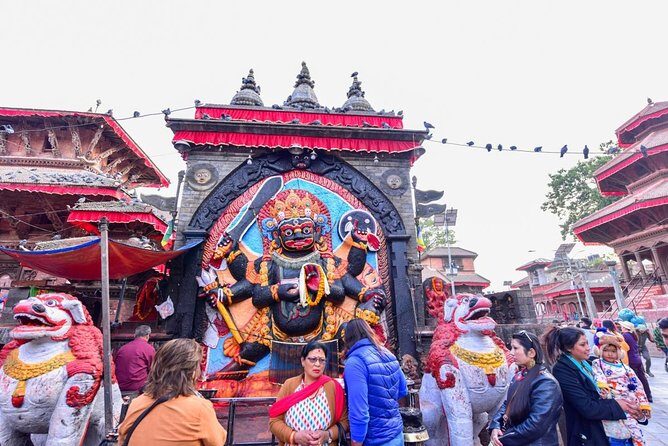
- Four UNESCO sights in one day: Swaymbhunath, Patan Durbar Square, Pashupatinath, and Boudhanath
- Hotel pickup and drop-off by private vehicle, with air-conditioned transport
- Lunch is included in the basic option (water, muffin, donut, fruit, juice)
- All-inclusive option can cover entrance fees along with food and drinks
- Short stop times keep the day moving, which is great if your schedule is tight
- Pashupatinath can be intense, including optional views of cremation activity by the Bagmati River
The 5–6 hour UNESCO circuit that actually fits a schedule
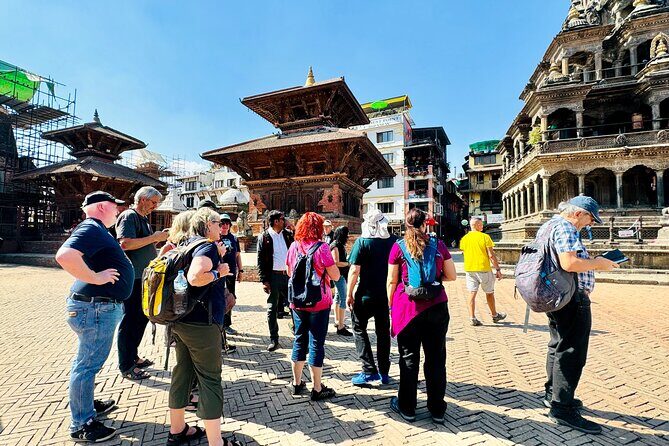
Kathmandu can eat your time. Traffic, queue lines, and “let’s just wander” moments add up fast. This tour is designed to keep you moving with a clear plan: four big sites, grouped across the valley, in roughly half a day’s worth of effort.
The vibe is practical: you’re not trying to do everything in sight. You’re choosing the highlights that explain how Nepal’s Hindu and Buddhist worlds show up in real places. If you’re only here for a short stay, this is an easy way to get your bearings fast—without turning your day into a blur of random taxis.
There’s also room to ask questions. People mention guides like Sumit and Anon being patient and talkative in a good way—turning “what am I looking at?” into “oh, I get it.”
You can also read our reviews of more private tours in Kathmandu

Getting around: hotel pickup, air-conditioning, and less guesswork
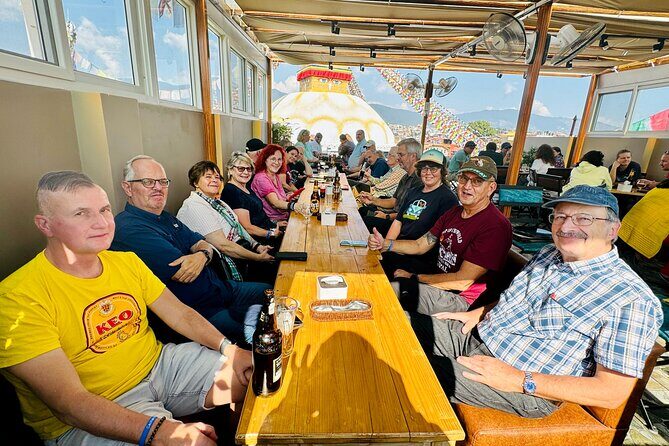
You get pick up from and drop off to your hotel by private vehicle. That sounds like a small thing until you do it the hard way—standing around for transport, figuring out timing, and losing daylight.
The tour includes air-conditioned private transportation and covers round-trip travel. That matters in Kathmandu because your day is already packed. Less logistical stress means you can spend your energy looking at the temples and stupa architecture instead of negotiating for the right bus.
One note: some days may use different vehicle types. A recent experience mentioned an electric vehicle, which is a nice bonus if you care about a lower-emissions option—if that matters to you, it’s worth asking when you book.
Stop 1: Swaymbhunath Monkey Temple views and UNESCO atmosphere
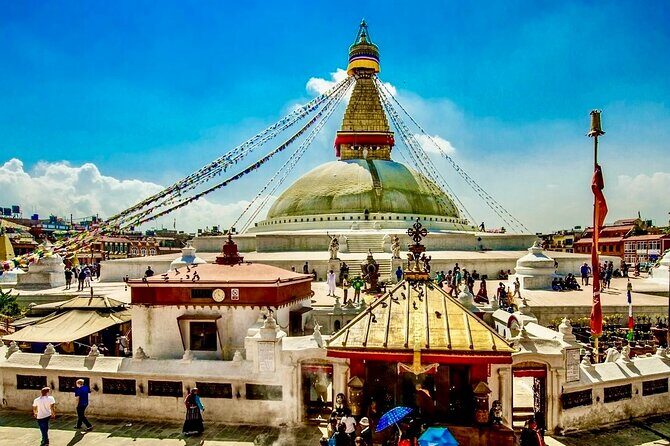
Swaymbhunath (the Monkey Temple) is perched on a hilltop west of Kathmandu. It’s one of Nepal’s oldest and most sacred sites, with over 2,500 years of history, and it’s also UNESCO-listed. The setting alone helps you understand why it’s a “go here” stop: you’re above the city, looking down at Kathmandu’s texture while you’re surrounded by religious life below.
In the itinerary, Swaymbhunath is planned for about 40 minutes. That’s enough for a quick orientation—spot the stupa, notice the details, and take in the overall mood. If you tend to slow down at one place, this is where you might wish you had an extra half hour. But as part of the full circuit, it makes sense.
Entrance tickets aren’t included for this stop. If you want to avoid surprises, plan for extra costs for monument entry unless you select the all-inclusive package.
Stop 2: Patan Durbar Square and Newar craftsmanship in about an hour
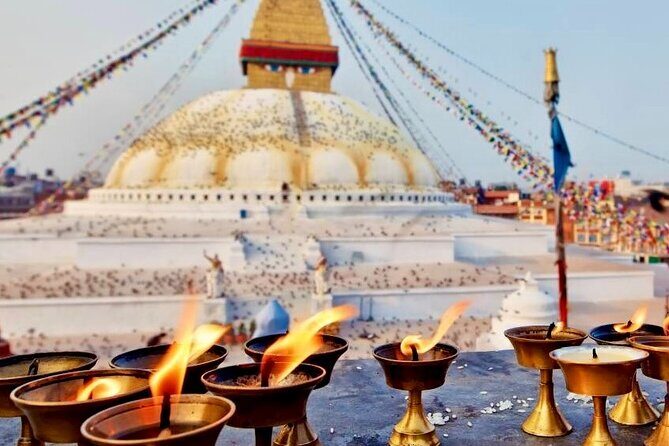
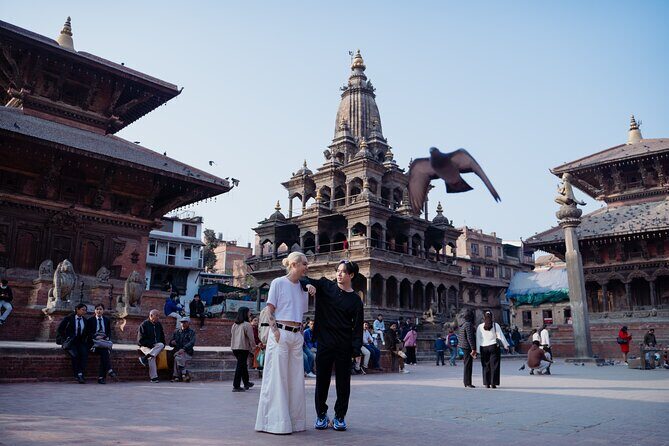
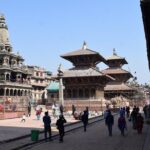
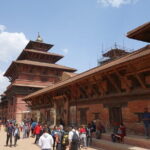
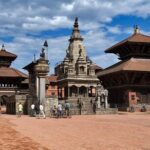
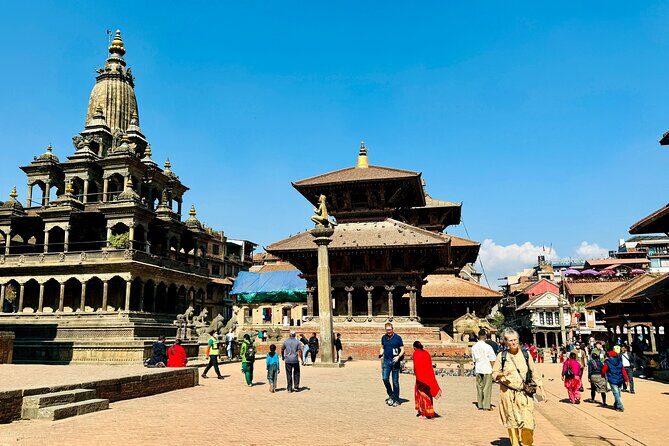
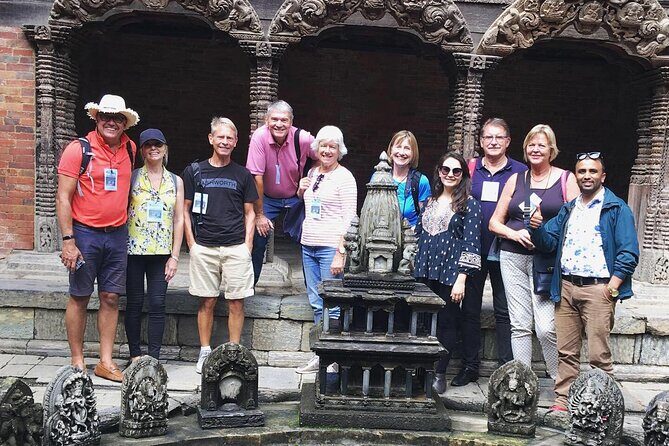
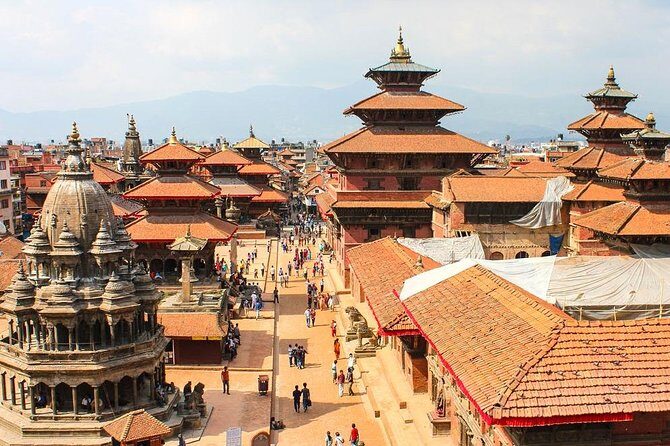
Patan Durbar Square sits in Lalitpur and is a standout for Newar architecture. It’s connected to the Malla kings of Patan, and the square is basically an open-air lesson in how political power, art, and religion used to overlap.
You’ll have around 1 hour here. That usually lands well for this type of site. You can do the “big picture” first—orientation, key structures, the main square layout—then return to a couple of points of interest for closer viewing.
This stop also gives your brain a change of pace after Swaymbhunath. Instead of a hilltop stupa atmosphere, you’re in a more architectural, craft-focused environment. The carvings and proportions can feel dense, so having a guide helps you not get lost in details you don’t know how to read yet.
Like the others, monument entrance fees aren’t included unless you’ve chosen the all-inclusive setup.
Stop 3: Pashupatinath Temple on the Bagmati River (and what to expect)
Pashupatinath Temple is one of the holiest Hindu shrines in the world, dedicated to Lord Shiva, and it’s UNESCO-listed. It sits by the Bagmati River, and that river setting matters. It’s where ritual life is part of the landscape, not an added performance.
The itinerary allows about 1 hour at Pashupatinath. That gives you time for the main temple area and for soaking up the religious atmosphere without turning your visit into a long stretch of standing and waiting.
One practical consideration: Pashupatinath is also known for cremation activity along the river. Some people find it very moving or difficult to watch. In past experiences, guides have been careful about choice—there’s no pressure to watch if you’d rather not. If you think you might find it hard, decide early that you can step back and keep your focus on the temple area.
Your guide can help you understand what you’re seeing—especially around how faith is practiced in daily, visible ways. People specifically mention guides like Anon explaining what’s happening on-site in a way that makes the experience feel respectful and clear.
Entrance fees apply unless you’ve selected the all-inclusive option.
You can also read our reviews of more tours and experiences in Kathmandu


Stop 4: Boudhanath Stupa scale, peace, and a good reset
Boudhanath Stupa is one of the largest and most important Buddhist stupas in the world. It’s UNESCO-listed too, and the scale is a big part of why it hits so hard. Even if you don’t know every term, you can feel the space and intention.
In the schedule, Boudhanath is allotted about 40 minutes. That’s enough time to see the stupa from a few angles, notice the activities around it, and take a breath after Pashupatinath’s intensity.
If you’ve had a long morning, Boudhanath is where your day can feel less about absorbing and more about observing. It’s a good mental reset because you’re moving from Shiva-focused ritual space into a Buddhist stupa environment where many people come to reflect, pray, and walk around in slow circles.
As with other sites, entrance tickets are extra in the basic option.
Lunch box reality check: what’s included and how it helps
Food is included, and that’s a big value win on a packed day. In the basic lunch box option, you get water (500ml bottled), a muffin, donut, banana, seasonal fruit, and juice. It’s simple, sweet-leaning, and meant to keep your energy steady while you’re between sites.
In addition, there’s an all-inclusive option that can cover food, soft drinks, and entrance fees, with a Khana set or a choice of dishes. If you hate the idea of adding extra payments during the day, this option can make your schedule calmer.
Either way, treat lunch as fuel—not a destination meal. Kathmandu is full of tempting restaurants, but you’ll lose time and momentum. This tour keeps your plan tight so you can enjoy the sites instead of searching for food.
Price and value: why the budget can work (or not)
The headline price is low, listed at $10 per person, which is why many people pick it for a first pass at Kathmandu’s UNESCO highlights.
Here’s the honest math to keep you in control:
- Entrance fees are not included in the basic setup, listed as $20 per person.
- If you choose the all-inclusive option, entrance fees can be covered along with meals and soft drinks.
So the value depends on which option you take. If you’re the kind of traveler who wants a clean, predictable cost, all-inclusive can be easier. If you don’t mind paying monument entry separately and just want the best base price, the basic option can still work well.
Either way, your day includes hotel pickup and drop-off, an English-speaking guide, and air-conditioned private transport. For a four-site routing, that’s where the money is going—and it’s also why it tends to feel efficient instead of chaotic.
How the day’s pacing feels in real life
The tour is built to move. Some people love this because it keeps the day tight and doesn’t drag. Others mention feeling like certain sites deserve more time.
Here’s the way I’d think about it before booking:
- If you’re traveling with limited hours, this is the right structure. You’ll leave with photos, context, and a clear sense of what Kathmandu’s “big four” are.
- If you like slow museum-style visits and you want to read every inscription, plan to return later—or do fewer stops on a different day.
Your guide can also shape the experience in small ways. People mention Ram being flexible if you ask about a quick supermarket stop during the tour. That kind of adjustment can make the day feel more like your trip rather than a fixed conveyor belt.
What to watch for at each site (so you’re not surprised)
Each stop is a world, so your expectations should shift.
- Swaymbhunath: hilltop sacred space, UNESCO atmosphere, quick orientation time (about 40 minutes).
- Patan Durbar Square: architecture and historical palace square feel; plan for a focused hour (about 1 hour).
- Pashupatinath: intense ritual setting by the Bagmati River; you might see or hear about cremation activity, and you can opt out of watching (about 1 hour).
- Boudhanath: Buddhist stupa scale and calmer pace; about 40 minutes works well here.
Also remember: admission tickets aren’t included in the basic plan. If you’re the type who hates last-minute logistics, choose all-inclusive or plan to pay the listed entrance fees on the day.
Who this tour suits best
This tour is a strong fit if:
- You have limited time in Kathmandu and want the big UNESCO highlights in one route
- You prefer guided context over wandering without a clue
- You want hotel pickup and comfortable transport so you’re not juggling taxis
- You’d like included food so you don’t spend half your day hunting for snacks
It may be less ideal if:
- You want long stays at one temple or square and plan to go deep on details
- You’re very sensitive to scenes around cremation activity and would rather avoid that environment entirely
Should you book the Kathmandu Top 4 UNESCO day?
Yes, I’d book it if your goal is smart coverage. It’s one of the easier ways to see the Kathmandu Valley’s top UNESCO sites without turning your day into a logistical puzzle. The included lunch helps, the hotel pickup saves time, and the four-site lineup hits both Hindu and Buddhist cultural landmarks in a single arc.
If you care about keeping costs predictable, strongly consider the all-inclusive option so entrance fees and meals are bundled. And if Pashupatinath feels emotionally heavy for you, decide in advance that you can stay focused on the temple area and skip any viewing you don’t want.
If you want a first great day in Kathmandu—this is a solid choice.
FAQ
What sites are included in the Kathmandu Top 4 UNESCO tour?
The tour visits Swaymbhunath, Patan Durbar Square, Pashupatinath Temple, and Boudhanath Stupa.
How long does the tour take?
It runs about 5 to 6 hours.
Is hotel pickup and drop-off included?
Yes. Pickup from and drop-off to your hotel is included by private vehicle.
Is lunch included?
Yes. The lunch box includes water (500ml bottled water), a muffin, donut, banana, seasonal fruit, and juice.
Are entrance fees included?
Entrance fees are not included in the basic option and must be paid directly by guests (listed as $20 per person). An all-inclusive option can include entrance fees.
Is this tour private or group?
You can choose group, private, or ticket-inclusive options. The tour is described as private/activity with only your group participating.
Is there an English-speaking guide?
Yes. The tour includes an English-speaking professional tour guide.
Do I get a ticket on my phone?
Yes. A mobile ticket is provided.
What happens if the weather is bad?
The experience requires good weather. If it’s canceled due to poor weather, you’ll be offered a different date or a full refund.
What is the cancellation window?
You can cancel for a full refund up to 24 hours before the experience’s start time. Within 24 hours, the amount paid is not refunded.