REVIEW · KATHMANDU
Folklore and Everyday Life in Ancient Patan
Book on Viator →Operated by Travel Nextdoor · Bookable on Viator
Patan’s stories hide in plain sight. This walking tour in ancient Patan is built around courtyards, monasteries, and shrines instead of the usual postcard stops, so you learn how faith and folklore show up in daily life across the Kathmandu Valley. I like the way it gives context to the tiny details you’d miss alone, especially around Pimbahal’s monastery atmosphere and ornate woodwork connected to more than 4,000 ordained monks.
My other big win is the guide energy. Names like Sandip come up for a reason: the talk is easygoing, full of local culture and Hindu-Buddhist themes, and it adds humor while you walk through real neighborhoods. One consideration: Patan Durbar Square isn’t covered, so if that’s your main target, you’ll need to visit it separately (with additional entry fees for parts of the complex).
You’ll be walking for about 2 to 2.5 hours with a small group (max 10), meeting at Patan Dhoka and ending near Swotha Square with a short walk to Durbar Square if you want to continue.
In This Review
- Key highlights worth planning for
- Patan Courtyards: why this walk feels more local than the usual highlights
- Route overview: Patan Dhoka start, Swotha Square finish, and the Durbar Square choice
- Stop 1: Pimbahal and the monastery world of 4,000+ ordained monks
- Stop 2: Nyakhachowk courtyards, falchaa resting areas, and ancestral shrines
- Stop 3: Nagbahaa’s large courtyard and how Greek-Hellenistic influence shows up
- Stop 4: Swotha Square temples, shrines, tea stops, and your Durbar Square option
- Sandip’s style (and what to expect from a small group)
- Price and value: what $65 gets you in Patan time
- Logistics that matter: timing, getting there, and keeping the walk comfortable
- Who should book this Patan walk (and who might pass)
- Should you book it?
- FAQ
- FAQ
- Where is the meeting point for the Patan tour?
- Where does the tour end?
- Is Patan Durbar Square included in the tour?
- How long is the walking tour?
- What’s included in the ticket price?
- Is pickup or drop-off included?
- How many people are in a group?
- Is the tour suitable for most people?
- What if the weather is bad or I need to cancel?
Key highlights worth planning for
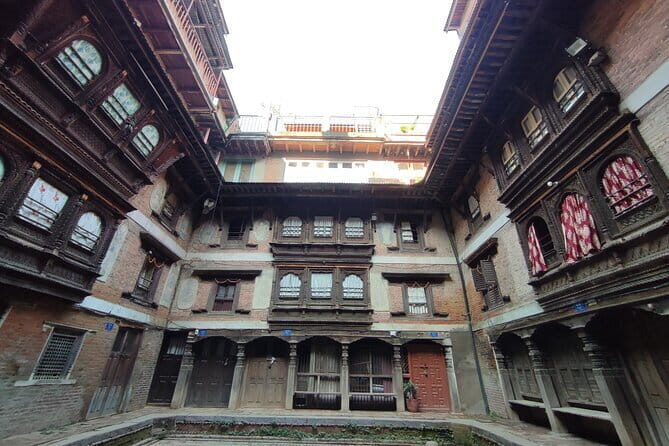
- Courtyards as the main stage: you move from one traditional courtyard to the next, seeing how faith and community life share space.
- Pimbahal monastery focus: the route starts with a major Newar Buddhist monastery and its deep monastic presence (4,000+ ordained monks).
- Architecture you can actually point to: you’ll hear specific terms tied to design and daily routines, like falchaa resting areas and ancestral shrines.
- Religion on the same street as daily errands: you’ll connect Newar Buddhist and Tantric Hindu traditions to what people do in everyday Patan life.
- An unexpected art-history thread: the tour links iconography to older globalization, including Greek/Hellenistic influence.
- Small group pacing: with a maximum of 10 people, questions and slower moments don’t get steamrolled.
Patan Courtyards: why this walk feels more local than the usual highlights
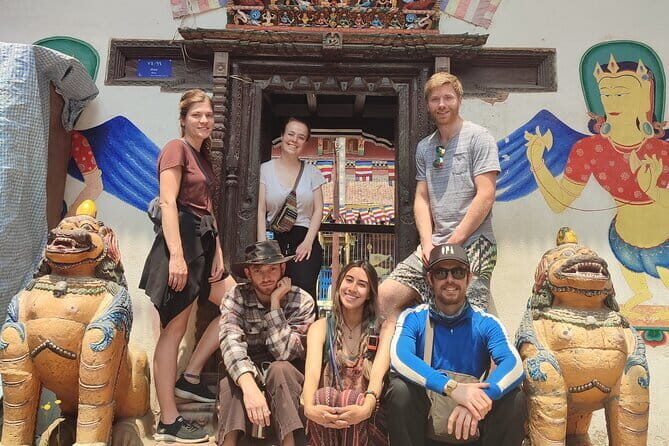
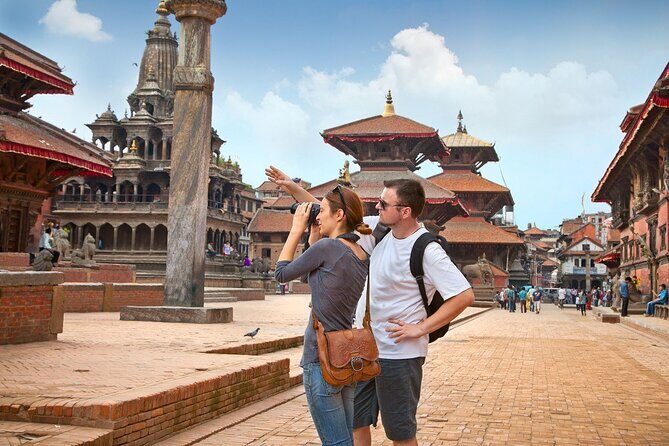
Patan (Lalitpur) can look like a place where history is sealed behind walls. This tour nudges you into the opposite mindset: history is lived. The focus stays on the narrow streets and shared courtyards that sit next to palaces and shrines, which means you’re not just staring at temples. You’re learning how the neighborhood’s spiritual and social systems overlap.
That matters because Patan’s most memorable moments aren’t always the biggest monuments. They’re the spaces where people would have gathered for worship, meetings, rest, and offerings. You get a guide who connects those spaces to folklore and faith practices, including Newar Buddhism and Tantric Hinduism, and explains how those traditions shape everyday life in Patan today.
This is also why the tour’s decision to skip Patan Durbar Square makes sense. Instead of stacking one major complex on top of another, you get a more nuanced view of how the old town evolved. You’ll still finish close enough to Durbar Square to go on your own, but the core experience stays more neighborhood-based.
You can also read our reviews of more tours and experiences in Kathmandu.


Route overview: Patan Dhoka start, Swotha Square finish, and the Durbar Square choice
You start at Patan Dhoka (the entrance gate area), and the tour ends at Swotha Square. That finish point is practical: Swotha Square is only a couple minutes’ walk from Patan Durbar Square, so you can easily tack on independent time afterward if you want the big palace-temple complex.
One key note: the tour is intentionally built so it doesn’t cover Patan Durbar Square. If you hoped for a guided walk inside the main palace complex, this may feel like a gap. But if you’re chasing the “how does this city actually work” answer, the trade-off is worth it. You’ll leave with better street-level context, which makes Durbar Square more understandable when you do see it later.
Timing is also realistic. Plan for 2 to 2.5 hours walking through old-town lanes and courtyard thresholds. The group is small (max 10), and you’ll have an experienced local guide leading the route. The ticket is a mobile ticket, which keeps things simple on the day.
Stop 1: Pimbahal and the monastery world of 4,000+ ordained monks
The first major anchor is Pimbahal, described as a respected and embellished Buddhist monastery in the Patan area. The scale alone sets the tone: it’s associated with more than 4,000 ordained monks in the monastic order.
What you’ll get here isn’t just a “big monastery” photo stop. The tour frames these traditional courtyard settlements as places where spiritual practice and indigenous knowledge overlap. That makes Pimbahal the perfect opener, because it trains your eyes. You start to notice how religious life isn’t separate from the architecture and street patterns around it.
You’ll also be in a spot where ornate craft is part of the message. The tour highlights intricate woodwork, so if you like details, take your time. Even though the stop is short (about 30 minutes), it’s paced to let you absorb how a monastery of that size can shape the rhythm of an old neighborhood.
Practical note: since entrance is listed as free for this stop, you’re not wrestling with extra fees at the first courtyard. Still, keep your expectations flexible if you arrive during busy worship moments.
Stop 2: Nyakhachowk courtyards, falchaa resting areas, and ancestral shrines
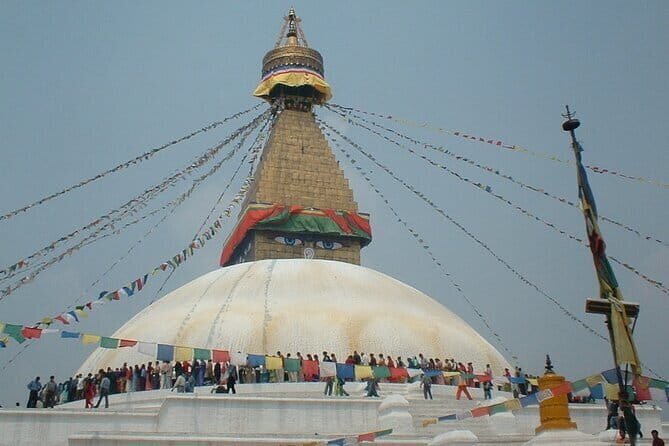
From Pimbahal, the walk moves into a quieter path where you can observe traditional design features more clearly. The tour calls out falchaa—resting areas—and also points you toward ancestral shrines and vernacular houses.
Then you enter the courtyard area of Nyakhachowk. The highlight here is that it houses one of the mos (the text is cut off, but it clearly signals there is a mosque inside the broader courtyard environment). That detail is valuable because it reinforces a theme of the tour: in this part of Patan, faith isn’t locked into one building type or one religious label. It shares space with daily life and with the architectural logic of courtyards.
You’ll also get a better sense of how these courtyards function as social connectors. They’re not museum rooms. They’re living structures where family shrines, religious observance, and everyday movement intersect. That’s the kind of information you can’t really “read” from a map.
This stop is about 30 minutes and again has free admission listed for the courtyard segment, so it stays easy on the budget.
Stop 3: Nagbahaa’s large courtyard and how Greek-Hellenistic influence shows up
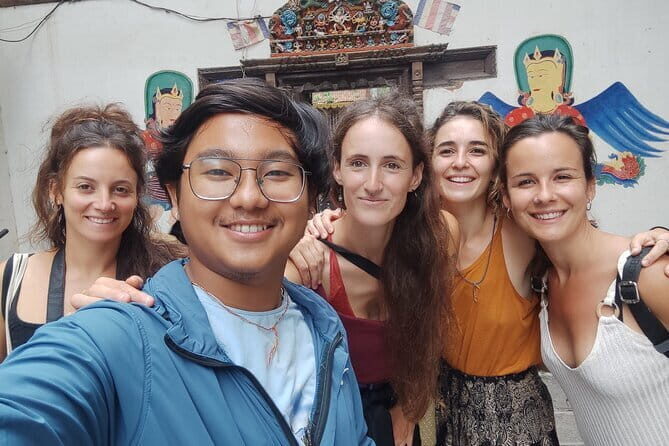
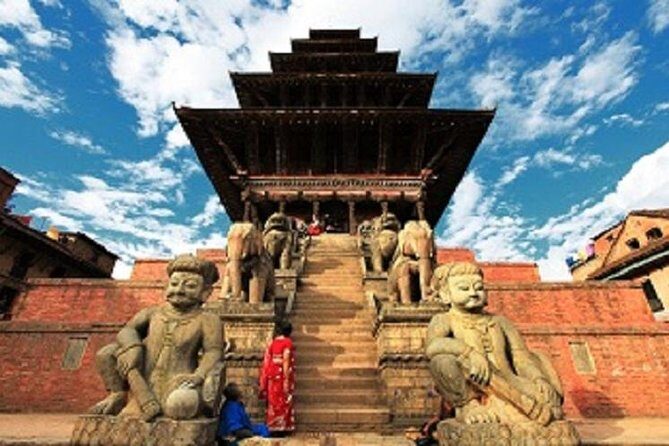
Next comes Nagbahaa (Nag Bahal), noted as one of the largest courtyards in old Patan. Big courtyards change how you experience a city. Smaller spaces can feel intimate; large ones feel communal. You’re in the right mood for the tour’s next theme: how globalization in ancient times shaped traditional art.
This is where the tour gets interesting for people who like cultural history beyond architecture. The discussion includes references to Greek influence and Hellenistic impressions appearing in Buddhist/Hindu iconography. That’s a specific claim, and it’s exactly the kind of idea that helps you connect what you see (ornament, forms, symbolic details) to a wider historical conversation.
It’s a short stop—about 15 minutes—but short doesn’t mean shallow here. The tour uses Nagbahaa as a conversation anchor. You look at the setting, then you’re guided toward the art-history angle.
Again, admission is listed as free for this courtyard stop, so you’re paying only for time and guidance, not for entry.






Stop 4: Swotha Square temples, shrines, tea stops, and your Durbar Square option
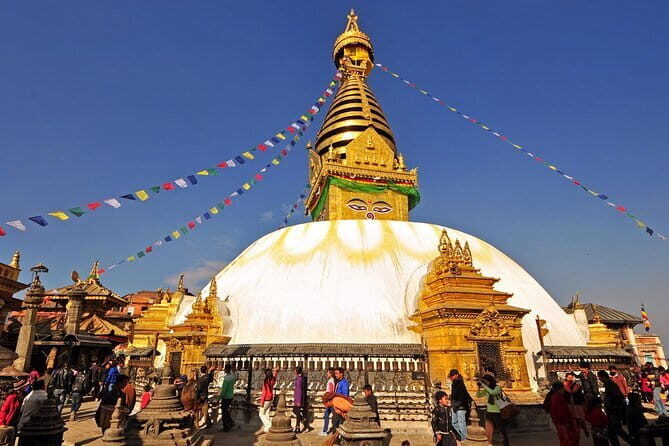
The walk closes at Swotha Square, a pleasant open area with several temples and shrines, plus tea shops. Ending in a square like this is practical. After courtyard-to-courtyard walking, you get a moment to breathe and reset your brain.
This part is about 15 minutes, and the stop is also listed as free.
The best part of the ending logistics is what comes next: you can continue to Patan Durbar Square on your own. The finish is only a couple minutes’ walk away, and if you want to see more—especially the museum inside the old palace complex—the tour notes that it’s worth it, with extra admission fees.
That setup lets you choose your own pace. If you’re temple-courtyarded out, you can stop here. If you want the major monument complex, you can do it with a clearer understanding of the surrounding old-town pattern.
Sandip’s style (and what to expect from a small group)

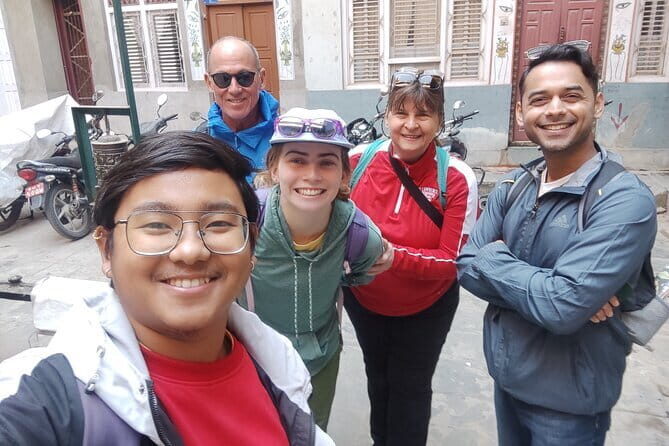
One reason this tour earns a strong reputation is the guide delivery. Names like Sandip appear with consistent praise: he’s described as attentive, easygoing, and very good at tying local folklore and religion to what you’re actually standing in.
You should also expect a talk style that feels like walking with someone who knows the neighborhood rhythm, not reciting a script. Humor shows up, which matters because the walk can be mentally busy—there are lots of details in religious iconography, courtyard functions, and architecture terms.
The group size limit (max 10) is part of the value. Smaller groups tend to make it easier to ask questions and to pause when you see something you want to look at longer. Since you’ll be moving through narrow streets and entering courtyards, a smooth pace helps.
You’ll also be traveling with an experienced local guide, which is where the real payoff sits. Architecture is one thing. Explanations that connect faith practices to daily life is another.
Price and value: what $65 gets you in Patan time
At $65 for about 2 to 2.5 hours, this is priced like a proper guided experience rather than a casual stroll. You’re paying for:
- a knowledgeable local guide
- a structured route through multiple courtyards and faith-related spaces
- a mobile ticket
- short stops where admission is listed as free
The absence of pickup/drop-off keeps the cost down, too. That’s common in old city areas where meeting at a gate is easier than trying to drive closer.
To judge value, compare this to time lost wandering alone. If you show up in Patan’s old streets without a guide, you can see beauty but you may miss the “why.” Here, the talk focuses on how Newar Buddhism and Tantric Hinduism show up in everyday life, and it adds the folklore-and-myth angle that turns buildings into stories.
This is also a tour you can use as a foundation. Once you understand how courtyards and shrines fit together, you’ll get more out of any later visit—including Patan Durbar Square, where you may pay extra for museum access.
Logistics that matter: timing, getting there, and keeping the walk comfortable
This tour starts at 10:00 am. The meeting point is at Patan Dhoka, and you end at Swotha Square.
Since pick up and drop off aren’t included, you’ll want to plan your own arrival. The tour notes it’s near public transportation, which helps.
Comfort-wise, you’re walking in the old town with narrow streets and courtyard entries. Wear shoes that handle uneven stone and take a little time to slip in and out of viewpoints. Also, remember it’s a faith setting as well as a street one. Move respectfully and stay mindful when you’re near shrines and monastery spaces.
Weather is important. The tour states it requires good weather, and if it’s canceled due to poor weather, you’ll be offered a different date or a full refund. In other words, don’t schedule this as your one-and-only plan if you’re visiting Patan during a variable forecast window.
Who should book this Patan walk (and who might pass)
Book this if you:
- want a neighborhood-based view of Patan, not just the top palace complex
- like explanations tied to courtyard life and religious practice
- want context for Hindu and Buddhist themes across everyday spaces
- enjoy art-history connections, including the Greek/Hellenistic iconography thread
You might choose something else if you:
- want a guided, in-depth tour specifically inside Patan Durbar Square itself
- prefer fewer faith-related stops
- have very limited time in Patan and need a single “big ticket” complex
Should you book it?
If your goal is to understand Patan as a living place—where Newar Buddhist monastery spaces, Tantric Hindu traditions, and courtyard community life overlap—this is an excellent use of a morning. The small-group format, the courtyard route, and the guide’s story-driven explanations are the core reason it’s worth your money.
I’d book it if you’re excited by details and you like learning how a city’s beliefs shape its everyday layout. I’d be cautious only if Patan Durbar Square is your must-see priority, since this route intentionally leaves that complex for you to explore independently afterward.
FAQ
FAQ
Where is the meeting point for the Patan tour?
The tour meets at Patan Dhoka, Patandhoka Road, Lalitpur 44600, Nepal.
Where does the tour end?
The tour ends at Swotha Square, Lalitpur 44600, Nepal. It’s a couple minutes walk from Patan Durbar Square.
Is Patan Durbar Square included in the tour?
No. Patan Durbar Square is not covered during the tour, but you can visit it independently afterward.
How long is the walking tour?
It lasts about 2 hours to 2 hours 30 minutes.
What’s included in the ticket price?
The tour includes an experienced local guide and you receive a mobile ticket. Admission is listed as free for the courtyard stops on the route.
Is pickup or drop-off included?
No. Pick up and drop off are not included.
How many people are in a group?
The tour has a maximum of 10 travelers.
Is the tour suitable for most people?
The tour notes that most travelers can participate and that it’s near public transportation. Service animals are allowed.
What if the weather is bad or I need to cancel?
The tour requires good weather. If canceled due to poor weather, you’ll be offered a different date or a full refund. You can also cancel for free up to 24 hours in advance for a full refund.