REVIEW · KATHMANDU
Annapurna base camp -9 days
Book on Viator →Operated by NEPAL LION TOURS AND TREKS PVT LTD · Bookable on Viator
Your first sunrise happens before breakfast. This 9-day Annapurna Base Camp trek lines up early mornings, big peaks like Himchuli and Annapurna South, and that special feeling of stepping into the Annapurna Sanctuary after the tree line. I especially love the sunrise wake-up call built into the schedule, because it turns a tough trek day into a memorable payoff.
I also like how much the trip handles for you on the logistics side. You get a licensed English-speaking guide, airport pickup and transfers, permits and paperworks, and your mountain days are covered with breakfasts, lunches, and dinners. On top of that, you’re given a down jacket and sleeping bag to use and return at the end, which helps a lot if you’re traveling light.
One thing to plan for: the porter is not included. You’ll pay $220 per person for a porter, and tips for guides and porters are also not included, so your real total can be higher than the headline price.
In This Review
- Key things I’d circle before you go
- Why the Annapurna Base Camp route feels like more than a checkbox
- Price and Logistics: what $693.34 buys (and what it doesn’t)
- Day 1 in Kathmandu: pickup is included, but the trek rhythm starts later
- Day 2: Phedi and Dhampus—first big views with less drama
- Day 3: Landrung and the oak-forest route—village life and shade
- Day 4: Chhomrong area to Seti Gandaki—rhodo forests and steep steps
- Day 5: Machhapuchhare Base Camp and the sacred no-meat rule
- Day 6: leaving the trees behind for Annapurna Sanctuary and Base Camp
- Day 7: early wake-up for sunrise, then a long descent by Modi Khola
- Day 8: Chhomrong ups and downs plus Jhinu hot springs
- Day 9: Nayapul and the return to Pokhara
- The guide team: names I’d watch for and why people trust them
- Gear and comfort: what’s provided and what you should still plan for
- Who this trek suits best
- Should you book this 9-day Annapurna Base Camp trek?
- FAQ
- Where does the tour start?
- How long is the Annapurna Base Camp trek?
- What is the price per person?
- What’s included in the trek days?
- Are airport transfers included?
- Do I need to pay for a porter?
- Is Kathmandu lodging included?
- Do I get trekking gear?
- What if my plans change?
Key things I’d circle before you go
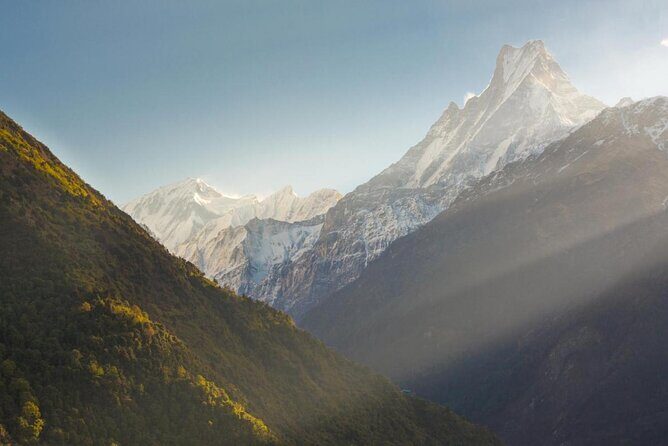
- Sunrise timing is built in so you can catch Annapurna Sanctuary light early
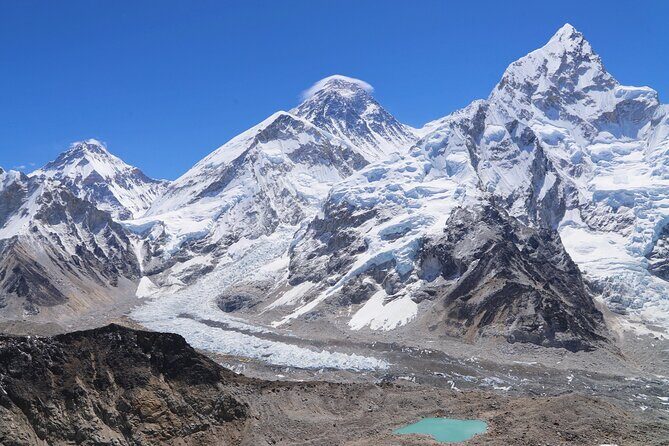
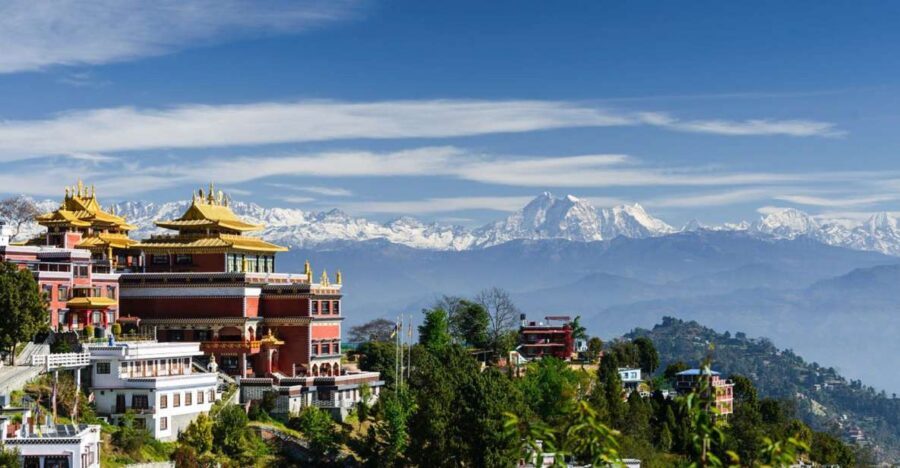
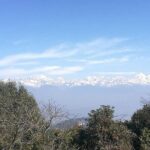
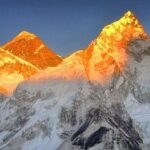
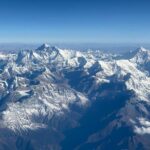
- Big-name views of Himchuli, Annapurna South, and Mt Fishtail (Machhapuchchre)
- Cultural trekking through Gurung and Magar villages on a classic ABC route
- Permits and paperworks handled with a guide who carries a first aid kit
- Down jacket + sleeping bag provided with return after the trek
- Private group experience so it’s only your group, not a giant mixed crowd
Why the Annapurna Base Camp route feels like more than a checkbox
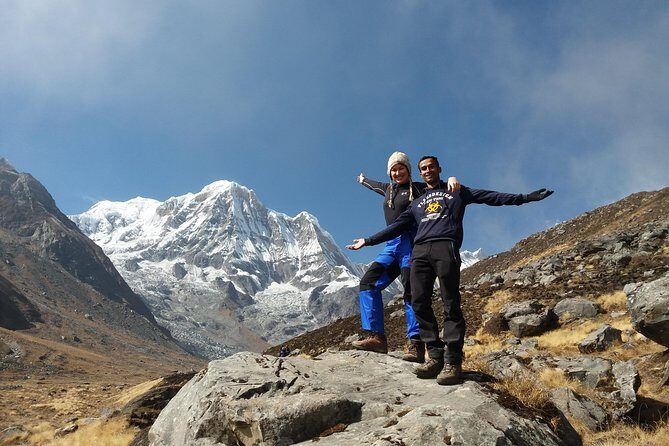
The Annapurna region is one of Nepal’s best-known trekking areas for a reason. On this route, you move through culturally rich Gurung and Magar villages, and you also travel through environments where wildlife is part of the background story—things like snow leopards and blue sheep are mentioned for the upper sub-alpine steppe. If you’re the type who enjoys noticing birds and plant life as you walk, this area also calls out species such as the Impeyan pheasant and blood pheasant.
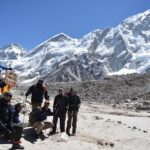
What I like about this specific trek is how it mixes scenery goals with day-to-day walking. You’re repeatedly pulled toward mountain views—Himchuli, Annapurna South, and Mt Fishtail (Machhapuchchre)—and then the route shifts into a more stark, exposed feel when you reach the Annapurna Sanctuary. That transition matters because it changes how the trek feels, not just what you see.
There’s also a cultural angle that’s easy to respect as you go. In the sacred valley near Machhapuchhare Base Camp, you’ll follow a rule where no meat or fish is allowed, tied to Buddhist and Hindu beliefs. Even if you’re not deeply religious, it’s the kind of practice that makes the trip feel real and local instead of like a theme park.
You can also read our reviews of more tours and experiences in Kathmandu.
Price and Logistics: what $693.34 buys (and what it doesn’t)
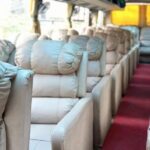
At $693.34 per person for 9 days, this can feel like good value if you compare it to paying for a guide, permits, and all the food and bed nights separately. Your package includes airport pickup and drop services in a private vehicle, plus transport from Kathmandu to Pokhara and back by tourist bus (with an optional flight upgrade at extra cost). It also includes a licensed English-speaking trekking guide, guide accommodation and insurance, and a first aid medical kit carried by the guide.
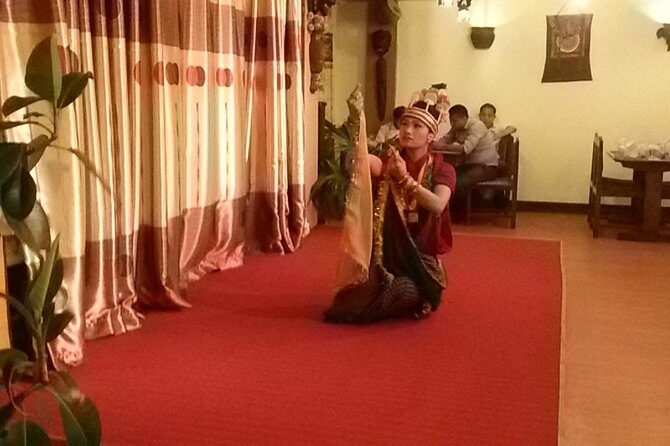
Most importantly for budget planning, your trekking-meal schedule is covered: 9 breakfasts, 9 lunches, and 9 dinners, plus 9 nights of accommodation during the trek. You also get a welcome or farewell dinner in Kathmandu at a cultural restaurant, which is a nice touch if you want one proper meal that’s included rather than another “find something on your own” evening.
Now the not-so-fun parts. International airfare, visa charges, and your travel and medical insurance are not included. Food and accommodation in Kathmandu are not included either, so you’ll want to budget for at least your arrival nights (even though you do get airport transfers). Also, personal expenses—shopping, bar bills, phone use, laundry, hot shower fees, and so on—are on you.
And then there’s that porter cost again. The trek lists a porter at $220 per person, and it also notes tips for guides and porters are not included. If you’re expecting the trek price to cover everything, plan for those add-ons so you’re not surprised later.
Day 1 in Kathmandu: pickup is included, but the trek rhythm starts later
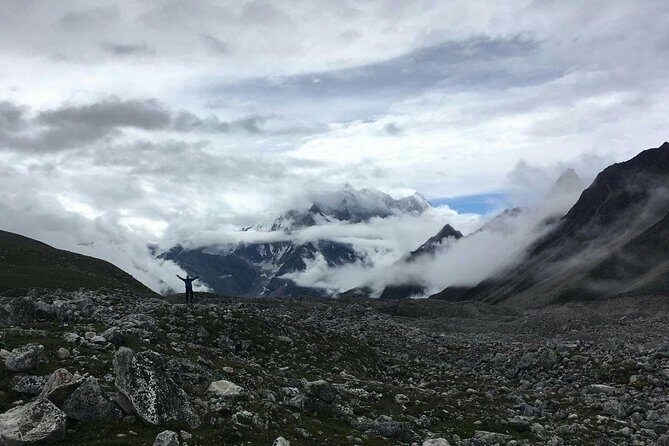
Your meeting point is Tribhuvan Airport in Kathmandu, with a start time listed as 6:30 am. Airport pickup and drop are part of the package in a private vehicle, so you’re not stuck negotiating with taxis after a flight.
But the trek package doesn’t fully start the moment you land. The schedule notes that the package begins from the second day of your arrival, which usually means you’ll have time in Kathmandu on day one to settle and prep. You’ll also have a welcome or farewell dinner included, which can be handy if you want a low-stress first or last evening.
If you’re sensitive to jet lag, this structure can actually help. You don’t jump into altitude-paced walking immediately; you get a buffer day, then the trek kicks off with a drive and trail work.
Day 2: Phedi and Dhampus—first big views with less drama
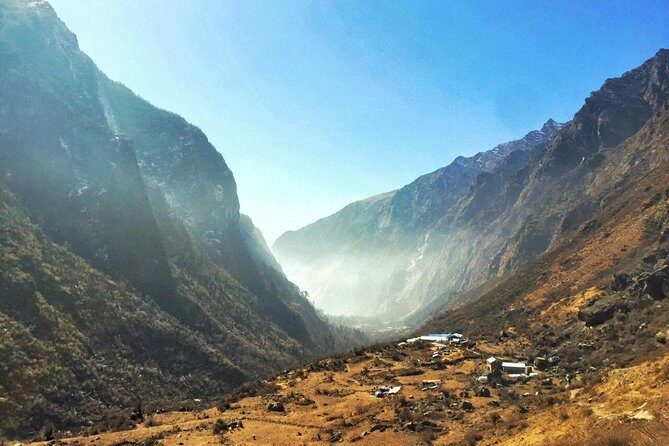
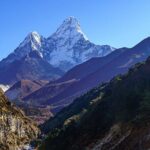
Day two starts with a drive from Pokhara to Phedi, then you begin trekking to Dhampus. Dhampus is a Gurung village, and the trip specifically calls out the views from here—Himchuli, Annapurna South, and Mt Fishtail (Machhapuchchre). That’s a strong start because it lets you feel like you’re already in the Annapurna story before the longer, harder days.
You’ll also notice how the route design favors steady progress. The walk time listed for this day is about 4 hours, which means it’s long enough to count as trekking but short enough to keep your legs from feeling wrecked on day two.
If you like the idea of easing in with landmark scenery, Dhampus is a good early target. It’s also a useful day for settling into the pace: slow walking, lots of stops for photos and breath control, and time to get comfortable with the rhythm.
Day 3: Landrung and the oak-forest route—village life and shade
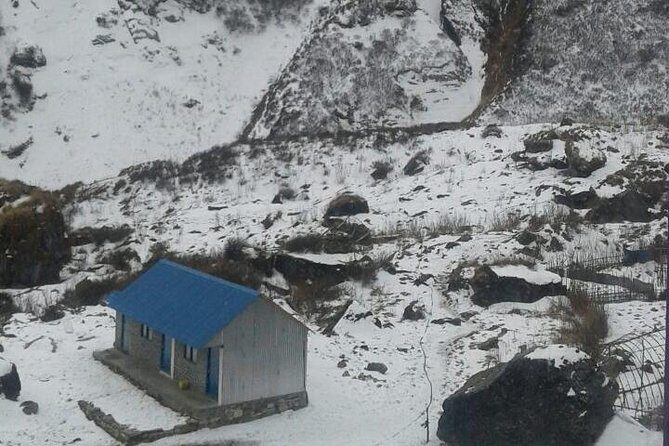
On day three, the trail goes down through oak forest, with terraced fields and villages along the way. You reach Landrung, described as a charming village of Gurung, Magar, and Brahmins—a mix that helps explain why this region is so culturally popular for trekkers.
This day is about more than checking a village box. Forest shade can make a big difference in how your body feels, especially if weather shifts during the trek. And terraces and farmland mean your walking environment stays interesting even when views are partly blocked by cloud.
The itinerary also shows a pattern you’ll keep seeing: short sections of down-and-up, with the day ending around a place to rest and recharge. That balance is one reason the ABC route is so popular—it gives you variety instead of monotony.
Day 4: Chhomrong area to Seti Gandaki—rhodo forests and steep steps
Day four starts from Chhomrung, crosses a bridge, and then rises toward Sinuwa Danda. After that, the trail transitions to thick rhododendron forest, then heads toward Khuldighar, and later drops via long, vertical stone steps toward Seti Gandaki (Seti River).
This is one of those days where you feel the route’s character. Stone steps are physically demanding, but they’re also predictable underfoot compared to loose terrain. Rhododendron forest also means more color and texture along the way, so the walking doesn’t feel like an endless corridor.
If you’re the type who hates big changes in effort level, this day could feel challenging. But in exchange, it sets you up for the later push by building legs gradually. Think of it as the day you earn the more dramatic “sanctuary” atmosphere that comes after.
Day 5: Machhapuchhare Base Camp and the sacred no-meat rule
Day five is a gradual ascent following the banks of the river Madi through a sacred valley. The trek info highlights a practice here: no meat or fish is allowed in this area to align with local Buddhist and Hindu beliefs.
That little detail matters because it shapes the atmosphere of the walk. It’s not a rule you hear about in a brochure and then forget; it shows up in how the area functions, and it reminds you you’re trekking through lived religion and local customs.
You continue passing bamboo trees and reach Machhapuchhare Base Camp. This segment is listed at about 6 hours, and it’s the kind of day where you’ll likely feel your pace shift from “settle in” to “focus and keep moving.” This is often where the trek starts to feel real in a body-and-breath way.
Day 6: leaving the trees behind for Annapurna Sanctuary and Base Camp
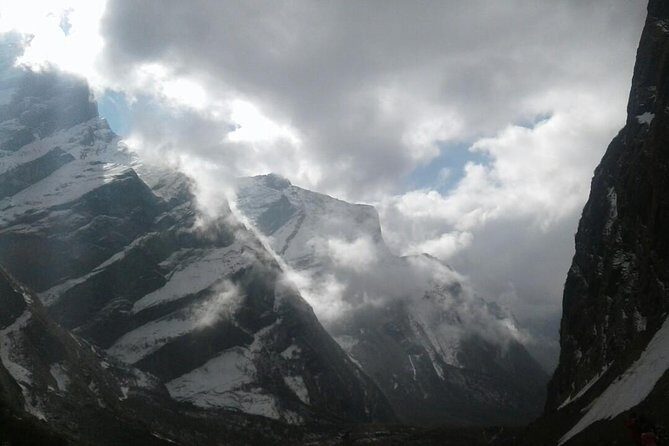
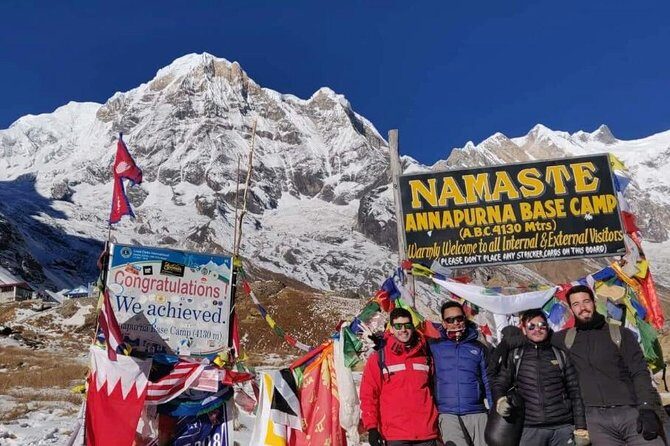
Day six is the big transition day. After Machhapuchhare Base Camp, the route describes leaving vegetation and trees behind and entering a “desert wilderness” called the Annapurna Sanctuary, described as surrounded by the Annapurna mountain range.
This is why ABC is so famous. Once you reach the sanctuary feel, the trek can start to seem more elemental—less green forest, more open sky, bigger mountain presence. Your arrival at Annapurna Base Camp is the reward for six days of steady walking through villages and forests.
The day is listed at about 5 hours, which might sound short compared to how long the trek has felt. That’s common with ABC: the final approach can be both mentally and physically intense, but the walking time is still manageable for many people who keep a steady pace.
Day 7: early wake-up for sunrise, then a long descent by Modi Khola
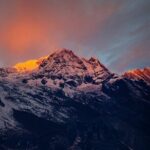
Day seven includes an early call so you can enjoy sunrise views of the Annapurna Sanctuary. Then you start descending by following the Modi Khola River toward Bamboo Hut.
This day is a good example of how the trek is designed to work with your senses. In the morning, you’re chasing light and mountain silhouettes. Later, you’re letting your legs recover with descent travel that can feel easier than climbs, even if it’s still long.
Even if you don’t consider yourself a sunrise person, this one is built into the route. The sanctuary morning views are one of the reasons people are willing to do the hard days earlier in the week.
Day 8: Chhomrong ups and downs plus Jhinu hot springs
On day eight, you start with an uphill trek to Sinewa, then descend to meet the Chomrong Khola River. After that, you do another ascent to Chomrong, then you finish with the final descent of the day to Jhinu, where you can visit natural hot springs.
The hot springs piece is a practical win. After several days of walking, a soak option helps your recovery feel less like a chore and more like a genuine reward. It’s also a nice way to break up the final hiking rhythm before the last day’s transfer.
This day is listed at about 6 hours. That’s enough time to feel work in your legs, but it leaves room for a proper reset by the time you reach Jhinu.
Day 9: Nayapul and the return to Pokhara
Your last trekking day is an easier descent along the Modi Khola River banks to Nayapul. From there, you take a private car for about a 1.5-hour drive back to Pokhara, then you’re transferred onward for your next rest.
This ending matters. It’s not all-out climbing or technical terrain to the finish line. Instead, it’s a gradual close that helps your body cool down after the trek’s weekly rhythm.
If you plan to keep traveling after Pokhara, this structure usually works better than ending in a remote spot with no easy connections.
The guide team: names I’d watch for and why people trust them
A big part of this experience is the human support. Your package includes a licensed English-speaking trekking guide, with food and accommodation logistics covered during the trek days. The info also specifies a first aid kit carried by the guide and that guide accommodation and insurance are included.
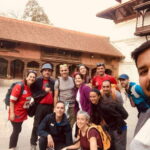
From the names tied to the trek experience, you may be guided by people like Sona, Shiva, or Binod, with porters such as Rāhül, Rajendra, or Bikash. What stands out in the pattern is that guides get credited not just for route know-how, but for friendliness and flexibility—especially if plans change.
One example from the supplied experience details: adjustments were made to fit travel timing, and there was even mention of staying a night at the hot springs area. That’s the kind of practical flexibility that makes the trek feel less rigid and more like it’s being shaped around you.
If you’re worried about feeling lost, this tour structure gives you an answer. You don’t have to manage permits, paperwork, or meal planning day-by-day on your own, and your guide is already set up to handle the mountain logistics.
Gear and comfort: what’s provided and what you should still plan for
The trek includes a down jacket and sleeping bag, and they’re returnable after you finish. That’s a real value add because it can save you from buying (or renting) key cold-weather items.
Still, you’ll want to bring your own basics for daily comfort and personal needs. The package notes that personal expenses are not included, and it also lists things like hot shower and laundry as examples of personal costs. So think of the trek kit as partial support: they help with key gear and cold-weather essentials, but your day-to-day comfort items aren’t fully covered.
Also keep your physical expectations realistic. The info says travelers should have moderate physical fitness. That doesn’t mean you need to be an athlete, but it does mean you should expect uphill effort, stone steps, and long walking days without a lot of shortcuts.
Who this trek suits best
This 9-day ABC trek is a strong fit if you want:
- Classic Annapurna Base Camp views like Himchuli, Annapurna South, and Mt Fishtail (Machhapuchchre)
- A route that includes culture in the walking through Gurung and Magar villages
- A plan that takes care of permits, paperwork, and trekking meals
- The convenience of a provided down jacket and sleeping bag
It may be less ideal if you’re trying to keep costs tight and want every expense included. The porter fee ($220 per person) and tips are not included, and Kathmandu food and lodging are not included either.
It’s also worth it to note the trip is private in the sense that only your group participates. If you prefer quieter, more contained logistics with fewer people around you, that’s a plus.
Should you book this 9-day Annapurna Base Camp trek?
If you want a well-organized ABC trek with meals, accommodation, permits, and a guide handled for you, I think this is a solid choice. The price looks more reasonable when you factor in how many trekking-day costs it includes, plus the gear support with a down jacket and sleeping bag returnable at the end.
I’d book with extra budget awareness if you want a porter. The $220 per person porter cost plus guide/porter tips are the main “watch this total” items in the provided information.
If you care about sunrise timing, culture on the trail, and having a guide who can help keep things smooth—this trek is built for that.
FAQ
Where does the tour start?
The start point is Tribhuwan Airport in Kathmandu, Nepal, with a start time listed as 6:30 am.
How long is the Annapurna Base Camp trek?
The trek is 9 days.
What is the price per person?
The price listed is $693.34 per person.
What’s included in the trek days?
Your package includes the guide, trekking permits and paperworks, and trekking meals (breakfast, lunch, dinner) plus 9 nights of accommodation during the trek.
Are airport transfers included?
Yes. Airport pickup and drop services are included in a private vehicle.
Do I need to pay for a porter?
A porter is not included. The provided porter cost is $220 per person, and tips for guides and porters are also not included.
Is Kathmandu lodging included?
Food and accommodation in Kathmandu are not included.
Do I get trekking gear?
Yes. A down jacket and sleeping bag are provided and are returnable after the trek completion.
What if my plans change?
Free cancellation is offered. You can cancel up to 24 hours in advance for a full refund, and the cutoff is based on the experience’s local time.