REVIEW · KATHMANDU
Katmandu: Pashupatinath Open Cremation & Evening Aarati
Book on GetYourGuide →Operated by Holyland Adventure Tours and Travels Pvt Ltd · Bookable on GetYourGuide
Death and devotion share one riverbank. I love the plain, human reality of the open cremation at Arya Ghat and the way evening Aarati turns devotion into sound, chanting, and oil-lamp light; the catch is that the topic is emotionally heavy and the walk can feel like a lot when you’re standing for a while.
For about $27, you’ll get private, air-conditioned transport, pickup/drop-off in Kathmandu, and water—plus the rare chance to understand Nepal’s Hindu spiritual traditions in a setting that doesn’t try to soften the truth.
In This Review
- Key things to notice before you go
- Pashupatinath open cremation and evening Aarati: what you’re really seeing
- Getting there from Kathmandu: the timing that makes or breaks your view
- Entering the Pashupatinath temple complex: what to expect on arrival
- Arya Ghat open cremation: the spiritual belief behind the scene
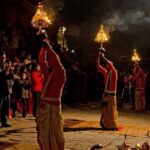
- Evening Aarati for Lord Shiva: how the ceremony feels at dusk
- What you get for the money: price, transport, and the real value
- Logistics that affect your experience: pickup windows, walking, and comfort
- When this tour is a great match—and when to skip it
- Practical tips for a respectful visit (and better photos)
- Should you book the Katmandu: Pashupatinath Open Cremation & Evening Aarati tour?
- FAQ
- How long is the Pashupatinath Open Cremation & Evening Aarati tour?
- Where does the tour include pickup and drop-off?
- Is an entry ticket included?
- Is there a live tour guide included?
- What time should I arrive for the Aarati ceremony?
- When does the evening Aarati start?
- What should I bring or wear?
- Who should not take this tour?
Key things to notice before you go
- Arya Ghat is the viewing zone: You’ll walk from the main temple entrance to the cremation area along the Bagmati River.
- Moksha is part of the explanation: Cremation here is linked to moksha (liberation) in Hindu belief.
- Aarati is timed and sight-dependent: Arrive by 5:30 PM so you’re not stuck at the back.
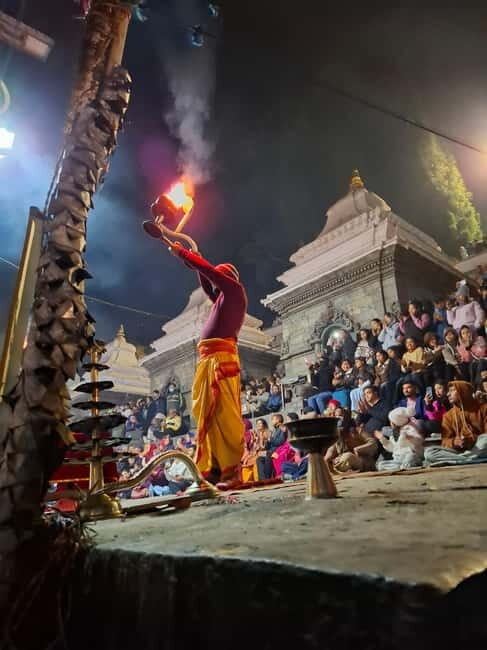
- Lord Shiva is the focus: The evening worship centers on Shiva, with chants, music, and glowing oil lamps.
- Cremation continues in the background: Even during Aarati, you’ll see how life, death, and worship sit side by side.
- Your driver may be your interpreter: A dedicated tour guide isn’t included, but you may get strong context from the person driving/assisting—like the praised English explanations from Bhum Raj Tiwari in one account.
Pashupatinath open cremation and evening Aarati: what you’re really seeing
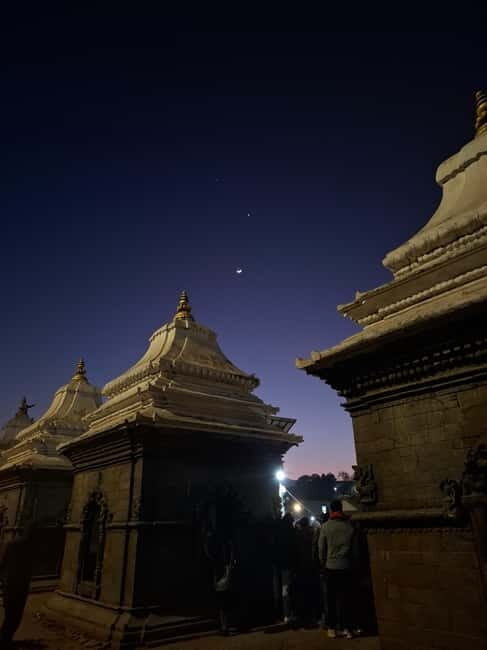
This is not a show. It’s one of the clearest windows you’ll get into Nepal’s Hindu spiritual practice—especially the ways people handle death, ritual, and devotion in the same sacred space.
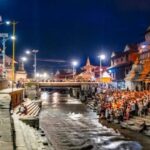
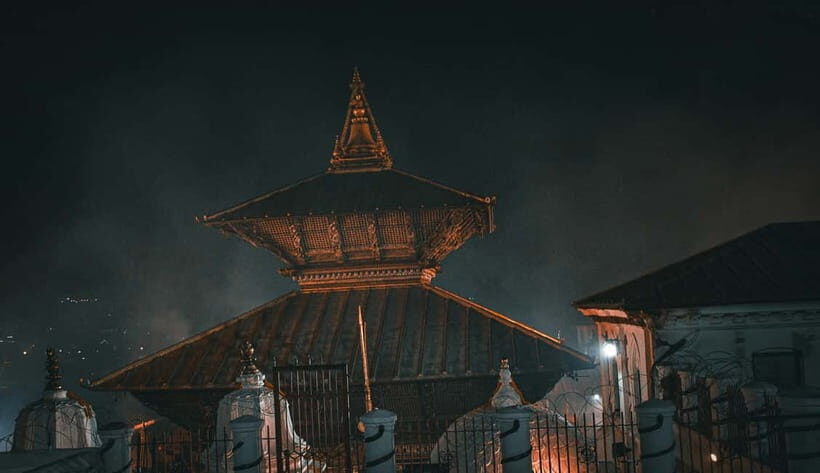
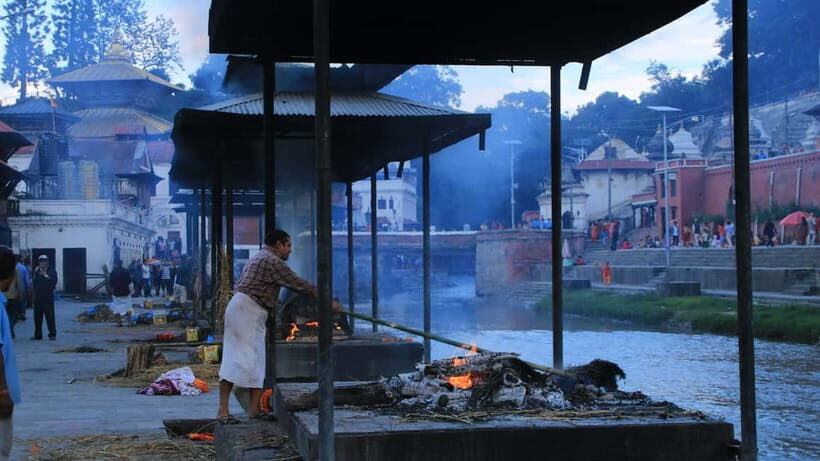
At Pashupatinath, the Bagmati River isn’t just scenery. It’s the stage. You’re taken to Arya Ghat to watch the cremation rites, and then you stay through the evening to witness the Aarati for Lord Shiva, where chants and oil-lamp light fill the temple atmosphere.
I like that the experience is built around timing and place, not a rushed checklist. You’re there when daylight turns to evening, and the shift in light changes how you understand what you’re seeing—burning pyres and moving water feel very different after sunset. Just be ready: your emotions will do the heavy lifting long before your camera does.
You can also read our reviews of more evening experiences in Kathmandu


Getting there from Kathmandu: the timing that makes or breaks your view
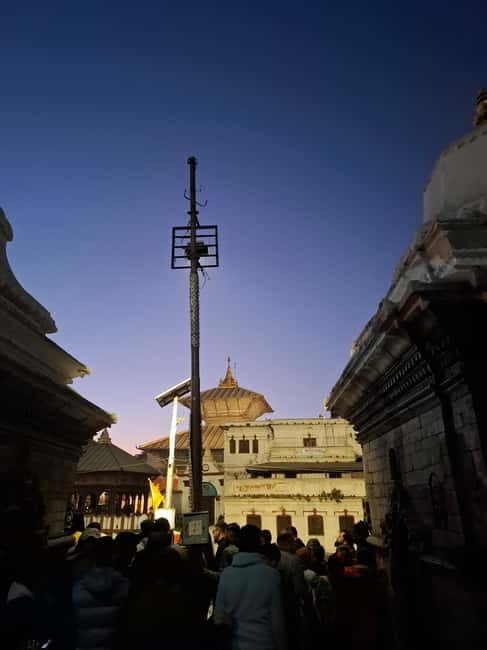
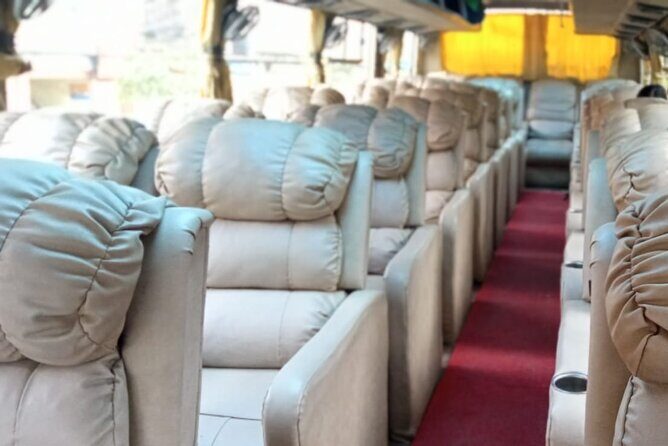
The tour starts with pickup from your location in Kathmandu. You’ll ride in a private, air-conditioned vehicle with an experienced driver, and you’ll get drinking water for the road.
You’ll drop at the main entrance of the Pashupatinath temple complex, then walk toward Arya Ghat. The important part is that you’re not just sightseeing the temple. You’re moving to a specific area for the cremation viewing, and later you must get yourself into position for the Aarati.
The schedule is anchored to evening worship. You’re advised to reach the Aarati area by 5:30 PM for the best viewing spot, and the Aarati ceremony starts around 6:00–6:30 PM. If you show up late, you’ll still see things—but you may end up with a view that feels more like watching from a distance than watching the ritual.
Also note the duration reality check: the stated length is about 3 hours, but it can run 3–4 hours depending on where you’re picked up and traffic. In practical terms, wear shoes you can stand/walk in without regretting it by hour two.
Entering the Pashupatinath temple complex: what to expect on arrival
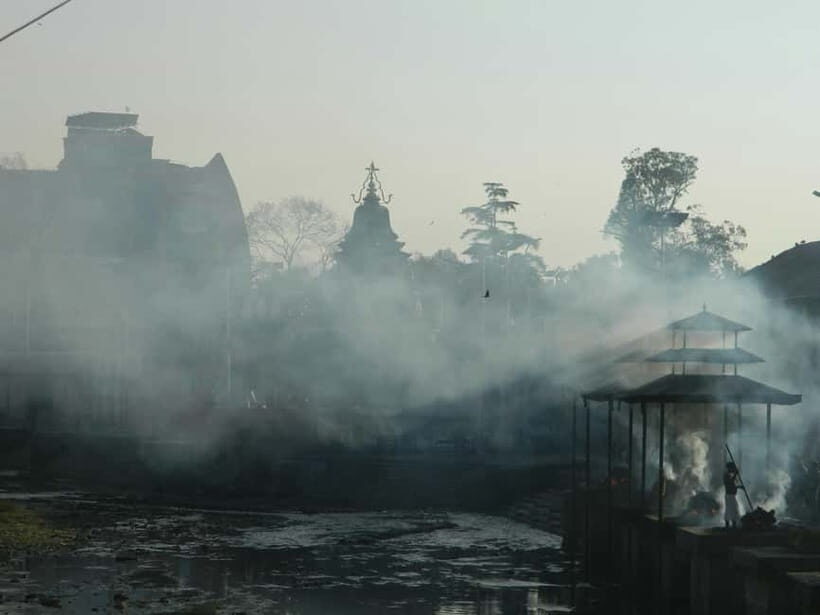
When you arrive at the main entrance, you’re entering a working religious complex. That means you’ll want to keep your body language calm and respectful, even if you’re quietly anxious about what you came to see.
Modest clothing is recommended at Pashupatinath, and it helps you blend in without friction. You’ll also be outside for parts of the experience, so bring something light for the evening if weather turns cool.
You’ll also want to have your essentials ready: passport or ID card, camera, cash, and comfortable shoes. The walking to the cremation area is real, and your comfort will affect how well you can focus on the ritual itself.
Arya Ghat open cremation: the spiritual belief behind the scene
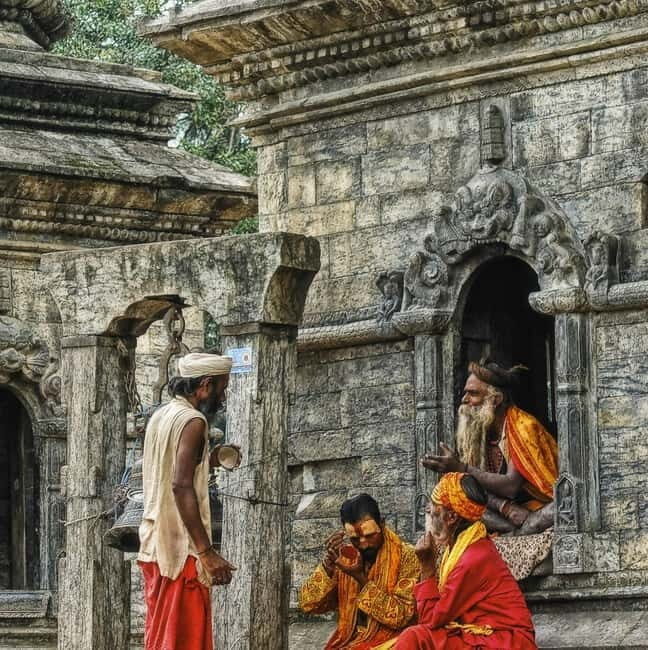
Arya Ghat is where you go to witness Hindu funeral rites along the Bagmati River. This is the moment most people come for, and it’s also the moment that can feel confronting.
Here’s the key cultural piece you’ll want in your head before you watch anything: cremation at this holy site is believed to help people attain moksha (liberation). That belief is part of why this place matters so much in Hindu spiritual life.
When you’re standing there, you’re not just looking at flames. You’re watching a ritual system—practical, repetitive, and meaningful. Even without perfect context, you can sense how the community understands death as part of a larger cycle. The experience can feel solemn and raw, and it can also prompt questions about how different cultures teach people to face the same universal event.
One of the strongest notes from an English-speaking experience is how much clearer everything became with explanation. In one praised account, the driver/guide Bhum Raj Tiwari was credited with very good English and with explaining why Hindus perform these rituals—making the logic understandable for European visitors. That’s the value of getting context while you’re there, not after you leave.
If you don’t get much explanation from your driver, don’t panic. You’ll still observe the process. But if you’re the type who needs meaning to stay calm, it’s smart to ask your driver questions early—before the ceremony energy ramps up.
Evening Aarati for Lord Shiva: how the ceremony feels at dusk
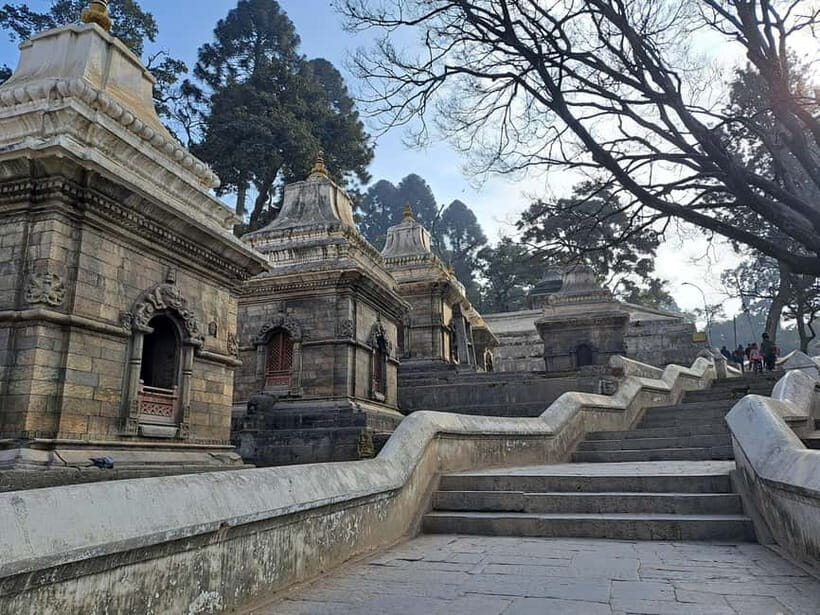
After the cremation viewing period, you shift to the Aarati area. This is the part where the same sacred complex changes mood fast—without changing its seriousness.
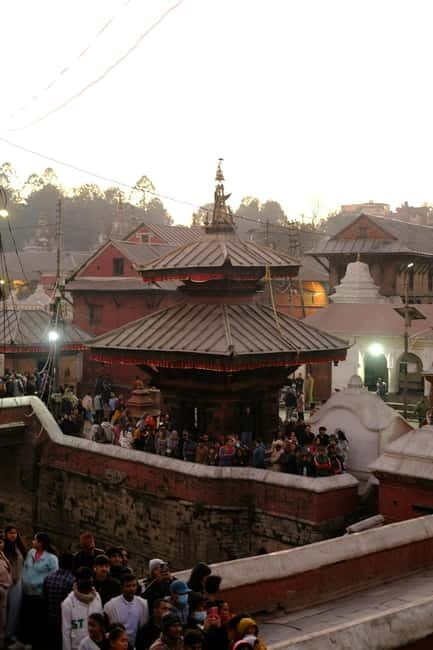
The Pashupatinath Aarati is dedicated to Lord Shiva and includes devotional songs, rhythmic chants, and the glow of oil lamps. The effect is powerful: you’re watching religious practice move from the physical reality of funeral rites into the auditory reality of worship.
What I find practical to remember is that you don’t have to “solve” what you’re seeing. Your job is to watch and listen. Chants and music create structure, and the oil lamps give the ceremony a focal point. Even if you don’t catch every word, the pace and repetition tell you what matters.
And here’s one of the most unusual parts: cremation rituals continue in the background while the Aarati happens. That means you experience the coexistence of life and death in the same place and time. It’s not polished. It’s real—and that’s why the evening can hit hard, in a good way or in a way that leaves you quiet afterward.




What you get for the money: price, transport, and the real value
At $27 per person, the big “value” isn’t the ritual itself (that’s priceless to you) but the logistics that get you there comfortably.
Included:
- private air-conditioned vehicle with an experienced driver
- pickup and drop-off in Kathmandu
- drinking water
Not included:
- entry tickets
- meals
- a dedicated tour guide (the tour notes indicate your driver provides assistance)
So the money largely buys you time and comfort. Without transport, getting to the right areas and managing the timing on your own gets harder—especially when you need to be in place by 5:30 PM.
That said, one caution comes directly from a low-rated account. It complained about late pickup, a vehicle that didn’t seem geared for tourists (dirty, no AC, no seat belt), and a driver with no English. I can’t generalize from one report, but you should treat it as a reminder: confirm pickup details clearly, and if you care about communication, be ready to get limited English context.
If you’re traveling with higher expectations for interpretation, you might consider whether you want to hire a local guide on-site separately. The tour can still be worth it for the access and timing—but it’s not marketed as a full narration package.
Logistics that affect your experience: pickup windows, walking, and comfort
Pickup operates with a window: the driver arrives within about 15 minutes of the scheduled time. If you’re at a hotel, pickup is usually at reception; if you’re at home, it should be at a visible location or the lobby area.
Because access can vary (narrow streets, restricted entry), provide detailed pickup instructions when booking. This small step saves stress later. Also bring cash, because you may want to shop around the temple area.
Footwear matters. You’ll walk to the cremation area, and then you’ll stand/wait for Aarati. If you have back problems or mobility limits, this tour can be a bad fit even if your mind is willing. The tour isn’t recommended for wheelchair users, people with mobility impairments, or anyone with pre-existing medical conditions.
One more practical note: you’ll be outdoors, and the evening can cool down. A light jacket can make the wait more bearable.
When this tour is a great match—and when to skip it
This is best for adults who can handle intense cultural experiences and want to understand how Hindu ritual works in a living tradition—not just from photos or behind a museum glass case.
It’s also a good choice for:
- travelers who like meaning and context (especially if your driver can explain)
- people who can handle standing and walking for a few hours
- couples or friends who want a private, timed outing rather than a big group
It’s not for:
- children under 9
- wheelchair users or anyone with mobility impairments
- people with back problems or pre-existing medical conditions
If you fall into any of those categories, it’s kinder to choose a different Kathmandu activity that doesn’t require this kind of physical effort and emotional intensity.
Practical tips for a respectful visit (and better photos)
You’ll get the most out of this tour if you prepare for modest behavior and practical filming/photography expectations.
Wear modest clothing and comfortable shoes. Bring your passport/ID card, camera, and cash. The tour includes drinking water, but you should still think like you’ll be outside for a stretch.
For the cremation viewing, treat photography as a moment of self-control. If you’re unsure, start without taking pictures. Watch what others do, then decide. The emotional tone is heavy, and pushing your lens forward can make you feel out of place fast.
For the Aarati, arrive early and settle in. That timing advice matters because the best spots are not the last spots.
Should you book the Katmandu: Pashupatinath Open Cremation & Evening Aarati tour?
I think you should book if you want an honest, timed look at Hindu funeral rites and Lord Shiva worship in one evening window—and you’re okay with the fact that it’s emotionally intense and requires walking/standing.
I would hesitate if:
- you’re sensitive to death-related rituals
- you need lots of English narration (the tour notes say you don’t get a dedicated guide)
- you have mobility or back issues
- you expect luxury comfort and perfect pickup punctuality every time (one low-rated account flagged a rough pickup/vehicle situation)
If you do book, I’d go in with two goals: first, arrive early for the Aarati spot; second, ask your driver questions about what you’re seeing while you still have daylight and calm. That turns the evening from shocking to understandable—and that’s the difference between remembering it for years and forgetting it quickly.
FAQ
How long is the Pashupatinath Open Cremation & Evening Aarati tour?
The duration is listed as about 3 hours, with an additional note that it may take approximately 3–4 hours depending on your pickup location and traffic.
Where does the tour include pickup and drop-off?
Pickup and drop-off are included within Kathmandu. Your driver will pick you up from your chosen location and return you after the experience.
Is an entry ticket included?
No. Entry tickets are not included.
Is there a live tour guide included?
The tour does not include a guide. Your driver will provide assistance, but a dedicated guide isn’t part of what’s included.
What time should I arrive for the Aarati ceremony?
You’re advised to arrive at least 30 minutes early, with the recommended arrival time being by 5:30 PM for the best viewing spot.
When does the evening Aarati start?
The Pashupatinath Aarati is scheduled to start between 6:00 PM and 6:30 PM.
What should I bring or wear?
Bring your passport or ID card, camera, cash, and comfortable shoes. Modest clothing is recommended, and it’s smart to dress for outdoor conditions in the evening.
Who should not take this tour?
It’s not suitable for children under 9, people with back problems, people with mobility impairments, wheelchair users, or anyone with pre-existing medical conditions.