REVIEW · KATHMANDU
Kathmandu: Pashupatinath Temple Evening Aarati Tour
Book on GetYourGuide →Operated by Aspiration Adventure Pvt Ltd · Bookable on GetYourGuide
Dusk at Pashupatinath is pure ritual theater. This 3-hour Kathmandu tour pairs a guided walk at Pashupatinath Temple with the night Bagmati River aarti.
I love the way your guide turns the ceremony into something you can actually understand, with English support from guides like Ramesh and Rajat. I also love that the timing works well for photos and atmosphere, with the aarti starting around 6 p.m.
One heads-up: no food or drinks are included, so you’ll want to eat and hydrate before you’re picked up.
In This Review
- Key Highlights You’ll Care About
- Kathmandu at Dusk: Pashupatinath Temple’s Night Aarti on the Bagmati
- How the 3-Hour Experience Flows (and Why the Timing Matters)
- The best part of the schedule: you’re not rushed into the dark
- Entering Pashupatinath: What Your Guide Helps You Notice
- Independent time: useful, as long as you stay aware
- The Bagmati River Aarti: Lights, Mantras, Incense, and Music
- The emotional payoff: it’s powerful even if you don’t know the words
- Photography Without Getting in the Way
- What to shoot (so you don’t come home with only blurry lights)
- Price and Value: Does $45 Make Sense for a 3-Hour Private Tour?
- Who This Tour Fits Best (and Who Might Want Something Else)
- Practical Tips for a Smooth Night in Kathmandu
- Should You Book This Kathmandu Evening Aarti Tour?
- FAQ
- What is the duration of the Pashupatinath evening aarti tour?
- How much does the tour cost?
- Where does the tour take place?
- What time does the aarti ceremony happen?
- Is hotel pickup and drop-off included?
- Is entry to Pashupatinath included?
- Does the tour include food or drinks?
- Is the tour private and in English?
Key Highlights You’ll Care About
- Aarti on the Bagmati River at night: Vedic mantras, bells, incense, oil lamps, and hymns with classical instruments.
- Guided context before the ceremony: You get historical and religious framing inside the temple complex.
- Private group, hotel pickup: You’re not squeezed into a huge crowd tour with a rushed guide.
- Photo opportunities in permitted areas: You can capture the moment, but you’ll need to follow on-the-ground rules.
- A 3-hour plan that fits an evening schedule: Late afternoon start, ceremony around 6 p.m., back to Kathmandu afterward.
Kathmandu at Dusk: Pashupatinath Temple’s Night Aarti on the Bagmati
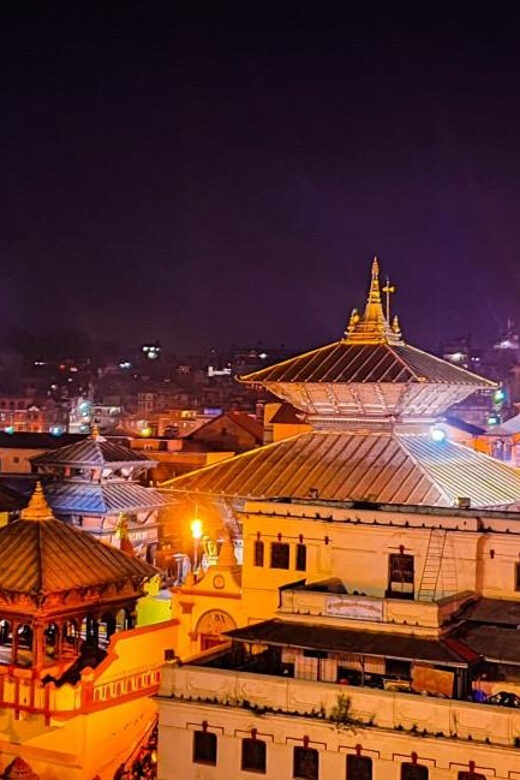
If you want Nepal that feels real, not just scenic, this is one of the best ways to do it. Pashupatinath is one of the region’s most important Hindu pilgrimage sites, and the evening aarti makes the spiritual side visible in a very human way.
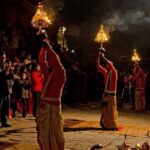
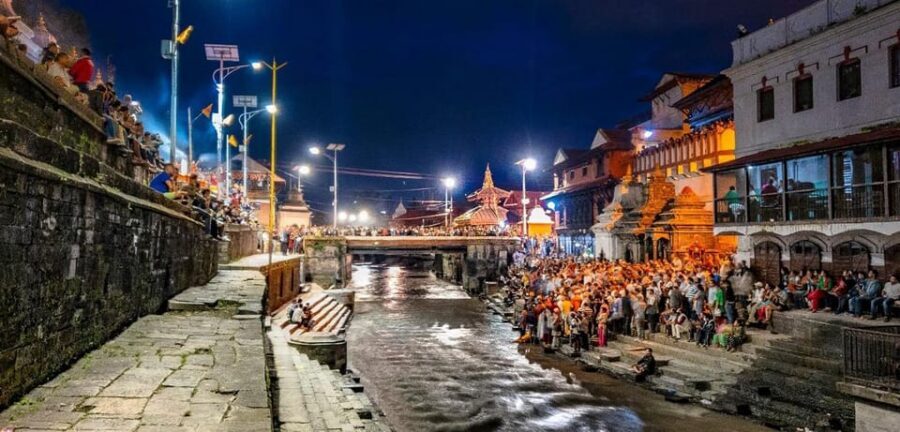
The heart of the experience is the aarti ritual on the Bagmati River’s banks, where people gather on the temple’s eastern side. Expect priests chanting Vedic mantras, ringing bells, lighting oil lamps, burning incense, and a musical setup that includes classical instruments and singing hymns. The sights are dramatic, sure. But what makes it worth your time is how the guide helps you connect what you’re seeing to why it matters.
You can also read our reviews of more evening experiences in Kathmandu


How the 3-Hour Experience Flows (and Why the Timing Matters)
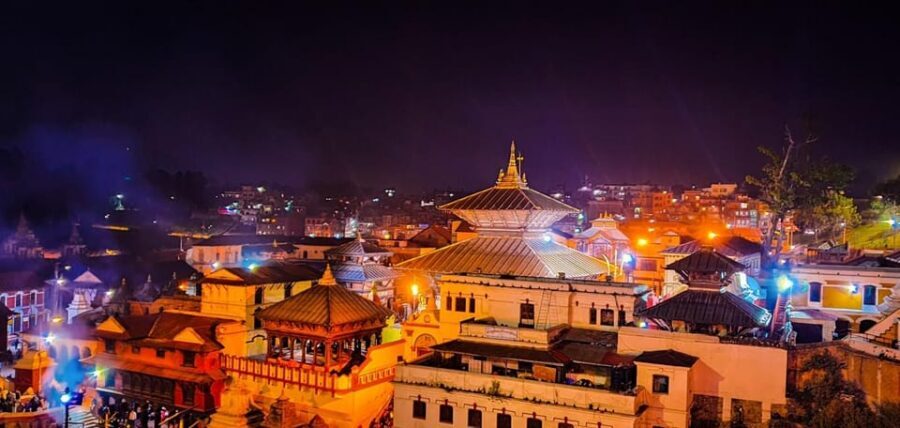
This tour is designed as a late-afternoon to evening loop. You get hotel pickup in Kathmandu, then a drive to Pashupatinath along the Bagmati River. That early arrival is a big deal. You’re not standing around in the last-minute scramble. You can get oriented, take in the temple complex, and settle before the ceremony begins.
Once you arrive, the pace is simple:
- You get a guided tour of the temple complex, with context about its religious importance.
- You then have time for independent exploration so you can look at the details you care about.
- Around 6 p.m., you shift to the aarti itself on the Bagmati River bank.
- After the ceremony, you’re driven back to your hotel.
The tour is listed as private, and that matters more than you might think. A private group means your guide can manage your exact viewing and timing needs, whether you’re mainly there for cultural understanding or for photography planning.
The best part of the schedule: you’re not rushed into the dark
Many cultural nights in Kathmandu feel like you arrive after the best part has started. Here, you reach the site before the action fully peaks. That makes the experience calmer and, honestly, more respectful. It also gives your camera a chance to work in better light before full night conditions.
Entering Pashupatinath: What Your Guide Helps You Notice
Pashupatinath Temple isn’t just a place to look at. It’s a living religious complex, and during your visit you’ll be surrounded by Hindu worship that continues beyond any single ceremony.
Your guide gives you a tour of the temple complex and explains the historical and religious significance. That guidance is what turns the visit from a scenic stop into a meaningful one. Without context, you’d still see the rituals. But with it, you can start recognizing patterns: the role of priests, the rhythm of prayers, and how the worship ties into the river setting.
You’ll also get a photo stop during the temple phase. The exact places you can stand for photos aren’t described in detail here, but the overall approach is clear: there’s time to capture images at the complex and then a second moment during the aarti on the riverbank.
Independent time: useful, as long as you stay aware
After the guided portion, you’ll get time for exploring on your own. This is where you can focus on what you like—architecture details, the atmosphere, or simply taking in how people move through the space.
Just keep in mind: you’re visiting a worship site during the lead-up to a major evening ritual. So you’ll want to follow your guide’s instructions on where to go and where to pause, especially as the ceremony time approaches.




The Bagmati River Aarti: Lights, Mantras, Incense, and Music
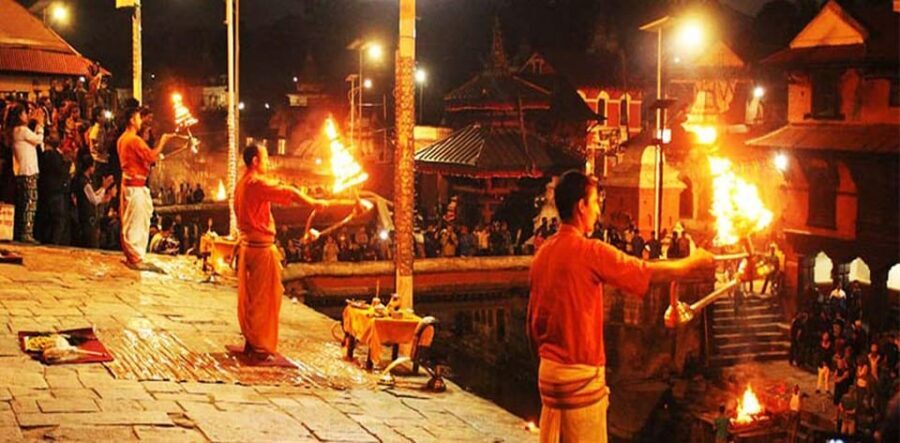
This is the show. The aarti is described as a nightly worship ritual that unfolds on the Bagmati River’s banks, located on the temple’s eastern side. This is where the atmosphere changes from temple sightseeing to something closer to a nighttime gathering with a spiritual pulse.
Here’s what you can expect during the ceremony:
- Priests chant Vedic mantras
- Bells are rung as part of the worship rhythm
- Oil lamps are waved before the idol of Lord Shiva
- Incense is burned
- A band plays classical instruments, while hymns are sung to the gods
In plain terms: you’re watching devotion expressed through sound, scent, and light—plus a real sense of timing. The lamps and chanting have a momentum. As the ceremony builds, it becomes less about watching from the outside and more about observing a tradition as it’s performed.
The emotional payoff: it’s powerful even if you don’t know the words
You don’t need to understand every mantra to feel what’s happening. The combination of chanting, bells, and lamps creates a structured kind of intensity. Your guide’s job is to help you understand the meaning behind the signals you’re seeing—so you can connect the ritual actions to Hindu worship traditions.
From the people who’ve done this with English guides like Ramesh, Rajat, and Anjan, the pattern is similar: the explanation tends to be clear and patient, so you’re not stuck guessing what you’re looking at.
Photography Without Getting in the Way
If you’re coming for photos, this tour is built for that. The experience specifically includes photography opportunities in permitted areas.
A few practical thoughts so your photos don’t turn into stress:
- Plan for changing light: early parts are easier for sharp images; the lamps can create dramatic contrast later.
- Don’t assume every angle is open: permitted zones matter during active worship moments.
- Give priority to the ritual: if you’re blocking someone’s view, your guide will likely ask you to adjust.
The guides mentioned in the experience descriptions—especially people like Ramesh and Rajat—are praised for being patient about requests and concerns. That’s important. If you want time for compositions or a specific shot, it helps when your guide doesn’t treat photography like an afterthought.
What to shoot (so you don’t come home with only blurry lights)
You’ll likely get the best results if you aim for:
- The lamp action (wide shots and close details, depending on where you’re allowed)
- People’s faces and posture during chanting
- The contrast between the riverbank setting and temple lighting
Even if you’re not a serious photographer, those are the visuals that make this a Kathmandu memory you can feel.
Price and Value: Does $45 Make Sense for a 3-Hour Private Tour?
$45 per person for a 3-hour private evening tour sounds straightforward, but value depends on what’s included—and this one does a lot for the price.
What you get included:
- Hotel pickup and drop-off
- Transportation to and from Pashupatinath
- A licensed English-speaking guide
- Entry ticket to Pashupatinath
- Taxes and service charges
- Skip the ticket line
What’s not included:
- Food and drinks
So the value equation is simple. You’re paying for convenience (pickup, transport), interpretation (English guide), and access (entry ticket). The ceremony itself is the core event, and you’re shown how to watch it with context rather than just passing time.
If you were to try to do this alone, you’d still pay transport costs, you’d still need to find the right viewing spot, and you might lose time figuring out what you’re looking at once the aarti starts. Here, the plan is designed to keep you in the right flow from temple arrival to the river ceremony.
The one thing that could change your experience is food. Since food and drinks aren’t included, you’ll want to plan dinner timing. If you’re hungry mid-ceremony, it’s harder to focus on details and meaning.
Who This Tour Fits Best (and Who Might Want Something Else)
This evening aarti tour is a good match if you:
- Want a deeper look at Hindu ceremony, not just sightseeing
- Like guided interpretation during a live cultural event
- Prefer a calm, private pace over group chaos
- Care about photography but still want to do it responsibly
It’s also ideal for a first “religion and culture” experience in Kathmandu because you’re covering a major temple complex and a signature night ritual in one compact block of time.
You might consider a different style of tour if:
- You want a long evening with lots of stops, meals, or shopping (this one is tightly focused)
- You’re extremely sensitive to crowds and active worship zones (the ceremony gathers people on the riverbank)
Practical Tips for a Smooth Night in Kathmandu
Here are the small things that make this type of evening experience go better:
- Eat before you go. Since food and drinks aren’t included, treat this like a “ceremony first” evening.
- Wear comfortable shoes. You’ll be moving around the temple area and then standing for a riverbank ceremony.
- Be ready for nighttime lighting. Oil lamps and dark conditions can limit where you can place yourself for photos.
- Follow your guide’s direction. Permitted areas matter for photography, and it’s also the easiest way to avoid getting in the way.
- Bring a charged camera or phone. You’ll want battery life, especially once lamps and incense create strong visual contrast.
If your goal is to walk away understanding what you saw, this tour’s structure supports that. You start with context, then you watch the ritual play out, and you leave with a clearer mental picture than a casual pass-through would give you.
Should You Book This Kathmandu Evening Aarti Tour?
If you want one evening in Kathmandu that feels specifically Nepal—not generic—and you like guided context around a live religious ritual, I’d say yes. For $45, you’re getting a private guided temple visit, hotel pickup, entry, and a front-row-style viewing moment during aarti on the Bagmati River.
Skip it only if you’re hoping for a meal-centered outing or you don’t want to spend a few hours standing and watching a ceremony unfold. If that part sounds okay, this tour is one of the most meaningful ways to spend an evening with Pashupatinath Temple at its most dramatic.
FAQ
What is the duration of the Pashupatinath evening aarti tour?
The tour lasts 3 hours.
How much does the tour cost?
The price is $45 per person.
Where does the tour take place?
The experience focuses on Pashupatinath Temple along the Bagmati River in Kathmandu, Nepal.
What time does the aarti ceremony happen?
The aarti begins around 6 p.m.
Is hotel pickup and drop-off included?
Yes. You get hotel pickup and drop-off in Kathmandu.
Is entry to Pashupatinath included?
Yes. The entry ticket to Pashupatinath is included, and ticket line skipping is offered.
Does the tour include food or drinks?
No. Food and drinks are not included.
Is the tour private and in English?
Yes. It’s a private group tour with a licensed English-speaking guide.