REVIEW · KATHMANDU
Discover Ranjana Lipi the Traditional Newari Script
Book on Viator →Operated by Community Homestay Network · Bookable on Viator
Ranjana Lipi looks fancy, but learning it is practical. This 3-hour Kathmandu workshop teaches you the traditional Newari script with a bamboo pen and ink, plus scheduled breaks for classic Newari food and drink. It’s one of those cultural activities where you do something with your hands, not just watch.
I especially like the way the class mixes writing practice with real Newari flavors like Samay Baji. You get an instructor-led session, welcome “Sagun” snacks, a traditional drink from an earthen cup, and a lunch platter as part of the experience.
One consideration: because this is hands-on and uses ink, you’ll want to dress for a little mess and expect the pace to be guided by local teaching style (not a quiet, English-only lecture). Also, the workshop requires good weather.
In This Review
- Key highlights worth your time
- Ranjana Lipi Writing Meets Samay Baji in Kirtipur
- Timings, meet-up point, and how the 3 hours flow
- What you learn in the Ranjana Lipi workshop
- The writing setup: ink, paper, and why it matters
- Welcome snacks and traditional drinks that keep the session moving
- The Samay Baji lunch platter: the part food lovers wait for
- Your framed memento: take the learning home
- Price and value: what you’re really paying for
- Group size, comfort, and who this fits best
- Teaching style and keeping up with local instruction
- Practical tips so your session goes smoothly
- Should you book Discover Ranjana Lipi in Kathmandu?
- FAQ
- What is the price for the Ranjana Lipi workshop?
- How long is the experience?
- Where do I meet for the workshop?
- What are the workshop start times?
- What food and drinks are included?
- What materials do I get for writing?
- Do I take anything home?
- Is transportation included?
- How big is the group?
- What happens if the weather is bad?
Key highlights worth your time
- Hands-on Ranjana Lipi practice using a customary bamboo pen, ink, and canvas paper
- Traditional Newari food included, centered on a Samay Baji platter
- Earthen-cup drink paired with your writing session so the culture stays in context
- You take home a framed memento made from your own writing
- Small group size with a maximum of 15 travelers
- Two daily start times (morning 8–11 or evening 5–8) for easier planning
Ranjana Lipi Writing Meets Samay Baji in Kirtipur
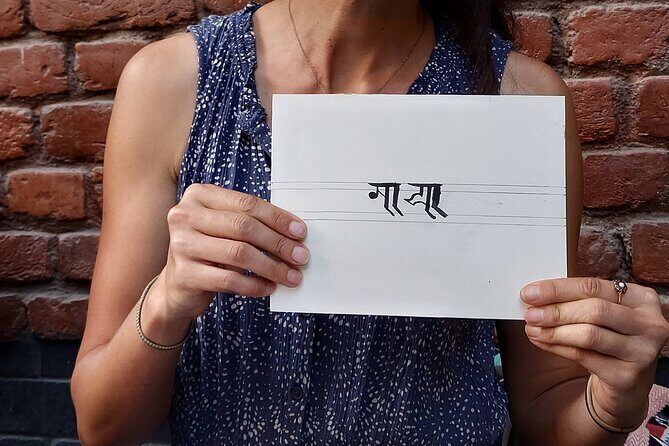
Kathmandu has plenty of cultural stops, but this one changes the format. You start the session learning the Ranjana Lipi script, and then food and drink keep coming in at the right moments. That matters, because Newari culture isn’t just symbols on paper—it’s also how people share meals, rituals, and daily life.
The experience is designed to feel social without turning into a crowd scene. The group stays small, and the whole flow is built around practice: you write, you sip, you eat, and you write again. By the time you’re done, you’re not just leaving with photos—you’re leaving with a framed piece you made.
You can also read our reviews of more tours and experiences in Kathmandu.


Timings, meet-up point, and how the 3 hours flow
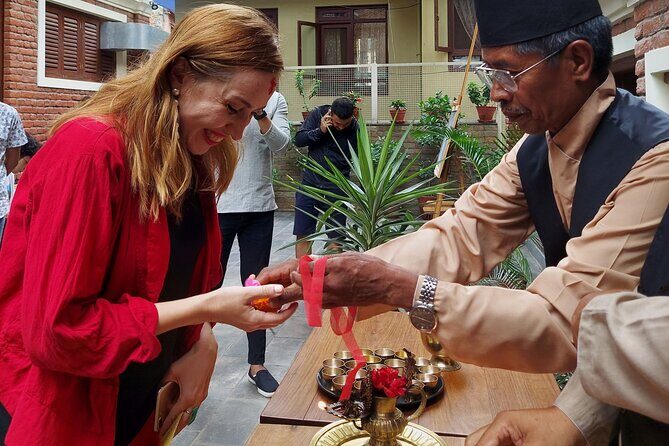
You’ll meet at Jatra Restaurant on Chithu Rd in Kirtipur (44618). The activity ends back at the same meeting point, so you’re not stuck figuring out your next step afterward.
You can choose either timing:
- Morning session: 8:00 am–11:00 am
- Evening session: 5:00 pm–8:00 pm
In terms of pace, think of it as a steady loop: welcome + snack/drink, learning and stroke practice, a food break, then more writing and final wrap-up. The full session runs about 3 hours, and that’s long enough to pick up the basics of the script without dragging on.
What you learn in the Ranjana Lipi workshop
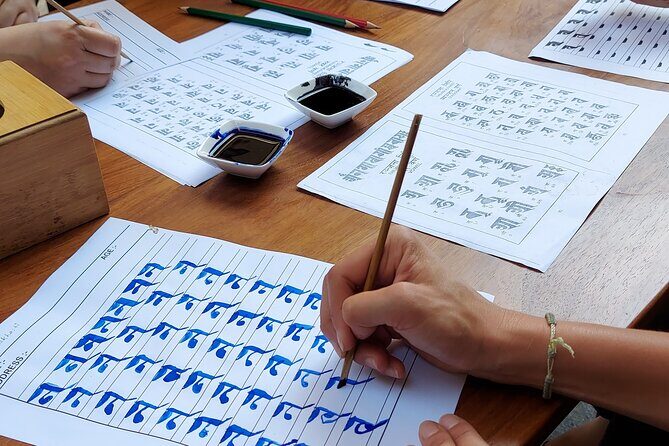
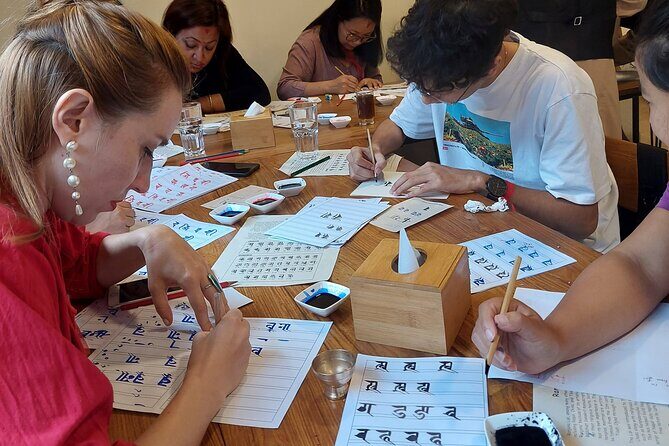
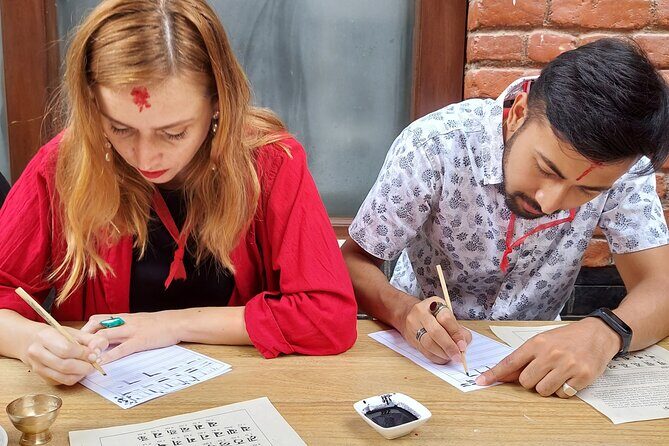
The core of this experience is learning Ranjana Lipi, the traditional Newari script. You’ll work with local experts who teach you how to write the characters using a customary bamboo pen and ink on canvas paper. This is not a “watch someone else write” situation—your hand gets involved quickly.
What you’re practicing is the shape and rhythm of the letters, starting from strokes and rules. One attendee noted how helpful it was to standardize letter knowledge and rules. That’s a good sign: you’re being guided toward correct form, not just copying random shapes.
If you’ve ever seen Ranjana Lipi in older contexts—like inscriptions on thangka paintings or historical manuscripts—this workshop helps you connect the visual look to actual movement of the pen. One participant also connected the script to Buddhist texts, including the mantra OM Mani Padme Hoon seen written in Ranjana on different kinds of religious artwork. Even if you don’t go that deep, you’ll leave with a clearer sense of what the script is doing line by line.
The writing setup: ink, paper, and why it matters
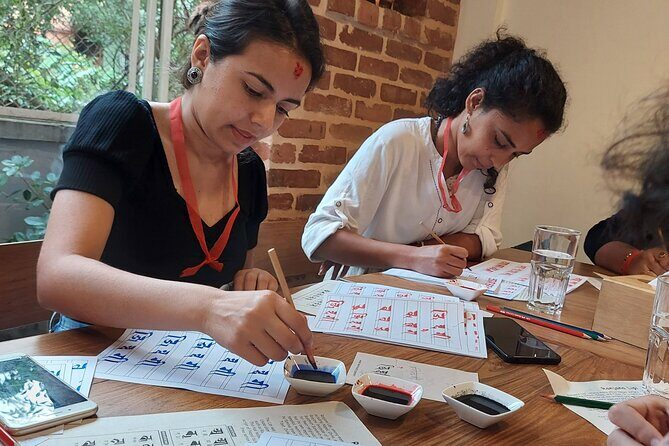
You’ll be using materials provided for you: bamboo pens, ink, and papers. Having that handled is more valuable than it sounds, because writing with traditional tools often needs the right setup to get results.
Also, ink work means simple practical choices. Wear clothes you’re okay with staining a bit, or at least keep sleeves secure. Your hands will be busy, and the session is built around practice strokes, so you’ll likely feel like you’re “learning to write” again—like school, just with better snacks.
Because it’s on canvas paper, you’ll likely notice the texture as you write. That changes how your pen glides, and it’s part of why this format works well for beginners. You’re not fighting materials while you try to learn shapes—you’re learning shapes with the tools designed for this kind of script practice.
Welcome snacks and traditional drinks that keep the session moving
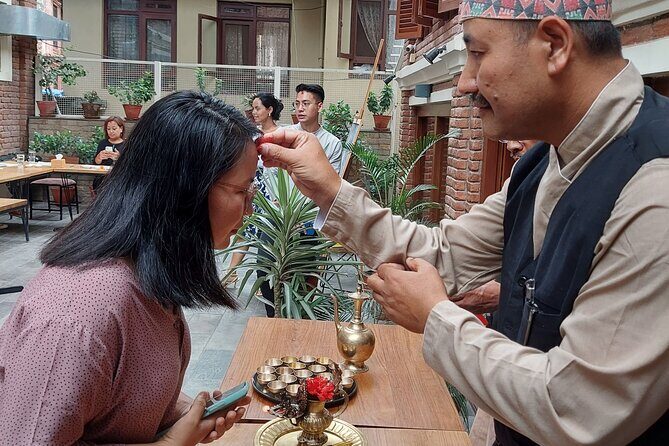
Right when you arrive, you’re welcomed with Sagun, a Newari snack served with an alcoholic or non-alcoholic drink option. This is a useful part of the timing. It breaks the “I’m new here” feeling, and it keeps energy up before you start writing carefully.
During the practice time, you also sip a traditional Newari drink from an earthen cup. That detail isn’t random. It gives you a real cultural cue: in this setting, tasting and writing happen in the same rhythm, not in separate phases.
If you’re sensitive to alcohol, choose the non-alcoholic option. The experience offers both, and you’ll still get the same cultural setup—just with the drink preference you need.



The Samay Baji lunch platter: the part food lovers wait for
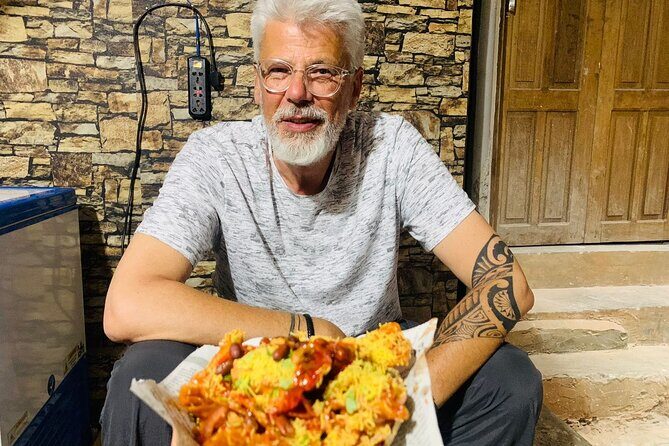
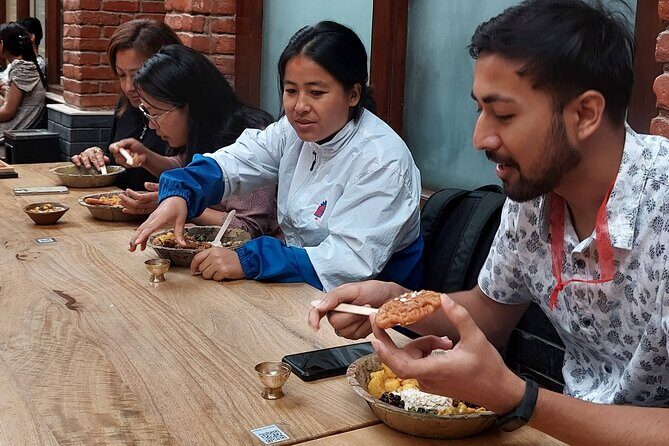
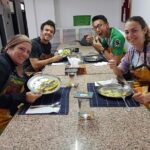
The big meal moment centers on Samay Baji, a well-known Newari set meal. You’ll get a Samay Baji platter with an alcoholic or non-alcoholic drink included. This is the meal break built into the workshop flow, so you’re not wandering off to find food while the class runs.
Samay Baji is a good match for a script workshop because it rewards your full attention. You can pause, eat, and then return to writing with fresh focus. It also helps explain why the event calls itself both cultural and culinary: the food isn’t an afterthought, it’s part of the way the Newari tradition is presented.
One strong theme from the experience is that the food is genuinely good, not just “included to be nice.” People have highlighted the cuisine and hospitality as top points, and that matches what you’d want if you’re paying for an organized cultural class. Here, you’re not choosing between learning and eating—you get both.
Your framed memento: take the learning home
At the end, you don’t just leave with a certificate. You leave with your own Ranjana script framed as a special memento.
That matters for two reasons. First, it gives your practice a clear goal, so the workshop feels productive, not just casual. Second, you end up with something tangible that makes the experience easier to remember later—especially if you’re the kind of person who likes collecting small, meaningful travel artifacts.
Even if your first attempt isn’t perfect, the framing makes it feel like a real piece of work. It’s the kind of keepsake you can display at home without it turning into another random photo pile.
Price and value: what you’re really paying for
The price is $42 per person for about 3 hours. At first glance, that sounds like a basic workshop fee, but the value comes from what’s included.
You’re not only paying for instruction. You also get:
- Welcome Sagun snacks with a drink (alcoholic or non-alcoholic)
- A meal: Newari Samay Baji platter with a drink
- Bamboo pens, ink, and paper
- Your framed script keepsake
- An instructor (local Lipi expert)
If you were doing these pieces separately in Kathmandu—especially a multi-part meal plus guided workshop tools—the total would likely climb fast. Here, the bundle keeps it straightforward. The cost also makes it easier to justify if you’re traveling in a group, since group discounts are part of the setup and small-group instruction is included in the same session.
Group size, comfort, and who this fits best
This activity caps at 15 travelers, which is a sweet spot. Big classes can be chaotic and feel hands-off. Small groups usually mean you get more attention while you’re learning strokes.
It also suits beginners. The experience is described as a good introduction even if you don’t know Ranjana Lipi in advance. If you’re comfortable trying something new with pen and ink, you’ll likely enjoy the challenge.
Who it’s especially good for:
- First-time visitors who want a Newari culture experience that goes beyond sightseeing
- Food-focused travelers who want an included meal that’s actually part of the event
- People who enjoy hands-on art or writing practice
Teaching style and keeping up with local instruction
The workshop is led by local experts and focuses on step-by-step guidance for the strokes. One key compliment was that instructors were supportive and guided learners through each stroke. That’s exactly what you want in a writing class—clear direction while your hand learns new shapes.
Language can be a factor in any local workshop. One attendee noted that teachers didn’t speak English, yet the session still worked. That tells you the structure likely relies on demonstration and hands-on correction. Still, bring a good attitude: learn by watching, copying, and adjusting.
Also, because the event includes breaks for food and drink, it prevents the “all class, no reset” fatigue. You get mental rest and a chance to re-focus before the next writing segment.
Practical tips so your session goes smoothly
A few small choices can make a big difference here:
- Wear comfortable clothes you don’t mind getting ink on. Traditional writing tools can get a little messy.
- Pick the time that matches your energy. Morning (8–11) is great if you like starting early. Evening (5–8) works well if you want a later cultural slot.
- Skip tea/coffee plans before you go. Coffee and/or tea aren’t included, so either plan to have it elsewhere or be fine with the drinks that come with the meal/snacks.
- Budget a tip if you want to. Personal expenses and tips aren’t included.
One more note: the experience requires good weather. If conditions are bad, it can be rescheduled or you may receive a full refund. That’s worth factoring in if you’re on a tight itinerary.
Should you book Discover Ranjana Lipi in Kathmandu?
You should book this workshop if you want a hands-on Ranjana Lipi experience that doesn’t treat food like a bonus. The combination of writing practice, traditional snacks, and a Samay Baji platter is a strong match for people who like culture through real activities.
Skip it if you’re mainly chasing a quick photo stop or you’re not interested in writing at all. It’s a class, and your hands are part of the point.
If you’re deciding between “watch a show” and “learn a skill,” this one leans toward learning. Plus, the take-home framed script gives you a reason to remember it long after you leave Kirtipur.
FAQ
What is the price for the Ranjana Lipi workshop?
The price is $42.00 per person.
How long is the experience?
It runs for approximately 3 hours.
Where do I meet for the workshop?
You start at Jatra Restaurant, Chithu Rd, Kirtipur 44618, Nepal.
What are the workshop start times?
There are two options: 8:00 am to 11:00 am (morning) or 5:00 pm to 8:00 pm (evening).
What food and drinks are included?
You’ll get welcome Sagun snacks with a drink option, plus a Newari Samay Baji platter with a drink option. Coffee and/or tea are not included.
What materials do I get for writing?
Bamboo pens, ink, and paper are included.
Do I take anything home?
Yes. You get your own Ranjana script framed as a memento.
Is transportation included?
No. Private transportation is not included.
How big is the group?
The experience has a maximum of 15 travelers.
What happens if the weather is bad?
The experience requires good weather. If it’s canceled due to poor weather, you’ll be offered a different date or a full refund.
If you want, tell me your travel dates (morning vs evening) and what kind of food you usually like, and I’ll help you pick the best time slot and set expectations for the pace.