REVIEW · KATHMANDU
Temples and Stupas Tour in Kathmandu Valley
Book on Viator →Operated by Royal Mountain Travel · Bookable on Viator
A day in Kathmandu, but not the usual one. This Temples and Stupas tour strings together three UNESCO-class landmarks tied to Nepal’s Hindu and Buddhist roots, with an English guide to translate the meaning behind what you see. You get transport in an air-conditioned vehicle and a simple route that spares you the daily headache of hunting rides and negotiating.
I especially like the way the itinerary is built around contrast. You start at Pashupatinath, then shift to the royal-era story of Durbar Square, then end at Boudhanath Stupa, where religious life blends together in a way that feels very Kathmandu.
One thing to factor in: entrances are not included, and you’ll still spend part of the day in car time between stops. If you want nonstop commentary, you might have to nudge your guide with questions when the van ride quiets down.
In This Review
- Key highlights to look for
- Why this 7-hour Kathmandu Valley loop works for first-timers
- Pashupatinath Temple: Shiva, devotees, and what you may notice at the cremation places
- Durbar Square and the Malla kings: royal palaces, Newari style, and a big-picture story
- Boudhanath Stupa: Buddhist faith that Hindus also respect
- Price and logistics: what $34 buys, and what to plan for
- Guide quality can make or break the whole day
- Timing, comfort, and pacing: small group, big sights
- Should you book this Temples and Stupas tour?
- FAQ
- What is the duration of the Temples and Stupas tour in Kathmandu Valley?
- What time does the tour start?
- Where is the meeting point?
- What stops are included?
- Is the entrance fee included in the $34 price?
- What’s included in the tour price?
- Do they provide hotel pickup and drop-off?
- What is the cancellation policy?
Key highlights to look for
- Three UNESCO-listed sites in a single 7-hour circuit, with a logical Hindu → royal → Buddhist flow
- Pashupatinath: Shiva connection and the possibility of seeing cremation activity at the cremation places
- Durbar Square: royal-past storytelling tied to the Malla kings and famous Newari architecture
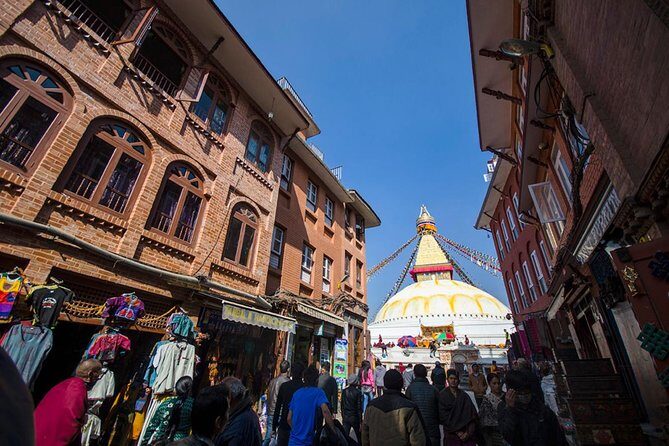
- Boudhanath Stupa: one of Nepal’s holiest Buddhist sites, with equal respect from Hindus too
- Small group max of 10 plus an English-speaking guide, keeping things manageable
Why this 7-hour Kathmandu Valley loop works for first-timers
Kathmandu Valley can feel like a blur of traffic, temples, and ticket windows. This tour avoids the classic first-day trap: doing three major sites with no plan, no context, and way too much time wasted on figuring out logistics.
The format is straightforward. The tour runs about 7 hours and starts at 9:00 am from Royal Mountain Travel, Lal Durbar Marg, Kathmandu. You return to the same meeting point when you’re done. That “in and out” rhythm is handy if you’re trying to fit sightseeing around a flight, a trek, or another day of slower exploration.
You’ll also appreciate the small-group cap of 10 travelers. It tends to make the guide’s explanations easier to hear and keeps you from feeling like you’re being dragged through heritage sites. The vehicle is air-conditioned, which matters in Nepal’s hotter stretches or when the day starts warm and busy.
That said, you’re not getting entrance tickets in the price. The tour covers guiding and transport, while food, drinks, and all fees and taxes are excluded. Budget time and money for those add-ons so the day stays smooth.
You can also read our reviews of more tours and experiences in Kathmandu.
Pashupatinath Temple: Shiva, devotees, and what you may notice at the cremation places
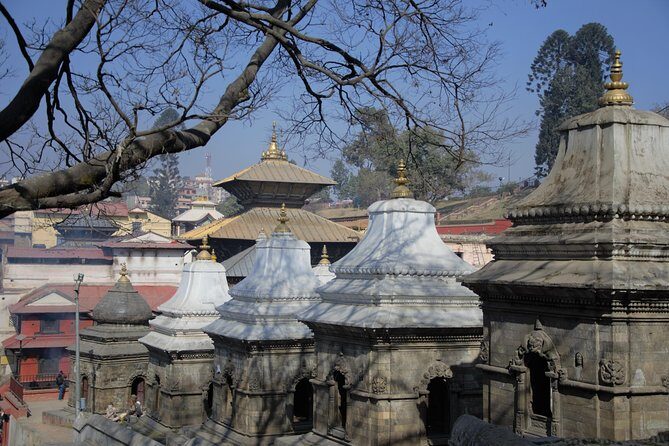
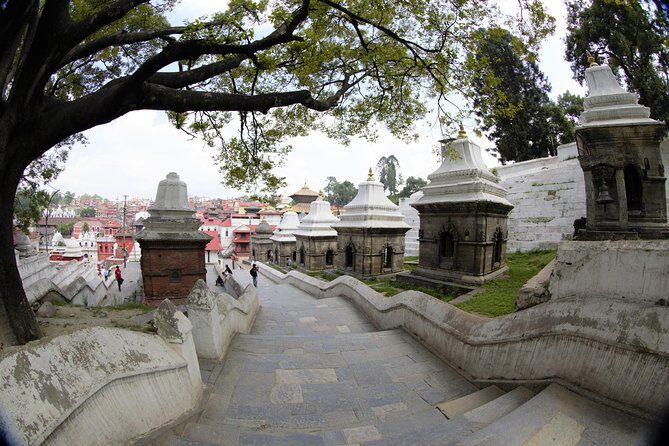
The day’s first stop is Pashupatinath Temple, dedicated to Lord Shiva (also known as Pashupatinath, the Lord of Animals). It’s more than a temple building in the common travel sense. It’s described as a final destination for Hindu devotees, so your experience is tied to real religious practice, not just sightseeing.
This stop is where the tour’s “Temple” part becomes most intense. You’re not just hearing that Shiva is a major figure; you’re stepping into a sacred place linked to life, death, and devotion. The itinerary specifically points to the chance that you might see a cremation at the cremation places connected with the temple area.
Time on site is about 2 hours. That’s enough to take in the setting, listen to the guide’s explanations about what you’re seeing, and ask questions without feeling rushed.
A practical consideration: because this site is tied to devotion and cremation activity, things can feel busy or emotionally serious. If you’re the type of traveler who prefers a calm, photo-and-move pace, go in with a steady mindset. This is a religious landmark first, and a tourist site second.
Durbar Square and the Malla kings: royal palaces, Newari style, and a big-picture story
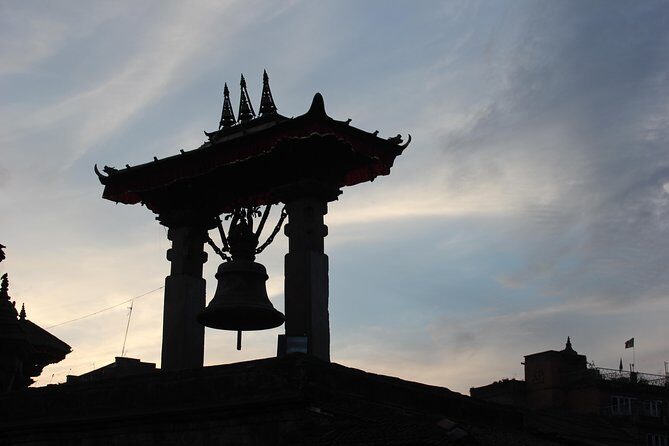
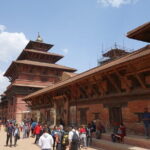
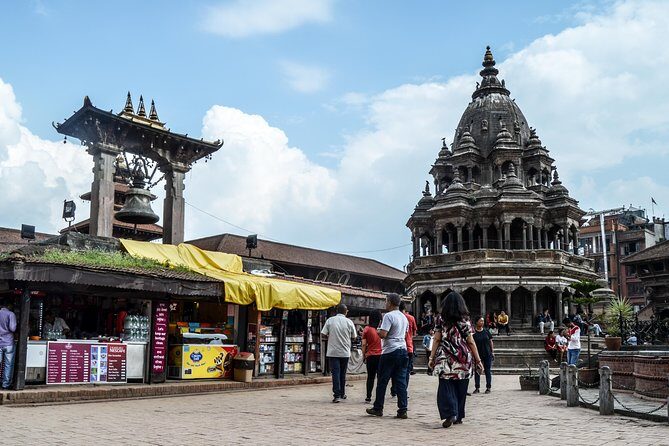
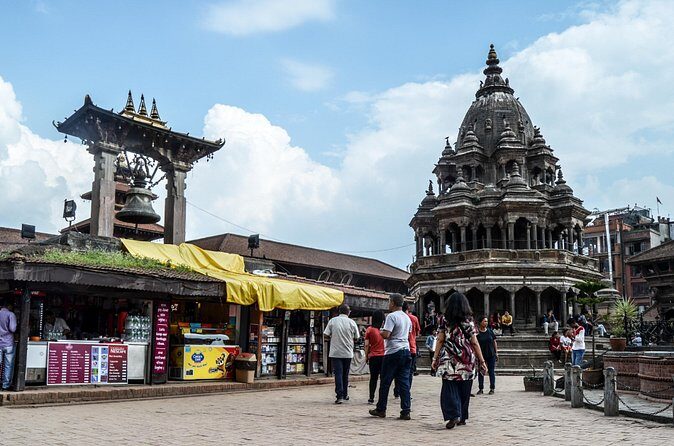
Next you’ll head to Durbar Square (Central), with the stop described around Newari architecture and the former royal palace of the Malla kings. Even if you don’t know the names yet, the structure of the stop makes sense: you’re shown the kind of architecture and royal-era space where Kathmandu’s history becomes physical.
This portion is listed for about 2 hours, and it’s the best place on the route to connect dots between religion, power, and everyday city life. “Follow in the footsteps of kings” isn’t just marketing copy here. You’re moving through spaces that were designed for authority and ceremonial life, and your guide is there to translate how that royal past shaped what you see today.
One small drawback to keep in mind: not every minute between stops comes with nonstop instruction. In the van, the guide and driver may focus on logistics, and you might not get constant narration. If you want more background while traveling, ask early. A good guide will usually adjust and keep the learning going.
Boudhanath Stupa: Buddhist faith that Hindus also respect
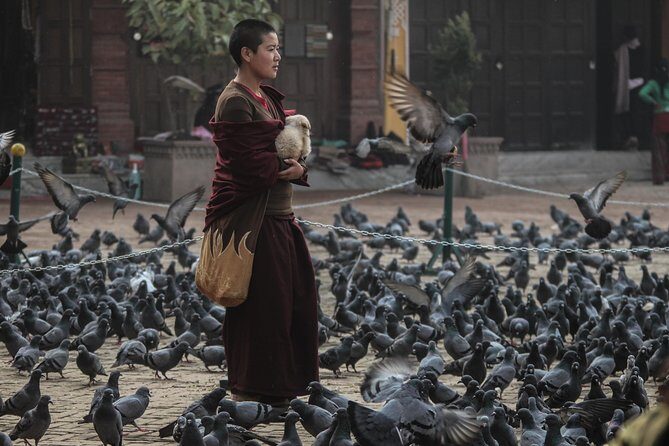
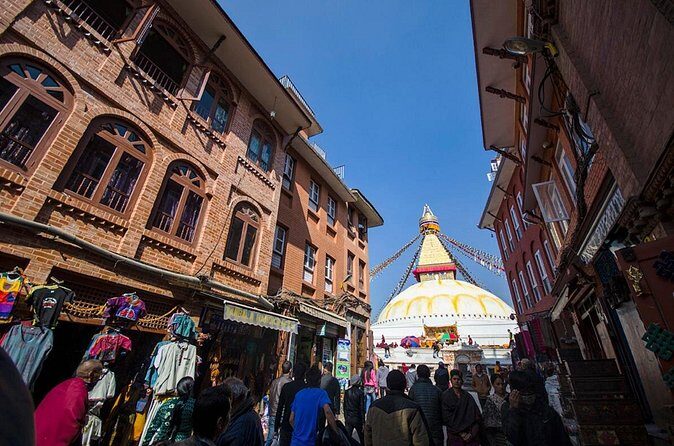
The last major stop is Boudhanath Stupa, described as one of Nepal’s holiest sites. This is the part of the tour that feels most “still,” even if the streets around it are active.
Here’s the key idea to listen for: Boudhanath isn’t only Buddhist. The tour description notes that Hindus of Nepal also pay respect there, so the atmosphere tends to reflect shared reverence more than strict separation. That matters, because Kathmandu often feels like overlapping layers—temples and stupas that coexist in the city’s spiritual map.
You get around 2 hours at this stop too. With a guide, you’re not just looking at a landmark; you’re getting context about Nepalese religion and culture as it connects back to the other sites you’ve already visited.
If you like your sightseeing with a viewpoint, Boudhanath can deliver. It’s the kind of place where you can pause and feel the spiritual rhythm of the area. And if you’re finishing the day after Pashupatinath and Durbar Square, it also offers a natural emotional shift: from intense devotion tied to cremation places, to royal-era buildings and then to a stupa that represents faith in a different tempo.
Price and logistics: what $34 buys, and what to plan for
At $34.00 per person, this tour is trying to be a budget-friendly way to do three big names in one day. The value logic is simple: you’re paying for an English-speaking guide and transport by air-conditioned vehicle, without spending your time negotiating rides or sorting out the order yourself.
However, you’re not paying for entrances. Entrance fees are applicable for children age 10 and above, and the tour notes that all fees and taxes are not included. One guest reported paying 2000 rupees total at two stops (1000 rupees each at two sites). That doesn’t guarantee the same total for every day, but it gives you a realistic ballpark to carry in your pocket or plan for in your budget.
Also notice what’s not included. There’s no food or drinks, and there’s no hotel pickup and drop-off—you meet at the tour’s office location and the tour ends back at that same meeting point. If you’re staying far from Lal Durbar Marg, you’ll want to plan your own way there, then handle your ride afterward.
One more small detail that can help your day: the tour uses a mobile ticket. That’s usually one less paper hassle, especially if you’re juggling your phone anyway.



Guide quality can make or break the whole day
This is one of those tours where the guide really matters. The highest-rated experiences in the feedback highlight guides who explain Nepal’s religion and culture clearly while still answering questions during the day.
Two names show up in standout feedback: Ms. Deepa and Kalpana. In both cases, the praise is about more than giving facts. The positive comments point to guides who keep talking and teaching, even beyond the usual “walk to the next stop” script. One guest even notes that the guide was willing to answer questions during the lunch break, which tells you the instruction quality wasn’t limited to the official photo moments.
That’s the biggest upside of a guided small-group tour: you get meaning with your monuments. At sites like Pashupatinath and Boudhanath, the guide’s context helps you understand why people come, what they’re doing, and what the site represents inside Nepalese life.
At the same time, there’s a counterpoint: one review described a calmer period in transit where the guide and driver chatted in Nepalese and the guest didn’t get much commentary during the drive. The practical fix is simple—bring your curiosity. Ask for clarification when you board, and don’t wait until you’re already inside a site to ask the bigger questions.
Timing, comfort, and pacing: small group, big sights
With about 7 hours on the clock and roughly 2 hours at each stop, the tour follows a “enough time to see, not enough time to get bored” rhythm. That’s ideal if you want a full taste of the Valley without turning your day into a multi-hour museum slog.
The group size limit—maximum 10 travelers—helps the pacing. You’re less likely to feel swallowed by a crowd, and the guide can keep track of everyone’s questions and timing.
The air-conditioned vehicle is a genuine comfort win, especially if your morning starts earlier than you want or if the day heats up. And since the tour is near public transportation and starts from a fixed location, it’s easier to build around it than a pick-up-heavy tour that has you waiting at the curb.
Should you book this Temples and Stupas tour?
Book it if you want a low-stress, organized way to hit three UNESCO-famous Kathmandu Valley sights in one day, with English guidance and small-group pacing. It’s also a strong choice if you don’t want to spend your Kathmandu time sorting out rides between far-flung neighborhoods.
Skip or rethink it if you’re hoping for a tour where entrances are included in the price, or if you hate the idea of paying extra for fees later. Also reconsider if your schedule is fragile—this tour runs at a specific start time, and it’s not described as a flexible itinerary.
My take: at $34, the value is in the guide + transport package. The best results come when you show up ready to ask questions—especially at places where religion isn’t a backdrop, it’s the point.
FAQ
What is the duration of the Temples and Stupas tour in Kathmandu Valley?
The tour is listed as about 7 hours.
What time does the tour start?
It starts at 9:00 am.
Where is the meeting point?
The meeting point is Royal Mountain Travel, Lal Durbar Marg, Kathmandu 44601, Nepal.
What stops are included?
The tour includes Pashupatinath Temple, Durbar Square (Central), and Boudhanath Stupa.
Is the entrance fee included in the $34 price?
No. Entrance fees are not included, and the tour notes entrance fees apply to children 10 years and above.
What’s included in the tour price?
Included items are an English-speaking tour guide and transport by air-conditioned vehicle, based on group size.
Do they provide hotel pickup and drop-off?
No hotel pickup/drop-off is listed. The tour ends back at the meeting point.
What is the cancellation policy?
You can cancel for a full refund up to 24 hours before the experience starts. If you cancel less than 24 hours before, the amount paid is not refunded.