REVIEW · KATHMANDU
UNESCO Seven World Heritage Tour in Kathmandu
Book on Viator →Operated by Himalayan Advisor Pvt. Ltd. · Bookable on Viator
Kathmandu temples aren’t random; they’re a full story. This private UNESCO tour strings together Swayambhunath, Kathmandu Durbar Square, Patan Durbar Square, Bhaktapur Durbar Square, Changu Narayan, Pashupatinath, and Boudhanath in one efficient day with a comfortable car and an English-speaking guide.
I really like two things here. First, you get entry tickets included for the UNESCO stops, so you spend less time hunting for booths and more time actually looking. Second, the guides (I’ve heard praise for people like Shanti, Pankaj, Kabita, Sarita, and Som) focus on context and will match the pace to your questions, not just herd you through. One possible drawback: it’s a long day with lots of walking and stairs, so comfortable shoes, water, and a realistic expectation of “a lot, but worth it” matter.
In This Review
- Key highlights worth your attention
- Why one private day works for Kathmandu Valley’s UNESCO sites
- Price and logistics: what $180 gets you (and what it doesn’t)
- How the route stays efficient in Kathmandu traffic
- Swayambhunath (Monkey Temple) and Amideva Buddha Park: hill views and spiritual layers
- Kathmandu Durbar Square and Kumari Chowk: royal space, living tradition
- Patan Durbar Square, Krishna Temple area, and the Golden Temple complex
- Bhaktapur Durbar Square and nearby temple stops: the City of Devotees feel
- Changu Narayan: the hilltop UNESCO classic
- Pashupatinath and Boudhanath: two faiths, two atmospheres
- Pashupatinath Temple
- Boudhanath Stupa
- The guide makes or breaks the day: names and what they did well
- What to wear, bring, and plan for (so the day feels fun)
- Should you book this UNESCO Seven tour?
Key highlights worth your attention
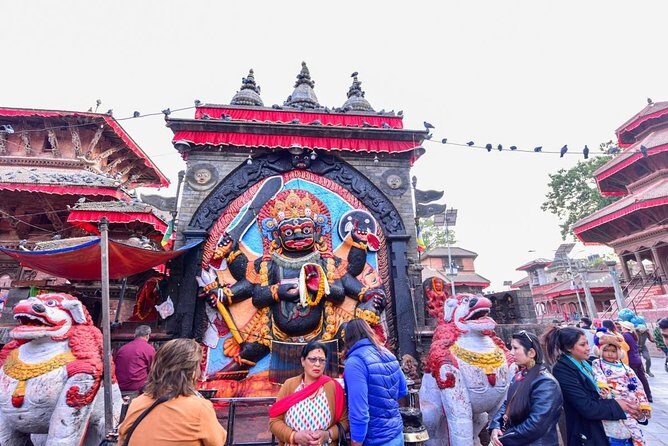
- Seven UNESCO World Heritage Sites in one day: a smart fix for short stays.
- Private car between stops: you lose less time to traffic and get more sighting hours.
- English-speaking guide on hand all day: explanations at each site, not just at the first stop.
- Entry fees covered for the 7 heritage sites: fewer hassle points during tight time.
- Bhaktapur’s temple-heavy streets: great contrast with the bigger Kathmandu/Patan squares.
- Changu Narayan as the hilltop pause: one older, calmer-feeling stop that still fits the schedule.
Why one private day works for Kathmandu Valley’s UNESCO sites
Kathmandu Valley is big on meaning and dense on stone. If you’re here for just a few days, trying to plan seven UNESCO stops by yourself can turn into a logistics puzzle: timings, tickets, and getting from one side of the valley to the other.
This tour is built for the “see the essentials first” moment. You get a dedicated guide and a private vehicle, so your day stays active without turning into constant map-checking and taxi bargaining. The tradeoff is that you’re packing in a lot, so you’ll want to slow down mentally inside each site, even if the route itself is fast.
You can also read our reviews of more historical tours in Kathmandu

Price and logistics: what $180 gets you (and what it doesn’t)
At $180 per person, the value comes from what’s included. The tour covers a private vehicle, an English-speaking guide, hotel pickup and drop-off, and all required entry fees for the seven UNESCO heritage sites.
That matters because it removes two common day-trip costs:
1) guide time and transport time (the big-ticket parts), and
2) the “small” ticket fees and on-site queue time that add up across multiple sites.
Lunch is not included, and tips aren’t included either. In Bhaktapur, you can choose from plenty of options, and the tour leaves that decision to you—handy if you have dietary needs or want a specific place to eat.
How the route stays efficient in Kathmandu traffic
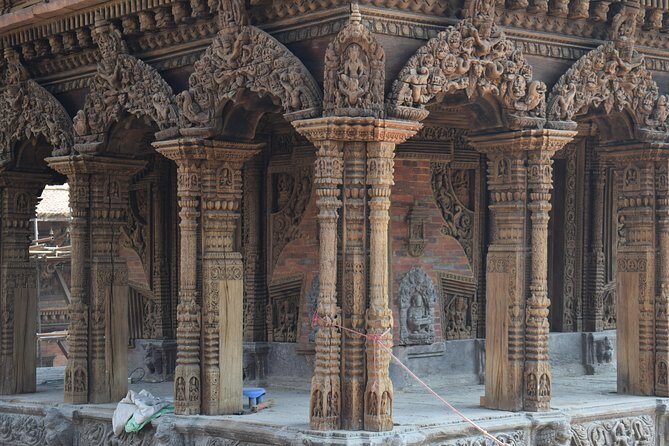
Kathmandu roads can be intense, and the best way to handle it is to avoid unnecessary zig-zags. This is why the day is designed around a private car and a guide who knows how to time stops.
A pattern shows up in how people describe the experience: the day starts early (around 7am in at least one guest’s experience), then keeps moving in a loop that clusters major sites by area. When you’re doing seven UNESCO sites, this is the difference between a smooth day and a chaotic one.
Practical advice: treat the tour like a “heritage sprint.” You’ll be walking through temple courtyards, climbing stairs at viewpoints, and standing in busy areas. Bring sun protection and plan for steady hydration.
Swayambhunath (Monkey Temple) and Amideva Buddha Park: hill views and spiritual layers
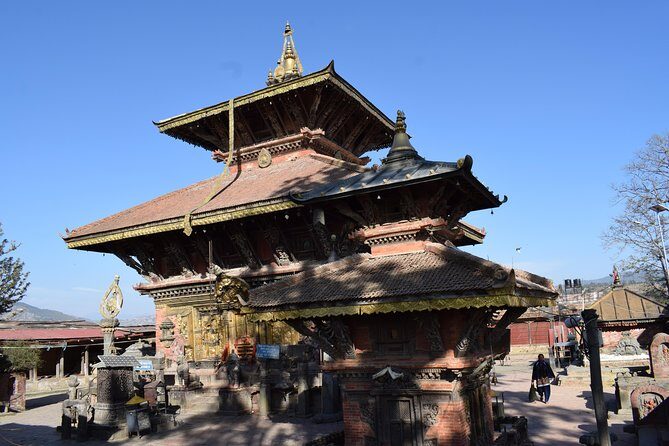
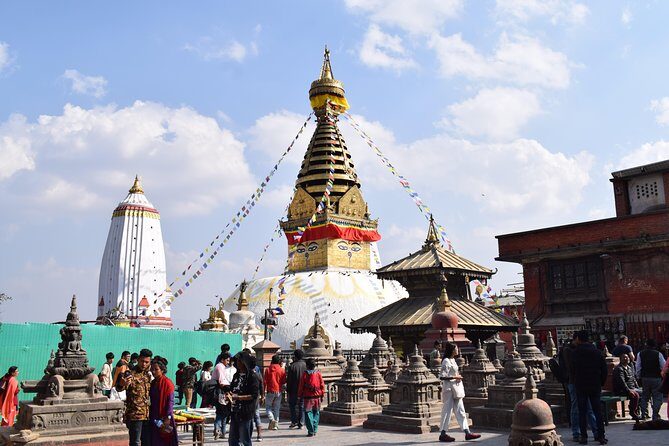
Most days begin with Swayambhunath, the stupa often called the Monkey Temple, perched on a hill. This stop is worth it even if you’ve seen photos, because you can feel how the religious spaces overlap: Hindu shrines and Buddhist symbolism appear side-by-side, all on one prominent viewpoint.
Plan for the physical part here. There are 365 stairs to reach the top area, so your legs get a workout early. Once you’re up, you’ll see prayer wheels you can spin and a wide city view that’s one of the easiest ways to orient yourself in Kathmandu.
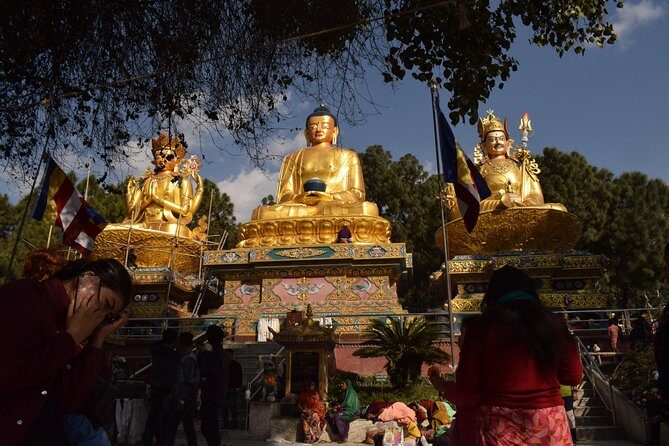
Right after, the route often includes Amideva Buddha Park. It’s short, but it adds variety: large Buddha statues and a calmer feel compared to the stair-and-crowd energy of the hill. Even with limited time, this works because you’re not just repeating one style of sight.
Watch-outs at this stop: wear shoes with good grip, and keep your hands free for photos while climbing. If you’re sensitive to crowds, go a little slower as you enter the stair sections.
Kathmandu Durbar Square and Kumari Chowk: royal space, living tradition
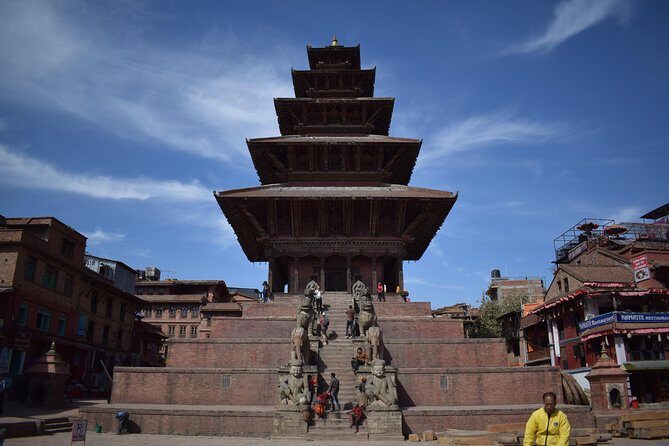
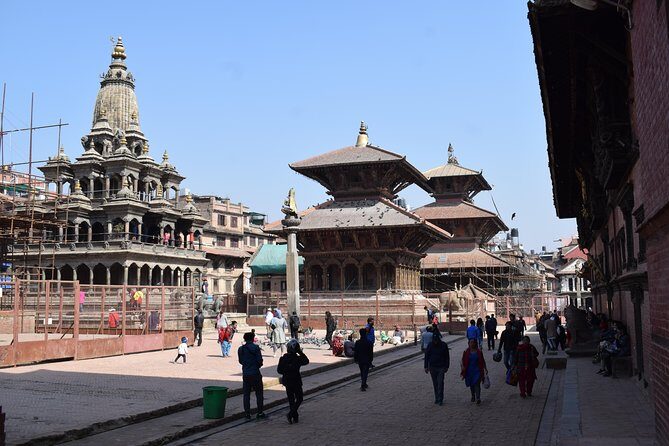
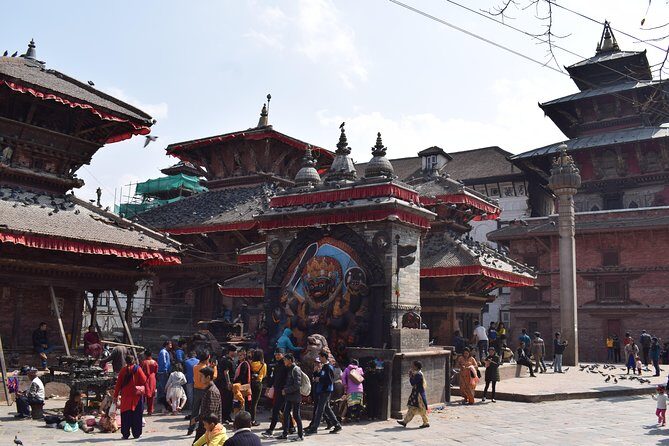
Next comes the royal core: Kathmandu Durbar Square. This area is full of stone temples and sacred architecture, but it also includes parts that are under reconstruction. That’s not a dealbreaker—it’s Kathmandu’s reality—but it does mean some sections may look unfinished or have scaffolding.
A big highlight here is the nearby experience of Kumari Chowk, tied to the Kumari, a girl chosen as a living goddess until puberty. You’re stepping into a ritual courtyard setting, and the surrounding buildings add that old-world “this is where power and devotion meet” feeling.
The guide role really matters at these stops. With the right explanations, Kumari Chowk and the Durbar Square sites stop being random courtyards and become a connected story about how Kathmandu’s religious life has been organized for centuries.
Consideration: this is a good place to take short pauses. The stonework is detailed, and it’s easy to rush if you’re trying to keep up with the car schedule.



Patan Durbar Square, Krishna Temple area, and the Golden Temple complex
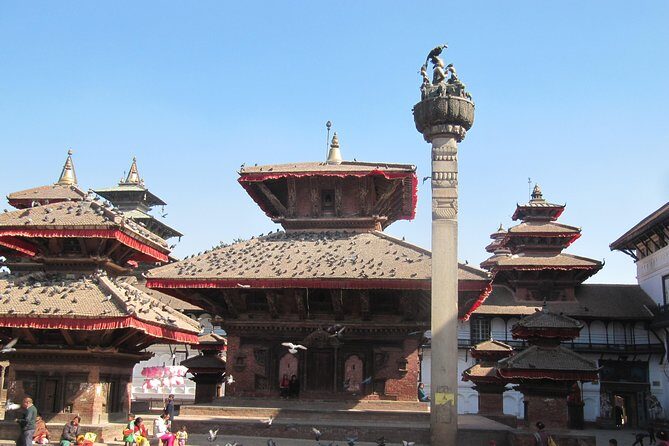
From Kathmandu’s square energy, the tour typically shifts to Patan Durbar Square in Lalitpur. Patan is known for Newari architecture and a distinct craft tradition, and the square gives you a tight sense of that style without needing extra navigation.
Within the Durbar area, you’ll also see the Krishna Temple area with stone artistry, plus a dense cluster of shrines and sculpted features. Again, the guide helps you decode what you’re looking at so you don’t just see “more carved stone.”
Then the tour often adds two bonuses:
- Hiranya Varna Mahavihar (the so-called Golden Temple)
- Patan Museum (inside the Keshav Narayan Chowk area)
The Golden Temple stop is quick, but it adds visual contrast with its pagoda-style temple vibe and metal statues. The Patan Museum is a smart counterbalance: you get context after hours of outdoor viewing, and it helps you connect the artistic details you just saw to broader cultural history.
Potential drawback: because you’re moving through several areas in one stretch, you might feel a “speed blur” if you prefer slow sightseeing. If you know you want time for photos, tell your guide early and plan to linger on the best carvings.
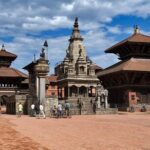
Bhaktapur Durbar Square and nearby temple stops: the City of Devotees feel
Bhaktapur is where the day gets especially interesting. You’re still in heritage mode, but the scale and vibe shift. The tour visits Bhaktapur City, often described as the City of Devotees, with many older houses and structures intact.
Inside the Bhaktapur portion, you may see a chain of stops that build the sense of a working historic town, not just a single landmark:
- Nyatapola Temple (a five-level pagoda-style temple; one of the tallest pagodas in the area)
- Dattatreya Temple in Dattatreya Square (believed to be built using a single tree trunk)
- 55 Window Palace (a palace-like structure named for its many carved windows)
- Siddha Pokhari (a man-made pond near the first city gate)
This cluster matters because Bhaktapur is about rhythms—courtyards, temple silhouettes, and carved facades you notice more as you walk. It’s also one of the best places for “stand and look longer” moments.
A practical note: Bhaktapur can involve extra walking and some stair climbing, even if each temple stop is short. If you’re already tired from Swayambhunath earlier, this is where your pace control matters. The best guides won’t rush you just to hit a checklist.
Lunch tip for you: lunch in Bhaktapur is on your own. That’s a plus, not a problem. If you’ve got an appetite preference, use it. Sitting down for a real meal also helps you reset for the late-day UNESCO sites.
Changu Narayan: the hilltop UNESCO classic
Changu Narayan Temple is the oldest major temple in the Kathmandu Valley area, tied to the Licchavi period records (as described in the tour info). It’s also set on a hilltop, which makes it feel like a genuine detour rather than another quick square stop.
The temple is known for stone and wooden carvings, and it’s a great mid-to-late-day change of pace. After the density of durbar squares and stupa areas, this stop feels more focused: a strong single place to look closely.
One-hour time here is generous compared to some other stops, and that extra time helps because carvings reward attention. If you like detail, this is one of your best chances all day.
What could slow you down: if you spend a lot of time reading every carving, it’s easy to lose track of the clock. Tell your guide what you enjoy most (carvings vs. views vs. symbolism) so they can protect your time.
Pashupatinath and Boudhanath: two faiths, two atmospheres
Near the end of the day, the tour typically brings you to Pashupatinath Temple and Boudhanath Stupa—two heavy hitters for Hindu and Buddhist pilgrimage.
Pashupatinath Temple
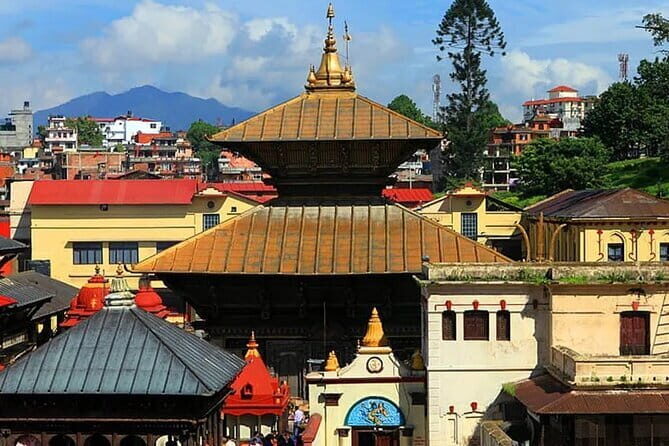
Pashupatinath is described as one of Nepal’s largest temple complexes, with more than 500 temples and shrines in the area. It covers about 0.64 hectares, and it’s not just a building—it’s a whole sacred zone.
Plan on spending time absorbing the scale and the variety of shrines. You may also encounter daily ritual energy, which changes the feel of the place compared to quieter heritage sites.
Boudhanath Stupa
Then it’s on to Boudhanath Stupa, famous for its tall mandala shape—36 meters—with many surrounding gompas. This is a major Buddhist pilgrimage spot, and it tends to feel steady and rhythmic compared to the more complex Hindu temple zone.
Even a shorter stop works if you know what to look for: the stupa’s form, the surrounding practice spaces, and the way people move around the monument.
Consideration: these are popular sites, so expect crowds. If you want the cleanest photos, you’ll likely need patience and good timing rather than speed.
The guide makes or breaks the day: names and what they did well
A pattern in the feedback is consistency: the guides don’t just recite facts. They explain how the sites fit together—Hindu and Buddhist connections, historical context for the temples, and practical advice for what to notice.
You’ll see praise tied to guides like Shanti, Pankaj, Kabita, Sarita, and Som. Common themes include:
- strong explanations of Hindu and Buddhist religion and temple history
- a friendly, respectful approach
- flexibility when you want extra time for photos or questions
- pacing that avoids the feeling of being shoved along
If you care about understanding what you’re looking at, this is one of your best reasons to choose this tour.
What to wear, bring, and plan for (so the day feels fun)
The stated dress code is smart casual. That’s your baseline. But for comfort, I’d treat this as a walking tour with temple stairs.
For you, that means:
- good walking shoes (non-slip grip helps)
- sun protection
- water
- a small bag you can manage while walking and climbing stairs
Also, expect information overload. The day includes a lot of sites, plus museums and multiple temple stops. The trick is to pick one thing to focus on at each location: carvings at Changu Narayan, stupa views at Swayambhunath, temple scale at Pashupatinath.
Should you book this UNESCO Seven tour?
Book it if:
- you want the fastest way to see all seven UNESCO World Heritage Sites in Kathmandu Valley in one shot
- you prefer private transport and an English guide over DIY planning
- you like having entry fees handled so you can focus on the sights
Skip or reconsider if:
- you hate long days and lots of stairs
- you want a slow, in-depth study of just one or two places
- you’re the type who needs a lot of downtime between stops
My take: this tour is best for getting your bearings fast. You’ll come away with a clear mental map of Kathmandu Valley’s most important sacred sites, plus enough context to choose what to revisit later—without trying to orchestrate seven separate days on your own.