REVIEW · KATHMANDU
Annapurna Base Camp Trek
Book on Viator →Operated by Mount Elegance Treks and Expedition · Bookable on Viator
Himalayas are still the main event. What makes this trek appealing is how carefully it handles the hard parts for you: permits, transfers, guide, and porter are built in, so your days focus on walking, views, and simple rhythm. The trek route also includes classic stops like Ghandruk, Annapurna Base Camp, and Jhinu Danda, with altitude steps that help you adjust rather than rocket straight upward.
Two things I like a lot: first, you get a licensed, English-speaking trekking guide plus porter service (a porter for 2 trekkers). Second, meals on the trail are set up as full board (breakfast, lunch, dinner) with tea/coffee, so you are not constantly negotiating for food at altitude.
One thing to consider: the comfort level is still realistic for the Himalayas. You should expect teahouses and basic amenities, and the package does not include hot showers during the trek.
In This Review
- Key highlights at a glance
- From Kathmandu arrivals to Pokhara lakeside rest
- Why the Kathmandu–Pokhara setup helps
- Ghandruk to Sinuwa: a village-to-forest climb that sets the pace
- What to expect here (and how to enjoy it)
- Sinuwa to Deurali: bamboo forests and a higher ceiling
- Practical tip for this day
- The Annapurna Base Camp day: 4,130m and your reward moment
- How to make the most of Base Camp
- Base Camp down to Bamboo: the smart part of recovering
- Why this stop is useful
- Bamboo to Jhinu Danda: forest walking and a lower finish
- What you should know about the “comfort” here
- Back to Pokhara, then Kathmandu: the last stretch is travel, not training
- Teahouses, meals, and the comfort level you’re paying for
- My value take: where your $240 really goes
- Guides and porters: how that affects your energy and safety
- Permits, gear bags, and what you still need to bring
- Who this trek suits best
- Should you book this Annapurna Base Camp trek?
- FAQ
- What is the highest altitude on this trek?
- How long is the Annapurna Base Camp trek package?
- Does the price include permits for the Annapurna region?
- Are meals included during the trek?
- What kind of accommodation do you get in Kathmandu and Pokhara?
- Will you have to share a room on the trek?
- Is hot shower available during the trek?
- Do you get a guide and porter service?
- What does the package not include?
- Is cancellation free, and what happens if weather is bad?
Key highlights at a glance
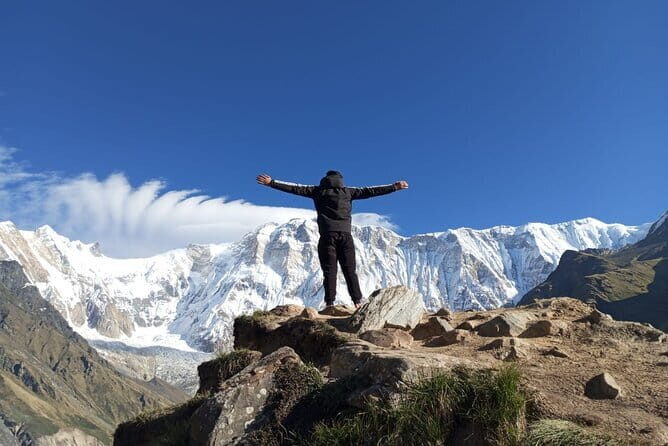
- Licensed English-speaking guide: you are not left to figure out the route, pace, or altitude logic on your own
- Porter support for 2 trekkers: less weight on your back can make a big difference by day 5 or 6
- Permits included (ACAP + TIMS): you avoid last-minute paperwork stress before you start hiking
- Kathmandu + Pokhara in 3-star hotels: you get solid rest before and after the trek
- Full-board meals on trail: breakfast, lunch, and dinner keep the day simple at altitude
From Kathmandu arrivals to Pokhara lakeside rest
Your trip starts in Kathmandu, with an airport greeting and a transfer to your hotel. Day 1 is light on purpose: you arrive around 1,400m and get breakfast, then you can sleep off travel and get your gear sorted. The hotel base matters because you’ll want energy for the long drive and your first trekking day.
Then comes the 200 km drive to Pokhara on Day 2 (about 7–8 hours). This is not the time to overplan. If you treat this as a travel day, you’ll arrive in Pokhara feeling ready rather than cranky. Pokhara sits much lower (about 822m), which is exactly what you want before climbing again on Day 3.
You can also read our reviews of more hiking tours in Kathmandu
Why the Kathmandu–Pokhara setup helps
This trek is physically demanding mainly because of altitude, not just distance. Having proper hotel time in Kathmandu and Pokhara gives you better chances to sleep, eat well, and start the trek with clean energy. It also means you’re not scrambling for transfers while jet-lagged.
Ghandruk to Sinuwa: a village-to-forest climb that sets the pace
Day 3 is where your trek truly begins. You drive about 41 km to Nayapul, then walk about 5 km to Ghandruk. You’ll see a mix of village life and footpath hiking, and Ghandruk is high enough to feel the altitude already (about 1,940m). The day’s structure helps: it’s not a huge trek distance, but it still gets you moving.
Day 4 pushes upward. The hike is around 12 km and usually takes 6–7 hours, climbing from Ghandruk to Sinuwa (about 2,340m). The trail pattern is described as descending toward the Kimrong Khola and then climbing again. That up-and-down mix is common in the Annapurna region, and it is also a good test of pacing. You want steady breathing, not speed.
What to expect here (and how to enjoy it)
You’ll likely feel your legs first and your breathing second. If you go too hard on Day 4, altitude will punish you later. If you keep it calm, this part of the route becomes one of the best “warming up” phases—villages at lower altitude, then forest walking as you rise.
Sinuwa to Deurali: bamboo forests and a higher ceiling
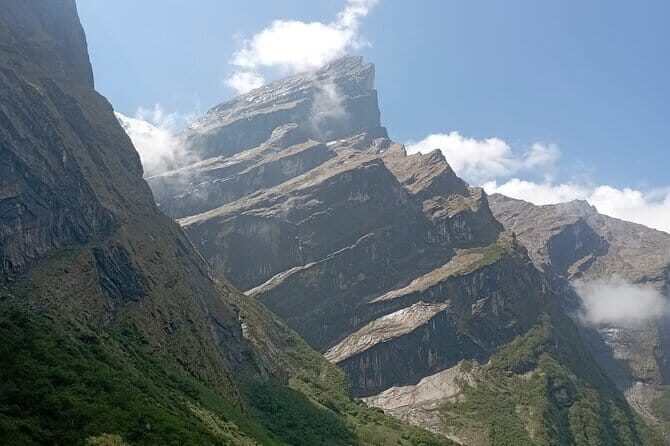
On Day 5, you walk about 10 km in roughly 6–7 hours to Deurali (around 3,200m). The trail is described as passing through lush bamboo forests with a gradual climb. Bamboo forest trekking is a nice change of scenery, and it also tends to reduce glare and heat compared with fully exposed paths.
This is also the point where you should take altitude seriously, even if you feel fine at the start of the day. Deurali is already high enough that a slow pace pays off. You are building a buffer for the big jump to Annapurna Base Camp the next day.

Practical tip for this day
Keep your effort consistent. The route profile matters less than how steady you move. If you can hold a conversational pace, you’ll usually arrive in better shape for the next day’s ascent.
The Annapurna Base Camp day: 4,130m and your reward moment
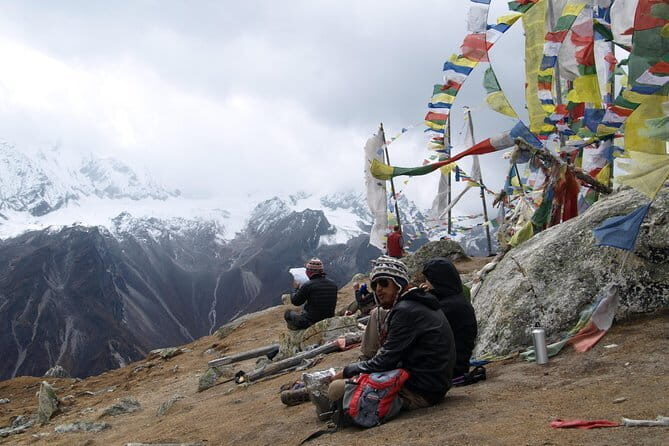
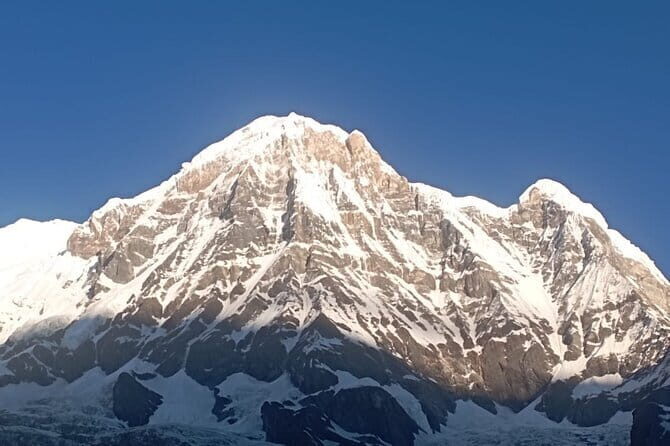
Day 6 is the highlight day: about 9 km and 6–7 hours to Annapurna Base Camp at roughly 4,130m. This is the trek day that people remember because the altitude and the scenery hit at the same time. You’re not just walking to a point on a map. You’re arriving in a high-altitude bowl where weather can change quickly and the views feel immediate.
Because the itinerary feeds you full meals (breakfast, lunch, dinner) during the trek, you can plan your calories without guessing. That kind of structure matters on the hardest days—especially when appetite can drop if you push pace too hard.
How to make the most of Base Camp
Even if you feel strong, don’t treat Base Camp like a sprint finish. Plan for breaks. You’ll want time for photos, a slow look around, and a moment to breathe in the altitude before heading into the descent.
Base Camp down to Bamboo: the smart part of recovering
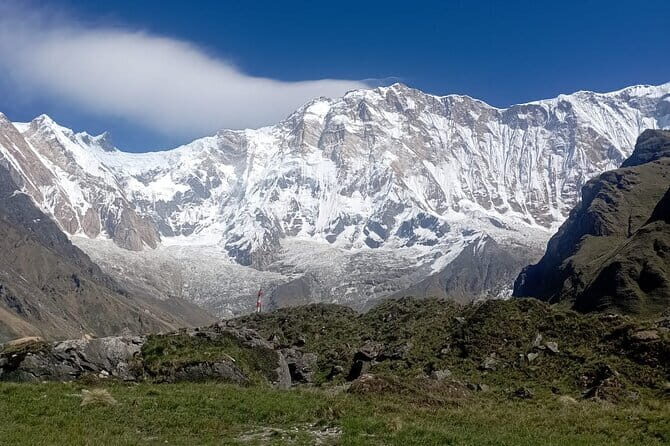
Day 7 starts with the Base Camp morning and then becomes a descent day. You walk about 13 km for 6–7 hours, dropping to Bamboo around 2,310m. This is a big elevation change, so the main challenge is your knees and feet, not your lungs.
Descending can feel easier than climbing until you realize how hard it is on your stride. If you’ve been using your trekking poles, this is where they earn their keep. Keep steps short and controlled.
Why this stop is useful
Stopping in Bamboo at a lower altitude gives your body time to recover before the next set of forest trails. It also keeps the itinerary from being a nonstop altitude grind.
Bamboo to Jhinu Danda: forest walking and a lower finish
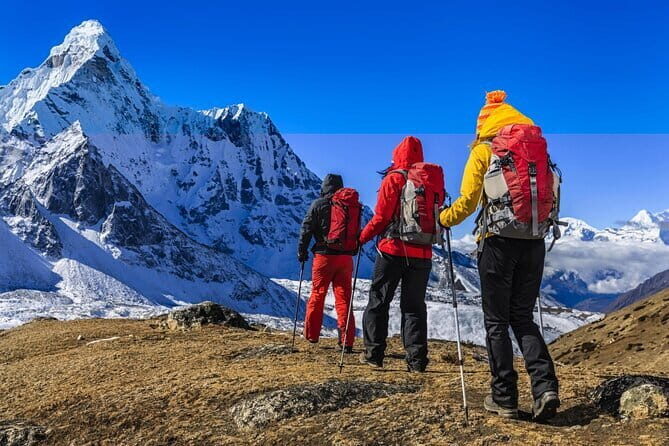
Day 8 continues the descent toward Jhinu Danda (about 1,780m). The trek is around 11 km and typically takes 5–6 hours. The route description emphasizes a pleasant journey through lush forest, which is exactly what you want after the long Base Camp-to-Bamboo day.
You’ll finish in Jhinu Danda and then shift back toward more comfortable travel. This section often feels slower because the lower altitude makes the effort feel more manageable.
What you should know about the “comfort” here
You’re still in trekking mode—teahouses, shared facilities, and mountain weather considerations. But dropping toward 1,780m usually makes you feel more like yourself. That’s a good psychological win on Day 8.
Back to Pokhara, then Kathmandu: the last stretch is travel, not training
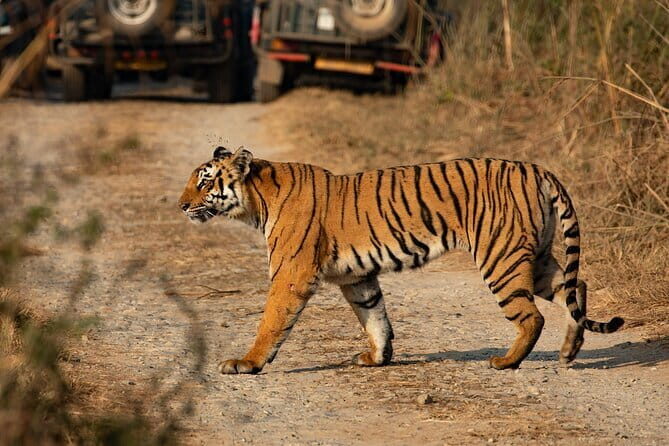
Day 9 brings you to Pokhara again. The day starts with about a 6 km trek and then a drive of around 2–3 hours. You end up back at about 822m, which is where altitude stress becomes far less noticeable. It also means you can eat normally and sleep comfortably.
Day 10 is a return drive to Kathmandu (about 200 km, 7–8 hours). Again, treat this as travel time. You are done with the big physical work, so your goal is smooth rest, not sightseeing sprinting.
Day 11 is a relax-and-wrap day in Kathmandu, depending on your flight time.
Teahouses, meals, and the comfort level you’re paying for
This trek is not marketed as five-star mountain living, and you shouldn’t expect it. Still, the “comfort” here is practical. During the trek you get twin sharing accommodation in teahouses described as best available, plus full-board meals with tea/coffee.
A few key points that affect your day-to-day experience:
- No hot shower during the trek means you’ll want to manage hygiene with wipes and quick wash planning.
- Alcohol and bottled water are not included, so factor that into your budget if you like drinks at night.
- The package provides a first-aid kit and trekking support structure, which helps if you get a minor issue on a long hiking day.
My value take: where your $240 really goes
At $240 per person, the price is low enough that you should think of this as a well-organized, midrange trekking package rather than a luxury build. The best value comes from what is already handled for you: transfers, permits (ACAP + TIMS), guide, porter support, and most meals. If you tried to piece those parts together on your own, you’d likely spend more time and take on more risk.
Just remember what’s excluded: international airfare, Nepal visa fees, and travel or rescue insurance. Those are not small items, and they are your responsibility.
Guides and porters: how that affects your energy and safety
The experience includes an experienced, English-speaking guide who is government-licensed. That matters because in mountain trekking, navigation and pacing are part safety, part comfort. Even if you think you know the route, conditions can shift and trail details matter.
You also get porter service (1 porter for 2 trekkers). That can be the difference between enjoying the trek and arriving tired. Porters generally handle heavier loads, so you can keep your pack lighter. Lighter packs are especially valuable on the days with longer walking like Day 6 and Day 7.
One more detail: first-aid kit support is included. It doesn’t replace medical care, but it shows the operator is planning for typical trek issues.
Permits, gear bags, and what you still need to bring
Permits are included: Annapurna Conservation Area Permit (ACAP) and TIMS card. That is a real win because these can be time-consuming to sort out last minute.
The trek also includes a duffel bag and sleeping bag, but you should expect them to be returned after the trek. So don’t plan on taking the sleeping bag home.
Because the package does not include bottled water, alcohol, or beverages on trail, you should plan on buying drinking water separately. And since hot showers are not included, pack for mountain hygiene.
Who this trek suits best
This Annapurna Base Camp route fits people with moderate physical fitness who want a structured, supported trek. It is ideal if you:
- want a classic Annapurna Base Camp experience without self-planning permits and logistics
- like clear daily structure (meals and accommodations planned)
- appreciate a licensed guide and porter support to manage energy
It may be less ideal if you:
- require frequent comfort amenities like hot showers
- prefer totally independent travel with no guides or porters
- are not comfortable with high-altitude trekking, especially the day rising to about 4,130m
Should you book this Annapurna Base Camp trek?
If you value organization, solid support, and a straightforward plan, I think this is a smart way to do Annapurna Base Camp. The strongest selling points are the included guide and porter setup, the full-board meals during the trek, and the fact that permits and transfers are handled ahead of time. For $240, you are paying for logistics as much as you are paying for hiking.
If your personal travel style depends on hot showers and lots of extra comfort upgrades, you might feel the gap—because those are explicitly not included.
FAQ
What is the highest altitude on this trek?
Annapurna Base Camp is listed at about 4,130m (13,550ft), which is the top altitude on the itinerary.
How long is the Annapurna Base Camp trek package?
It’s listed as about 11 days.
Does the price include permits for the Annapurna region?
Yes. The Annapurna Conservation Area Permit (ACAP) and TIMS card are included.
Are meals included during the trek?
Yes. The package includes full board meals on the trek with breakfast, lunch, and dinner (plus tea/coffee).
What kind of accommodation do you get in Kathmandu and Pokhara?
You stay in a 3-star hotel in Kathmandu and Pokhara, including breakfast.
Will you have to share a room on the trek?
Yes. Accommodation during the trek is listed as twin sharing teahouses.
Is hot shower available during the trek?
No. Hot shower is not included during the trek.
Do you get a guide and porter service?
Yes. An experienced, English-speaking, government-licensed trekking guide is included, and porter service is provided (1 porter for 2 trekkers).
What does the package not include?
International airfare, Nepal visa fees, travel and rescue insurance, tips for trekking staff and driver, personal expenses, and alcoholic drinks and bottled water are not included. Lunch and dinner in Kathmandu and Pokhara are also not included.
Is cancellation free, and what happens if weather is bad?
Free cancellation is offered. If you cancel up to 24 hours in advance, you receive a full refund. If canceled due to poor weather, you’re offered a different date or a full refund, depending on circumstances.