REVIEW · KATHMANDU
Annapurna Base Camp Trekking
Book on Viator →Operated by Accessible Adventure Pvt. Ltd · Bookable on Viator
A 4,130m finish line changes your whole day. This Annapurna Base Camp trek is interesting because your logistics are mostly taken care of: guides, permits, tea house nights, and round-trip transport between Kathmandu and Pokhara. I really like that you get a licensed English-speaking trek guide plus porter help, and that you’re loaned trekking gear like a sleeping bag and down jacket for the cold. One drawback to plan for: meals on the trek and your hotels in Kathmandu and Pokhara are not included, so you’ll still spend money after you arrive.
I also like how the route mixes big-view days with quieter village days, so you’re not always climbing and always tired. You’ll be waking up early at least once for sunrise, then settling into steady walking toward the Annapurna Sanctuary. If you’re someone who needs lots of creature comforts at night, you might find teahouses pretty basic (though that’s part of the trekking deal).
In This Review
- Key takeaways before you go
- The Value Play: What $749.90 Really Buys You
- Kathmandu Arrival: Easy Start, Then a Real Trek Briefing
- Kathmandu to Pokhara: A Short Step That Sets the Tone
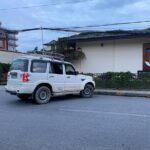
- Pokhara to the Trail: Nayapul’s Taxi Moment
- Ulleri and Ghorepani: The Climb You Feel in Your Legs
- Poon Hill Sunrise at 3,210m: Your Morning Reward
- Tadapani to Chuile to Sinuwa: Village Days That Add Up
- Deurali and the High Country: Toward Machhapuchhre Base Camp
- Annapurna Base Camp: The 4,130m Moment
- Down to Bamboo: Recovery Starts, But the Trail Keeps Moving
- Bamboo to Jhinu Danda: When You Trade Views for Relief
- Pokhara to Kathmandu: The Last 200km Feels Longer Than It Looks
- Who This Tour Suits Best
- The Best Part People Talk About: Guide and Porter Support
- Final Check: Should You Book This Annapurna Base Camp Trek?
- FAQ
- What is the duration of the Annapurna Base Camp trek?
- Where does the trek start?
- Is there a guide?
- Do I get porter support?
- What trekking gear is provided?
- Are permits included?
- Where do you stay during the trek?
- Are meals included?
- Is the Jhinu Danda hot spring included?
- Can I cancel for a full refund?
Key takeaways before you go
- Licensed English-speaking guide + porter system: you’re not on your own, and one porter is listed for two trekkers.
- Gear is included: duffle bag, sleeping bag, and down jacket for the trek days.
- Permits handled: TIMS and Annapurna Conservation Area Permit are included.
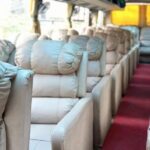
- Transport is simplified: round-trip tourist bus Kathmandu–Pokhara, plus private transfers to the trek start and end.
- Sunrise payoffs: Poon Hill is built into the early route before you head deeper toward ABC.
The Value Play: What $749.90 Really Buys You
At $749.90 per person, this package lands in the “good structure” category for the Annapurna region. The big reason is what’s included, not just the trek itself.
Here’s what your money is covering:
- Round-trip Kathmandu–Pokhara by tourist bus
- Private transfers to the trek starting point and ending point
- A licensed, English-speaking trekking guide
- Porter support (listed as one porter for two trekkers)
- Permits and government fees, including TIMS and the Annapadhna Conservation Area Permit
- Trek gear for you to use: duffle bag, sleeping bag, and down jacket
- Tea house accommodations along the trek (not just “maybe,” but as part of the plan)
- A first aid kit is mentioned in the tour overview, which matters when you’re far from clinics
What’s not included helps you budget realistically:
- Food during the trek (breakfast, lunch, dinner are not included)
- Accommodation in Kathmandu and Pokhara
- Cold drinks (and the day’s hot spring admission is listed as not included)
- If you’re traveling solo, porter for a solo traveler is noted as not included
So the value depends on your style. If you pack light, want permits handled, and prefer not to wrestle with logistics, this is a solid setup. If you’re counting every rupee, you’ll want to plan your daily meal costs and your hotel nights in the cities.
You can also read our reviews of more hiking tours in Kathmandu
Kathmandu Arrival: Easy Start, Then a Real Trek Briefing
Day 1 is set up for you to arrive, sleep, and get oriented. You meet a representative at the airport and get transferred to your hotel. Later, you’ll have a pre-trip meeting with your trek leader and get a briefing on what’s coming.
That briefing is small but important. A trek like Annapurna Base Camp has a rhythm—walking days, altitude changes, and cold nights. When your leader explains what to expect, you can focus on pacing and packing instead of guessing.
Practical note: the tour start time is listed as 6:00 am (for the meeting point). Even if the walking doesn’t start that moment, you should expect an early day.
Kathmandu to Pokhara: A Short Step That Sets the Tone
Day 2 heads from Kathmandu toward Pokhara Lakeside. Expect about a half-day of travel (the plan lists roughly 7 hours). Pokhara is your mountain-stage. It’s where you’ll feel the shift from city rhythm to trail rhythm.
The plan also includes time back on the city circuit in Kathmandu and a drive day arrangement, so you’re not rushing around at random hours. The key value here is practical: you get in position for the next morning’s drive and trek start.
Pokhara to the Trail: Nayapul’s Taxi Moment
The trek proper begins after a drive to the region and a taxi to Nayapul, which is the usual “flip the switch” point where city life is done and walking begins. Your route then threads through smaller stopping villages with increasing altitude and more frequent turns in the trail.
The plan’s day-to-day sequence builds altitude gradually:
- You start around 827 meters and head toward Tikhedunga/Ulleri area
- You move through stops like Birethanti, Ulleri, and Ghorepani
This approach matters because ABC isn’t just a single climb. It’s a sequence of climbs and rests. If you go too hard too early, you’ll pay later.
Ulleri and Ghorepani: The Climb You Feel in Your Legs
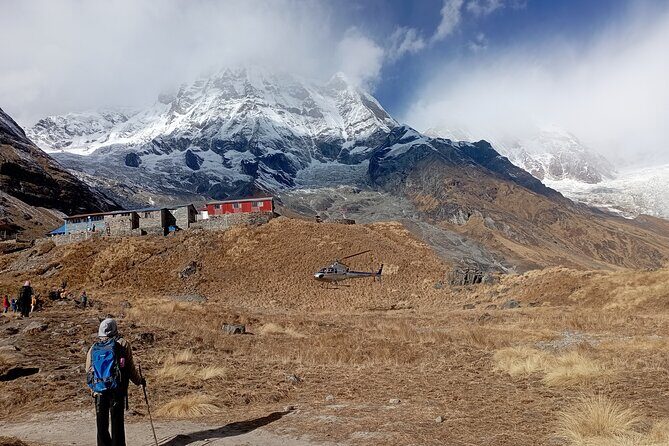
On the way to Ghorepani, you’ll spend time in the Tikhedhunga to Ulleri section. That part is often tough because the trail gains altitude steadily. In your plan, Ulleri is around 1,480 meters, and Ghorepani sits at 2,874 meters.
Why I like this part of the plan: it gives you a “controlled suffering” phase. You’re not yet at the high cold. You’re learning your pace.
Ghorepani is also where the big visual payoff starts to feel real. It’s a common base for sunrise plans, and it’s the springboard into the next days.

Poon Hill Sunrise at 3,210m: Your Morning Reward
Day 4 is built around an early sunrise at Poon Hill (listed around 3,210m). The plan says it’s a pre-dawn hike from Ghorepani, about a 45-minute push.
This day is worth it because it teaches you something:
- You’ll often feel cold and tired before you feel the reward.
- Then the peaks show up, and you realize why people do this trek.
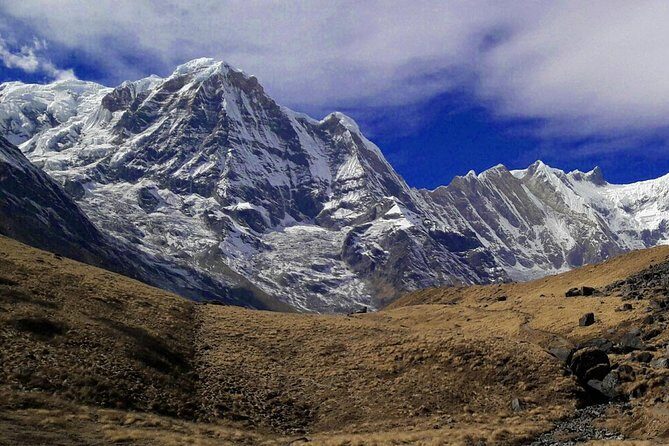
You then continue toward Tadapani (around 2,630m). The route is described with views of peaks like Machhapuchhre and Annapurna South, and that’s the shift from “I’m hiking” to “I’m watching mountains change shape as the light grows.”
If you’re prone to snoozing through alarms, set two. You’ll thank yourself later.
Tadapani to Chuile to Sinuwa: Village Days That Add Up
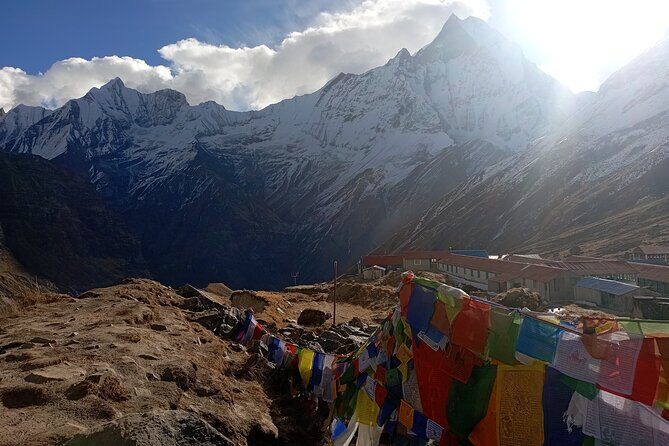
Days 5 and 6 carry you through a sequence of smaller settlements:
- Chuile (around 2,300m)
- Sinuwa (around 2,340m–2,360m)
- and then onward toward Deurali (listed around 2,890m after the next segment)
These days can feel slower in your head because you’re not always thinking about one huge summit moment. But that’s actually the point.
Sinuwa matters because it’s a staging area between key areas on the route—between Chhomrong and Bamboo on many ABC paths. In your plan, you’re moving through the Annapurna Sanctuary region toward higher ground, and these middle days help you acclimatize.
One realistic drawback: the higher you go, the less your body wants to cooperate. Your plan lists moderate fitness as a requirement, so if you struggle on steep days, you’ll want to train before you arrive.
Deurali and the High Country: Toward Machhapuchhre Base Camp
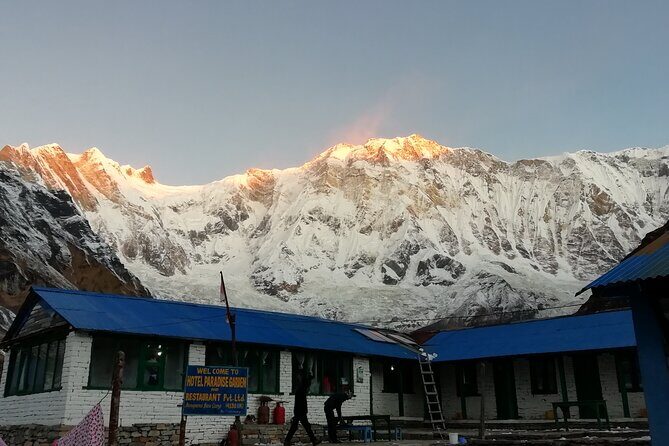
Day 7 is the big turning point. The climb starts from either 2,890m at Deurali or a higher starting altitude listed as 3,174m (depending on where you start that day). You move toward Machhapuchhre Base Camp (around 3,700m) and then up to Annapurna Base Camp at 4,130m.
Why this route is smart: it uses a stop like Machhapuchhre Base Camp to break up the day before the final push. That’s not just a scenic pause; it’s a pacing tool.
Even if you don’t love heights, your plan sets you up to reach ABC in a way that feels staged rather than a single brutal day. You’ll still feel the altitude, and that’s unavoidable. But you’re not thrown into the deep end without support.
Annapurna Base Camp: The 4,130m Moment
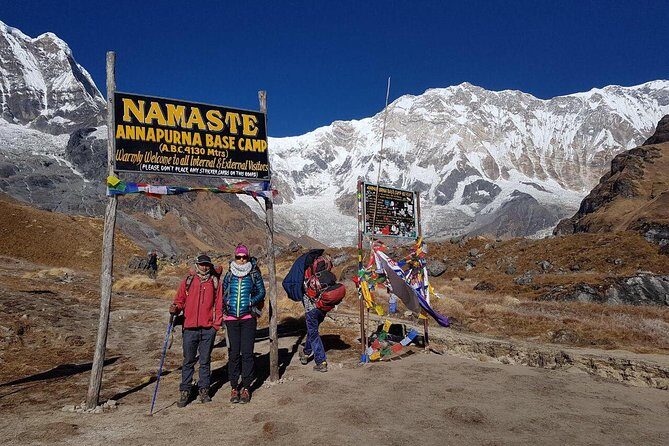
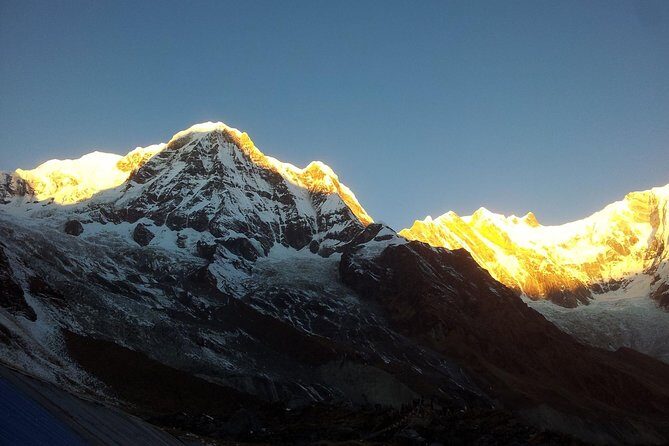
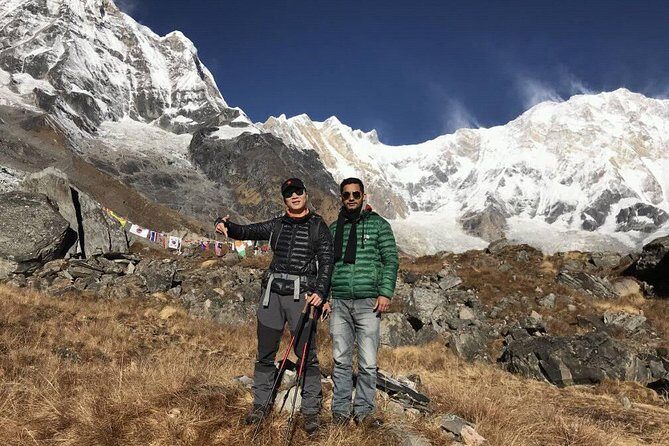
Day 7 ends at Annapurna Base Camp (around 4,130m). The plan positions it as the crown moment of the trek, surrounded by big peaks and in the heart of the Annapurna Sanctuary.
What you can expect here, based on the way the trek is structured:
- you’ll likely spend time at altitude absorbing the view
- you’ll want to stay warm because evenings at this elevation can be rough
- you’ll have your guide making sure you don’t rush your body into problems
This is where the gear package helps. Having a down jacket and a sleeping bag for the trek days means you’re not trying to solve winter layers with whatever you already packed.
One extra practical thing: keep water and snacks simple. Your trek plan notes that food during the trek isn’t included, so you’ll be relying on whatever meal plan your group uses at tea houses. Bring a little extra snack capacity if you can.
Down to Bamboo: Recovery Starts, But the Trail Keeps Moving
Day 8 is a descent from ABC (4,130m) down to Bamboo (around 2,350m). The plan says about 7 hours walking.
This is “good hard.” Going down feels better, but it can be rough on knees and ankles. A strong guide and porter setup matters here because you’re moving through steep sections and staying safe.
The trail also sets you up for the next recovery style day. Bamboo is where you start dropping further toward comfortable temperatures and toward hot springs later.
Bamboo to Jhinu Danda: When You Trade Views for Relief
Day 9 walks from Bamboo down to Jhinu Danda at about 1,780m. The plan lists roughly 5 hours.
Day 10 centers on Jhinu Danda and its natural hot springs. The hot spring admission is explicitly marked as not included in the tour data.
That means: plan to pay for the soak if you want it. This is also a good day to manage your energy. You’ve just come down from serious altitude, so your body needs a slower pace.
Then you transition back toward lower elevation trekking, with route choices mentioned around Siwa or Ghandruk Phedi at roughly 1,150m to 3,770 feet. Your plan suggests you trek from Jhinu Danda to that lower route depending on what the day chooses.
Pokhara to Kathmandu: The Last 200km Feels Longer Than It Looks
Day 11 returns you to Kathmandu via Pokhara to Kathmandu by road, roughly 8 hours in the plan. It’s described as about 200 kilometers.
This leg matters because your trekking legs may still be tired. The better you’ve paced earlier, the easier this day feels. Either way, you’ll be glad you’re not switching modes constantly.
Day 12 is departure at Tribhuvan International Airport and the tour ends.
Who This Tour Suits Best
This Annapurna Base Camp plan fits you if:
- you want a structured trek with permits handled
- you like the idea of a licensed English-speaking guide and porter support
- you’re okay with tea house accommodations (warm enough with the provided gear)
- you’re aiming for ABC in a 12-day schedule without building your own logistics
It might feel like work if:
- you want all meals and city hotels included (those are not included here)
- you dislike early mornings (the plan starts very early days)
- you don’t want to pay extra for the Jhinu Danda hot spring admission
The Best Part People Talk About: Guide and Porter Support
One of the standout themes in the experience data is how supportive the guide/porter pairing is. A recent trek called out guide Avi and porter Robin for being patient and careful with safety and the overall experience.
You can’t buy patience. You get it, or you don’t—and this tour is built around that human support. That matters on a trek like ABC because problems usually show up when you push too hard, get cold, or lose your footing.
Having a team that watches the details helps you enjoy the mountains instead of managing avoidable stress.
Final Check: Should You Book This Annapurna Base Camp Trek?
If you want an Annapurna Base Camp trek with gear included, permits handled, and a guide/porter team to keep you on track, I’d say this is a strong choice for most people with moderate fitness.
Before you book, do two quick reality checks:
- Confirm your budget for meals during the trek and hotel nights in Kathmandu and Pokhara.
- If you’re going solo, check how porter support is handled, since the data notes porter for a solo traveler is not included.
If that fits your style, you’ll likely appreciate the balance here: early view days, steady altitude work, then the ABC payoff at 4,130m, followed by a descent that ends with a hot spring option.
FAQ
What is the duration of the Annapurna Base Camp trek?
The tour runs for about 12 days.
Where does the trek start?
You’ll use a taxi to Nayapul to begin the trek, with private transfer to the starting point included.
Is there a guide?
Yes. The package includes one licensed professional English-speaking trekking guide.
Do I get porter support?
Porter support is included as one porter for two trekkers. The data also notes that for a solo traveler, porter support is not included.
What trekking gear is provided?
You get a duffle bag, sleeping bag, and down jacket for use during the trek. A first aid kit is also mentioned in the overview.
Are permits included?
Yes. TIMS and the Annapurna Conservation Area Permit are included.
Where do you stay during the trek?
The plan includes tea house accommodations during the trek.
Are meals included?
No. Food during the trek (breakfast, lunch, and dinner) is listed as not included.
Is the Jhinu Danda hot spring included?
The hot spring admission at Jhinu Danda is listed as not included.
Can I cancel for a full refund?
Yes. You can cancel up to 24 hours in advance for a full refund. If you cancel less than 24 hours before the experience start time, the amount paid is not refunded.