REVIEW · KATHMANDU
Kathmandu: Pashupatinath Temple Evening Aarati Tour
Book on GetYourGuide →Operated by Breakfree Adventures Pvt. Ltd. · Bookable on GetYourGuide
Oil lamps on the Bagmati at dusk. This evening ritual at Pashupatinath is one of the most moving sights in Kathmandu, and I like how the Pashupati Bagmati Aarati turns the riverfront into a living place of prayer. I also like that you get real context from guides (names like Razz and Shankar come up often), not just a surface description. The main trade-off is that the area can get crowded, smoky with incense, and emotionally intense if you’re sensitive to religious fire ceremonies.
This tour is built for practical comfort: private A/C transport, hotel pickup, and a professional English-speaking guide, so you’re not stressing about timing or getting there on time. Still, there’s one big heads-up: non-Hindus can’t enter the main temple, so your best experience is watching from the Bagmati river banks rather than from inside the inner spaces.
If you time it right, though, you’ll catch a rare mix of spirituality, symbolism, and Kathmandu street life—without losing hours in logistics. Just come with modest clothing, patience for crowds, and a respectful mindset, because this place runs by ritual, not by your schedule.
In This Review
- Key things to know before you go
- Evening Timing: Why 6 PM at Pashupatinath Feels Different
- Getting There From Thamel, Boudhha, or Central Kathmandu (and What Crowds Do)
- At the Bagmati River: Watching the Pashupati Bagmati Aarati
- Ritual Meaning: Lamps, Chanting, Bhajans, and Shiva’s Presence
- Temple Rules, Dress Code, and Photo Etiquette
- What You Might See Near Cremation Activity (Be Ready for Realness)
- Price and Value for $22: What’s Included, What Isn’t
- A Quick Note on Shopping Pressure and How to Stay in Control
- Who This Tour Suits (and Who Might Want Another Option)
- My Practical Tips for a Better Seat and a Smoother Evening
- Should You Book the Kathmandu Pashupatinath Evening Aarati Tour?
- FAQ
- What time does the evening Aarati start?
- How long is the Pashupatinath Evening Aarati Tour?
- Is the monument entry fee included in the price?
- Can non-Hindus enter the main temple?
- Where are the pickup locations?
- Where do you get dropped off?
- What’s included in the tour price?
- Are meals and drinks included?
- Is photography allowed?
- What should I wear to the ceremony?
Key things to know before you go
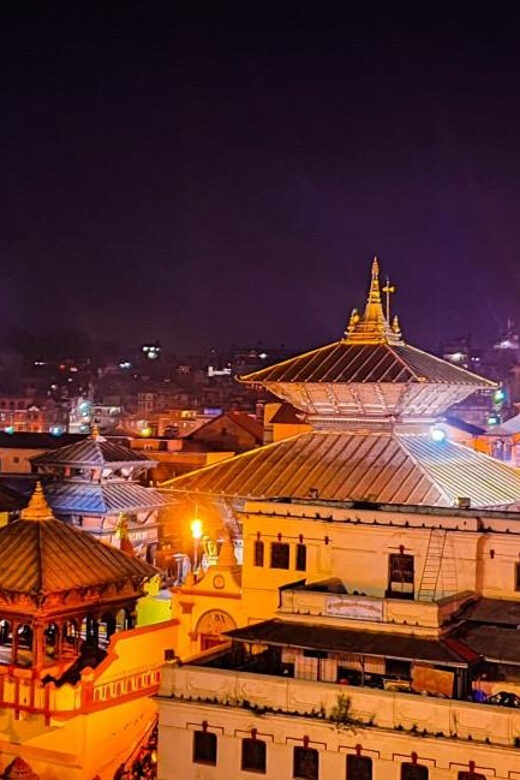
- 6:00–6:30 PM start: the tour lines up with the evening Aarati timing when the river bank atmosphere is strongest
- River-bank viewing for non-Hindus: you can’t enter the main temple, but you can watch the ceremony beside the Bagmati
- Lamps, chants, and bhajans: circular lamp motions, sacred chanting, and group singing shape the whole experience
- Good guidance matters: guides such as Razz and Shankar often help you understand what you’re seeing and where to stand
- Entry fee is separate: plan on the NPR 1,000 monument fee per person on the day
- Crowds and smoke are real: festivals and weekends can pack the riverfront and incense smoke is part of the scene
Evening Timing: Why 6 PM at Pashupatinath Feels Different
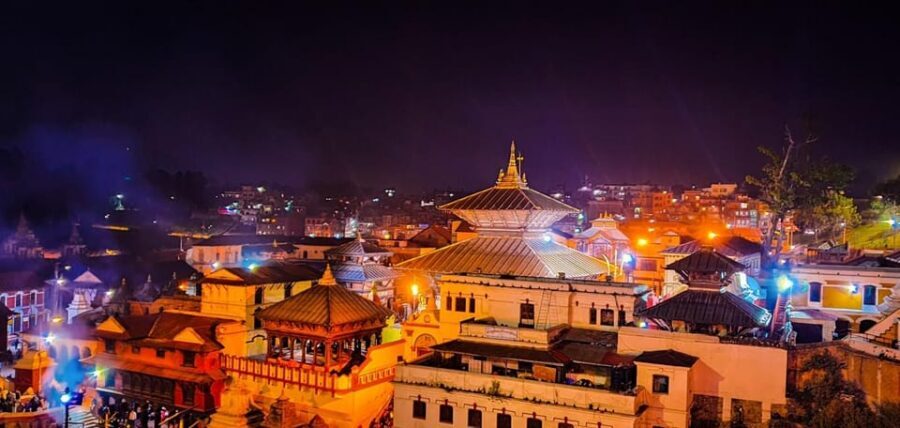
Pashupatinath’s evening Aarati is timed for a shift in mood. Around 6:00 PM to 6:30 PM, the riverfront moves from ordinary city evening into something ritual-led: priests start the worship sequence with oil lamps while chants and bhajans carry through the air. The result is a ceremony that feels less like sightseeing and more like you’ve arrived at a daily spiritual heartbeat.
There’s also a rhythm you can feel in the storytelling of the place. The Bagmati Aarati isn’t a one-off event; it began in 2000 and became a regular tradition in 2006. That matters because it explains why the crowd is so practiced. People know where to stand, when to listen, and how to watch without turning it into a spectacle.
If you’re the type of traveler who gets restless with long waits, this helps: you’re not drifting all night. The tour is about 3 hours, and it’s centered on one key moment—arrive, get positioned, watch, and leave with a clear memory instead of 20 scattered stops.
You can also read our reviews of more evening experiences in Kathmandu


Getting There From Thamel, Boudhha, or Central Kathmandu (and What Crowds Do)
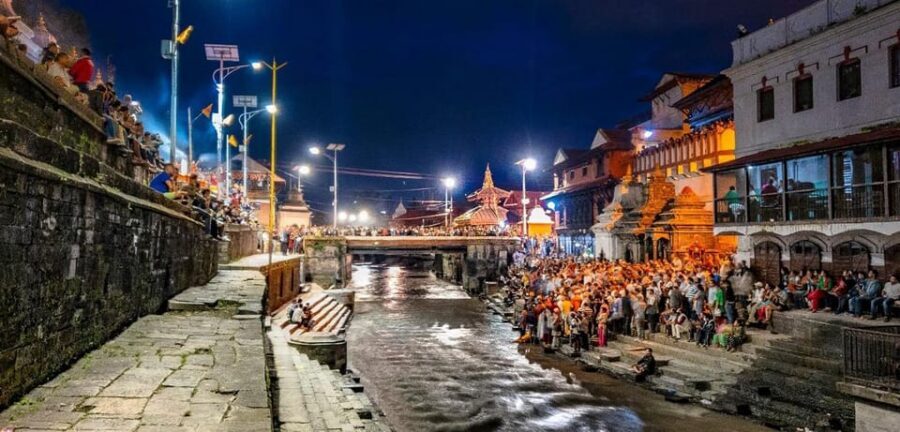
The logistics are one of the tour’s quiet advantages. You get hotel pickup and drop-off in Kathmandu city center, plus private A/C vehicle. You’ll have pickup options from Thamel, Boudhha, or Kathmandu, and the tour returns you to Kathmandu, Thamel, or Boudhha afterward.
Why does this matter? Because the Pashupatinath riverfront can be hard to navigate at peak moments. A private ride saves time and reduces the stress of coordinating tuk-tuks or walking in evening traffic. It also helps you reach the area before the best viewing spots disappear.
Still, here’s the reality check: the site gets crowded—especially on weekends and around big Hindu holidays like Maha Shivaratri and Haritalika Teej. The Aarti itself draws thousands, and even non-festival nights can feel packed. One useful detail from people who did this tour is that a guide like Razz can help you get a good place to sit on busy nights. That’s not luck; it’s the difference between showing up and actually being prepared.
At the Bagmati River: Watching the Pashupati Bagmati Aarati
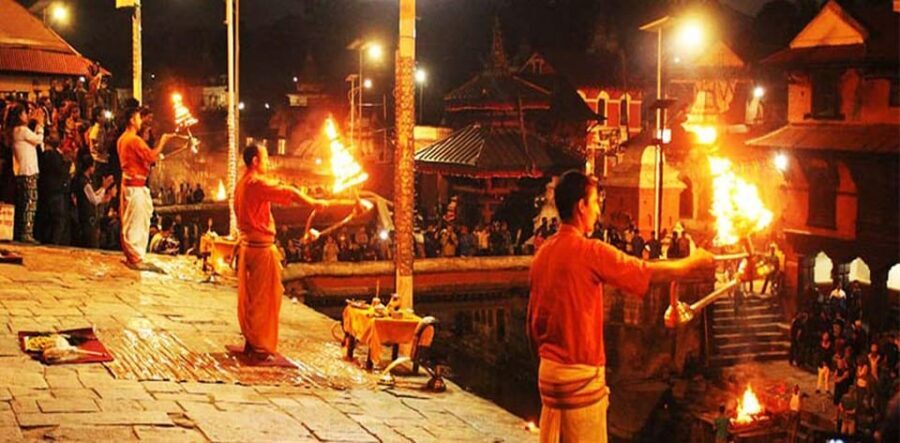
The heart of the experience is the ceremony by the Bagmati River. Pashupatinath sits right alongside it, and the ritual takes place on the river side, where the movement of water becomes part of the symbolism. In Hindu belief, bathing in the Bagmati is thought to wash away sins, so the river isn’t just scenery—it’s a spiritual actor in the story.
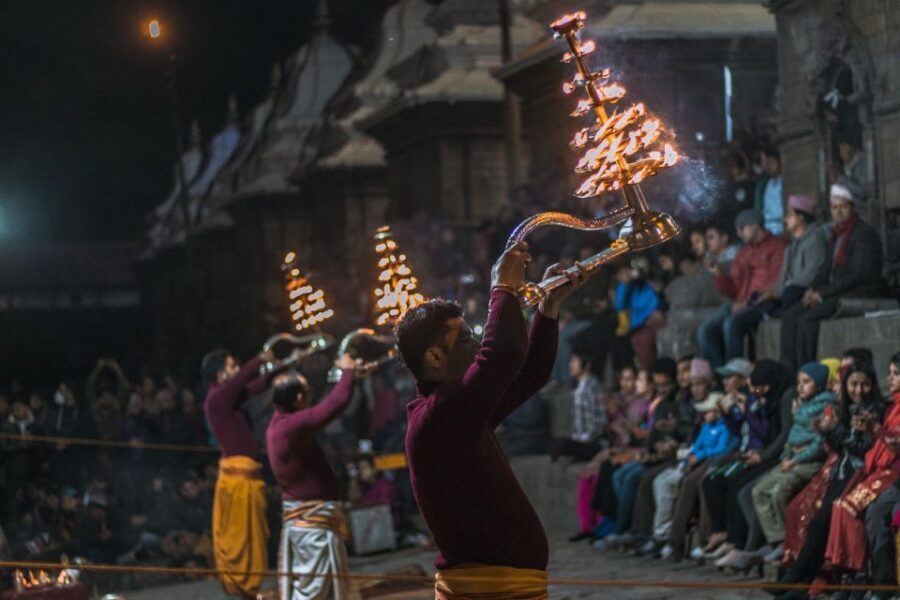
During the Pashupati Bagmati Aarati, priests perform the worship ritual with oil lamps while chanting sacred words. You’ll see the lamps move in circular motions, which represents devotion to the Divine. It’s simple in mechanics, but powerful in feeling. The lamps create glowing rings of motion against the riverbank, and the chants give the whole thing a steady pulse.
Another piece that makes the ceremony feel human is the singing. Devotees take part with bhajans, and that group sound blends with chanting. Instead of one voice doing all the work, the atmosphere becomes layered—priests lead, devotees reinforce, and the crowd listens.
Timing matters here. Since the Aarati starts around 6:00–6:30 PM, you want to be ready to settle and observe rather than arrive late and scramble for sight lines.
Ritual Meaning: Lamps, Chanting, Bhajans, and Shiva’s Presence
If you only watch the ritual, you still get something meaningful. But if you want the moment to click, the guide interpretation helps a lot. Guides named in the experience often connect the dots between what you see and what it means in Hindu practice.
The Aarati is described as the highest form of prayer in Hinduism. That’s a strong claim, and you feel why once you watch: the worship isn’t only spoken; it’s enacted through light, motion, sound, and collective participation. The symbolism of the circular lamp motions isn’t a random gesture—it’s devotion expressed physically.
You’ll also hear about the belief that God is present in all living beings. The ceremony leans toward collective well-being, ending with prayers for the wellness of all souls and gratitude toward God’s kindness.
And there’s a Shiva connection in the wider ritual environment. At Pashupatinath, people may also perform a divine dance called Tandav, offered in homage to Lord Shiva. That’s not always the centerpiece of what every visitor sees from the river bank, but it helps explain why this place feels so tightly linked to Shiva-focused devotion and festival energy.
One more cultural layer from the guide side: I’ve seen notes about guides connecting Hinduism with Buddhist context as well. That can be especially helpful in Kathmandu, where religions overlap in daily life and artistic tradition.
Temple Rules, Dress Code, and Photo Etiquette
Before you go, accept one boundary: non-Hindus are not permitted inside the main temple. The good news is that the Aarati can be viewed from the Bagmati river banks, so you’re not shut out of the core experience—you just don’t enter the temple complex itself.
Dress matters more than you might expect. You should cover shoulders and knees. This isn’t about fashion; it’s about showing respect in a sacred Hindu site where the focus stays on ritual rather than visitor comfort.
On photography: it’s generally allowed, but you should stay respectful during the ceremony. The easiest way to do this is simple—keep your phone low until there’s a clear moment, don’t block people who are watching, and avoid photographing close-ups of priests in ways that distract from the ritual.
Also expect incense smoke and chanting. Those sensory details aren’t “bad weather”—they’re part of the atmosphere. If you’re sensitive to strong smells, you’ll want to bring a light scarf or keep your breathing steady while you watch.




What You Might See Near Cremation Activity (Be Ready for Realness)
Pashupatinath is not a clean, tourist-only temple. It’s a working spiritual place, which means you may see elements of cremation practices in the surrounding area. In one account, the guide experience included an opportunity to see cremations in a very close, direct way before the Aarati ceremony.
I’ll phrase this carefully for your expectations: you might not see cremations from every exact viewing angle or every day, but the cremation area is part of the broader site experience. If that subject matter feels overwhelming, plan to mentally prepare first. If it helps, focus on the shift that comes after—watching the Aarati afterward can feel like a release valve, because the ceremony is about prayer, light, and collective hope.
The key is to stay respectful and keep moving according to the flow of the sacred space. Your guide should help you understand what you’re seeing so it doesn’t feel random.
Price and Value for $22: What’s Included, What Isn’t
At $22 per person for a 3-hour tour, you’re paying for more than just watching the Aarati. You’re getting:
- Hotel pickup and drop-off with private A/C transport
- A professional English-speaking guide
- All taxes
- Skip the ticket line (but see the entry fee note below)
What you don’t get is the monument entry fee of NPR 1,000 per person, paid on the day of your visit. You also won’t have meals or drinks included.
Is it still good value? Usually, yes—because transport and guiding are often the big costs in Kathmandu evening tours, and here they’re part of the package. The skip-the-ticket-line detail matters too: when it’s crowded, time turns into stress fast.
One more value angle: a good guide can change how you remember the night. Guides like Razz are described as explaining rituals, symbolism, and even cross-religious context in a way that makes the ceremony easier to appreciate. That kind of interpretation is hard to price, and it’s often what turns a nice photo into a lasting memory.
A Quick Note on Shopping Pressure and How to Stay in Control
There’s one concern that pops up in the broader experience: a report of a guide allegedly pushing a purchase (in that case, about ruparchai). I can’t verify motives from afar, but I can tell you how to protect yourself.
If you want to shop, set your rules:
- Decide in advance what you want to buy (or decide you don’t want to shop at all).
- Don’t feel obligated to buy because someone suggests it during the tour.
- If anyone steers you toward a transaction, ask for a clear price and don’t accept vague answers.
A tour should feel like service, not sales. You deserve the clean experience you came for.
Who This Tour Suits (and Who Might Want Another Option)
This is a great fit if you:
- Want a spiritual, evening-focused experience rather than a long temple crawl
- Like guided interpretation, especially around symbolism and ritual meaning
- Prefer organized transport over negotiating with evening traffic
It’s also a good match for first-timers who want one signature Kathmandu religious scene without spending hours planning.
Consider whether it’s right for you if:
- You’re very sensitive to smoke, chanting, or crowded spaces
- You don’t handle intense religious practices (like cremation activity) well, even if you’re mainly attending the Aarati
- You expect the main temple interior (non-Hindus can view from the river banks)
In other words: this tour rewards people who can handle the real atmosphere of a living religious site.
My Practical Tips for a Better Seat and a Smoother Evening
Here’s how to make the most of your 3 hours:
- Arrive calm and ready to wait. The best viewing moments belong to people who settle without fuss.
- Dress by the rules, even if you feel warm. Shoulders and knees covered makes you blend in and keeps the mood respectful.
- Plan for incense smoke. Bring a light scarf if you’re sensitive, and don’t overthink it once you’re there.
- Let the guide do the talking. If your guide explains why the lamps move in circles and what the prayers aim for, your experience will make sense faster.
- Stay respectful with photos. Use your camera like a tool, not like a distraction.
- If it’s a festival night, expect extra crowds. That’s when guides like Razz can be most helpful for positioning.
Should You Book the Kathmandu Pashupatinath Evening Aarati Tour?
I’d book it if you want one unforgettable Kathmandu night centered on a living ritual, with English guidance and smooth transport. The combination of Bagmati riverfront Aarati, clear ritual symbolism (lamps, chants, bhajans), and a guide who helps you understand what you’re seeing is exactly the kind of experience that feels worth more than the ticket price.
Skip booking only if you strongly dislike smoky crowds, get distressed by cremation-related realities, or you’re hoping for a quiet, controlled temple interior visit. This tour is about the river, the devotion, and the spiritual atmosphere. If that matches your travel style, you’ll likely feel grateful you went.
FAQ
What time does the evening Aarati start?
The evening Aarati usually starts around 6:00 PM to 6:30 PM, though the exact timing can vary by season.
How long is the Pashupatinath Evening Aarati Tour?
The total duration is about 3 hours.
Is the monument entry fee included in the price?
No. The monument entry fee is NPR 1,000 per person and must be paid on the day of the visit.
Can non-Hindus enter the main temple?
Non-Hindus are not permitted inside the main temple, but the Aarati can be viewed from the Bagmati River banks.
Where are the pickup locations?
Pickups are available from Kathmandu, Thamel, and Boudhha.
Where do you get dropped off?
Drop-off is available in Kathmandu, Thamel, and Boudhha.
What’s included in the tour price?
You get hotel pickup and drop-off by private vehicle, a professional English-speaking guide, private air-conditioned transportation, and all taxes. The skip-the-ticket-line benefit is also included.
Are meals and drinks included?
No. Meals and drinks are not included.
Is photography allowed?
Photography is generally allowed, but you should remain respectful during the rituals.
What should I wear to the ceremony?
Dress modestly by covering your shoulders and knees, since it’s a sacred Hindu site.