REVIEW · KATHMANDU
Pick 2-Wonders of Kathmandu: A 3-Hour Heritage Hop
Book on GetYourGuide →Operated by Cordial Trek Pvt. Ltd. · Bookable on GetYourGuide
Three hours is the fastest way to start loving Kathmandu. This short-and-sweet tour links two major UNESCO sites with a guide and an easy plan, so you actually get meaning, not just photos. I especially like the chance to see Kumari in person (if you pick the Durbar Square option) and the 360-degree panorama from Swayambhunath. The one thing to watch is that the timetable is tight, and monument entrance fees are extra.
What really makes it work is the pace control. You’re in a private group with an air-conditioned vehicle, and the guide can adjust to your interests so you don’t get rushed through the good parts. I’ve also seen guides known for being patient with questions and even helping with photo moments, which matters when you’re trying to read carvings and take a few shots without stress.
Price-wise, $3.94 per person is the headline, but the value comes from what you get: hotel pickup/drop, bottled water, and a live guide for the whole 3 hours. Since there are add-on entrance fees, your total cost will depend on which two sites you choose, but the guided time at two World Heritage stops is still a strong deal.
In This Review
- Key things to notice before you book
- The 3-hour format: how you get value without burning time
- Picking the right combo: Kathmandu’s UNESCO sites in four useful ways
- Option 1: Kathmandu Durbar Square and Swayambhunath’s 360° views
- Kathmandu Durbar Square: palace details and the Kumari tradition
- Swayambhunath (Monkey Temple): stupa symbolism and panoramic Kathmandu
- Possible drawback with this combo
- Option 2: Pashupatinath Temple and Boudhanath’s calm giant stupa
- Pashupatinath: Shiva devotion along the Bagmati River
- Boudhanath: massive mandala, trade-route history, and peace
- Possible drawback with this combo
- Option 3: Patan Durbar Square art plus Kathmandu Durbar Square royal scenes
- Patan Durbar Square: red brick artistry and temple density
- Kathmandu Durbar Square: compare royal styles and symbols
- Possible drawback with this combo
- Option 4: Bhaktapur Durbar Square and the tall Nyatapola Temple
- Bhaktapur Durbar Square: four smaller squares inside the bigger one
- Nyatapola Temple: Nepal’s tall five-story landmark
- Possible drawback with this combo
- The guide, the vehicle, and the pacing that makes it feel human
- Price and entrance fees: what $3.94 really means for your wallet
- Practical details that can make or break your experience
- What’s included
- What’s not included
- What you should bring
- What you should not bring
- Who should consider skipping
- Should you book this 3-hour Kathmandu Pick 2-Wonders hop?
- FAQ
- What is the duration of Pick 2-Wonders of Kathmandu?
- Where do they pick you up and drop you off?
- What are the tour options?
- Is the group private?
- What languages are the live guides?
- Are entrance fees included?
- Does the tour include skipping the ticket line?
- What should I bring with me?
- Is it suitable for wheelchair users or very elderly travelers?
Key things to notice before you book
- Pick 2 sites from 6 UNESCO World Heritage options without committing to a full-day itinerary
- Kumari viewing is available if your combo includes Kathmandu Durbar Square
- 360-degree views come standard with Swayambhunath (Monkey Temple) as one of the two picks
- Newari architecture details are a big focus at the Durbar Squares
- Private transport gets you there fast, and the transport is rated highly
The 3-hour format: how you get value without burning time
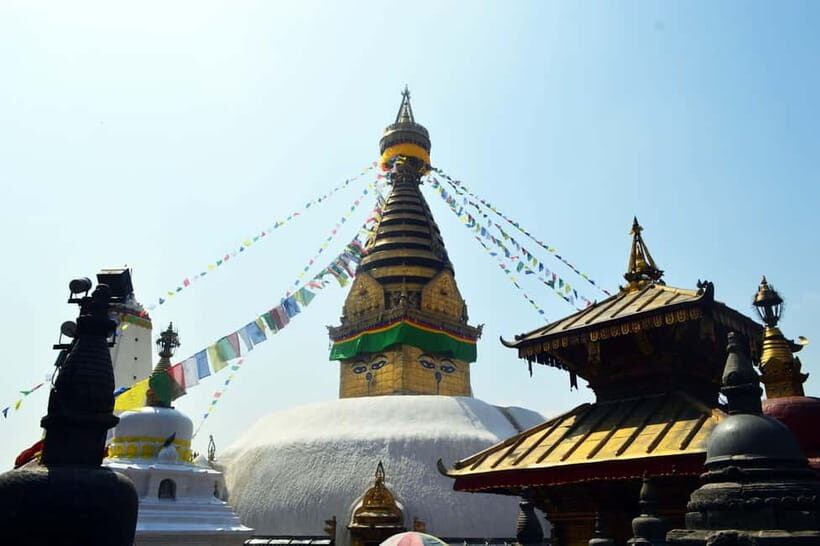
Three hours in Kathmandu can feel too short. The trick here is that the tour is built around two concentrated highlights, not a long checklist that turns into a blur. You’ll spend more time at the actual sites and less time guessing how to connect them on your own.
Private hotel pickup and drop-off from Thamel also changes the math. You’re not spending your limited time navigating traffic, finding parking, or standing in line to sort tickets. The tour includes an air-conditioned private vehicle, plus bottled water, which sounds small until you’re walking in temple heat with no plan.
This is also a good format if you’re jet-lagged or trying to fit culture into a packed schedule. The tour length is fixed (3 hours), so you should choose the two sites that match your mood: royal square details and Kumari, or riverside cremation rites and a massive Buddhist stupa, or the artistic and architectural contrasts between Kathmandu and Patan, or stepping into a slower-feeling Bhaktapur day.
You can also read our reviews of more historical tours in Kathmandu

Picking the right combo: Kathmandu’s UNESCO sites in four useful ways
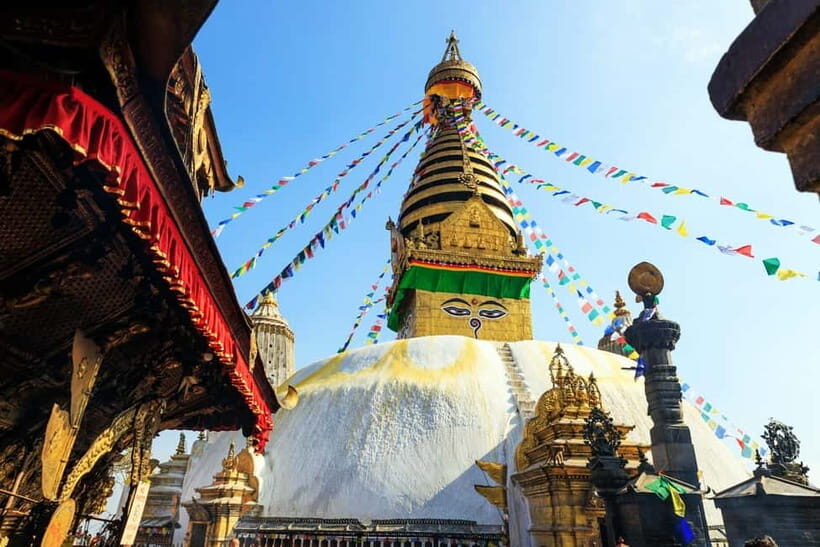
You can choose any two of six UNESCO World Heritage sites. The tour lays out four popular combos so you can match your interests fast: living goddess and hilltop stupa, Hindu temples and a giant stupa, two Durbar Squares, or Bhaktapur’s royal square and temples.
Here’s the practical part: think about what you want to feel in those three hours. If you want religion, mythology, and views, go for Durbar Square plus Swayambhunath. If you want ritual intensity and spiritual atmosphere, go for Pashupatinath plus Boudhanath. If you want architecture and art, combine Durbar Squares (Patan plus Kathmandu) or pick Bhaktapur.
Also note the pace: you’re walking and sightseeing in concentrated bursts. If you’re sensitive to stairs or long temple approaches, check your comfort level before picking options that involve hilltop climbs like Swayambhunath.
Option 1: Kathmandu Durbar Square and Swayambhunath’s 360° views
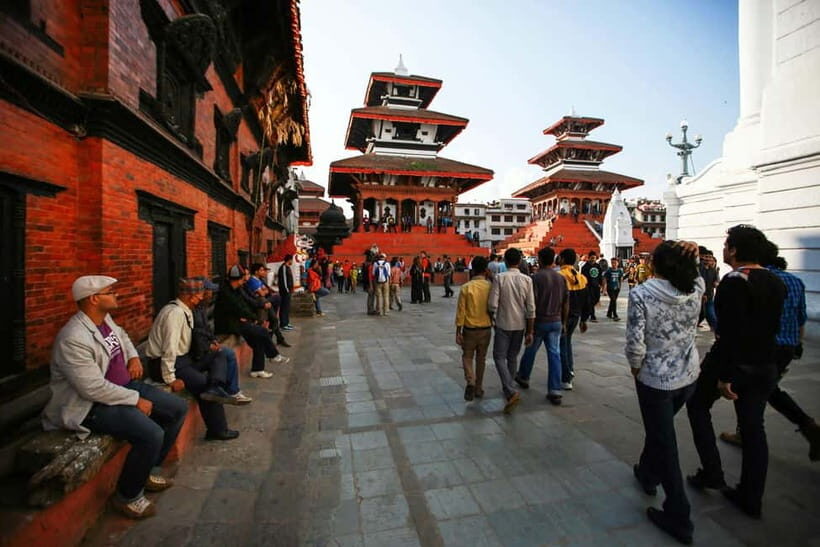
This combo is for people who want royal power, temple symbolism, and big city views in one afternoon.
Kathmandu Durbar Square: palace details and the Kumari tradition
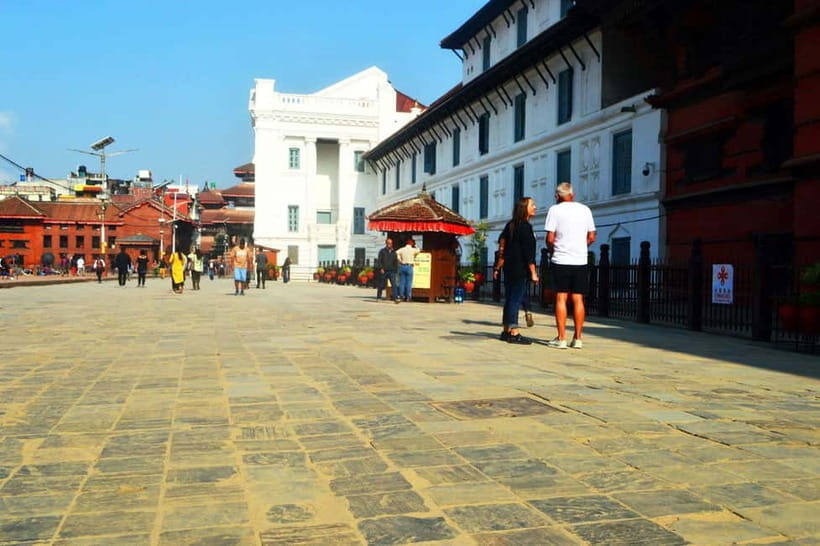
Kathmandu Durbar Square is the old-city centerpiece. It’s where you can look at palaces tied to both the Malla and Shah dynasties, including the nine-storied Nautale Durbar. The guide helps you read what you’re seeing, from how the space was used to why the carvings and building forms matter.
A major reason to choose this option is the Kumari, the living goddess. You’ll get a rare chance to sight her in her temple. Even if you don’t know the tradition yet, having a guide on hand keeps it from becoming just a quick glance. It’s also one of those moments that feels deeply local, not a generic tourist stop.
Swayambhunath (Monkey Temple): stupa symbolism and panoramic Kathmandu
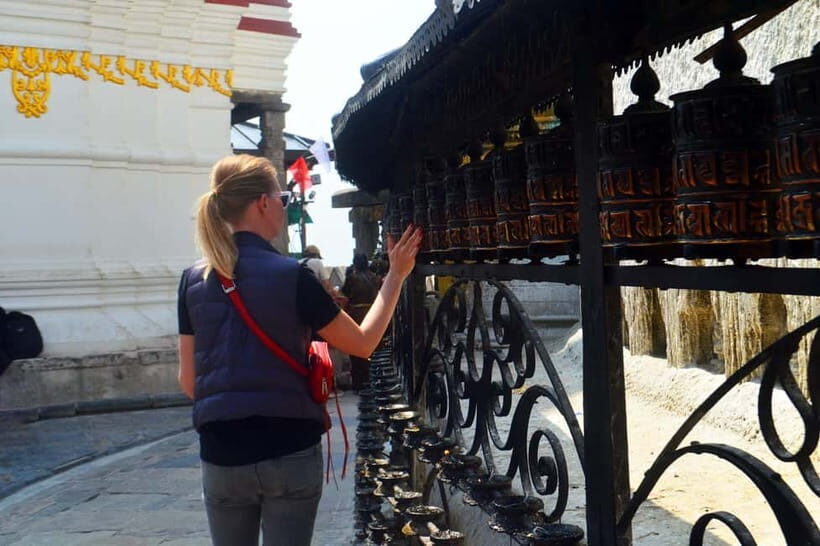
From the Durbar Square vibe, you’ll shift to Swayambhunath, a hilltop stupa with UNESCO status. The big idea here is the Mahachaitya area—plus the playful monkeys you’ll almost certainly notice as you move around. The view is the payoff: Swayambhunath is built for looking out, so you get panoramic 360-degree vistas over the Kathmandu Valley.
One practical tip: treat the climb and the viewing time as part of the experience, not something to rush. The best photos and the most useful understanding come when you pause and let the skyline make sense—temples, courtyards, and the city’s layout.
You can also read our reviews of more tours and experiences in Kathmandu


Possible drawback with this combo
You’ll likely do more walking here than with a flat-square-only plan. If you’re short on energy, pace yourself early so the view doesn’t feel like a sprint at the end.
Option 2: Pashupatinath Temple and Boudhanath’s calm giant stupa
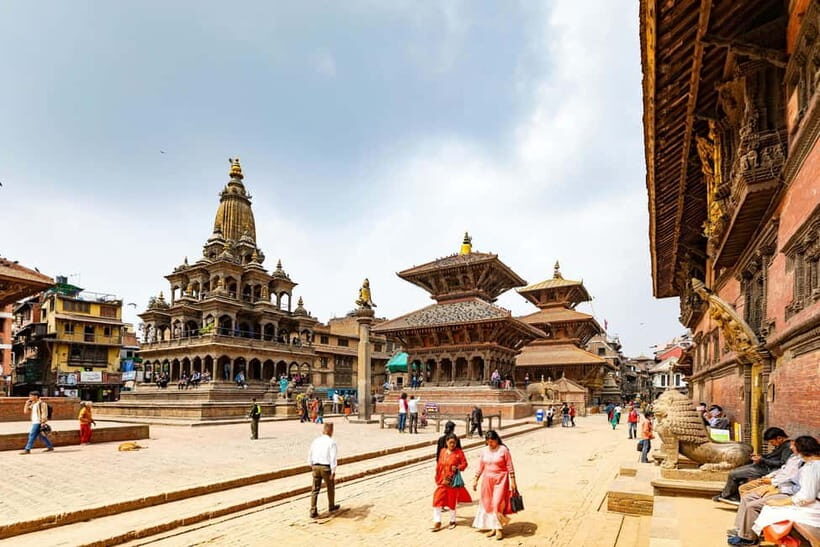
If Option 1 is about royal square + city views, this one is about spiritual contrast: Hindu rites at Pashupatinath, then Buddhist serenity at Boudhanath.
Pashupatinath: Shiva devotion along the Bagmati River
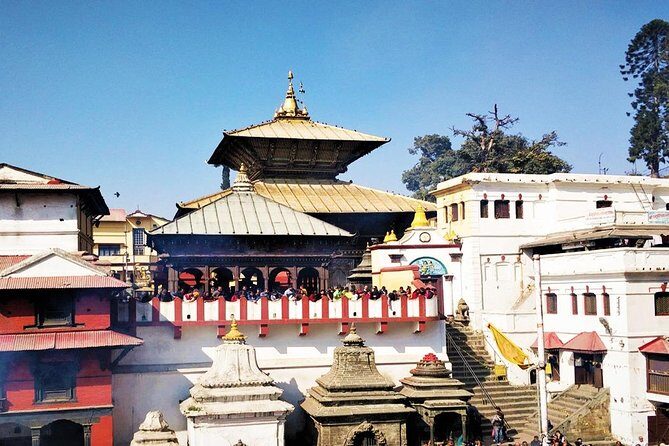
Pashupatinath Temple is one of Hinduism’s holiest sites, dedicated to Lord Shiva. It sits by the sacred Bagmati River, and you might witness traditional cremation rituals along the banks.
That last part is important. Cremation rituals can be intense and emotional. The good news is that a guide can help you understand the symbols and what you’re seeing, so you don’t feel like you’re standing in the wrong place with no context. If you happen to be there on a festival day, expect more ceremonial activity and clearer ritual storytelling from the guide.
Boudhanath: massive mandala, trade-route history, and peace
Then you’ll move to Boudhanath Stupa, known for its serene atmosphere and its massive scale. It’s the largest mandala in Nepal and a UNESCO World Heritage site, and it was once a crucial stop on the ancient trade route to Tibet.
This stop changes your pace fast. At Boudhanath, the mood is slower and more contemplative, and the stupa’s size makes the symbolism easier to feel. It’s a place where you can look at details, watch the flow of visitors, and reset your nervous system before returning to the city streets.
Possible drawback with this combo
If you’re sensitive to religious ceremonies involving fire or grief, go into Pashupatinath with emotional preparation. The tour can explain what’s happening, but it can’t make the rituals less real.
Option 3: Patan Durbar Square art plus Kathmandu Durbar Square royal scenes
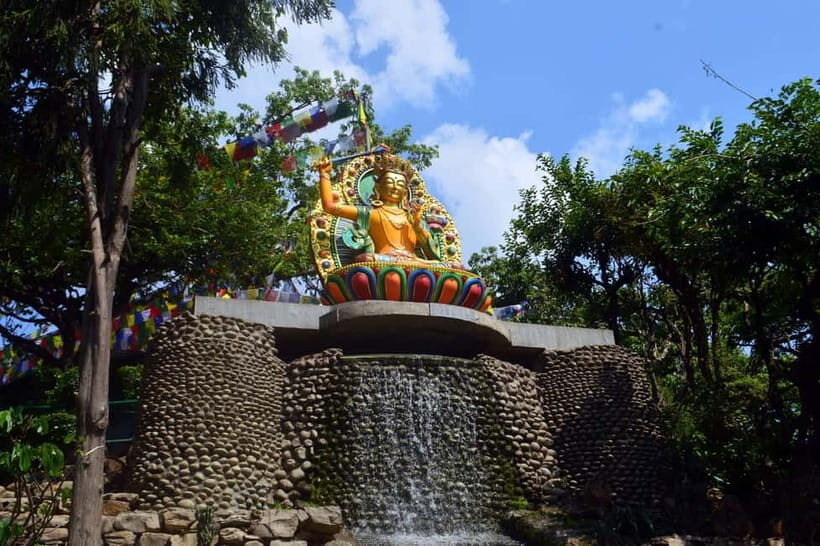
This combo is a smart choice if you love architecture and want a clearer sense of Newari craftsmanship.
Patan Durbar Square: red brick artistry and temple density
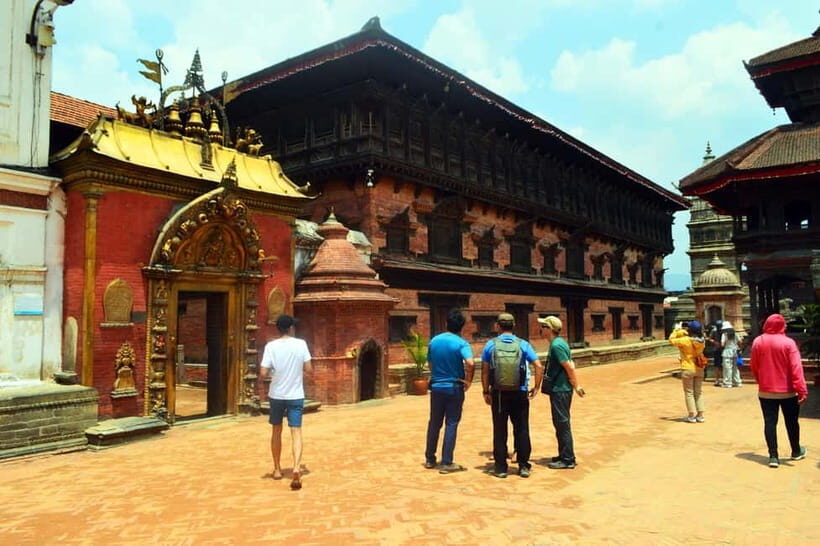
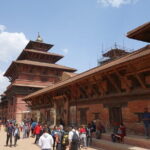
Patan Durbar Square is in Lalitpur and is often described as Kathmandu’s artistic heart. Here you’ll find Newari architecture on display across the medieval royal palace area, with temples and statues spread throughout the square.
The red brick pavement is a standout feature, and it matters because it frames how you move through the space. Patan feels more like a working outdoor museum—textures, doorways, stonework, and patterns you can spot as you walk.
Kathmandu Durbar Square: compare royal styles and symbols
Then you return to Kathmandu Durbar Square for the royal core. If you’re already here, you’ll likely notice how the palaces and temples echo power, religion, and city identity. If you chose your first stop as Patan, Kathmandu can feel like the louder, more central counterpart.
This option is excellent for “I want context” travelers: you’ll leave with a more layered understanding of how the Kathmandu Valley shaped its royal and religious architecture over time.
Possible drawback with this combo
It’s less about views and more about stone, layout, and detail. If you’re mostly chasing skyline photos and panoramic scenery, you may prefer Option 1.
Option 4: Bhaktapur Durbar Square and the tall Nyatapola Temple
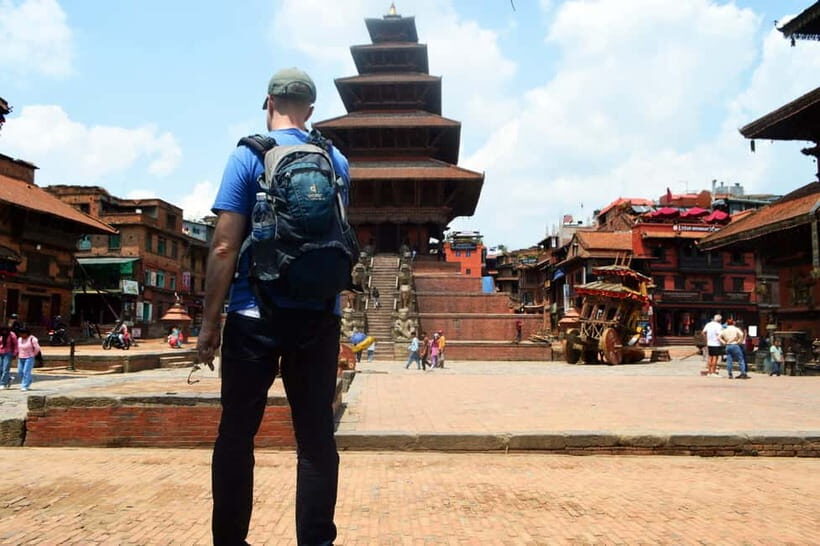
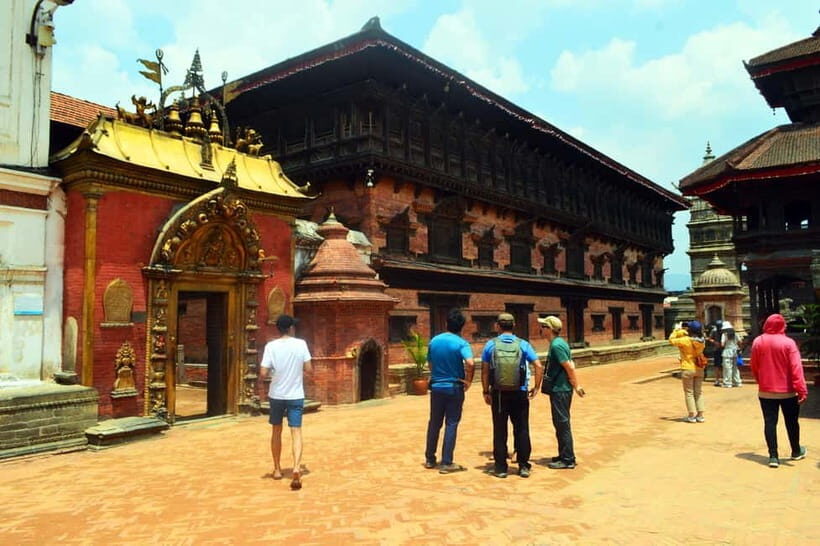
This is the choice for people who want a time-warp feel in a compact package. Bhaktapur is the smallest district yet home to the largest Durbar Square in Nepal, and it’s UNESCO-listed.
Bhaktapur Durbar Square: four smaller squares inside the bigger one
Bhaktapur’s Durbar Square includes four smaller squares, so you get variety without needing more hours. It’s the kind of site where the layout helps you understand how people once moved through power centers, marketplaces, and ceremonial areas.
Nyatapola Temple: Nepal’s tall five-story landmark
Don’t skip the Nyatapola Temple. It’s five-storied and described as Nepal’s tallest. That height isn’t just a trivia point—it’s what makes the carvings and temple structure easier to read as you move around.
If you’re the type who likes to study symmetry and craftsmanship, Bhaktapur can be very satisfying in a short window because it compresses so many visual details into one area.
Possible drawback with this combo
This option leans heavily on architecture. If you want a big stupa or hilltop panorama, this may feel quieter than the others.
The guide, the vehicle, and the pacing that makes it feel human
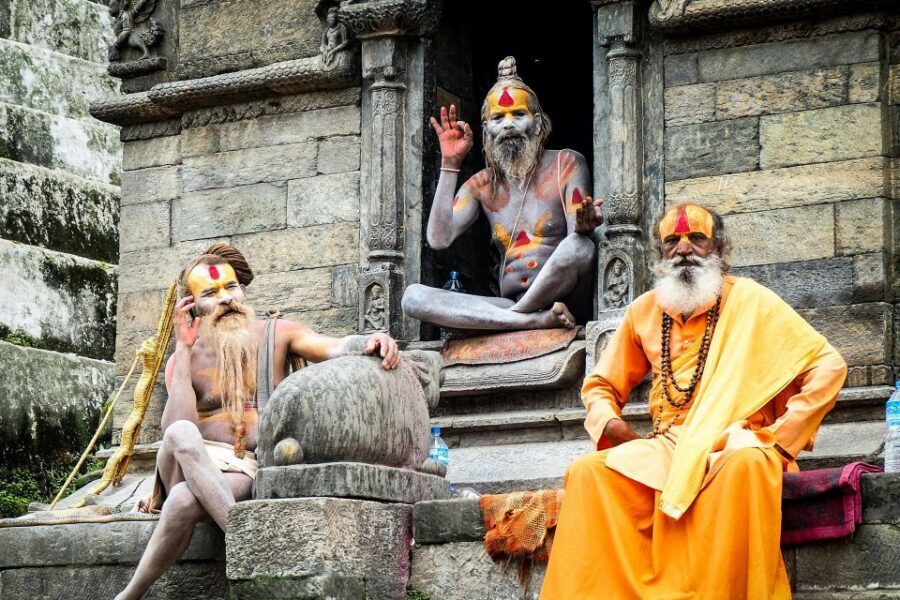
The tour’s biggest advantage is not just the sites—it’s the human layer. An experienced guide brings the details to life, and the tone stays practical: explanations that help you connect symbols, dynasties, and rituals to what you’re physically looking at.
Multiple guides are mentioned across English-speaking and Hindi-speaking experiences, including Nilakantha Acharya. That name comes up often in connection with strong explanations of Durbar Square and Monkey Temple, plus support with questions. Other guides like Prakash also show up in high ratings for teaching and patience.
What I like here is flexibility. The guide can adjust the speed based on what you care about, even letting you linger where something clicks. If you’re the kind of person who takes a lot of photos, that’s not treated like a problem—your pace is part of the plan. In one case, a guide even worked in a rooftop coffee stop when jet lag hit between highlights, which is a nice reminder that the day is meant to feel manageable.
On the logistics side, transport is a standout. The vehicle gets strong scores—92% of reviewers gave it a perfect score—which matters in a city where traffic and navigation can be exhausting.
Price and entrance fees: what $3.94 really means for your wallet
At $3.94 per person, this tour is priced like a budget-friendly way to get two UNESCO sites plus a guide. That’s the key: you’re not just paying for entry-level sightseeing. You’re paying for pickup/drop, air-conditioned private vehicle time, bottled water, and a live guide for 3 hours.
What’s not included is monument entrance fees. The tour notes there’s an add-on option, so your costs can be managed in advance depending on what you pick. Since different sites can have different fees, your final total will vary based on your selected pair.
Cash and a passport are listed as what to bring. That’s a simple reminder: Kathmandu tours often run smoothly when you travel light and carry what’s needed for on-the-spot requirements.
Practical details that can make or break your experience
What’s included
You get pickup and drop from your hotel in Kathmandu (Thamel), a tour guide, an air-conditioned private vehicle, and bottled drinking water. You also get a tour to your chosen two of the UNESCO sites, plus the benefit of skipping the ticket line.
What’s not included
Meals and beverages are not included. Also, monument entrance fees are not included unless you add them.
What you should bring
Bring your passport and cash. If you’ve left these behind, you’ll feel it quickly.
What you should not bring
Luggage or large bags are not allowed, and alcohol and drugs are not allowed. So keep your day bag small and keep it realistic.
Who should consider skipping
This isn’t suitable for wheelchair users, babies under 1 year, or people over 95 years. If mobility is limited, the short duration won’t automatically make the walk easier—temples and heritage squares can still involve uneven ground and stairs.
Should you book this 3-hour Kathmandu Pick 2-Wonders hop?
Book it if you want a guided taste of Kathmandu Valley’s UNESCO sites without losing a full day. It’s especially worth it when you want one of these signature moments: the Kumari sighting at Kathmandu Durbar Square, or the panoramic 360-degree views from Swayambhunath, or the contrast of Pashupatinath rites paired with Boudhanath’s calm.
Skip it if you’re trying to do a lot of “soft” interests and don’t want concentrated walking. Also consider whether extra entrance fees will fit your budget before committing, since those fees aren’t automatically included.
If you have limited time and want your hours to count, this tour is a solid call. The private vehicle, hotel pickup, and live guide help you get more understanding per minute—which is exactly what you want when Kathmandu is moving fast and you only have a short window.
FAQ
What is the duration of Pick 2-Wonders of Kathmandu?
The tour lasts 3 hours.
Where do they pick you up and drop you off?
Pickup and drop are included in Kathmandu, and the pickup point is Thamel. You’ll be dropped back at Thamel.
What are the tour options?
You choose 2 sites out of 6 UNESCO World Heritage options. The listed combos are: Kathmandu Durbar Square + Swayambhunath, Pashupatinath Temple + Boudhanath Stupa, Patan Durbar Square + Kathmandu Durbar Square, or Bhaktapur Durbar Square.
Is the group private?
Yes, it’s a private group.
What languages are the live guides?
The live tour guide speaks English and Hindi.
Are entrance fees included?
Monument entrance fees are not included, though there is an add-on option available.
Does the tour include skipping the ticket line?
Yes, the tour includes skip the ticket line.
What should I bring with me?
Bring your passport and cash.
Is it suitable for wheelchair users or very elderly travelers?
No. It is not suitable for wheelchair users, babies under 1 year, or people over 95 years.