REVIEW · KATHMANDU
Cook and Dine with a Local family
Book on Viator →Operated by Royal Mountain Travel · Bookable on Viator
Dinner starts with a market stop.
This Kathmandu cooking class with a local host family turns shopping for spices into a real, hands-on meal you learn and repeat later. I especially liked the spice market shopping (you pick ingredients with your host, not just watch) and the warm, everyday feel of eating dinner in their home. One thing to consider: the experience depends on good weather, so plans can shift if conditions are poor.
You also get the practical pieces that make the whole thing stress-free: pickup, private transportation, and an English-speaking host family. The group stays small (up to 4), which means you’re not stuck asking questions over a loud crowd.
The food focus is refreshingly simple. You’ll learn a Nepali classic—dal bhat—by cutting vegetables and mixing them with spices like turmeric, cumin, ginger, and garlic. If you’re expecting a fancy, many-course show, this is more about real skills and real family cooking than a performance.
In This Review
- Key things to notice before you go
- Why a local family cooking class in Kathmandu is different
- Pickup, timing, and the small-group setup that keeps things easy
- The market stop: how spice shopping becomes part of the lesson
- Cooking dal bhat with your host: simple steps, real spice work
- Dinner at home: what you’re actually doing besides eating
- Price and value: is $45 fair for a 5-hour family experience?
- Who should book this cooking class in Kathmandu
- Weather and timing: the practical side of planning your 3:00 pm class
- Should you book this Cook and Dine with a Local family class?
- FAQ
- Where is the meeting point for this experience?
- What time does the experience start?
- How long does the cooking class last?
- How much does it cost per person?
- Is pickup included?
- What do I do during the class?
- Is dinner included?
- How many people are in the group?
- What happens if the weather is poor?
- What is the cancellation policy?
Key things to notice before you go
- Up to 4 people means more conversation while you shop and cook.
- Spice shopping first so you understand what you’re about to taste and cook.
- English-speaking host family helps you learn the why, not just the steps.
- Private transportation + pickup keeps the start simple at 3:00 pm.
- Dal bhat is the teachable centerpiece, built around spices you can repeat at home.
- Dinner with the family gives context to the cooking, not just the recipe.
Why a local family cooking class in Kathmandu is different
Kathmandu has plenty of cooking tours where you get a quick demo, then a photo, then dinner. This one works because it’s built around family life. You’re not just collecting recipes. You’re seeing the rhythm of a Nepali household and learning how the ingredients get chosen, handled, and turned into food people actually eat.
I like that the “tour” part is brief and purposeful. The day flows from market to kitchen to dinner, with your host family guiding you throughout. That means you learn what spices smell like before they ever hit the pot, and you understand how they work together when you’re cooking.
Also, the class is designed for real take-home value. You’ll leave with a process you can repeat, not only a list of spices. Dal bhat is a great example: it’s straightforward, but it depends on getting the spice mix right. In other words, you can bring this one back home without buying a whole new world of ingredients.
You can also read our reviews of more tours and experiences in Kathmandu.


Pickup, timing, and the small-group setup that keeps things easy
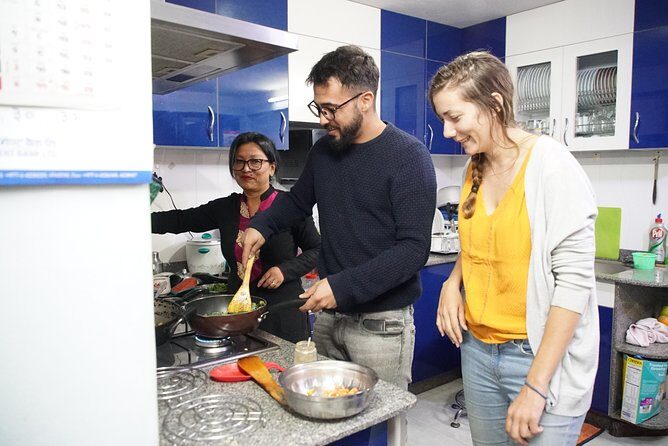
This experience runs about 5 hours, starting at 3:00 pm. It ends back at the meeting point, so you’re not left figuring out your next move at night in Kathmandu.
The pickup and private transportation matter more than you might think. In a busy city, the hardest part of any food tour is getting to the right place on time. Here, Royal Mountain Travel handles your ride, and the activity starts from their office at Lal Durbar Marg. That keeps you focused on the fun parts: the market and the cooking.
One of the best advantages is the maximum group size: 4 travelers. With a group that small, you get more than a seat at the table. You get chances to ask questions while you’re shopping, while you’re cooking, and while you’re eating. If you learn faster by talking through choices, this setup is a big plus.
The tour also includes a mobile ticket, and you receive confirmation at booking time. That removes some of the usual last-minute uncertainty that comes with tours.
The market stop: how spice shopping becomes part of the lesson
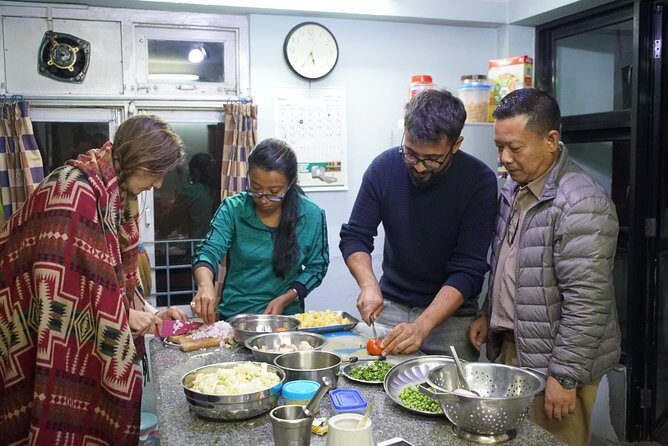
Your host family picks you up and takes you to a local market. This isn’t just a walk-through. The point is to buy groceries and spices together and talk about what makes Nepali food taste the way it does.
Here’s what you’ll actually gain from this market step: you’ll understand ingredients in context. When you see spices side by side, you start noticing the differences that don’t always come through when you buy them in a supermarket jar. Your host explains what each spice contributes, and you get to pick the ingredients you’ll later use in your dish.
It’s also the moment when your cooking class becomes more than instructions. You’re going to remember the smells and textures from that market stop. That’s where you build the mental map that makes the recipe feel natural later.
A practical note: market shopping can be fast-paced. Bring a curious mindset. If you want a quiet, slow stroll with lots of time for photos, this part may feel a bit “hands-on” and a bit busy. But for learning, it’s exactly the right kind of activity.
Cooking dal bhat with your host: simple steps, real spice work
Dal bhat is the featured dish, and that’s a smart choice for a cooking class. It’s traditional, familiar enough to explain clearly, and flexible enough to teach fundamental technique.
You’ll do key prep tasks like cutting vegetables, then mixing them with a spice blend. The spices mentioned include turmeric, cumin, ginger, garlic, and you’ll work with an assortment of spices that create the flavor profile.
What I like about this approach is that it teaches you the idea behind the cooking, not just a memorized recipe. Dal bhat is easy to explain step-by-step, which means you can concentrate on what changes when you adjust spice amounts and timing.
Think about it this way: after the market visit, each spice has a story. Turmeric isn’t just yellow powder anymore—it’s the marker for warmth and color. Cumin becomes the earthy backbone. Garlic and ginger stop being generic aromatics and become the punch that wakes everything up. That understanding is what helps the recipe translate to your kitchen later.
Also, the class is guided by your English-speaking host family. That helps a lot if you’re unsure about cooking terminology. You’re not stuck guessing what something means while a pot heats up.
One more practical detail: cooking classes are often a bit hands-on and a bit aromatic. If you’re sensitive to strong smells, plan on your clothes carrying the spice scent for a while.
Dinner at home: what you’re actually doing besides eating
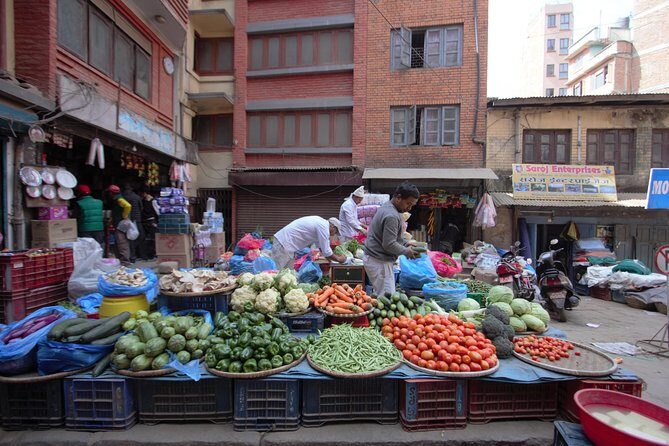
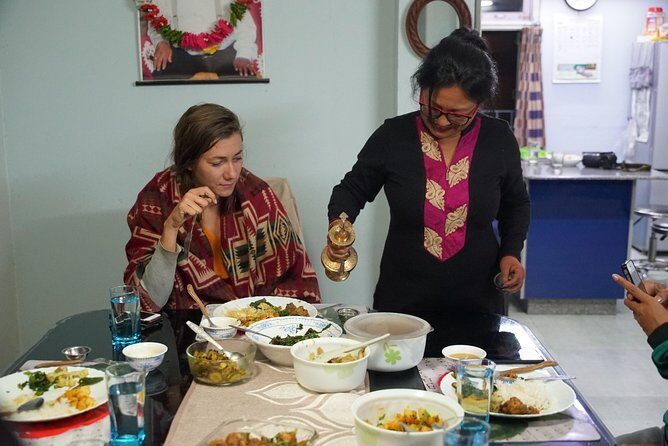
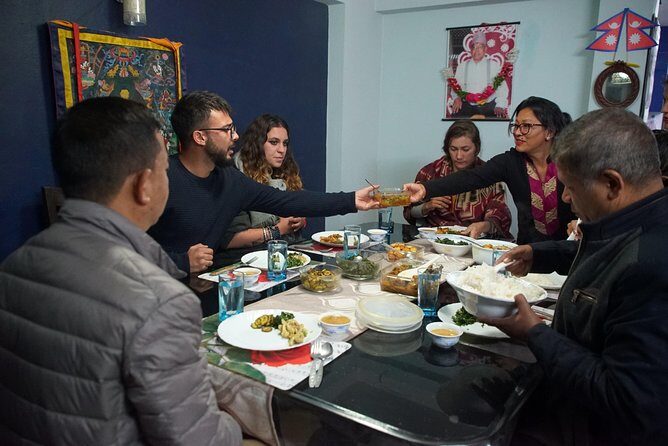
After cooking, you’ll enjoy dinner with the family in their home. This part is more than a meal at the end—it’s where the experience becomes human.
You’ll witness daily life in their home and interact with the family. That’s the part that many food tours skip. You get a sense of how food fits into the day-to-day, not just the evening event.
From the reviews, the vibe is consistently welcoming and friendly. People describe the home as delightful and the dinner as a special moment, which makes sense when the focus is on a family setting rather than a restaurant table designed for tourists.
The dinner included element is also a value win. You’re paying for a guided market step plus the cooking lesson plus dinner, all bundled together. That usually adds up to better value than separate tickets for a workshop and a standalone meal.
To make the most of this segment, bring a respectful attitude and be ready to ask simple questions. In small-group settings, those questions lead to the best conversations. If you’re comfortable eating what’s put in front of you, you’ll get more out of the experience.

Price and value: is $45 fair for a 5-hour family experience?
At $45 per person for about 5 hours, this class is priced in a way that feels fair for what you’re getting.
You’re not just paying for a cooking instructor. You’re paying for a whole chain of costs and effort:
- pickup and private transportation
- spice shopping with an English-speaking host family
- cooking instruction and time in the home
- dinner included
And the group size stays small, up to 4. Small-group cooking experiences usually cost more because the host family is giving more time per person. Here, you still get that more personal attention without a massive price jump.
So yes, it looks good on paper. But the better way to judge value is by asking what you want out of Nepal. If you want meals you can repeat with understanding—plus a real family interaction—this price feels like a reasonable trade.
If your goal is only to eat Nepali food and you don’t care about learning ingredients and steps, you might feel less satisfied. But if you want skill and context, $45 for a five-hour family-led experience is a strong deal.
Who should book this cooking class in Kathmandu
This experience fits best if you want:
- hands-on learning (not just watching)
- a small group experience
- market-to-kitchen-to-dinner flow
- a traditional dish teachable enough to repeat later, especially dal bhat
It’s also a good fit if you like conversation. With an English-speaking host family and a maximum of 4 travelers, you’ll have more chances to ask why certain spices are used and how the steps connect.
If you’re traveling solo or as a couple, you’ll likely enjoy the intimate feel. If you’re part of a bigger group, this may not be your best option because the class size is capped at 4.
Weather and timing: the practical side of planning your 3:00 pm class
This activity requires good weather. The good news is that the consequence is clear: if it’s canceled due to poor weather, you’ll be offered a different date or a full refund.
The start time is 3:00 pm, which matters for your planning. If you like a slow morning and you want dinner as the payoff, this schedule is friendly. If your days are packed with early tours, you’ll want to leave yourself enough time to get to the meeting point area on time.
The meeting point is the Royal Mountain Travel office at Lal Durbar Marg, Kathmandu 44601, Nepal, and the activity returns there at the end. That loop is useful. It reduces the hassle of late-night logistics.
Also, the start location is listed as near public transportation. That’s handy if you decide not to rely on pickup for some reason, though pickup is part of the experience.
Should you book this Cook and Dine with a Local family class?
Book it if you want a real meal-learning experience tied to daily life. The strongest reasons are the combination of market spice shopping, a family-led dal bhat lesson, and dinner in the home setting with an English-speaking host.
Skip it only if your priorities are different. If you mainly want a quick food stop with minimal interaction, or you’re not interested in cooking steps, another kind of meal experience might suit you better.
If you do book, go with two mental goals: pay attention to what each spice does, and ask questions during the market and cooking parts. That’s where the value is. Then you’ll leave with dinner and with a method you can actually use again.
FAQ
Where is the meeting point for this experience?
The meeting point is Royal Mountain Travel, Lal Durbar Marg, Kathmandu 44601, Nepal.
What time does the experience start?
It starts at 3:00 pm.
How long does the cooking class last?
The duration is approximately 5 hours.
How much does it cost per person?
The price is $45.00 per person.
Is pickup included?
Yes. Pickup is offered, and private transportation is included.
What do I do during the class?
You visit a local market to shop for groceries and spices, then you learn to cook a Nepali dish (dal bhat) with your host family.
Is dinner included?
Yes. Dinner is included.
How many people are in the group?
The maximum group size is 4 travelers.
What happens if the weather is poor?
If the experience is canceled due to poor weather, you’ll be offered a different date or a full refund.
What is the cancellation policy?
You can cancel for free up to 24 hours in advance for a full refund. If you cancel less than 24 hours before the start time, the amount paid is not refunded.