REVIEW · KATHMANDU
Evening Photography Tour of Kathmandu
Book on Viator →Operated by Third Rock Adventures · Bookable on Viator
Kathmandu at dusk hits different. This private evening photography tour strings together two of the city’s biggest spiritual landmarks—Boudhanath and Pashupatinath—with an English-speaking licensed guide who helps you find the right spots and understand what’s happening. I love that pickup and private transportation from central Kathmandu remove the hassle, and I also love the focus on real, on-the-ground moments like butter lamps, parikrama, and the evening aarti. One drawback to keep in mind: this is timed around ceremonies, so low light can make photography trickier than daytime sightseeing, and you’ll want a camera you’re comfortable using after dark.
The half-day format is also a big win. You’re out for about 3 to 4 hours, you get context for what you’re photographing, and you don’t have to piece together directions across town. Guides such as Mr Bikash and Deepa come up in feedback for a reason: they’re the kind of people who explain what the rituals mean while you’re actually watching them. Still, if you already visited these sites earlier in the day, you might feel like you’re repeating some basics—so you’ll get the most value if you’re coming specifically for the evening atmosphere.
In This Review
- Key things I’d watch for
- Why Kathmandu at dusk is a photographer’s sweet spot
- Price and logistics: what you really pay for
- Getting picked up in Kathmandu without the stress
- Boudhanath Stupa at night: butter lamps and parikrama
- Pashupatinath Temple after dark: chanting, singing, and aarti fire
- Guide help that makes your photos (and your understanding) click
- What you’ll capture: how the light and motion work
- What’s included, what to plan for, and what to bring
- Who should book this tour (and who might skip it)
- Should you book this Kathmandu evening photography tour?
- FAQ
- How long is the evening photography tour?
- Where does the tour take place?
- Is the tour private?
- Do I get pickup from Kathmandu?
- Are admission tickets included?
- Is dinner included?
- Is bottled water included?
- What does the price include?
- What’s the cancellation policy?
Key things I’d watch for
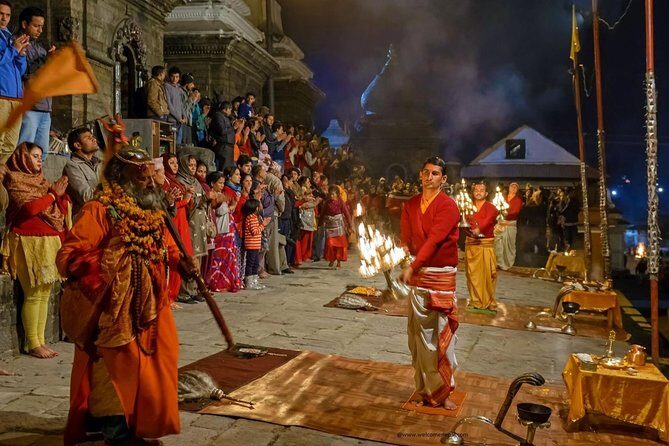
- You photograph rituals, not just buildings: butter lamps, parikrama, chanting, singing, and fire offerings are the main event.
- Spot-finding matters at night: a guide helps you move to positions that fit the action (and the light).
- Admission is included twice: both stops include the admission tickets, so you’re not doing extra ticket math.
- It’s truly private: only your group goes, so you can keep your pace without worrying about syncing with strangers.
- Bring the right energy for low light: ceremonies move fast and lighting is dramatic, so plan on shooting, adjusting, and waiting.
Why Kathmandu at dusk is a photographer’s sweet spot
Evening in Kathmandu turns the volume up on religion. Daytime gives you the shape of places; nighttime gives you the meaning. At Boudhanath, the stupa is lit up and decorated, and that changes everything in a frame. The white dome and surrounding activity—monks and devotees moving through their routines—create photos with both geometry and emotion.
At Pashupatinath, the evening aarti is the reason people come. You’re not just seeing a temple. You’re seeing a ritual with chanting, singing, and flame offerings, where the crowd’s energy and the priests’ movements become the story. It’s the kind of scene where a guide’s context turns your pictures from pretty to purposeful.
One more reason this works: your time window is short. You spend the evening on two high-impact areas rather than crisscrossing half the city. For photography, that’s practical. You’re not rushing between locations or trying to “make it work” with tired legs and missing light.
You can also read our reviews of more evening experiences in Kathmandu
Price and logistics: what you really pay for
This tour costs $102 per person and runs about 3 to 4 hours. On paper, that might sound like a lot for a short ride. In practice, you’re paying for three things that save you effort and improve results:
1) Pickup and private transportation from central Kathmandu, so you don’t spend your evening figuring out routes.
2) An English-speaking licensed city guide, which matters for photography because it helps you understand what to aim for and when.
3) Admission tickets included for both stops, plus all fees and taxes.
What’s not included is simple: dinner, bottled water, and alcoholic beverages. So you’ll want to plan around that. If you tend to get hungry on tours, grab a snack before you go or budget for something after.
Also, the tour runs under the condition of good weather. If conditions are poor, you should expect the operator to offer another date or a full refund. That weather dependency is not a small detail for night photography, so it’s worth keeping your schedule flexible.
Getting picked up in Kathmandu without the stress
You’ll get pickup offered from central Kathmandu. That’s a big deal here because the sites are important, but they’re not “right next door.” Private transport means you can focus on the experience instead of negotiating rides, waiting around, and losing momentum when the light is changing.
The tour is also private, meaning only your group participates. That changes the vibe. You don’t have to worry about someone lagging behind, and you can take breaks when you need a reset between the two ceremonies. If you’re photographing with any serious intent, that freedom helps. You can pause, check your settings, and reposition without feeling like you’re slowing everyone down.
One practical note: the sites are near public transportation, but you still get the smoother door-to-door service. At night, that reduces the “where do I stand?” confusion, which is especially helpful when you’re trying to photograph moving ceremonies and not just monuments.
Boudhanath Stupa at night: butter lamps and parikrama
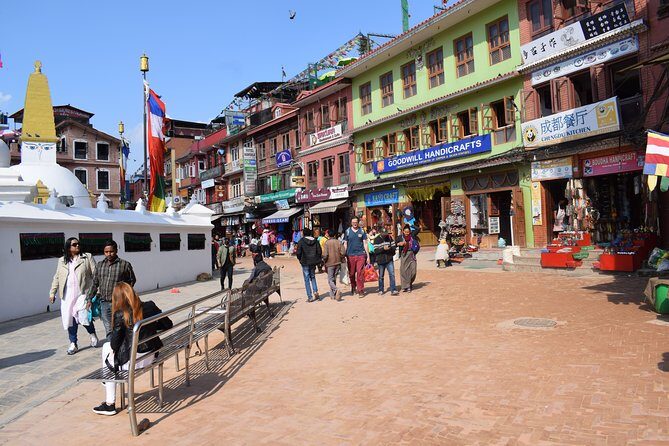
Boudhanath is a pilgrimage center for Tibetan Buddhism, and the evening turns it into a photo scene with built-in layers. The stupa itself is white and iconic, but the real visual payoff comes from what people do around it.
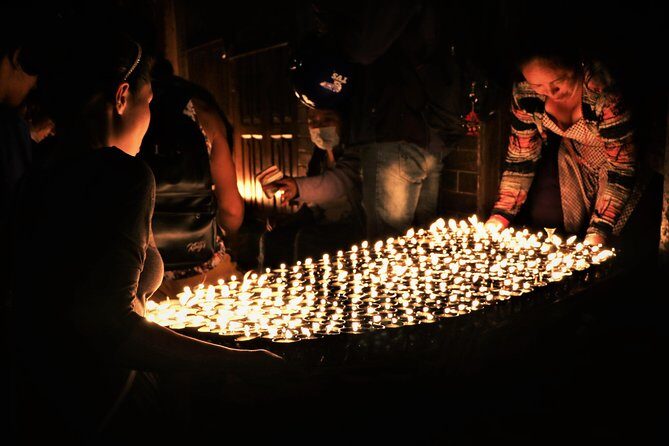
At Stop 1, you’ll see devotees making Parikrama, also known as circumambulation—walking around the stupa in a continuous loop. That motion matters for photos. It gives you rhythm in a frame, and it naturally creates foreground-and-background depth as people pass at different distances from the camera.
You also get the moment that most photographers chase: monks and devotees lighting butter lamps. The flames add warm points of light against the stupa’s pale surface. It’s not only pretty; it’s meaningful. The prayers are offered for the well-being of all sentient beings and world peace. Even if you’re focused on the camera, you’ll feel the intention behind the scene.
You’ll likely spend about one hour here. That duration is long enough to settle in, make a few attempts, and learn the flow of where people move and how the ceremony unfolds. The included admission helps too—you’re free to focus on the ritual rather than hunting down ticket details.
A possible drawback: stupa areas can be busy during key times. If your plan is to get very clean, empty compositions, you’ll be disappointed. The value of this tour is that you’re there for the human activity—the devotion is the subject. If you want “monument only” photos, you might find your expectations need adjusting.
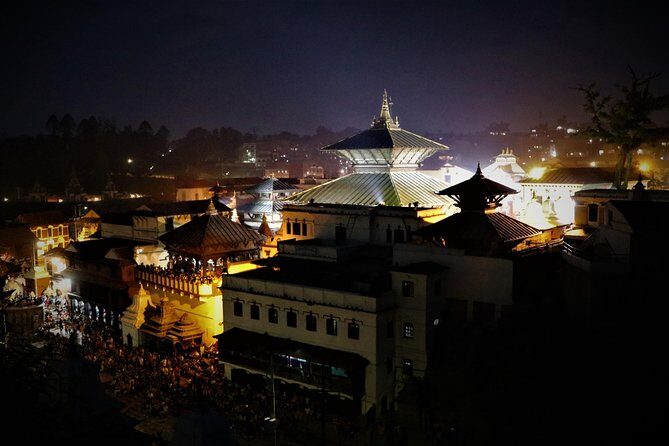
Pashupatinath Temple after dark: chanting, singing, and aarti fire
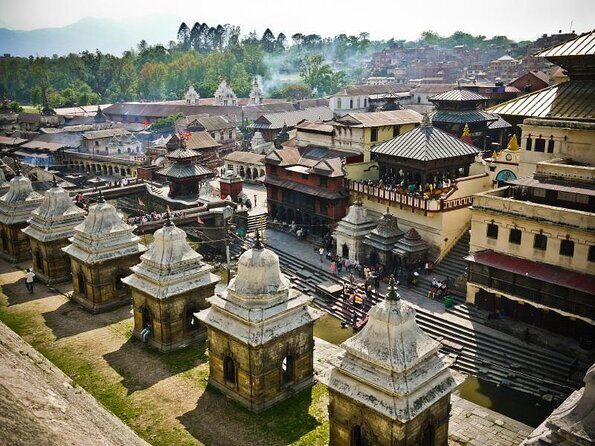
Pashupatinath is one of Kathmandu’s most important Hindu shrines dedicated to Lord Shiva. The name itself points to the temple’s role as protector of all living beings—so when the evening ceremonies start, it helps to know you’re watching devotion tied to a very specific spiritual focus.
At Stop 2, the evening atmosphere becomes electric with the sound of sacred Vedic shlokas and hymns. Then comes aarti, the ritual where priests offer light from a flame to the gods. This is one of the best settings for photography on the whole route because the light source is the ceremony itself. The fire gives you contrast and highlights movement from the hands of priests and the faces of devotees nearby.
You’ll also see devotees dancing in a trance-like way when the priests offer the aarti. That part is hard to stage and hard to replicate later in the day. It’s exactly the kind of moment that makes an evening photography tour worth it: you’re documenting something active, not static.
The tour schedule allots about one hour for this stop as well. For photography, that’s a solid chunk. You get time to watch a sequence start, see the rhythm of the priests’ movements, and then shoot as the ritual builds.
One extra atmosphere cue from what people experience on this site: the temple area is connected to the Bagmati River setting, and that adds to the mood near the banks. Even if you’re not chasing a river shot, the water-adjacent environment tends to shape how the light reflects and how the scene feels in your camera.
Like Boudhanath, this is not a “quiet, museum-style” experience. If you don’t like crowds, this could test your patience. But if you want authentic ceremony in action, it’s the whole point.

Guide help that makes your photos (and your understanding) click
This tour’s biggest advantage isn’t just that you get transport. It’s that you get a guide who helps you interpret the scene fast enough to photograph it well.
In feedback, guides such as Mr Bikash and Deepa are described as professional, polite, and strongly rooted in Kathmandu heritage. That matters because religious landmarks have details that are easy to miss if you’re just reading a sign. When the guide points out where the important moments happen, you spend more time shooting and less time guessing.
Here’s what the guide adds, in practical terms:
- You know where to stand for the action. Night photography rewards position. Even a small shift can change the background, the angle of movement, and how flames fall in your frame.
- You understand what you’re seeing while you’re seeing it. Butter lamps mean more when you know the devotional purpose. Aarti lands better when you know what the priests are offering and why chanting matters.
- Between stops, you learn enough to appreciate the city. People often expect just site visits. Here, the car time also becomes part of the education, which makes your evening feel connected instead of random.
There’s also a subtle value in traveling with context: you’re less likely to miss the “camera-window moments.” Ceremonies don’t pause for your schedule. A guide helps you stay in sync with what’s unfolding.
What you’ll capture: how the light and motion work
Evening photography at sacred sites is a balancing act. You’ll be working with:
- Multiple light sources: lit butter lamps at Boudhanath and flame offerings during aarti at Pashupatinath.
- Human movement: parikrama walkers create flow around the stupa, and priests and devotees move through ritual sequences.
- Changing intensity: ceremonies build and shift, so one photo angle may not work throughout the full hour.
This is why the guide’s timing and location advice is so useful. You’re trying to catch sequences, not just take “a picture of the place.” With the right positioning, you can include the stupa or temple context while still focusing on the people and flames that create the emotion.
You also want to accept one reality: low light can be demanding. If you shoot with a phone, you might still get great images, but you’ll need steadiness and patience. If you shoot with a camera, set expectations for adjusting quickly as lighting changes.
What’s included, what to plan for, and what to bring
The tour includes:
- Private transportation
- All fees and taxes
- English speaking licensed city guide
- Admission tickets for both stops
- The practical backbone: the plan to help you know where to go and when
Not included:
- Dinner
- Bottled water
- Alcoholic beverages
Because water and meals aren’t provided, I suggest you plan your evening like a real photo session, not a casual stroll. Eat beforehand if you can, or plan a bite after. Bring water if you’re picky about it. And if your camera setup is anything more than point-and-shoot, make sure your battery is ready for a few hours of evening shooting.
Since the tour promises that all you need is your camera, it’s clear the experience is built around seeing and photographing, not around gear rentals or additional equipment. So come ready to work with the light you have.
Also, keep in mind that the tour requires good weather. If it’s rained out or conditions are poor, the plan can change. That’s normal, but it’s worth keeping in mind if your Kathmandu dates are tight.
Who should book this tour (and who might skip it)
I’d recommend this tour if you want religious photography that’s grounded in real practice. It’s ideal for:
- People who feel more connected to places when they understand the rituals
- Photographers who like night light and don’t mind crowds if the subject is moving
- Travelers who would otherwise see these landmarks on their own at the wrong time and miss the ceremonies
You might reconsider booking if:
- You’re only interested in architectural sightseeing with minimal crowd interaction
- You get frustrated by low-light photography challenges
- You’ve already decided you want a totally relaxed, quiet evening with no ceremonial intensity
That said, even if you’ve seen Boudhanath and Pashupatinath earlier, the evening adds something daytime can’t. The butter lamps and aarti are the difference-maker.
Should you book this Kathmandu evening photography tour?
If you care about photos with meaning, yes—I think you should book it. The value is in the combination: private transport, a licensed English-speaking guide, and admission included for both major stops, all wrapped into a short evening window that’s designed around ceremonies.
Here’s how to make the call:
- Choose it if you want butter lamps, parikrama motion, and aarti flames with guidance so you can photograph the action instead of wandering.
- Consider it carefully if you dislike crowds or you’re expecting empty, postcard-style scenes.
- Book with a bit of weather flexibility in mind, since good conditions matter for the experience.
Overall, this is the kind of tour that turns a regular visit into a real night story. You’re not just seeing Kathmandu—you’re photographing why people come here after dark.
FAQ
How long is the evening photography tour?
It runs for about 3 to 4 hours.
Where does the tour take place?
The tour is in Kathmandu and focuses on Boudhanath and Pashupatinath.
Is the tour private?
Yes, it’s a private tour/activity, so only your group participates.
Do I get pickup from Kathmandu?
Pickup is offered, and transportation from central Kathmandu is included.
Are admission tickets included?
Yes. Admission tickets are included for both stops.
Is dinner included?
No, dinner is not included.
Is bottled water included?
No, bottled water is not included.
What does the price include?
It includes private transportation, all fees and taxes, and an English speaking licensed city guide.
What’s the cancellation policy?
Free cancellation is available. You can cancel up to 24 hours in advance of the experience for a full refund, based on local time. If you cancel less than 24 hours before the start time, the amount you paid will not be refunded.