REVIEW · KATHMANDU
Everest Base Camp trek 14 days
Book on Viator →Operated by Sunrise Adventure Trek P. Ltd · Bookable on Viator
Everest Base Camp can feel intimidating.
This trek plan brings no-stress planning and a ready-to-go kit so your days are about walking and getting your breath back, not spreadsheets.
I also like that sleeping bag and down jacket are provided, and that most meals are handled during the trek. One thing to keep in mind: Lukla flights can be sensitive to weather, and the trip does not include your travel insurance or crew tips.
You’ll travel with a small group (maximum 18 travelers) and finish with a cultural show and farewell dinner, which is a nice way to land the plane emotionally after a serious hike.
In This Review
- Key Highlights Worth Your Attention
- The Big Value: What This EBC Plan Does For You
- Kathmandu Arrival: Pickups, Flights, and Getting Oriented
- Day 2 To Day 4: Lukla to Phakding, then Namche Bazaar
- Day 5 To Day 7: Tengboche and Dingboche Acclimatization Rhythm
- Day 8 To Day 10: Lobuche, Everest Base Camp, then Kalapatthar
- The Return Loop: Namche Bazaar, Lukla, Kathmandu
- Price and What You Really Get for $1,380
- Comfort and Practical Reality on the Trail
- Who This Everest Base Camp Trek Fits Best
- Should You Book This Everest Base Camp Trek?
- FAQ
- How long is the Everest Base Camp trek on this program?
- Where does the trek start?
- Are flights included to Lukla and back?
- Are meals included during the trekking days?
- Is a sleeping bag and down jacket provided?
- What permits are included?
- How many people are in a group?
- What’s not included in the tour price?
- Is free cancellation available?
Key Highlights Worth Your Attention
- Guided logistics that remove the puzzle: flights, permits, transport, and lodge stays are built into the schedule
- Gear included for real cold: sleeping bag and a down jacket are provided for the trek
- Acclimatization days are scheduled: Namche Bazaar and Dingboche breaks help you adjust before higher passes
- Big day structure is clear: Everest Base Camp and Gorakshep on Day 9, then Kalapatthar and the long descent on Day 10
- Meals and accommodations stay consistent: breakfast, lunch, dinner are covered during trekking days listed as B.L.D
- Small group feel: up to 18 travelers means less chaos in tea houses and on trail crossings
The Big Value: What This EBC Plan Does For You
If you’re drawn to Everest Base Camp but worried about planning, this is where the program earns its keep. You’re not just buying a route. You’re buying someone else to handle the moving parts: Kathmandu to Lukla flights, transportation between trekking segments, permits, and trekking-lodge lodging.
The second value hit is the gear. A provided sleeping bag and down jacket can save you both money and hassle. It also means you can pack lighter, which matters when your “carry weight” becomes whatever you can manage without turning every incline into a negotiation.
The third value point is the way the days are protected from total decision fatigue. You’ll have a guided flow with set trekking times and most meals included. That’s not just convenience. On an altitude trek, it’s also stress control. Less fussing means more focus on pacing and staying warm.
You can also read our reviews of more hiking tours in Kathmandu
Kathmandu Arrival: Pickups, Flights, and Getting Oriented
Your trip starts in Kathmandu. You’ll get airport pick up and departures, plus flight tickets for the Kathmandu–Lukla–Kathmandu route. The itinerary also includes standard hotels in Kathmandu on a twin-sharing bed basis with breakfast.
Day 1 is straightforward: arrival and settling in. Day 2 is where the trip flips into trekking mode—so it’s smart to use Day 1 to rest, organize essentials, and keep your energy for the flight and first hike.
You’ll also be operating with permits sorted. The trek includes the TIMS card and the trekking permit, so you’re not trying to chase paperwork while your legs are itching to move.
Day 2 To Day 4: Lukla to Phakding, then Namche Bazaar
Day 2 begins with the Lukla flight, listed at about 40–45 minutes, then a trek from Lukla to Phakding. The route time is 3 to 4 hours, and you’ll start around 866 ft / 2640 m in the provided figures.
This first trekking day is a practical “wake up your legs” segment. You’re not going straight for maximum elevation. You’re easing into the pace, learning what your breathing feels like, and figuring out how quickly you warm up (or don’t) when the sun drops behind the hills.
Day 3 takes you from Phakding to Namche Bazaar. Expect around 5 to 6 hours and arrival around 3440 m / 11319 ft. This is the day where you’ll feel the altitude more than you did the day before, even if the trek doesn’t look huge on paper.
Day 4 is an acclimatization day in Namche Bazaar. That’s a key design choice. Instead of sprinting upward every day, you get a built-in buffer to help your body adjust.
Day 5 To Day 7: Tengboche and Dingboche Acclimatization Rhythm
Day 5 is the trek to Tengboche, listed at 6 to 7 hours with an altitude around 3860 m / 12694 ft. This is one of those days where pacing matters more than speed. The goal is to keep steady effort, stay warm, and avoid turning every break into a rescue mission.
Day 6 is acclimatization in Dingboche. Day 7 again mentions trekking to Dingboche at 4410 m / 14300 ft with 5 to 6 hours. Even if the exact movement is short compared to other days, the pattern is clear: you’re spending time at higher altitude before going further.
This “pause before the push” approach is worth respecting. Everest Base Camp is not just a distance challenge. It’s an altitude challenge, and acclimatization time is one of the few levers you can control.
Also, the trekking days are scheduled with B.L.D (Breakfast, Lunch & Dinner), which helps keep your food rhythm predictable. On cold days, that can be the difference between feeling okay and getting cranky.
Day 8 To Day 10: Lobuche, Everest Base Camp, then Kalapatthar
Day 8 treks to Lobuche around 4910 m / 16207 ft with about 5 hours. By now, the routine is established: walk, stop, eat, warm up, repeat. You’ll want to keep your layers ready because mornings and evenings at altitude can shift quickly.
Day 9 is the big payoff day: trekking to Everest Base Camp, then continuing back to Gorakshep (5200 m). The exact hours aren’t listed for this segment, but the structure is built for a long, focused day. You’ll also be operating at around Base Camp altitude territory, where the effort feels heavier.
Day 10 is a two-part day. First, a hike to Kalapatthar (5550 m) listed as 2 hours 30 minutes, then a long trek down to Periche at 4200 m with a 7-hour duration.
Two practical notes here:
- Kalapatthar is scheduled as a targeted push, so you’ll want to conserve energy in the morning and move steadily on the ascent.
- The descent to Periche is long. Even if it feels like relief, your knees will remind you that gravity charges interest.
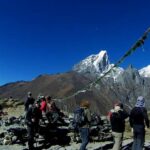
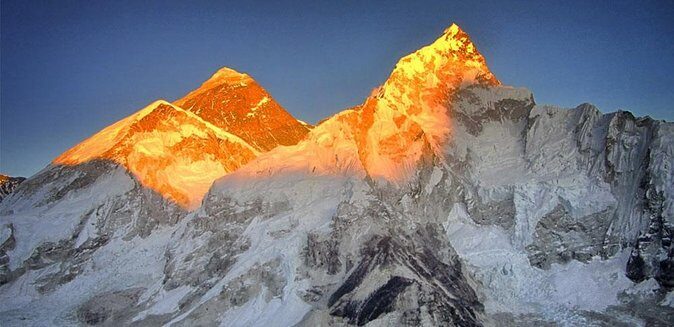
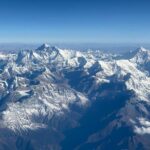
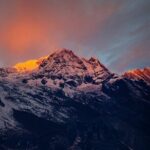
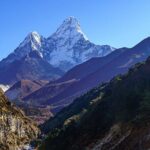
The overall highlight promise in the overview is also meaningful here. You’re set up to catch sight of Ama Dablam, Lhotse, Makalu, Cho Oyu, and Everest during the trek. Seeing those peaks is why this route is so addictive to repeat trekkers.

The Return Loop: Namche Bazaar, Lukla, Kathmandu
Day 11 takes you back to Namche Bazaar (listed at 3441 m) in about 6 hours. This is one of those days where your body is tired, but the route is clear. Staying consistent with food and hydration helps more than pushing pace.
Day 12 is the trek to Lukla, listed at 7 hours. It’s a full day, and you’ll likely feel the cumulative days in your legs. Treat it like a finish line lap, not a victory sprint.
Day 13 is flight back to Kathmandu, listed as B.D (Breakfast & Dinner). Day 14 is your farewell and departure, plus the program ender: a cultural show and farewell dinner.
That last meal matters more than it sounds. After cold nights and altitude effort, a scheduled celebratory evening gives you closure and a human moment to share stories without worrying about where dinner is or how to get home.
Price and What You Really Get for $1,380
At $1,380 per person, the question isn’t just price. It’s what gets bundled into that number.
What’s included that can add serious value:
- Kathmandu–Lukla–Kathmandu flights
- Airport pick up and departures
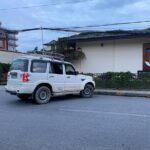
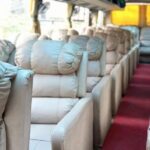
- Transport using A/C car and a tourist deluxe bus during trip segments
- Hotels in Kathmandu (twin sharing) and trekking lodge accommodations
- Sleeping bag and down jacket (big-ticket convenience)
- Permits (TIMS card and trekking permit)
- Most meals during the trek (daily breakfast, lunch, dinner as listed)
- Guide support including salary, accommodation, meals, and insurance
- A first aid medicine item
- T-shirt and a trip achievement certificate
- A cultural show and farewell dinner
- Government tax official expenses
What’s not included (and you should plan around it):
- Your international airfare
- Travel insurance
- Tips for the trekking crew
- Entrance fees and any extra meals in Kathmandu
- Personal expenses, including bar bills
So, is it good value? For the type of trek that forces you to handle flights, permits, lodges, and cold-weather logistics, yes. You’re paying for fewer unknowns and a smoother run. If you already own proper cold gear and you’re comfortable coordinating permits and flights yourself, you might find cheaper options. But if your goal is to walk and not manage a project plan, this bundle is the point.
Comfort and Practical Reality on the Trail
You’ll be in trekking lodges rather than camping. That’s not only more comfortable; it also reduces the list of things you must carry. Your provided sleeping bag and down jacket help a lot with night-time cold management.
Meal support is also practical. The schedule indicates B.L.D for trekking days. That means you’re not guessing where the next meal will be or whether it will be available on time. At altitude, consistency helps your energy stay steady.
On safety: the included items include a first aid medicine item, and the tour covers the guide’s and crew-related items like insurance and accommodation. The itinerary also includes acclimatization blocks in Namche and Dingboche, which is one of the most important safety decisions you can make before you ever reach Base Camp.
From accounts tied to the operator, the guide team is often described as friendly, organized, and focused on safety. Names like Suresh and Ram show up in people’s experiences for follow-up and guidance, and Sobit is also referenced as part of a helpful team. A sherpa named Pasang Sherpa appears in summit-related stories tied to this operator. That’s not a guarantee, but it does signal that real people are staffing these treks—not a faceless handoff.
Who This Everest Base Camp Trek Fits Best
This trek suits you if:
- You have moderate physical fitness
- You want a guided plan that handles flights, permits, transport, and trekking lodge stays
- You value having sleeping bag and down jacket provided
- You prefer to spend your attention on pacing and acclimatization, not on logistics
It might feel like overkill if you’re an ultra-experienced high-altitude trekker who already has all gear, knows how to arrange permits, and enjoys planning every detail yourself.
Group size is capped at 18 travelers, which usually helps keep things manageable. Too many people can turn tea-house life into a maze. This is set up to avoid that as much as possible.
Should You Book This Everest Base Camp Trek?
I’d say book it if your main goal is reaching Everest Base Camp with solid structure and minimal planning stress. The included flights, permits, lodge accommodations, and provided cold-weather gear are the kind of “boring but essential” items that derail trips when you try to self-organize.
I would hesitate if you’re unwilling to handle the realities of altitude and cold, or if you haven’t budgeted for travel insurance and tips. Also, be flexible on expectations around Lukla flight timing, because that part of the journey depends on conditions you can’t fully control.
If you want the Everest experience with less admin and more trail time, this one is built for you. And that farewell cultural show at the end is a nice touch when you’re ready to stop hiking and start smiling for real.
FAQ
How long is the Everest Base Camp trek on this program?
The experience is listed as 14 days for the Everest Base Camp trek, with the overall duration described as 5 to 14 days (approx.) depending on the itinerary structure.
Where does the trek start?
The trek starts in Kathmandu, with meeting points listed within the Kathmandu Valley area.
Are flights included to Lukla and back?
Yes. The tour includes Kathmandu, Lukla, and Kathmandu flight tickets, and Day 2 includes a Lukla flight of about 40–45 minutes.
Are meals included during the trekking days?
Yes. The itinerary states daily 3 time meals during the trek as B.L.D (Breakfast, Lunch & Dinner).
Is a sleeping bag and down jacket provided?
Yes. The included items state that you can receive a sleeping bag and down-jacket during the trek if you need them.
What permits are included?
The tour includes a trekking permit and a TIMS card.
How many people are in a group?
The maximum group size is listed as 18 travelers.
What’s not included in the tour price?
Not included are international air ticket, travel insurance, tips, entrance fees, and extra meals in Kathmandu plus personal expenses such as bar bills.
Is free cancellation available?
Yes. Free cancellation is available, with a full refund if you cancel at least 24 hours in advance of the experience start time.