REVIEW · KATHMANDU
Seven World Heritage Day Tour in Kathmandu Nepal
Book on Viator →Operated by Himalayan Planet Adventures · Bookable on Viator
One day, seven UNESCO sites, big rewards. This is a long but well-organized Kathmandu Valley circuit where a private vehicle and local guide connect the dots between temples, courtyards, and royal squares. You get to see major icons like Pashupatinath plus quieter stops such as Changu Narayan without trying to stitch it together yourself.
I especially like the pacing promise: each stop has a set amount of time, so you don’t lose the whole day to indecision. I also like the variety—Buddhist stupa views, Newari architecture at durbar squares, and Hindu temple complexes all in one run.
The main drawback is simple: it’s 10 to 12 hours. With multiple short visits and some uphill walking, it can feel like a lot if you’re sensitive to stairs or want long photo breaks.
In This Review
- Key things that make this tour work
- The Kathmandu UNESCO circuit, done in one long day
- Price and what you still need to budget
- Pickup, private transport, and the Ring road advantage
- Morning start times and managing 10 to 12 hours
- Your UNESCO day, stop by stop: what to expect
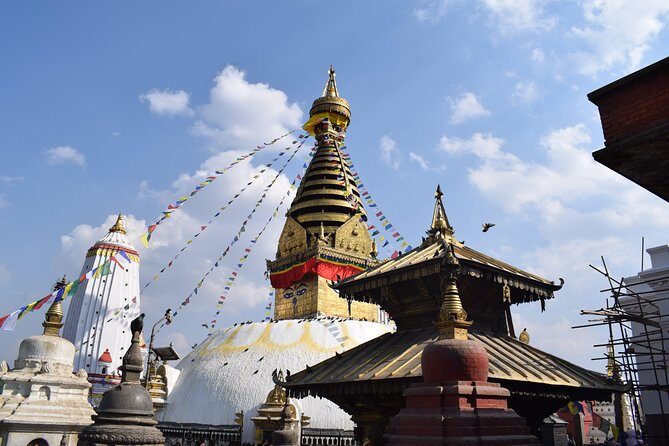
- Stop 1: Swayambhunath Stupa (about 1 hour)
- Stop 2: Amideva Buddha Park (about 30 minutes, free)
- Stop 3: Kathmandu Durbar Square (about 1 hour)
- Stop 4: Kumari Chowk (about 5 minutes, free)
- Stop 5: Patan Durbar Square (about 1 hour)
- Stop 5 (area): Krishna Temple stone architecture and shrines
- Stop 6: Golden Temple / Hiranya Varna Mahavihar (about 15 minutes)
- Stop 7: Patan Museum (about 30 minutes, admission not included)
- Stop 8: Bhaktapur Durbar Square (about 2 hours)
- Stop 9: Nyatapola Temple (about 10 minutes, free)
- Stop 10: Dattatraya Temple (about 15 minutes, free)
- Stop 11: 55 Window Palace (about 15 minutes, free)
- Stop 12: Siddha Pokhari (about 15 minutes, free)
- Stop 13: Changu Narayan Temple (about 30 minutes)
- Stop 14: Pashupatinath Temple (about 1 hour)
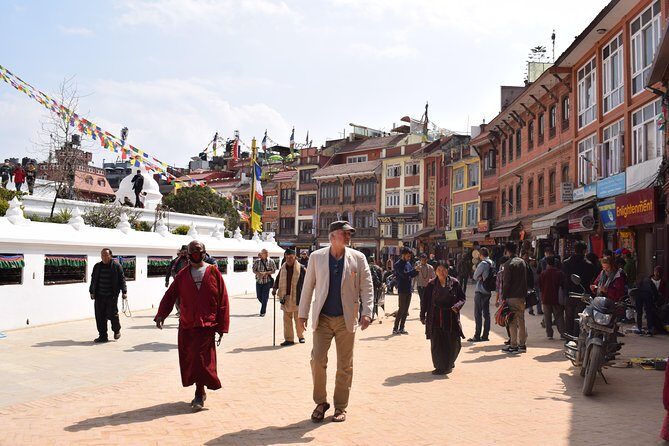
- Stop 15: Boudhanath Stupa (about 1 hour)
- The guide makes or breaks the day
- Who this tour suits best
- Should you book the Seven World Heritage Day Tour?
- FAQ
- What is the duration of the Seven World Heritage Day Tour?
- What is the price per person?
- Is hotel pickup included?
- How do you travel between sites?
- Are entrance fees included for the UNESCO sites?
- Is food provided during the tour?
- Do I need paper tickets?
- What is the cancellation policy?
Key things that make this tour work
- Private vehicle pickup/drop-off inside the Ring road keeps your day efficient.
- Seven UNESCO sites in a single itinerary beats the usual Kathmandu scramble.
- Professional local guides (including Shanti Karki and Pankaj) can add clarity to what you’re seeing.
- Multiple morning start times help you match your energy level and schedule.
- Mobile ticket + group discounts can make planning smoother and cheaper if you’re traveling with others.
- Entrance fees aren’t included, so you’ll want to budget for site tickets separately.
The Kathmandu UNESCO circuit, done in one long day
If Kathmandu Valley is on your “must-see” list, this tour is built for people who want results fast. Instead of choosing between a few big attractions, you’ll line up seven UNESCO World Heritage sites into one continuous day with a guide and a comfortable private vehicle.
That structure matters. Kathmandu’s sites are spread out, and traffic can turn a simple plan into a stress test. Here, the time you spend commuting is reduced so you can use the day for the places themselves. And because the stops include both the famous names and less-hyped sites, you leave with a wider sense of how the valley’s cultures connect.
You also get a useful reality check: UNESCO doesn’t just mean pretty buildings. It often means courtyards you can stand in, stone details you have to slow down for, and religious places where people live and worship today—not museum dioramas.
You can also read our reviews of more historical tours in Kathmandu

Price and what you still need to budget
This tour costs $65 per person. For that price, you’re buying three big things: pickup and drop-off inside the Ring road, transport by private vehicle, and a professional guide.
The part to watch is what isn’t included. The tour lists food and drinks as not included, and entrance fees are also not included in all Heritage sites (the exact entry charges depend on your site choices). Because the itinerary touches many UNESCO-listed locations, your final spend will likely be more than the base $65 once site tickets add up.
So here’s the practical way to judge value:
- If you’d otherwise pay for a driver or multiple separate tours, the $65 can feel fair fast.
- If you’re traveling with a small group, group discounts may improve the deal.
- If you’re trying to keep the budget tight, plan ahead for entrance tickets and meals.
Bottom line: the value is in the full-day routing and guide support. You’ll get more per hour than doing it piece by piece on your own, but you should still expect extra costs for site admissions and food.
Pickup, private transport, and the Ring road advantage
One of the simplest joys of this tour is that the day starts with hotel pickup and drop-off inside the Ring road. That matters in Kathmandu because “central” can mean different things depending on traffic and where you’re staying. By keeping pickup within the Ring road, the operator can route the day more predictably.
You’ll travel by private vehicle, not a shared bus. That usually means:
- less waiting
- easier time management between sites
- fewer headaches when you want a short pause to catch your breath or grab water/snacks on the go
You’ll also get a mobile ticket, which is handy for avoiding paper clutter and for quick check-ins.
Morning start times and managing 10 to 12 hours
The tour runs about 10 to 12 hours, and you can choose from multiple morning start times. That flexibility is useful because the day includes a mix of long sit-with-it places (like Bhaktapur Durbar Square) and quicker stops (like Kumari Chowk).
Plan for a “runway walk” day rather than a stroll day. Even when a stop says 10 or 15 minutes, you’ll still want time to:
- orient yourself inside the courtyards/complexes
- take in major features (temple style, layout, carved elements)
- switch between religious spaces where people actually worship
Also, one review highlight worth keeping in mind: the guide can be flexible about comfort, including minimizing stair climbing when needed. That doesn’t change the fact that Kathmandu has slopes and steps, but it’s a good sign that pace and movement matter on this trip.
Your UNESCO day, stop by stop: what to expect
Below is the kind of trip rhythm you’ll experience: arrive, get the big picture from your guide, then spend a short window soaking up details before moving on.



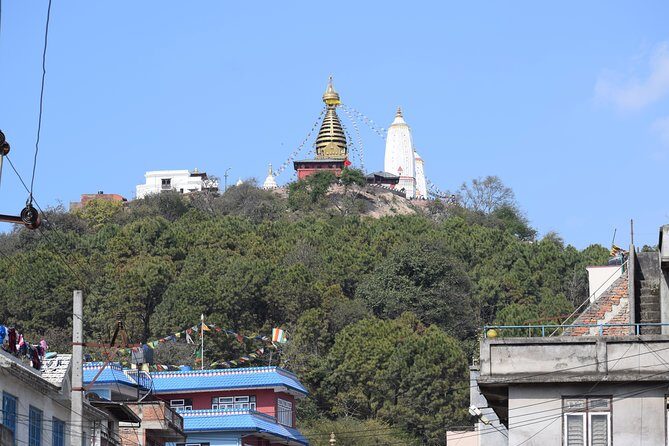
Stop 1: Swayambhunath Stupa (about 1 hour)
Swayambhunath is a Buddhist pilgrimage site listed by UNESCO. It’s approached from two entrances, including one inclined walk to the top.
Why it’s worth your time:
- it’s one of Kathmandu’s signature religious landmarks
- the setting gives you a strong sense of how major temples/stupas anchor the city
Watch-outs:
- the walk up may involve effort, especially if you’re not feeling great that morning
- admission isn’t included here, so expect a ticket cost unless your package choice covers it
Stop 2: Amideva Buddha Park (about 30 minutes, free)
Right after Swayambhunath, you’ll hit Amideva Buddha Park. It’s known for large statues of Shakyamuni Buddha, plus smaller religious and architectural components.
Why you’ll like it:
- it’s a calmer, more “sculpture-focused” break from the main stupa area
- it’s short enough to fit the day without fatigue taking over
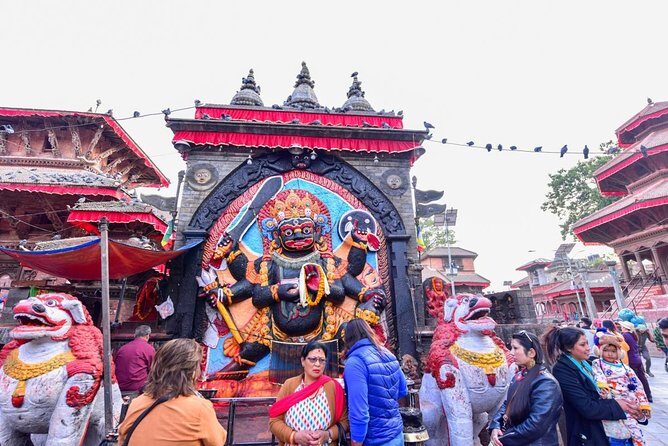
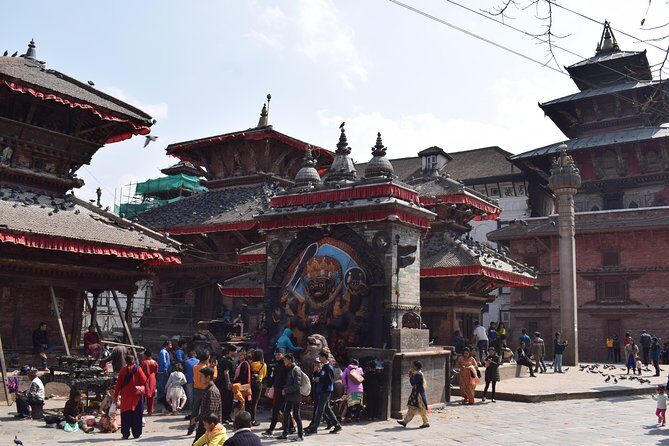
Stop 3: Kathmandu Durbar Square (about 1 hour)
Next is Kathmandu Durbar Square, another UNESCO site. Expect historical and architectural buildings, with at least some areas reported as under construction.
Why it’s important:
- durbar squares show how power, craft, and religion shaped the city
- even when parts are under work, the surviving architecture still gives you a real sense of place
Possible drawback:
- construction can limit some views or photo angles
Stop 4: Kumari Chowk (about 5 minutes, free)
This is quick, but culturally big. Kumari Chowk is a red-bricked, three-level courtyard where the living goddess resides. The Kumari is a Newari girl selected to serve as the living goddess until puberty.
What to do with your brief time:
- focus on the courtyard structure and the way the space supports ongoing religious meaning
- don’t expect long wandering here—this is a stop for understanding, then moving on
Stop 5: Patan Durbar Square (about 1 hour)
Then you shift to Patan Durbar Square in Lalitpur, the courtyard of the historic Malla palace. It’s famous for Newari architecture, with a floor of crimson bricks and layered layout.
Why Patan works in this itinerary:
- the design language feels different from Kathmandu, so the day doesn’t repeat itself
- the Malla palace context helps you read the stonework like a story rather than a collection of buildings
Stop 5 (area): Krishna Temple stone architecture and shrines
Along the way to the main site, you’ll see stone architecture connected to the Krishna temple, including 21 shrines with carvings tied to Ramayana and Mahabharat, plus a large bell.
This is one of those “details pay off” moments. Don’t rush past the carvings—your guide can point out what themes to look for so you know what you’re seeing.
Stop 6: Golden Temple / Hiranya Varna Mahavihar (about 15 minutes)
The Hiranya Varna Mahavihar, often called the Golden Temple, is a 12th-century pagoda-style temple. It features bronze statues and silver and gold decorations.
Why 15 minutes still makes sense:
- this is a compact highlight where visual impact is immediate
- the pagoda-style form helps you connect the architectural styles across the day
Admission isn’t included, so plan for ticket time/cost if needed.
Stop 7: Patan Museum (about 30 minutes, admission not included)
At Patan’s museum space, you’ll enter the museum connected to the durbar square area (Keshav Narayan Chowk). It includes records about ancestors’ lifestyles and various artifacts.
Why it’s a strong add-on:
- after seeing courtyards and temples, the museum gives you a “why” layer
- it helps you translate stone architecture into human lives and local craft traditions
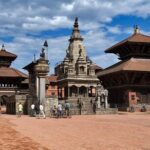
Stop 8: Bhaktapur Durbar Square (about 2 hours)
Now the trip slows a bit at Bhaktapur Durbar Square, often associated with the City of Devotees. It’s an indigenous Newari cultural and architecture center, with major features including the famed 55-window palace area.
This is one of the best-value blocks of time in the whole itinerary. Two hours means you can:
- stand back and take in layout
- then return to specific carvings and facades without feeling rushed
Stop 9: Nyatapola Temple (about 10 minutes, free)
Nyatapola Temple is a five-level pagoda-style temple with a sculpted look. It’s described as one of the tallest pagodas, over 30 meters tall.
Why it’s great for quick stops:
- you can grasp the scale fast
- it’s a clear architectural “win” even if your legs are tired
Stop 10: Dattatraya Temple (about 15 minutes, free)
At Dattatreya Square, you’ll visit Dattatraya Temple, which is believed to have been constructed using the stem of a single tree.
This is a stop where you should lean on your guide for interpretation. Even without a long visit, understanding the origin story helps you notice how the temple feels and is built.
Stop 11: 55 Window Palace (about 15 minutes, free)
The 55-window palace gets its name from exactly 55 windows carved into the palace structure, connected through linked courtyards.
Quick strategy:
- look for the rhythm of windows across the facades
- then zoom in on the carving patterns, which your guide can explain in context
Stop 12: Siddha Pokhari (about 15 minutes, free)
Siddha Pokhari is a human-made pond that’s 171 meters long and 3 meters deep. It’s also a local hangout, so the vibe is less formal than some temple areas.
This is your chance for a mental reset during a packed day—slow down, sit if you can, and let the architecture take a back seat for a minute.
Stop 13: Changu Narayan Temple (about 30 minutes)
This UNESCO site is described as among the least visited, and it’s often discussed as a gem for people who like craft details. Here you’ll observe Newari craftsmen working in traditional carving styles.
Why it’s a smart inclusion:
- it balances the more famous durbar and temple stops
- it connects UNESCO to living skills, not just monuments
Admission isn’t included, so plan for a ticket cost if required.
Stop 14: Pashupatinath Temple (about 1 hour)
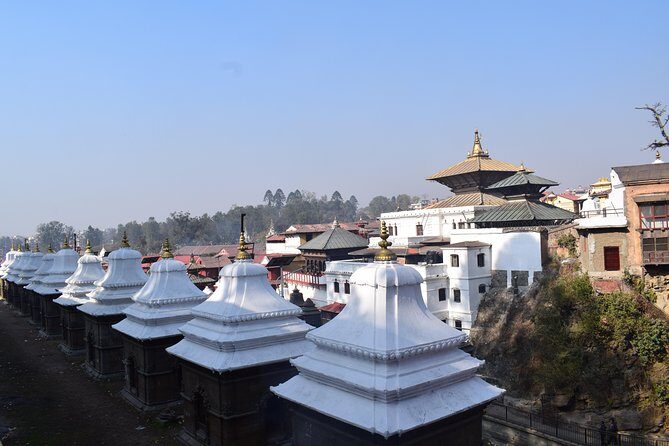
Pashupatinath Temple is presented as the greatest temple complex in Nepal, with over 500 temples and shrines. The complex covers about 0.64 hectares, and it draws many Hindu devotees.
This is one of the big spiritual anchors of the itinerary. Expect a larger, more complex site than you’ve had earlier, and give yourself time to take in the density of religious structures.
Admission isn’t included here, too.
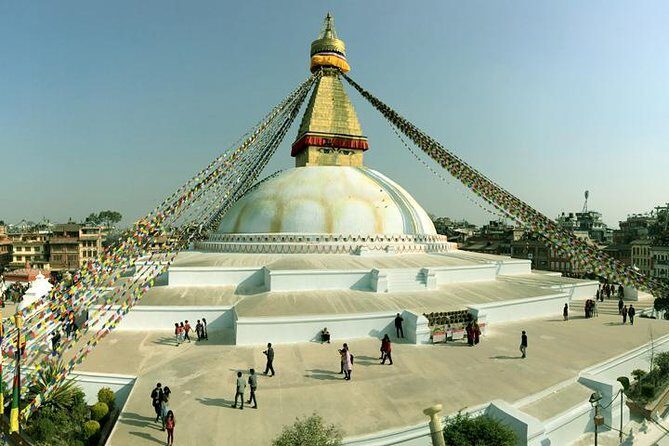
Stop 15: Boudhanath Stupa (about 1 hour)
Finally, you’ll reach Boudhanath Stupa, one of Nepal’s main Buddhist pilgrimage destinations. It’s described as 36 meters tall with over 50 gompas around it.
Why this ending works:
- you end with a major Buddhist monument after covering Hindu and Newari architectural stops
- the scale gives your day closure, like a visual exhale
Admission isn’t included, so expect site ticket costs if applicable.
The guide makes or breaks the day
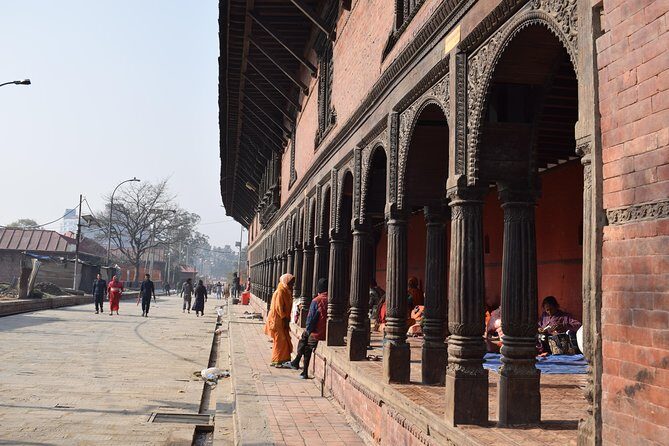
A tour like this lives or dies on interpretation. The itinerary is full of UNESCO labels, but it’s your guide who turns those labels into something you can actually picture and remember.
I’ve seen this operator’s guides highlighted—Shanti Karki is praised for sharing lots of detail about history and daily life, and Pankaj is noted for being flexible with how fast you move, including minimizing stair climbing when needed.
How you can use your guide (and make the day feel less rushed):
- Ask one simple question early, like what to look for in the architecture style at each durbar square.
- If you have mobility limits, tell them up front. The tour includes an inclined walk at Swayambhunath, so comfort planning matters.
- Use your short stops for your big curiosity: carvings, temple layout, and why this place is UNESCO-listed.
When the guide explains what you’re seeing, those small stops stop feeling like checkboxes.
Who this tour suits best
This is a strong fit for people who:
- want to see all seven UNESCO sites in Kathmandu Valley without building a plan from scratch
- like having a driver and a guide so the day stays efficient
- can handle a full day (10 to 12 hours) with multiple short visits
It may be less ideal if you:
- want slow museum pacing and long rest breaks
- get overwhelmed by constant moving between sites
- hate stairs and steep walks (even with flexibility)
Should you book the Seven World Heritage Day Tour?
I’d book it if your priority is coverage and you want a guided, time-managed route that hits the main UNESCO anchors: Swayambhunath, Durbar Squares across Kathmandu/Patan/Bhaktapur, Changu Narayan, Pashupatinath, and Boudhanath.
I’d think twice if you’re chasing a calm day. This is a marathon of meaning, not a quiet stroll. You’ll be glad you have the private vehicle, but you still need to show up ready for a long schedule and separate spending on meals and entrance fees.
If you do book, go in with a simple mindset: your goal isn’t to memorize everything. Your goal is to get your bearings fast on how Kathmandu Valley’s religious and craft traditions shaped the spaces you’ll stand in all day.
FAQ
What is the duration of the Seven World Heritage Day Tour?
The tour runs about 10 to 12 hours.
What is the price per person?
The price is $65.00 per person.
Is hotel pickup included?
Yes. You get hotel pickup and drop-off inside the Ring road.
How do you travel between sites?
You travel by private vehicle with a professional tour guide.
Are entrance fees included for the UNESCO sites?
Entrance fees are not included. Food and drinks are also not included.
Is food provided during the tour?
No. Food and drinks are not included, but you can buy them at each site.
Do I need paper tickets?
No. You receive a mobile ticket.
What is the cancellation policy?
Free cancellation is available. You can cancel up to 24 hours in advance for a full refund. If you cancel less than 24 hours before the experience start time, you do not get a refund.