REVIEW · KATHMANDU
Swayambhu and Kathmandu Durbar Square Half Day Tour
Book on Viator →Operated by Himalayan Advisor Pvt. Ltd. · Bookable on Viator
Swayambhunath and Durbar Square in one tidy circuit. This half-day tour strings together two UNESCO World Heritage stops and adds a local guide so the temples make sense instead of feeling like random stops. You also get hotel pickup and drop-off, which matters a lot in Kathmandu traffic, plus entrance tickets included so you can spend your time looking instead of paying at each gate.
I especially like the pace: about four hours that still leaves room for real questions. You’ll spend focused time at Swayambhunath (Monkey Temple) and then shift to the royal-and-religious core at Kathmandu Durbar Square, with short guided stops that keep your day from dragging.
One drawback to consider: the schedule is tight, with shorter time slices at multiple spots (like Kumari Chowk and Hanuman Dhoka). If you prefer slow wandering and long photo breaks, you may want a longer full-day option later.
In This Review
- Key things I’d zero in on
- Why this half-day combo works: two UNESCO sites, one connected story
- Pickup, private vehicle, and that all-important time buffer
- Stop 1: Swayambhunath Monkey Temple views and temple details
- A quick add-on inside the complex: Amideva Buddha Park
- Kathmandu Durbar Square: the royal center that became a living heritage site
- Kumari Chowk: your chance to see the Kumari tradition in action
- Hanuman Dhoka and the feel of everyday devotion
- Basantapur Tower, street shopping, and Akash Bhairav Temple
- What the guide adds: Hindu and Buddhist traditions made practical
- Price and value: $65 feels fair when entrances and transport are included
- Who should book this tour (and who might want something else)
- Practical tips to get the most from the 4-hour loop
- Should you book this Swayambhu and Kathmandu Durbar Square half day tour?
- FAQ
- FAQ
- How long is the Swayambhu and Kathmandu Durbar Square half day tour?
- What does the tour cost?
- Is hotel pickup and drop-off included?
- Are entrance tickets included?
- What stops are included in the tour?
- Is food or drinks included?
- Is this a private tour or a group tour?
- How far in advance should I book?
- What’s the cancellation policy?
- Is the tour hard to join for most people?
Key things I’d zero in on
- Hotel transfers included, so you avoid the hassle of figuring out routes and meeting points
- UNESCO combo in half a day: Swayambhunath plus Kathmandu Durbar Square
- Admission tickets covered, including the smaller temple stops along the way
- Guide-led explanations that connect Hindu and Buddhist traditions in plain language
- Short stop times that keep momentum, but don’t allow endless wandering
Why this half-day combo works: two UNESCO sites, one connected story
Kathmandu has a way of making you feel like you’re walking through layers of time at once. This tour is built for people who don’t have a full day, because it ties together two of the most important heritage anchors in the valley: Swayambhunath on the hill and Kathmandu Durbar Square in the old royal district.
What I like about the flow is how the guide can frame what you’re seeing as part of everyday religious life, not just architecture. You’ll bounce between Hindu and Buddhist spaces, and the tour format nudges you to notice patterns: symbols, rituals, and the way temples sit inside neighborhoods rather than outside them.
Also, you don’t have to manage logistics. When transport and entrance fees are handled, your brain stays on the sights—where to stand for the best view, what to look at in carvings, and how the different sacred spaces relate.
You can also read our reviews of more tours and experiences in Kathmandu.

Pickup, private vehicle, and that all-important time buffer
In Kathmandu, time can evaporate quickly. The tour includes hotel pickup and drop-off plus transport by private vehicle, which is a big quality-of-life win if you’d rather not figure out streets, stops, and schedules on your own.
You’re also not doing a “group cattle call” experience in the typical sense. This is described as private in the sense that only your group participates, which usually means less waiting and more flexibility if your guide needs to adjust the pacing.
The tour runs about 4 hours, so you’re not locked into an all-day grind. That works well if you’re arriving, changing hotels, or want a first taste of Kathmandu before you plan deeper excursions.
Stop 1: Swayambhunath Monkey Temple views and temple details
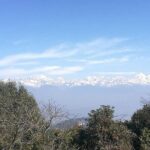
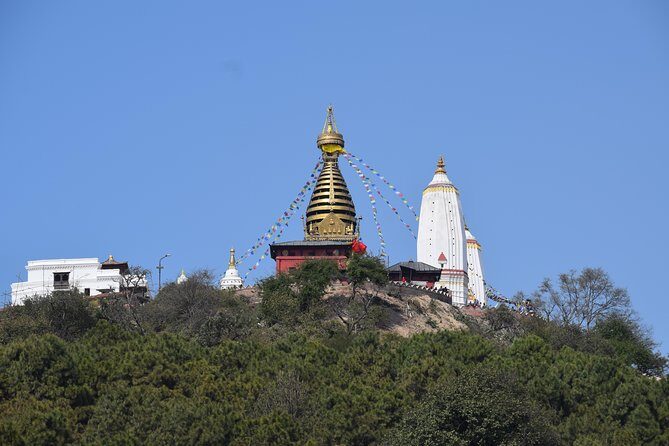
Your first major stop is Swayambhunath, often nicknamed Monkey Temple, and it sits high above Kathmandu with wide views over the city and the valley beyond. The setting alone is worth it: you get elevation, you get atmosphere, and you get a clear sense of where the city sits relative to the surrounding hills.
This stop is around 45 minutes, which is long enough to do more than rush past. You can take in the hilltop feel, look around at temple structures and symbolic details, and get oriented with the kind of religious energy that’s common in Kathmandu’s heritage sites.
The monkey connection is real here—there are lots of monkeys around the complex. So keep your phone and snacks protected, and be alert as you move. You don’t need fear; you just need common-sense awareness in a place where animals have adapted to human foot traffic.
A quick add-on inside the complex: Amideva Buddha Park
Right within the Monkey Temple area, there’s a smaller stop called Amideva Buddha Park. It’s scheduled for about 15 minutes, so it’s short—but the tour’s value is that you don’t have to know this space exists or how to find it on your own.
The highlight here is a large statue with three symbols and Buddha, plus a setting that tends to feel quieter than the busiest sections of Swayambhu. The tour framing also matters: your guide can explain why the smaller spaces like this one are meaningful rather than just treating it like an extra photo stop.
If you’re worried about “temple fatigue,” this is actually a good break. You can shift your attention from the big panorama mood to more focused symbolism, then you’re ready to move on.
Kathmandu Durbar Square: the royal center that became a living heritage site
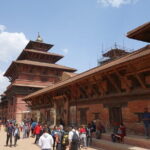
Next up is Kathmandu Durbar Square, the longtime hub of royal dynasties that ruled the Kathmandu Valley until 2008. What makes this stop powerful is that it’s not only about temples—you’re seeing a place where kings were crowned, lived, and reigned, and where the religious and political worlds blended.
You’ll spend about 30 minutes in this area. That’s enough time to grasp the layout and notice major sights, especially when you’re guided. Without a guide, it can be easy to treat a durbar square like a collection of buildings. With a guide, it becomes a coherent story: who ruled here, why this mattered, and how sacred sites anchor daily life even after political power shifted.
One practical note: Durbar Square is busy compared with hilltop Swayambhu. Expect more foot traffic, more side stalls, and more visual noise. Plan to take your time looking at carvings and architecture when you can, but don’t try to photograph everything at once.



Kumari Chowk: your chance to see the Kumari tradition in action
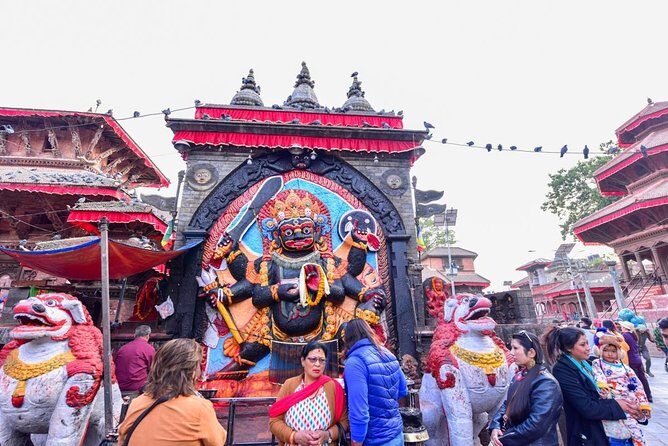
Inside Durbar Square, you’ll go to Kumari Chowk, scheduled for about 15 minutes. This is a popular spot, and it’s tied to the living goddess tradition—there’s a chance you may see Goddess Kumari here, along with the peacock window and fine carvings.
Even if you don’t catch everything perfectly, the point of the guided time is that you’ll know what you’re looking at and why it’s special. The carvings and the design details matter more when someone gives you the context.
Because this is a short stop, come with a clear mindset: focus on what’s visible in the moment, respect the space, and let your guide time your look so you’re not standing too long in the wrong place.
Hanuman Dhoka and the feel of everyday devotion
Another Durbar Square highlight is Hanuman Dhoka, scheduled for about 15 minutes. This stop is built around the idea of seeing the area’s living culture, not just admiring buildings from a distance.
What I like about this part is the balance. After Kumari Chowk’s very specific tradition, Hanuman Dhoka gives you a different angle on Kathmandu’s spiritual life—more about temples and daily rhythms in the historic core.
If you tend to enjoy architecture and religious symbolism, this is where your guide’s explanations can make the carvings and site layout click. Short stops can feel rushed, but Hanuman Dhoka’s variety of details rewards careful attention.
Basantapur Tower, street shopping, and Akash Bhairav Temple
As you move through the Durbar Square zone, you’ll also visit Basantapur Tower for about 15 minutes. This area acts like a key open space around the square—often lively, with people moving through the historic district. If you like soaking up the social side of heritage areas, this is a good moment to pause and watch how the neighborhood works.
There’s also time for a busy local shopping market stop that runs on the way to Kathmandu Durbar Square. This is one of those Kathmandu reality checks—in a good way. If you’ve been thinking the day is only temples, this segment reminds you that heritage districts are also places where locals shop, talk, and live.
Next is Akash Bhairav Temple, again about 15 minutes. It’s described as small but one of the busiest temple spots in town, and you may be able to grab a drink afterward—there’s mention of delicious lassi here. This works well as a final taste of the area’s everyday sacred energy before the tour wraps.
What the guide adds: Hindu and Buddhist traditions made practical
A good guided loop does two things: it saves you time and it helps you understand what you’re seeing without homework. This tour is designed around that. Swayambhunath and Durbar Square are both UNESCO World Heritage sites, but your guide helps connect the dots between Hindu and Buddhist Nepali traditions so you’re not just collecting images.
One standout detail from past experiences is that guides can bring the sites to life quickly. For example, one guide named Pankaj has been described as fun and informative, with the ability to explain cultural connections in just half a day.
You don’t need a graduate degree in South Asian studies to enjoy this. If you show up curious and ask simple questions—what symbol means what, why this temple sits here, how these traditions overlap—you’ll get a lot out of the short format.
Price and value: $65 feels fair when entrances and transport are included
At $65 per person, this is not a bargain-basement deal. But in Kathmandu, the value is in what’s included. Your hotel pickup and drop-off, private vehicle transport, a professional guide, and all entrance fees are part of the package, which reduces the chance of surprise costs mid-day.
For a half-day experience, that can be a very efficient way to see two major heritage sites without spending hours planning routes and figuring out ticketing. It’s also good value if you’re traveling with limited time, because the guide’s route choices matter more when your clock is ticking.
There’s also group discounts, and since this is private for your group, you’re not stuck in a huge crowd experience where you can’t ask questions.
Who should book this tour (and who might want something else)
This tour is a strong fit if:
- You have a tight schedule and want a fast orientation to Kathmandu’s heritage
- You prefer guidance over self-guided wandering
- You want two UNESCO sites in one go with tickets and transport included
- You’re traveling as a small group or want a calmer private-group feel
You might want a different option if:
- You hate short stop times and want slow, long visits
- You’re already an expert on Kathmandu architecture and want deep, unhurried exploration
- You’re the type who likes to linger for photos for an hour at each location
Still, even then, this tour can work as a first pass. You’ll leave with names, locations, and context—so your later visits make more sense.
Practical tips to get the most from the 4-hour loop
Keep expectations realistic: you’re sampling. The best way to enjoy it is to pick your priorities. If you love temple symbolism, pay attention to carvings and the meanings your guide points out. If you love views, focus your time on hilltop Swayambhunath and save your photos for moments when you can stand comfortably.
Wear shoes you can walk in. Durbar Square and its surrounding areas involve uneven surfaces and crowds. Bring a light layer if the weather is changeable, and keep small cash or cards in case you decide to buy something in the market segment.
Since food and drinks aren’t included, plan on grabbing water yourself. The mention of lassi near Akash Bhairav Temple is a nice touch, but it’s not a meal plan.
Should you book this Swayambhu and Kathmandu Durbar Square half day tour?
I’d book this if you want a smart first taste of Kathmandu’s sacred heart without spending your whole day on logistics. The entrance fees included, pickup included, and the guided connection between Hindu and Buddhist traditions make it a practical value play for short on time trips.
If you’re okay with a fast-moving itinerary and you like understanding what you’re looking at, this is one of the easier ways to get oriented quickly. Save longer independent exploration for later days—after you’ve learned the basics of where everything is and why it matters.
FAQ
FAQ
How long is the Swayambhu and Kathmandu Durbar Square half day tour?
It runs for about 4 hours (approx.).
What does the tour cost?
The price is $65.00 per person.
Is hotel pickup and drop-off included?
Yes. Hotel pickup and drop-off are included.
Are entrance tickets included?
Yes. Admission tickets for both places and the scheduled stops are included, and entrance fees are covered.
What stops are included in the tour?
You’ll visit Swayambhunath, Amideva Buddha Park, Kathmandu Durbar Square, Kumari Chowk, Hanuman Dhoka, Basantapur Tower, and Akash Bhairav Temple, plus a market stop on the way.
Is food or drinks included?
No. Food and drinks are not included.
Is this a private tour or a group tour?
It’s described as private/activity where only your group participates.
How far in advance should I book?
On average, it’s booked 6 days in advance.
What’s the cancellation policy?
Free cancellation is available. You can cancel up to 24 hours in advance for a full refund.
Is the tour hard to join for most people?
It states that most travelers can participate.