REVIEW · KATHMANDU
Upper Mustang Trek 14 Days
Book on Viator →Operated by Trek Mania Nepal · Bookable on Viator
Lo Manthang feels like a sealed chapter of Nepal. This Upper Mustang Trek mixes Tibetan-influenced culture, walled cities, and storied caves with solid organization, including smooth pre-trip communication with guide Devaraj and his daughter. I also like that your package includes the Upper Mustang restricted-area permit (10 days) plus an English-speaking licensed guide, so you can focus on walking and not paperwork. One caution: trek meals and trek lodging aren’t included, so you’ll want to budget daily costs on top of the tour price.
From Kathmandu, you’ll ease in with hotel time in Thamel, then head to Pokhara for lake views and temples before flying to Jomsom, the gateway town. The route walks you through places like Kagbeni’s mud-brick lanes and Lo Manthang’s monastery sites, with pacing designed for acclimatization. If you’re hoping for everything to be fully covered and low-hassle day to day, this trip may feel a bit “pay-as-you-go” once the trek starts.
In This Review
- Key highlights to look for
- Entering Upper Mustang: why this trek feels different from most Nepal routes
- Price and what $1,212 covers (and what you’ll pay separately)
- Kathmandu to Pokhara: your travel warm-up before the trek
- The Jomsom flight: convenient, but watch for wind reality
- Kagbeni to Chele to Syanboche: getting into Mustang’s high-desert feel
- Ghami and Tsarang: monasteries and fort-like history
- Lo Manthang: the walled capital day you’ll remember
- The return trek: Dhakmar and Kagbeni again
- Flying back to Pokhara and winding down in Kathmandu
- Guides, permits, and comfort: the support system you’re paying for
- What daily life feels like on this route (and what to pack your mind for)
- Who should book this Upper Mustang trek?
- Should you book Upper Mustang with Trek Mania Nepal?
- FAQ
- How long is the Upper Mustang Trek tour?
- Where do I start this tour?
- Is airport pickup and drop-off included?
- Do you include permits for Upper Mustang and Annapurna Conservation Area?
- Is trek accommodation included?
- Are meals included?
- Are drinks included?
- Do I get a trekking guide?
- What if I need to cancel?
Key highlights to look for
- Upper Mustang permit included (10 days) so you get access to the restricted zone without handling the paperwork yourself
- Guide Devaraj’s organization and communication gets praised for being smooth and professional
- Lo Manthang visits built in including Thubchen Gompa and time for Chhoser Cave
- A classic approach: flight in, trek out and back through Kagbeni, Ghami, Tsarang, and more
- Teahouse-style comfort planning, paired with thoughtful pacing for altitude realities
Entering Upper Mustang: why this trek feels different from most Nepal routes
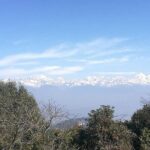
Upper Mustang has a special pull because it’s not just mountains and viewpoints. It’s a region shaped by centuries of Tibetan influence, where walled villages and monastery complexes still help explain why people once guarded this area like a secret. When you walk through the same kind of narrow alleys, pass historic caves, and see how communities are built into a high-altitude desert, the trip stops feeling like a checklist.
The other thing that makes this one stand out is the balance. The route is clearly designed for real time on the ground—walking between distinct villages—while still keeping you supported with a licensed English-speaking trekking guide, permits handled for you, and a paced schedule. In the reviews, that shows up as “everything was perfectly organized,” and that kind of reliability matters more here than in gentler trekking areas.
You can also read our reviews of more hiking tours in Kathmandu
Price and what $1,212 covers (and what you’ll pay separately)
At $1,212 per person for a 14-day trip, this sits in the mid-to-upper range for Nepal treks, mostly because of the restricted-area access and the private-trip structure. Here’s what that price gets you based on the listed inclusions: airport pickup and drop, Kathmandu accommodations for 2 nights at Hotel Chhimeki, “transportation as per the itinerary,” a licensed trekking guide, and the Upper Mustang restricted-area permit (10 days) plus the Annapurna Conservation Area Permit.
What’s not included is where you should plan carefully. Accommodation during the trek isn’t included, and all meals are listed as not included—though the package does include dinner (listed under included items). Drinks are also not included, along with travel insurance/rescue costs, tips for guides/porters, and personal expenses.
So the real value question becomes this: does the trip’s structure reduce uncertainty for you? If you want permits, an experienced guide, and a planned route handled up front, the price starts to make sense quickly. If you prefer a fully all-inclusive package where you barely touch your wallet once trekking begins, you may feel you have to manage extra daily budgeting.
Kathmandu to Pokhara: your travel warm-up before the trek
Days 1 through 2 are about getting you moving without rushing you. You start in Thamel, the lively Kathmandu base area, with time to check in at Hotel Chhimeki and get your bearings. That matters because Kathmandu can feel chaotic at first, and a couple of hours of “figure things out” time reduces stress later.
Then the route shifts to Pokhara, reached by scenic drive. You’ll have time to walk along Phewa Tal, and you can also visit Tal Barahi Temple, reached via a short boat ride. This isn’t just sightseeing padding. Pokhara gives you a gentler rhythm before you fly to the higher, windier Kali Gandaki corridor.
One practical note: the first two days are also where you’ll likely settle into logistics—what kind of trekking pace you can handle, how your body reacts to travel, and what you still need to buy. If you’re the type who likes to show up with everything ready, use this time to double-check your gear list (especially layers).
The Jomsom flight: convenient, but watch for wind reality
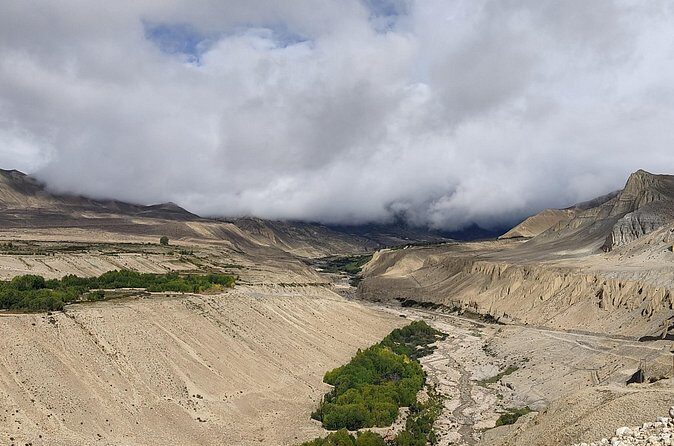
Day 3 includes a flight from Pokhara to Jomsom. Jomsom is the gateway to Upper Mustang, and the town’s setting is known for dramatic mountain scenery and strong winds that can sweep through the Kali Gandaki Valley.
That means the flight is convenient, but it’s also the part of the trip that can be most sensitive to weather. The itinerary doesn’t spell out “backup plans,” so assume you’ll need patience if conditions change. If you absolutely hate travel delays, plan your expectations around flight variability in this region.
Once you land, you’ll begin the trek from Jomsom toward Kagbeni, which is famous for its mud-brick houses, narrow alleyways, and centuries-old Buddhist monasteries. This early stop sets the tone: Upper Mustang isn’t just scenery. It’s architecture and daily life shaped by the landscape.
Kagbeni to Chele to Syanboche: getting into Mustang’s high-desert feel
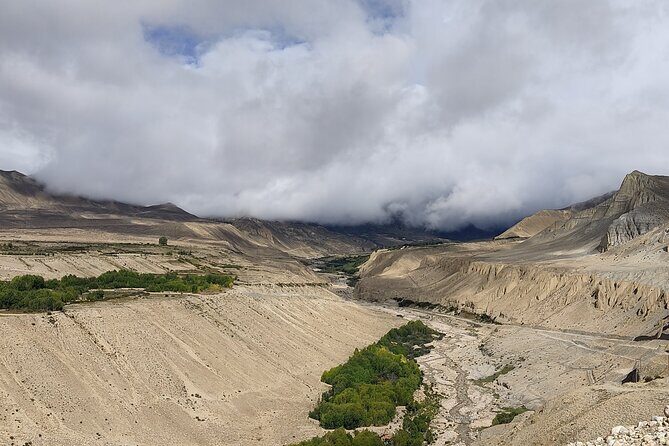
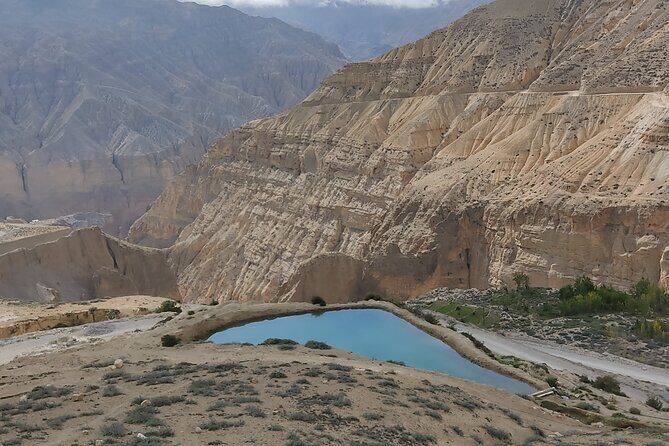
Your first full trekking days move you from Kagbeni to Chele, then from Chele to Syanboche. The route through this stretch is described as moving across arid terrain, with ancient caves and traditional Mustang villages along the way. You’re trading lush valleys for a stark, open world where you see how communities survive and build in dry conditions.
Chele is part of the trek’s “transitional” vibe: you’re not yet at the most famous walled city, but you’re already in the Mustang tempo. Syanboche pushes that further with high-altitude desert scenery and rugged, barren ground. For many people, this is where the trip starts to feel fully real—because you can’t blend into a normal day. Every step is visible against the open terrain.
The trade-off is that this section can feel more demanding mentally than physically, especially if you’re used to greener trails. It’s big sky walking. If you’re okay with that, it’s fantastic.
Ghami and Tsarang: monasteries and fort-like history
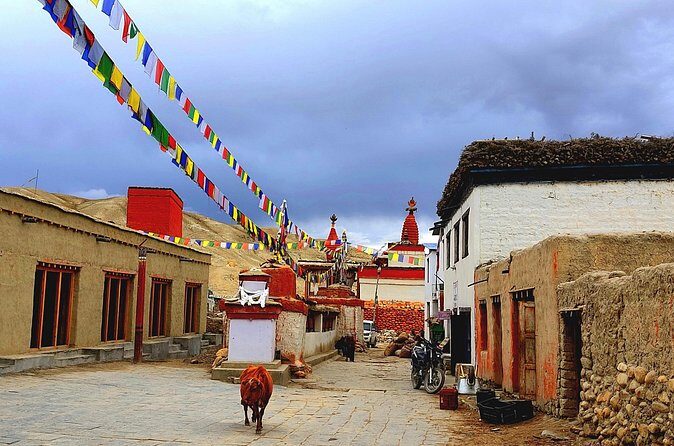
Day 6 continues the trek toward Ghami, a village known for monasteries and the way the area supports Tibetan-influenced culture. Day 7 then takes you from Ghami to Tsarang, highlighted for its ancient monastery and the Tsarang Fort.
This is a helpful stage in the itinerary because it gives you variety. The earlier days focus on moving through high-desert terrain and cave/village combinations. Then Ghami and Tsarang add more cultural “anchors” so the trek doesn’t become one long visual sameness. You start seeing how the region’s religious sites are placed as part of the community’s identity.
Also, this is where your guide’s local knowledge becomes useful. Even if you’re not a hardcore history person, a guide who can explain what you’re seeing makes stops like monasteries feel alive instead of like “photo at a wall.”
Lo Manthang: the walled capital day you’ll remember
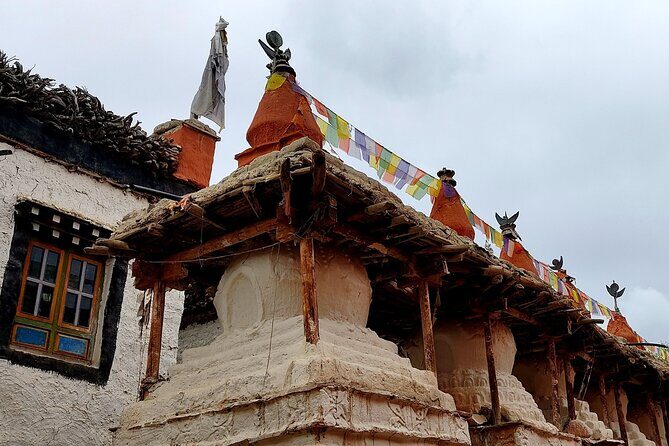
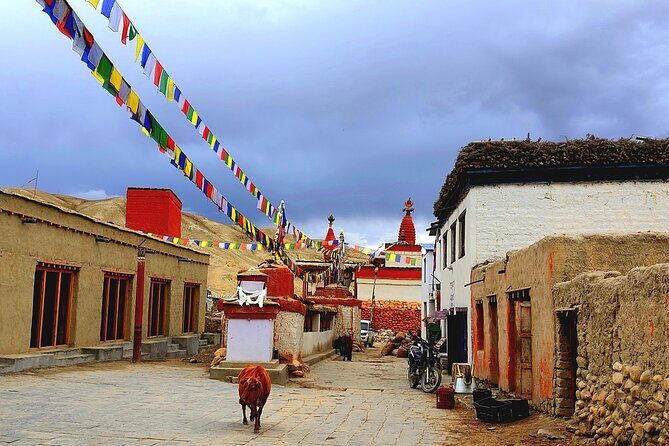
Lo Manthang is the reason many people choose Upper Mustang in the first place. You reach it on Day 8 after trekking from Tsarang, and the place immediately reads as something different: a walled city with narrow streets and traditional mud-brick architecture. It’s Tibetan-influenced culture on a compact, walkable scale.
On Day 9, you get the best part: Thubchen Gompa and Chhoser Cave. Thubchen Gompa is described as one of the oldest and most significant monasteries in Lo Manthang, which means your time there isn’t just a quick stop—it’s a chance to slow down and read the area through its religious center. Then you head to Chhoser Cave, a site with historical significance and a setting that’s used for centuries.
This combination is powerful because it connects faith and survival. Monasteries show the spiritual side of the region. Caves point to the older, practical side of living in a harsh, high-altitude environment.
If you want to make this day extra good, be ready to walk a bit slower. The best moments in Lo Manthang often happen between the “big sights,” when you notice textures and daily patterns rather than rushing from one point to the next.
The return trek: Dhakmar and Kagbeni again
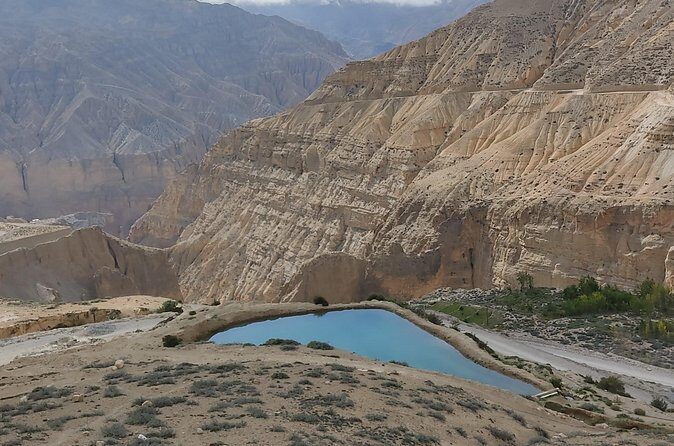
After Lo Manthang, your route turns back with Lo Manthang to Dhakmar (Day 10) and then Dhakmar back to Kagbeni (Day 11). The return days are where you gain perspective. You’re seeing the same general region, but now your body knows the rhythm and your eyes understand the terrain better.
Dhakmar is described as having unique rock formations and expansive valleys. Even if the scenery isn’t totally new, your interpretation changes because you’ve already learned how this region “works.” Kagbeni again also feels different the second time. The first visit is introduction; the second visit becomes navigation through memory.
This is also where pacing and acclimatization matter. The schedule gives you days on both sides of the Lo Manthang hub, rather than a quick one-direction blast. That helps if you’re sensitive to altitude or just want a calmer experience.
Flying back to Pokhara and winding down in Kathmandu
Day 12 returns via flight from Jomsom to Pokhara, then you get time to relax. The itinerary highlights Pokhara’s serene beauty and its views of the Annapurna range and lakes, which is a nice way to shift your mind from “trail mode” back to “rest mode.”
Day 13 drives you back to Kathmandu, and Day 14 ends at Tribhuvan International Airport. That end buffer matters. A trek that starts high and ends with nonstop logistics can feel abrupt. Here, you get at least one full day of winding down after the main walking is done.
Guides, permits, and comfort: the support system you’re paying for
This trip includes a government license holder English-speaking trekking guide plus a first aid medical box. It also includes the permits: Upper Mustang Restricted Area Permit (10 days) and the Annapurna Conservation Area Permit. That is not glamorous, but it’s huge. In a region that used to be tightly controlled, permit access is part of what makes your route possible.
The overview also emphasizes planned acclimatization, handpicked teahouses, and thoughtful pacing. Even though trek accommodation and meals are listed as not included, the language signals that the trip is organized around standard high-altitude “teahouse style” stops. In plain terms: you won’t be designing your own overnight plan from scratch.
If you’re the kind of traveler who likes a clear structure—where you know where you’re sleeping and what today’s walk looks like—this kind of support system is worth real money.
What daily life feels like on this route (and what to pack your mind for)
Upper Mustang is high, dry, and visually intense. Your days involve walking between villages that feel tied to place more than to roads. That means you’ll want to think about comfort basics: layers for temperature swings, a plan for hydration, and patience for how slow travel can feel when the terrain is steep or rocky.
Also remember: drinks aren’t included. That sounds small until you’re walking all day and realizing you’re making choices about electrolytes and how you’ll manage water access. Build that into your budget rather than hoping it will be covered.
Because trek meals aren’t included (with the exception of listed dinner), you should expect to choose your food each day. The upside is flexibility. The downside is you’ll need cash and the willingness to eat what’s available at teahouses.
Who should book this Upper Mustang trek?
This is a strong fit if you want:
- Tibetan-influenced culture beyond the usual Nepal trekking trail
- A route focused on Lo Manthang and monastery/cave sites
- A guided experience that handles permits and key logistics, not just “here’s a map”
It may be less ideal if you:
- Want full meal and lodging coverage for the entire trek (it’s not listed as included)
- Can’t handle the possibility of wind affecting the Pokhara–Jomsom or Jomsom–Pokhara flights
- Prefer routes with lower altitude exposure or shorter walking days (this one expects moderate physical fitness)
The private format also matters. It’s private, so your group size and pace are more flexible, and you won’t be squeezed into a big cattle-car group.
Should you book Upper Mustang with Trek Mania Nepal?
If your top priority is Upper Mustang access, a guided route through villages like Kagbeni, Ghami, Tsarang, and Lo Manthang, and a plan that’s designed for pacing and acclimatization, I’d say this trip is worth serious consideration. The reviews highlight organization and smooth communication with guide Devaraj and his daughter, which is exactly what you want when parts of the trip depend on permits and mountain flight windows.
Just go in with eyes open on costs and “what’s on you.” Since trek lodging and most meals aren’t included, you’ll want to budget for daily teahouse life and keep some money ready for drinks and snacks. If you can handle that, the payoff is walking through one of Nepal’s most distinctive cultural corridors—ending with monasteries and cave history in Lo Manthang that feel far from typical trekking tourism.
FAQ
How long is the Upper Mustang Trek tour?
The duration is listed as 14 days (approx.).
Where do I start this tour?
The meeting point is at Hotel Chhimeki, 17 Purano Dhalko Marga, Kathmandu 44600, Nepal.
Is airport pickup and drop-off included?
Yes. Airport pickup and drop service is included.
Do you include permits for Upper Mustang and Annapurna Conservation Area?
Yes. The tour includes the Upper Mustang Restricted Area Permit (10 days only) and the Annapurna Conservation Area Permit.
Is trek accommodation included?
No. Accommodation during the trek is listed as not included.
Are meals included?
Meals are listed as not included. The inclusions list also mentions dinner, so you should confirm exactly which meals are covered before you go.
Are drinks included?
No. All kinds of drinks are listed as not included.
Do I get a trekking guide?
Yes. You’ll have a government license holder English-speaking trekking guide included.
What if I need to cancel?
You can cancel up to 3 days in advance for a full refund, and changes within 3 days of the start time aren’t accepted.