REVIEW · KATHMANDU
Annapurna Base Camp Trek 10 Days
Book on Viator →Operated by The Great Adventure Treks & Expedition - Private Day Tours · Bookable on Viator
One good thing about Annapurna: the views start early. This 10-day trek turns long bus days into quick altitude wins, then delivers the real payoff at Annapurna Base Camp (4,130 m) with sunrise mornings and big-peak panoramas. I really like that you travel with a government-licensed guide (often Sudam and Ganesh, based on past groups) and that a porter handles your load (25 kg max). The main drawback to plan for is the altitude and the steady effort of steep stair sections and uphill hiking, even when the schedule says “easy.”
If you want a well-run trip that balances real mountain time with practical support, this route is built for you. You’ll be moving most days, but you also get a clear off-trek break in Pokhara where you can reset before heading back to Kathmandu.
In This Review
- Key points at a glance
- Setting Off From Kathmandu: the smooth start that matters
- Pokhara and Ghandruk: easing in at altitude
- Chhomrong and Kimrungdanda: first big peak views
- A reality check
- The Himalayan Hotel and Khuldighar: suspension bridge moments
- From Deurali to Annapurna Base Camp: the 4,130 m payoff
- Sunrise at ABC
- Descent to Bamboo: the same trail, different feeling
- Chhomrong and Jhinu Danda: rhythm returns
- Naya Pul to Pokhara: a real finish, not just a pause
- Pokhara leisure day: reset your head and legs
- Getting back to Kathmandu: last mountain views
- Price and logistics: what $996 gets you (and what to watch)
- Who should book this Annapurna Base Camp trek?
- Should you book with The Great Adventure Treks & Expedition?
- FAQ
- How long is the Annapurna Base Camp trek?
- Where does this trek start and what time does it begin?
- What is the maximum group size?
- Is airport pickup included?
- Do I get a guide and porter?
- Are permits included for the trek?
- What trekking gear is included?
- What meals are included?
- How do you travel between Kathmandu and Pokhara?
- Is there time to rest in Pokhara during the trip?
Key points at a glance
- Government-licensed trekking guidance with experienced leaders like Sudam and Ganesh
- Porter support (2 guests share 1 porter; porter carries up to 25 kg)
- Permits handled for you via ACAP and the TIMS card
- Base Camp at 4,130 m plus a sunrise morning over the Annapurna massif
- Included gear such as a sleeping bag and down jacket (big budget saver)
- Pokhara recovery time after the trek, including a full leisure day
Setting Off From Kathmandu: the smooth start that matters
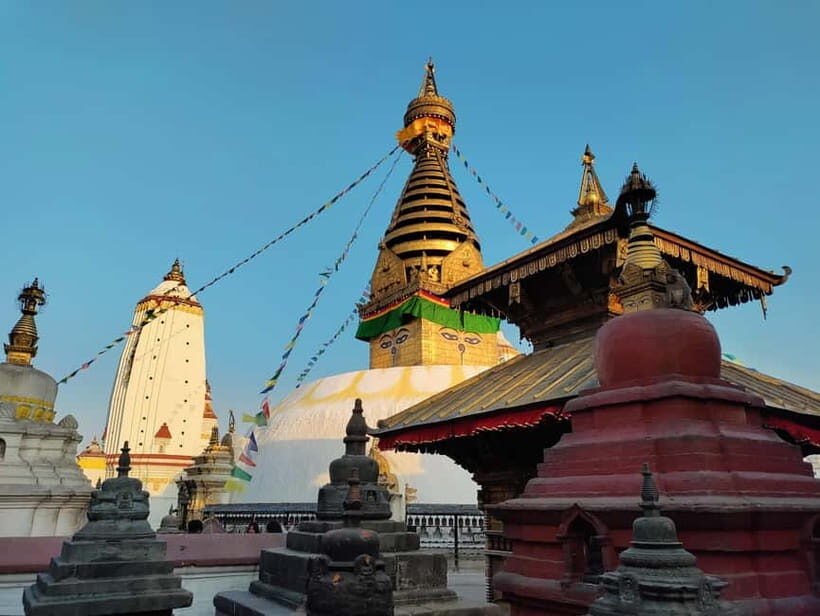
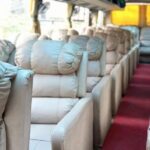
Day 1 is all about getting positioned without wasting energy. After breakfast, you ride in a tourist bus from Kathmandu to Pokhara, about 6–7 hours. It’s not a “trek day,” but it is part of the experience: you’ll be watching the roads shift from city traffic to more open mountain valleys, and you’ll arrive ready to sleep well because the real walking starts the next morning.
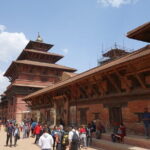
Then there’s the Kathmandu sightseeing by private vehicle included before your departure. If you like knowing where you are in a country before you disappear into the mountains, this is a nice way to do it without turning the first day into chaos.
One practical note: this is a trip that starts early. With a 8:15 am start time at the meeting point, plan to be calm, fed, and packed the night before.
You can also read our reviews of more hiking tours in Kathmandu
Pokhara and Ghandruk: easing in at altitude
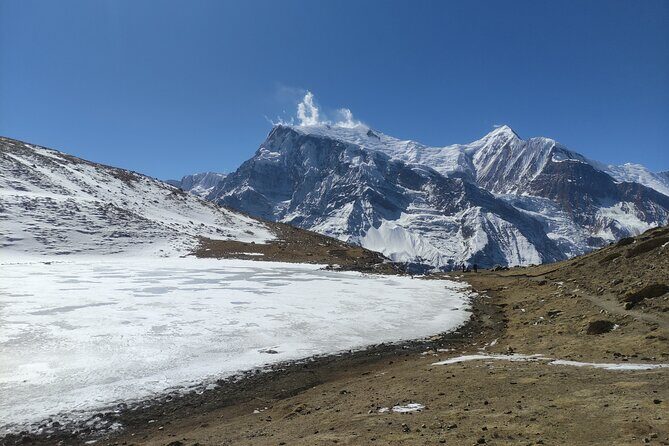
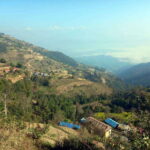
On Day 2 you drive from Pokhara to Ghandruk, around 3–3.5 hours. Ghandruk sits at about 1,940 m, so you’re not suddenly dropped into the hardest elevation right away. This is a smart ramp-up. You’ll also be moving through a part of the Annapurna region where Gurung and Magar culture is part of everyday life, and that makes the trek feel less like a sealed-off hiking route and more like a living community.
The schedule lists a 5-hour portion on this day, so expect a full chunk of travel-plus-walking time. Don’t treat it like a stroll. Even early sections in this region can include stairs and uneven paths.
What I like about this approach is that it gives you just enough effort to build rhythm without draining you before the bigger climbs.
Chhomrong and Kimrungdanda: first big peak views
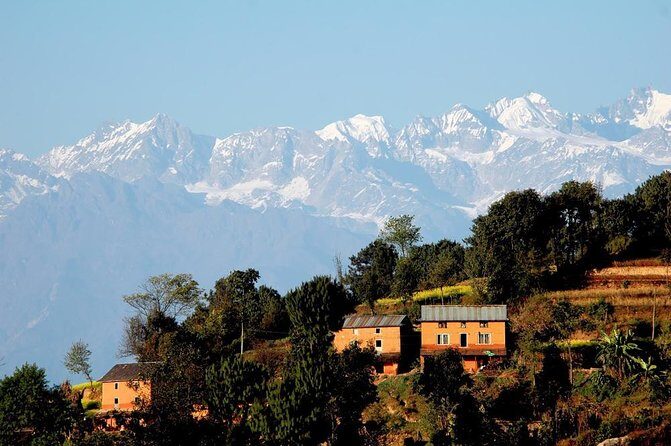
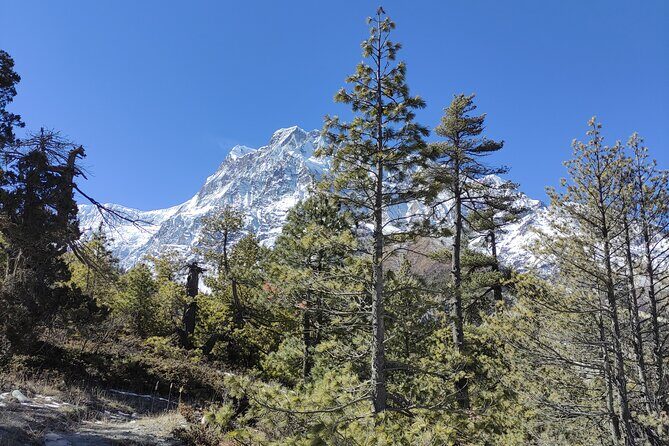
Day 3 builds momentum. From Ghandruk, you trek uphill for about one hour up to Kimrungdanda, where you can catch strong views of Annapurna South, Hiunchuli, Machhapuchhre (Fishtail), and Gangapurna. That moment is one of the reasons ABC trekkers get hooked: the mountain shapes show up in layers, not all at once.
Then you continue onward to Chhomrong, with about 6 hours on the day. Chhomrong is a key staging area on many Annapurna routes. You’ll feel the trail shift as you move deeper into the massif’s shadow—more steps, more pacing, and more of that “keep your breath even” work.
A reality check
This is where you’ll likely notice how your body handles uphill. If you walk too fast early, the next day can feel tougher than it needs to.
The Himalayan Hotel and Khuldighar: suspension bridge moments
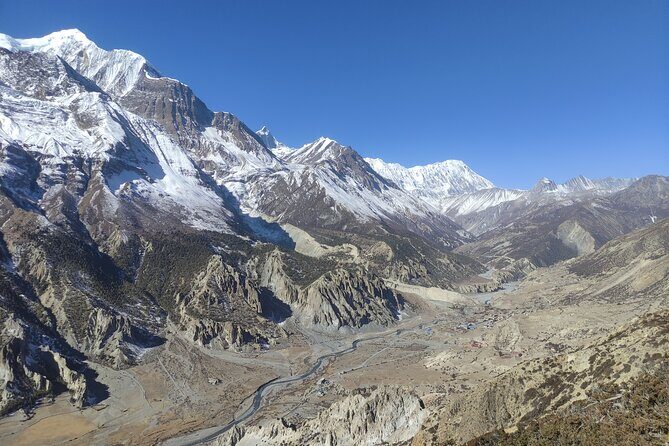
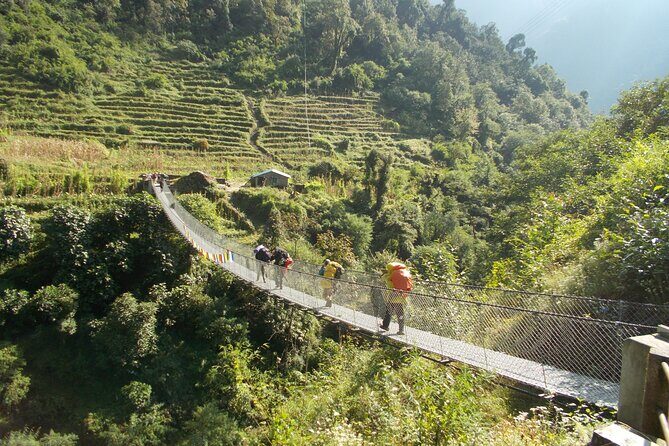
Day 4 is a classic Annapurna day: down, then up, repeat in a different mood. You start from Chhomrong by descending through thousands of steps toward Chomrong Khola, cross a suspension bridge, and then climb back up toward Khuldighar (2,380 m). After that, you continue to The Himalayan Hotel.
It’s about 7 hours total, and it’s not the type of hike where you feel “finished” in the middle. The downhills can be surprisingly tiring because your quads do more work than you expect. The uphills then come right back, so your legs don’t get much true recovery.
Why this part is worth it: suspension bridges and river crossings give you those quick, satisfying “I’m really in the mountains” moments. Also, reaching Khuldighar helps you feel the altitude shifting in your lungs, without going too extreme all at once.

From Deurali to Annapurna Base Camp: the 4,130 m payoff
Day 5 is where the trip earns its reputation. You move from the area near The Himalayan Hotel toward Deurali (about an hour’s walk), then you climb gently through a river bed before hitting a steeper section that leads you toward Bagar. From there, you push onward to Annapurna Base Camp.
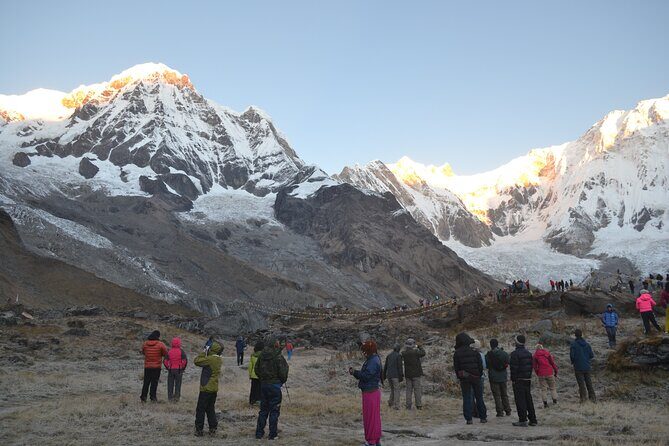
You’ll spend roughly 6 hours getting to Base Camp from Machhapuchhre Base Camp (the plan has that transfer in the flow of the day). One detail that matters: the forested sections are expected to thin out as you approach ABC. That change is real on this trail—less shade, more exposed sky, and clearer views.
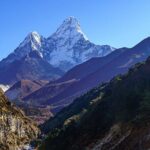
And then there’s the target itself: Annapurna Base Camp at 4,130 meters. This is where your photos suddenly look like postcards even if you’re tired. The massif views include Annapurna peaks and Machhapuchhre’s dramatic profile nearby.
Sunrise at ABC
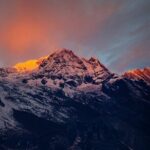
The next morning includes sunrise time at Base Camp. Even if clouds show up, you’ll still get that distinct high-altitude stillness. Your body will be working, but the atmosphere makes it feel like the trek finally slows down long enough for you to absorb it.
Descent to Bamboo: the same trail, different feeling
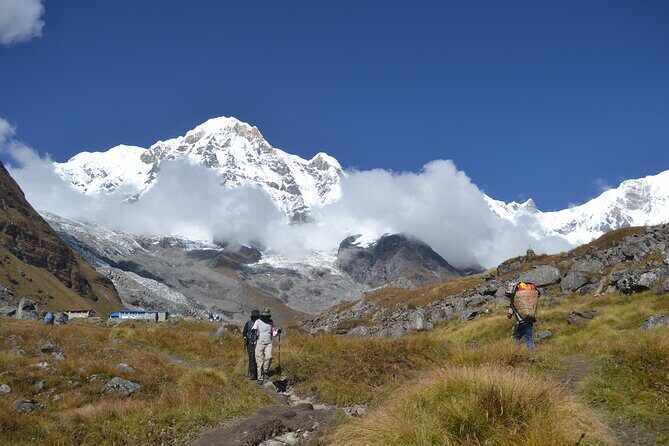
Day 6 is about getting back down safely. The plan says you’ll descend back to Bamboo, taking roughly 8 hours and returning along the same trail you used to come up.
This is a good time to remember: “descent” doesn’t mean “easy.” Your knees and feet still do a lot. The good news is that the mental work is often easier than the uphill push, because you already know the route and you’re moving toward lower elevation.
What I like here is the structure. By keeping the descent organized and scheduled, you’re less likely to rush. For many people, a controlled descent is the difference between feeling strong on Day 7 and paying for it later.
Chhomrong and Jhinu Danda: rhythm returns
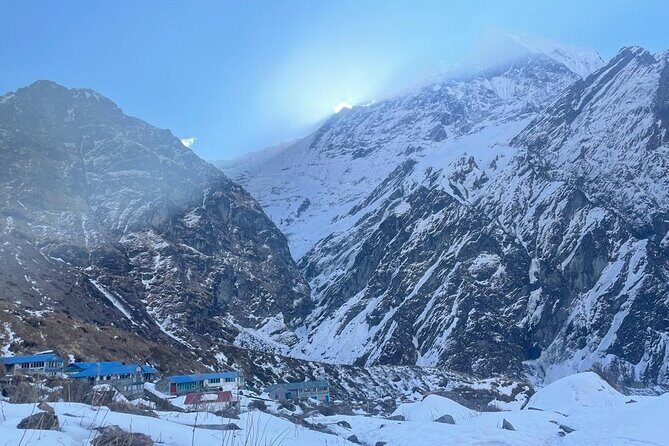
Day 7 turns the crank again: you trek uphill at first until Kuldighar, then head downhill to Chhomrong Khola. After that, you climb uphill again through stone steps for about an hour to reach Chhomrong again, with about 6 hours total.
This day can feel repetitive in a good way. You know the area, you understand the pacing, and your body starts to find a sustainable walking cadence. If you’re the kind of hiker who likes steady progress—rather than huge surprises—this back-and-forth section can feel satisfying.
Naya Pul to Pokhara: a real finish, not just a pause
Day 8 is where you leave the trekking rhythm behind. You hike from Jhinu Danda toward Naya Pul, taking about 4–5 hours along the side of Modi Khola before reaching Birethanti. Then you’re transferred by private vehicle to Pokhara, where you stay overnight.
This part is valuable because it’s not just “walk until you’re done.” It’s still mountain travel, but at a pace that feels more human. You’ll get that sense of finishing the loop: your boots are tired, but you’re no longer fighting altitude.
Pokhara leisure day: reset your head and legs
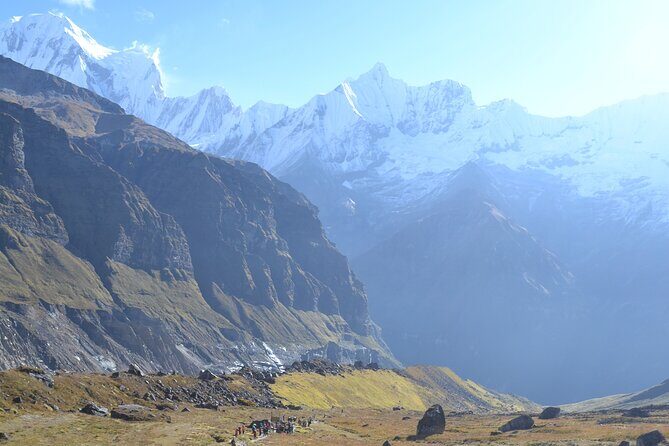
Day 9 is full-on downtime in Pokhara. You have a leisure day with time to do sightseeing on your own. The plan specifically points you toward options like Phewa Lake and Begnas Lake.
This is honestly one of the best parts of a trek like ABC. After days of fixed schedules and narrow trails, Pokhara gives you freedom. You can slow down, eat well, and let your feet unclench.
If you’ve been carrying a tight backpack routine, use this day to review your photos, recheck any gear that might be damp, and plan how you want to celebrate the fact that you reached Base Camp.
Getting back to Kathmandu: last mountain views
Day 10 brings the return. You travel from Pokhara to Kathmandu in the afternoon by a scenic flight or bus. The flight is described as extremely scenic and gives you one last chance to view the Annapurna region peaks.
Then you arrive in Kathmandu and the activity ends back at the meeting point. It’s a clean wrap-up: you don’t lose a whole day to logistics.
Price and logistics: what $996 gets you (and what to watch)
At $996 per person, this trek is positioned as a supported, included-extras style trip. Here’s what stands out as real value:
- Transportation between cities is included, including Kathmandu to Pokhara by tourist bus and Pokhara to Nayapul by private vehicle, plus the return legs.
- Permits are included: ACAP and TIMS card, which are easy to forget until you’re already planning.
- Guide and porter support are included. The guide is government licensed, and the porter carries up to 25 kg (with a 2 guest / 1 porter setup).
- Gear is included: a sleeping bag and down jacket. Renting or buying these can quietly add up.
- Meals are included: 8 breakfasts, 8 lunches, and 8 dinners.
- Kathmandu sightseeing is included by private vehicle, which helps you start with fewer gaps.
What you should watch for: the trip includes a lot of structured movement, so you need to be comfortable with long days on your feet and a schedule that doesn’t pause just because you’re feeling cautious. Also, the altitude is real, even if the plan says “moderate physical fitness.” Your body may need more time to adjust than someone else’s.
Who should book this Annapurna Base Camp trek?
This trek fits best if you want:
- Professional support with a government-licensed guide
- Porter help to keep your load manageable
- An itinerary that includes permits, equipment, meals, and key transfers
- A clear plan that reaches Base Camp and then uses a structured return
In the real world, this suits many first-time trekkers too—especially if you like knowing exactly what’s coming next. The reviews attached to this operator highlight attentive care from guides like Sudam and Ganesh, and they also mention a strong porter relationship (including a porter named Dinesh), which is a good sign for day-to-day practicality.
Think twice if:
- you have medical concerns related to altitude (and you haven’t cleared them with a professional)
- you hate stair-heavy hikes or need lots of control over pace
- you’re looking for a more flexible, independent style trek
Should you book with The Great Adventure Treks & Expedition?
If you want Annapurna Base Camp with the stress taken out of logistics, I’d say yes—this is the kind of trip that’s built to run smoothly. The big wins for value are the included permits, meals, sleeping bag and down jacket, and porter support, plus the straightforward transport plan between Kathmandu and Pokhara.
If you’re the type who benefits from guidance, and you want your biggest effort to be the walking—not paperwork—then this booking makes sense. Just be honest with yourself about altitude and endurance. Do the trek prepared, walk at a steady pace, and you’ll likely come away with that rare mix of physical satisfaction and serious awe at 4,130 meters.
FAQ
How long is the Annapurna Base Camp trek?
The experience is listed as 10 days (approx.).
Where does this trek start and what time does it begin?
It starts at The Great Adventure Treks & Expedition Pvt. Ltd, Chhusya Galli, Kathmandu 44600, Nepal, with a start time of 8:15 am.
What is the maximum group size?
The maximum group size is 16 travelers.
Is airport pickup included?
Yes. Pick up from the airport and transfer to hotel is included.
Do I get a guide and porter?
Yes. You’ll have an professional trekking guide with government license and a porter to carry luggage. The setup is 2 guest 1 porter, with a 25 kg max for the porter.
Are permits included for the trek?
Yes. The trek includes the Annapurna Conservation Area Project (ACAP) Permit and a TIMS card.
What trekking gear is included?
The package includes necessary equipment, specifically a sleeping bag and down jacket.
What meals are included?
Meals include 8 breakfasts, 8 lunches, and 8 dinners.
How do you travel between Kathmandu and Pokhara?
You travel Kathmandu to Pokhara by tourist bus (about 6–7 hours). Later, you travel from Pokhara to Kathmandu by scenic flight or bus.
Is there time to rest in Pokhara during the trip?
Yes. You have an overnight in Pokhara and a leisure day in Pokhara with time for sightseeing on your own.