REVIEW · KATHMANDU
From Kathmandu: 3 Major Durbar Square Guided Tour
Book on GetYourGuide →Operated by Nepal Adventure Guide · Bookable on GetYourGuide
Three palaces, one ancient map.
This 5-hour private tour ties together the Durbar Squares of the Kathmandu Valley, and the guide helps you read the carvings like a story, not just decorations. I especially like how the Kathmandu stop includes the Kumari residence area, so you’re looking at living tradition as well as royal architecture.
My second big favorite is Patan’s Krishna Mandir stone temple, because it’s the kind of craft you’d miss if you walked past quickly. The one consideration: the schedule is tight, so it’s best for people who want a smart overview and orientation, not an all-day, slow-temple experience.
In This Review
- Key highlights to know before you go
- How the 5-hour route keeps Kathmandu Valley real (not rushed chaos)
- Kathmandu Durbar Square: Hanuman Dhoka Palace and the Kumari residence area
- Bhaktapur Durbar Square: 55-Window Palace, Golden Gate, and Nyatapola’s scale
- Patan Durbar Square: Krishna Mandir stonework and the museum context
- What makes the guides matter (especially in 5 hours)
- Price and value: what $86 buys you in the real world
- Practical tips so your visit feels smooth
- Should you book this Durbar Square tour?
- FAQ
- What is the duration of the tour?
- How much does the tour cost?
- Where does the tour start and pick you up?
- Which Durbar Squares does the tour visit?
- What’s included in the price?
- Are entrance fees included?
- Do I need to buy tickets or wait in line?
- Is the tour private or shared?
- Is the tour wheelchair accessible?
- Can I cancel for a full refund?
- Is it suitable for very elderly visitors?
Key highlights to know before you go
- UNESCO Durbar Squares in one morning, with a guide to connect what you see to what it means
- Kathmandu (Hanuman Dhoka) includes the royal palace complex and the Kumari residence area
- Patan’s Krishna Mandir is the standout craft stop for stonework and religious symbolism
- Bhaktapur’s Nyatapola adds the dramatic pagoda scale and some of the best-preserved old-city feel
- Pickup from Thamel plus private transportation between sites keeps the day efficient
- English-speaking guide and skip-the-ticket-line help you spend more time looking, less time queuing
How the 5-hour route keeps Kathmandu Valley real (not rushed chaos)
This tour is designed for one thing: getting you from place to place inside the Kathmandu Valley’s three major royal squares without wasting hours on logistics. You start in Thamel, get hotel pickup and drop-off within Kathmandu, and then use private transportation between sites. That matters more than it sounds. In older cities, a lot of time can vanish just crossing streets, finding entrances, and negotiating with your own energy. Here, the guide handles the flow.
The total time is 5 hours, and the guided chunks are fairly focused: Kathmandu gets about 1.5 hours, and Bhaktapur and Patan each get about 2 hours. That timing is perfect if you want context and then time to actually look—temples, courtyards, gateways, carved wood, and the visual language of the Newars who shaped so much of this valley’s heritage.
Do note one reality: 5 hours is still 5 hours. You won’t have time to treat each square like a half-day museum. If you’re the type who wants to sit quietly and absorb every alcove, you may leave wanting to return later. But if your goal is a strong overview with a real sense of place, this schedule is a smart fit.
You can also read our reviews of more guided tours in Kathmandu
Kathmandu Durbar Square: Hanuman Dhoka Palace and the Kumari residence area
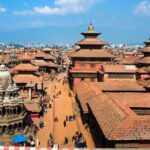
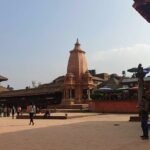
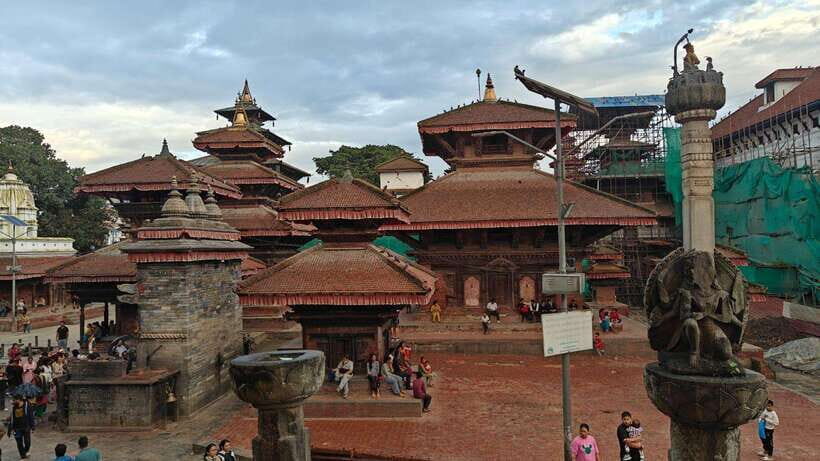
Kathmandu Durbar Square is the center of ancient Kathmandu, and the architecture reads like a collage of royal power and religious devotion. This stop focuses on the Hanuman Dhoka Palace complex, tied to Hanuman, the Hindu monkey god. Even before you get “deep” into explanation, the place gives you clues: royal courtyards, temple facades, and richly worked structures that signal this wasn’t just a palace—it was a stage for ceremonies, festivals, and state religion.
The guide’s value here is practical. When you’re standing in a courtyard full of carvings and layered structures, it’s easy to feel like you’re looking at art without knowing what you’re looking at. A good guide helps you connect the dots: which spaces were royal, which were temple-related, and why certain elements matter. That’s what makes the Kathmandu stop feel more like a guided reading than a sightseeing walk.
One of the tour’s most distinctive elements in Kathmandu is the Kumari residence area. The living goddess is associated with a specific palace setting here, so you’re not just touring monuments from history—you’re seeing how tradition is housed in real, defined spaces. Even if you can’t catch every moment of ceremony, you still get the sense that these Durbar Square spaces operate on more than tourist hours.
You’ll also get time around major temple elements such as the Taleju Temple area. In simple terms: this is where the palace-and-temple overlap becomes obvious. If you want to understand how Kathmandu’s royal identity expressed itself in stone, wood, and sacred space, this is the best place to start.
Bhaktapur Durbar Square: 55-Window Palace, Golden Gate, and Nyatapola’s scale
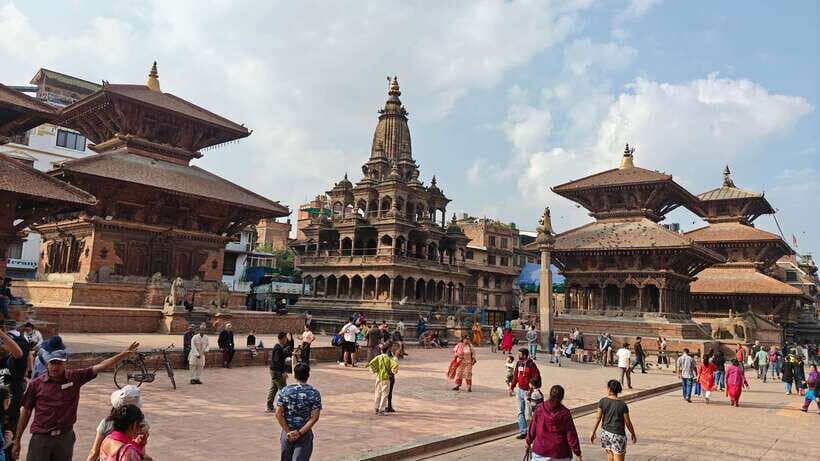
If Kathmandu is about royal centerpiece energy, Bhaktapur feels more like an old city that didn’t rush to replace its past. Bhaktapur Durbar Square tends to feel better preserved and less commercialized than some of the other stops, which makes it easier to slow your eyes down and spot details.
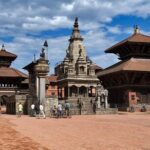
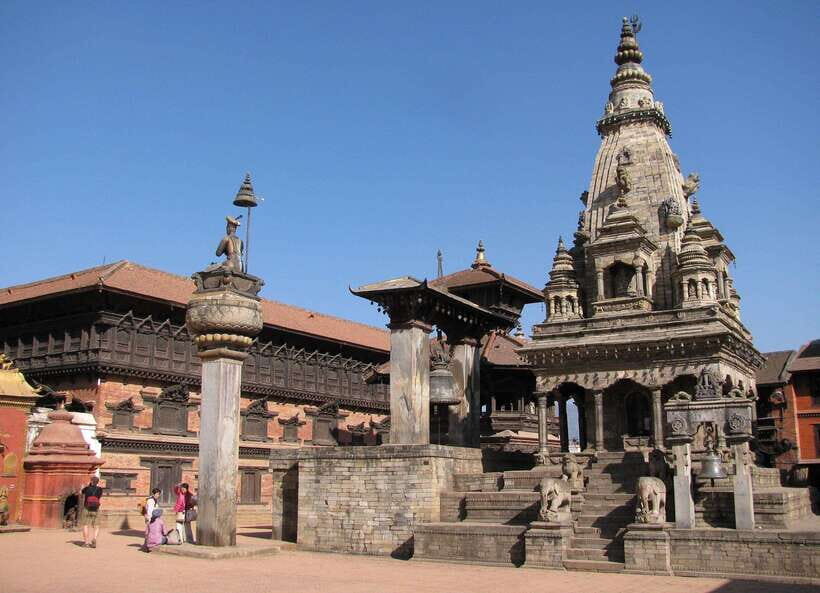
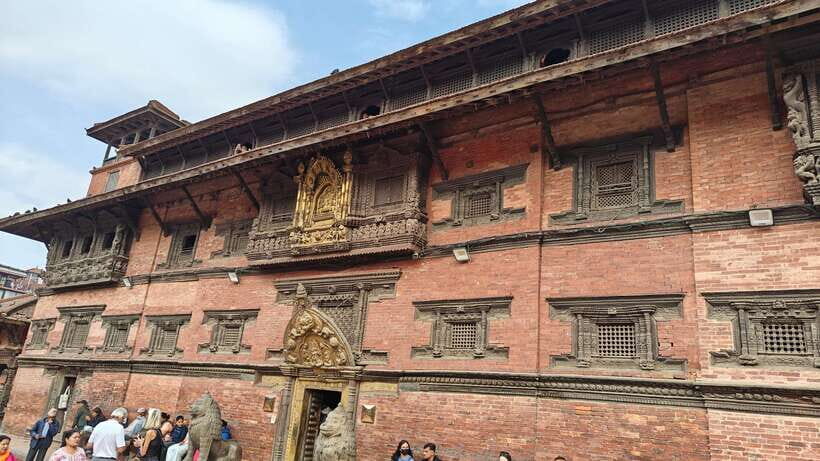
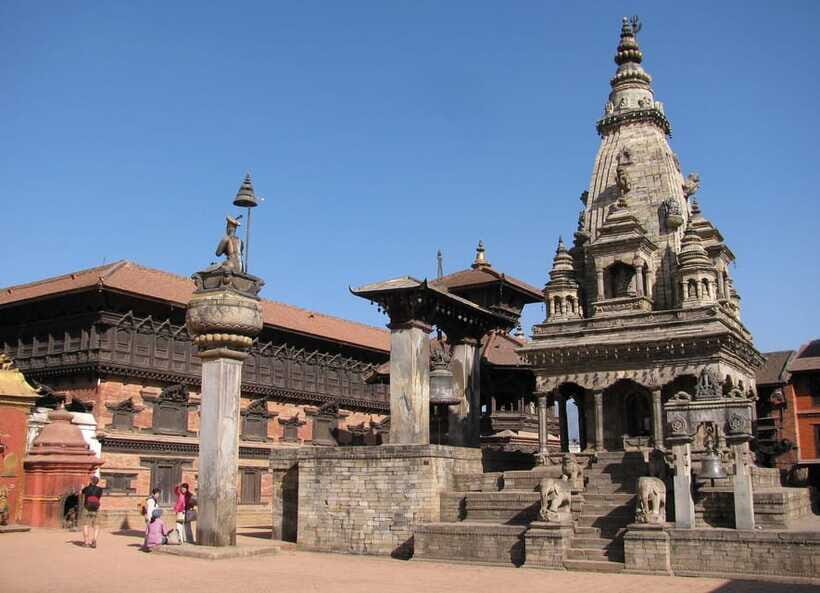
Your guided time here is about 2 hours, which is just enough to walk the main highlights without losing your momentum. Key sights include the 55-Window Palace, the Vatsala Temple, and the Golden Gate. These aren’t just pretty backdrops. They’re examples of Newari architecture, where form and function are tied together: windows and balconies communicate rank and household identity, gates mark movement and status, and temples anchor spiritual meaning.
Then comes the big wow: Nyatapola Temple. It’s described as the tallest pagoda in Nepal, and seeing it in person gives you a sense of vertical ambition that’s hard to understand from photos. A tall pagoda isn’t just a tall structure. It’s a statement—about power, belief, and the skill it took to build upward with balance and ornamentation.
What I like for readers here is that Bhaktapur adds a different texture to the day. You’re not only collecting temples; you’re collecting a shift in atmosphere. The alleyways and craftsmanship around Bhaktapur’s Durbar Square are part of the experience too. If you’re the type who enjoys walking through working neighborhoods, this is the moment when the tour starts to feel less like a list and more like a place you might want to roam on your own afterward.
Patan Durbar Square: Krishna Mandir stonework and the museum context

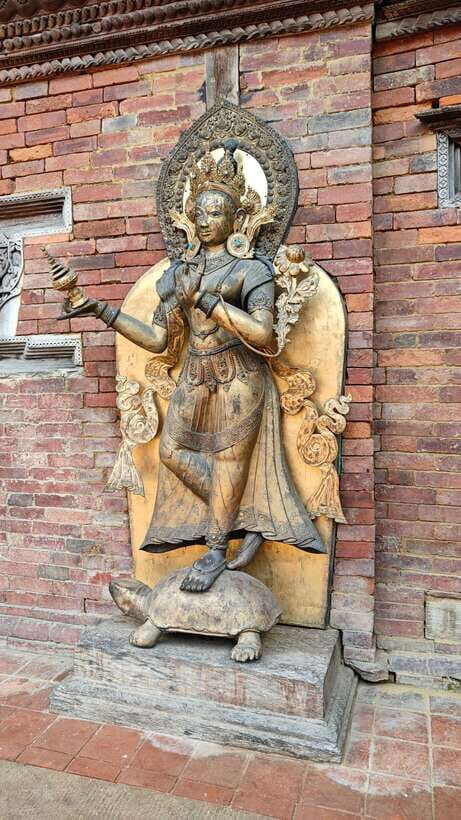
Patan’s Durbar Square (also known as Lalitpur Durbar Square) is where the day leans even more into art and craftsmanship. Patan is known for fine arts and skilled building traditions, and the square shows it in the density of temples, statuary, and carved stone details.
Your guided time here is also about 2 hours, and it’s structured around the former royal palace core plus the temples that shaped the square’s identity. The central palace area is important because it links the architecture to governance and patronage. In plain language: someone had to pay for all of this work, and the palace center gives you the backbone for understanding why the square looks the way it does.
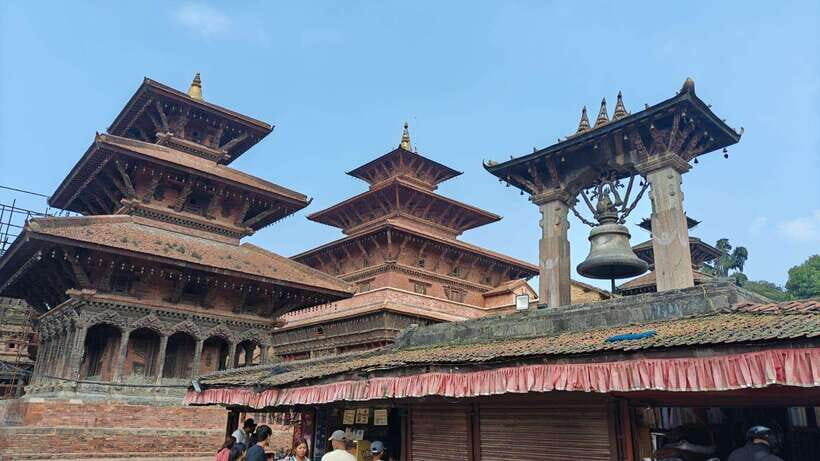
The standout for many people is Krishna Mandir, a stone temple dedicated to Lord Krishna. If you like architectural detail—corners, stone layers, the way shapes repeat and change—you’ll probably spend extra time on this one. The guide’s job is to slow your attention down and help you see what makes this temple distinct.
There’s also a Patan Museum within the palace complex. In practical terms, it gives you a chance to turn “I saw carvings” into “I understand what those carvings represent.” The museum is framed as a place to learn about the valley’s history, culture, and religious art. If you’ve ever felt that temple visits are great for photos but fuzzy for meaning, a museum stop inside the same complex can fix that.
If your brain likes clean structure, Patan is the square that often makes the whole day click. You see the same type of heritage as Kathmandu and Bhaktapur, but the focus shifts toward stonework, craft, and how religious figures are represented.
What makes the guides matter (especially in 5 hours)
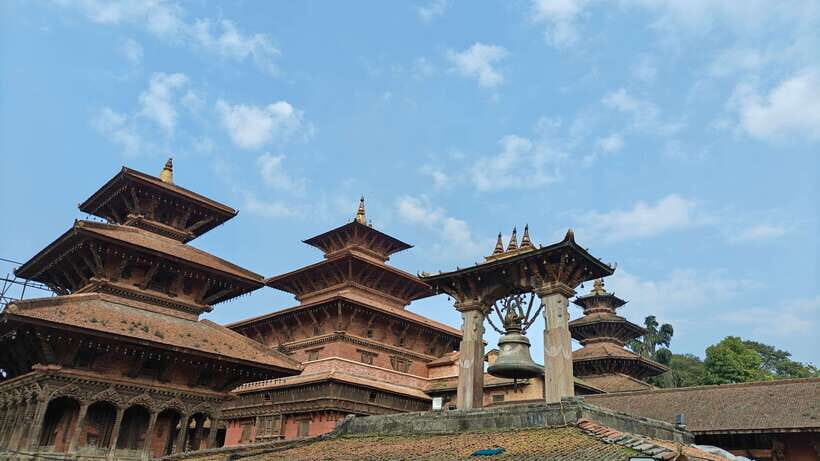
In a tour like this, the guide isn’t a bonus. They’re the difference between a “temple walk” and a “place-understanding.” The tour uses a professional English-speaking guide, and the past experiences shared about guides highlight a consistent pattern: strong storytelling, clear explanations, and the confidence to connect history, culture, and architecture without turning it into a lecture.
Two guide names you might hear associated with excellent versions of this tour are Pranav and Aneel (Karma). Both are described as fluent and friendly, with a passion for telling the story behind the sites. That kind of energy matters because you’re covering three major squares. Without good guidance, you can end up with a blur of gates and temples.
With a good guide, you start making connections fast. You learn what different temple structures signal, why certain palaces are referenced by name, and how the Kathmandu Valley’s royal cities expressed religion through built form. That’s how you get more value out of limited time.



Price and value: what $86 buys you in the real world
The price is $86 per person for a 5-hour private-group experience covering three UNESCO-listed Durbar Squares. On paper, that looks straightforward. In real life, the value comes from what’s included:
- Guided tours of Kathmandu, Bhaktapur, and Patan Durbar Squares
- A professional English-speaking guide
- Private transportation between sites
- Hotel pickup and drop-off within Kathmandu, including Thamel
- Skip the ticket line
Entrance fees are not included, so you should budget extra for those on the day. But even with that, this pricing still makes sense if you’re trying to see the valley’s major highlights in one plan. Hiring guides separately for each site, or trying to coordinate hopping between squares efficiently on your own, often adds up in time and hassle faster than the cost difference.
Think of $86 here as paying for time savings and meaning-making. You’re not just paying to walk; you’re paying to understand. If you speak English and want someone to translate the architecture into context, this is a good use of money.
Practical tips so your visit feels smooth
Here are the small decisions that make this kind of heritage day easier:
- Wear shoes you trust. Durbar Square surfaces can be uneven and you’ll do steady walking across courtyards.
- Bring water. Meals aren’t included, so plan your hydration and consider what you’ll eat before or after.
- Keep your camera ready, not your schedule tighter. The tour is timed, but the moments that deserve a photo often take an extra minute. Build that into your head.
- Expect a guided overview. Each square gets a set amount of time, so treat it like orientation plus highlights, not an all-day deep hangout.
- Know your boundaries. Alcohol and drugs aren’t allowed on the tour, and the activity isn’t suitable for people over 95 years.
Also, it’s listed as wheelchair accessible. That’s a strong plus. Still, old-city areas can have their own physical limits, so if you or a companion uses a wheelchair, it’s smart to confirm what routes the guide will use and what you’ll be able to reach comfortably.
Should you book this Durbar Square tour?
I’d book this tour if you want the Kathmandu Valley’s three major royal squares in one efficient package and you value a guide who explains what you’re seeing. It’s also a great option if it’s your first time in Kathmandu Valley and you want the “map” of how Kathmandu, Patan, and Bhaktapur express heritage differently.
I’d skip it if you’re a slow-travel type who needs long, quiet museum-and-temple time for each stop. In 5 hours, you’ll see plenty, but you won’t master each square the way a multi-day trip can.
For most people—short on time, excited about architecture, and eager to understand the stories behind the stone—this is a solid, cost-aware way to get real value.
FAQ
What is the duration of the tour?
The tour lasts 5 hours.
How much does the tour cost?
It costs $86 per person.
Where does the tour start and pick you up?
Pickup is from Thamel, and you’re also dropped back at Thamel.
Which Durbar Squares does the tour visit?
It includes Kathmandu Durbar Square (Hanuman Dhoka), Bhaktapur Durbar Square, and Patan Durbar Square.
What’s included in the price?
You get guided tours at all three Durbar Squares, a professional English-speaking guide, private transportation between sites, and hotel pickup and drop-off within Kathmandu.
Are entrance fees included?
No. Entrance fees are not included.
Do I need to buy tickets or wait in line?
The tour includes skip the ticket line, but entrance fees themselves are not included.
Is the tour private or shared?
It’s a private group.
Is the tour wheelchair accessible?
Yes. The tour is listed as wheelchair accessible.
Can I cancel for a full refund?
Yes. You can cancel up to 24 hours in advance for a full refund.
Is it suitable for very elderly visitors?
It is not suitable for people over 95 years.