REVIEW · KATHMANDU
Private Full-Day Kathmandu All 7 UNESCO World Heritage Sites Tour
Book on Viator →Operated by Breakfree Adventures Pvt. Ltd. · Bookable on Viator
Seven UNESCO sites in one Kathmandu day.
This private, full-day route is a smart way to understand how Buddhism and Hinduism shape Kathmandu Valley’s art and daily life. I love that you get seven UNESCO stops in one organized day, and I also like the private guide approach—so you’re not just seeing temples, you’re learning how to read what you’re looking at.
One possible drawback: it’s a long day (about 9 to 11 hours) with a moderate fitness level, and meals aren’t included. If you’re the type who needs a proper lunch break, you’ll want to plan snacks and a meal on your own.
In This Review
- Key highlights at a glance
- Why this Kathmandu UNESCO circuit works in one long day
- Hotel pickup, private vehicle, and the time you actually save
- Swayambhunath: the hilltop Monkey Temple to start your day right
- Kathmandu Durbar Square: where royal power became stone
- Patan Durbar Square: Newari craft you can actually spot
- Bhaktapur Durbar Square and Changu Narayan Temple: adding depth beyond the headlines
- Boudhanath Stupa and Pashupatinath Temple: two sacred styles in one day
- Price and logistics: what $80 per person really covers
- Timing that matters: how to survive 9 to 11 hours
- Who should book this private 7-site day tour
- Should you book this Kathmandu 7-UNESCO full-day tour?
- FAQ
- How long is the Kathmandu 7 UNESCO private tour?
- Do I get hotel pickup and drop-off?
- Are entrance tickets included for all the sites?
- Is this tour only for my group?
- Are meals included?
- What’s the cancellation rule?
Key highlights at a glance
- All 7 UNESCO World Heritage Sites: You hit the full set tied to the Kathmandu Valley royal and religious core.
- Hotel pickup and drop-off: Less stress, especially if you’re not familiar with traffic and routing.
- Entrance fees handled: Most sites include tickets, so you can spend time watching instead of figuring paperwork out.
- Private transport: A dedicated car/van means fewer waiting games and more control over pacing.
- Multiple strong guides by name: You’ll often hear praise for guides like Razz, Shankar, Subash, Bithya, and Dipaak for clear explanations and local context.
- Mobile ticket and group options: Useful if you’re coordinating as a small group and want a simple ticket flow.
Why this Kathmandu UNESCO circuit works in one long day
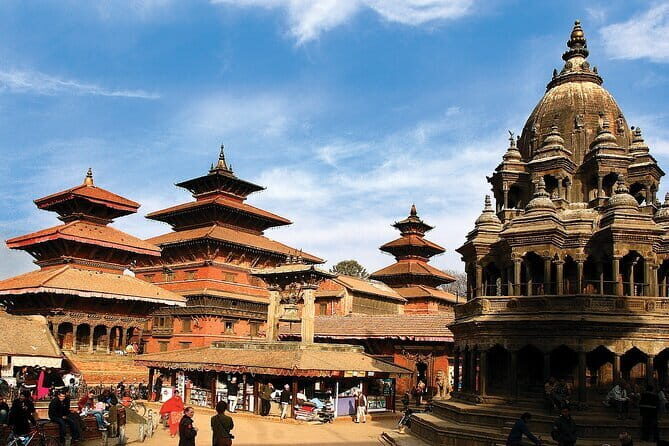
Kathmandu Valley can feel like a maze of temples, courtyards, and carved stone. This tour helps you turn that chaos into a storyline. Instead of picking just one highlight, you follow a logical circuit through major monuments tied to royal squares, pilgrimage sites, and classic Newari craftsmanship.
The best part is that you’re not racing randomly from landmark to landmark. You spend set time at each stop—enough to look closely, wander a bit, and get context—then move on by private vehicle. In plain terms: you get the big names, plus the guide’s explanation that makes them make sense fast.
You can also read our reviews of more private tours in Kathmandu

Hotel pickup, private vehicle, and the time you actually save
This is set up as a private day, meaning only your group rides along. You’ll get hotel pickup and drop-off, plus a dedicated private car/van with fuel, parking, and related charges covered.
That matters in Kathmandu. Even if you’re excited to get out and explore, the valley’s driving time can eat your day. A private vehicle reduces the stop-and-go hassle, so you’re more likely to arrive with energy rather than arriving stressed. It also helps if you want your guide to adjust the pacing slightly—within reason—based on crowds or how fast you’re walking.
A small detail that adds up: there’s a mobile ticket component. That typically means less last-minute desk-hunting and smoother entry than a paper-only setup.
Swayambhunath: the hilltop Monkey Temple to start your day right
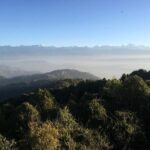
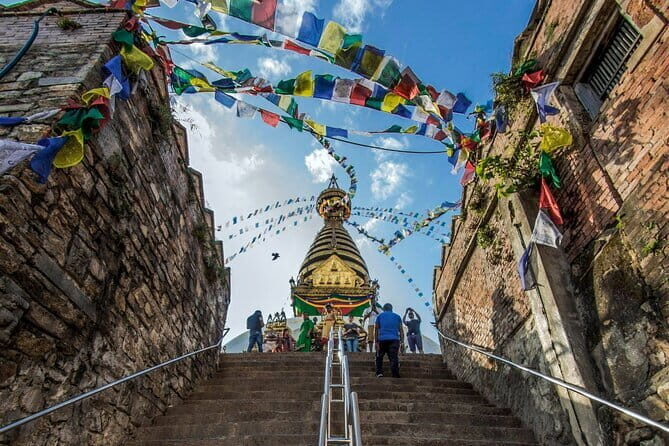
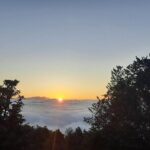
Your first major stop is Swayambhunath (Monkey Temple), perched up above the valley. The location is the point. From the hilltop, you get a wide view over Kathmandu Valley, and that makes every later courtyard and square feel more connected to the bigger whole.
You’ll spend about 45 minutes here, and the admission is free. That’s a nice bonus for value: even though you’re paying for the tour, one of the key sites doesn’t add an extra ticket step.
What to watch for:
- The viewpoint. Take a minute to look out before you zoom in on details.
- The temple approach. This is the type of place where you’ll naturally slow down once you start noticing the architecture and the religious activity.
A practical consideration: hilltop sites can mean steps and uneven areas. The tour lists a moderate fitness level, so plan for some walking before you settle into a viewing rhythm.
Kathmandu Durbar Square: where royal power became stone

Next you head to Kathmandu Durbar Square, a UNESCO site right in the center of Kathmandu. This is one of the best places to understand how monarchy and religion braided together in city design—palaces, courtyards, and temples packed into one core.
You’ll have about 45 minutes, and admission is included. That makes it easy to focus on the space instead of handling ticketing mid-day.
What makes it special:
- Courtyards and temples in close proximity. You’re not just looking at a single building—you’re seeing how multiple structures relate.
- The sense of place. Since it’s in the middle of the city, you often feel the monument living alongside everyday Kathmandu life.
Possible drawback: because it’s central, it can also be busy. If you like quiet, you’ll need to use your time well—arrive focused, look broadly first, then slow down for close viewing.
Patan Durbar Square: Newari craft you can actually spot
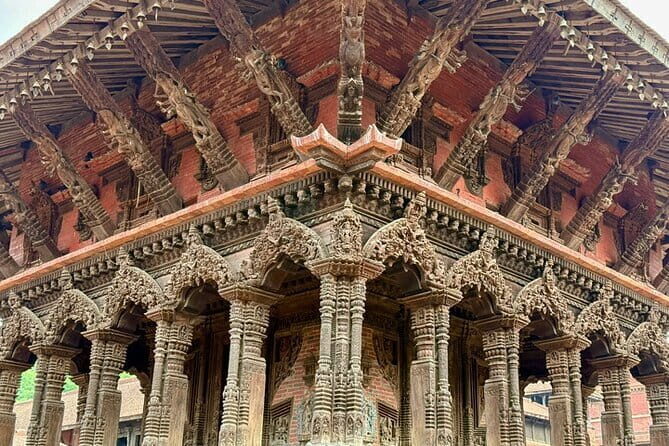
From Kathmandu you move to Patan Durbar Square in Lalitpur. This site is known for Newari craftsmanship, and once you start looking at carvings and stonework, you see why people connect Patan with artistry.
Here you’ll spend around 1 hour, with admission included. One hour is a workable amount at Patan because there’s a lot to absorb in details—without turning your day into an endurance test.
What I like about this stop (and what you’ll likely like too):
- It’s visually distinct from Kathmandu Durbar Square, so your eyes don’t get bored.
- The design helps you spot craftsmanship themes faster—especially if you let your guide point out what to look for.
Small warning: if you’re trying to photograph everything from every angle, Patan can eat minutes. Set a goal for what you want—one wide context shot plus a few close-ups—and you’ll keep your day moving.
You can also read our reviews of more historical tours in Kathmandu

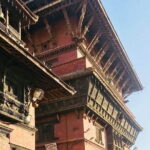
Bhaktapur Durbar Square and Changu Narayan Temple: adding depth beyond the headlines
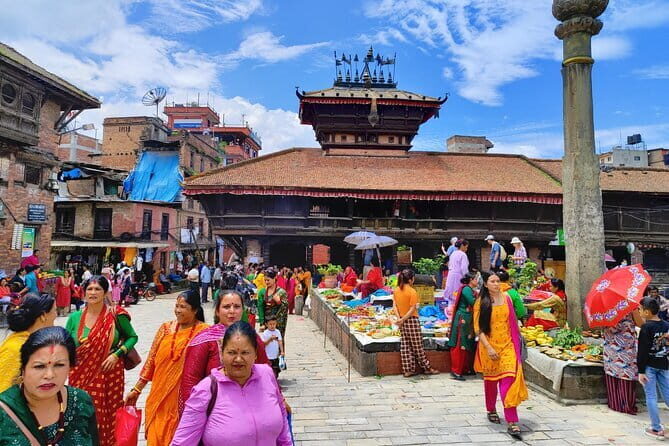
Then you head to Bhaktapur Durbar Square, one of the biggest hits for people who like architecture and city-planning details. You’ll spend about 1 hour 30 minutes, and admission is included.
Bhaktapur tends to reward slower attention. That longer time slot compared to some other stops helps. You’re more likely to walk around and take in the building relationships rather than just doing a quick scan.
What makes Bhaktapur feel worth the time:
- It gives you a chance to notice how the whole square functions as a living monument.
- The extra time helps you understand what’s different here versus other Durbar Squares.
Next comes Changu Narayan Temple, usually a short-but-memorable stop. You’ll spend about 25 minutes, with admission included. It’s described as the oldest temple in Nepal and sits on a hilltop overlooking the valley, dedicated to Lord Vishnu.
This is the kind of stop that works well late in the route: you get a classic hilltop temple experience without losing your whole day. If you want one very specific viewpoint moment, this is it.
Possible drawback: because it’s a hilltop temple area and the time is short, you’ll want to go with a focused mindset. Quick look first, then a calm scan of the details your guide highlights.
Boudhanath Stupa and Pashupatinath Temple: two sacred styles in one day
After the Durbar Squares and Vishnu temple, the itinerary shifts into major pilgrimage territory.
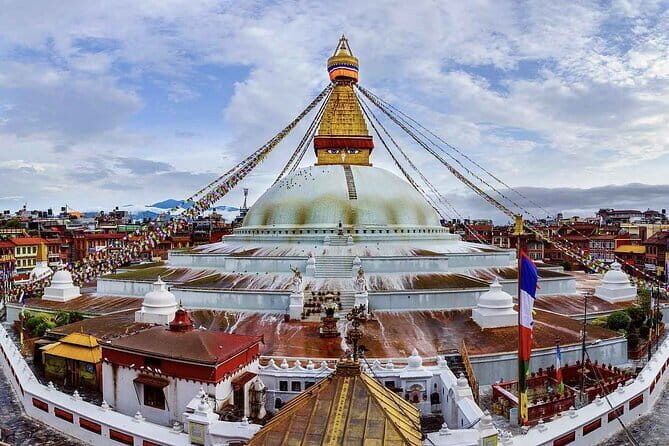
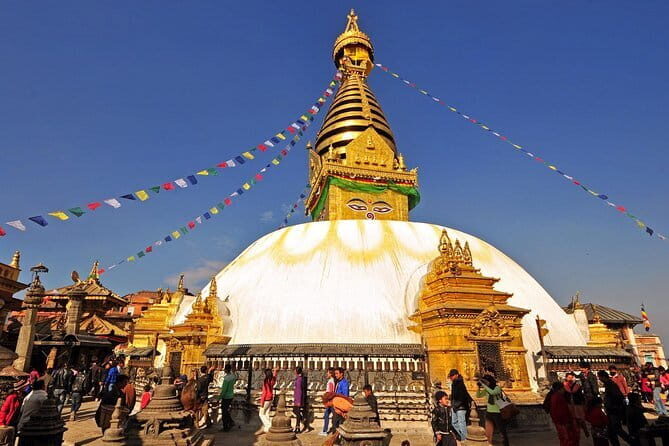
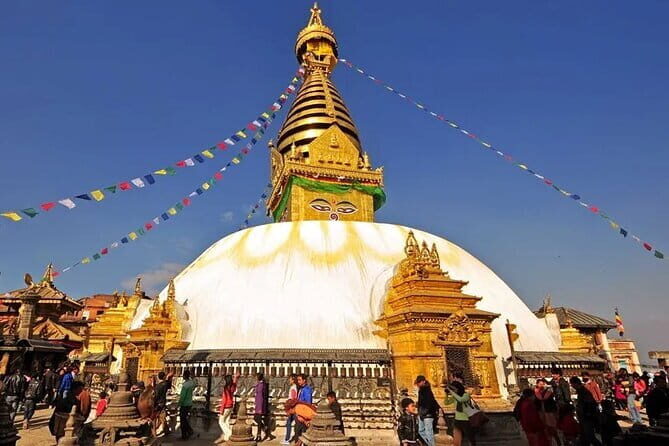
First: Boudhanath Stupa, one of the world’s largest spherical stupas and a UNESCO site. You’ll spend about 30 minutes, and admission is included. The stupa’s size alone does a lot of the work for you. It’s a powerful visual object, and it helps you understand how Buddhism expresses devotion through structure and ritual space.
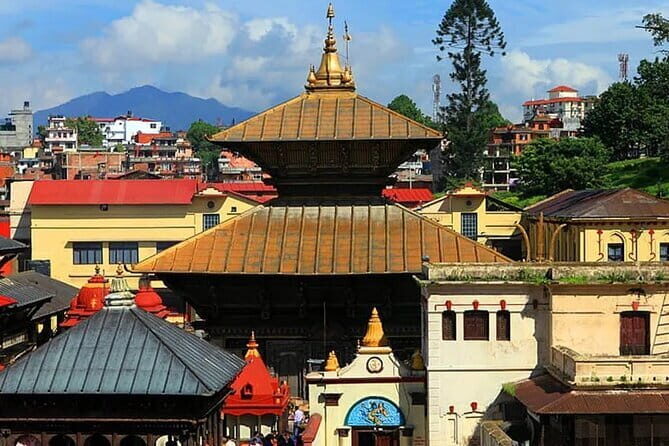
Then: Pashupatinath Temple, dedicated to Lord Shiva and located by the Bagmati River. You’ll also have about 30 minutes, and admission is included.
Why this pairing works:
- You see a major Buddhist monument style (Boudhanath) and a major Hindu sacred complex (Pashupatinath) in the same day.
- You’ll notice how different religious architecture shapes your movement and attention.
A practical consideration: both areas can be busy and active. Your time is limited at each, so don’t try to master everything in 30 minutes. Let your guide’s explanation tell you what to focus on, then take a few slow minutes to absorb the atmosphere.
Price and logistics: what $80 per person really covers
The price is $80 per person, and many people book about 29 days in advance, which is a hint that this is a steady-demand day tour.
So what are you buying?
You’re not just paying for driving. You’re paying for:
- Hotel pickup and drop-off
- A professional private guide
- A private vehicle with fuel and parking
- Monument entrance fees for the sites listed (with Swayambhunath noted as free)
- Service charges and taxes
Meals and drinks are not included, and tipping is customary. That’s the trade-off. The tour tries to make the museum-ticket side of the day painless, but it won’t do the food part for you.
Is it good value? For me, it often comes down to this question: how much do you value a guide who can help you interpret what you’re seeing? If you want context—why a square is arranged the way it is, what the temples represent, what the carvings signal—this format can be money well spent. If you just want quick photos with no explanations, you might feel the day is too guided and structured for your taste.
Timing that matters: how to survive 9 to 11 hours
This tour runs roughly 9 to 11 hours, and the total “on-site” time is about 6 hours across the seven stops. The rest is travel time and short transitions. That means you should treat the day like a marathon, not like a casual stroll.
Here’s how you’ll get the most out of it:
- Bring water. Food isn’t included, and you’ll be out for most of the day.
- Wear comfortable shoes with good grip. Hilltop areas and temple grounds often include steps and uneven surfaces.
- Plan a flexible lunch strategy. You’ll need to buy your own meal or snack during the day.
One review detail I’d take seriously as advice: people repeatedly recommend starting early. A long day can feel easier when you begin with good light and less congestion. If your schedule allows, aim for an early start.
Who should book this private 7-site day tour
This fits best if you:
- Want to check all 7 UNESCO Kathmandu Valley sites in one day.
- Like guided explanations that turn buildings into stories you can understand.
- Prefer a private setup over crowded group tours.
- Are okay with a full day of walking and moving between sites.
You might skip it (or consider a lighter option) if:
- You want long stays and slow wandering at just one or two sites.
- You hate structured timing and feel trapped when a day feels “planned.”
Should you book this Kathmandu 7-UNESCO full-day tour?
Book it if you want maximum coverage with minimal logistics headaches. Hotel pickup, private transport, and covered entrance fees mean you spend your energy looking—not managing tickets, rides, or timing.
Don’t book it if you’re not comfortable with a long day and you really need meals included. Also, if you prefer quiet and slow pacing, the site-by-site schedule may feel too tight, especially in busy central areas.
My practical suggestion: if this is your first time in Kathmandu Valley and you want the UNESCO core without spending days piecing it together, this private full-day route is a strong choice. It’s focused, efficient, and—when you let your guide do the interpretation part—actually fun rather than just “temple hopping.”
FAQ
How long is the Kathmandu 7 UNESCO private tour?
The tour lasts about 9 to 11 hours, with time spent at each of the seven UNESCO sites.
Do I get hotel pickup and drop-off?
Yes. The tour includes hotel pickup and drop-off.
Are entrance tickets included for all the sites?
Yes, the tour includes monument entrance fees for the listed sites. Swayambhunath is noted as free, while the other sites have admission included.
Is this tour only for my group?
Yes. It’s a private tour/activity, so only your group participates.
Are meals included?
No. Meals and drinks are not included, so you’ll need to plan your own food during the day.
What’s the cancellation rule?
Free cancellation is available up to 24 hours in advance for a full refund. If you cancel less than 24 hours before the start time, the amount paid is not refunded.