REVIEW · KATHMANDU
Everest Base Camp Helicopter Tour
Book on Viator →Operated by Trekking Planner Nepal · Bookable on Viator
Everest Base Camp by helicopter turns a long trek into a fast, big-sky day. You’ll get evergreen views of peaks and glaciers, plus a down-to-earth break for breakfast at Everest View Hotel. One thing to know upfront: a Kalapatthar landing depends on how many seats you’re sharing, so it’s not identical for everyone.
I like that the route is built for wow-per-hour. Flight time is about 3 hours 30 minutes total, but you’ll spend only around 45 minutes in the air segment to Everest landmarks at first, then later you’ll be back on the ground for refueling and a proper meal stop. If you hate uncertainty, this tour may feel tight—because landing access and timing can shift based on the group size that day.
This is a practical option if you want the Everest story without the days of trekking. You’ll travel with a guide team, use a mobile ticket, and get transport between your hotel and Kathmandu’s domestic airport. The aircraft and route come with limits too: each passenger weight is capped at 265 lbs, and the operator says it runs in all weather conditions (so clothing matters).
In This Review
- Key Points You’ll Want to Know First
- What the Everest Base Camp Helicopter Day Really Feels Like
- The Flight Route Breakdown: From Kathmandu to Everest Views
- Kalapatthar Landing Rules (Shared vs Private): The Real Decision Point
- Lukla Refuel Stop: Why 10–15 Minutes Can Matter
- Everest View Hotel Breakfast Stop: Your Grounding Moment
- Price and Value: Is $1,699 Actually Worth It?
- Comfort, Safety, and What’s Included (and What Isn’t)
- Practical Planning Tips for Your Day in Kathmandu
- Who Should Book This Helicopter Tour, and Who Might Skip It
- Should You Book This Everest Base Camp Helicopter Tour?
- FAQ
- How long is the Everest Base Camp helicopter tour?
- Is pickup from my hotel included?
- Will the helicopter land at Kalapatthar?
- Is there a refueling stop during the flight?
- Where do we have breakfast?
- What documents do I need to book?
- What’s the cancellation policy?
Key Points You’ll Want to Know First
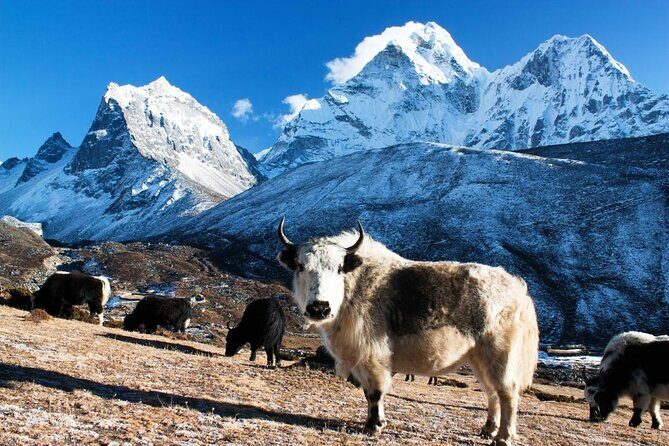
- Kalapatthar landing is conditional on passenger count and whether you booked sharing vs private.
- Short Lukla refuel stop (about 10–15 minutes) helps keep the schedule moving.
- Everest View Hotel breakfast stop gives you a real, grounded break with time to eat and reset.
- Max 10 travelers means you’re usually not packed shoulder-to-shoulder.
- Weight limit (265 lbs per person) is a hard constraint, not a suggestion.
- Medical gear is included, with a first aid kit and comprehensive medical kits for precaution.
What the Everest Base Camp Helicopter Day Really Feels Like
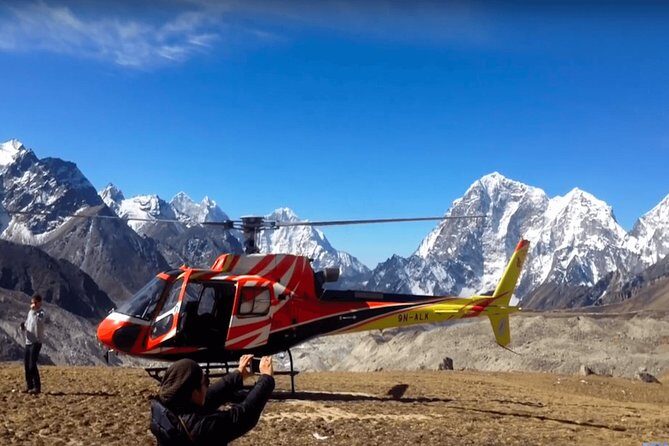
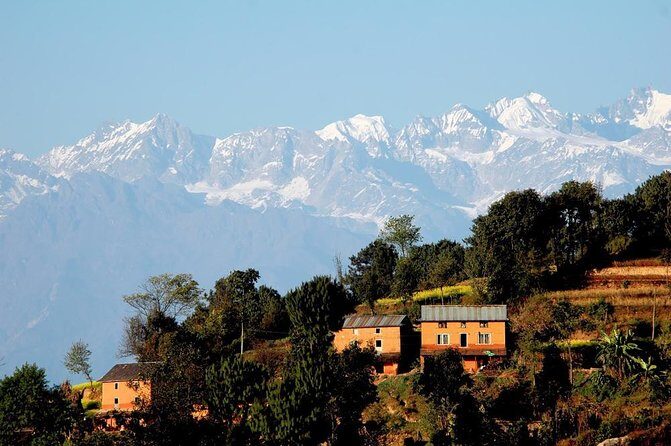
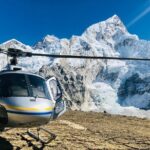
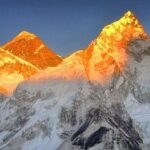
This tour is designed for people who want the Everest Big Picture—fast. You’ll fly high above the world’s highest mountain area and take in wide views you normally only see after days on foot. The experience is about scale: dense forests sliding down into river valleys, glaciers and ice fields, and those classic Himalayan layers that look unreal from the air.
What makes it especially interesting is the mix of scenery you pass over. The flight is described as showing mountain peaks, dense forests, glaciers, lakes, rivers, and traditional villages. That means it’s not just Everest as a single postcard. You’re seeing how the region changes from lower terrain up to the high ice zones.
It’s also a short day. Total duration is listed as about 4 hours, with flight time totaling about 3 hours 30 minutes. In practical terms, that gives you a way to fit Everest views into a tighter Kathmandu schedule—without adding the altitude exposure that comes with trekking for more than a week.
You can also read our reviews of more tours and experiences in Kathmandu
The Flight Route Breakdown: From Kathmandu to Everest Views
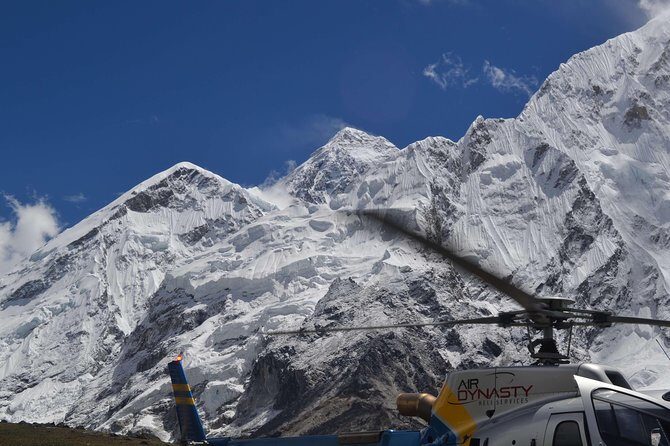
Your day starts in Kathmandu with pickup offered and transportation to the domestic airport, then back after the flight. The operator also states the activity operates within a wide daytime window (opening hours are 6:15 AM–6:15 PM), so you’ll likely have an early start that still feels manageable.
Once you’re in the helicopter, you’ll take a first pass that includes sightseeing of the Everest area. The itinerary notes that the initial flight segment takes about 45 minutes and includes a refueling break in Lukla of roughly 10–15 minutes. That refuel stop is quick, but it matters. It’s part of how helicopter operations handle fuel planning and altitude route needs, and it’s one reason your “about 4 hours” can still hold together on the ground.
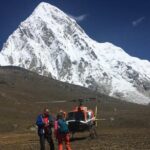
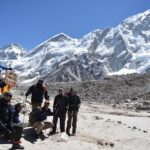
After the initial sightseeing segment (and after the refuel), the helicopter continues toward the Everest Base Camp area. The big moment you’re booking for is the ability to fly over Everest landmarks and, depending on your group setup, land for a closer look.
Kalapatthar Landing Rules (Shared vs Private): The Real Decision Point
This is the part you should treat as your make-or-break detail.
The itinerary explains that landing at Kalapatthar is limited by passenger count. In a shared helicopter, the landing at Kalapatthar can be done only for small groups—specifically it’s described as being possible on a sharing basis for two passengers. If there are 5 passengers in a shared helicopter, the helicopter does not land at Kalapatthar.
Private is also not automatically a guarantee. The notes say that with a private helicopter, a landing at Kalapatthar can happen for two passengers, but if there are 5 passengers in the private setup, it doesn’t land.
So what does that mean for you?
- If your goal is stepping onto Kalapatthar, you’ll want to confirm the seat count for your exact booking.
- If you don’t care about an actual landing and you mostly want the flying views, then the shared option may still be great value.
One more practical angle: because landing access depends on the group, you can’t fully control it after booking. I’d plan your expectations around the flight views first, and treat Kalapatthar as the bonus if it’s available for your schedule and group configuration.
Lukla Refuel Stop: Why 10–15 Minutes Can Matter
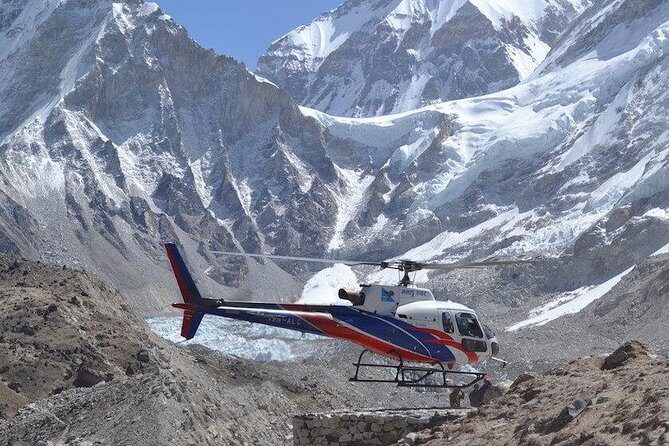
That Lukla stop isn’t there for sightseeing—it’s for fuel. But even a short break changes how the day feels.
The itinerary states the helicopter refuels in Lukla for 10–15 minutes. That’s enough time for a calm reset and to let your brain catch up after the first air segment. If you’re prone to getting motion-sick, having that brief pause can help.
Also, that refuel stop is part of why the tour stays around 4 hours instead of ballooning into an all-day commitment. For many people, that’s the difference between fitting Everest into a short Kathmandu visit versus turning it into a travel-day project.
Everest View Hotel Breakfast Stop: Your Grounding Moment
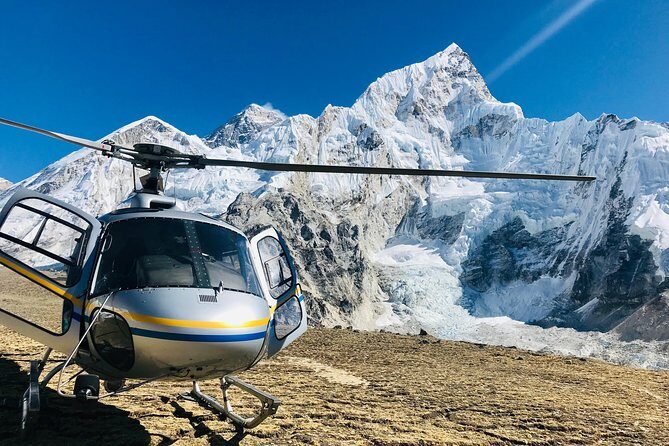
After the flight segment, the itinerary says all passengers land at Everest View Hotel for breakfast, with about 45 minutes to 1 hour on the ground.
This is a smart human touch in the plan. When you’re only in the air, everything blends together: altitude, wind, bright light, camera fatigue. A fixed breakfast stop gives you:
- time to eat (so you don’t feel fragile later),
- time to warm up a bit and breathe,
- time to handle basic needs before the flight ends.
One caution: the inclusions list says meals are included, while the exclusions also state breakfast and all meals are excluded. That conflict means you should confirm what’s covered for your booking. The itinerary clearly states breakfast at Everest View Hotel, but you still want the final answer in writing.


Price and Value: Is $1,699 Actually Worth It?
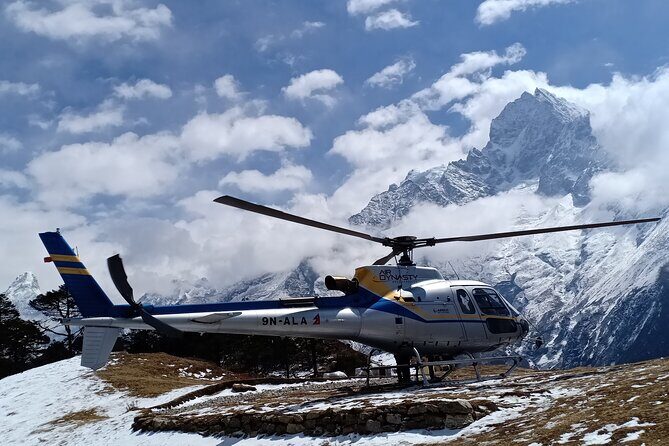
At $1,699.00 per person, this is not a budget choice. But the value isn’t just “you saw Everest.” It’s the time compression and the access to views that would otherwise require a long trek.
Here’s how I think about the price as a traveler:
- You’re paying for helicopter time where distances and altitude are measured in minutes, not days.
- You’re getting guided service on the heli tour plus operational support like transport from your hotel to the domestic airport and back.
- You also get medical kits and first aid coverage as precaution, which matters when weather, altitude, and remote terrain are part of the equation.
What’s excluded also shapes the real cost. The price does not include Nepal visa, international airfare, or personal travel/medical insurance. It also lists that meals like breakfast are excluded (again, double-check), and it excludes tips and personal drinks. Plus, “all fees and taxes” are listed as not included.
So the honest value equation is:
- Great value if you’re short on time and want the Everest experience without the trek.
- Less value if you want to keep your overall trip costs tightly controlled, because the extras can add up once you include insurance, visa, and any optional landing-related upgrades.
If you can budget it, the helicopter day can feel like a smart trade: you buy a concentrated Everest moment instead of spending a week or more on logistics, permits, and physical preparation.
Comfort, Safety, and What’s Included (and What Isn’t)
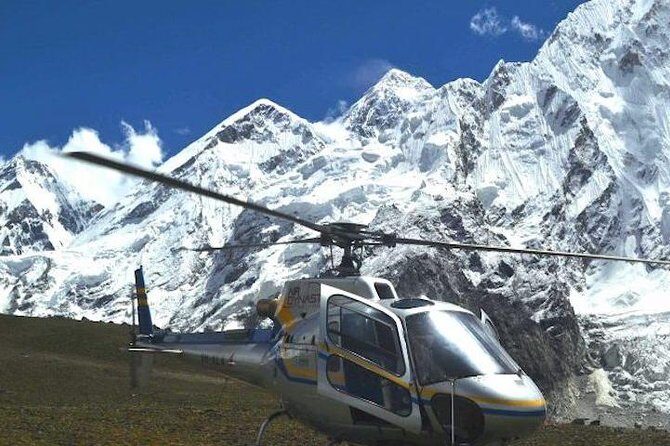
The tour includes transportation between your hotel and Kathmandu domestic airport, guides on the heli tour, and medical insurance coverage tied to daily wages (the listing’s wording is specific, so I’d treat it as “insurance is part of the package”). It also includes comprehensive medical kits and a first aid kit.
That’s the right set of inclusions for a day where conditions can shift quickly. Even with short flight time, you’re operating in an environment where unexpected medical needs are not something you want to handle alone.
But safety-related coverage also has limits. The listing states emergency evacuation and changes that break away from the proposed duration where refund won’t be entertained. It also says the office will issue a letter you can use with your valid insurance. That’s not ideal if you were planning to rely on refunds, so I’d treat this as an “insurance-first” situation.
One more practical detail: the operator sets a 265 lbs total weight per passenger. If you’re close to the limit, don’t assume it’s flexible.
Practical Planning Tips for Your Day in Kathmandu
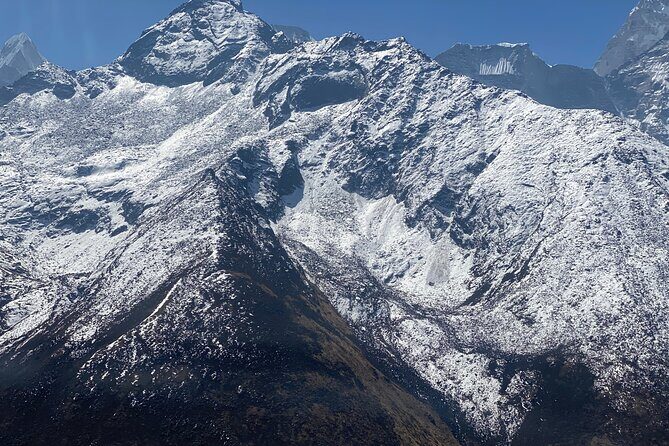
Even though this is a fast tour, preparation still matters.
- Dress for cold and wind. The operator says it runs in all weather conditions and to dress appropriately. That’s a clue that you should plan for chilly air and changing visibility.
- Plan for a camera-and-eyewear strategy. Bright snow glare can be intense. Bring sunglasses you trust and keep them accessible.
- Keep your documents ready. The listing says you need passport name, number, expiry, and country at booking.
- Use the mobile ticket. The tour includes a mobile ticket, which usually means you’ll want to keep your phone charged and easy to access.
- Expect a short window of activity time. The opening hours span 6:15 AM–6:15 PM. Your exact pickup time depends on your schedule that day.
Also, this is a small-group experience with a stated maximum of 10 travelers. That can feel calmer than big tour buses, though the seating arrangement rules for Kalapatthar landing are still the main variable for what you actually get to do.
Who Should Book This Helicopter Tour, and Who Might Skip It
This tour fits you if:
- you have limited time in Kathmandu,
- you want Everest views without committing to a week-long trek,
- you’re comfortable with a day that is mostly about flying and a short ground stop.
It might not fit you as well if:
- Kalapatthar is your #1 goal and you’re not willing to confirm whether landing will happen for your exact group size,
- you’re looking for a fully predictable itinerary with no operational variation,
- you’re sensitive to cold or wind and don’t want to dress for it.
It can also help to know the group structure. The landing rule changes depending on whether your shared helicopter has 2 passengers landing vs 5 passengers not landing, and private changes at 5 passengers too. That’s why I’d treat your booking as a “views first” experience.
Should You Book This Everest Base Camp Helicopter Tour?
Book it if you want a high-impact Everest day that trades trekking time for helicopter views, and if your budget includes not just the tour price but also visa, insurance, and any uncovered meals or personal expenses. Confirm whether your booking setup allows Kalapatthar landing for your passenger configuration, and consider asking what’s covered for breakfast on your exact day.
Skip or reconsider if you need Kalapatthar landing guaranteed, you’re unwilling to dress for cold and changing weather, or you’re trying to build a trip where all costs are fully contained and predictable.
If you’re in the sweet spot—time-limited, Everest-hungry, and comfortable planning around a small number of operational variables—this is a strong choice. You’ll get a concentrated look at Everest’s power, glaciers, and high terrain that would take weeks to see on foot.
FAQ
How long is the Everest Base Camp helicopter tour?
The duration is listed as approximately 4 hours, with flight time totaling about 3 hours 30 minutes.
Is pickup from my hotel included?
Yes. The tour includes transportation to Kathmandu domestic airport from your hotel and back.
Will the helicopter land at Kalapatthar?
Kalapatthar landing depends on passenger count and whether you book sharing or private. The notes say it can be done for two passengers, while a shared helicopter with 5 passengers does not land at Kalapatthar.
Is there a refueling stop during the flight?
Yes. The itinerary describes a Lukla refueling break of about 10–15 minutes.
Where do we have breakfast?
After the flight segment, the itinerary says all passengers land at Everest View Hotel for breakfast, with about 45 minutes to 1 hour there.
What documents do I need to book?
The listing says you need passport name, number, expiry, and country for all participants at time of booking.
What’s the cancellation policy?
Free cancellation is allowed up to 24 hours in advance for a full refund. If you cancel less than 24 hours before the experience starts, the amount paid will not be refunded.