REVIEW · KATHMANDU
Kathmandu Cultural Tour – Kathmandu Valley Sightseeing Tour
Book on Viator →Operated by Adventure Vision Treks and Travels · Bookable on Viator
Kathmandu can feel like a big, loud puzzle. This private Kathmandu Valley sightseeing tour helps you solve it fast, with a guide to connect the dots between Buddhist and Hindu holy sites. I like how the route is tight and efficient, yet still gives you time to actually look, not just pose and move on.
I’m also taken with the built-in “value per hour” idea here: hotel pickup and drop-off plus a private vehicle means you spend less time negotiating traffic and more time at the temples. And because this is a private setup, you can ask questions and go at a pace that fits your group.
One thing to keep in mind: the tour is sold as having a guide/driver, but you’ll want to confirm the guide will actively explain each stop. One prior customer described a situation where the driver acted more like a chauffeur, and the plan didn’t fully match the promised four stops, so don’t be shy about setting expectations up front.
In This Review
- Key things to know before you go
- A fast, culture-heavy route through Kathmandu Valley
- Price, pickup, and what $78 buys you in real time
- Stop 1: Swayambhunath’s hilltop views and monkey temple mythology
- Stop 2: Boudhanath Stupa and the steady rhythm of Tibetan Buddhism
- Stop 3: Pashupatinath and visiting cremation rituals with care
- Stop 4: Patan Durbar Square for architecture, museum time, and a slower finish
- Timing, transport, and how to make the day feel smooth
- What kind of traveler this tour suits best
- Should you book this Kathmandu Cultural Tour?
- FAQ
- How long is the Kathmandu Valley sightseeing tour?
- What’s included in the price?
- Are entry fees to the World Heritage sites included?
- Which UNESCO World Heritage sites are visited?
- Is this tour private?
- Is the tour dependent on weather?
Key things to know before you go
- Four UNESCO sites in one outing, so you’re not guessing what’s worth your limited time
- Swayambhunath’s short hill walk and the monkey temple energy right away
- Boudhanath’s Tibetan atmosphere, including prayer wheels and monk chants in the Bouddha area
- Pashupatinath’s cremation rituals are part of the experience, and you can choose what you watch
- Patan Durbar Square gives you a calmer, more crafts-and-architecture feel to end the day
A fast, culture-heavy route through Kathmandu Valley
This tour is built for the traveler who has only a half-day in Kathmandu and wants real depth, not just a checklist. You’ll be moving through the Kathmandu Valley’s most famous sacred landmarks, two in the Buddhist tradition and two in the Hindu tradition, plus a historic royal square in Patan.
What makes the whole route work is that your guide is meant to connect meaning to what you see. Instead of staring at stone and bells without context, you get the significance of each place as you go. That makes the day feel less like “touring” and more like understanding.
It’s also a nice choice if you like variety. Swayambhunath gives you panoramic views and mythology. Boudhanath shifts the mood into Tibetan practice and steady ritual motion. Then Pashupatinath brings a heavier, life-and-death reality. Finally, Patan Durbar Square is where you can slow down and notice architecture and museum details without the spiritual intensity of the cremation area.
You can also read our reviews of more historical tours in Kathmandu

Price, pickup, and what $78 buys you in real time
At $78 per person for a 5 to 6 hour private sightseeing tour, you’re paying for convenience and guided flow. The included hotel pickup and drop-off matters in a city where transit and timing can eat your day. You also get a private vehicle, a driver/guide, and bottled water (one bottle).
Now the fine print: entry fees to the UNESCO sites are not included. That’s pretty common for tours like this, but it changes your real budget. Before you go, plan on paying separate admission for each World Heritage stop, since the schedule expects you to enter at each location.
Also, this tour is close to “short on time” territory. You’ll be out for a half day, so you won’t have endless hours at one place. If you’re the type who wants to linger at a single temple for a long, quiet session, you might want extra free time after the tour. If you’re okay with a guided overview plus time to look around, this fits well.
Stop 1: Swayambhunath’s hilltop views and monkey temple mythology
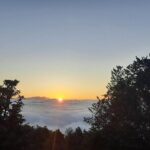
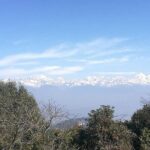
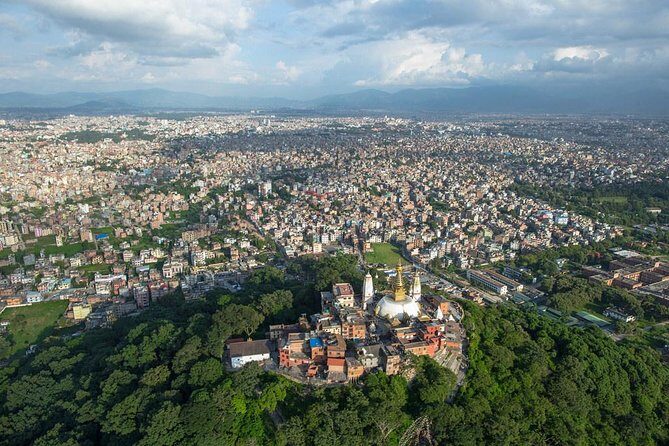
You start at Swayambhunath, a Buddhist stupa perched on a hill. Getting there is straightforward: there’s a short walk, about 5 minutes, to reach the summit. The payoff is a big, wide view over Kathmandu city, which is exactly what makes this first stop such a strong “orientation moment.”
This site is often called the Monkey Temple. That’s not just a cute nickname. The area is known for monkeys, and they’re part of the live, messy energy of the place. It’s one of those settings where the spiritual and the everyday share the same space, and that combination can feel oddly memorable.
You also get a sense of age and layers. Swayambhunath is described as one of Nepal’s oldest Buddhist stupa sites, surrounded by multiple shrines and temples. So while you’re there for the views, you’re also surrounded by detail: smaller statues, ritual corners, and the constant movement of visitors.
Timing note: the tour allows about 2 hours here. That’s generally enough to climb up, wander the key areas, and sit for a moment with the panorama before you head to the next stop. Admission is not included, so keep your ticket budget in mind before you arrive.
Stop 2: Boudhanath Stupa and the steady rhythm of Tibetan Buddhism
Next comes Boudhanath Stupa, which the tour describes as the largest Tibetan stupa in the world. If Swayambhunath begins the day with sweeping views and playful chaos, Boudhanath changes the tone. It’s in Bouddha, an area often referred to as Little Tibet.
This stop is all about ritual atmosphere. Expect a calm, focused scene with monks chanting and prayer wheels spinning in rhythmic patterns. That combination is the real “experience engine” of Boudhanath: even when you’re standing still, you feel like you’re part of an ongoing practice.
One useful way to approach Boudhanath is to slow your pace just a bit as you arrive. Let the visual rhythm settle first, then look around for the details that make it feel Tibetan rather than simply “a stupa.” The tour gives you the context of Tibetan Buddhism here, which makes the chants and wheel-spinning feel meaningful instead of just noise.
Timing note: you get about 1 hour at Boudhanath. For many people, that’s enough to see the main stupa area and absorb the atmosphere, but if you’re deeply interested in Tibetan ritual details, you may wish you had more time.
As with the other UNESCO stops, admission tickets are not included, so plan for that cost.
Stop 3: Pashupatinath and visiting cremation rituals with care
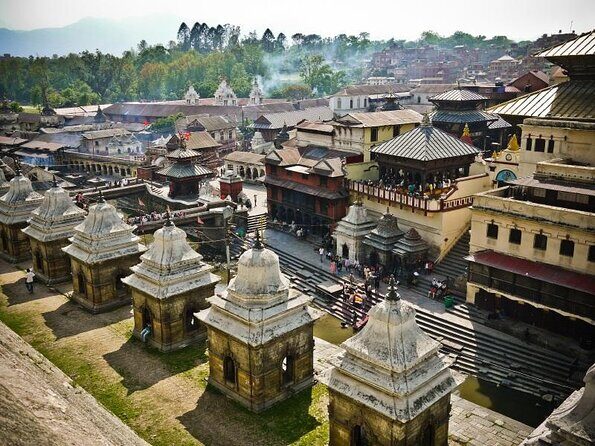
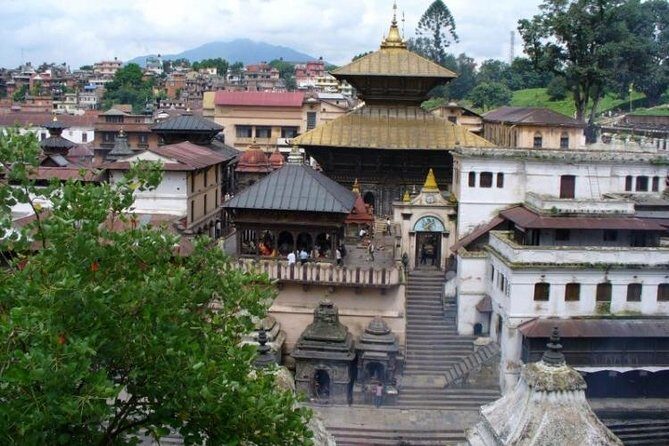
Pashupatinath Temple is the heavy stop, and it’s also one of the most significant. It’s a UNESCO World Heritage Site and holds major religious importance for Hindus. The tour highlights why: cremation rituals occur openly along the Bagmati River.
This is where your personal comfort level matters. The tour information is clear that witnessing cremation rituals can be deeply reflective, but it may also feel intense or unsettling for some visitors. The key point is that you can choose whether to observe this aspect.
I like that the tour doesn’t treat this as a one-size-fits-all “shock value” moment. It’s framed as culturally important and spiritually powerful, with an option to look or step back. If you’re coming in expecting to be fully protected from difficult sights, reset your expectations now.
What you’ll likely remember most here is the atmosphere and the history—Pashupatinath isn’t just a pretty building. It’s described as a sacred place for Hindu cremation rites, performed along the river. Even if you keep your viewing limited, the setting helps you understand why this place matters so much.
Timing note: plan on about 1 hour at Pashupatinath. That’s enough for an overview and a decision about how much you want to watch, but again, this isn’t the stop for “I’ll spend the whole afternoon here.”


Stop 4: Patan Durbar Square for architecture, museum time, and a slower finish
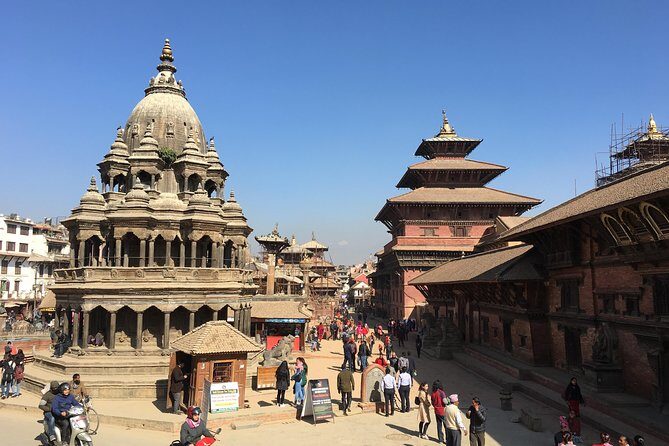
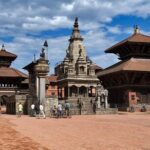
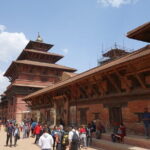
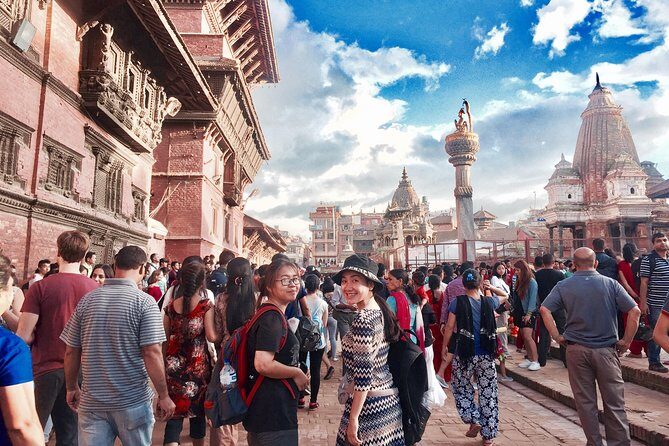
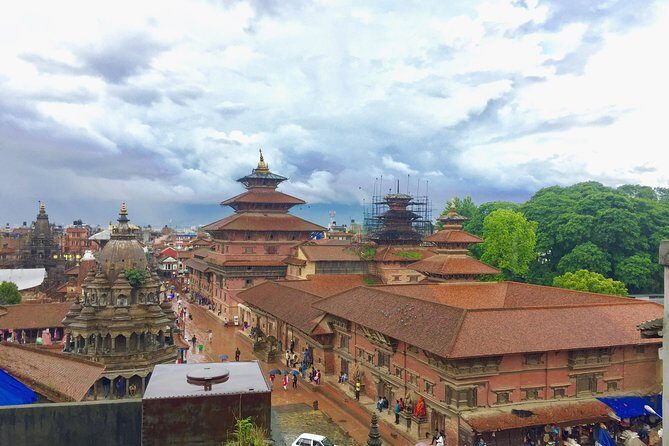
You end at Patan Durbar Square in Patan (Lalitpur). This is one of the three historic royal squares in the Kathmandu Valley, and it brings the day toward a more architectural, grounded feeling. The tour highlights 17th-century architecture and also mentions a museum on-site, which gives you indoor options if the weather shifts.
Patan’s Durbar Square is often a good “wrap” stop because it balances visual detail with slower wandering. The stonework, courtyards, and the overall layout invite you to pause and look up. And because the day’s earlier stops can feel spiritually intense, Patan can feel like a release—still sacred and historic, but less emotionally heavy than the cremation setting.
The tour also suggests making space for the vibe in the square area, including a chance to savor a cup of authentic Patan tea. That’s a practical tip disguised as a fun one. If you like ending a tour with something small and local, this is where you can do it without needing to add extra planning.
Timing note: the tour allots about 2 hours here, which is generous enough to cover the main square, look around the museum area, and still leave time to rest your feet before you’re back in the car.
Timing, transport, and how to make the day feel smooth
This tour runs about 5 to 6 hours, and the site times add up to around 6 hours before travel between locations. In real life, that means you should treat the schedule as a guided pace, not an open-ended hangout.
The included private vehicle and pickup/drop-off are what keep the day realistic. You’re not fighting for buses or coordinating with multiple entry points. For a first trip, that saves mental energy. For a second trip, it still saves time when you’re trying to fit UNESCO visits into one day.
One more practical point: because this tour is private, you should expect it to feel tailored. If your group has questions about what you’re seeing—like the difference in spiritual focus between the Buddhist sites and the Hindu site—this guide format is how you get answers without doing homework.
And after reading about the one rough experience in the past, I’d add a simple check: confirm who will guide you at each UNESCO stop and whether the guide stays with you through the key areas. A driver who drops you off and goes quiet can turn a guided tour into a self-guided sprint. You’re paying for the explanation, so ask for it early in the day.
What kind of traveler this tour suits best
This fits best if you’re:
- A first-time visitor who wants the big Kathmandu Valley highlights in a single outing
- Short on time and okay with a half-day overview
- Someone who appreciates context, not just photos
- Traveling in a group that prefers private comfort over group van energy
It may not be ideal if you want one stop to be your long deep-dive day. With only about 1 hour at Boudhanath and Pashupatinath, you’ll see the main areas, but you won’t have hours to get lost.
It’s also a solid match if you’re prepared for an emotionally mixed day. Swayambhunath and Boudhanath can feel buoyant and focused. Pashupatinath is a different mood entirely. The tour’s option to choose whether to observe cremation rituals helps you shape that experience.
Should you book this Kathmandu Cultural Tour?
I think this is worth booking if you want a guided, efficient way to hit four UNESCO World Heritage sites without spending your day plotting routes and entry logistics. The included pickup, private vehicle, and bottled water make the morning easier, and the itinerary covers the most recognizable spiritual landmarks in a sensible order.
I’d book with one caveat: set expectations about active guiding at each stop. If you care about explanations at Swayambhunath, Boudhanath, and especially Pashupatinath, confirm that the guide will stay with you and talk you through what you’re seeing rather than simply delivering you to entrances.
If you’re sensitive to intense sights, go in knowing the tour includes cremation rituals at Pashupatinath—and you can choose your level of viewing. That awareness is better than surprise.
Also, plan around conditions. The experience requires good weather, and if conditions are poor, you should be offered a different date or a full refund. If you’re booking during a period where the forecast looks unstable, keep that flexibility in mind.
FAQ
How long is the Kathmandu Valley sightseeing tour?
It runs about 5 to 6 hours.
What’s included in the price?
The tour includes hotel pickup and drop-off, transport by private vehicle, a driver/guide, and bottled water (1 bottle).
Are entry fees to the World Heritage sites included?
No. Entry fees are not included, so you’ll need to budget for tickets at the UNESCO locations.
Which UNESCO World Heritage sites are visited?
The tour visits four UNESCO World Heritage sites: Swayambhunath, Boudhanath Stupa, Pashupatinath Temple, and Patan Durbar Square.
Is this tour private?
Yes. It’s a private tour/activity, and only your group participates.
Is the tour dependent on weather?
Yes. The experience requires good weather; if it’s canceled due to poor weather, you’ll be offered a different date or a full refund.