REVIEW · KATHMANDU
Old Kathmandu Walking Tour, Historic World Heritage Durbar Square
Book on Viator →Operated by Three Jewels Adventures · Bookable on Viator
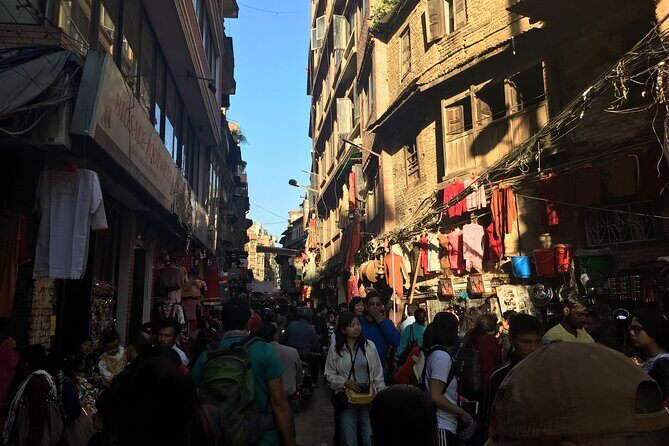
Old Kathmandu can feel like a maze at first. This walking tour makes it readable fast, linking small Buddhist sites, everyday markets, and Kathmandu Durbar Square into one smooth morning plan. You start near Thamel (or get picked up), then spend about 4 to 5 hours exploring with seasoned local help and finishing with a casual tea/coffee chat with your guide.
I especially like two things: the mix of famous stops with quieter courtyards and temples that you’d likely miss on your own, and the way the guide connects places to the people and traditions that still use them today. In past tours, guides like Mr. Mahesh Shreshtha and Modo have been noted for pointing out details and making moments like Kumari Chowk easier to understand as you’re standing there.
One consideration: some of the biggest ticketed areas cost extra. Durbar Square entry (and the related Swayambhu Stupa area) is not included, so you’ll want to budget a bit on top of the $28 price.
In This Review
- Key highlights
- Getting Your Bearings in Old Kathmandu Durbar Square Focus
- The 9:00 AM Start: Where You Meet and How Pickup Works
- Stop 1: Bikramshila Mahavihar (Thambahil) and Why Thamel Got Its Name
- Stop 2: Asan, Old Kathmandu’s Everyday Marketplace Beat
- Stop 3: Janabaha Dyo and Seto MachhindraNath Temple
- Stop 4: Itum Bahal, an 11th-Century Buddhist Monastic Complex
- UNESCO Time: Kathmandu Durbar Square and Kumari Chowk
- Kumari Chowk: The Living Goddess Courtyard Area
- After Durbar Square: Kathesimbu (Dharmakirti Vihara) and the Swayambhu Replica
- Another ticket you’ll want to plan for
- The Walk Back to Thamel: Cafe Mitra Tea or Coffee and a Simple Decompression
- Price and Value: What $28 Gets You (and What Costs Extra)
- How Private Feels in Practice: Your Group, Your Pace
- What to Expect From the Guide Experience
- Who This Tour Fits Best (and Who Might Want Something Else)
- Should You Book the Old Kathmandu Walking Tour?
- FAQ
- How long is the Old Kathmandu Walking Tour?
- What time does the tour start?
- Where do I meet the guide, and where does the tour end?
- Is pickup offered?
- What’s included in the tour price?
- What entry fees are not included?
- Is this tour private or shared?
- Can I get a refund if plans change?
Key highlights
- Thambahil roots: learn why Thamel is named after the nearby historic Bikramshila Mahavihar area
- Asan market basics: oldest living marketplace feel, from food to metalwork to spiritual items
- Seto MachhindraNath at Janabaha Dyo: an important native deity shrine tied to Tibetan Buddhist tradition
- Durbar Square with Kumari Chowk: see the living goddess courtyard area as part of the UNESCO complex
- Kathesimbu/Dharmakirti Vihara: a Buddhist stupa complex with a Swayambhu replica
- Tea/coffee with your guide: a low-pressure way to ask questions at the end
Getting Your Bearings in Old Kathmandu Durbar Square Focus
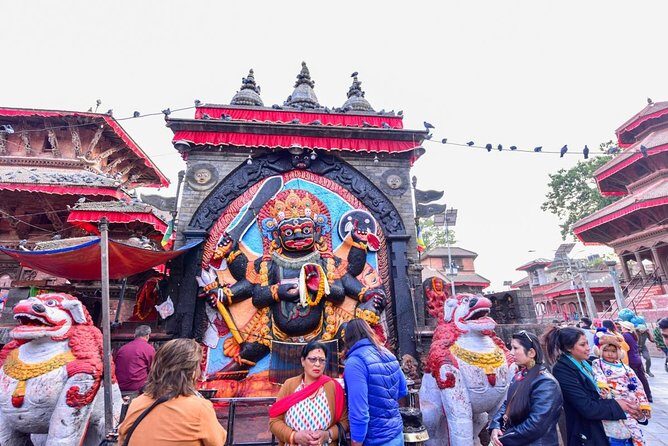
This is a practical Old Kathmandu tour, not a race around the loudest sights. The goal is to help you understand how different spiritual worlds overlap in the city—Buddhist and Hindu spaces often sit close, and the guide’s job is to explain what you’re looking at and why locals still care.
You’ll spend your time moving through compact streets and courtyard-like areas where buildings and shrines don’t always announce themselves from the street. That’s where this tour earns its keep. It’s not just ticking off landmarks. You’re learning how Kathmandu works on the ground.
You can also read our reviews of more walking tours in Kathmandu
The 9:00 AM Start: Where You Meet and How Pickup Works
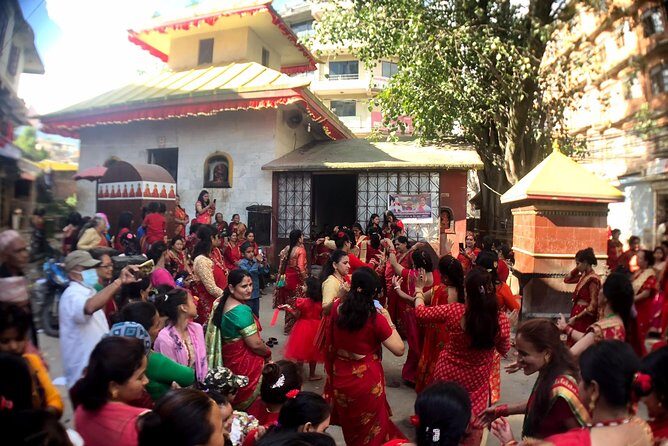
The tour runs from 9:00 am and lasts about 4 to 5 hours. If you’re staying in Thamel, you may start right at your hotel lobby. If you’re not in the Thamel cluster, the operator can pick you up and bring you to the starting point with a short drive, around 20 minutes.
The meeting point is Amrit Marg, Kathmandu 44600, and the tour ends at Cafe Mitra on Thamel Marg. Even if you get dropped somewhere slightly outside the meeting point area, the tour is set up so you don’t have to wrestle the logistics during the day.
One small but useful detail: the experience uses a mobile ticket, which makes arrival smoother on a day when you’re already juggling streets, shoes, and weather.
Stop 1: Bikramshila Mahavihar (Thambahil) and Why Thamel Got Its Name
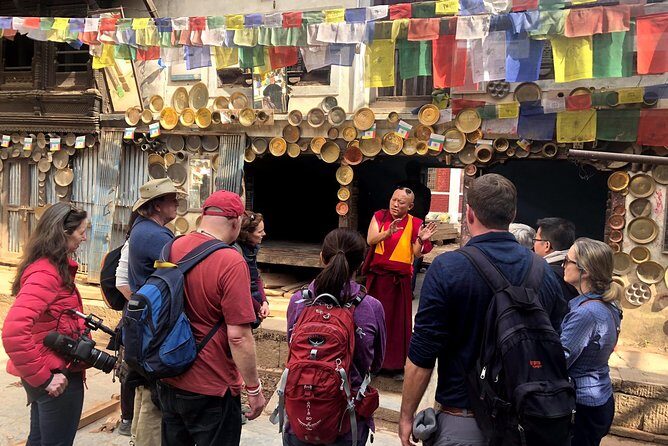
The morning begins at a place most visitors don’t naturally find. Bikramshila Mahavihar—also known as Thambahil—belongs to the native Newar Buddhist tradition. It’s described as a rarely visited Buddhist monument, and it carries a neat piece of local naming history: the tourist hub of Thamel is named after this historic monument.
What I like about this opening is that it sets the tone. You start with a spiritual site that’s tied to Kathmandu’s living neighborhood identity, not only to the big postcard scenes.
This stop also runs with free admission, so you’re not front-loading your day with extra ticket hassles.
Stop 2: Asan, Old Kathmandu’s Everyday Marketplace Beat
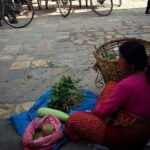
Next you head to Asan, Kathmandu’s oldest living market. This is one of those places where “market” isn’t just shopping—it’s how daily life keeps moving. The tour frames it as a place where locals buy and sell common goods, ranging from vegetables and clothing to metal items and even spiritual items.
This is where you get a sense of rhythm. You see what’s traded, how people move, and how commerce and devotion share the same streets. The guide’s value is in slowing you down just enough to notice patterns.
Admission here is also free, which helps keep the morning feeling efficient: learn, look, ask, then move on.
Stop 3: Janabaha Dyo and Seto MachhindraNath Temple
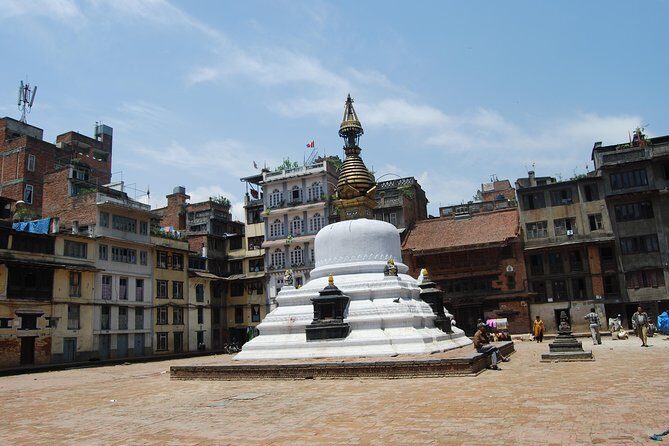
If you like the idea of Kathmandu having layers—different communities, different art styles, different devotional meanings—this stop is for you.
Janabaha Dyo is tied to the Seto MachhindraNath Temple, described as a native deity associated with Tibetan Buddhists. The tour notes the connection to Avalokitesvara, often described as the god of compassion, and calls out a striking visual detail: the shrine includes 108 engraved icons of Avalokitesvara showing major forms.
Even if you’re not a deep arts-and-symbols person, this kind of detail helps you see the difference between a generic temple and a specific, meaningful one. And it’s not just theoretical. You’re standing in the place where locals come to connect with the shrine.
Again, this stop is free on admission.
You can also read our reviews of more historical tours in Kathmandu
Stop 4: Itum Bahal, an 11th-Century Buddhist Monastic Complex
From markets and shrine art, you shift into a more architectural and monastic feeling with Itum Bahal. The tour presents it as an 11th-century monastic complex and notes that only part of the original building remains, along with courtyards connected to the goddess Tara.
Why this matters: it’s a reminder that Kathmandu wasn’t only a place of palaces and famous squares. It was also a place where religious education, daily worship, and community life lived inside structured monastic spaces.
This stop is free, and the time you spend here is a good break from “always looking up” at the big complexes. You get a different kind of viewpoint—courtyard scale and stone-meets-life details.
UNESCO Time: Kathmandu Durbar Square and Kumari Chowk
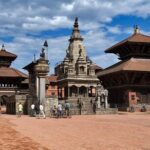
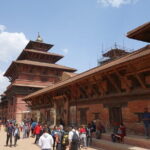
Then you reach the highlight zone: Kathmandu Durbar Square, part of a UNESCO World Heritage Site and described as a 17th-century palace complex surrounded by temples.
This area is famous for a reason, but the real win is having context as you move through it. The tour doesn’t treat Durbar Square as a single photo location. You walk through temple surroundings, including the Kumari Temple area, which leads into Kumari Chowk.
Kumari Chowk: The Living Goddess Courtyard Area
Inside Kathmandu Durbar Square, Kumari Chowk is the moment many people come for. The tour describes the building as centuries old (around three hundred years) and ties it to the living goddess tradition—meaning this isn’t just a statue stop; it’s a role-based living religious institution.
When I think about what makes this part of the day work, it’s this: by the time you arrive, you’ve already seen Buddhist and Hindu spaces in smaller forms. Kumari Chowk lands with more meaning because you understand the city’s mix of belief systems rather than treating each site as isolated.
Important note on cost: Durbar Square admission is not included. So expect to pay entry fees on site for the Durbar Square premises area.
After Durbar Square: Kathesimbu (Dharmakirti Vihara) and the Swayambhu Replica
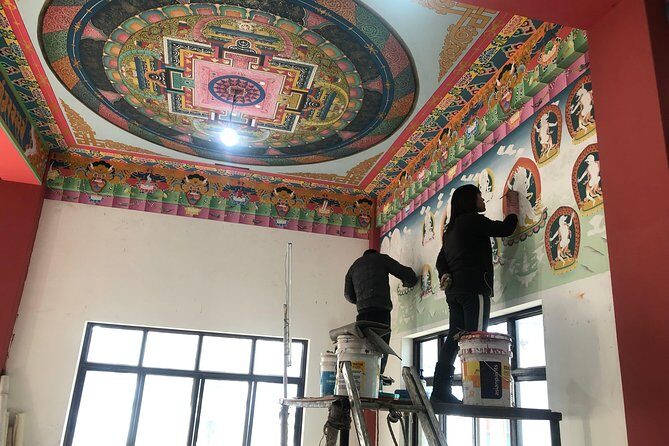
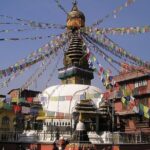
From Durbar Square, the tour continues through the old town to the Buddhist stupa complex of Kathesimbu, also called Dharmakirti Vihara. This stop is described as housing a replica of the Swayambhu Stupa, presented as one of the most important pilgrim stupa sites.
Why I like this add-on: it gives you a way to see the idea of Swayambhunath without needing to make the whole day about one major attraction. You get a smaller-scale experience that still connects to the broader Kathmandu religious map.
Another ticket you’ll want to plan for
The entry fee for the Swayambhu Stupa area isn’t included in the tour price. The tour notes that Durbar Square and Swayambhu stupa entry fees are extra, so plan a little cash or card readiness for that final part of the UNESCO-adjacent story.
The Walk Back to Thamel: Cafe Mitra Tea or Coffee and a Simple Decompression
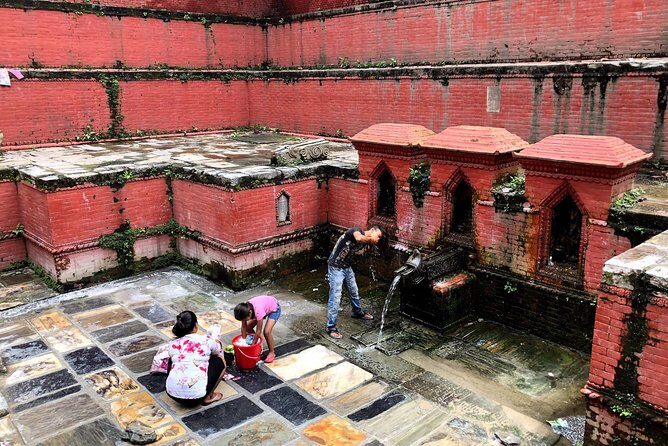
Finishing in Thamel is a smart move. When you’re done with temples and courtyards, a familiar neighborhood setting makes the day feel complete instead of abruptly ending in a random street.
You wrap up at Cafe Mitra, where the tour includes coffee and/or tea. The point isn’t the drink itself—it’s the chance to ask questions and connect dots with your guide in a relaxed way. This is also where guides like Mr. Mahesh Shreshtha and Modo were described as helpful in translating what you saw into practical understanding.
If you’re the type who keeps collecting questions as you walk, this final chat makes the experience stick.
Price and Value: What $28 Gets You (and What Costs Extra)
At $28 per person, this tour is priced like an efficient Kathmandu orientation walk. The included items matter:
- Private transportation
- Coffee and/or tea
Many of the smaller stops are listed with free admission tickets, which helps keep the day from turning into a pile of paid entries right away. That said, two of the major cultural anchors cost extra: Kathmandu Durbar Square premises and the related Swayambhu Stupa entry fee.
So the real value equation looks like this:
- You’re paying for guided interpretation, time management, and the “you’ll see more than the main road” factor.
- You’re paying less than a full-day big sightseeing program would cost.
- You still budget for the two main sites.
For planning, this tour is shown as commonly booked about 32 days in advance, which is a good sign. If you’re visiting during a busy season or have specific timing, booking ahead is a smart habit.
How Private Feels in Practice: Your Group, Your Pace
This is marked as a private tour/activity, meaning only your group participates. Even though it’s called a walking tour, there’s also private transportation built in, which helps you avoid losing the day to long transfers.
Also look for the fact that the experience includes group discounts as a feature. If you’re traveling with friends or family, you may get better overall value when you book together, while still keeping the private-group format.
What to Expect From the Guide Experience
The reviews supporting this tour put heavy weight on interpretation and personal engagement, not just reciting facts. Two named guides come up: Mr. Mahesh Shreshtha and Modo. In their tours, people highlighted that the guides spotted details they would have missed and made key moments easier to understand.
There’s also a strong theme of spiritual-site context. One meaningful example from the supplied feedback is that the guide helped create moments around temple life, including meeting a Hindu priest at a smaller temple and getting to experience the Kumari living goddess area as a guided moment rather than a quick stop.
So if you want a day where your questions don’t get brushed aside, this guide-led structure is a good match.
Who This Tour Fits Best (and Who Might Want Something Else)
This works especially well if:
- You want a first-time Kathmandu orientation that goes beyond Durbar Square photos
- You like a guide who points out details in smaller shrines, courtyards, and market areas
- You prefer a focused morning (not a late-start, all-day marathon)
It might feel less ideal if you:
- Only care about one major site and want to spend the whole time there without extra stops
- Don’t want to handle any extra on-site entry fees (since Durbar Square and Swayambhu area fees aren’t included)
For most people, the balance is good: enough variety to feel like Kathmandu, not so many stops that you’re constantly rushing.
Should You Book the Old Kathmandu Walking Tour?
I think you should book this tour if you want a practical way to understand Old Kathmandu’s spiritual geography and everyday life in one go. The biggest selling point is the combination: famous UNESCO Durbar Square and Kumari Chowk, plus smaller Buddhist sites and market streets that give the city its texture.
If you’re planning a short stay and you only have one guided morning, this is a strong contender. You get a guided route, included tea/coffee, and a clear framework for what to look for and why it matters—without turning it into a checklist you can’t remember.
Just budget for the Durbar Square and Swayambhu entry fees, wear comfortable walking shoes, and come ready with a few questions. The guide portion is where this tour earns its value.
FAQ
How long is the Old Kathmandu Walking Tour?
The tour lasts about 4 to 5 hours.
What time does the tour start?
It starts at 9:00 am.
Where do I meet the guide, and where does the tour end?
You meet at Amrit Marg, Kathmandu 44600, Nepal. The tour ends at Cafe Mitra, Thamel Marg, Kathmandu 44600, Nepal.
Is pickup offered?
Yes. If you’re in tourist town Thamel, you may start right at your hotel lobby. Otherwise, pickup can take you to the starting point by a short drive (about 20 minutes).
What’s included in the tour price?
The price includes private transportation and coffee and/or tea.
What entry fees are not included?
Entry fees for Kathmandu Durbar Square premises and Swayambhu Stupa are not included in the tour price.
Is this tour private or shared?
It’s private. Only your group participates.
Can I get a refund if plans change?
Yes. Free cancellation is offered up to 24 hours before the experience start time for a full refund.