REVIEW · KATHMANDU
Kathmandu Heritage Tour – Private Full-Day UNESCO Sites & Temples
Book on Viator →Operated by Himalayan Recreation Treks & Expedition Pvt.Ltd · Bookable on Viator
One day, nine sacred stops in Kathmandu Valley. This private tour is a fast, focused way to see major UNESCO sites and temple squares, with a real human thread on how the 2015 earthquake still shaped what you’ll see. I also love the structure: hotel pickup and a dedicated driver means you spend less time negotiating traffic and more time looking closely. One thing to plan for: entrance fees and lunch are not included, so your budget needs a little padding.
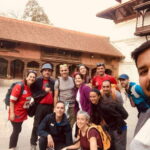
Guides like Krishna, Jamuna, Janina, and SuJan show up often in the mix, and the best version of this day is when your guide turns stone and ritual into stories you can actually follow. You get private guiding (not just a radio voice) plus the small comforts like bottled water, which matters in the heat and crowds.
In This Review
- Key things I’d watch for on this Kathmandu UNESCO day
- A 5–8 Hour UNESCO Circuit That Fits a Real Schedule
- Hotel Pickup, Private Vehicle, Bottled Water: The Comfort Layer Matters
- Swayambhunath Monkey Temple: Hilltop Panoramas and 3,000+ Years of Buddhism
- Kathmandu Durbar Square and the Kumari Window Moment
- Basantpur Dabali and the Short Temple Detours You’ll Actually Remember
- Taleju Bhawani Temple in Bhaktapur: The Malla Kings’ Clan Goddess
- Kumari Chowk and Hanuman Dhoka: Small Areas, Big Characters
- Pashupatinath Temple: The Main Hindu Site That Feels Like a Whole World
- Crematoria at Pashupatinath: Sacred, Active, and Not for Everyone
- Boudhanath Stupa: The 5th-Century Eyes of the Buddha
- Garden of Dreams: A Neo-Classical Pause in the Middle of Kathmandu
- Price and Logistics: What the $60 Is Really Buying You
- Earthquake Damage in 2015: Why It’s Part of the Story
- Who This Tour Fits Best (And Who Might Want Something Else)
- Should You Book the Kathmandu Heritage Tour?
- FAQ
- How long is the Kathmandu Heritage Tour?
- Do I get hotel pickup and drop-off?
- Is this tour private?
- Are entrance fees included?
- What about lunch and food during the tour?
- What major sites are included in the day?
- Does the tour address damage from the 2015 earthquakes?
- Is bottled water included?
- What is the cancellation policy?
Key things I’d watch for on this Kathmandu UNESCO day
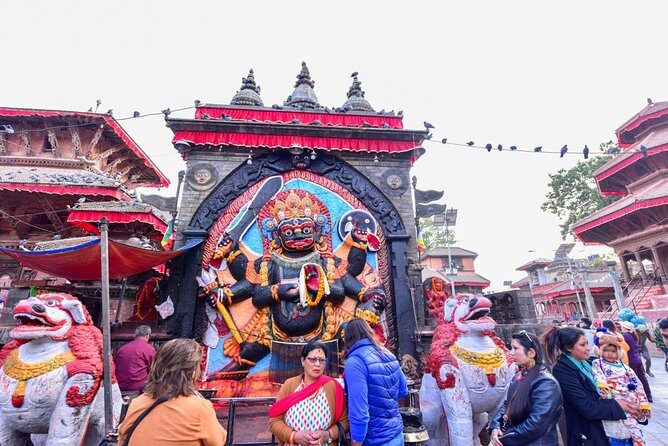
- A true Kathmandu Valley overview in one go: Swayambhunath, Kathmandu Durbar Square, Pashupatinath, Boudhanath, and more.
- Earthquake context included: you’ll hear what damage did to key sites after 2015.
- Private, small-group feel: only your booking group rides together, up to 10 people.
- The Kumari moment is a highlight: the living goddess can sometimes be seen at her window.
- Traffic management is part of the value: you’re not guessing routes between sites.
- You’ll pay extra at gates sometimes: some stops are free, others are not.
A 5–8 Hour UNESCO Circuit That Fits a Real Schedule
This is the kind of day trip that makes sense when you have limited time in Kathmandu Valley but still want the headline sites. The tour runs about 5 to 8 hours, and it works because you’re not hopping between far-off corners of the map alone—you have hotel pickup, a private vehicle, and a guide to keep the day moving at a pace you can handle.
I like that it’s not just a sightseeing sprint. With a private guide, you can ask practical questions: What’s the meaning of this shrine? Why do people behave a certain way here? And how did the earthquake impact restoration and access? That context turns the monuments from photo backdrops into something more grounded.
Do note the pace can still feel packed. You’re visiting multiple temple zones and sacred courtyards. If you hate standing in lines, or if walking up uneven temple steps makes you slow down, tell your guide early and ask for an adjustment.
You can also read our reviews of more private tours in Kathmandu
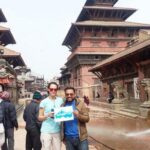

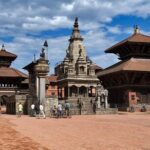
Hotel Pickup, Private Vehicle, Bottled Water: The Comfort Layer Matters
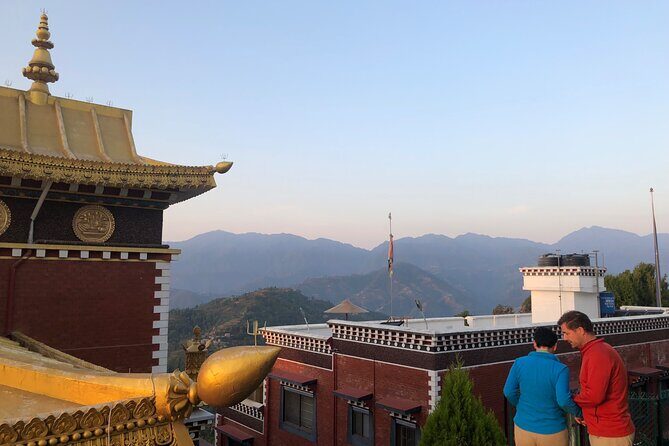
Logistics might sound boring, but on a Kathmandu day, it’s half the win. Hotel pickup and drop-off means you’re not trying to coordinate a start time with a taxi, and you’re not wasting energy hauling yourself across town before your first temple.
You’re also getting transport by a private vehicle, which helps with two real issues here: traffic and route changes. Even the reviews that praise the guides often praise the driver for getting everyone safely through city driving.
Bottled water is included, which is a small detail until you’re halfway through Swayambhunath in midday sun and you’re grateful you’re not scrambling for a drink.
Swayambhunath Monkey Temple: Hilltop Panoramas and 3,000+ Years of Buddhism
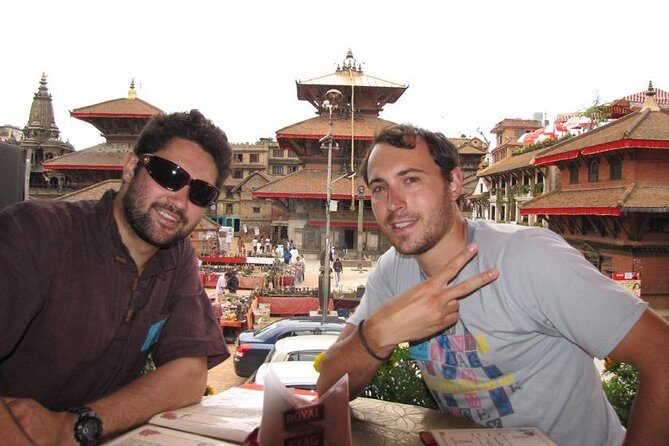
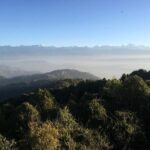
Your day starts at Swayambhunath, the hilltop temple people call the Monkey Temple. You’ll get city views as you climb into the complex, and the history here goes back over 3,000 years. Even if you’ve seen photos, being up there changes how you read Kathmandu—suddenly you understand why this spot became such a major spiritual landmark.
This stop is especially good for first-timers because it gives you a top-down sense of layout: where the valley sits, how neighborhoods cluster, and how sacred spaces relate to daily life.
Entrance fees are listed as not included, so treat this as one of the stops where you should be ready to pay at the gate.
Also, keep your eyes open for small rituals: pilgrims moving in patterns, incense, and temple visitors who don’t act like tourists. Your guide can explain why the behavior matters, and that makes the photos less empty.
Kathmandu Durbar Square and the Kumari Window Moment
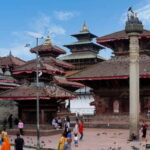
Next comes Kathmandu Durbar Square, an ornate royal residence area tied to the 16th-century kingdom story. You’ll also see the famous Kumari, the living goddess.
One of the most talked-about moments here is the possibility of spotting the Kumari at her window. Sometimes the timing works out and sometimes it doesn’t, but even without a perfect window-view, the square still hits hard for architecture and symbolism. Your guide can help you notice details you’d otherwise miss—carvings, layout, and the way people move through the space.
Admission is again not included, so this is another gate stop where budgeting helps.
Practical note: Durbar Square areas can get crowded. If you’re sensitive to crowds or strong smells from incense, pace yourself. Don’t race to every viewpoint. Let your guide point you to the best angles, then linger.
Basantpur Dabali and the Short Temple Detours You’ll Actually Remember
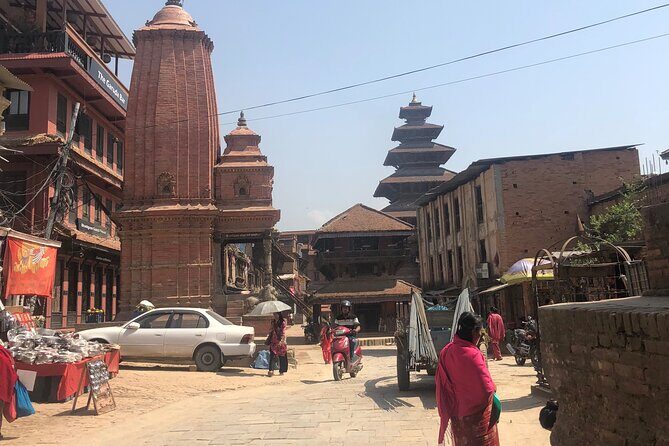
You won’t spend long at Basantpur Dabali—about 10 minutes—but it’s a smart break in the flow. It’s described as a very old tourist centre in Kathmandu, with a Hindu temple that adds texture to the day. Short stops like this are easy to underestimate, yet they often turn into the photos you keep because they’re less staged and more everyday.
These quick moments also help when you’re dealing with weather changes or the reality that some temple zones have restricted movement. A good guide threads these smaller stops in a way that doesn’t feel like wasted time.
This one is listed as free admission, so if you’re trying to keep costs controlled, pay attention to which portions are marked as not requiring fees.
You can also read our reviews of more historical tours in Kathmandu

Taleju Bhawani Temple in Bhaktapur: The Malla Kings’ Clan Goddess
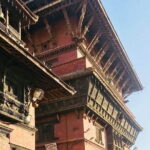
One of the more interesting cultural sidesteps is the Taleju Bhawani Temple in Bhaktapur. The goddess here is tied to power and clan identity, especially as the clan goddess of the Malla kings who ruled Nepal from the 12th to the 18th century.
Even if you only stay about 10 minutes, it’s the kind of stop your guide can make meaningful because it connects a deity to a political history. Without that explanation, you might see it as another temple. With context, you see why this site mattered to rulers and why the devotion continues.
Admission is marked free for this stop, which is a nice cost break during a gate-heavy day.
Kumari Chowk and Hanuman Dhoka: Small Areas, Big Characters
Back in the Kathmandu Durbar Square orbit, you’ll also cover Kumari Chowk and Hanuman Dhoka.
- Kumari Chowk is described as a palace where a virgin girl is worshipped as Durga in human form. The wording here matters: this is about the living role, not just the statue.
- Hanuman Dhoka is built to honor Hanuman, and the square includes real monkeys. That mix of sacred worship and animal presence makes it feel uniquely Kathmandu—less polished than some other temple visits, more alive.
Kumari Chowk and Hanuman Dhoka are listed as free admission. Staying for around 10 minutes at Kumari Chowk and about 15 minutes at Hanuman Dhoka keeps the day moving, while still letting you experience the key personalities of the area.
Pashupatinath Temple: The Main Hindu Site That Feels Like a Whole World
If Swayambhunath is your Buddhist hilltop view, Pashupatinath Temple is a Hindu spiritual universe. It’s described as one of the most sacred Hindu shrines in the world and a main Hindu site, with a sense that this isn’t just sightseeing—people come here for devotion.
Plan for about one hour at Pashupatinath. You’ll see the richly ornamented pagoda housing the sacred linga symbol associated with Lord Shiva. The place is extremely important, and your guide can help you make sense of the symbolism and the crowd behavior.
Entrance fees here are not included, so expect another gate cost.
This stop is also where you start noticing how the valley blends spirituality with daily life. Families, priests, and visitors all move with different purposes, and it’s worth slowing down long enough to observe.
Crematoria at Pashupatinath: Sacred, Active, and Not for Everyone
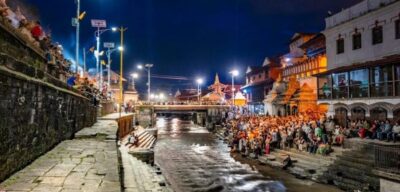
Right at Pashupatinath’s sphere, the tour includes a visit to the Crematoria. The description is blunt: it’s on constant action. It also notes that it can remind you of India, but with more reverence and less hype.
You’ll spend about 30 minutes, and entrance is listed as free, with a note that Pashupatinath entrance fees work here. Translation: you may not pay extra at this specific area if you’ve already covered the relevant entry.
This is the stop that most tests your comfort level. If you’re squeamish, or if you prefer purely architectural sights, be honest with yourself. This is a place where grief and ritual are real, not staged.
A respectful tone helps: stand back, don’t block ceremonial movements, and follow your guide’s cues.
Boudhanath Stupa: The 5th-Century Eyes of the Buddha
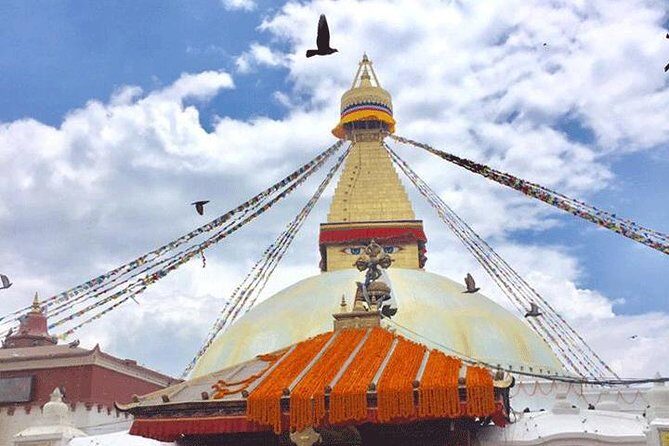
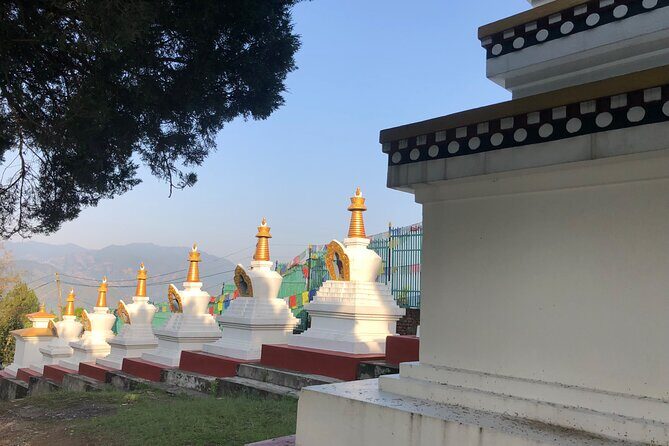
Next is Boudhanath, a major Buddhist stupa in the valley. It’s described as about 2,500 years old, built in the 5th century, and decorated with four pairs of eyes of Lord Buddha facing the four cardinal directions. That design detail is what makes Boudhanath feel alive even when you’re just walking the perimeter.
You’ll spend about one hour here. If you’ve never watched people circle a stupa in quiet rhythm, this is a good place to see how devotion looks when it’s not loud.
Entrance is not included for this stop, so again, this is another point where gate costs show up.
If you get tired from the temple steps earlier in the day, Boudhanath can be a calmer pace—just slower, steadier, and full of small scenes.
Garden of Dreams: A Neo-Classical Pause in the Middle of Kathmandu
After the heavier sacred sites, the tour includes the Garden of Dreams, a neo-classical historical garden. It’s described as having design similarities with formal European gardens, including paved perimeter paths.
This stop works because it gives your legs a reset. You’re swapping shrine steps for a calmer environment where you can sit, walk slowly, and take photos that feel less like documentation and more like a break.
The tour also includes a short stop in a main tourist area. It’s useful if you want a chance to regroup, use your senses for a moment, and check what you might want to do later in the city.
Price and Logistics: What the $60 Is Really Buying You
At $60 per person, this tour isn’t cheap, but it’s not a gimmick either. You’re paying for three big things:
- A private guide
- A private vehicle
- Hotel pickup and drop-off, plus bottled water
That combo matters when your time is limited and you don’t want the stress of figuring out routes between major sacred zones. In a city where traffic can chew up the day, the transport part is not just convenience—it’s value.
Now the part that can surprise people: entrance fees and food aren’t included. Lunch is described as something you should budget around $10 USD if you buy locally. Some quick stops are listed as free admission, but bigger headline sites can come with gate fees, including Swayambhunath and Pashupatinath.
If you’re traveling on a tight budget, here’s the way to make this tour feel fair: set aside extra cash before you start the day, and don’t treat entrance fees as an emergency expense that ruins the experience.
Earthquake Damage in 2015: Why It’s Part of the Story
This tour explicitly flags that some sites have significant damage from the April and May 2015 earthquakes. You shouldn’t expect everything to look perfect or unchanged. Instead, think of the day as a living record: restoration efforts, repaired structures, and sometimes restricted areas.
That earthquake context adds weight to the visit. You’ll walk through places that are not frozen in time. They’re continuing to recover, and your guide’s explanation helps you understand why certain areas may look different than what older guidebooks might show.
Who This Tour Fits Best (And Who Might Want Something Else)
This is a strong fit if you:
- Are in Kathmandu Valley for a short time and want the big UNESCO anchors in one day
- Want a guide to explain the why behind temples and sacred squares
- Prefer a private setup over joining a larger group
It’s less ideal if you:
- Hate paying separate entrance fees throughout the day
- Want zero exposure to grief-related spaces like the crematoria area
- Need lots of downtime between stops
If you’re the type who likes to take things at an unhurried pace, tell your guide. Many guides on this route are good at adjusting walking speed and timing, especially if you say what matters most to you.
Should You Book the Kathmandu Heritage Tour?
If your goal is a clear, well-guided orientation to Kathmandu Valley’s major sacred sites, I’d say yes—with one condition: go in ready to budget for entrance fees and expect a busy day.
Book it if you want the day to feel guided, structured, and meaningful, not just a grab-bag of photos. Skip it or pair it with another plan if you know you’d rather spend more time in fewer places, or if the crematoria stop would take the enjoyment out of the experience.
FAQ
How long is the Kathmandu Heritage Tour?
The tour runs about 5 to 8 hours.
Do I get hotel pickup and drop-off?
Yes. Hotel pickup and drop-off in Kathmandu are included.
Is this tour private?
Yes. It’s a private tour/activity, and only your group participates. A maximum of 10 people per booking is listed.
Are entrance fees included?
No. Entrance fees are at your expense.
What about lunch and food during the tour?
Food and drinks are not included. The information provided suggests planning to spend around $10 USD for lunch purchased locally.
What major sites are included in the day?
Stops include Swayambhunath (Monkey Temple), Kathmandu Durbar Square, Pashupatinath Temple, the Crematoria area, Boudhanath Stupa, and the Garden of Dreams, plus shorter temple-square stops.
Does the tour address damage from the 2015 earthquakes?
Yes. The tour notes that some sites visited were significantly damaged due to the April and May 2015 earthquakes.
Is bottled water included?
Yes. Bottled water is included.
What is the cancellation policy?
Free cancellation is offered. You can cancel up to 24 hours in advance for a full refund.