REVIEW · KATHMANDU
Kathmandu Private Tour of UNESCO World Heritage Sites
Book on Viator →Operated by Amazing Kathmandu Tours · Bookable on Viator
One day in Kathmandu can feel like a whole book. This private UNESCO circuit packs seven major heritage stops into a smooth, guided loop so you can move at your own pace. I like the focus on big cultural moments without feeling rushed, and I especially like that you get private transport with pickup for comfort.
Two things make this setup work well. First, the tour pairs a professional English-speaking guide with your schedule, so the meaning behind temples and squares doesn’t get lost. Second, it’s designed to reduce crowd pressure by keeping it private, not a cattle call.
The main thing to plan for is costs beyond the ticket. Entrance fees are not included, and if you go to all seven sites the total listed entrance fee is $48 per person, paid in cash to the temple authorities.
In This Review
- Key highlights I’d mark on your map
- Why 7 UNESCO sites in one day actually makes sense
- Price and what $47.50 really buys you
- Your 9-hour day: 9:00 AM start, private pacing, and fewer headaches
- Changu Narayan Temple: ancient layers in a quiet forest setting
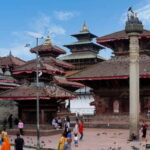
- Bhaktapur Durbar Square: royal space made of smaller squares
- Boudhanath Stupa: Buddhist focus, huge scale, and prayer flags
- Pashupatinath Temple: Hindu rituals by the Bagmati River
- Patan Durbar Square: art and architecture you can notice quickly
- Kathmandu Durbar Square (Basantapur and Hanuman Dhoka): the city’s historic core
- Swayambhunath Monkey Temple: hilltop views and the all-seeing eyes
- Entrance fees, lunch, and the few things that can derail your day
- The kind of guide you want for this day
- Who this private UNESCO day trip is best for
- Should you book this Kathmandu private UNESCO tour?
- FAQ
- What time does the tour start?
- How long is the Kathmandu private tour?
- Is this tour private?
- Does the price include a guide and transportation?
- Are entrance fees included?
- Is lunch included?
- Which site is listed as free?
- Is pickup offered?
- Is mobile ticketing included?
- Is cancellation free?
Key highlights I’d mark on your map
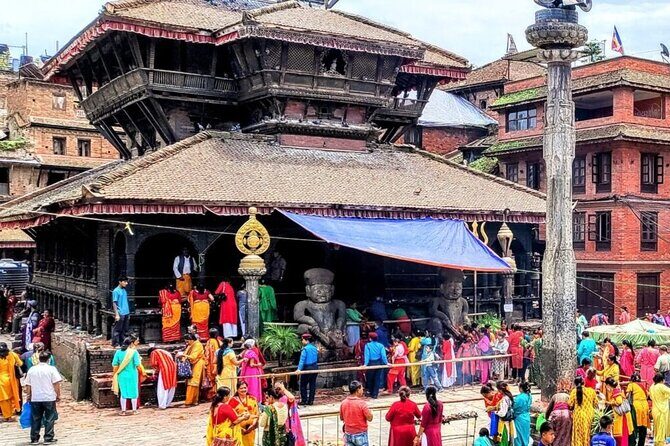
- Seven UNESCO sites in one day across Kathmandu, Patan, Bhaktapur, and the hilltop views of Swayambhunath
- English-speaking professional guide who adds context to what you’re actually seeing
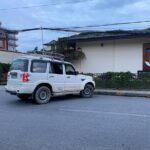
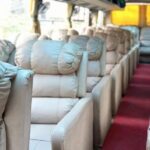
- Air-conditioned vehicle + pickup to keep transit easy during a long day
- Built-in flexibility thanks to a private group and time at each stop
- Clear entrance-fee expectations, including Swayambhunath listed as free and a $48 cash total if visiting all seven
Why 7 UNESCO sites in one day actually makes sense
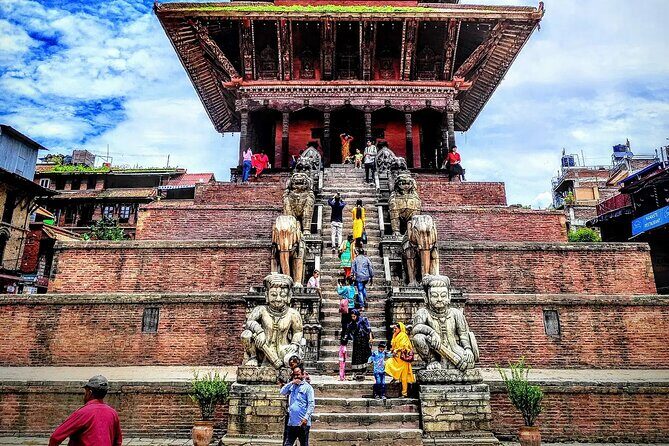
Kathmandu’s heritage isn’t spread out in a neat, linear way. It’s layered: royal squares, stupa legends, river rituals, and hillside panoramas. Doing this privately and in one organized day means you don’t waste precious hours figuring out routes between major clusters of UNESCO sites.
What I like about the structure is that it gives you a full cultural sweep. You start with an ancient temple tucked into a quiet forest area, then you move into the durbar squares where architecture and history show up in stone, wood, and carved details. After that, you switch religions and moods: Buddhist stupa reverence, Hindu river rituals, and hilltop views.
A day like this is also a smart way to beat the “I only saw one temple” problem. If you’re short on time in Nepal, this tour turns that limitation into a strength.
You can also read our reviews of more private tours in Kathmandu

Price and what $47.50 really buys you
At $47.50 per person, you’re not just paying for sightseeing. You’re paying for three practical things that add real value in Kathmandu: pickup, an air-conditioned vehicle, and a professional English-speaking guide.
Here’s the honest part: the tour price doesn’t include entrances. The important number is the listed total entrance fee if you visit all 7 sites: $48 per person, paid in cash to temple authorities. Swayambhunath is listed as free, so you may pay less if you end up skipping any stop, but the tour is clearly built around seeing the full circuit.
So the true cost picture is simple:
- Tour price covers transport + guide (and the private format).
- Entrance fees are separate, with a known total if you do everything.
If you’re the type of traveler who wants context (not just photos), the guide time is where a lot of the value lands.
Your 9-hour day: 9:00 AM start, private pacing, and fewer headaches
The tour starts at 9:00 am and runs about 9 hours. That’s a long day, but it’s also what makes seeing seven UNESCO sites possible without sprinting between far-apart points.
Because it’s private, you’re not waiting around for other groups. You should still expect a steady rhythm: visit, walk around, take in details, and move on. The itinerary lists about 1 hour at several major stops, while a couple of entries are listed as very brief (like 1 minute at Boudhanath Stupa and 1 minute at Kathmandu Durbar Square). That doesn’t mean you won’t see anything there. It means those moments might be more focused on the key highlights you can’t miss.
You’ll also have mobile ticket access, and service animals are allowed. The overall format is geared toward comfort as much as sightseeing—especially with air-conditioned transport during the day.
Changu Narayan Temple: ancient layers in a quiet forest setting
Changu Narayan Temple is one of those sites that feels like it’s outside the modern rush. It’s described as the oldest in Kathmandu Valley, built in the Licchavi days (around 450–750 AD). That date range matters because it signals that you’re looking at work from a very early period of the valley’s history.
The temple is also known for its two-tiered pagoda-style design. A pagoda form in South Asia can mean a lot, but here it also gives you a visual anchor: you can compare shape and structure as you move through the rest of the day.
Why this stop works early: you set the “time machine” tone before you get into the durbar squares, which are more about royal-era display and city-scale architecture. It’s a good way to start if you like understanding how old Kathmandu really is.
A small caution: the itinerary lists admission ticket not included, so you’ll want to keep the entrance-fee plan in mind from the beginning.
Bhaktapur Durbar Square: royal space made of smaller squares
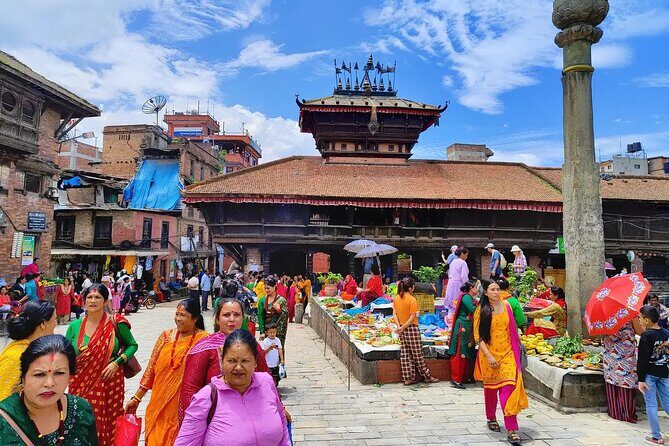
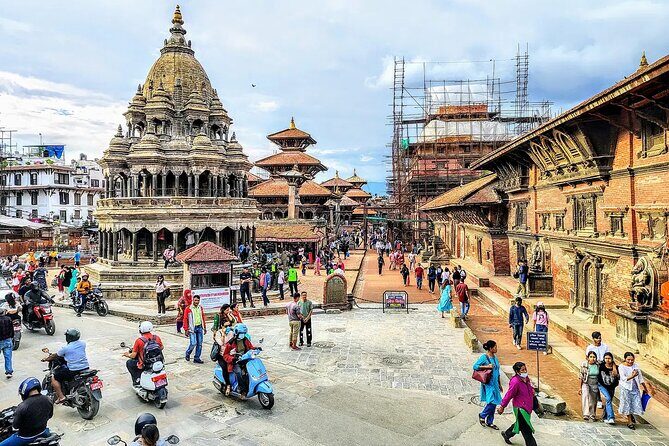
Bhaktapur’s Durbar Square is more than one courtyard. It’s described as a larger area made up of four distinct squares, including Pottery Square, Dattatreya Square, and Taumadhi Square. That layout detail is useful because it tells you what to look for: don’t treat it like a single stop where you only check one building. The site unfolds as you move through its sub-areas.
In a place like this, the value of a guide is huge. You get help reading the architecture and understanding why so many structures matter. You also get pacing guidance, so you don’t spend the whole hour only staring at one object.
The itinerary schedules about 1 hour here, with admission ticket not included. In practice, that’s enough time to walk the main paths, notice carved detail, and still feel like you experienced the square rather than just passed through it.
You can also read our reviews of more historical tours in Kathmandu
Boudhanath Stupa: Buddhist focus, huge scale, and prayer flags
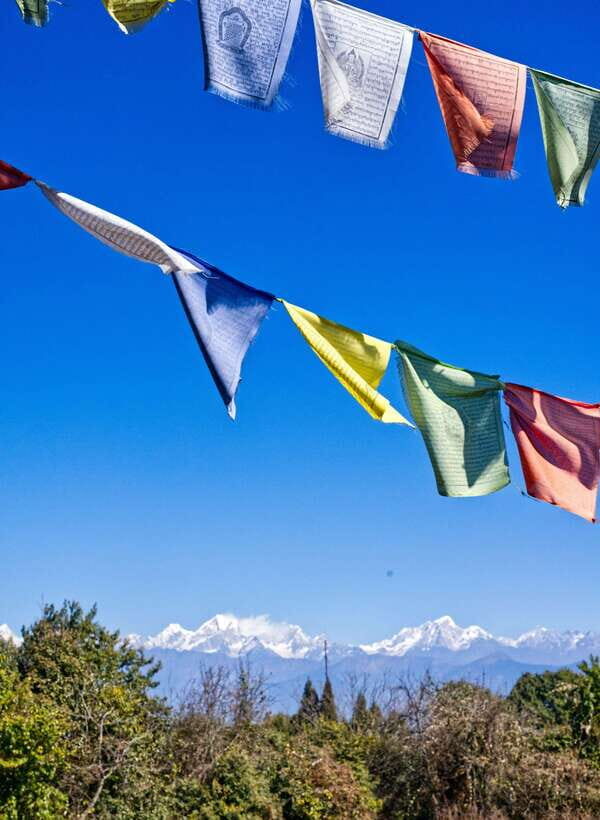
Boudhanath Stupa is Nepal’s most iconic Buddhist site. The description hits you with the scale: it’s 36 meters (118 ft) with a massive white dome decorated by prayer flags and intricate artwork.
This is a great contrast stop. After the royal-square feel of the durbar spaces, Boudhanath is more about atmosphere—reverence, movement around the stupa, and the visual rhythm of flags and painted detail.
The itinerary lists 1 minute for this stop. That’s the one part I’d treat with common sense. If you’re someone who loves to linger with slow observation, ask your guide how flexible the timing is. You’ll still see the main visual, but if you want more stillness, you’ll want to coordinate your time for that.
As with the other major sites, entrance fees are listed as not included, so it’s part of the overall entrance-fee math.
Pashupatinath Temple: Hindu rituals by the Bagmati River
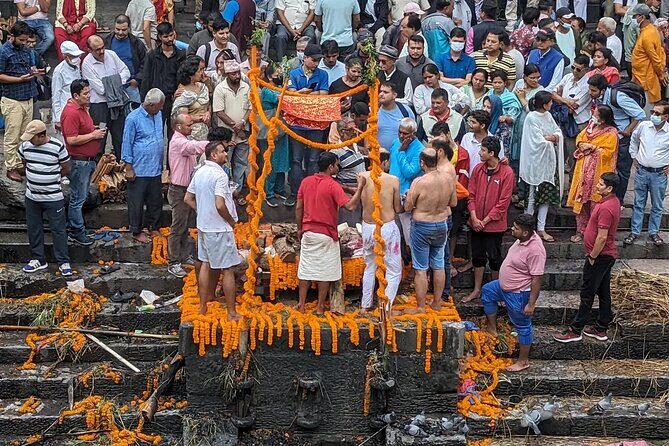
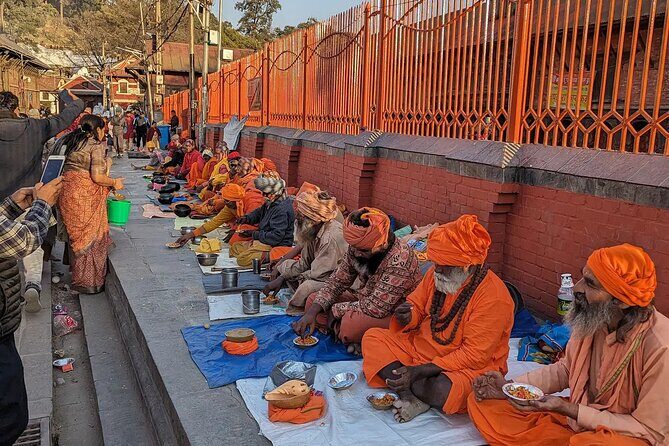
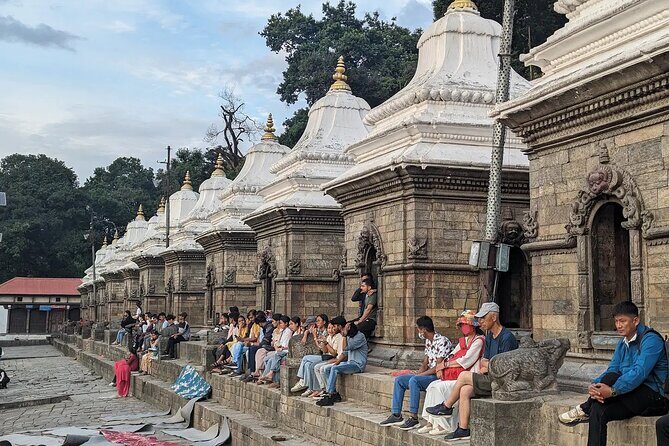
Pashupatinath is Kathmandu’s holiest Hindu shrine, and it sits along the Bagmati River. The description also makes the focus clear: it’s dedicated to Lord Shiva and known for intense devotional energy.
This is one of those places where the setting matters. A riverfront shrine changes what you feel when you arrive, because the water and the ceremonies are tied together in how the place works. You’re not just looking at a building; you’re in the orbit of real ongoing religious life.
The temple architecture is pagoda-style, but the bigger “feature” is the ritual atmosphere. This stop is listed for about 1 hour, with admission not included.
If you’re sensitive to strong spiritual sights and sounds, it helps to go in mentally ready. This is not a silent museum moment.
Patan Durbar Square: art and architecture you can notice quickly
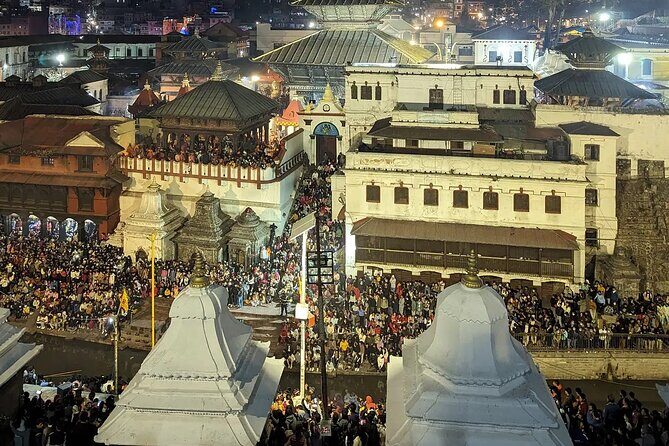
Patan Durbar Square is in the Lalitpur District, and the description emphasizes artistry and architectural finesse. That phrase is vague until you’re actually looking at the kind of work durbar squares are known for—details in the facades, the way buildings sit together, and the impression that craftspeople built the city with pride.
The itinerary allocates about 1 hour here, again with admission tickets not included.
Why I think Patan is worth the time: the city’s style often feels a bit different from Kathmandu and Bhaktapur. Even if you’re not an architecture expert, you’ll likely feel the change in design language as you shift between squares.
Kathmandu Durbar Square (Basantapur and Hanuman Dhoka): the city’s historic core
Kathmandu Durbar Square is also known as Basantapur Durbar and Hanuman Dhoka. It’s described as an integral part of the ancient durbar squares in the Kathmandu Valley.
This is a big anchor stop, but the itinerary lists 1 minute for it. That means you should treat it as a quick hit of the key scene, not a deep walk. If you’re the type who wants to photograph lots of facades or take time reading inscriptions, consider timing your priorities with your guide.
The good news: this is exactly the kind of “visible center” where even a brief stop helps you orient the rest of your understanding of the valley. Seeing it early or in the right order can make the day click.
As always, admission is listed as not included for this stop.
Swayambhunath Monkey Temple: hilltop views and the all-seeing eyes
Swayambhunath is the hilltop stupa many people associate with the nickname Monkey Temple. It sits high and offers the best views of Kathmandu Valley, so it’s a natural closer for a day like this.
The iconic element is the white dome with Buddha’s all-seeing eyes on the top. That detail is more than decoration. It gives you a focal point that’s visible from multiple angles, which makes it easier to appreciate the stupa even if you’re short on time.
The itinerary lists about 1 hour here, and importantly, admission is listed as free. That’s a real value perk in your day plan, and it also means your entrance-fee total may land lower than the maximum if you keep the full itinerary.
One practical note: it’s on a hill. Wear shoes you can trust on uneven ground, and give yourself a moment at the top before you start taking photos.
Entrance fees, lunch, and the few things that can derail your day
Here’s how I’d plan the money and timing without surprises.
Entrance fees
- Many stops list admission not included.
- If you visit all 7 sites, the total listed entrance fee is $48 per person, paid in cash to the temple authorities.
- Swayambhunath is listed as free.
Because cash is specifically mentioned for the entrance fees, plan ahead. Don’t assume you can pay everything through the tour price.
Lunch
- Lunch is not included.
- With a long 9-hour day, you’ll want to either eat before you start or coordinate a planned meal window during the route, based on what your guide can arrange.
If you don’t, you’ll feel it by the middle of the afternoon, especially after walking and stairs.
Pace
The itinerary shows a mix of 1-hour blocks and very brief segments (like 1 minute stops). That’s not automatically bad. It can actually work well if you want a highlights loop. Just be ready to ask your guide whether you can adjust time at any spot you care about most.
The kind of guide you want for this day
The tour includes a professional English-speaking tour guide, and the experience is praised for the people running it. One thank-you note highlights a team that included guide Pranav and driver Bijaya, and it’s easy to see why this matters on a day like this.
A tour like this isn’t only about seeing famous buildings. It’s about understanding why they’re placed where they are, what the symbols mean, and how the sites connect across religions and centuries.
If you care about cultural context, this is the part you’re buying with your money.
Who this private UNESCO day trip is best for
This tour makes the most sense if you:
- Have limited time in Kathmandu and want to see all seven UNESCO sites in one organized day
- Prefer a private setup over joining crowds
- Like historical and spiritual context, not just a checklist
- Want comfortable transit with air-conditioned vehicle and pickup
If you’re the type who hates time limits and wants slow, long stays at one site, you may find the day full. In that case, you could still book the tour, but be strategic: decide in advance which stops you want deeper time at, and communicate that to your guide.
Should you book this Kathmandu private UNESCO tour?
I’d book it if you want a smart, well-structured day that covers the valley’s headline heritage sites with minimal stress. The combination of private transport, pickup, and a professional English-speaking guide turns a complicated route into something you can actually enjoy.
I wouldn’t book it if entrance-fee surprises and cash handling stress you out, or if you know you need long, unhurried hours at just one or two sites. This is a highlights-focused circuit, even with some 1-hour stops.
If your goal is to get oriented fast and see Kathmandu’s spiritual and historic sides in one go, this is a strong fit.
FAQ
What time does the tour start?
The tour starts at 9:00 am.
How long is the Kathmandu private tour?
It runs about 9 hours.
Is this tour private?
Yes. It’s listed as a private tour/activity, and only your group participates.
Does the price include a guide and transportation?
The tour includes an air-conditioned vehicle and a professional English-speaking tour guide.
Are entrance fees included?
No. Entrance fees are not included. If you visit all 7 sites, the listed entrance fee total is $48 per person paid in cash to temple authorities.
Is lunch included?
No. Lunch is not included.
Which site is listed as free?
Swayambhunath is listed as free in the itinerary.
Is pickup offered?
Yes, pickup is offered.
Is mobile ticketing included?
Yes, a mobile ticket is included.
Is cancellation free?
The policy states free cancellation, with full refund if you cancel up to 24 hours in advance of the experience’s start time.