REVIEW · KATHMANDU
Kathmandu Sightseeing Tour with Car and Guide
Book on Viator →Operated by Himalayan Trekking · Bookable on Viator
Kathmandu can feel like a lot on day one. This car-and-guide sightseeing route helps you hit the big UNESCO sites in Kathmandu Valley without losing time to logistics, and it starts conveniently from Thamel. I especially like the air-conditioned vehicle for the ride between stops, and the way the guide turns each site into something you can actually understand on the spot. One thing to consider: admission tickets at each major stop are not included, so plan for a few extra charges once you’re there.
What makes this tour practical is the built-in pacing. Each stop runs about an hour, so you get time to wander, look up close, and ask questions, without the day turning into a sprint. I also like that it’s described as a private setup for your group, which usually means fewer awkward pauses while you wait for people who are moving at different speeds. If you prefer very slow travel or deep, multi-hour museum-style visits, you might want a longer itinerary on a separate day.
In This Review
- Key highlights I’d plan around
- How this Kathmandu car-and-guide setup feels in real life
- Stop 1: Kathmandu Durbar Square and Kumari Ghar
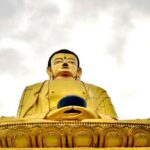
- Stop 2: Boudhanath Stupa and Tibetan Buddhist atmosphere
- Stop 3: Swayambhunath, Monkey Temple views, and a steep climb
- Stop 4: Pashupatinath Temple on the Bagmati River
- Price and value: $50 for a full UNESCO-style day
- Guides, comfort, and the human factor (what stands out)
- What to expect from timing and pace
- Who this tour is best for
- Should you book Kathmandu Sightseeing with car and guide?
- FAQ
- How long is the Kathmandu sightseeing tour?
- Where does the tour start?
- Is this tour private?
- What UNESCO sites are included?
- What’s included in the price?
- Are admission fees included?
- Is lunch included?
- Will I get a confirmation after booking?
- Do they provide a mobile ticket?
- Is free cancellation available?
- Is the tour suitable for most travelers?
Key highlights I’d plan around
- Thamel start point that’s easy to reach, even if you’re arriving in Kathmandu that morning
- UNESCO sites in one loop: Kathmandu Durbar Square, Boudhanath, Swayambhunath, Pashupatinath
- AC transport plus bottled water, which matters quickly in Nepal’s heat
- A guide who explains clearly, with multiple guests praising the communication and comfort
- Private-group feel, so the driver and guide can adjust to your pace
How this Kathmandu car-and-guide setup feels in real life
The whole point of this tour is saving you mental energy. Kathmandu Valley has layers of temples, squares, stupas, and stories, and trying to organize it all yourself can turn into constant bargaining over taxis, route questions, and “where do we go next?” stress. With a car and driver lined up, you can focus on the sights and the explanations—get your bearings fast and then start enjoying.
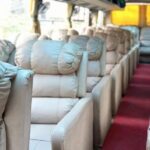
The included comfort details are also not fluff. You get an air-conditioned vehicle and bottled water, which helps when you’re moving between crowded religious sites. Even if you love walking, you’ll appreciate having a vehicle waiting as soon as you finish a stop. It’s a good match for first-timers who want a solid Kathmandu introduction without spending the whole day behind the wheel or arguing over directions.
You’ll also have a professional tour guide with the driver for the tour duration. That matters because these places are not just photo stops. A good guide can connect architecture, ritual life, and local meaning in a way that makes your photos better and your questions make sense.
You can also read our reviews of more guided tours in Kathmandu
Stop 1: Kathmandu Durbar Square and Kumari Ghar
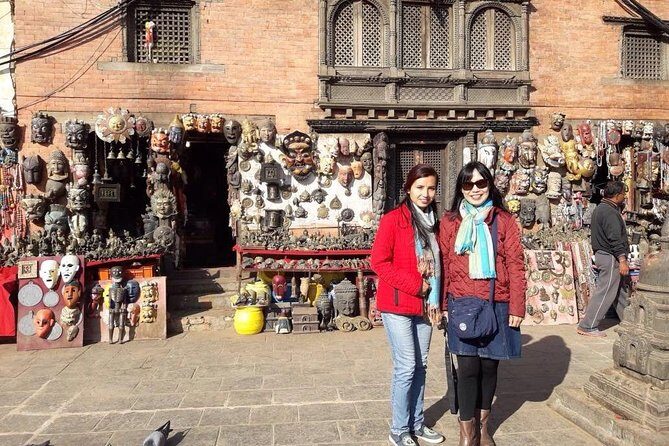
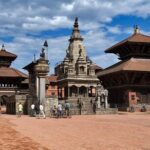
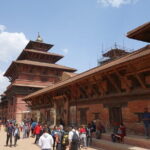
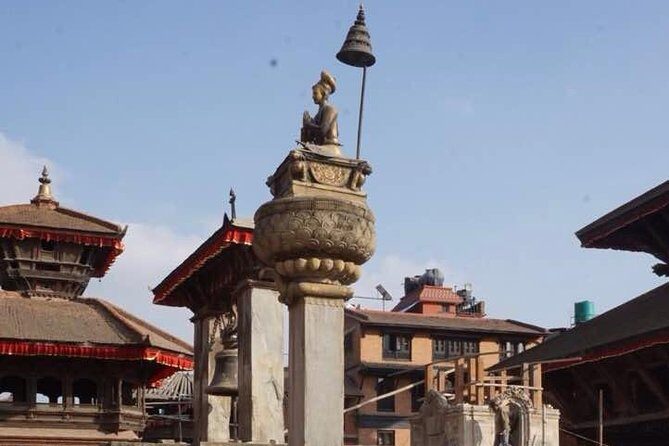
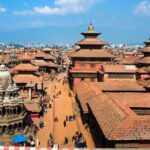
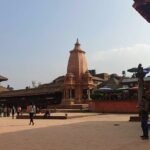
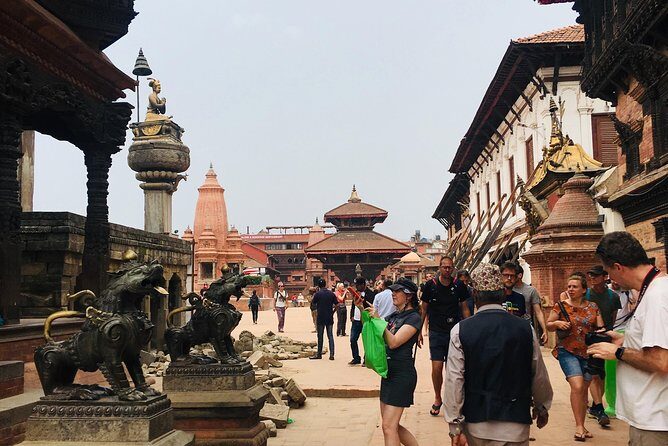
You start in the heart of the city’s historic core: Kathmandu Durbar Square. This is the kind of place where you immediately notice that the city is built around ceremonies, not just buildings. Expect you’ll have about an hour here, with time to walk the square and look into the most important spots.
One highlight inside the square is Kumari Ghar (House of the Living Goddess). The idea is simple but powerful: this is a residence connected to the tradition of the Living Goddess. Even if you don’t know the background before you arrive, the guide can help you understand what you’re looking at, and why this corner of the square carries so much meaning for locals.
What I like about this first stop is the “set the stage” effect. Durbar Square helps you understand Kathmandu’s cultural identity before you jump to more Buddhist-focused sites. It’s a strong opening because it makes the rest of the day feel like you’re moving through related spiritual landscapes, not hopping randomly between unrelated attractions.
A practical consideration: Durbar Square is a busy, visually dense zone. In about an hour, you’ll want to prioritize a few key views rather than trying to see everything. If you’re the kind of traveler who loves lingering, tell your guide what you want most—your time is limited here, and the best outcome is a plan that fits your style.
Stop 2: Boudhanath Stupa and Tibetan Buddhist atmosphere
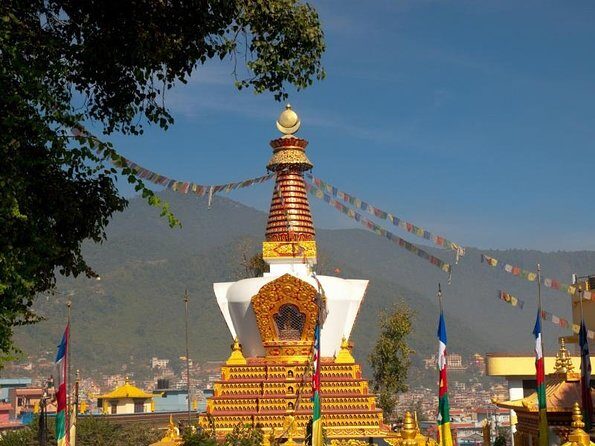
Next up is Boudhanath Stupa, one of the largest and most significant Buddhist stupas in the world and a UNESCO World Heritage Site. For many visitors, this is the emotional center of the Kathmandu Valley loop, mostly because of how active the stupa area feels.
You’ll get around an hour here, and the setup makes it easy to experience the site at human scale. The guide can point out what to notice as you walk around the stupa area, and why this site matters to Tibetan Buddhists who come here for pilgrimage and devotion.
Boudhanath is also a great place to slow down, even if the clock is moving. The stupa’s scale draws you in, and the surrounding cultural details give you plenty to look at—religious symbols, daily rituals, and the rhythm of visitors and pilgrims.
A small heads-up: admission is not included. That doesn’t necessarily mean you can’t enter freely in every area, but it does mean you should be ready for official tickets or fees where they apply. Bring small cash and keep your expectations flexible.
Stop 3: Swayambhunath, Monkey Temple views, and a steep climb
After Boudhanath, you’ll head to Swayambhunath, also called the Monkey Temple. This is an older, highly sacred Buddhist site, and it sits on a hilltop—so you’re not just visiting a temple, you’re also earning city views.
You’ll have about an hour. That window is usually enough to reach viewpoints, walk through the main areas, and take in the panorama. The views are part of the payoff here: Kathmandu looks different from above, and the city’s layout becomes easier to understand.
The “Monkey Temple” nickname is more than a cute label. If you’re lucky, you’ll spot monkeys in the area, and if you’re unlucky, you’ll still notice that the site is designed for a world where animals share the space. Keep an eye on bags and food, and don’t act like you’re in a zoo—this is still a working religious site.
Again, admission tickets are not included, so plan for possible fees. Also, because it’s on a hilltop, expect some walking and steps. If you’re short on mobility, ask the guide about how to pace yourself. With a car-and-guide day like this, you can often adjust your approach without derailing the schedule.
Stop 4: Pashupatinath Temple on the Bagmati River
The final big stop is Pashupatinath Temple, one of the most sacred Hindu temples in the world, dedicated to Lord Shiva. It’s a UNESCO World Heritage Site and it sits along the Bagmati River, which is part of what gives the site its atmosphere.
You’ll get about an hour here as well. Pashupatinath is not a single-building attraction; it’s a religious landscape. As you walk, you’ll notice the temple’s orientation to the river and how the area functions for worship. A good guide helps you read what you’re seeing without turning it into a lecture.
This is also the stop where you’ll likely feel the weight of the place. If you care about understanding living religions—not just sightseeing—this one can be especially rewarding. It’s a different energy than the Buddhist sites you visited earlier, and the contrast is part of the point of the route.
Practical note: admission and fees are not included, so keep that budget item in mind. Also, temple areas can have dress and behavior expectations. If you’re not sure what’s appropriate, your guide can point you in the right direction on arrival.

Price and value: $50 for a full UNESCO-style day
At $50 per person for about 5 hours (with some descriptions listing 3–5 hours depending on pacing), the best way to judge value is not the number—it’s what you get for the number.
You’re paying for:
- an air-conditioned vehicle
- a driver
- a professional guide and their remuneration
- bottled water
- a route that strings together major UNESCO sites efficiently
If you were to arrange transport on your own, hire a guide for just one stop, and then try to manage timing across multiple far-apart locations, the costs can add up fast. Here, the structure is doing work for you. You lose less time, you spend less energy planning, and you get context at each stop.
The tradeoff is that the tour includes the guiding and transport, but doesn’t include all fees and taxes and doesn’t include lunch. So your total spending will depend on what ticketing fees apply at each site and whether you eat during the day or earlier/later. For many visitors, this still feels like a fair deal because you’re buying convenience plus explanations for multiple UNESCO-level destinations.
Also, this is listed as a private tour/activity for your group. That can be a value win, especially if you’re traveling with family, friends, or a mixed-mobility group. You’re not stuck with a crowd pace.
Guides, comfort, and the human factor (what stands out)
Several guests highlighted a consistent theme: the experience doesn’t feel rushed or cold. One review specifically credits Mr Surya for being friendly and welcoming, making sure people were comfortable throughout the journey. People also praised his communication and the way guides explained the sites well.
Even if you don’t know the names in advance, the takeaway for you is clear: this company seems to care about making the tour feel easy, not just productive. That matters in Kathmandu because the sites are meaningful, but the environment can be chaotic if you’re trying to navigate everything on your own.
So when you book, I’d treat this as a guide-led day, not a bus tour. If you show interest—ask questions, ask for what to focus on at each stop—you’re more likely to get the kind of satisfaction people repeatedly mention.
What to expect from timing and pace
The schedule is organized by stop, with about one hour per site. That’s a sweet spot for first-timers who want to see the major highlights. It’s also long enough to step away from the main crowd for a few moments, then come back when you want the bigger views.
But remember: Kathmandu isn’t a place where everything runs like a clock. Traffic, walking flow at temple entrances, and the time it takes to take photos all affect the feel of the day. With an “approx.” duration, your driver and guide will adjust so you still finish the loop.
If you’re the type who likes to linger, tell your guide early. With four major stops, small changes in pacing can cascade, so it’s smart to decide what you want more of: more time at one site, fewer photos, or more Q&A.
Who this tour is best for
This is a strong fit if you:
- are short on time in Kathmandu but want major UNESCO stops
- prefer guided context over wandering without a plan
- want a comfortable day with AC transport
- like private-group pacing rather than joining a big group
It can also work well if you’re traveling with family, because each stop is manageable, and you’re not trekking between far points without help.
If you’re a hardcore architecture or ritual specialist who wants hours per site, you might still enjoy this—but you’ll likely want to pair it with additional time on separate days for the sites that pull you in most.
Should you book Kathmandu Sightseeing with car and guide?
I’d book this if you want a practical UNESCO overview day that keeps Kathmandu simple. You’re getting four major religious landmarks, guided explanations, and comfortable transport, all for a price that’s hard to beat when you think about how much effort it takes to do the same thing on your own.
Skip it (or plan differently) if you’re looking for a very slow, deep-dive style experience at one single site. In this format, you’re meant to move through Kathmandu Valley’s highlights efficiently.
If you do book, pick your priorities before you arrive. Decide what matters most to you—views at Swayambhunath, atmosphere at Boudhanath, sacred Hindu focus at Pashupatinath, or the cultural core at Kathmandu Durbar Square—then let your guide shape the time around that. That’s how you turn a short day into a memorable one.
FAQ
How long is the Kathmandu sightseeing tour?
The tour runs about 5 hours (approximately). Some descriptions also note 3–5 hours depending on how the day is paced.
Where does the tour start?
The tour starts in Thamel. Pickup is offered.
Is this tour private?
Yes. It’s described as a private tour/activity, meaning only your group participates.
What UNESCO sites are included?
The tour includes Kathmandu Durbar Square, Boudhanath Stupa, Swayambhunath, and Pashupatinath Temple.
What’s included in the price?
Included items are an air-conditioned vehicle, bottled water, the driver during the tour, and a professional tour guide (plus the guide’s remuneration).
Are admission fees included?
No. Admission tickets and all site fees and taxes are not included.
Is lunch included?
No. Lunch is not included.
Will I get a confirmation after booking?
Yes. Confirmation is received at the time of booking.
Do they provide a mobile ticket?
Yes. The tour includes a mobile ticket.
Is free cancellation available?
Yes. Free cancellation is available up to 24 hours in advance for a full refund. If you cancel less than 24 hours before the start time, the amount paid is not refunded.
Is the tour suitable for most travelers?
It’s marked as suitable for most travelers, and service animals are allowed.