REVIEW · KATHMANDU
Private Day Tour: Patan and Bhaktapur from Kathmandu
Book on Viator →Operated by Pigeon Travel And Tours Pvt Ltd · Bookable on Viator
Patan and Bhaktapur feel like time travel. This private day tour strings together two UNESCO-listed Durbar Squares with a licensed guide, walking time in the courtyards and palaces, plus a stop at a Tibetan handicraft center with a carpet-weaving demonstration. It’s also a smart way to learn how the Kathmandu Valley’s culture shifted after the 2015 earthquake, without turning the day into a lecture.
I especially like the walking pace in Patan and Bhaktapur. You get time to notice details like Newari architecture in the courtyards and the big-name landmarks that make Bhaktapur so famous, including the Golden Gate and the 55-Window Palace. I also appreciate that your guide brings context to what you’re seeing, not just a checklist of sights.
The main thing to consider is walking time. You’ll be on your feet for several hours, and the day is timed around a morning pickup and a return to Kathmandu, so it’s not the best choice if you want a super laid-back itinerary.
In This Review
- Key highlights you’ll care about
- Two UNESCO Durbar Squares in One Day
- Morning pickup from Kathmandu, then straight into Patan
- Patan Durbar Square walking: what to notice first
- The arts angle: Palaces, temples, and working craftsmanship
- Jawalakhel Tibetan handicraft center and the carpet weaving demonstration
- Heading to Bhaktapur: Bhadgaon and its UNESCO Durbar Square
- Bhaktapur Durbar Square highlights: Golden Gate, Lion Gate, Potter’s Square
- How the 2015 earthquake gets woven into the day
- Traditional lunch time in Bhaktapur’s square (and how to use it)
- Why the private vehicle and hotel pickup add real value
- Price and what you get for $105 per person
- Logistics you’ll feel: start time, pace, and comfort
- Who should book this Patan and Bhaktapur private day
- Should you book it or choose something else?
- FAQ
- What time does the tour start?
- How long is the Patan and Bhaktapur private day tour?
- Does the price include hotel pickup and drop-off?
- Are entrance fees included?
- Is lunch included?
- What sights are included at Patan Durbar Square?
- What are the main highlights at Bhaktapur Durbar Square?
- Is this tour private?
- What’s included for comfort and support during the tour?
Key highlights you’ll care about
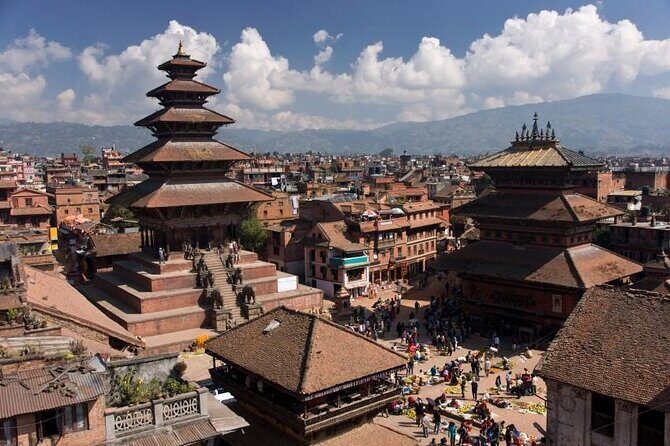
- Two UNESCO Durbar Squares in one day: Patan and Bhaktapur (Bhadgaon)
- Courtyard-focused Patan walking around Mul Chowk, Sundari Chowk, and Keshav Narayan Chowk
- Tibetan handicraft center stop in Jawalakhel with a carpet-weaving demonstration
- Bhaktapur icons you can actually walk to: Golden Gate, Lion Gate, Potter’s Square, 55-Window Palace
- Included entry fees plus a private vehicle and hotel pickup/drop-off, which cuts friction a lot
Two UNESCO Durbar Squares in One Day
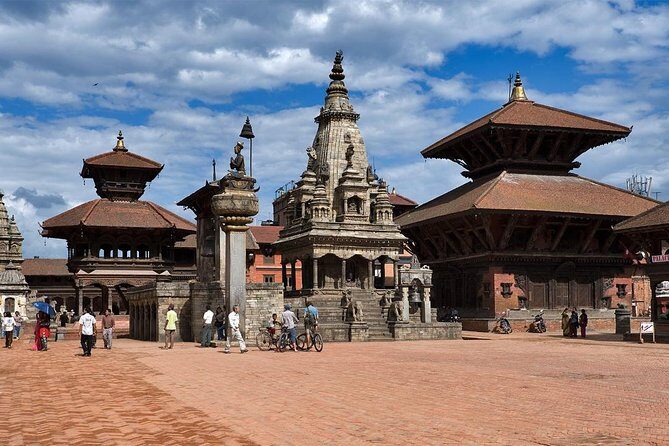
This tour is built for travelers who want more than photos of temples. You’re moving between Patan and Bhaktapur, both recognized as UNESCO World Heritage Sites, and your guide gives you a frame for how the buildings relate to the people who lived there.
Patan sits on the opposite side of the Bagmati River from Kathmandu. Bhaktapur is about 14 km east of Kathmandu, and locals often call it Bhadgaon. Put together, it’s a neat snapshot of the Kathmandu Valley’s medieval city life.
You can also read our reviews of more private tours in Kathmandu

Morning pickup from Kathmandu, then straight into Patan
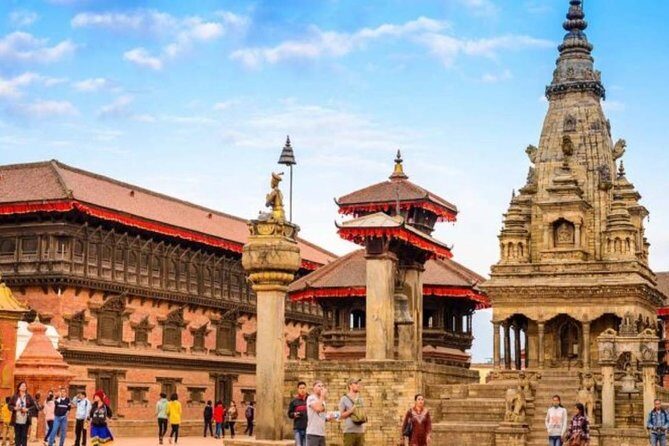
Your day starts with a morning pickup from your accommodation in Kathmandu. The tour begins at 10:00 am, and you’ll ride by private vehicle to Patan, where the walking tour begins at Patan Durbar Square.
This opening matters. Patan’s square is easier to enjoy when you’re not already exhausted from a full day of travel. You also get to focus on the stone and woodwork while you still have energy to look closely.
Patan Durbar Square is the kind of place where it helps to have someone point things out. It’s not just one building; it’s an area tied to royal Malla-era residence and the religious life of the city.
Patan Durbar Square walking: what to notice first
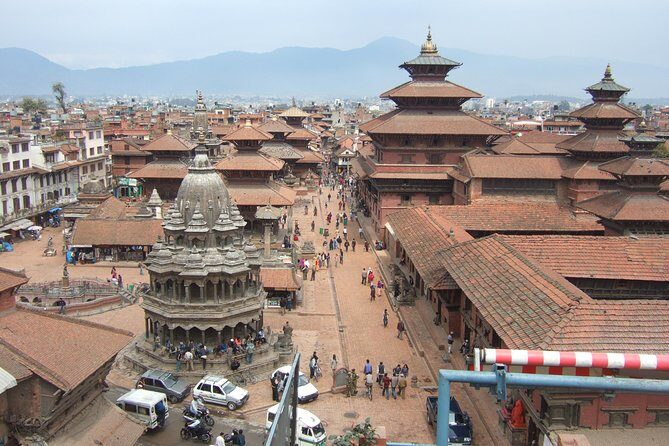
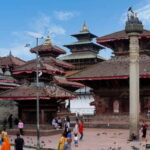
Your guide leads you through Patan Durbar Square, including the royal palace zone and the temple-filled courtyards around Mul Chowk, Sundari Chowk, and Keshav Narayan Chowk. The big win here is the specificity: you’re not just shown a view, you’re taught what features make Newari architecture stand out.
Look for how the space is organized. Courtyards in these squares are social and religious at the same time, so you’ll see temple corners, carvings, and gateway details that feel designed for daily life, not only for visitors. That’s why the walking tour format works so well.
You’ll also get to see Krishna Mandir (Temple), described as one of the grand highlights of the square. It was built in 1637 by King Siddhi Narsingh Malla, and the temple is constructed of stone. If you like architecture, this is the stop where the details start to click.
The arts angle: Palaces, temples, and working craftsmanship
Patan Durbar Square isn’t only about religion. It also reflects the city’s long reputation for fine arts and metalwork. Your guide’s commentary helps connect that reputation to what you see in front of you, like guardian figures, bronze gateway elements, and the carved stonework around the royal and temple spaces.
If you’re the type who likes to spot patterns, this is a strong match. Newari design has a consistent “language,” and walking through the square gives you a chance to compare motifs instead of seeing everything as a blur.
The tour includes entrance fees for the sights you visit, so you don’t have to stop and negotiate ticket lines mid-walk. That keeps the experience moving at a comfortable pace.
Jawalakhel Tibetan handicraft center and the carpet weaving demonstration
Before you head to Bhaktapur, the itinerary includes a visit to a Tibetan handicraft center at Jawalakhel. During the stop, you can watch a demonstration of carpet weaving.
This isn’t just a souvenir pit stop. A short craft demonstration gives you a better lens for what you might buy later, because you understand the effort behind the work. If textiles and traditional crafts interest you, this part adds variety to a day otherwise centered on stone temples.
Also, it’s a good pause point. After walking Patan, you’ll often welcome a change of pace where you can sit, watch, and reset your eyes for another round of architecture.




Heading to Bhaktapur: Bhadgaon and its UNESCO Durbar Square
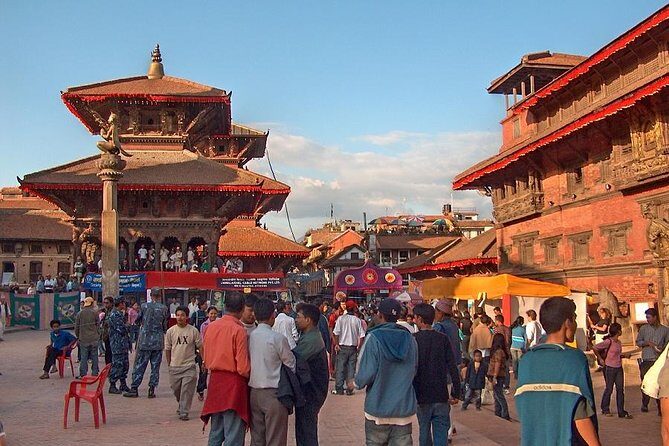
Next comes Bhaktapur Durbar Square, the plaza in front of the royal palace of the old Bhaktapur Kingdom. The area is part of a UNESCO complex, and it’s often discussed as a set of distinct squares—Durbar Square, Taumadhi Square, Dattatreya Square, and Potter’s Square.
You’ll hear the local name Bhadgaon as well, which helps you connect the place to everyday culture, not only to signage. The tour timing is built so you don’t arrive too late and feel rushed.
Bhaktapur’s Durbar Square sits at about 1,401 meters above sea level (as described for the plaza), which can be a useful note for travelers who are sensitive to altitude. Even if it doesn’t change your day much, it’s worth remembering you’re a bit higher than Kathmandu.
Bhaktapur Durbar Square highlights: Golden Gate, Lion Gate, Potter’s Square
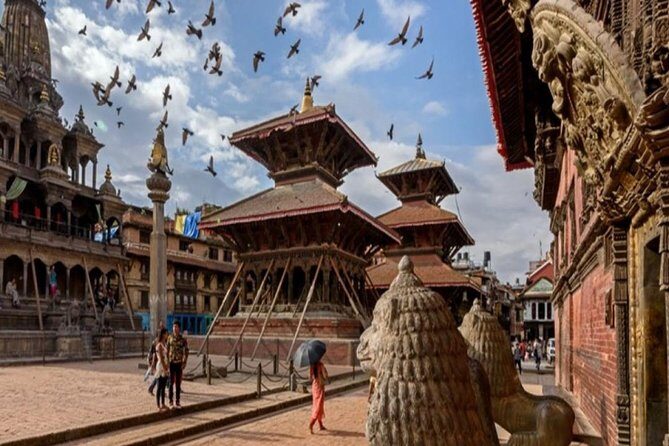
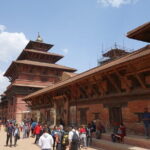
Bhaktapur is famous for a list of landmarks you can actually walk to. Your guide brings you to highlights including the Golden Gate, Lion Gate, Potter’s Square, and the National Art Gallery. The 55-Window Palace is one of the headline sights in the area.
This is where I think the private format pays off. If you’re in a group where everyone just wants the biggest names, you can miss how the landmarks relate to each other. With a private guide, you can spend extra moments on the building features you care about most.
The 55-Window Palace, once the royal seat of Nepal, is a great example. You can see it as a symbol first, and then—if your guide points it out—you start noticing how the palace design reflects royal identity and the city’s artistic traditions.
How the 2015 earthquake gets woven into the day
One detail that makes this tour feel more real is how your guide explains the history of the Kathmandu Valley and the impact of the 2015 earthquake in the region. This matters because the rebuilding story is part of why the area looks the way it does today.
You don’t need a deep engineering lecture to understand the takeaway. The guide helps you connect present-day structures and restoration with what visitors see on the ground, which turns the trip from pure sightseeing into “I get it now.”
If you’re someone who likes context, this is a big plus.
Traditional lunch time in Bhaktapur’s square (and how to use it)
Your itinerary includes a break for lunch in Bhaktapur, with time to buy food in the square. The tour doesn’t include food and drinks, so you’ll pay for your meal on your own, but you’re given the chance to eat in the middle of the action.
This is a nice strategy. Instead of lunch being a separate add-on somewhere else, it’s timed inside the area where you’ll keep soaking up the atmosphere. You can also choose what fits your stomach and energy level—something light if you want to keep walking, or a heavier meal if you want a reset.
Practical tip: because you’ll be on a schedule, use the lunch window to eat and step back into the square right away. Waiting too long usually means you’ll rush the next stretch.
Why the private vehicle and hotel pickup add real value
A lot of Kathmandu tours promise convenience, but this one actually includes the parts that reduce stress. You get hotel pickup and drop-off, private transportation, bottled water, and free WiFi.
For a day focused on walking and monuments, that’s the difference between a smooth day and a day you spend negotiating getting from A to B. You also avoid the “where do we meet?” confusion that can eat up time in a city with complex traffic.
The tour also notes group discounts. Since this is a private tour with only your group participating, that matters most when you have companions to share the ride and guide time.
Price and what you get for $105 per person
At $105 per person for about 7 hours, the value comes from the combo of things that would cost you separately: a private guide, private vehicle, entrance fees, and hotel pickup/drop-off. If you’ve ever tried to cobble together Kathmandu Valley monument stops without a guide, you know how quickly ticketing, routes, and time become a headache.
Entrance fees and taxes are included, which is a big deal on these UNESCO-listed sites where tickets can change your pacing. Bottled water is also included, and it’s a small thing that helps you stay comfortable during walking.
What’s not included is food and drinks. That’s normal, and it gives you control over what you eat. Just plan on budgeting for lunch in Bhaktapur.
Logistics you’ll feel: start time, pace, and comfort
This tour starts at 10:00 am and runs around 7 hours. In other words, it’s not an early-morning crawl, and it’s not a late-afternoon stroll either. It’s a mid-day focused plan that balances travel time with time on the ground.
Because it’s a walking tour inside dense heritage squares, wear shoes that handle uneven stone and lots of steps. You don’t want to be thinking about footwear while you’re trying to notice carvings and architectural details.
Mobile ticket and pickup convenience also help. You’ll get confirmation at booking time, and the format is described as a mobile ticket, so you can keep everything in one place.
Who should book this Patan and Bhaktapur private day
I’d steer you toward this tour if:
- you want two UNESCO Durbar Squares in one day
- you care about architecture and want guidance on what to look for
- you like seeing both royal palaces and temple spaces, not only one theme
- you prefer a private experience with your own pace
I’d think twice if:
- you want mostly free time with no structure
- you’re trying to pack too many long walks into a short trip
- you hate walking on uneven ground
Should you book it or choose something else?
Book it if you want a well-paced day that covers the Patan and Bhaktapur highlights while still leaving room for lunch and learning. The included guide time, entrance fees, and hotel pickup make it feel like a clean solution instead of a DIY project.
Choose a different option if you’re looking for a lighter day, or if you only care about one city’s monuments. Patan and Bhaktapur together are fantastic, but they take energy. This is best for travelers who don’t mind walking and who want the meaning behind what they’re seeing.
If you’re heading to Kathmandu and you want your heritage day to feel both practical and personal, this private pairing is a strong bet.
FAQ
What time does the tour start?
The tour starts at 10:00 am.
How long is the Patan and Bhaktapur private day tour?
It’s listed as approximately 7 hours.
Does the price include hotel pickup and drop-off?
Yes. Hotel pickup and drop-off are included.
Are entrance fees included?
Yes. The current temple and monuments entry fees are included.
Is lunch included?
No. Food and drinks are not included, but you do have time to purchase lunch in Bhaktapur.
What sights are included at Patan Durbar Square?
You’ll visit Patan Durbar Square and see highlights such as Krishna Mandir, along with walking through courtyards including Mul Chowk, Sundari Chowk, and Keshav Narayan Chowk.
What are the main highlights at Bhaktapur Durbar Square?
Key stops include the Golden Gate, Lion Gate, Potter’s Square, the National Art Gallery, and the 55-Window Palace.
Is this tour private?
Yes. It’s a private tour, and only your group participates.
What’s included for comfort and support during the tour?
It includes a licensed tour guide, transport by private vehicle, bottled water, and free WiFi. You’ll also receive a mobile ticket.