REVIEW · KATHMANDU
Private Half-Day Tour of Boudhanath and Pashupatinath Temples in Kathmandu
Book on Viator →Operated by Pigeon Travel And Tours Pvt Ltd · Bookable on Viator
Two temples, one unforgettable river. This private half-day route mixes Pashupatinath Temple rituals with Boudhanath Stupa’s Buddhist atmosphere, and it’s built for people who don’t want to wrestle Kathmandu traffic for four hours. I like that you get a private guide plus a vehicle, so the history and meaning land in real time, not as a random facts dump.
I also like the pacing: two hours at Pashupatinath to take in the Bagmati River setting, then two hours at Boudhanath to watch prayer wheels and spot Buddhist statuary up close. The only real catch is that this is a worship-focused visit, so plan on a modest dress code and keep expectations ready for emotional sights near the river.
In This Review
- Key Things I’d Pay Attention To
- Why This 4-Hour Private Loop Works in Kathmandu
- Meeting at 10:00 and Getting Around Without Stress
- Pashupatinath Temple: Watching Life Along the Bagmati River
- Entering the Ritual World: What Your Guide Helps You Notice
- Boudhanath Stupa: Prayer Wheels and Shared Worship
- How the 10:00 Timing Affects What You See
- Dress Code and Etiquette: Avoid Awkward Moments
- Price and Value: Is $47 Fair for This Setup?
- Who This Tour Suits Best (and Who Should Rethink It)
- Should You Book This Private Half-Day Tour?
- FAQ
- How long is the tour?
- What time does the tour start?
- Is pickup from my hotel included?
- Does the price include entrance fees?
- What stops are included in the half-day itinerary?
- What’s included in the tour besides the guide?
- Is food included?
- Is this a private tour?
- What is the cancellation policy?
- Do I need to dress modestly?
Key Things I’d Pay Attention To
- Private guide + private vehicle saves you time in a city where traffic can eat your morning
- Two UNESCO stops in one half-day means less logistics and more actual looking
- Bagmati River ghats at Pashupatinath are the main event, and timing matters for what you see
- Boudhanath’s mandala and prayer wheels are purpose-built for slow, careful observation
- Entrance fees are included, so you’re not chasing extra tickets mid-day
- No food included means you’ll want to eat before or after, especially if you’re sensitive to long pauses
Why This 4-Hour Private Loop Works in Kathmandu
Kathmandu can feel like a puzzle with too many moving pieces. This tour keeps it simple: two nearby UNESCO World Heritage sites, structured time at each, and a plan that doesn’t rely on you figuring out transport. You spend your energy where it belongs—on the temples and what they mean—rather than on navigation.
Because it’s private, you also get a little breathing room. You’re not stuck sprinting with a group because someone arrived late, or because the driver is waiting for the next stop. It’s a half-day format, so the goal is clear: see the core sights, learn what to look for, and still have time left in your Kathmandu day.
You can also read our reviews of more private tours in Kathmandu

Meeting at 10:00 and Getting Around Without Stress
The tour starts at 10:00 am with pickup from your hotel or airport, and the ending is a drop-off back the same way. That matters more than it sounds. Temple areas can mean narrow roads, crowded approaches, and lots of foot traffic, so starting with a driver who knows the route helps you get your bearings fast.
The operator includes a private vehicle and an English-speaking local guide, plus two mineral water bottles per person. That’s the kind of practical inclusion that pays off in real life: you’re not hunting for water, and you’re not doing mental math mid-visit.
One detail I appreciate is that it’s described as a mobile ticket experience. That can be handy when you’re juggling multiple stops during your trip.
Pashupatinath Temple: Watching Life Along the Bagmati River
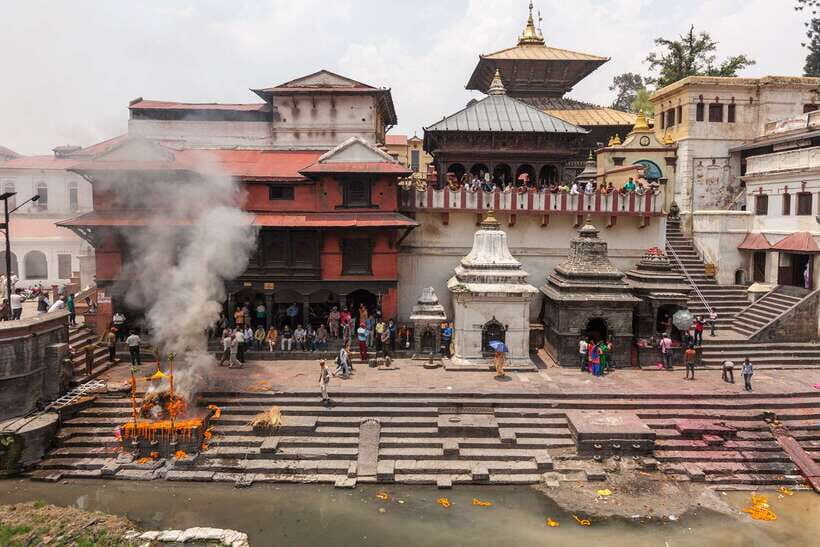
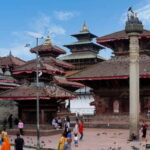
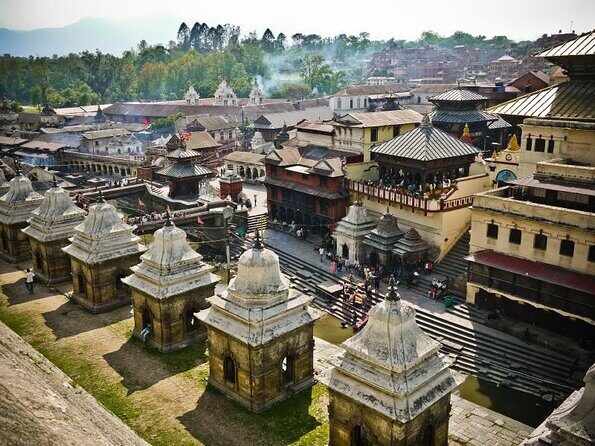
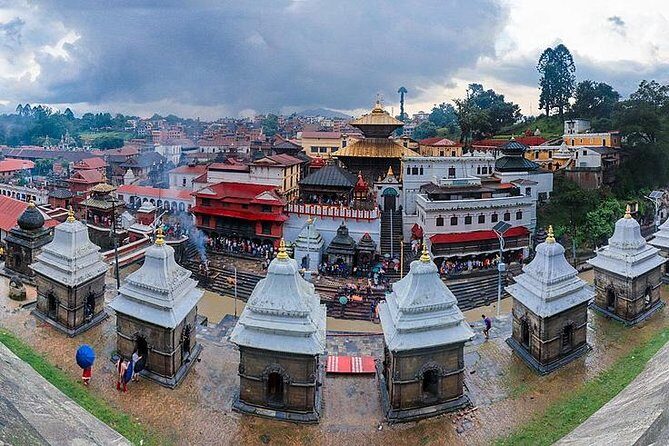
Pashupatinath is a major Hindu temple complex on the banks of the Bagmati River, about 5 kilometers northeast of central Kathmandu. The tour gives you time to observe the temple activities from the river side—exactly where this place feels most powerful. The ghats are the stage, and the river is the context.
What makes Pashupatinath special is that it’s not only about architecture. It’s a working religious site, with ceremonies and daily worship happening around you. You’ll want to slow down and look at patterns: people moving toward the ghats, rituals unfolding, and the way the temple relates to the river.
A word of honest warning, too. In feedback connected to this tour, one person mentioned being present for a cremation along the river—an experience that was deeply meaningful but also not for everyone. If that kind of scene makes you uncomfortable, it’s smart to mentally prepare before you go, because Pashupatinath is where Hindu funerary traditions can be visible in real time.
Entering the Ritual World: What Your Guide Helps You Notice
This tour is set up so your guide can explain what you’re seeing in a way that clicks. The included time—about two hours at Pashupatinath—is enough for more than quick photos. You should aim to learn the basics of what you’re observing rather than trying to memorize everything.
In particular, a good guide helps you read details that otherwise look like background noise. For example, you may notice different roles people play, how worship flows along the river steps, and how the temple complex functions as a national religious center tied to Nepal’s national deity.
One review praised a guide named Mr. Bishnu for arriving on time and explaining history and background in great detail, with a patient pace. Another mentioned Pawan, who spoke French, which suggests the operator takes language support seriously when possible.
Even if you’re comfortable traveling solo, this is the kind of place where a guide can turn a visit from sightseeing into understanding.
Boudhanath Stupa: Prayer Wheels and Shared Worship
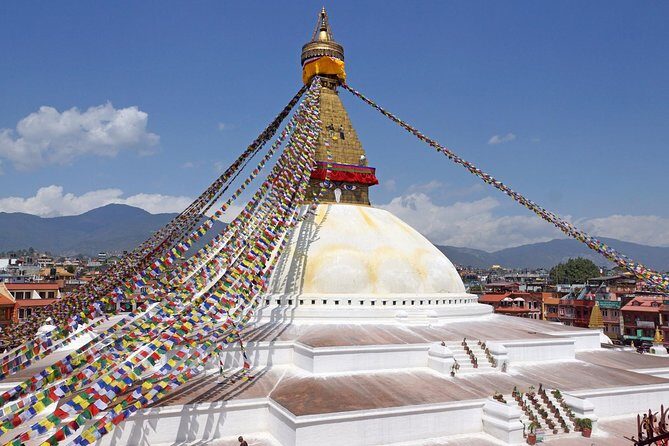
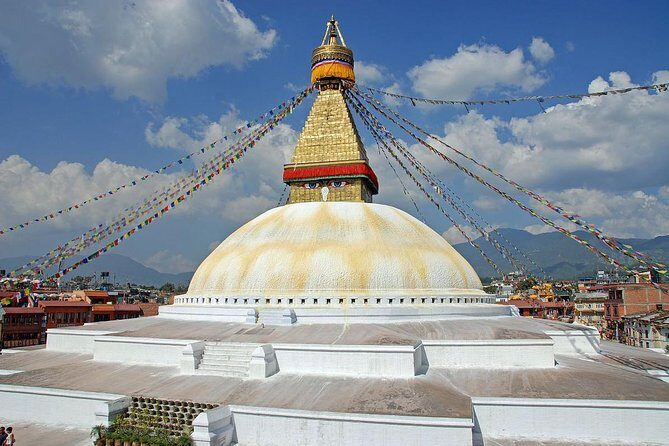
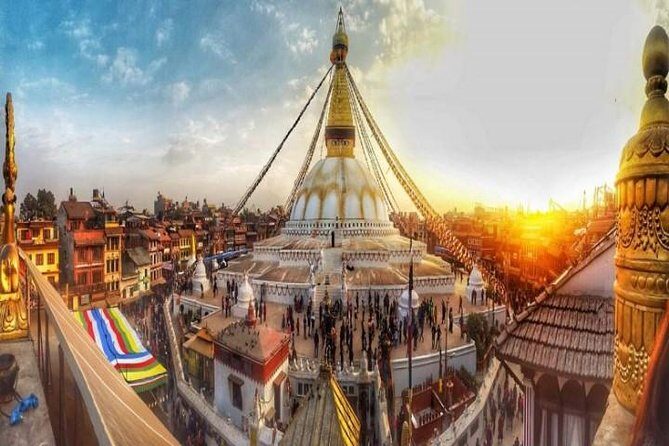
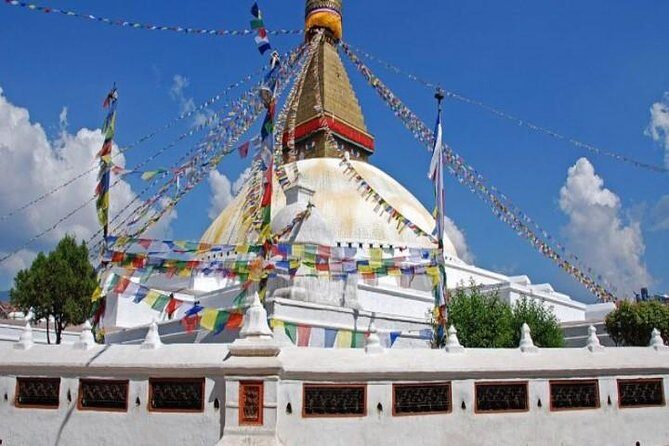
Next comes Boudhanath Stupa, located about 11 kilometers from the center on Kathmandu’s northeastern outskirts. The stupa is known for its large spherical shape and for the massive mandala that surrounds it. On a practical level, that means you get a strong visual anchor almost immediately.
This stop also includes about two hours, and the focus is on Buddhist worship. You’ll see prayer wheels and Buddhist statues—things that make the space feel active even when you’re not hearing speeches or tour talk.
Boudhanath is also described as sacred for both Nepalis and Tibetans, which is a helpful framing for what you’ll likely notice. People don’t treat this as a museum piece. They treat it as a place to practice, return, and spend time. That’s why it’s worth lingering: the best moments aren’t always the loud ones.
If you like places where you can watch people and still feel calm, Boudhanath tends to deliver. It gives you a different mood after Pashupatinath’s river-side ceremonies.
You can also read our reviews of more tours and experiences in Kathmandu

How the 10:00 Timing Affects What You See
The tour runs about 4 hours total, with a start time of 10:00 am. That timing is a smart compromise. Too early and you might run into quieter scenes; too late and you can lose prime visiting hours before your afternoon plan.
Still, temple areas can be unpredictable. Ceremonies and visitor patterns shift. The good news is the tour gives you enough time at each stop that you can absorb the atmosphere even if the exact ritual you hope for isn’t happening when you arrive.
If you’re the kind of person who likes structured travel, this schedule will feel comfortable. If you like maximum flexibility, remember that the whole point here is a tight, private half-day—so you’ll get the most from it by going in with a curious, observant mindset.
Dress Code and Etiquette: Avoid Awkward Moments
Places of worship here require modest dress. That’s not just a rule on paper; it’s the reality of walking into sacred spaces where people will notice what you’re wearing. Aim for clothing that covers shoulders and knees, and keep it simple.
Also, for river-area sites like Pashupatinath, be ready for changing conditions. The ground and steps near the ghats can require careful footing, and you’ll likely find people moving with purposeful calm. Give others space. Watch where you step. And if your guide suggests a viewpoint from the banks, follow that guidance.
One practical tip: because the tour includes entrance fees but not food, you may want to eat before pickup or plan a meal after you return. That reduces fatigue, and fatigue makes etiquette easier to mess up.
Price and Value: Is $47 Fair for This Setup?
The price is $47.00 per person, and the big value story is what’s included: hotel or airport pickup and drop-off, transport by private vehicle, an English-speaking local guide, entrance fees, and two mineral water bottles per person. For a half-day tour that hits two major UNESCO World Heritage sites, that’s often where group tours can struggle—extra time, extra logistics, and extra ticket hassles.
With this format, you’re paying to remove the friction. In a city like Kathmandu, friction is time, not just money. The vehicle and guide reduce the chance of getting stuck asking for directions while temples are busy.
Is it the cheapest option? Probably not. But if you care about getting it right—seeing both Pashupatinath and Boudhanath without stress—this price can feel reasonable.
A quick mental check before you book: if you’d otherwise spend part of your day figuring out transport and entrances, you’ll likely feel the value immediately once you’re on schedule.
Who This Tour Suits Best (and Who Should Rethink It)
This tour fits best if you want a focused half-day and you prefer local context. If you like religious architecture but also want to understand rituals—Hindu and Buddhist—this route makes a lot of sense.
It’s also ideal if you’re short on time. Two UNESCO sites in four hours is efficient without being rushed, as long as you lean into the guide’s pacing instead of trying to speed-run both locations.
You might rethink booking if:
- you strongly dislike witnessing intense religious ceremonies near the river (Pashupatinath can include scenes tied to cremation)
- you want long free time at each site with no structure (this is built for set durations)
- you plan to eat on the go during the tour (food isn’t included)
Should You Book This Private Half-Day Tour?
I’d book it if you want a smooth, private Kathmandu day built around two of the city’s most meaningful sacred sites. The combination of private transport, an English-speaking guide, and included entrance fees turns this into a “show up and learn” experience, not a scavenger hunt.
The decision hinge is your comfort level with Pashupatinath’s river activity. If you’re okay with emotionally heavy realities as part of observing living traditions, you’ll likely leave with a visit that feels unforgettable for the right reasons. If you’d rather keep things light and ceremonial only, you may want a different itinerary.
FAQ
How long is the tour?
It’s about 4 hours in total.
What time does the tour start?
The start time is 10:00 am.
Is pickup from my hotel included?
Yes. Pickup and drop-off from your hotel (or airport) are included.
Does the price include entrance fees?
Yes. Entrance fees are included for both stops.
What stops are included in the half-day itinerary?
You visit Pashupatinath Temple first, then Boudhanath Stupa.
What’s included in the tour besides the guide?
The tour includes private vehicle transport, an English-speaking local guide, and 2 mineral water bottles per person.
Is food included?
No. Food and drinks are not included.
Is this a private tour?
Yes. It’s a private tour/activity, and only your group participates.
What is the cancellation policy?
You can cancel for free up to 24 hours in advance for a full refund.
Do I need to dress modestly?
Yes. A dress code is required to enter places of worship and selected museums, so dress modestly.