REVIEW · KATHMANDU
TOP 4 UNESCO World Heritage Sites Tour
Book on Viator →Operated by Green Valley Nepal Treks & Research Hub Pvt Ltd · Bookable on Viator
One day, four world-class sacred sites. This private Kathmandu Valley route is interesting because you switch between Hindu and Buddhist traditions while still moving at a human pace, with hotel pickup and drop-off built in. I like how it’s designed for limited time in Kathmandu, yet still hits major landmarks tied to centuries of devotion and street-level spiritual life.
Two things I really like: first, you get an English-speaking guide who can explain what you’re seeing in plain terms (and in the real world, that matters at sites where details can fly past fast). Second, the logistics feel easy—door-to-door transportation from anywhere in the capital, plus optional morning or afternoon departures.
One consideration: entrance rules and fees can affect your day. Pashupatinath has a Hindu-only entry requirement, and monument entrance costs (around NPR 2700) and expected tipping for the guide and driver aren’t included.
In This Review
- Key points before you go
- Why this UNESCO day works better than DIY scrambling
- The morning vs afternoon decision that can save your day
- Stop 1: Pashupatinath Temple by the Bagmati River
- Stop 2: Boudhanath Stupa and the slow rhythm of practice
- Stop 3: Swayambhunath, the Monkey Temple, with valley views
- Stop 4: Patan Durbar Square and Newari royal architecture
- The value you’re actually paying for: guide, vehicle, and pace
- Dress code and the Pashupatinath rule: plan this part early
- How long is the day, and what it feels like on the ground
- Who this tour suits best
- Should you book the Top 4 UNESCO World Heritage Sites Tour?
- FAQ
- What sites are included in the Top 4 UNESCO World Heritage Sites Tour?
- How long does the tour take?
- What is included in the price?
- Are entrance fees included?
- Is pickup available?
- What departure times can I choose?
- Is there a dress code?
- Can everyone enter Pashupatinath Temple?
- Is this a private tour?
Key points before you go
- Private, door-to-door pickup means you’re not playing taxi roulette across Kathmandu traffic.
- Two departure options (morning or afternoon) help you match jet lag, weather, and your energy.
- English guide + set stops gives structure without turning the day into a rushed checklist.
- Mixed Hindu and Buddhist sites lets you compare how faith shows up in daily rituals and sacred spaces.
- Dress code is strict: knees and shoulders covered, no shorts or sleeveless tops.
- Pashupatinath requires you to be Hindu to enter the temple grounds.
Why this UNESCO day works better than DIY scrambling
Kathmandu Valley is famous for spiritual landmarks, but they’re spread out in a way that can make a self-guided day feel chaotic. This tour’s biggest win is that it solves the practical problem: you’re not trying to stitch together four far-flung sites using buses, taxis, or uncertain directions while crowds and traffic change minute to minute.
I also like the format of a private tour for your group. You can ask questions without feeling like you’re interrupting a moving crowd. And because the plan is built around four UNESCO World Heritage sites, you get a full thematic day—Hindu devotion at Pashupatinath and Buddhist practice at Boudhanath and Swayambhunath—then you cap it with the historic Newari royal-life atmosphere of Patan Durbar Square.
Value-wise, the headline price is low for what you get on the ground: a private, air-conditioned vehicle plus hotel pickup and drop-off and an English guide for roughly 6 to 7 hours. The trade-off is that you should budget extra for entrance fees (around NPR 2700) and tipping.
You can also read our reviews of more historical tours in Kathmandu

The morning vs afternoon decision that can save your day
You can choose morning or afternoon departure times, and that choice can affect your comfort and pacing more than you might expect.
If you prefer a calm start, morning can feel easier for getting around and for getting your bearings at each site. If you’d rather sleep in, handle rest time, or time things around temple crowd patterns, afternoon may fit better.
Either way, the tour’s structured stops keep you from losing time to wrong turns or waiting. That structure matters most at places where the “right moment” for photos and walking space changes quickly.
Stop 1: Pashupatinath Temple by the Bagmati River
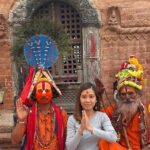
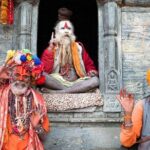
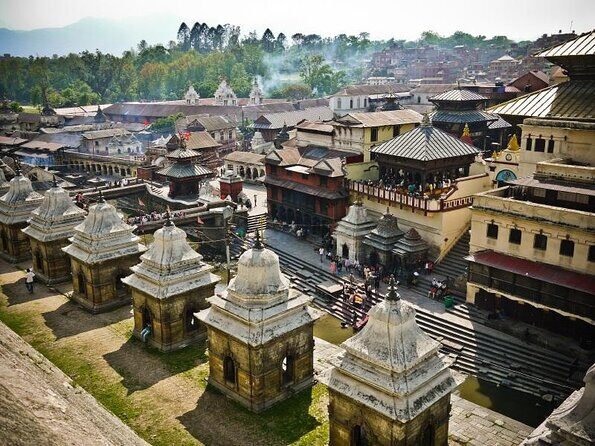
Pashupatinath is dedicated to Lord Shiva and sits about five kilometers east of Kathmandu on the bank of the Bagmati River. It’s known for visual details too—the temple has two golden roofs and four silver doors, so even from the right viewing areas you’ll notice why it’s a centerpiece of the city’s Hindu pilgrimage culture.
This stop is also where you need to be most careful about expectations. The tour includes visiting Pashupatinath, but entry has a condition: you must be Hindu to enter the temple. That doesn’t mean you’re shut out from the experience entirely—you can still observe from allowed areas—but your access to the most sacred interior viewing areas depends on that requirement.
What makes this stop special is that it’s not just architecture. It’s a working sacred place tied to ritual and devotion. If your faith allows entry, you’ll want to follow local guidance closely on where to stand and how to behave.
Practical note: dress code applies here too—no shorts or sleeveless tops, and you’ll need knees and shoulders covered. If you show up under-dressed, you risk refusal of entry.
Stop 2: Boudhanath Stupa and the slow rhythm of practice
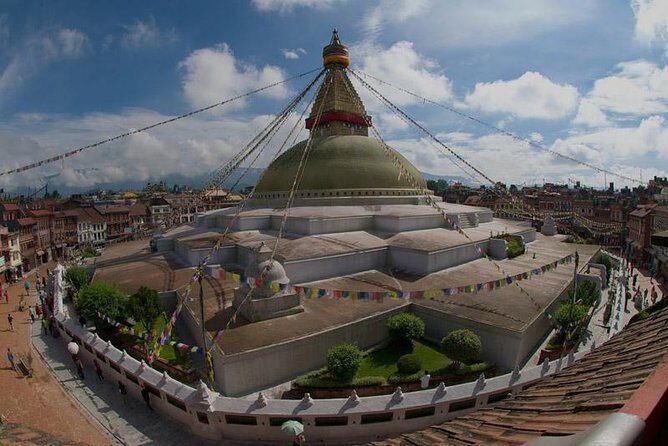
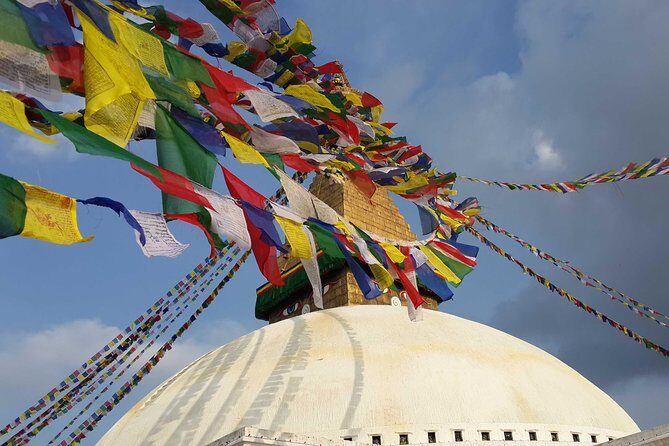
Next is Boudhanath Stupa, about 6 km east of Kathmandu. It’s believed to date back to the 5th century AD and is one of the largest Buddhist stupas in the world. What I love about this stop is how the space works: the stupa sits at the center of movement, and you’ll see devotional life organized around it.
The stupa is ringed by Buddhist lamas and monks, and that changes your experience from sightseeing into something closer to witnessing practice. Even if you don’t know the language, the body language of devotion—walking, chanting, watching—reads clearly.
The tour timing gives you about an hour here. That’s enough for a first pass around the stupa, time to pause, and time to ask your guide what you’re noticing. If you only come once to this part of Kathmandu, this is the one where having a guide really pays off, because Buddhist symbols can feel cryptic if you don’t know what to look for.
Stop 3: Swayambhunath, the Monkey Temple, with valley views
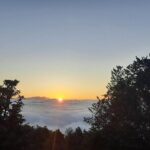
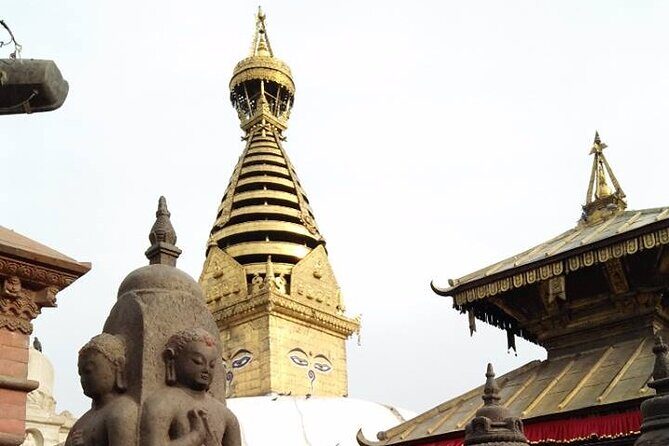
Swayambhunath—often called the Monkey Temple—is about 2,500 years old and sits on a hillock roughly 77 m above the ground level. That height matters. It means you get a view over the Kathmandu Valley, not just a close-up shrine moment.
The dome has painted eyes, and those eyes are a big part of why this site feels memorable on first contact. You’ll notice people looking up, not only at the temple structures but also at the painted features meant to watch over devotees.
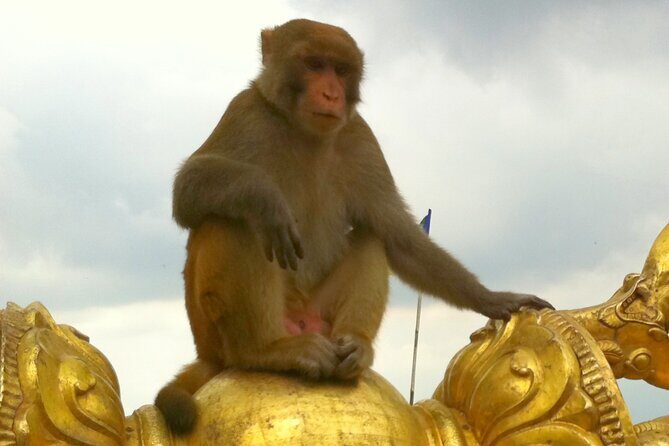
You’ll have about 45 minutes at Swayambhunath, which is tight but workable. Expect some stairs, some crowd flow, and the need to keep an eye on your belongings. Also, the name Monkey Temple is not theoretical—plan on the reality of monkeys being around in the area, especially if you stop for photos.
If you’re prone to motion sickness on hill climbs or you dislike stairs, you might find this the most physically demanding stop in the day. On the flip side, it’s also the most scenic feeling moment.



Stop 4: Patan Durbar Square and Newari royal architecture
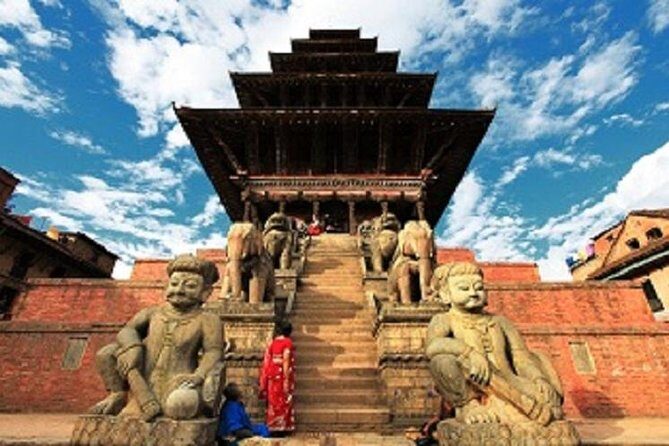
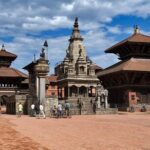
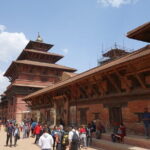
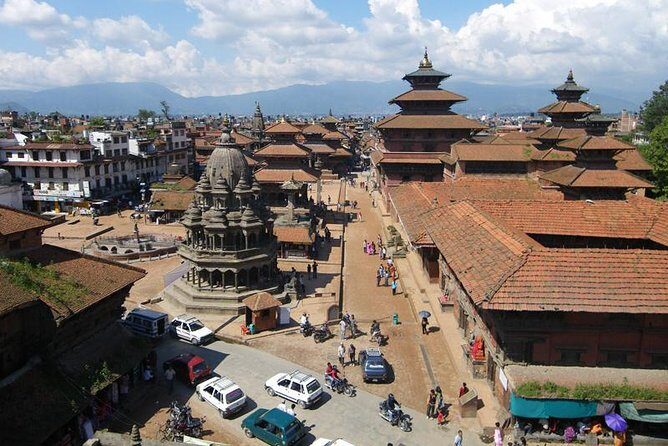
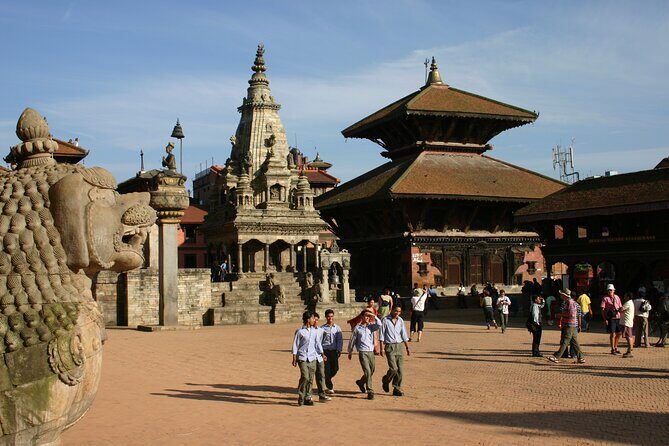
Then you shift into the historic Patan side of Kathmandu Valley at Patan Durbar Square. This is home to the former Patan Royal Family, and it’s known for strong Newari architecture. It’s also one of the most photographed of Kathmandu’s three Durbar Squares, which makes sense once you start looking at the details up close.
This stop gives about an hour, and that time is well spent. Durbar squares can be a lot if you try to sprint through every doorway and carving. A guide helps you decide what to focus on—what’s most distinctive here versus what’s similar at other heritage squares.
If you like architecture and craft traditions, this is where you’ll likely feel the day shift from religious observation to a more historical city-layer perspective. You’ll also get a sense of how Patan’s royal legacy shows up in stone, space, and building layout.
The value you’re actually paying for: guide, vehicle, and pace
At $50 per person, the price can look almost too easy—until you compare what you’d spend trying to hire an equivalent private driver for a full day plus an English guide. Here you’re paying for a complete moving plan: air-conditioned private vehicle, pickup and drop-off from anywhere in Kathmandu, and an English-speaking professional guide.
That “package feel” matters because Kathmandu isn’t a place where you want to waste hours on navigation. The route is efficient for the number of UNESCO sites packed into it.
Two review-backed strengths show up again and again: guides who explain clearly, and drivers who keep the day running even when traffic gets stressful. Names you may hear mentioned include Kapil (including Kapil Pandey) and Saraswati Ghimire, with drivers like Ram and Suman praised for care and reliability. You’re not just buying transport—you’re buying smoother decision-making in real time.
Also, keep your expectations realistic: admission fees are not included (around NPR 2700). And tipping is expected. If you treat the listed price as all-in, you’ll be surprised at the end.
Dress code and the Pashupatinath rule: plan this part early
Before you fall in love with the itinerary, double-check your wardrobe. The tour requires dress code for places of worship and selected museums: no shorts or sleeveless tops, and knees and shoulders must be covered for both men and women. If you ignore this, you can be refused entry.
Then there’s the bigger rule: you must be Hindu to enter Pashupatinath Temple. If you’re not Hindu, you’ll still likely be able to visit from allowed areas, but you won’t get the same access to the temple grounds. This is the one detail that can change the value of the day depending on your personal situation.
If you’re traveling with mixed-faith friends or family, this is the stop to plan around. The guide can help you understand what’s possible once you’re on site.
How long is the day, and what it feels like on the ground
The tour runs about 6 to 7 hours. That’s long enough to make each site feel meaningful, but short enough that you can still enjoy the rest of your day in Kathmandu without feeling wiped out.
Because it’s private, you’re not squeezed into another group’s schedule. You can ask for a pause, adjust walking pace, or spend a bit longer where you’re most interested.
The door-to-door pickup also reduces the “where do we meet?” headache. And the mobile ticket is a nice convenience that keeps the day smoother once you’re moving between sites.
Who this tour suits best
This is a great match if you:
- want a structured day of UNESCO sites without navigating traffic and timing on your own
- care about understanding what you’re seeing, not only snapping photos
- prefer the comfort of pickup and an air-conditioned vehicle
- like a mix of Hindu rituals and Buddhist sacred architecture
It may be less ideal if you:
- need full access to Pashupatinath Temple but don’t meet the Hindu-only entry requirement
- hate stairs or physical climbs (Swayambhunath can be demanding)
- have very strict budget limits if you can’t cover entrance fees and tips
Should you book the Top 4 UNESCO World Heritage Sites Tour?
I’d book it if you want the fastest way to get the big Kathmandu Valley spiritual hits in one day, with less stress and better explanations than DIY. The combination of a private English guide, door-to-door transport, and a sensible sequence of sites makes it a strong value at this price level.
But book with eyes open. Budget for monument entrance fees (around NPR 2700), bring a fully compliant outfit for worship sites, and recognize the Pashupatinath entry rule can limit access depending on your background.
If you want your day to feel organized without being rigid, and you like learning while you walk through sacred spaces, this one works.
FAQ
What sites are included in the Top 4 UNESCO World Heritage Sites Tour?
The tour visits Pashupatinath Temple, Boudhanath Stupa, Swayambhunath (Monkey Temple), and Patan Durbar Square.
How long does the tour take?
The tour runs about 6 to 7 hours.
What is included in the price?
Included are an air-conditioned private tourist vehicle, hotel pickup and drop-off by private vehicle, and an English-speaking professional tour guide.
Are entrance fees included?
No. City sightseeing monument entrance fees are not included and are listed as around NPR 2700.
Is pickup available?
Yes. The tour offers hotel pickup and drop-off from anywhere in Kathmandu.
What departure times can I choose?
You can choose between morning or afternoon departure times.
Is there a dress code?
Yes. You must cover knees and shoulders. No shorts or sleeveless tops are allowed, and you may be refused entry if you don’t comply.
Can everyone enter Pashupatinath Temple?
The tour notes that customers must be Hindu to enter Pashupatinath Temple.
Is this a private tour?
Yes. This is a private tour/activity, and only your group participates.