REVIEW · KATHMANDU
Walking tour of Kathmandu with awesome local guides
Book on Viator →Operated by Breakfree Adventures Pvt. Ltd. · Bookable on Viator
Kathmandu feels like it runs on foot. This private walking tour helps you skip the usual traffic hassle while guiding you through two UNESCO World Heritage areas and the streets between them. I really like that you get licensed local guides who explain what you’re seeing in plain language, like Madan in Durbar Square and Subash around downtown.
You’ll also get a practical win: mineral water is included, so you can focus on the walking, not sourcing drinks. The route covers iconic spots and real-life market squares such as Indra Chowk and Asan, where the pace is slower than taxi travel and you can actually make sense of the city.
One thing to plan for: monument entrance fees are not included, so budget a little extra for any sites you choose to go inside. Also, because it’s a walk, the exact pace depends on your group and comfort level.
In This Review
- Key points to know before you go
- Why walking beats traffic in Kathmandu
- Pickup from Thamel: what the timing really feels like
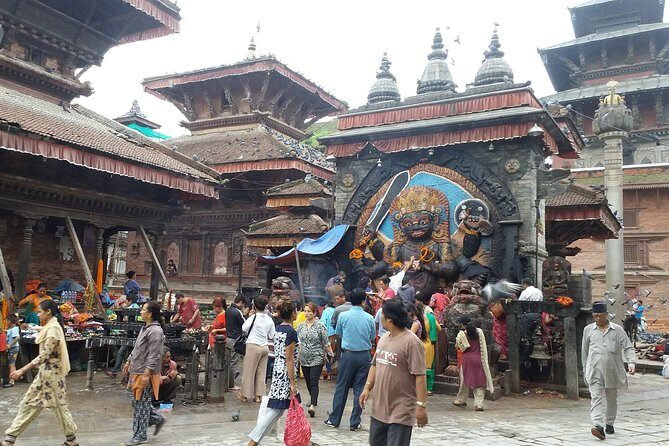
- Kathmandu Durbar Square: temples, palaces, and what you should look for
- Markets that make Kathmandu feel real: Asan and Indra Chowk
- Swayambhunath: why Monkey Temple works (even when it’s crowded)
- Price and value: $30 per person, and what you really get
- Group size, pace, and comfort: who it’s best for
- The guide factor: names you can learn from
- Should you book this Kathmandu walking tour?
- FAQ
- What’s the duration of the walking tour?
- Where does the tour start and end?
- Is pickup included?
- Does the price include entrance fees for monuments?
- Is mineral water included?
- Is this a private tour?
- What’s the cancellation policy?
Key points to know before you go
- Skip taxi time: walking cuts down on traffic stress while keeping you close to the sights
- Mineral water included: no last-minute bottle run before you start
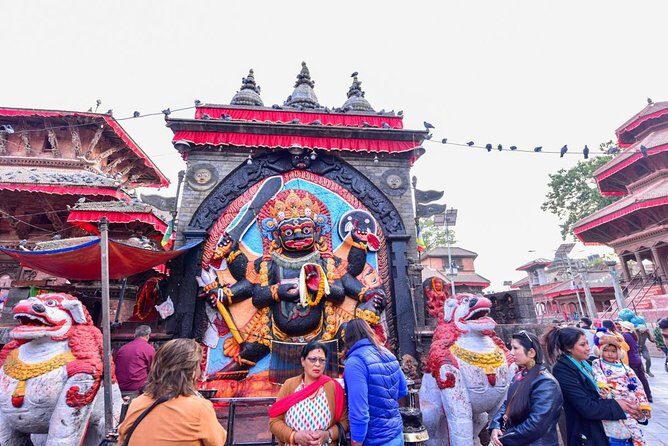
- Durbar Square first: you get a focused look at temples and palace architecture for about 2 hours
- Swayambhunath in daylight: a classic 1-hour stop to see why it’s nicknamed Monkey Temple
- Market stops fit the route: Asan (free) and Indra Chowk add everyday Kathmandu texture
- Guides matter: local experts like Madan and Subash are specifically noted for answering questions well
Why walking beats traffic in Kathmandu
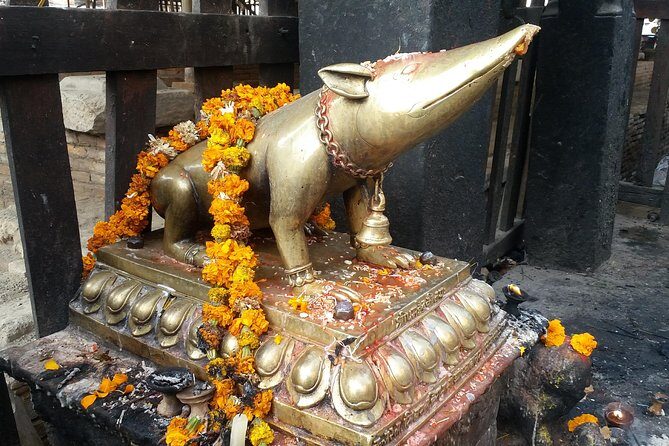
Kathmandu can be fast, loud, and unpredictable once you’re stuck in vehicles. A good walking plan changes your whole experience. You see the city at human speed—shop signs, temple courtyards, foot traffic, and the small details that taxis blur into one moving background.
This tour is set up for that kind of street-level sightseeing. You start in the Thamel area and head into the older parts of Kathmandu with a guide who keeps things organized, so you don’t burn time guessing where to go next. It’s not just “see landmarks.” It’s also “learn how the city works.”
And yes, you’ll still see plenty of action. Kathmandu street life is part of the point—but walking means you can stop, ask questions, and take in what the locals are doing right there.
You can also read our reviews of more walking tours in Kathmandu

Pickup from Thamel: what the timing really feels like
The tour picks you up from Thamel or nearby and ends back at the same meeting point. That matters more than it sounds. It keeps you from spending your best daylight wrestling with directions or negotiating a ride back to your hotel area.
The total time is listed at about 5 to 6 hours, with walking hours depending on your group. That means you should treat this as a “half-day with breaks,” not a sprint. If you’re the kind of person who likes photos and questions (you should be), plan to enjoy the time instead of trying to rush it.
You don’t need to carry everything, either. Mineral water is included, so you can keep your hands free for maps, phones, and small purchases at market stalls.
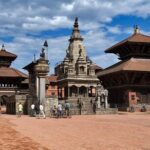
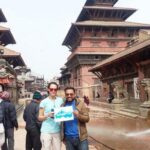
Kathmandu Durbar Square: temples, palaces, and what you should look for
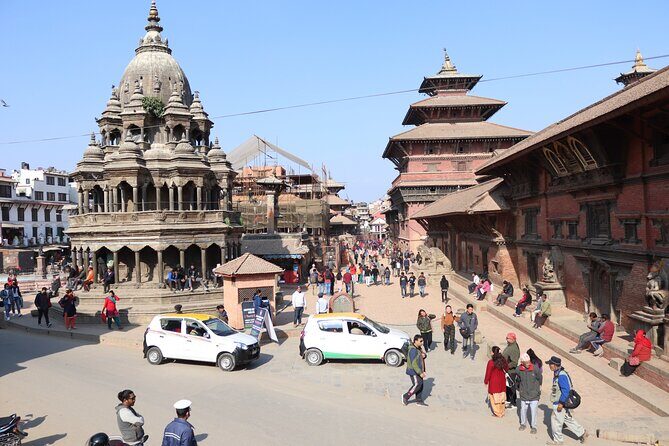
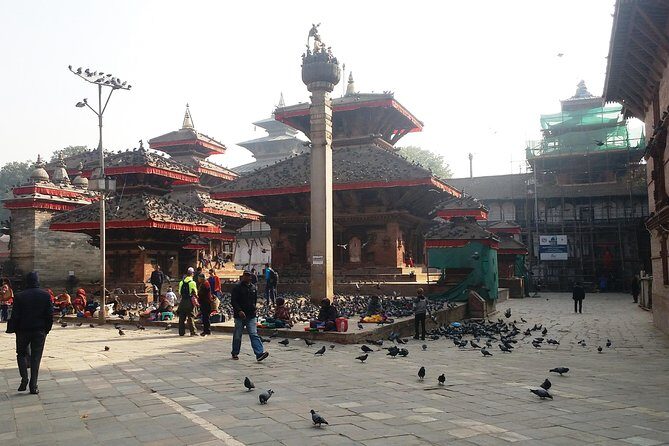
Your first major stop is Kathmandu Durbar Square, with about 2 hours on site. The important practical note is that admission tickets aren’t included, so you’ll want to factor in entrance fees if you plan to enter any monument areas.
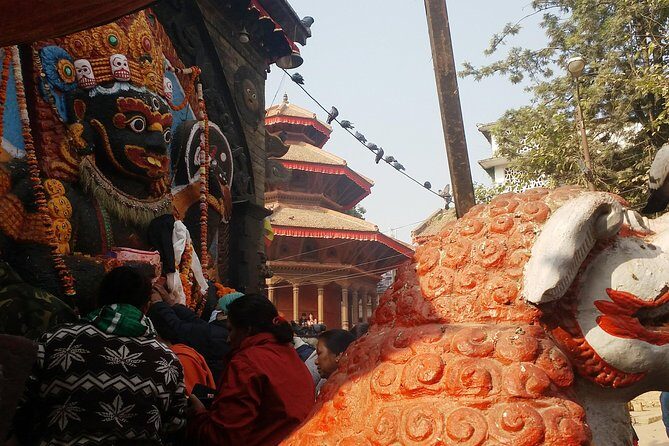
What makes this stop worth your attention is the way it mixes sacred spaces and the physical memory of the city. Durbar Square is one of those places where the architecture isn’t just decorative—it’s a record of how power, religion, and daily life shaped Kathmandu over time. Even if you’re not a “history person,” a good guide helps you connect the shapes and layouts to real meaning.
This is also where the tour’s “local guide advantage” shows up. One guide named Madan is specifically highlighted for explaining Nepalese history, with plenty of time to answer questions while you’re walking around and looking closely. That kind of guidance is gold here, because the site can feel overwhelming if you’re wandering on your own.
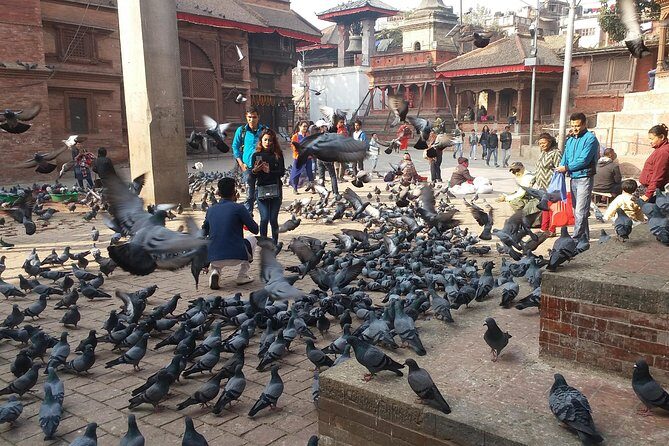
A small drawback: Durbar Square is a busy cultural zone, so you’ll want to bring patience for crowds. Going with a guide helps you move with purpose instead of getting stuck in slow-moving foot traffic.
Markets that make Kathmandu feel real: Asan and Indra Chowk
After Durbar Square, the tour shifts gears into the kind of streets that make Kathmandu feel lived-in. You’ll pass through market areas and squares where you can spot daily trade rather than only tourist signage.
Asan is one of those stops: it’s listed at about 10 minutes, and it’s marked free for admission. Asan is described as a ceremonial market and residential square, known for its bazaar energy and festival calendar. Even in a short visit, it helps you understand Kathmandu isn’t only temples and viewpoints—it’s also commerce, tradition, and routine.
Then you’ll get time around Indra Chowk, a centuries-old market area with colorful shops and stalls. The tour description calls out produce, aromatic spices, textiles, and a specialist market for beads, bangles, and ornaments. This is the part of the route where you can slow down, look at goods, and get a feel for the texture of the city.
One extra tip from the guide experiences shared: Yomari—a traditional Newari food—comes up as something a guide may help you find while you’re in the area. The tour doesn’t promise a food tasting, so don’t expect a scheduled meal. But if you’re interested in tasting local specialties, this is often where a well-timed stop fits naturally.
Swayambhunath: why Monkey Temple works (even when it’s crowded)
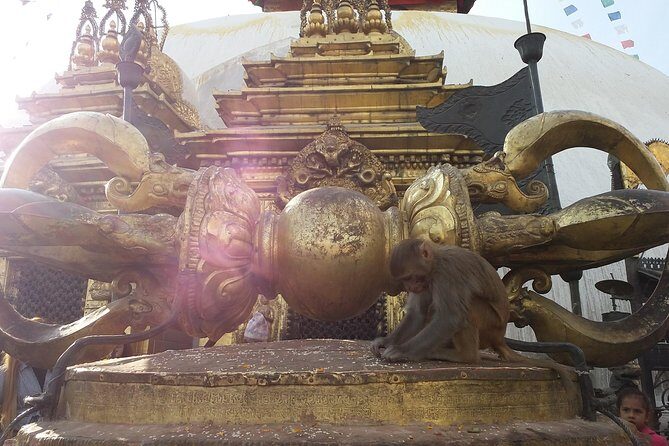
The second UNESCO World Heritage site focus is Swayambhunath, listed as about 1 hour. This hilltop landmark is widely nicknamed Monkey Temple, and the nickname isn’t just for fun. The place feels alive—by views, by activity, and by the way the site sits above the city.
Like Durbar Square, admission tickets are not included, so again: plan for entrance fees if you decide to go inside or access specific areas. Also, expect stairs or uphill walking as you approach viewpoints. If your group has mobility constraints, this is the part you’ll want to think about first.
Why this stop is worth your time: it’s one of Kathmandu’s best “big picture” moments. From the top, the city’s layout becomes clearer, and all those earlier street scenes start to connect. Your guide can help you spot what you’re looking at and explain the religious and cultural meaning of what surrounds you.
If you like religion explained without the lecture tone, this is where it shines. A guide named Subash is specifically noted for answering questions about history and major religions while navigating Kathmandu streets. That kind of explanation works perfectly at a place like Swayambhunath, where symbols can feel confusing if you’re not sure what to ask.


Price and value: $30 per person, and what you really get
At $30 per person, this tour is positioned as a budget-friendly way to do a smart “great hits” route with real local interpretation. The key value isn’t just the places—it’s the combination of a licensed guide, a time-saving walking format, and mineral water included.
Let’s be honest about what you’re paying for:
You’re paying for someone to:
- keep you moving efficiently through Kathmandu’s maze-like streets
- connect what you see to meaning, not just labels
- manage the flow between Durbar Square, market areas, and Swayambhunath
You’re also paying for a structure that helps you avoid the common tourist trap: spending hours coordinating rides and still ending up confused on foot.
What’s not included matters:
- Monuments entrance fees
- Any transfers/taxi fares (pickup is offered, but extra rides aren’t covered beyond that)
- Tips and gratuities
So the real cost may be a bit higher once entrance fees come into play. Still, compared with paying for multiple separate guide days or trying to assemble your own route, this tends to come out as good value—especially if you like the idea of getting your bearings fast.
One more practical detail: it’s set up as a private tour, meaning only your group participates. Private can be worth it in Kathmandu, where you don’t want to keep pace with strangers while trying to understand sacred architecture and market etiquette.
Group size, pace, and comfort: who it’s best for
This is a private tour/activity, suitable for many age groups who want to explore Kathmandu locally, and it’s bookable round the year. Most people can do it, but walking comfort matters.
If you’re:
- short on time but want a meaningful route
- tired of taxi windows and want real street context
- interested in culture and religion, explained in simple language
…this is a strong fit.
If you don’t like walking, or if your group has limited mobility, you may feel the stairs and hill approach at Swayambhunath more than you expect. You can still ask your guide to pace things, but the route is fundamentally walking-based.
The upside is that the guide can usually steer you away from wasted time and keep stops efficient. Local guides also know where the crowd pressure builds, so you’re less likely to get stuck waiting for movement.
The guide factor: names you can learn from
The tour’s standout theme is the guides. In the experiences shared, multiple guides are praised for handling questions and turning “what is this?” into “now I get it.”
Madan is highlighted for Kathmandu Durbar Square and downtown explanations, plus helping someone find Yomari while moving through Indra Chowk. Subash is highlighted for over four hours of walking with clear answers about the city’s history and main religions. Another name you may see in guide assignments is Raghu Nath Pradham, connected with organization and a smooth overall trip structure.
Even the support details matter. One experience notes Rakesh as handling safe and pleasant transport, which fits the idea that pickup and movement around Kathmandu should stay calm.
Bottom line: if you care about understanding more than taking photos, choose this tour for the human guidance.
Should you book this Kathmandu walking tour?
Book it if you want:
- a structured way to see Durbar Square and Swayambhunath without getting lost
- market texture added in (Asan and Indra Chowk are part of the point)
- local guidance that answers questions while you walk
- mineral water included and a pace that works for a half-day
Skip it or consider a gentler alternative if:
- you’re not comfortable with hilltop walking and stairs
- you’d rather do monuments at your own speed without a guide
- your budget can’t handle extra entrance fees at monuments
For most first-timers and mid-timers in Kathmandu, this is a smart way to turn limited time into real understanding—especially because walking helps you experience Kathmandu as a place, not just a list.
FAQ
What’s the duration of the walking tour?
The tour runs about 5 to 6 hours. Walking time can vary depending on the group’s pace and interests.
Where does the tour start and end?
The tour starts in Thamel (or the surrounding area) and ends back at the meeting point.
Is pickup included?
Yes, pickup is offered from Thamel or surrounding areas.
Does the price include entrance fees for monuments?
No. Monument entrance fees are not included, so you should plan for tickets where required.
Is mineral water included?
Yes. Mineral water is included, so you don’t need to bring your own just to stay hydrated.
Is this a private tour?
Yes. Only your group will participate, so it’s a private experience.
What’s the cancellation policy?
You can cancel for a full refund up to 24 hours before the experience starts. If you cancel less than 24 hours before, the amount paid is not refunded.