REVIEW · KATHMANDU
Kathmandu: Pashupatinath Evening Aarati Tour Private/Group
Book on GetYourGuide →Operated by Himalayan 360 · Bookable on GetYourGuide
An evening at Pashupatinath hits different. This tour pairs a guided walk through one of Kathmandu’s most important Hindu shrines with the Bagmati River ritual, where priests, music, bells, and oil lamps all line up into one moving scene. I like that you get hotel pickup and drop-off in Thamel, and I also like the licensed guide who puts the sights in context before the ceremony starts. One thing to consider: where you’re positioned for the aarti can make a big difference for views and photos, so ask your guide about the viewing spot when you arrive.
If you want a spiritual experience that’s practical (not just a bus ride and a selfie), this works well. Expect chanting, bell ringing, incense, and devotional music starting around 6 pm, plus a bit of free time to look around the temple complex at your own pace. A possible drawback: if you’re hoping for a specific angle of what you’ll see along the river area, don’t assume the first seating will be perfect—one review flagged that their spot didn’t match what they wanted.
In This Review
- Key highlights you’ll care about
- Hotel Pickup to Pashupatinath: how the late-afternoon timing works
- First stop: a guided walk inside the Pashupatinath temple complex
- A small but real practical note
- The Bagmati River evening aarti: what happens around 6 pm
- Where you’ll stand for the ceremony (and why it can make or break your photos)
- Transportation and free time: the balance you get in 2–3 hours
- Price and what your $22 really buys
- Guide quality: how much the experience depends on Amrit-style context
- What to bring and how to prepare for an evening by the river
- Who this tour suits best (and who should rethink it)
- Should you book this Kathmandu Pashupatinath Evening Aarati tour?
- FAQ
- How long is the Pashupatinath evening aarti tour?
- Where does the pickup happen?
- What time does the evening aarti start?
- Is there a guided portion before the ceremony?
- What’s included in the price?
- Are entry fees included?
- Is food or drinks included?
- What languages are the guides available in?
- What should I bring?
Key highlights you’ll care about
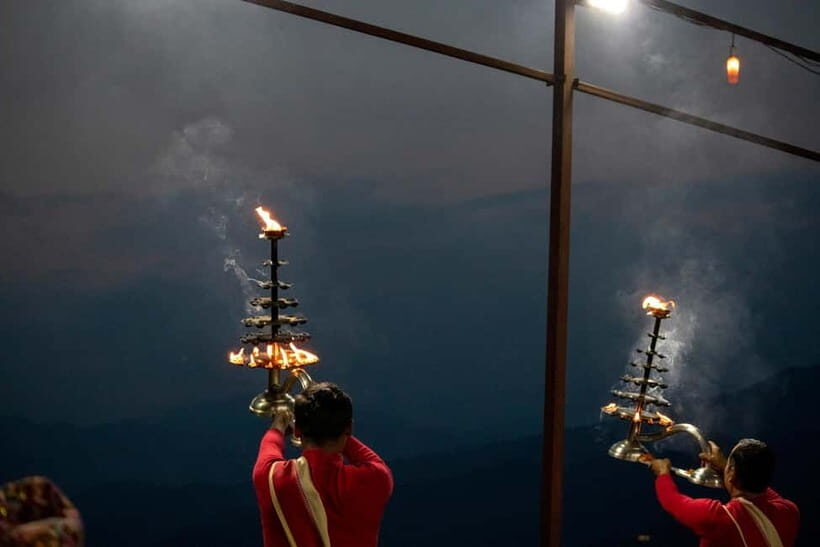
- Bagmati River aarti around 6 pm: oil lamps, bells, chanting, incense, and live devotional music in one timed ceremony.
- Guided temple visit first: history and religious significance explained before you’re left to explore.
- You get free time inside the complex: about 1.5 hours for walking, sightseeing, and self-paced wandering.
- Thamel-area pickup and drop-off: specifically from Thamel or nearby, with two common meeting points.
- Private group is available: handy if you want quieter questions and less group shuffling.
- Price includes the hard parts: transport, guide, and taxes are bundled for $22 per person.
Hotel Pickup to Pashupatinath: how the late-afternoon timing works
This tour starts in Kathmandu with pickup from Thamel (or nearby), then you drive to Pashupatinath in the late afternoon. The timing matters because you’ll arrive before the main ritual so you can settle in, learn the basics, and then actually enjoy the ceremony when it begins.
The ride itself is part of the experience. You’re heading toward a temple complex tied to the Bagmati River, so you’ll notice the shift from city noise to a more ceremonial atmosphere as the evening approaches. It’s a smart setup: you’re not rushing around with no context right when the chanting starts.
Your total outing runs 2–3 hours, which is compact for a major cultural site. That’s good if you’re short on time in Kathmandu, but it also means you’ll want to keep your energy for the riverbank portion, which is the emotional center of the evening.
You can also read our reviews of more private tours in Kathmandu

First stop: a guided walk inside the Pashupatinath temple complex
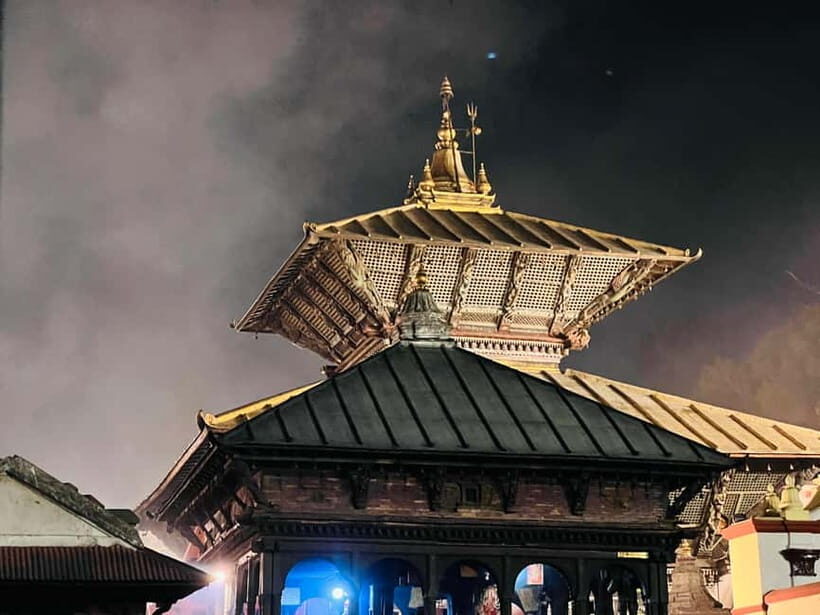
Before the aarti, your licensed English-speaking guide briefs you about what you’re seeing. The focus is on religious significance, history, and architectural details—enough to help you make sense of why this place matters without drowning you in details you’ll never use.
Then you’ll head into the temple complex with the guide. After the guided part, you get free time to explore on your own. The walking/sightseeing time is listed as about 1.5 hours, so think of it as: learn for a bit, then wander for a bit.
What makes this stop valuable is the order. You’ll understand the symbolism behind the ritual before you watch it happen. That turns the aarti from a show into something you can actually read.
A small but real practical note
Temple areas can be busy and rules can apply, so comfortable shoes are a must. Plan for standing time later, especially near the river where you’ll want clear sight lines.
The Bagmati River evening aarti: what happens around 6 pm
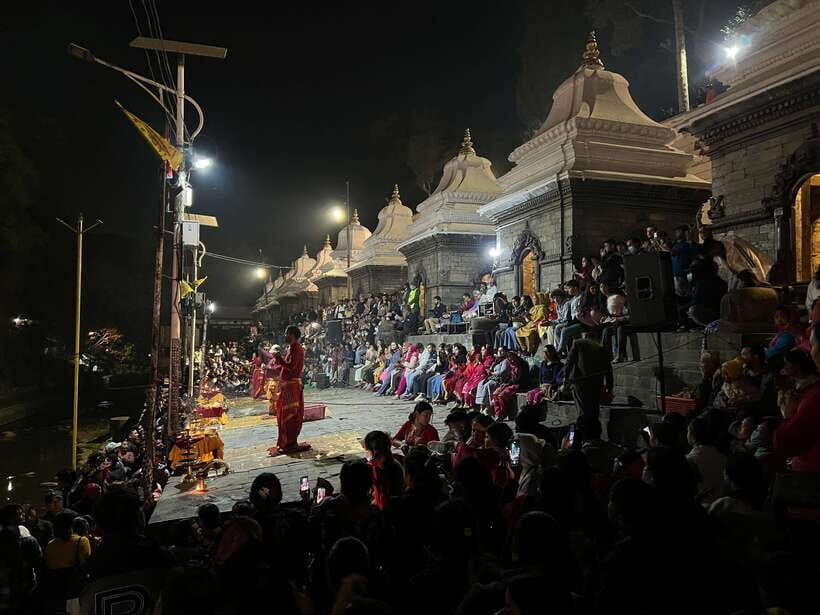
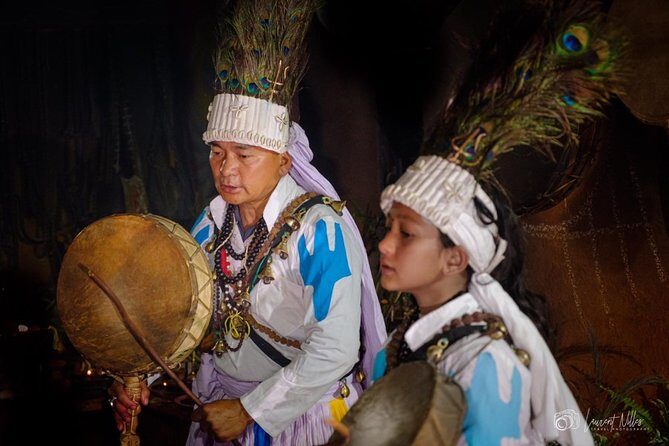
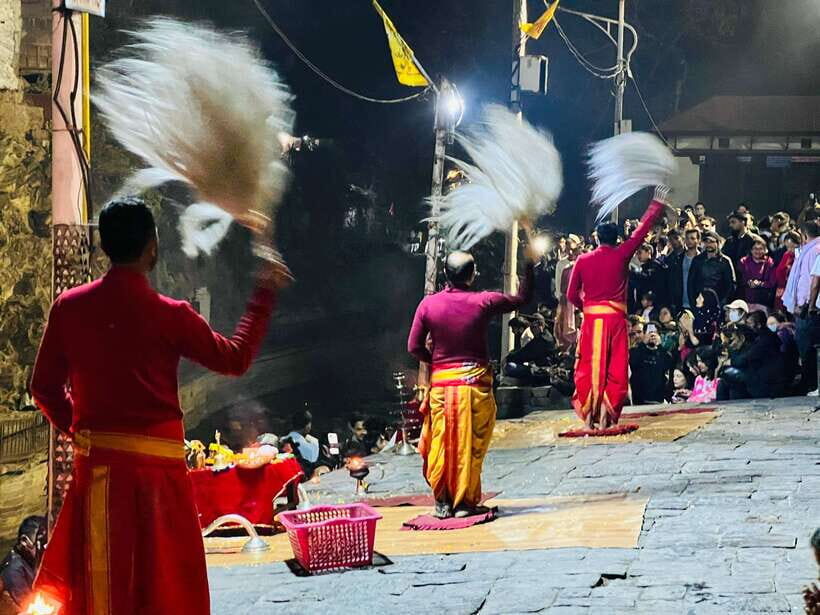
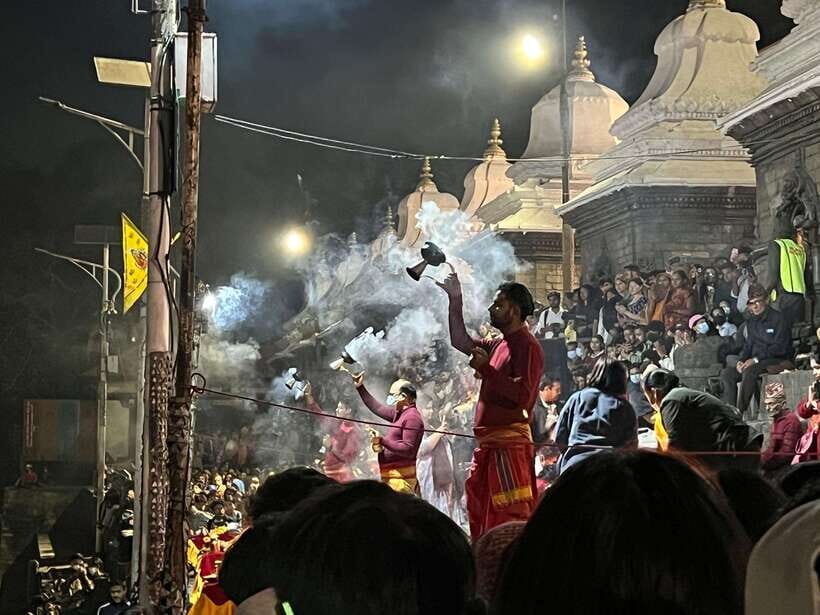
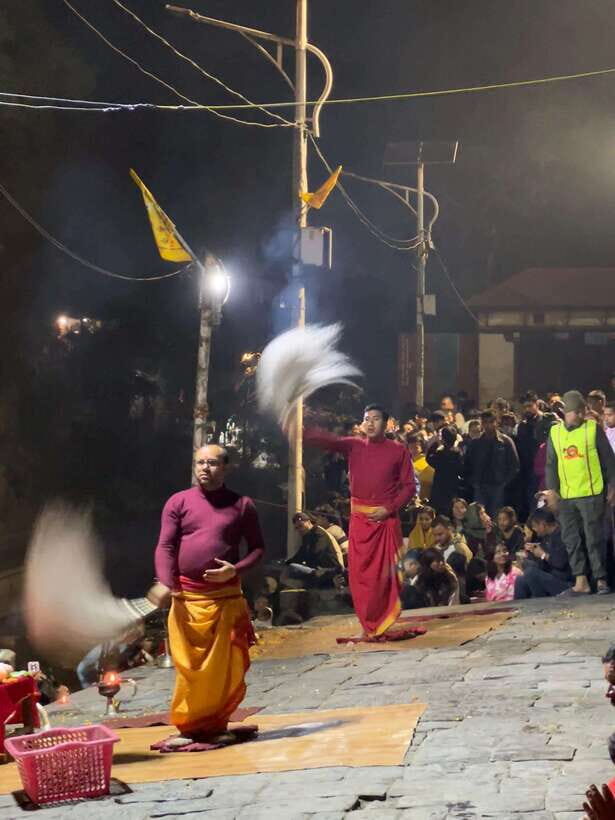
Around 6 pm, the evening aarti starts on the eastern bank of the Bagmati River. This is the headline moment: a rhythmic, sensory ceremony built from multiple layers at once.
Here’s what you can expect during the ritual:
- Chanting of Vedic mantras
- Bells ringing in rhythm
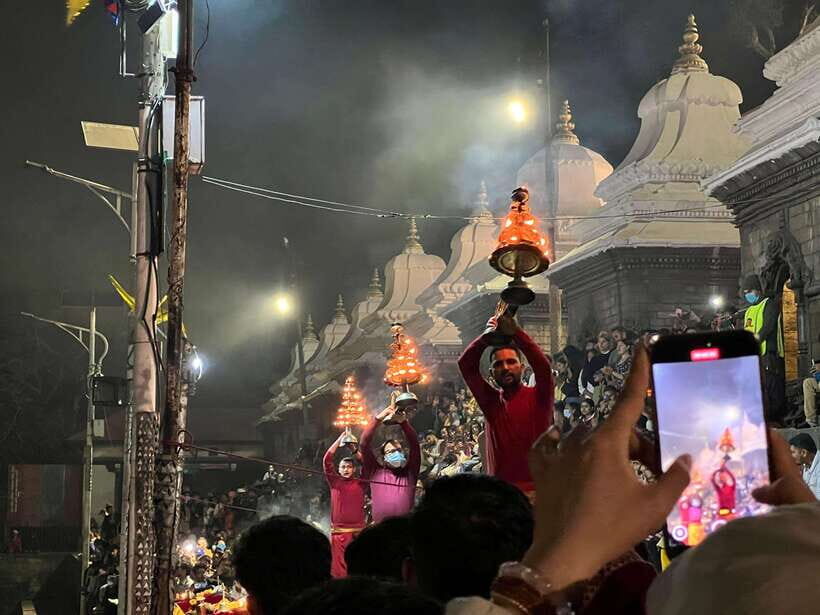
- Priests waving oil lamps in intricate patterns
- Incense burning through the air
- Live music using classical instruments and devotional hymns
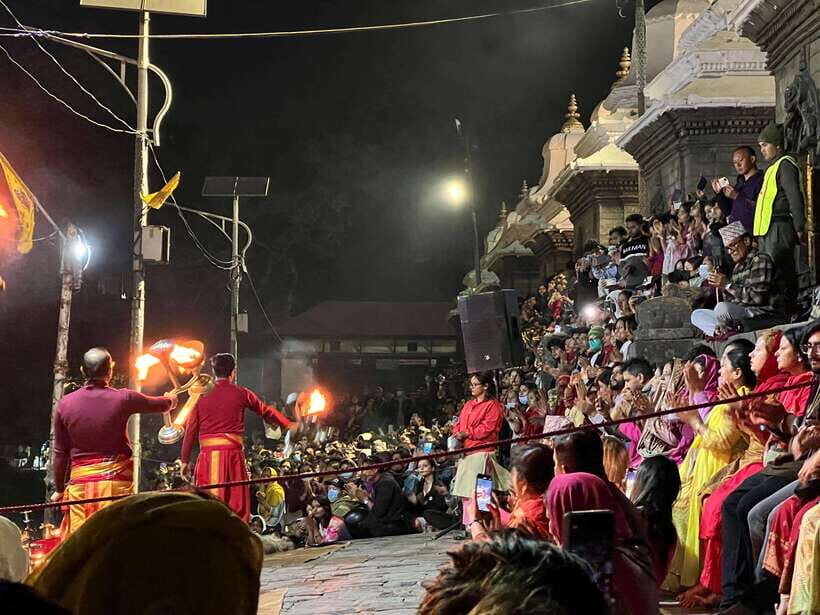
The effect is that you’re not just watching people perform—you’re watching a tradition being lived. The flicker of oil lamps along the riverbank makes the whole scene feel like time slows down. And the sound matters: chanting, bells, and live music blend into something that’s physical, not just background noise.
Your guide may also help you understand what you’re seeing as it unfolds. That’s especially useful if you want to know what parts of the ceremony are happening and why they’re placed in a particular sequence.
Where you’ll stand for the ceremony (and why it can make or break your photos)
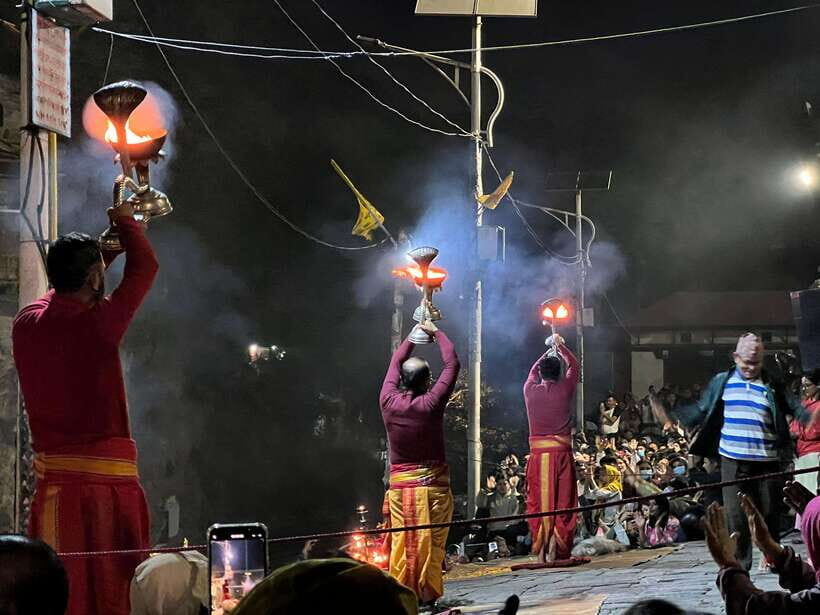
One of the most important lessons from real-world experience is simple: your viewing spot matters. In one verified booking, a guest said their group was seated in a spot that didn’t match what they wanted to see, even after they asked to adjust. That’s a reminder to be proactive.
When you arrive near the riverbank, take a minute:
- Identify where the main action line is (where the priests and lamps are).
- Consider where you’ll be able to see without constant craning.
- If your view seems blocked, speak up early and ask if there’s flexibility.
Also, bring a camera if you want photos. Just be ready for low light and smoke/incense in the air. Oil lamps provide a warm glow, but it’s not the kind of lighting that makes everyone’s camera behave perfectly.
If you care most about the ceremony itself—not other river activity—tell your guide what you want to focus on. That way, they can aim you toward the best practical viewpoint for your priorities.
You can also read our reviews of more evening experiences in Kathmandu




Transportation and free time: the balance you get in 2–3 hours
This isn’t a long, slow day. You’ll drive there and back, visit the temple with a guide, enjoy some self-paced time, and then concentrate on the aarti.
The rhythm usually feels like this:
- Pickup in Thamel, late afternoon drive
- Guided briefing and temple complex exploration
- Free time to wander and absorb
- Aarti begins around 6 pm on the Bagmati River
- Drive back to your hotel area
That structure is good value for many people because it removes stress. You’re not figuring out routes, timing, or what to pay attention to. It also keeps you from spending half the evening stuck in logistics.
Just keep your expectations realistic. Free time is built in, but it’s not a full afternoon where you can go deep into every corner. If you’re the type who wants to read every sign and linger for hours, you might wish you had more time. But if you want the core experience, this schedule hits the mark.
Price and what your $22 really buys
At $22 per person, this tour is priced like a value option that still includes the essentials. What you get included:
- Hotel pickup and drop-off (from Thamel or nearby)
- Transportation to and from Pashupatinath
- Licensed English-speaking guide
- All taxes and service charges
Not included:
- Entry fees
- Food and drinks
That “included” list is the part that matters. In cities like Kathmandu, transportation and a guide can easily cost more than people expect—especially when the goal is evening timing. Bundling it into one price helps you avoid surprise costs for basic logistics.
The trade-off is that you still need to budget separately for any entry fees and your own water/snacks. Since the tour is only 2–3 hours, food needs are usually manageable, but don’t assume it’s provided.
Guide quality: how much the experience depends on Amrit-style context
The ceremony is spectacular on its own, but the difference-maker is usually your guide’s explanations. One verified booking specifically mentioned Amrit as fantastic and very informative, with lots of questions answered.
That’s the sweet spot you should look for: a guide who helps you understand what you’re seeing without turning it into a lecture. If your guide is good at pacing, you get the best of both worlds—context first, then the ceremony as the main event.
On the other hand, one review complained about being placed in a less ideal spot and also about the guide chatting in a way that felt distracting. That doesn’t mean every tour will run that way, but it does underline why you should:
- Ask questions early
- Confirm your viewing plan upon arrival
- Request a better seat/view if something feels off
What to bring and how to prepare for an evening by the river
This is one of those tours where packing light is fine, but packing smart is better. Bring:
- Comfortable shoes (standing and walking time)
- Camera (if you want photos)
- Cash (the tour notes cash as a helpful item)
Wear layers if you get cold after sundown. Incense and smoke can also affect how clothing feels, so think practical: something you don’t mind brushing past aromas.
Also, keep in mind that a riverbank ceremony involves sound and crowds. If you’re sensitive to noise or smell, just know what you’re walking into. It’s not a museum setting; it’s a live ritual.
Who this tour suits best (and who should rethink it)
This tour is best for adults and older kids who want a focused cultural experience in a short window. It’s also a strong choice if you prefer guided context rather than wandering a big complex on your own.
It’s not suitable for:
- Children under 2 years
- Children under 5 years
- Wheelchair users
- Babies under 1 year
If any of those apply to you, skip this option and look for a different plan that matches your needs.
If you’re traveling as a couple, it can feel intimate. If you go as a group, private group availability can help reduce the small chaos that comes with uneven pacing and language needs.
One more fit check: if your main goal is the aarti only, make sure you’re clear about viewing priorities early. The ceremony is the core, but your spot determines how much of it you truly get to see.
Should you book this Kathmandu Pashupatinath Evening Aarati tour?
Book it if you want:
- A structured evening that includes pickup, transport, and a guide
- The Bagmati River aarti around 6 pm with lamps, bells, incense, and live devotional music
- A mix of guided learning and some time to explore on your own
Skip it or ask a lot of questions first if:
- You’re very picky about the exact viewing angle for the ceremony
- You’re traveling with someone who can’t handle walking and standing in temple and riverbank areas
- You’re hoping food is included (it isn’t)
For most people in Kathmandu with a limited schedule, this is a solid value way to experience a major Nepalese Hindu ritual without doing the planning yourself.
FAQ
How long is the Pashupatinath evening aarti tour?
The duration is listed as 2 to 3 hours.
Where does the pickup happen?
Pickup is available from Thamel and Thamel Marg, and also from nearby areas (only from Thamel or nearby).
What time does the evening aarti start?
The evening aarti ceremony starts at about 6 pm.
Is there a guided portion before the ceremony?
Yes. You’ll get a guided tour and briefing about Pashupatinath Temple, then you’ll have free time to explore.
What’s included in the price?
Included: hotel pickup and drop-off (from Thamel or nearby), transportation to and from Pashupatinath Temple, a licensed English-speaking guide, and all taxes and service charges.
Are entry fees included?
No. Entry fees are not included.
Is food or drinks included?
No. Food and drinks are not included.
What languages are the guides available in?
The guide support is listed as English, Hindi, and Chinese.
What should I bring?
Bring comfortable shoes, a camera, and cash.