REVIEW · KATHMANDU
Kathmandu to Annapurna Base Camp (ABC) 5-Day Trek
Book on Viator →Operated by Cordial Trek Pvt. Ltd. · Bookable on Viator
Your time is short, but your views won’t be. This 5-day Annapurna Base Camp (ABC) trip is built for people who want the classic Annapurna Sanctuary feel without a long multi-week trek, starting with a hotel pickup in Kathmandu and a quick flight to Pokhara. I like that it includes the big essentials—permits, a licensed guide, and mountain guest house lodging—so you’re not juggling logistics on the fly. I also like the route rhythm: you climb from Simrung toward Sinuwa, reach ABC at 4,130 m, and then finish with a down-trek that includes the famous natural hot spring at Jhinu Danda. One consideration: it’s only five days, so the altitude can still hit hard for some people even though the trek is the “shortest possible” way to reach ABC.
A lot of the “worth it” factor here is in how the trip is run day-to-day. You travel with a guide (English and Hindi) who’s there for route support and safety, and the experience is designed to feel organized from Kathmandu to the return to Pokhara after Jhinu Danda. In the past, trekkers have highlighted guides and porters who keep things calm, check in on how you’re doing, and keep morale up when the climb gets annoying. Still, meals and drinks are not included, so your budget needs a little breathing room for tea house food along the trail.
Finally, make sure you understand what the included flights cover before you pack. The package includes the Kathmandu-to-Pokhara flight one way, but the trek’s final day finishes in Pokhara after driving from Jhinu Danda—so plan your next leg from Pokhara back to Kathmandu on your own. If you want a guided, time-efficient ABC trek and you’re okay handling meals yourself, this is a strong match.
In This Review
- Key things you’ll notice on this 5-day ABC trek
- A 5-day shortcut to Annapurna Base Camp at 4,130 m
- Kathmandu to Pokhara flight, then the Simrung start
- Day 1 to Sinuwa: first taste of the Annapurna Sanctuary approach
- Day 2 to Deurali: tea houses, dense forest, and waterfall country
- Day 3 to ABC via Machhapuchhre Base Camp: the big arrival day
- Day 4 sunrise at ABC, then a descent back toward Sinuwa
- Day 5 Jhinu Danda hot springs, then drive back to Pokhara
- Price and logistics: what $99 includes, and what you still pay for
- Guides, safety, and the human side of trekking
- What kind of traveler should book this ABC trek?
- Should you book this 5-day Annapurna Base Camp trek from Kathmandu?
- FAQ
- How long is the Kathmandu to Annapurna Base Camp 5-day trek?
- What’s the highest altitude on this trek?
- Does the trip include pickup in Kathmandu?
- Are trekking permits and national park fees included?
- Are meals and drinks included?
- Is porter service included?
- Where do you stay during the trek?
- Is the flight included for the return trip to Kathmandu?
- Is free cancellation available, and what happens if weather is bad?
Key things you’ll notice on this 5-day ABC trek
- Shortest practical route to ABC (4130 m) in about five days, with the focus on reaching the base camp zone quickly
- Hotel pickup + flight to Pokhara + ground transfers so you’re not working out the whole chain yourself
- Guided trekking with permits handled (trekking permits and national park fees are included)
- Real tea house trekking days with overnight stops at Sinuwa and Deurali, then a return trek
- Jhinu Danda hot spring built into the final day so your legs get a reward instead of just a finish line
A 5-day shortcut to Annapurna Base Camp at 4,130 m
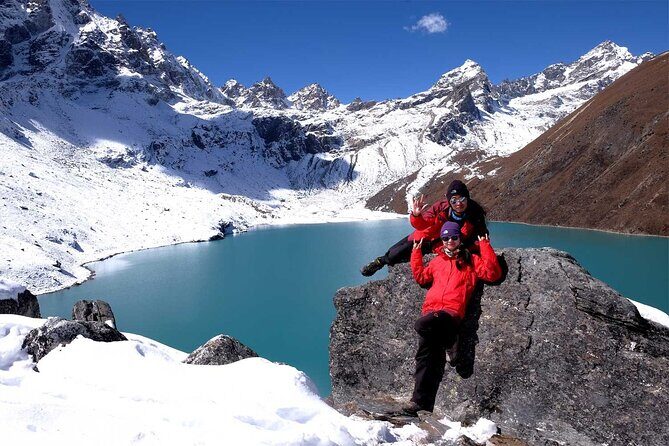
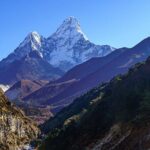
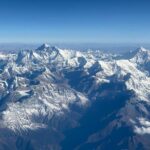
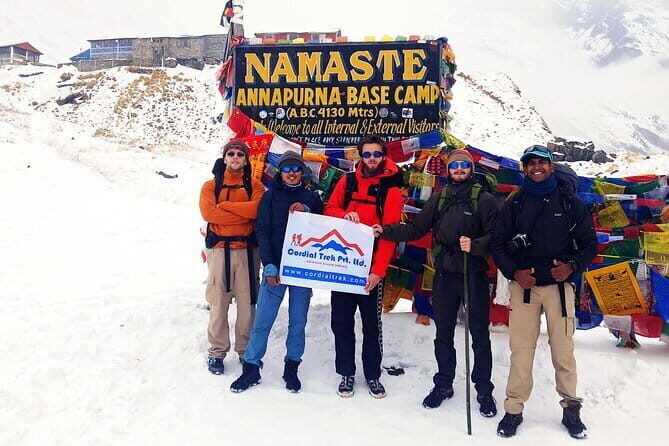
Annapurna Base Camp sits at 4,130 m (13,550 ft), inside the Annapurna Sanctuary—an icy basin north of Pokhara. Annapurna I rises to 8,091 m, and that whole region’s scale is part of what makes ABC feel special: you’re not just “visiting a place,” you’re stepping into a high-mountain world where the mountains dominate everything.
This trek is marketed as the shortest possible way to get to ABC, and that matters for your decision. If you only have about a week in Nepal, a five-day format gives you a serious mountain milestone without stretching your time off work into a full-on expedition.
The tradeoff is also real. Five days means you’ll spend more time climbing each day than a longer, more gradual acclimatization plan would. You’ll still be trekking with a guide, but you should treat this as a physical challenge, not a casual stroll.
You can also read our reviews of more hiking tours in Kathmandu
Kathmandu to Pokhara flight, then the Simrung start
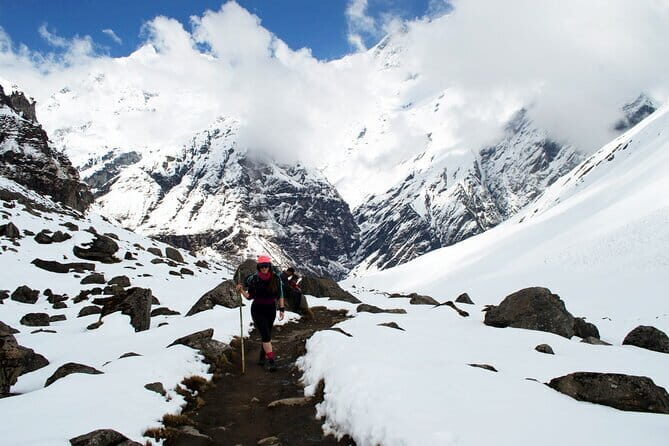
Day 1 begins with an early pickup from your hotel or apartment in Kathmandu, then transfer to Tribhuvan International Airport for the flight to Pokhara. The flight itself is quick—about 25 minutes—and that short airborne jump is one of the smartest parts of the plan. It saves you a day of road travel and puts you on the trail while you still have energy.
After landing in Pokhara, you’ll drive to Simrung to start the trek. Then the day turns into real walking: you hike toward Sinuwa via Jhinu Danda and Chomrong, aiming for a night halt in Sinuwa.
What I like about this “fly first, trek second” structure is that it keeps the trek focused. You’re not spending your first hours in Nepal stuck in transit, guessing where to go. The included shared vehicle from Pokhara to Simrung and back later also helps, even if you don’t know the region.
One practical note: plan your Kathmandu day to be early and efficient. If you’re the type who likes a slow morning with a long café breakfast, you may need to adjust your expectations on Day 1.
Day 1 to Sinuwa: first taste of the Annapurna Sanctuary approach
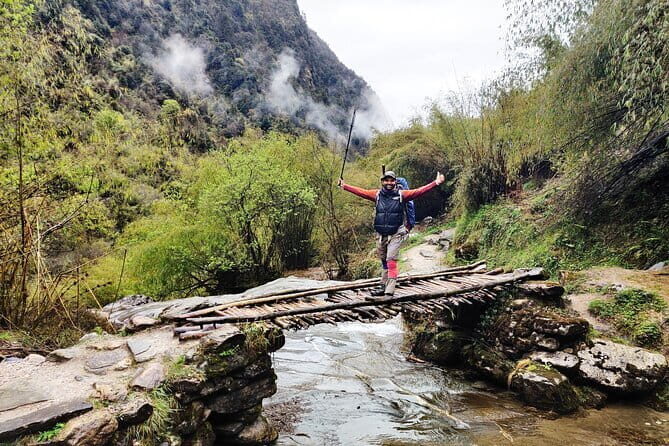
The goal on Day 1 is to get yourself into the rhythm of the trek by moving from Simrung toward Sinuwa. The walking time is described as about 5–6 hours, with the route passing through well-known points like Jhinu Danda and Chomrong before stopping overnight in Sinuwa.
Why Sinuwa is a useful stop: it acts like a launch pad for the higher days ahead. By the end of Day 1, you’re not just thinking about getting through today—you’re setting up the next climb to Deurali.
A detail worth knowing: this route is described as passing through lush green rhododendron forests, and those forests are part of what makes the trail feel alive instead of just steep. If the weather is clear, you’ll often get better views once you’re above the thicker valley cover, and Sinuwa is a place where those moments can show up.
Possible drawback: with a shorter trek total, Day 1 is still a real day. You’ll want to keep your pace steady instead of trying to prove something on the first big incline.
Day 2 to Deurali: tea houses, dense forest, and waterfall country
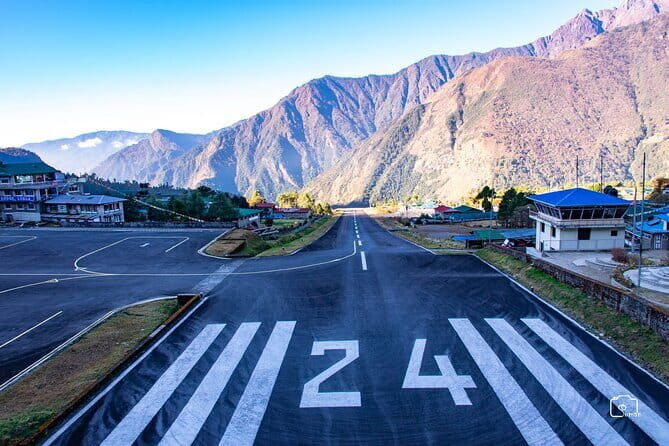
On Day 2 you hike from Sinuwa to Deurali, described as about 6–7 hours. The route goes via Himalaya, a small settlement with tea houses, and you’ll move through dense forest while seeing waterfalls along the way.
This day is a key “make or break” moment for many people. If you go out too fast on Day 1, Day 2’s longer walk can feel heavier. If you keep a controlled pace and drink enough water, you’ll usually feel like you’re building strength.
Deurali’s appeal is simple: it’s another mountain stop where you can settle into tea house life for the evening. Even if you prefer faster travel, there’s value in having a structured overnight in a place that’s set up for trekkers.
What to expect: forest trekking can be cooler and slower, but it’s still distance on distance. Bring layers you can manage easily, because cloud cover and shade can swing quickly.
Day 3 to ABC via Machhapuchhre Base Camp: the big arrival day
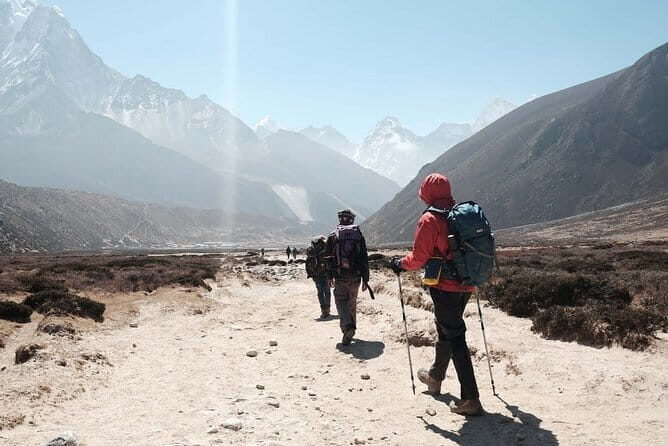
Day 3 is your destination day: you arrive at Annapurna Base Camp. The route is described as going via Machhapuchhre Base Camp (MBC), and you pass through the MBC valley on the way in.
This is the day you’re picturing when you book an ABC trek. ABC at 4,130 m isn’t the world’s highest peak, but the feeling is different because you’re inside the amphitheater of the Annapurna Sanctuary. Even the approach can feel like you’re walking into a “real” mountain geography, with the peaks growing more important as you move closer.
You’ll also likely feel the altitude more strongly on this day than earlier. That doesn’t mean you’re doomed—it means you should treat your breathing like it matters (because it does). If you find yourself gasping, slow down. A guide will typically help you keep moving at a sustainable pace.
One more thing I’d keep in mind: the route through Machhapuchhre Base Camp adds variety. It’s not a one-note climb; you’re traveling through a valley setting on the way to ABC, which can make the last push feel less repetitive.
You can also read our reviews of more tours and experiences in Kathmandu
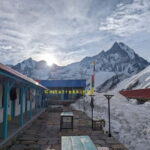
Day 4 sunrise at ABC, then a descent back toward Sinuwa
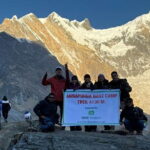
Day 4 starts with a sunrise view and breakfast at Annapurna Base Camp. After that, you trek down toward Sinuwa via Deurali, Himalaya, and Dobh (those are the key places named on this itinerary).
This is where your trek becomes more comfortable in one sense and harder in another. Descents often feel easier on the breathing side, but they can be tough on knees and feet. Keep your steps short and controlled. If your legs feel shaky, it’s better to slow down than to power through.
I like having sunrise at ABC built in, because it turns your base camp time into something more than just a photo stop. You’re not just reaching the goal—you’re also experiencing the mountain at a different light level.
By the time you’re heading back toward Sinuwa, you’ll likely appreciate how the earlier stops make sense. The “return trail” is not a random route; it uses familiar stepping stones so you can keep moving without guesswork.
Day 5 Jhinu Danda hot springs, then drive back to Pokhara
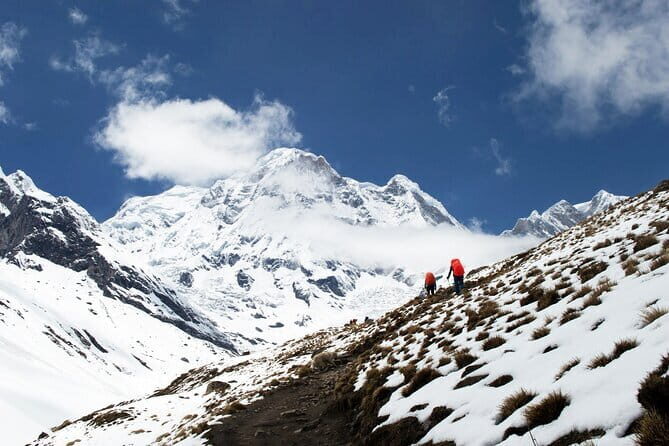
Day 5 is your reset day. You trek down toward Simrung via Jhinu Danda, taking about 5–6 hours. Jhinu Danda is famous for its natural hot springs, and the plan is to enjoy a hot spring bath as a reward after the hike.
This is one of the best finishes you can ask for after cold mornings and long walking days. Hot springs are not magic, but they can make your legs feel less angry, especially if you’ve been dealing with that trekking-boot ache.
After time at Jhinu Danda, you drive back to Pokhara for a short break (about 2 hours). In the evening, the trek wraps with a celebration of completion in Pokhara.
Now the important logistics point: the included flight is only Kathmandu-to-Pokhara one way. Since Day 5 ends in Pokhara, you’ll need to handle your own travel back to Kathmandu from there unless your provider arranges it separately.
Price and logistics: what $99 includes, and what you still pay for
The headline price is $99 per person, and that’s the kind of number that makes you want to ask: what’s missing?
Here’s what’s explicitly included:
- Flight tickets Kathmandu–Pokhara one way (for the Kathmandu option)
- Shared vehicle Pokhara–Simrung–Pokhara
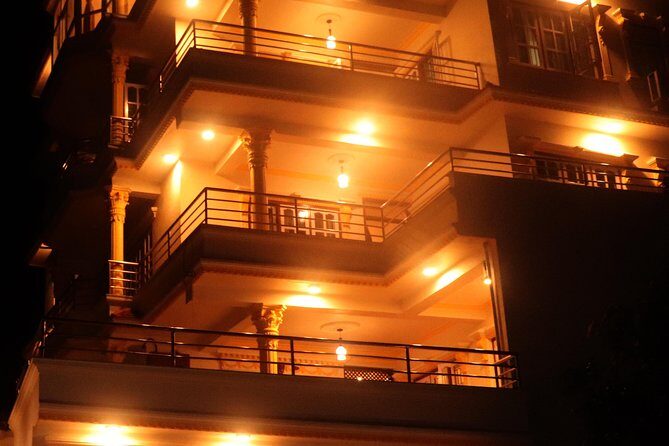
- Mountain guest house accommodation for 4 nights
- Trekking permits and national park fees
- A licensed trekking guide
- Hotel pickup and drop in Kathmandu
- Guide languages: English and Hindi
- Mobile ticket
What’s not included:
- All meals and drinks
- Porter service
So the value is strong if you can manage your own food and you’re comfortable carrying your day gear. Tea house meals along the trail can add up, but they’re also part of the day-to-day experience. If you want convenience like full meal inclusion or a porter to take the load, you should budget extra or confirm how that’s handled for your group.
One more detail that matters: this is described as private, meaning it’s only your group participating. At the same time, the offer mentions group discounts. In practice, that usually means the price can improve if you travel with friends or match with others depending on availability—so it’s worth asking what discount applies to your exact group.
Finally, plan ahead. This trek is often booked about 35 days in advance, which tells me the sweet spots (and the best weather windows) don’t hang around forever.
Guides, safety, and the human side of trekking
What I care about most on an ABC trek isn’t just altitude or photos. It’s whether the person guiding you can keep things calm when the weather shifts or the climb gets slow.
This operator uses licensed guides and has English/Hindi support, and the experience style described by past trekkers has a few clear strengths. Guides have been praised for making solo trekkers feel safe, staying attentive to physical comfort, and keeping the mood light when conditions get tough. Porters have also been highlighted as cheerful and helpful, which matters because the mountain doesn’t care if you’re tired—it just keeps going.
If you’re choosing this trek, ask one simple question before you commit: who will be my guide, and will I have porter support if I want it? Since porter service is listed as not included, you’ll want clarity for your situation.
What kind of traveler should book this ABC trek?
This five-day ABC route fits best if:
- You have limited time and still want to reach ABC at 4,130 m
- You’re comfortable trekking at a moderate fitness level
- You want guided route support and permits handled
- You’re okay buying meals and drinks along the trail
It may be less ideal if:
- You need full-service meals included
- You want a long acclimatization plan built into the schedule
- Your priority is independent hiking without a guide
If you’re a first-time trekker, this can still work, because the structure is clear: guided steps, set overnight stops, permits covered, and a finish that includes hot springs. Just don’t treat it like a walk in the park.
Should you book this 5-day Annapurna Base Camp trek from Kathmandu?
I’d book it if you want a focused ABC mission in about five days and you like having logistics handled: pickup in Kathmandu, flight to Pokhara, permits, guided trekking, and guest house nights. The inclusion of trekking permits and mountain lodging is where the value really shows up, especially at the $99 price point.
I wouldn’t book it on impulse if you’re trying to keep costs ultra-tight without planning for meals, or if you rely on a porter to carry the bulk of your kit. Also, because Day 5 finishes in Pokhara, you’ll need to plan your return to Kathmandu—don’t assume the package covers everything after the trek ends.
If you’re the type who wants a real sense of accomplishment without spending weeks on the trail, this is a smart way to do Annapurna Base Camp.
FAQ
How long is the Kathmandu to Annapurna Base Camp 5-day trek?
It’s about 5 days, with a short flight from Kathmandu to Pokhara and multi-day hiking, ending with a return drive back to Pokhara.
What’s the highest altitude on this trek?
Annapurna Base Camp is listed at 4,130 m (13,550 ft).
Does the trip include pickup in Kathmandu?
Yes. Hotel pickup and drop in Kathmandu are included.
Are trekking permits and national park fees included?
Yes. Trekking permits and national park fees are included.
Are meals and drinks included?
No. All meals and drinks are not included.
Is porter service included?
Porter service is not included.
Where do you stay during the trek?
You stay in mountain guest houses for 4 nights.
Is the flight included for the return trip to Kathmandu?
The flight ticket included is Kathmandu to Pokhara one way. Day 5 ends back in Pokhara, so you’ll need onward travel from Pokhara after the trek.
Is free cancellation available, and what happens if weather is bad?
Free cancellation is available. You can cancel up to 24 hours in advance for a full refund. If the experience is canceled due to poor weather, you’ll be offered a different date or a full refund.