REVIEW · KATHMANDU
Nepal and Bhutan Tours
Book on Viator →Operated by Odea Services · Bookable on Viator
Sunrise temples and a Tiger’s Nest hike. This 8-day trip strings together Kathmandu’s big Buddhist sites with mountain-country pacing, then swaps to Bhutan monasteries and dzongs for views that usually depend on clear skies. Two things I especially like are the private vehicle for Nepal and Bhutan and the fact that Kathmandu–Paro flights are included, so you’re not stuck improvising logistics. One drawback to plan for: you’ll have early starts and a hike day that asks your legs to show up.
You meet at Tribhuvan Airport in Kathmandu at 7:15 am, and the company offers pickup, which makes the start feel less chaotic. It’s also a private tour, meaning it’s just your group—no mixed pacing with strangers who treat sightseeing like a sprint.
In This Review
- Key highlights to look for before you go
- Thamel at night: Kathmandu’s easiest first step
- Nagarkot and Swayambhu: city sights plus mountain air
- Bhutan flight day: clear-weather views and a short hop that changes everything
- Changangkha Lhakhang and a nunnery visit: Thimphu-area culture, built for stillness
- Punakha Dzong over the Mo Chu and Pho Chu rivers
- Drukgyal Dzong ruins and the hike to Taktsang (Tiger’s Nest)
- Paro airport support and Kathmandu free time: two-country wrap-up
- Your last day in Thamel: plan the flight-day calmly
- Hotels, meals, guides, and private transport: the comfort behind the scenes
- Price and value: what you’re really paying for (and what to double-check)
- Who this Nepal and Bhutan tour suits best
- Final call: should you book with Odea Services?
- FAQ
- How long is the Nepal and Bhutan tour?
- Where do we meet, and what time does the day start?
- Is pickup offered?
- What flight is included in the trip?
- What’s included in the price?
- What happens if weather is poor?
Key highlights to look for before you go
- Included Kathmandu ↔ Paro airfare: fewer moving parts, more time on the ground.
- A real Bhutan monastery hike: the Taktsang / Tiger’s Nest day is a centerpiece.
- Kathmandu heritage that’s easy to enjoy: Thamel + Swayambhu make a strong first loop.
- Dzongs and temples, not just photos: Punakha Dzong and Drukgyal Dzong add context.
- 3-star hotels and private transport: comfortable base without luxury-service fuss.
Thamel at night: Kathmandu’s easiest first step
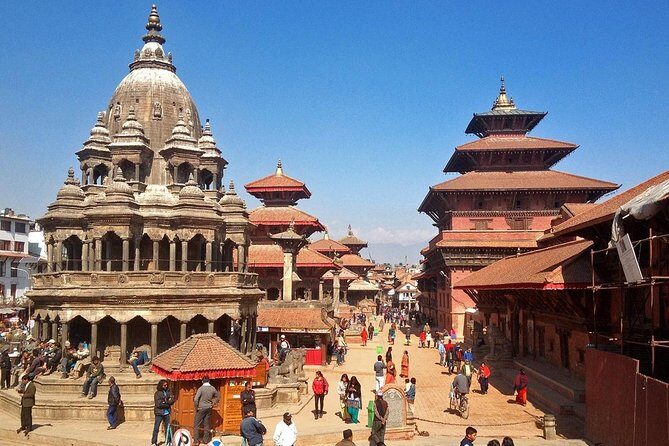
Your first evening is spent in Thamel, Kathmandu’s classic wander zone. Expect a relaxed arrival rhythm: you arrive, take it slow, and do an easy walk through the streets before a welcome dinner.
I like this approach because it helps you get your bearings fast. After hours in transit, you don’t want your first day to be a packed checklist. Thamel is good for this: you can orient yourself, grab water or snacks for tomorrow, and notice how daily life works—shops opening, people moving, the city’s constant hum.
The only practical watch-out is simple: Kathmandu can feel busy right away. If you’re sensitive to crowds, plan for an early night after dinner.
You can also read our reviews of more tours and experiences in Kathmandu.
Nagarkot and Swayambhu: city sights plus mountain air
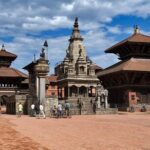
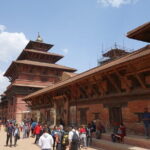
Day two starts with breakfast, then you head out toward Nagarkot, followed by time back in Kathmandu for a city tour. One stop you’ll make is Swayambhunath Stupa, also known as the monkey temple.
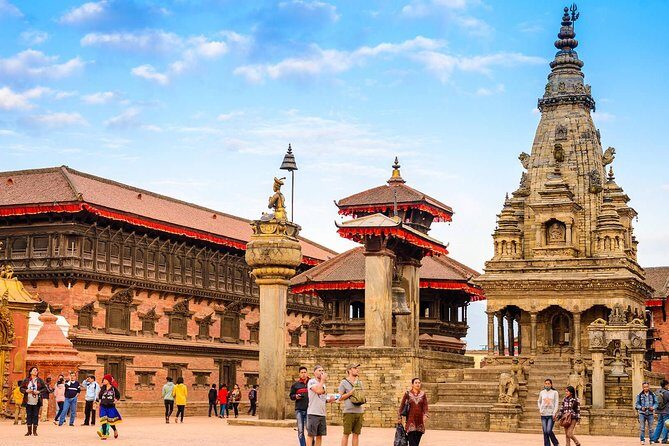
Swayambhunath sits on a hill, and that hill position matters. You get views and a sense of age—this place feels perched above the city rather than competing with it. The dome-shaped stupa is a Buddhist holy site, and it’s famous for the monkeys that hang around near temple areas. That means you’ll see a living, noisy layer of Kathmandu right alongside the sacred calm.
A small tip that makes a difference: wear shoes you can trust on uneven ground and steps. This isn’t a museum floor situation. If you’re visiting in warmer parts of the day, bring sun protection too—hill temples collect heat.
Bhutan flight day: clear-weather views and a short hop that changes everything
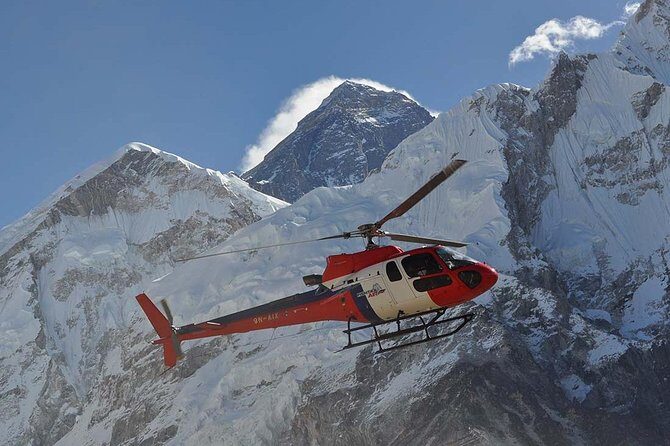
One of the most memorable moments in this whole plan is the transition from Nepal to Bhutan. You wake up early for sunrise views, then after breakfast you’re dropped to Kathmandu airport. The flight into Paro is about one hour by Druk Air.
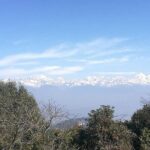
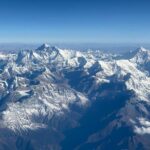
The text is clear about why timing matters: on clear weather days, you can get magnificent views of the world’s highest peaks. That’s not guaranteed, of course. But even when the clouds are doing their thing, this flight still feels special because Bhutan doesn’t arrive as a long drive—it arrives as an aerial reveal.
Then you land in Paro and settle into the Bhutan part of the trip. For many first-timers, this is the mental switch: you stop thinking of it as another stop and start thinking of it as a different country with different rules of attention—slower, quieter, and more temple-centered.
Changangkha Lhakhang and a nunnery visit: Thimphu-area culture, built for stillness
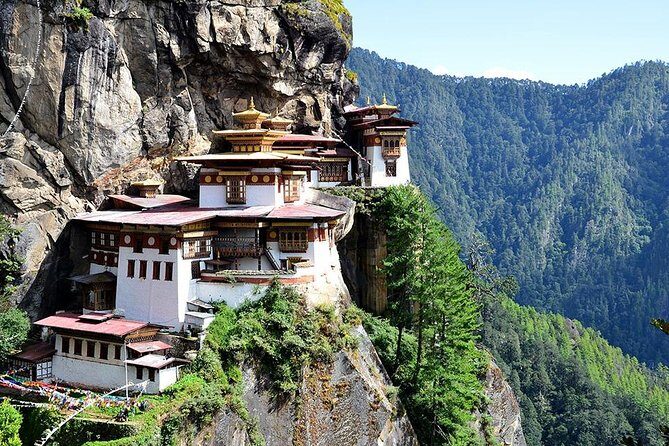
After the Punakha day begins, you’ll visit Changangkha Lhakhang, described as a temple built in the 12th century. You’ll also visit the nunnery known as Drubthob Goemba.
The interesting thing here is the combination: you get the architectural and spiritual weight of a very old temple, then you shift to a setting tied directly to monastic life. Places like this are often less about grand, tourist-style spectacle and more about routine—quiet devotion, daily discipline, and the way people move through sacred space.
Two practical considerations:
- Dress modestly for temple areas. Bhutan is conservative about this.
- Keep your pace respectful. If there’s a prayer rhythm happening, don’t rush through like you’re late for a show.
Punakha Dzong over the Mo Chu and Pho Chu rivers
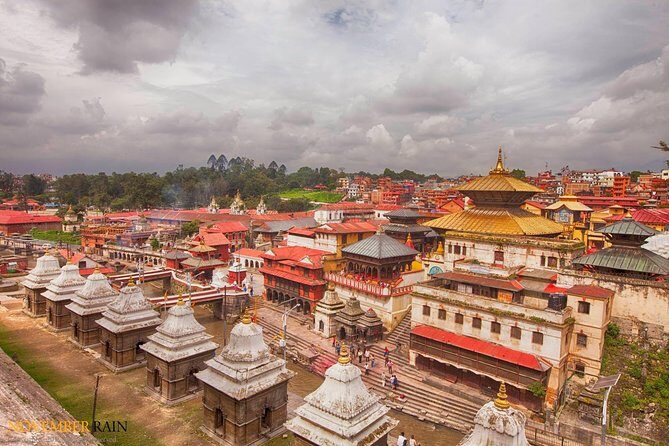
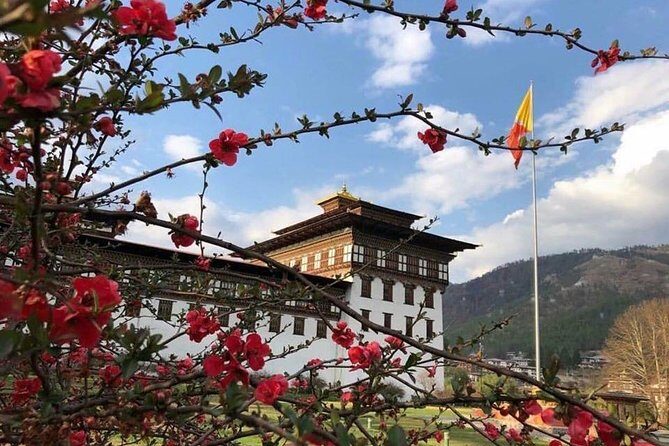
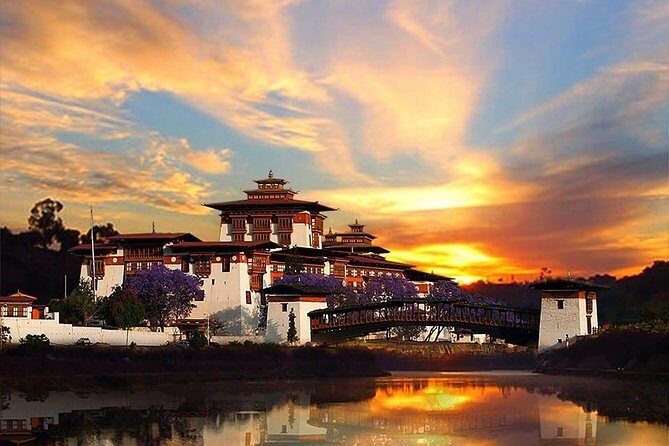
Day five brings you to Punakha Dzong after breakfast. It’s described as an ancient capital of Bhutan, stretching between the Mo Chu and Pho Chu rivers. It’s also noted as the winter capital for monks and for the Je Khenpo (chief abbot).
That detail is worth knowing because it explains why Punakha Dzong feels more than scenic. It’s not only an old building. It’s tied to leadership and seasonal life—monastic movement shaped by winter conditions, and the dzong serving as an important administrative and spiritual center.
If you’re the kind of traveler who likes context (not just sightseeing), this stop will satisfy you. You leave with a clearer sense of how Bhutan’s religious institutions connect to geography and time.
One word of caution: dzongs and temple compounds often involve walking over stone and uneven paths. It’s not extreme, but it’s not flat either.

Drukgyal Dzong ruins and the hike to Taktsang (Tiger’s Nest)
Now for the day most people remember: the Paro Taktsang / Tiger’s Nest experience.
You start with early breakfast, then drive along winding roads to Drukgyal Dzong, described as a ruined fort that once defended the valley from Tibetan invasions. Even before you hike, that stop gives you a historical frame. This wasn’t just a religious site idea—it was also about protection, control, and guarding passage through difficult terrain.
Then you drive to Ramthangkha, and you hike up to Taktsang Monastery (Tiger’s Nest). The hike is listed as part of a roughly 6-hour day, and the entry for this day is included.
Here’s the practical reality: this is a real hike. It may not be a marathon, but it asks for steady footing, pacing, and stamina. Bring water, wear supportive shoes, and plan to go slow on steeper sections. If you feel rushed, that can make the experience less enjoyable fast—so don’t try to “win” the climb.
The upside is huge. Tiger’s Nest is the kind of site where your surroundings become the story. Even if the viewpoints are cloudy, the monastery setting and the sense of effort spent make it land emotionally.
Paro airport support and Kathmandu free time: two-country wrap-up
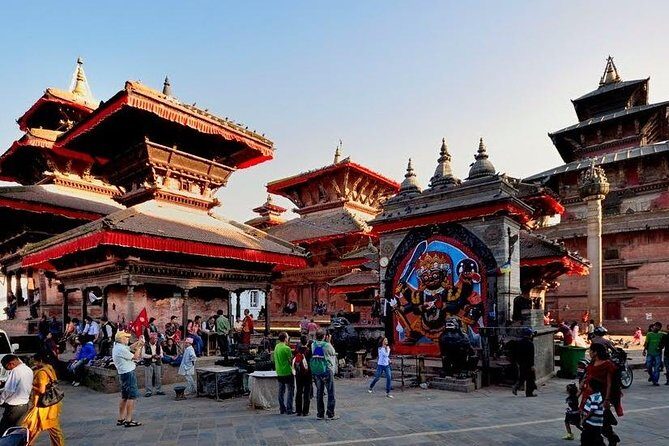
Day seven is a travel day with help built in. After breakfast, you drive to Paro airport and a representative assists with exit formalities before you’re sent off. Then you’re back in Kathmandu, welcomed and transferred to your hotel, with leisure time afterward for shopping.
This is a good moment in the trip because it’s not crammed into a temple rush. You get breathing room to do practical things: stock up on gifts, top off chargers, or just sit with a tea and let Bhutan settle into your memory.
Don’t expect this day to feel like a full sightseeing day. It’s more of a transition, and the value is that you’re not left figuring out airport paperwork alone.
Your last day in Thamel: plan the flight-day calmly
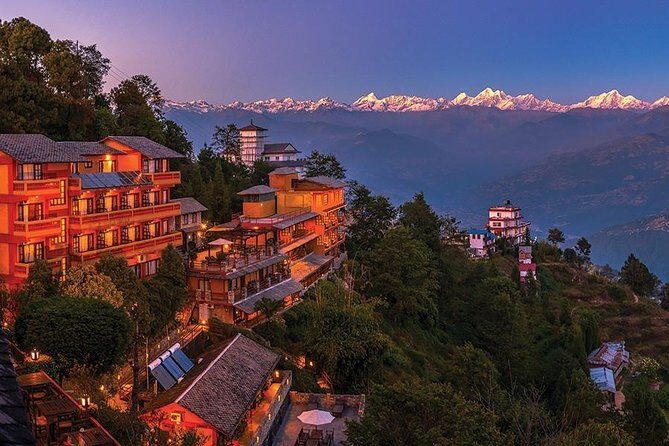
On day eight, the journey within Nepal ends. About 3 hours before your scheduled flight, a representative escorts you to the airport.
That timing helps. Airports in Kathmandu can take more effort than you expect, and having buffer time means less stress when the clock gets loud. If you like souvenir shopping, you still have chances earlier, but this final day is meant to be calm—not chaotic.
Hotels, meals, guides, and private transport: the comfort behind the scenes
This tour is built around 3-star hotels in Nepal and Bhutan and private vehicle transport for sightseeing in both countries. It also includes a professional tour guide and driver, plus their salaries, and the accommodations for them.
That matters more than it sounds. Private transport reduces wait times, and it also means your guide can keep the day flowing without coordinating around other groups. In a route like Nepal-to-Bhutan, that kind of coordination helps.
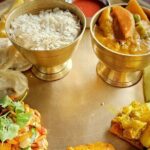
Meals are also partially handled:
- Nepal: lunch is included, and dinner is included on two evenings.
- Bhutan: breakfast, lunch, and dinner are included, plus mineral water is noted.
- Some meals in Nepal are listed as not included, so you may want to budget for breakfast or dinner on certain days depending on the schedule.
You also get a welcome dinner, and some museum fees and special entry fees are included. This reduces the “pay at every gate” feeling.
Price and value: what you’re really paying for (and what to double-check)
The price is listed at $1,400 for about 8 days, and the value comes from what it covers, especially transportation and Bhutan entry-related costs.
Here’s what stands out as value-makers:
- Flights are included (Kathmandu → Paro and Paro → Kathmandu).
- Private vehicle plus guide and driver are included.
- Hotels are included in both countries.
- Meals are partially included, with Bhutan meals covered more fully.
- Museum/special entry fees are included.
Now, where you should be careful:
- Tipping for the guide and staff is not included, and tipping is usually expected in some form when service is handled for you.
- Insurance is not included.
- For visas, the data is a bit mixed: the list mentions a visa fee as included, but it also specifically says Nepal visa fee is not included. Before you pay, double-check your final confirmation so you know exactly which visa costs you’re responsible for.
Also note: the experience requires good weather. If weather disrupts it, you’ll be offered a different date or a full refund. That’s not a small detail—this kind of region depends on visibility.
Who this Nepal and Bhutan tour suits best
This is a strong match if you want:
- A first-time-friendly route connecting Kathmandu heritage to Bhutan monasteries and dzongs
- Included flights so you’re not building your own air plan
- Comfort-level hotels and private transport
- A centerpiece hike day to Taktsang rather than a “drive-by monastery” day
It’s not the best fit if you:
- Can’t handle early mornings
- Want zero hiking (there is a hike to Taktsang)
- Prefer a trip where you fully control every meal and every timing detail
Final call: should you book with Odea Services?
If you want the Nepal-to-Bhutan switch handled cleanly, this route has the right structure: Kathmandu orientation, then the Bhutan core, with included airfare and private transport doing the heavy lifting.
Before you book, I’d ask two quick questions:
- Confirm exactly which visa fees you’re paying vs. what’s included on your final invoice (especially since Nepal visa fee is listed as not included).
- Ask how you should prepare for the Taktsang hike day (shoe requirements, how long the active hiking portion is, and what to expect on the route).
If you’re okay with an early-start rhythm and you’re excited to work for one big view, this is the kind of trip that makes sense. You’ll spend more time seeing places and less time untangling logistics.
FAQ
How long is the Nepal and Bhutan tour?
The trip is about 8 days.
Where do we meet, and what time does the day start?
You start at Tribhuvan Airport in Kathmandu, Nepal at 7:15 am.
Is pickup offered?
Yes, pickup is offered.
What flight is included in the trip?
Flights are included from Kathmandu to Paro and Paro to Kathmandu.
What’s included in the price?
The price includes 3-star hotels in Nepal and Bhutan, private vehicle transport, a professional tour guide and driver, welcome dinner, meals (including lunch in Nepal and breakfast/lunch/dinner in Bhutan), mineral water, museum fees and special entry fees, visa fee (listed in the included section), and airfare between Kathmandu and Paro.
What happens if weather is poor?
The experience requires good weather. If it’s canceled due to poor weather, you’ll be offered a different date or a full refund.