REVIEW · KATHMANDU
Patan Heritage Tour – Private/Small Group
Book on Viator →Operated by Amazing Kathmandu Tours · Bookable on Viator
Patan stories live in the alleys. This 3-hour Patan Heritage Tour threads together Newar Buddhism and Malla-era city life as you walk from Patan Dhoka to iconic courtyards and monasteries. It’s a compact route with lots of context, so monuments stop feeling like random stops and start feeling like a living neighborhood.
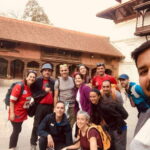
I like that you get a real conversation, not a rushed lecture. The English-speaking guide (people mention guides like Santosh, Shreya Karki, and Bajey) adjusts the pace and level of detail to what you find interesting, including the narrow lanes and passages you’d miss on your own.
One practical thing to consider: key sights don’t include entrance fees (like Patan Durbar Square), so plan for cash on arrival for at least the Durbar Square fee.
In This Review
- Key things I’d note before you go
- A 3-hour Patan walk that moves at human speed
- Starting at Patan Dhoka: the gate tells you how Patan worked
- Ganesh Mandir: a fast legend before the bigger temples
- Golden Temple (Hiranya Varna Mahavihar): Newar Vajrayana in plain human terms
- Patan Durbar Square: where Malla kings built their authority
- Patan Museum: sacred arts in an old royal court
- English guide storytelling: why the route feels personal
- Price and value: $5 is the headline, the experience is the buy
- Who this tour suits best
- Should you book the Patan Heritage Tour?
- FAQ
- How long is the Patan Heritage Tour?
- What is the group size limit?
- Where do I meet the guide?
- Is the tour price only $5 per person?
- Are entrance fees included?
- How much is the Durbar Square entrance fee?
- Is there an English-speaking guide?
- Are service animals allowed?
- What is the cancellation policy for a full refund?
Key things I’d note before you go
- Small group up to 5 means you can ask questions and actually follow the stories without a crowd push
- Ganesh Mandir adds a quick Hindu origin tale before you reach the bigger Buddhist sites
- Golden Temple (Hiranya Varna Mahavihar) gives you Newar Buddhist context tied to Vajrayana and daily life
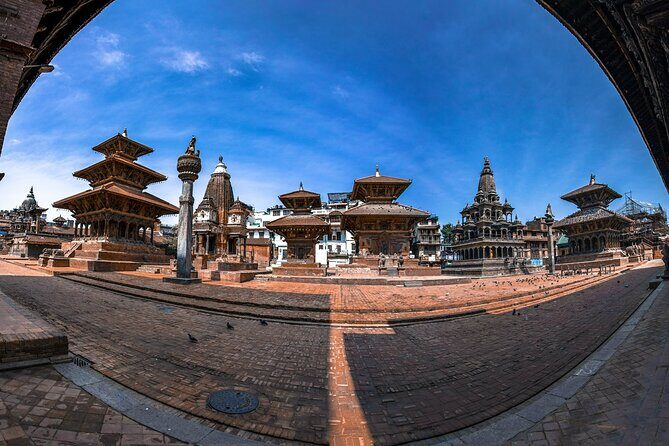
- Patan Durbar Square focuses on the Malla kings, with architecture, shrines, and palace spaces you can walk through
- Patan Museum is a strong follow-up because it puts sacred arts into an old royal-court setting
A 3-hour Patan walk that moves at human speed
This is the kind of walking tour that fits real life in Kathmandu Valley. You’re out for about 3 hours, but the key detail is that the route feels flexible—how long you spend at each place can vary based on what catches your attention. That matters here, because Patan isn’t one big monument. It’s layers: small shrines, wall carvings, courtyards, and temple rhythms.
With a group capped at 5 participants, your guide can slow down when you want photos, pause to explain a symbol on a gate, or shift to simpler explanations if you’re tired of names and dates. It also makes the walking easier to manage. Patan’s streets can be tight and busy-looking, and you’ll feel the difference between a big group and a small one fast.
You can also read our reviews of more private tours in Kathmandu

Starting at Patan Dhoka: the gate tells you how Patan worked
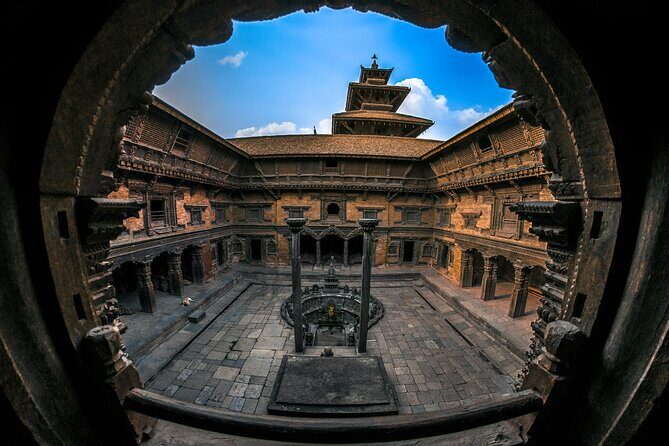
Your meeting point is Patan Dhoka, the Patan Gate in Lalitpur. Expect the guide to frame what you’re about to see with a few essential stories—especially how the Malla kings organized and protected the old city. Even before you reach the major sights, you’ll get a sense that Patan was designed for both power and everyday movement.
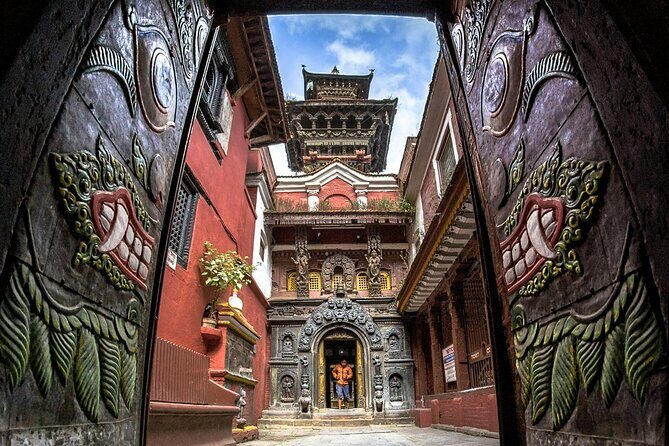
This early stop also sets you up for the wall murals you’ll see on and around the gate. If you’ve ever felt like temple art is just decorative until someone explains it—this is that moment. The guide points you toward details so you stop walking past things and start noticing them.
Tip: if you’re the type who likes to take in a place visually first, use these first minutes to get your bearings. After that, you’ll be better able to connect the stories you hear to what you’re actually looking at.
Ganesh Mandir: a fast legend before the bigger temples
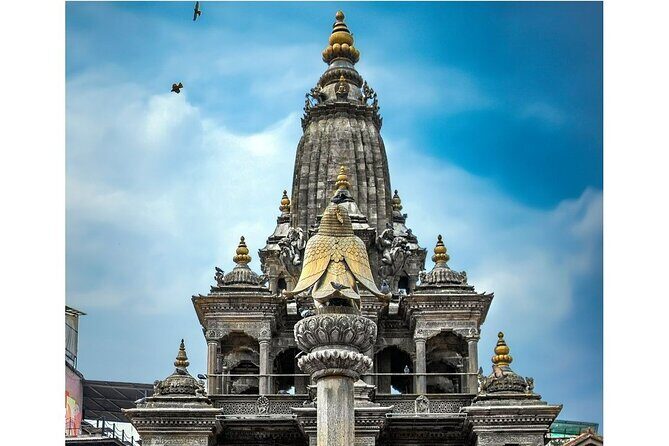
From Patan Dhoka, you pass by Ganesh Mandir, a shrine dedicated to Lord Ganesha. The stop is short—about 15 minutes—but it’s not filler. The guide shares the story of how Ganesha got the elephant head, which helps you understand why Hindu figures show up so often in Nepalese life around Buddhist spaces.
Even if you’re primarily there for Buddhism, I find this stop useful. It gives you a sense of how religious ideas can overlap in everyday Patan streets. Nepal’s temple world isn’t neatly separated. It’s more like different languages spoken in the same city.
Golden Temple (Hiranya Varna Mahavihar): Newar Vajrayana in plain human terms
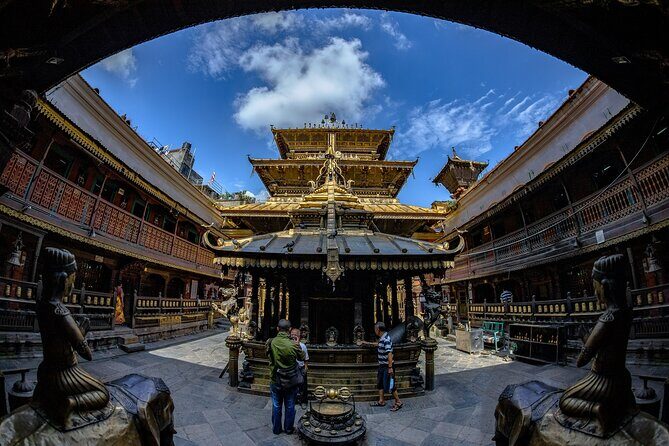
Next comes the Golden Temple (Hiranya Varna Mahavihar), a Newari Buddhist monastery dating back to the 14th century. Plan on about 15 minutes here, and focus on the explanations as much as the visuals.
The guide talks about Buddha’s teachings and how the Newar tradition relates to Vajrayana, with influences connected to Theravada. In normal tourist mode, that sounds like a school topic. On the ground, it becomes more tangible. You start to see how the religious language you’re hearing connects to the way people structure devotion—through monks, monasteries, ritual spaces, and a steady relationship to the past.
Important practical note: the Golden Temple entrance isn’t included in the tour price, so you’ll want to be ready to pay on site. Your guide can point you in the right direction, but don’t count on this one being free.
Patan Durbar Square: where Malla kings built their authority
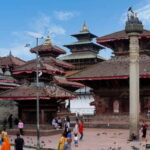
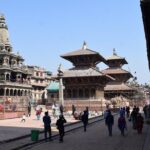
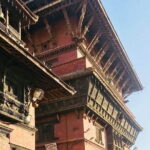
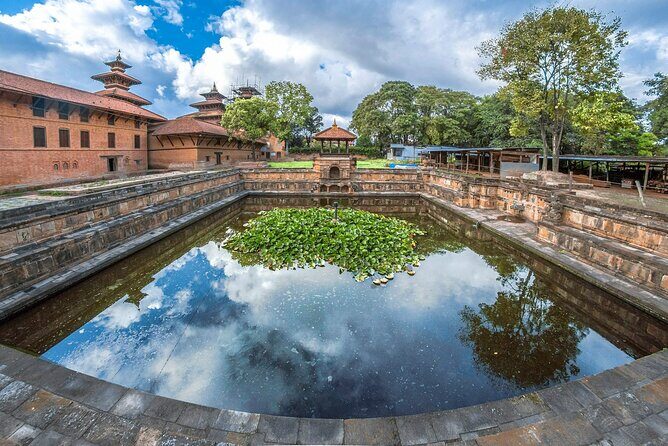
After the monastery, you move into Patan Durbar Square, the ancient royal palace area where the Malla kings of Patan lived. This is where the tour gets more architectural. Expect about 45 minutes spent walking around shrines, palace spaces, and the distinctive Nepalese building style.
What I like about this part is that it’s not just “look at the temple.” The guide connects what you see to power and city planning—why royal spaces were designed the way they were, and how shrines fit into that royal layout. You’ll also get a better sense of why Patan feels so temple-centered. The religion isn’t off to one side. It’s woven into the civic center.
Here’s the big budget note: entrance to Durbar Square is not included and it has to be paid in cash at the entrance. The fee listed is NRP 1000 (about US$9). The guide also recommends paying at least NRP 100 as a donation to the Royal Kumari, which is a meaningful local touch if you want to participate respectfully.
If you don’t want to think about cash while you’re standing there, bring enough bills in advance. It makes the whole experience smoother.
You can also read our reviews of more historical tours in Kathmandu


Patan Museum: sacred arts in an old royal court
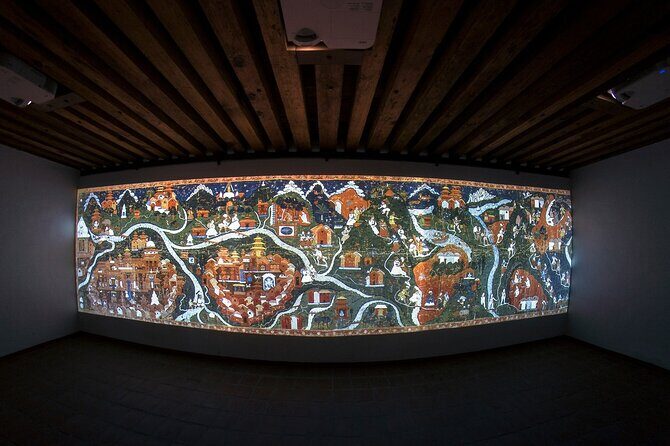
After the square, you’ll head to Patan Museum, which takes about 1 hour. This is a great stop if you want context after walking through living monuments.
The museum houses traditional sacred arts in an old residential court setting—part of the former royal palace environment of the Malla kings. That matters more than it sounds. When sacred objects and artworks are placed in an old royal-court space, the setting helps you understand how these pieces belonged to daily devotional life, not just to display cases.
I like museum stops when they answer questions I didn’t know I had yet. Here, you’ll likely come away with clearer ideas about religious artistry—how it’s made, why it’s valued, and why it shows up in the city’s temple world. It’s the “make sense of what I just saw” moment.
Again, entrance to the museum isn’t included in the tour price, so expect to pay on arrival.
English guide storytelling: why the route feels personal
The tour’s real “secret sauce” is the guide. You get an English-speaking guide, and the experience is described as small-group, meaning the guide can adjust. People specifically note guides like Santosh, Bajey, and Shreya Karki for their knowledge and patience, plus for leading you through streets and passages you’d never find alone.
That guidance shows up in two ways:
1) You learn the meaning behind details you’d otherwise ignore.
2) Your time doesn’t get wasted on long explanations that don’t match your interests.
It’s also worth saying out loud: a walking tour lives or dies on whether the guide can read the group. Here, the pace seems responsive—if you want the quick version, you get it. If you want more depth, you get that too. In a place like Patan, that’s a big deal.
Price and value: $5 is the headline, the experience is the buy
The price is listed at $5 per person, with the tour being private/small-group (max 5) and including an English-speaking guide. Even without adding up everything on your end, that’s an unusually low base price for a guided walk in Kathmandu Valley.
But here’s the fair, balanced view: entrances for major sights like Patan Durbar Square (NRP 1000 cash) and other sites aren’t included. So your real cost has two parts:
- the low tour fee that covers the guiding and time
- the on-site fees you’ll pay as you go
Still, the math usually works in your favor if you planned to see these places anyway. You’re paying for the guidance that turns monuments into stories, plus you’re saving time trying to navigate Patan’s maze-like street network solo.
Also note: the tour uses a mobile ticket, which tends to make check-in easier and reduces hassle.
Who this tour suits best
This is a strong choice if you:
- want a short, focused Patan experience without committing to a full day
- enjoy understanding religion and culture through real places, not just photos
- like walking routes where the guide leads through lanes and courtyards
- value a small group where you can ask questions
It’s also a good fit if you’re traveling solo or as a couple. With the max size set at 5, you’re less likely to feel lost in the crowd.
If you’re the kind of traveler who wants only the most famous buildings with minimal explanation, you might find the narrative-heavy approach a bit much. But given how adaptable the guides are, you likely can steer it toward what you care about.
Should you book the Patan Heritage Tour?
If you’re choosing between a quick photo loop and a guided walk that makes Patan click, I’d book this. The small group size, the street-level storytelling, and the mix of Ganesh Mandir, the Golden Temple context, Malla-era Patan Durbar Square, and the Patan Museum follow-through are a smart way to get meaning fast.
Book it if you’re willing to pay on-site entrance fees and you like learning how history connects to daily life. Skip it only if you want zero cash moments and zero interpretation, because this tour is built around understanding what you see.
FAQ
How long is the Patan Heritage Tour?
It’s about 3 hours (approx.).
What is the group size limit?
The tour is a small group with a maximum of 5 travelers.
Where do I meet the guide?
You meet at Patan Dhoka, Lalitpur 44600, Nepal, and the tour ends back at the meeting point.
Is the tour price only $5 per person?
Yes, the tour price is listed as $5.00 per person (with youth pricing for students who have a student card).
Are entrance fees included?
Not for everything. Golden Temple and Patan Durbar Square entrances are not included, and the Patan Museum entrance is also not included.
How much is the Durbar Square entrance fee?
Entrance to Durbar Square is NRP 1000 and is paid in cash at the entrance. A donation of at least NRP 100 to the Royal Kumari is recommended.
Is there an English-speaking guide?
Yes, the tour includes an English-speaking guide.
Are service animals allowed?
Yes, service animals are allowed.
What is the cancellation policy for a full refund?
You can cancel for a full refund if you cancel at least 24 hours before the experience starts. Free cancellation applies within that window.