Five UNESCO sites, one efficient Kathmandu day. You’ll bounce between Swayambhunath (Monkey Temple) and major Hindu and Buddhist landmarks, with an experienced guide to help you make sense of what you’re seeing—fast. I really like how this packs two temple styles in one route, and how the day avoids hours of aimless wandering; one consideration is that monument time is short, so you’ll move at a quick pace and you may need to budget extra for entrances.
The tour runs about 4 to 6 hours, starts at 9:15 am, and stays group-friendly with a maximum of 15 people. You get private transportation plus pickup, and you’ll use a mobile ticket; lunch is not included, so plan for a snack break if you get hungry.
In This Review
- Key highlights worth caring about
- How this Kathmandu Valley UNESCO loop feels in real life
- Price and ticket math: what your $40 really buys
- Swayambhunath (Monkey Temple): hilltop spirituality and quick city orientation
- Patan Durbar Square: Newari temple density and palace-square atmosphere
- Boudhanath Stupa: the giant dome view and why people keep coming
- Pashupatinath Temple: Nepal’s major Hindu pilgrimage on the Bagmati River
- Kathmandu Durbar Square and Kumari Temple: the city’s royal temple world
- Timing tips for a 4 to 6 hour day without stress
- Who this tour is best for (and who should choose something slower)
- Should you book this Full Day Kathmandu tour?
- FAQ
- FAQ
- What time does the tour start?
- How long is the full day tour?
- Which UNESCO World Heritage Sites are included?
- Is pickup offered?
- Is there an admission fee for monuments?
- Is lunch included?
- What’s the group size limit?
- Do I get a ticket on my phone?
- What if the weather is poor?
- Can I cancel and get my money back?
Key highlights worth caring about
- Five UNESCO stops without wasting your day: you hit major Kathmandu Valley icons in a tight schedule
- Faith mix you can actually compare: Hindu pilgrimage sites side-by-side with Buddhist stupas
- Short, focused site blocks: some stops run around 30 minutes, so show up ready to look
- Two Durbar Squares: Patan’s Newari temple density plus Kathmandu’s Durbar Square and Kumari Temple
- Entrance fees are extra: the tour price covers guiding and transport, not monument admissions
How this Kathmandu Valley UNESCO loop feels in real life
This is a good “first sweep” tour when you want to get oriented in Kathmandu Valley. The best part is the way the sites mirror each other: you start with a hilltop stupa complex where Hinduism and Buddhism share space, then you shift to a massive Buddhist stupa, then to one of Nepal’s most important Hindu temples, and finally into the Durbar Square temple zones.
Because the duration is only 4 to 6 hours, the experience is more like a guided highlights walk than a slow, lingering museum day. That can be a plus if you like momentum and clear structure. It’s a drawback if you’re the type who wants to sit quietly for a long time and watch every ritual up close.
You can also read our reviews of more historical tours in Kathmandu

Price and ticket math: what your $40 really buys
The listed price is $40, and you also get private transportation and an experienced guide. For a day that strings together multiple UNESCO sites, that’s usually solid value—especially when traffic and navigation can be tiring on your first day.
Two costs to keep in mind:
- Lunch isn’t included.
- Monuments entrance fees are not included, listed as worth about 30 USD.
So your realistic budget is closer to $40 plus whatever you pay at the monuments. If you arrive with that in mind, there’s no surprise stress.
One more practical point: the tour uses a mobile ticket, and pickup is offered. That combination usually makes the morning smoother, since you’re not trying to coordinate with a driver on your own.
Swayambhunath (Monkey Temple): hilltop spirituality and quick city orientation
You start at Swayambhunath Stupa, often nicknamed Monkey Temple for the monkeys you might see around the grounds. This site is famous for the blend of Hinduism and Buddhism, and that matters because you’re not just ticking off a landmark—you’re learning how Kathmandu’s religious world overlaps.
What I like here is the structure of the visit. You’ll explore the hilltop chaityas and stupas with a guide who can point out what’s important visually and spiritually, not just chronologically. Even with a short time window, the place works because there’s so much to look at: domes, prayer spaces, and religious symbolism layered across the complex.
One consideration: Swayambhu is set on a hill, so expect stairs and uneven ground. If you’re carrying a backpack, go light—this is the kind of start where every extra layer becomes annoying by the second stop.
Patan Durbar Square: Newari temple density and palace-square atmosphere
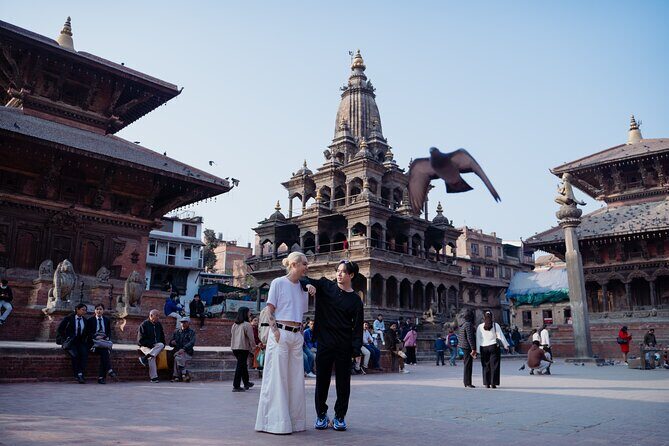
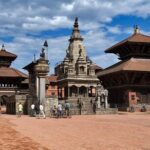
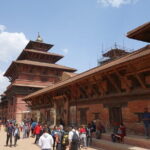
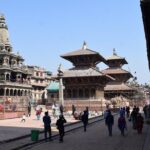
Next comes Patan Durbar Square, the old royal palace area of Patan. This stop is worth your attention because the standout feature is the concentration of temples in Newari architecture. It’s not one big monument—it’s a dense group of temple forms, with a sense that the square is packed for a reason.
The time you get is brief (around 30 minutes for the listed stop), so the guide’s job is important. With a good guide, you learn what you’re looking at in that tight window: which buildings are the key pieces, how the architecture is organized, and what “Durbar Square” means in the Kathmandu Valley context.
If you’re the kind of traveler who loves details, Patan is satisfying because you can keep your eyes moving—doorways, carvings, temple shapes—without feeling like you’re waiting for something to happen. If you’re the kind who wants to take your time photographing everything, you might feel rushed unless you plan your shots fast and skip the second and third detours.
Boudhanath Stupa: the giant dome view and why people keep coming
Then you head to Boudhanath Stupa, one of the oldest monuments tied to Gautam Buddha in Kathmandu Valley lore. This stupa is said to have been built around the 14th century, and it’s known for its huge dome and the Buddhist pyramid sitting on top of it.
This is a great stop for two reasons. First, it’s a visual anchor for the day; you can feel the scale immediately. Second, it’s easy to understand what devotees are doing because the layout naturally invites you to look and reflect while watching prayer rhythms move around the site.
The listed stop time is about 30 minutes, and admission fees are not included. If you want the best return for your time, show up ready to look upward and around. Don’t spend all your time photographing the first angle you find—this is one of those places where your second viewpoint often teaches you something new.
You can also read our reviews of more tours and experiences in Kathmandu


Pashupatinath Temple: Nepal’s major Hindu pilgrimage on the Bagmati River
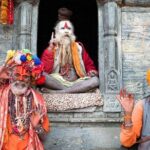
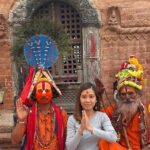
One of the day’s biggest anchors is Pashupatinath Temple, a major Hindu pilgrimage site on the bank of the Bagmati River. The temple complex is described as sprawling, and it’s known as the seat of Nepal’s national deity.
This stop is powerful, but it also needs the right mindset. The scale and activity can feel intense even when you’re only there for a short portion of the day. Go in expecting a living religious environment, not a quiet photo set.
A guide matters here because temple complexes can be confusing if you don’t know where the focus points are. In particular, you’ll want help understanding how the complex is organized so you don’t spend your limited time wandering aimlessly.
Also plan for etiquette. For Hindu temple visits in Nepal, dress modestly and behave respectfully. It’s not complicated, but it can make the difference between feeling at ease and feeling like you’re in the way.
Kathmandu Durbar Square and Kumari Temple: the city’s royal temple world
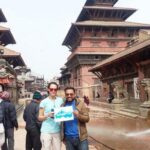
Finally, you visit Kathmandu Durbar Square, with time to see Kumari Temple. Durbar Square areas are all about concentrated sacred spaces tied to the city’s historical power centers, and Kathmandu’s version gives you that royal-temple feel right in the heart of the city.
Even with about 30 minutes, this stop can land well because it’s the kind of place where you can quickly connect the dots between architecture and local tradition. If you’ve already seen Patan’s Durbar Square, you’ll start noticing how the two squares feel different while still belonging to the same Kathmandu Valley world.
Practical tip: expect crowds and lots of movement. Keep an eye on your guide, and don’t get separated while you’re photographing. This is one of those moments where good group management keeps your day from turning into a frustrating scavenger hunt.
Timing tips for a 4 to 6 hour day without stress
A 4 to 6 hour schedule means each stop is a “show up and look” experience. Here’s how to make it work:
- Start ready: the tour begins at 9:15 am, so hydrate and eat before pickup if you can.
- Pack light: you’ll be moving between temple zones, so keep essentials handy.
- Wear temple-friendly shoes: you’ll be on uneven paths and stairs, especially around hilltop and temple complexes.
- Budget for entrance fees: monuments have admissions listed as extra, around 30 USD worth.
- Skip expecting lunch: lunch isn’t included, so plan for snacks or a later meal.
Weather also matters. The experience requires good weather, and if it’s canceled due to poor weather you should be offered a different date or a full refund.
Who this tour is best for (and who should choose something slower)
This tour fits best if you:
- want a structured introduction to Kathmandu Valley’s UNESCO sites in one day
- like comparing Hindu and Buddhist sacred spaces back-to-back
- prefer having transport and guiding handled for you
It might be less ideal if you:
- want long, quiet stays at each monument
- dislike short stop durations (some stops are about 30 minutes)
- plan to spend lots of time shopping or doing long detours between sites
Group size stays manageable with a maximum of 15 travelers, which usually helps the pacing. Private transportation also reduces the “where are we going next” anxiety.
Should you book this Full Day Kathmandu tour?
If you’re weighing this against doing things on your own, I’d lean toward booking—especially for a first-time Kathmandu Valley day. The big reason is the combination of private transport and an experienced guide to connect the dots across five UNESCO sites without you having to map everything yourself.
Do book if you can handle a quick pace and you’re ready for extra entrance fees. Don’t book if you know you’ll want hours at just one location. If that’s you, consider pairing a slower visit to one or two sites with a separate transport arrangement.
FAQ
FAQ
What time does the tour start?
The tour start time is 9:15 am.
How long is the full day tour?
It runs about 4 to 6 hours.
Which UNESCO World Heritage Sites are included?
The tour includes Swyambhunath Stupa (Swayambhunath), Boudhanath Stupa, Pashupatinath Temple, Patan Durbar Square, and Kathmandu Durbar Square (with Kumari Temple).
Is pickup offered?
Yes, pickup is offered.
Is there an admission fee for monuments?
No, monument entrance fees are not included. They are listed as worth about 30 USD.
Is lunch included?
No, lunch is not included.
What’s the group size limit?
The tour has a maximum of 15 travelers.
Do I get a ticket on my phone?
Yes, the tour includes a mobile ticket.
What if the weather is poor?
The experience requires good weather. If it’s canceled due to poor weather, you should be offered a different date or a full refund.
Can I cancel and get my money back?
It is non-refundable and cannot be changed for any reason. If it’s canceled due to poor weather, you’ll be offered a different date or a full refund.