REVIEW · KATHMANDU
Kathmandu: Everest Base Camp Helicopter Tour
Book on GetYourGuide →Operated by Everest Experience and Assistance · Bookable on GetYourGuide
Everest from a window, no trekking days. This Kathmandu helicopter tour turns the Khumbu region into a short, intense day, with close flyovers of Kalapatthar and Everest Base Camp, plus breakfast at Hotel Everest View.
I love how much you see without spending weeks hiking. The second big win is that breakfast happens at altitude, with that white-peaked backdrop doing the entertaining for you.
One thing to plan for: weather can change the timing fast. In a bad forecast, you may wait, reroute, or lose the easy, tight schedule you were hoping for.
In This Review
- Key moments that make this flight worth it
- Why a helicopter day beats a 2-week trek (for the right traveler)
- The route in plain English: Kathmandu to Lukla to the Everest viewing zone
- The Kalapatthar / Everest Base Camp moment: what “close” really means
- Breakfast at Hotel Everest View (3,880 m): the human pause at the top
- Weather is the boss: why your day can stretch beyond 4.5 hours
- Seats, windows, and the small details that affect your day
- The money math: $1,863 and what you should budget beyond the headline price
- Who this tour fits, and who should skip it
- What to bring (and what not to bring) for a smooth flight day
- Should you book the Kathmandu to Everest Base Camp helicopter tour?
- FAQ
- How long is the Kathmandu to Everest Base Camp helicopter tour?
- What’s included in the price?
- Is breakfast included?
- Are national park fees included?
- Do I need cash for the trip?
- What if the weather is bad at Hotel Everest View?
- Is there a limit on group size?
- Who is the tour not suitable for?
- Is cancellation flexible if plans change?
Key moments that make this flight worth it
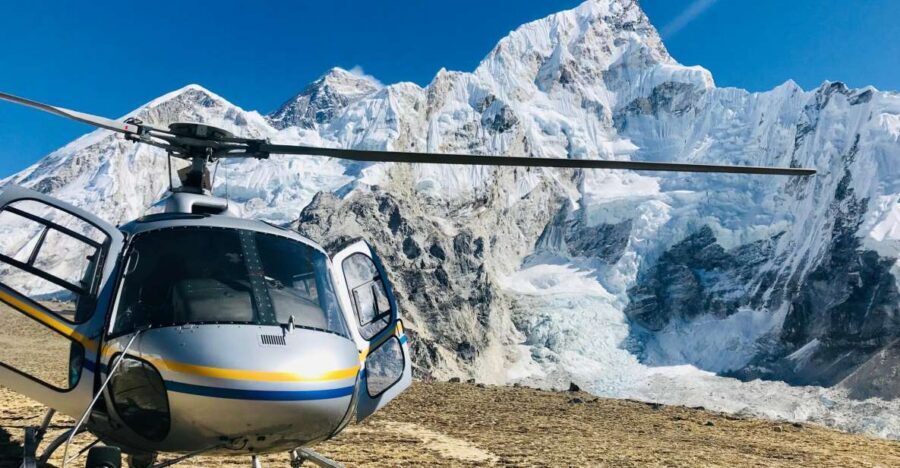
- Close flyovers around Kalapatthar and Everest Base Camp for photo angles you simply can’t get on foot
- Breakfast on an open terrace at Hotel Everest View (3,880 meters) after the flight delivers the views
- A small group (limited to 5) and a guide who’s there in English for the key moments
- Lukla refueling stop (10–15 minutes) that keeps the route realistic in a high-altitude country
- Oxygen tanks onboard for emergencies, plus a safety briefing before you take off
Why a helicopter day beats a 2-week trek (for the right traveler)
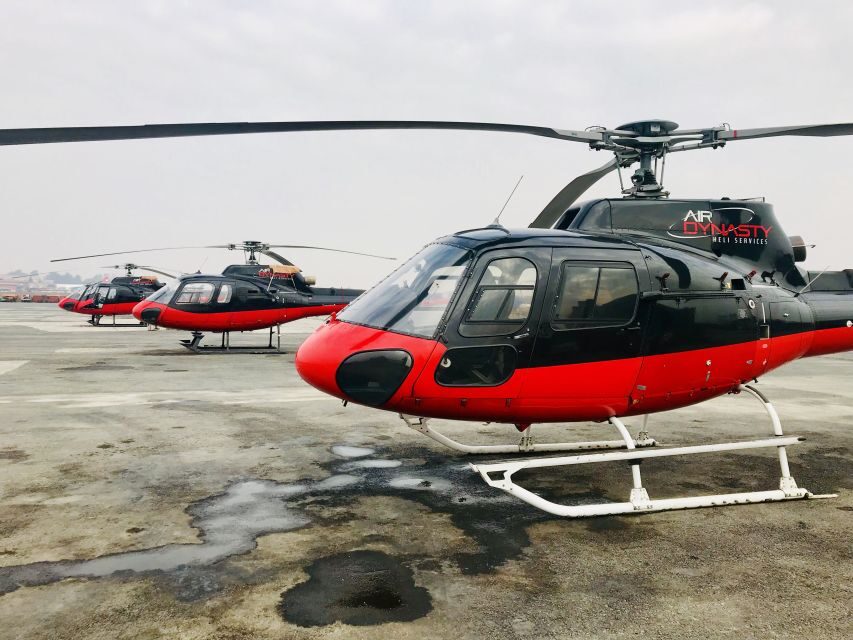
If your dream is Everest views but you don’t want a long trek, this is the clean shortcut. You trade days of stair-step altitude gain for a fast route into the best viewing zones, with big mountain moments stacked back to back.
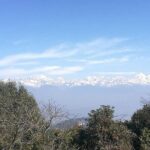
What makes this feel special is the type of sightlines you get. The route is built around the Everest viewing corridor, so you’re not just flying over Nepal in general—you’re flying into the specific places people aim for on foot. And after that comes the most human moment of the day: breakfast with the mountains right there, not somewhere you’ll reach after 10 trail days.
Price is obviously the elephant in the room (more on that soon), but the value story is simple: you’re buying time, access, and “wow” density.
You can also read our reviews of more tours and experiences in Kathmandu
The route in plain English: Kathmandu to Lukla to the Everest viewing zone
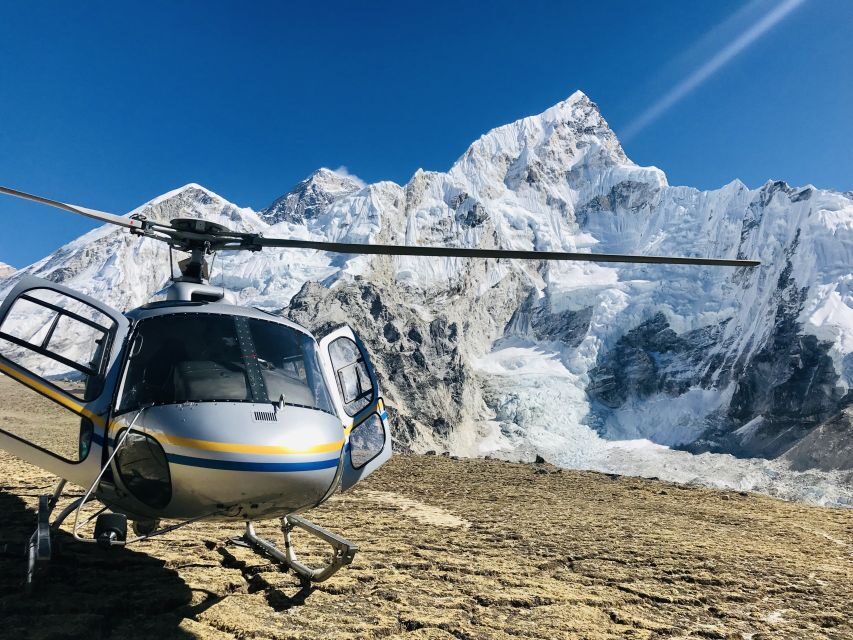
Your morning starts with pickup from your Kathmandu accommodation and transfer to Tribhuvan International Airport’s domestic area. You’ll typically have a bit of prep time on the ground—think 30–40 minutes—so don’t treat this like a quick walk-up-and-go.
Then the flight begins, and it’s not a straight line. You fly about 45 minutes over hills and valleys to Lukla (Tenzing Hillary Airport), sitting around 2,860 meters. Lukla isn’t a sightseeing stop here; it’s the practical refueling moment, usually 10–15 minutes, before the helicopter continues.
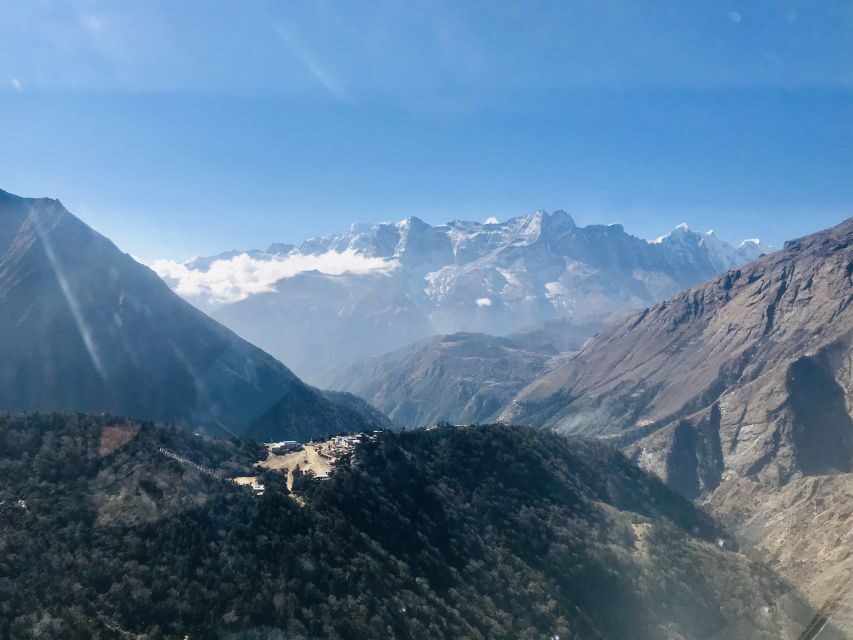
Next comes the part that people book for: a focused pass over the Everest region. You’ll fly for around 25 minutes over major names in the Khumbu route—Namche Bazar, Pheriche, Tengboche Monastery, and Gorakshep—so you can match what you’ve seen on maps to what you’re actually watching from the air.
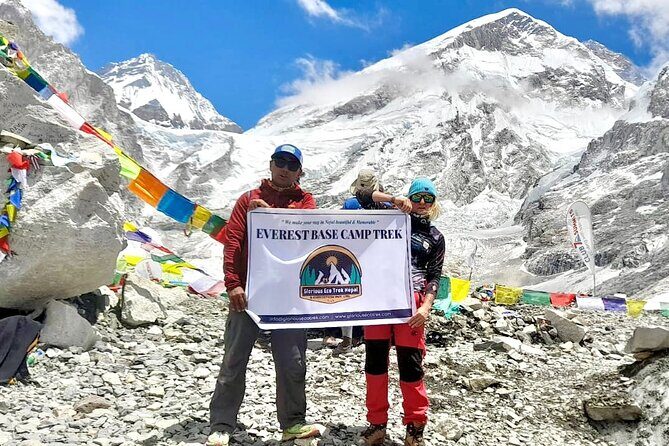
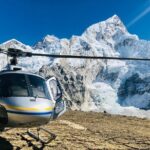
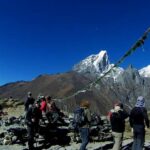
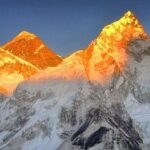
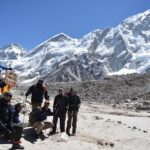
From there, the plan centers on Kalapatthar and Everest Base Camp viewpoints. Kalapatthar is described as being 200 meters above Everest Base Camp, and the tour is set up for you to see it close enough to make your camera work overtime.
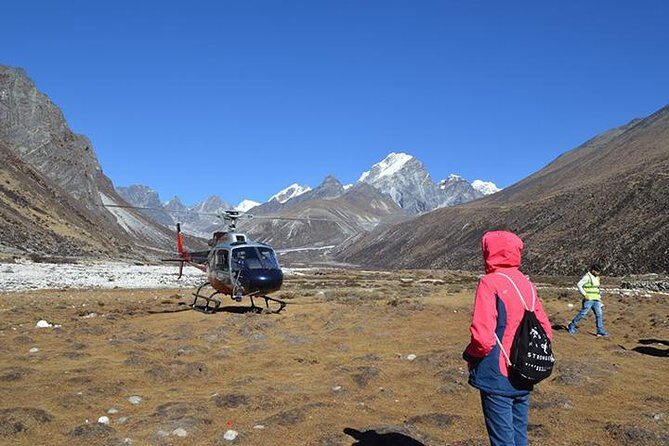
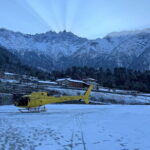
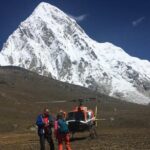
One interesting wrinkle: the highlights mention a landing near Phiriche with short shuttle connections toward E.B.C and Kalapatthar, while keeping you in window seating. The overall flow still stays the same—short close-in viewpoints plus the meal stop—just know there may be minor route variations depending on conditions.
The Kalapatthar / Everest Base Camp moment: what “close” really means
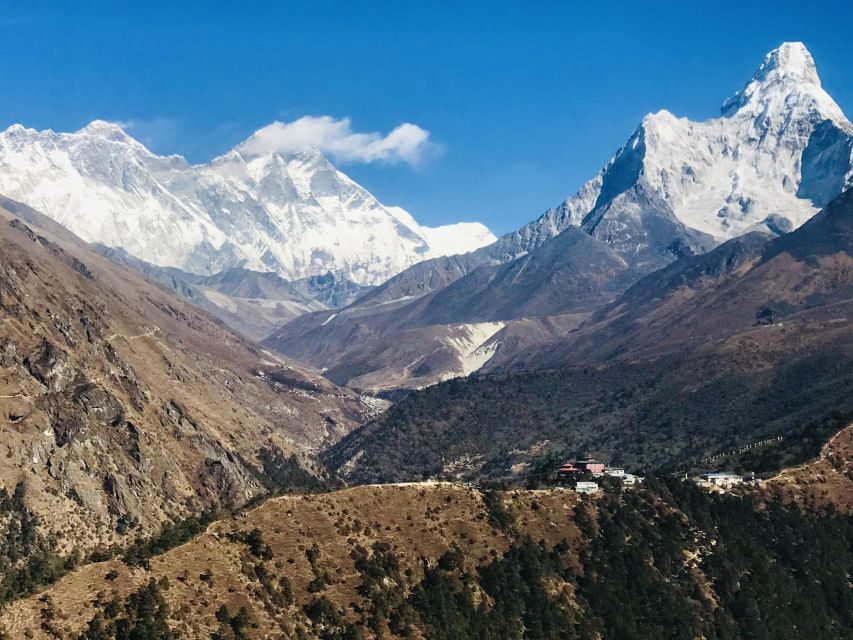
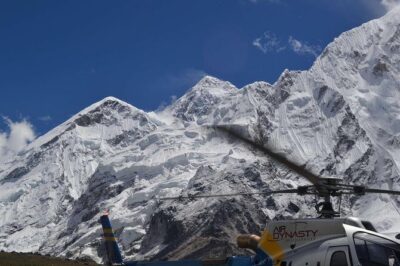
From a helicopter, “close” isn’t poetic. It’s practical: you get angles that compress distance, so peaks look like they’re layered on top of each other instead of sitting far away behind haze.
At Kalapatthar, you get a viewing window with time for photos and simply looking. This is the moment where your brain usually tries to count what you expected to see after days of trekking, and then realizes it’s all happening in minutes.
Two things to keep in mind:
- Your best photos happen when you’re ready early. The “quick stop” style means you’ll want your camera settings sorted before the helicopter settles.
- Light matters. Clear skies make everything sharper and whiter; cloudier conditions can still be dramatic, but the crispness you want might soften.
If you care about capturing the right view, bring that sunglasses + sunscreen setup you’d use on a high-altitude trek. Even on a flight, the glare can be intense.
Breakfast at Hotel Everest View (3,880 m): the human pause at the top
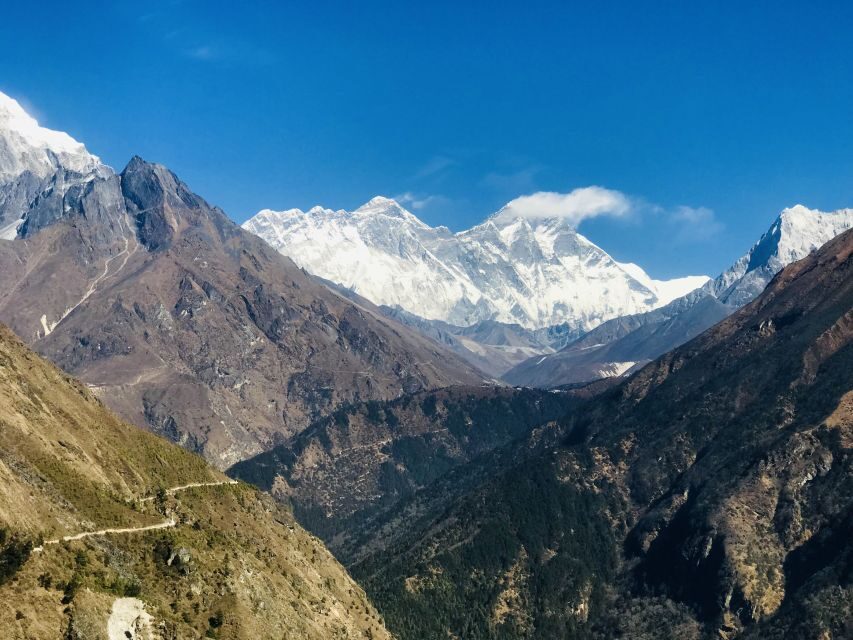
After the flyover and viewpoint time, you fly on toward Hotel Everest View at about 3,880 meters. The itinerary calls out a flight segment around 12 minutes to reach that area, and then the plan builds in a 45-minute breakfast break.
The breakfast stop is the emotional centerpiece of the whole experience. It’s not just food; it’s the rare chance to stand still at altitude and let the mountains do their thing. You’ll be on an open terrace for the meal, which means you’re not stuck in a dining room staring at windows—you’re surrounded by peaks that feel close enough to touch.
Important practical note: if weather doesn’t cooperate at Hotel Everest View, the plan adjusts. You may land at Lukla or another location in the region to keep the breakfast part of the day intact. That flexibility is a big reason this style of tour is more reliable than a fixed “only one exact spot” plan—though it still doesn’t remove weather risk entirely.
Also, the breakfast itself is not included in the base price. The cost is listed at around $30 USD, so have a realistic amount of cash (or payment method, if your operator allows) ready for that last step.
Weather is the boss: why your day can stretch beyond 4.5 hours
This tour is described as around 4.5 hours, and in good conditions it can feel like a well-paced half-day. But Nepal weather can be stubborn, and helicopters are still at the mercy of wind, visibility, and cloud ceiling.
One booking reported an about 1-hour wait due to weather and then a successful completion. Another described a much bigger disruption—tour cancellation early on, then a total of roughly 26 hours before everything resolved, including needing to arrange lodging in Lukla after plans couldn’t finish within the original timing. That’s the extreme side of the spectrum, but it’s a good reality check.
So here’s what I advise you to do:
- Try to keep one or two flexible days around your flight date.
- Build some buffer into your schedule in Kathmandu afterward, especially if you’re connecting to another country or long-distance transport.
- If you don’t have flexible days, make sure the rest of your itinerary has some slack. You’re buying a weather-dependent experience.
If the day goes sideways, the good news is that the operator’s role includes rerouting or rescheduling. The cost of not having extra time is what can turn this into a headache.

Seats, windows, and the small details that affect your day
A helicopter tour lives or dies on comfort and clarity. Here, the tour is set up for easy viewing: all window seat is specifically called out in the highlights, which matters because you’ll be leaning, aiming, and snapping photos for most of the key portions.
You also get an English live tour guide, and before takeoff there’s a safety briefing. That matters more than people think—when you’re dealing with altitude, prop wash, and a lot of people eager to rush to the windows, good instructions help everyone stay calm.
One operational note from real bookings: paperwork and documentation moments can be a bit hit-or-miss. One participant wished the staff handling document steps had been friendlier. I’m not saying it ruins anything, but it’s a cue to arrive early, bring your passport/ID ready, and keep your tone polite and focused—your time in the helicopter line is limited.
Also: oxygen is part of the safety kit. The included items mention oxygen tanks inside the aircraft (for emergencies). You’re not going to be “using oxygen” as part of the normal plan, but having it on board is reassuring.
The money math: $1,863 and what you should budget beyond the headline price
The advertised price is $1,863 per person, and that’s high, no way around it. But charter-style helicopter pricing isn’t cheap because you’re not sharing a seat on a public route—you’re paying for aircraft time, staffing, and the logistics of operating in a remote, high-altitude region.
What’s included:
- Hotel pickup and drop-off in Kathmandu
- One chartered helicopter flight
- Company charges
- Oxygen tanks onboard
What’s not included (and can add up):
- Breakfast at Hotel Everest View (about $30 USD)
- National park fees (listed at $50 USD)
- Airport tax (listed at $5 USD)
So the real value question becomes: does this price buy you the experience you want more than trekking would? If your priority is “see Everest up close without weeks of hiking,” the pricing starts to make sense. If you want to experience the region with daily culture on the trail, then trekking may be a better value even if it takes longer.
Either way, don’t ignore the small extra fees. They’re listed clearly, but they can be easy to forget when planning your total cash needs.
Who this tour fits, and who should skip it
This is not a casual sight-seeing helicopter ride. You’re dealing with altitude, airport transfers, and a format that expects you to move through the process efficiently.
The tour is not suitable for:
- Pregnant women
- People with mobility impairments
- Wheelchair users
That exclusion should be taken seriously. Even if you’re otherwise healthy, the combination of early morning logistics and high-altitude environment makes this a poor fit for anyone who needs significant assistance or barrier-free movement.
Who it suits best:
- You want Everest views without a long trek
- You’re comfortable being outdoors in cold conditions
- You can handle weather uncertainty with at least a little buffer time
If you’re an experienced traveler who plans for weather and travel variability, this can be a fantastic, efficient way to see the Himalayas’ main event.
What to bring (and what not to bring) for a smooth flight day
You’ll want to pack like it’s cold outside, not like it’s warm because Kathmandu is warm. The essentials listed are:
- Passport or ID card
- Warm clothing
- Sunglasses
- Sunscreen
- Cash
And the big constraint:
- No luggage or large bags
That means you should plan for a minimal day pack. Keep the essentials close and easy to reach, because you won’t have time (or space) to deal with bulky gear.
Also, the morning starts early. Wear layers you can adjust quickly, because you’ll go from airport prep to open-air viewing angles without much time to play catch-up.
Should you book the Kathmandu to Everest Base Camp helicopter tour?
Book it if you want the Everest region’s headline views fast, and you’re okay with weather being part of the deal. The payoff is real: close flyovers of Kalapatthar and Everest Base Camp, a high-altitude breakfast at Hotel Everest View, and a small-group setup that keeps the day from feeling chaotic.
Don’t book it if your schedule is tight and you can’t handle delays. Even though the tour is described as about 4.5 hours, real-world timing can stretch when weather forces reroutes or long waits, and that’s when the experience stops being relaxing and starts being stressful.
My practical final take: if you can give yourself flexible days and you care most about seeing Everest without trekking, this is a powerful choice. If your goal is daily local walking, slow culture, and you want control over each hour, you’ll likely be happier with an itinerary that doesn’t depend on helicopter weather windows.
FAQ
How long is the Kathmandu to Everest Base Camp helicopter tour?
The total experience is described as about 4.5 hours. Flights include preparation time at the airport, multiple flight segments, and a breakfast break at the Everest View area.
What’s included in the price?
The price includes hotel pickup and drop-off, one chartered helicopter flight, company charges, and oxygen tanks inside the aircraft for emergencies.
Is breakfast included?
Breakfast at Hotel Everest View is not included in the base price. It’s listed as approximately $30 USD.
Are national park fees included?
No. National park fees are listed separately at about $50 USD.
Do I need cash for the trip?
Cash is listed as something to bring. You’ll likely need it for items not included, like breakfast, plus any additional airport or park fees.
What if the weather is bad at Hotel Everest View?
If weather isn’t good at Hotel Everest View, the plan can shift to landing at Lukla or another location in the region so you can still have breakfast.
Is there a limit on group size?
Yes. The tour is described as a small group limited to 5 participants.
Who is the tour not suitable for?
It’s not suitable for pregnant women, people with mobility impairments, or wheelchair users.
Is cancellation flexible if plans change?
Yes. Free cancellation is offered up to 24 hours in advance for a full refund.