REVIEW · KATHMANDU
Kathmandu Top 4 or 2 UNESCO World Heritage Sites Day Tour
Book on Viator →Operated by Attractive Travels and Tours Pvt. Ltd. · Bookable on Viator
A UNESCO sampler day in Kathmandu Valley sounds intense.
It’s actually a smart way to see four standout World Heritage sites in a single 5–7 hour run, with car transport and a guide doing the hard parts like navigation and context.
I like the no-getting-lost pickup (hotel meet-up and drop-off) and the chance to pair temple sightseeing with hands-on culture at a thangka painting school and a singing bowl demonstration.
One watch-out: you’ll still pay UNESCO entrance fees on top of the tour price, and the Monkey Temple at Swayambhunath means a stair climb.
In This Review
- Key Things You’ll Notice on This Kathmandu Day Tour
- Door-to-Door UNESCO in Kathmandu Valley (Without the Headache)
- Price and Entrance Fees: What the $40 Covers
- What the Day Feels Like: Timing, Pace, and Comfort
- Stop 1: Pashupatinath Temple by the Bagmati River
- Stop 2: Boudhanath Stupa and Its Tibetan-Influenced Atmosphere
- Stop 3: Swayambhunath (Monkey Temple) and the Stair Climb
- Stop 4: Patan Durbar Square and Newari Architecture
- Thangka Painting School and Singing Bowl Demonstration
- The Guides: Prakash Aryal Shows Up in Many Great Days
- Who This Tour Fits Best (And Who Should Rethink It)
- Common Small Frictions (That You Can Plan Around)
- Should You Book This Kathmandu UNESCO World Heritage Day Tour?
- FAQ
- Which UNESCO sites are included?
- How long is the Kathmandu UNESCO World Heritage day tour?
- Is hotel pickup and drop-off included?
- What is included besides transportation and the guide?
- Are entrance fees included in the $40 price?
- Can I cancel for a full refund?
Key Things You’ll Notice on This Kathmandu Day Tour
- Hotel pickup and drop-off so you don’t waste the first hour finding the car.
- Four UNESCO sites in one day: Pashupatinath, Boudhanath, Swayambhunath, and Patan Durbar Square.
- Thangka painting and singing bowls as more than a photo stop.
- Time to ask questions in a private setup, not a “look fast, move on” bus rhythm.
- Bottled water included, useful in Kathmandu’s heat.
- Guide support you can feel from comments about guides like Prakash Aryal.
Door-to-Door UNESCO in Kathmandu Valley (Without the Headache)
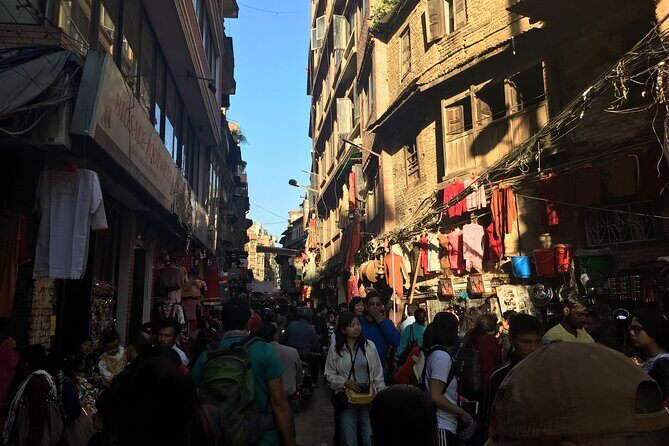
Kathmandu Valley can overwhelm fast. Roads are busy, landmarks blend together, and a lot of what you’re seeing only makes sense with context. This tour is built to solve those problems with car transport, a professional guide, and pickup and drop-off arranged right from your hotel.
I also like the format: you’re not stuck in a rigid “yes/no” schedule. It’s a private day tour for your group, with the ability to customize your itinerary and ask questions as you go. That matters because these UNESCO sites aren’t just pretty buildings—you’re stepping into living religious spaces and craft traditions.
If you’re trying to pack in the main sites during a limited stay, this is a practical way to do it. It’s also priced so you can afford a guided day rather than spending your energy on logistics.
You can also read our reviews of more historical tours in Kathmandu
Price and Entrance Fees: What the $40 Covers
The tour price is $40.00 per person, typically booked about 23 days in advance on average. That’s a decent deal when you consider what’s included: transportation, a professional guide, bottled water, and two cultural stops tied to traditional arts.
The catch is the UNESCO entrance fees are not included:
- $20 per person if visiting 4 UNESCO sites
- $10 per person if visiting 2 UNESCO sites
So in the full 4-site version, you should expect the day’s total to be tour price plus that additional gate fee. Still, compared with paying separately for transport and hiring a guide on your own, this often works out to solid value—especially if you’d otherwise lose time figuring out routes.
Also note: the tour uses a mobile ticket and may offer group discounts. If you’re traveling with family or friends, that can help lower the per-person total.
What the Day Feels Like: Timing, Pace, and Comfort
You’re looking at about 5 to 7 hours total. That’s enough time to see the major sights, but not enough time to slow-walk every corner like you’d do on a multi-day stay.
The driving plan matters. You’re hopping around the Kathmandu Valley by car, which usually beats trying to do this on your own with public transport. The experience provider also includes all transportation as per the itinerary, so you’re not left coordinating vehicles between stops.
The other practical detail: bottled water is provided—simple, but worth it when you’re moving through temple areas in warm weather.
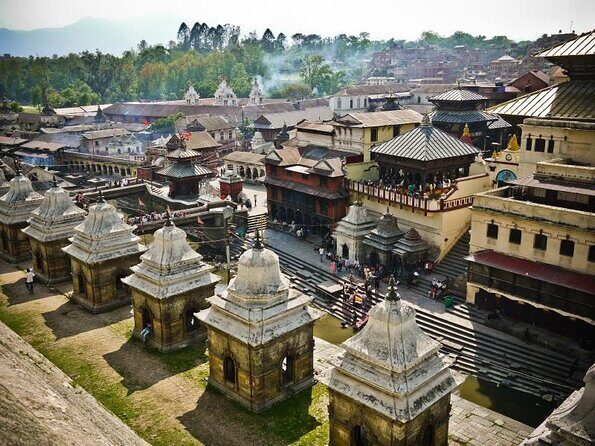
Stop 1: Pashupatinath Temple by the Bagmati River
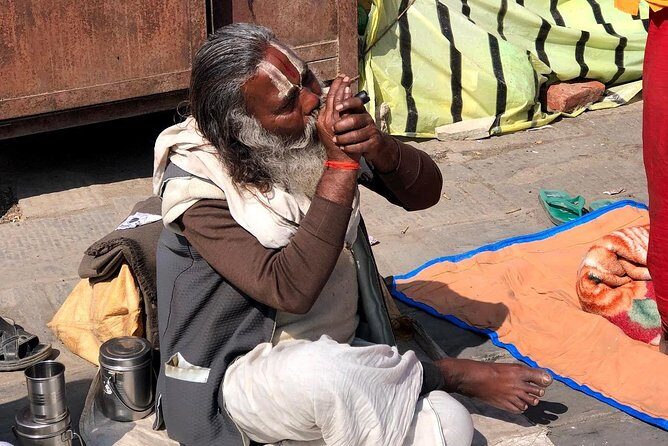
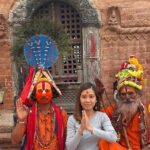
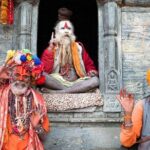
Pashupatinath is one of the most important Hindu temples in Nepal, devoted to Lord Shiva, and it sits along the Bagmati River in eastern Kathmandu Valley. Even if you know little about Hindu ritual, the place has an unmistakable spiritual gravity.
Why it’s a must:
- The architecture and setting give you a real sense of how religion is woven into everyday life here.
- You have a guide who can explain what you’re seeing, instead of guessing.
The tour schedule gives you about 2 hours at this stop, which is enough for a calm look and time to ask questions. The big consideration is emotional sensitivity: this temple complex is known for major open-air cremation rites, and the experience can be intense if you’re not ready. If you’d rather avoid that, tell your guide early so you can plan your viewing time.
Stop 2: Boudhanath Stupa and Its Tibetan-Influenced Atmosphere
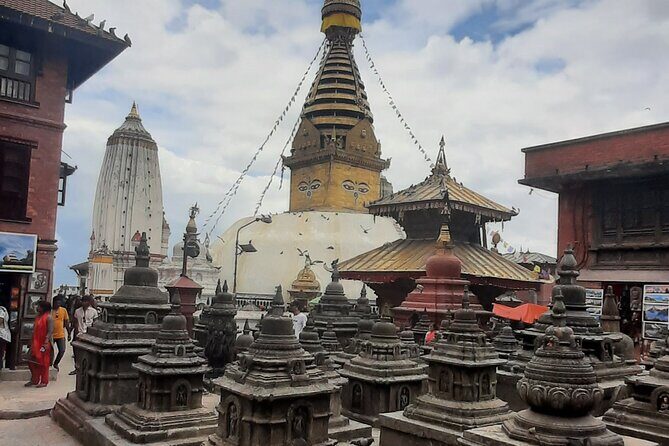
Next up is Boudhanath Stupa, a UNESCO World Heritage site surrounded by monasteries. The area has a strong Tibetan cultural influence, and the stupa itself is the visual anchor for everything around it.
This stop is about 1 hour, which sounds short until you’re actually there. Boudhanath isn’t just a monument—it’s a place where people practice, watch, and pause. You’ll want time to walk the stupa area and observe how the space feels in use, not only on a postcard.
A guide helps you read the place: what you’re seeing, why it matters, and what elements signal the Tibetan influence. Without that, you can end up doing what I’ve done before—taking photos and moving on without connecting the dots.
Practical note: if you’re sensitive to crowds during busy prayer times, ask your guide about the best moment to circulate.


Stop 3: Swayambhunath (Monkey Temple) and the Stair Climb
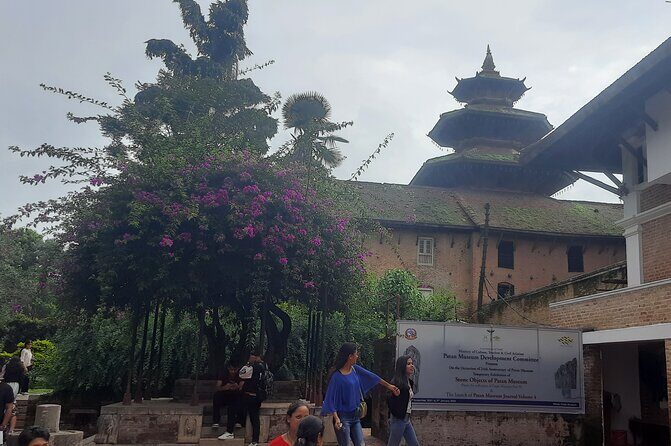
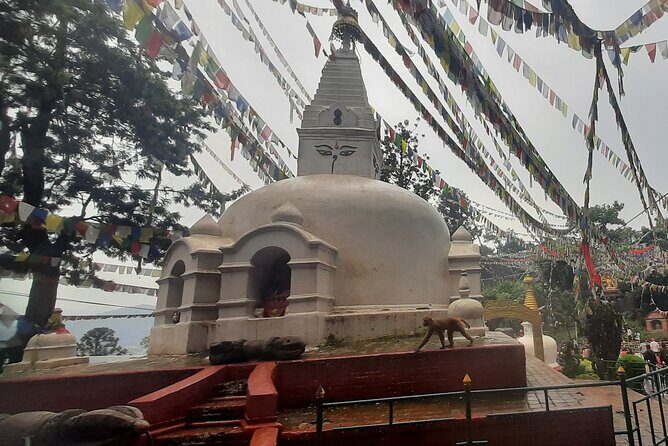
Swayambhunath Temple, also called the Monkey Temple, crowns a hill. The defining action here is the stair climb—long enough to feel like a mini workout, but rewarding once you reach the stupa.
Why it works on a day tour:
- It’s a different vibe than the river and stupa settings earlier in the day.
- The hilltop location helps you understand why it’s such a landmark.
The tour allocates about 2 hours for Swayambhunath. That includes time for the climb, exploring around the stupa, and getting your questions answered.
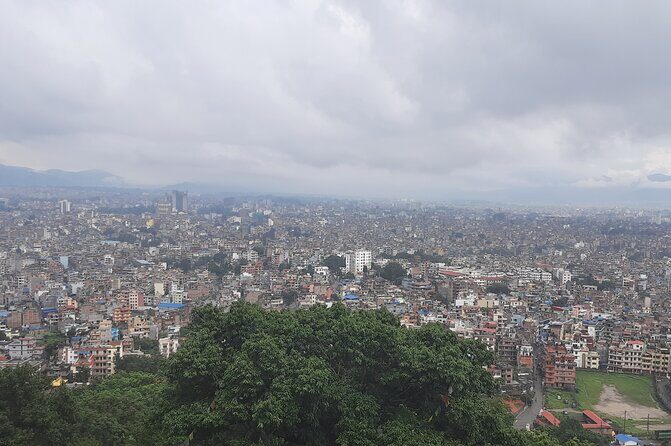
The main drawback is physical: if you don’t love stairs, this can be tiring. Wear shoes you trust, plan for slower pacing if needed, and don’t rush the climb. When you get to the top, the views and atmosphere make it worth the effort.
Stop 4: Patan Durbar Square and Newari Architecture
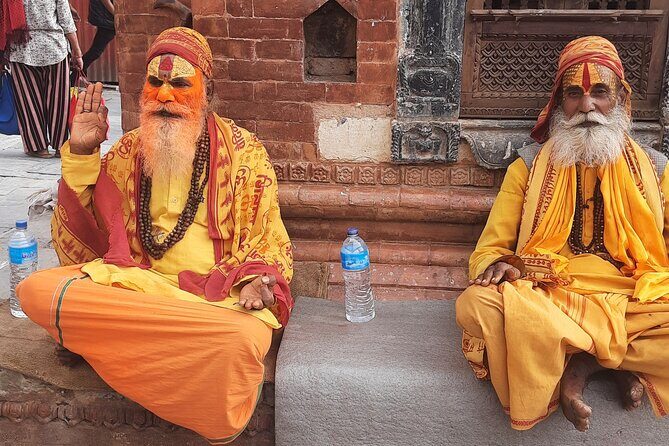
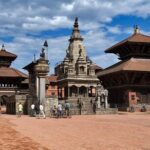
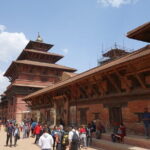
Then you head to Patan Durbar Square, a UNESCO World Heritage site associated with Newari architecture, shaped by the Malla kings as patrons of arts and architecture.
This is your 1-hour stop, and it’s the one where your guide’s explanation really changes what you notice. Durbar squares can look like “big open areas with temples” if you don’t have context. With a guide, you start spotting the design logic—how buildings, courtyards, and details reflect local craft traditions and power.
It’s also a good moment to shop lightly or browse nearby heritage craft spots, but don’t let shopping swallow the time. Patan rewards your attention, especially if you slow down for a few key structures rather than zigzagging everywhere.
Thangka Painting School and Singing Bowl Demonstration
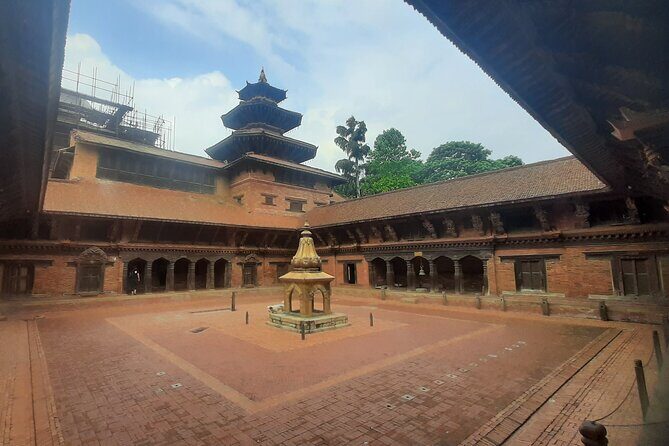
The best surprise on this tour is that it’s not only temples. You’ll also visit a thangka painting school and a healing and singing bowl demonstration center.
Why those stops matter:
- Thangka painting is a visual language. A short visit with instruction helps you understand symbolism and technique beyond just admiring finished art.
- Singing bowls are tied to sound healing traditions. The demonstration gives you a structured explanation, so the experience feels grounded instead of random.
You’re not just watching from the side. The way the stops are described includes access that feels more “behind the scenes,” plus you’ll have time to ask questions. In a culture-heavy day like this, that part helps you connect the dots between religion, art, and daily practice.
Also, these stops break up the day so you’re not marching from temple to temple the whole time.
The Guides: Prakash Aryal Shows Up in Many Great Days
A theme from the guide names you’ll hear associated with this tour: Prakash (including Prakash Aryal). Comments around his work emphasize clear explanations and flexibility—like adjusting the experience to what you care about, not running a script for everyone.
That’s exactly what you want for UNESCO sites. The architecture and rituals are complex, and having someone who can explain in plain language can turn “I saw it” into “I get it.”
On some days, the driver is credited as well (for example, Niroj). A calm driver matters in Kathmandu traffic because it reduces stress when you’re trying to enjoy the day rather than fighting for your seat and scanning maps.
Who This Tour Fits Best (And Who Should Rethink It)
This tour suits you if:
- You want major UNESCO sites in one day without logistics headaches.
- You’d rather pay for a guide than spend your day figuring out routes.
- You like culture, crafts, and religious architecture, not only landmarks.
It may not be ideal if:
- You hate stairs (Swayambhunath is stair-focused).
- You get overwhelmed by intense ritual imagery (Pashupatinath can be emotionally heavy).
- You want a slow, deep museum-style pace. This is a hit-the-key-points day.
A good match is also travelers who are curious and willing to ask questions. The private setup is built for that.
Common Small Frictions (That You Can Plan Around)
Even with a guide, there are a few realities:
- You’ll be moving through active religious areas, so dress norms and on-site rules may apply. A guide helps you navigate, but it’s still a respectful-space day.
- Time is tight across four UNESCO stops. If you fall in love with one place, be ready to prioritize what you really want to see.
- Extra costs can catch people off guard if you forget entrance fees aren’t included.
None of this is a dealbreaker. It’s just the kind of tour where knowing the rhythm ahead of time improves your experience.
Should You Book This Kathmandu UNESCO World Heritage Day Tour?
I’d book it if you’re on a time crunch and want a guided route that covers the big four UNESCO stops plus thangka and singing bowls. The door-to-door pickup, professional guide, and cultural additions make it feel like more than a simple sightseeing loop. You’ll also likely appreciate the private-group feel if you prefer to go at your own pace.
I’d pause and double-check your comfort level if you’re very sensitive to the kinds of scenes that can occur at Pashupatinath, or if stair climbs are a problem for you. And go in mentally prepared for the UNESCO entrance fees that are separate from the tour price.
FAQ
Which UNESCO sites are included?
The tour includes Pashupatinath Temple, Boudhanath Stupa, Swayambhunath (Monkey Temple), and Patan Durbar Square.
How long is the Kathmandu UNESCO World Heritage day tour?
It runs for about 5 to 7 hours.
Is hotel pickup and drop-off included?
Yes. The tour offers hotel pickup and drop-off, with a driver meeting you right at your door.
What is included besides transportation and the guide?
In addition to transportation and a professional guide, you’ll visit a thangka painting school and a healing and singing bowl demonstration center, plus you receive bottled water.
Are entrance fees included in the $40 price?
No. UNESCO entrance fees are not included. The fee is listed as $20 per person for 4 sites or $10 per person if only 2 sites are visited.
Can I cancel for a full refund?
Yes. The policy says you can cancel up to 24 hours in advance for a full refund.