REVIEW · KATHMANDU
Knife (Khukuri) Making Workshop- Forge of the Gurkhas
Book on Viator →Operated by I. Experience Nepal · Bookable on Viator
A knife starts as scrap and fire. I loved the chance for hammering hot iron and walking away with a genuinely sharp khukuri you helped make. One thing to consider: metal can show hidden issues later, so in rare cases a blade may crack during the process.
This is a small workshop in Kathmandu built around a real blacksmith’s workshop rhythm: you’re there for about 4 hours, with a maximum of 5 people, and the price is $68 per person for a take-home 6-inch knife. Pickup is offered, and you’ll get a mobile ticket and confirmation at booking.
In This Review
- Key takeaways before you go
- Why a Khukuri Workshop in Kathmandu Feels Different
- What You’ll Make: the 6-inch Khukuri and Its Meaning
- The 4-Hour Workshop Flow: hammering, first grinding, and finishing
- Step 1: Hammering the iron into blade shape
- Step 2: The first grinding (host-controlled safety, your shaping)
- Step 3: Buffing and polishing at the end
- What you’ll likely leave with
- Meet Indra and the guide team: craft meets conversation
- Value and price: is $68 a good deal?
- Safety and hands-on limits: what to expect around sparks
- Who this workshop is perfect for (and who should think twice)
- Should you book the Forge of the Gurkhas khukuri workshop?
- FAQ
- How long does the khukuri making workshop take?
- What size khukuri will I make?
- Is hotel pickup included?
- How many people are in the group?
- Will I grind the blade myself?
- What is the cost?
- Can I cancel and get a full refund?
Key takeaways before you go
- 6-inch khukuri included: you make a small blade to take home as a souvenir
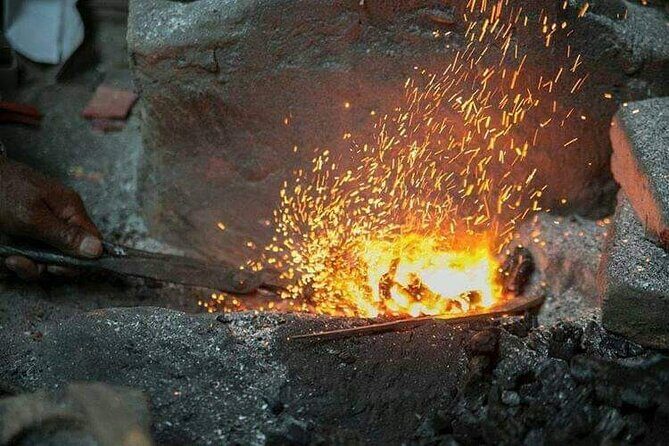
- Hands-on without the danger: you do safe steps like hammering, with the host managing sparkier grinding
- Craft lineage matters: you learn directly from a long-time blacksmith and assistants
- Small-group pace: max 5 travelers means real attention, not a factory tour vibe
- You finish the knife: buffing and polishing are part of your experience
Why a Khukuri Workshop in Kathmandu Feels Different
If you’ve only seen khukuris in souvenir shops, this workshop changes the way you think about them. A khukuri is a Gurkha symbol of loyalty, and it’s also part of daily life across Nepal’s hill tribes. It’s not just a knife; it’s a multipurpose tool people use for shaping timber and for chopping meat and vegetables.
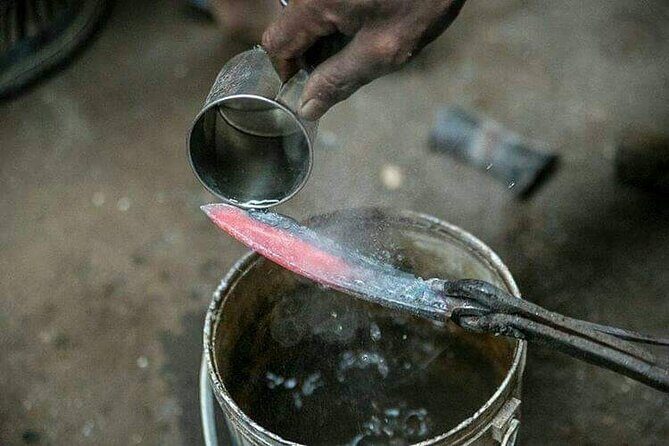
What I like most is that you can see the transformation in real time: tempered steel, a slightly curved profile, and a blade that ends up exceedingly sharp. The work happens at a human scale, not a staged show. And because it’s limited to about five people, the conversation can stay personal. One of the best parts is meeting the makers behind the craft, including Indra, a blacksmith with decades of experience, plus the people translating and guiding you through what you’re seeing.
The main consideration is that a khukuri is real metalwork. Even with skill, you might end up with a blade that develops cracks later. The good news is the operation has a process to address problems, including making things right if a finished knife has issues.
You can also read our reviews of more tours and experiences in Kathmandu

What You’ll Make: the 6-inch Khukuri and Its Meaning
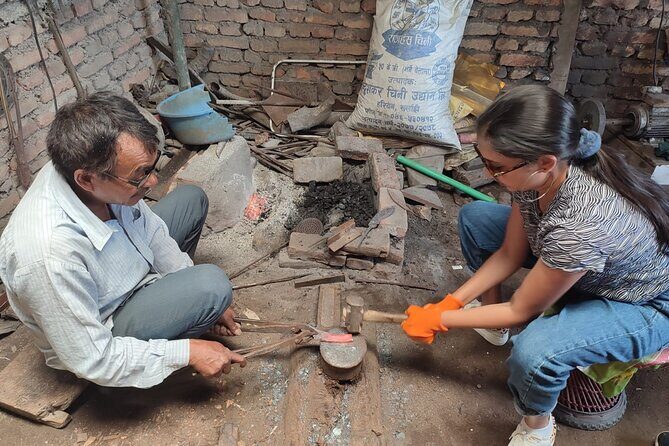
For this workshop, your take-home is a small 6-inch blade. The khukuri design carries symbolism and function at the same time, and the workshop explains both.
Here’s what you’re learning to appreciate:
- Blade material and shape: the blade is tempered steel, slightly curved, and meant to be sharp enough for real tasks.
- Handle and grip culture: handles are typically wood or buffalo horn.
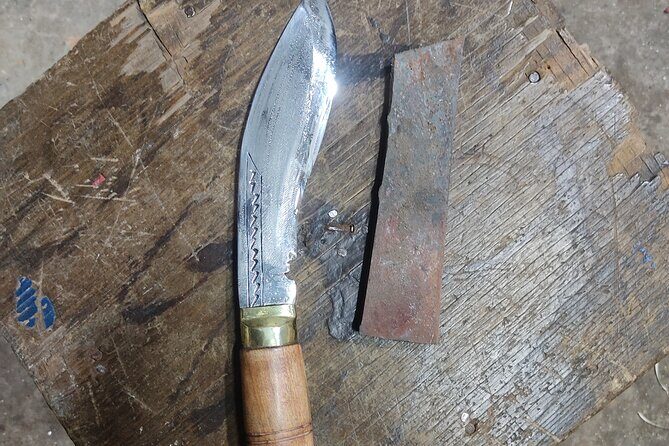
- The nick near the handle: there’s a nick in the blade close to the handle. It’s practical—meant to prevent blood from reaching the handle—and it’s also described as symbolic of the Hindu Trinity: Brahma, Vishnu, and Shiva.
- Scabbard style: the blade is enclosed in a scabbard of wood and leather.
Even if you don’t care about the religious symbolism, the design details make sense once you see how the blade is built. A khukuri isn’t trying to look fancy. It’s designed to be used, handled safely, and maintained like a working tool.
Also note the knife isn’t just a generic souvenir shape. Different khukuri sizes exist, and this workshop focuses on the 6-inch version so the experience stays manageable in roughly four hours while still letting you participate in the key steps.
The 4-Hour Workshop Flow: hammering, first grinding, and finishing
The workshop is built around steps you can actually do. The host also takes over the parts that need tight control—mainly to keep sparks and grinding risk under safety management.
You’re told up front that khukuri making takes years of experience, so the “you do” part is balanced with “the host does” part. In practice, that usually means you’re hands-on for the early shaping and finishing, while the most dangerous grinding work is handled by the smith.
Step 1: Hammering the iron into blade shape
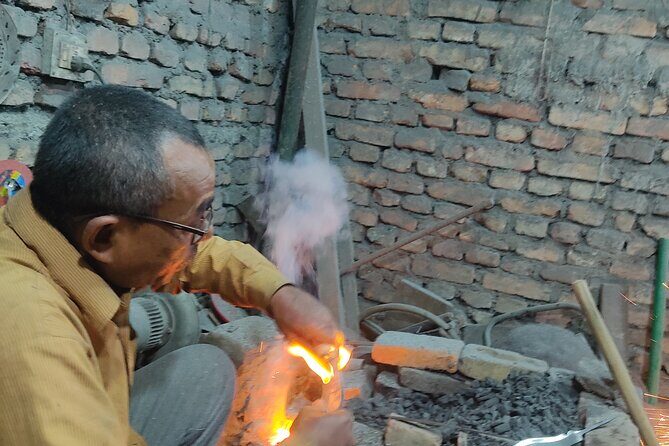
This is where the workshop feels real. You start with raw iron, and the shaping begins with hammer work. It’s not just pretending with tools—it’s physical, and you can feel why blacksmithing has a reputation for strength and patience.
If you like tactile learning, this step is your best moment. You’re turning material into a tool you’ll keep.
Step 2: The first grinding (host-controlled safety, your shaping)
Grinding is where sparks fly, so don’t expect total freedom here. The host handles the sparkier grinding work for safety, and guests are advised to stay clear during that stage.
You still get involvement in the shaping and early grinding process. Think of it as supervised progress: you see the edge and profile get refined, and you learn what “grind to a line” actually means.


Step 3: Buffing and polishing at the end
The final transformation is visual. Buffing and polishing are where the knife goes from shaped metal to a finished object. When this finishes well, you end up with a shiny blade and the kind of sharp edge that makes you stop and look twice.
Several people highlight that the final result isn’t a toy—this is an honest, functional khukuri that feels like it has a story attached to it.
What you’ll likely leave with
At the end, you’ll have your finished 6-inch khukuri as your souvenir. The process is the point, but you also get the payoff: a knife you can inspect up close, right away.
Meet Indra and the guide team: craft meets conversation
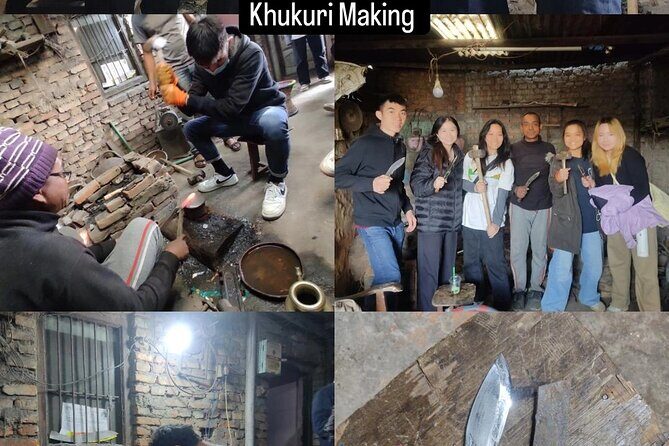
A big reason this workshop earns near-perfect ratings is the people. Indra is the blacksmith at the center of it, and he’s often described as proud of his craft and friendly with questions. You’ll also work with a guide who helps translate and explain what you’re watching.
In many workshops, translation becomes a barrier. Here, it tends to do the opposite. You get context on what you’re making and why the design details matter—plus the chance to ask questions in plain language.
You may also chat about Nepal beyond knives. One review notes the guide spent time talking about local places and what to do in Nepal, not just running a script. That kind of conversation adds value because you leave with practical knowledge, not only a souvenir.
And yes, there’s hospitality. People mention things like green tea and a lunch that’s part of the day. If you want a workshop that feels like a visit to a family craft space (not a tourist production), this is the kind of place that aims for that tone.
Value and price: is $68 a good deal?
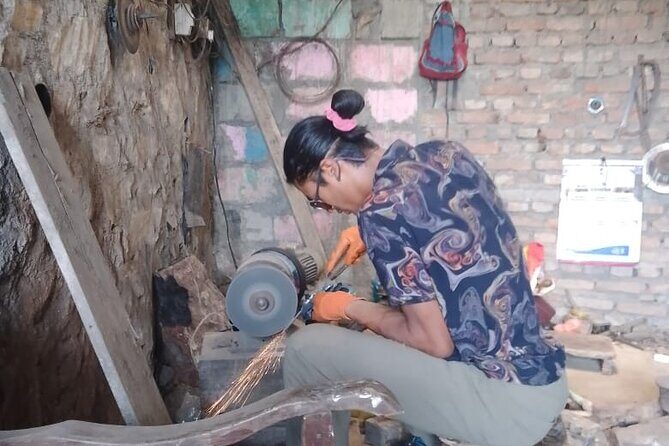
At $68 per person, you’re paying for more than a quick demo. You’re paying for:
- real hands-on time over roughly 4 hours
- a small 6-inch khukuri made through multiple stages
- small-group attention (max 5)
- guidance that explains the craft, not just the steps
The value gets clearer when you compare this to buying a khukuri in Kathmandu. Shoppers can end up paying for a look without the story—and without the feeling of having contributed to the finished tool. Here, you’re part of the process, so the knife has personal meaning.
Some people mention they could make a longer 10-inch version for an additional fee. If that interests you, it’s worth asking ahead of time whether upgrades are available when you book. The base workshop is designed around the 6-inch size, so the experience stays manageable.
Is it cheap? No. But it’s not overpriced for what you’re actually getting: a take-home knife and real craft participation.
Safety and hands-on limits: what to expect around sparks
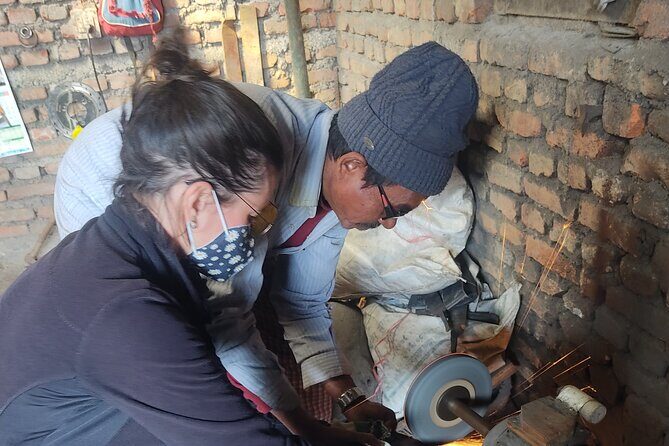
You should go into this expecting a safety-first approach. This is metalwork with heat, grinding, and hot tools. The workshop explicitly notes that for safety reasons, sparkier blade grinding is handled by the host, and guests are advised to stay clear of the sparks during that part.
That means you won’t be doing everything like a professional smith. You’ll be doing the steps that fit a safe participant role: hammering the iron, early shaping and grinding under supervision, and the final buffing and polishing.
If you’re coming with the idea that you’ll control every stage with your own hands, calibrate expectations. You’re still participating meaningfully, but there’s a deliberate split so you don’t end up as a human distraction near a grinding wheel.
One practical tip: dress for mess and heat. Even if you’re not handling the hot grind yourself, you’re in a working forge environment.
Who this workshop is perfect for (and who should think twice)
This experience fits best if you want craft, not crowds.
You’ll love it if:
- you enjoy hands-on workshops where you leave with a real object
- you care about local culture and the practical side of traditional tools
- you like meeting makers in small spaces and asking questions
You should think twice if:
- you want full control over every stage, including the most spark-heavy grinding (the host manages that)
- you’re traveling with kids who might struggle with the long focus required for metalworking (one family mentioned younger children ran out of patience during the 4–5 hour process)
- you’re extremely strict about perfect cosmetic results, because metalwork can reveal issues later
If you’re on the fence, treat it like a workshop day. It’s not a quick selfie stop. It’s a skill-based activity where time matters.
Should you book the Forge of the Gurkhas khukuri workshop?
I’d book it if you’re in Kathmandu and you want a take-home souvenir with real weight—literal and emotional. The workshop does what good cultural tours should do: it shows a craft in action and lets you participate in key parts, while still keeping safety front and center.
Pick this workshop if you want:
- a 6-inch khukuri you helped make
- a small-group environment (max 5)
- a visit to the blacksmith’s world with translation and conversation
- the chance to finish and polish the knife yourself
Skip it only if you need a fast, low-effort activity or you’re traveling with someone who can’t handle a workshop that takes real patience.
If you want an authentic Kathmandu day that’s not about shopping, this is a strong choice.
FAQ
How long does the khukuri making workshop take?
It runs for about 4 hours (approx.).
What size khukuri will I make?
For this workshop, you make a small 6-inch blade.
Is hotel pickup included?
Pickup is offered. You’ll use the mobile ticket and get confirmation at booking.
How many people are in the group?
The workshop has a maximum of 5 travelers, so it stays small.
Will I grind the blade myself?
For safety reasons, the host handles the blade grinding where sparks are involved. You can still participate in steps such as hammering, early work, and buffing and polishing.
What is the cost?
The price is $68.00 per person.
Can I cancel and get a full refund?
Yes. You can cancel up to 24 hours in advance for a full refund.