REVIEW · KATHMANDU
Momo, Dhalbhat & Thukpa Cooking Class, Nepal
Book on Viator →Operated by Momo, Dhalbhat & Thukpa Cooking Class · Bookable on Viator
Your morning gets edible fast. This cooking class in Patan starts with a local market walk and turns into real hands-on time making momo and dhalbhat with Esther Rai (with help from Amos). I also liked how the experience stays practical and social, not just a demo, even though some early prep may already be handled for you.
What makes it extra appealing is the setting: you’re close to Patan’s sights, including a stop at the Golden Temple (Hiranya Varna Mahavihar), and the cooking area is about a short walk from Patan Durbar Square. The whole experience runs about 3 hours, keeps the group small (max 10), and ends back where you start, so it fits nicely into a Kathmandu itinerary without turning into a day-long project.
In This Review
- Key things to know before you cook in Patan
- Market-to-kitchen cooking: why this format works in Kathmandu
- Golden Temple (Hiranya Varna Mahavihar) and Patan time: context before you cook
- The start point in Lalitpur: logistics that keep it easy
- Market visit: what you should pay attention to
- Momo practice: shaping dumplings and learning the small moves
- Dhalbhat lesson: understanding Nepal’s everyday plate
- Thukpa: soup learning that sticks
- Where you cook: close to Patan Durbar Square, but not trapped in Thamel
- Value check: is $25 worth it?
- What the experience feels like in real time
- Tips for you before you book
- Who this class is best for
- Should you book the Momo, Dhalbhat & Thukpa Cooking Class?
- FAQ
- How long does the Momo, Dhalbhat & Thukpa Cooking Class take?
- What dishes will I learn to make?
- Do we visit a market before cooking?
- Where do we meet, and where does the tour end?
- How many people are in each class?
- What if the weather is bad?
- Is there a free cancellation window?
Key things to know before you cook in Patan
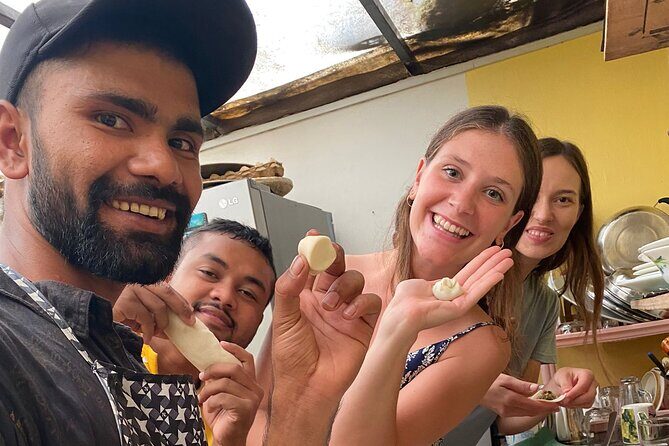
- Market visit first: You go to a local vegetable market and interact with sellers before you touch a single ingredient.
- Three classic dishes: You learn to make momo, dhalbhat, and thukpa, with the menu based on requests.
- Food plus culture stops: The route includes the Golden Temple (Hiranya Varna Mahavihar) and time in Patan (Lalitpur).
- Small group cooking: Max 10 people keeps the pace friendly and questions easy to ask.
- Eat what you cook: Once your dishes are ready, you get to sit down and eat the results.
- Weather matters: It requires good weather, so plan with that in mind.
Market-to-kitchen cooking: why this format works in Kathmandu
I like cooking classes where you don’t just learn recipes, you learn choices. Here, that starts at the local vegetable market. You’ll see what’s fresh, meet the people selling it, and understand how Nepali cooks shop for flavor instead of chasing imported shortcuts.
You also feel the rhythm of the city. Kathmandu can be a little chaotic, but a market walk gives you something steady to focus on: colors, smells, and what the vendors recommend. It’s also a good way to pick up useful “why” information, like what ingredients tend to go together and how spices fit into everyday cooking.
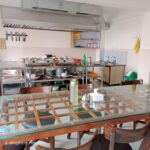
Then you move from street-level shopping to the cooking station, which is set up for actually cooking, not just watching. After everything is prepared, you eat your meal while it’s still in the zone—hot, fresh, and clearly the whole point.
You can also read our reviews of more cooking classes in Kathmandu
Golden Temple (Hiranya Varna Mahavihar) and Patan time: context before you cook
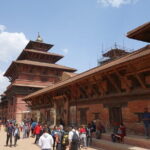
The experience begins with cultural stops, so your cooking doesn’t feel like it dropped out of nowhere. First up is the Golden Temple, officially known as Hiranya Varna Mahavihar. Even if you’re not a full-time temple person, it’s a solid way to orient yourself in Patan and understand why people take food and daily life seriously here.
After that, you spend time in Patan (Lalitpur). Patan is one of those places where details reward slow walking. You’ll get a sense of local traditions and place names that make the neighborhood feel less like a blur and more like a real community.
Why this matters for a cooking class: it gives you context. You’re about to learn three comfort foods, and culture stops help you understand them as daily food—not just tourist food.
The start point in Lalitpur: logistics that keep it easy
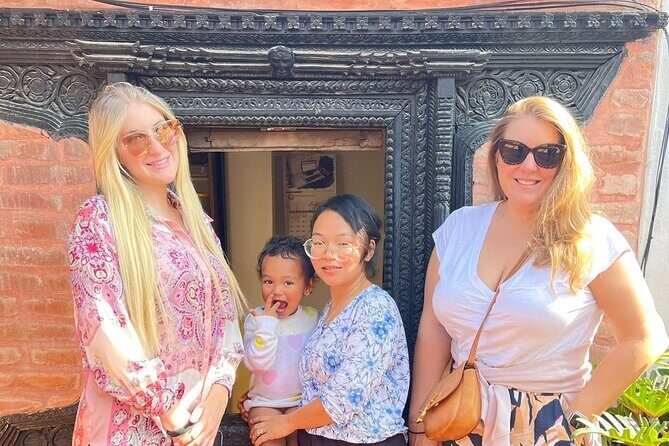
You meet at Nagabahal – Nyadha Galli, Lalitpur 44600, Nepal. The tour ends back at the same meeting point, which is great because you don’t need to figure out how to link up with transit afterward.
It’s also listed as near public transportation, so it’s not a mission to reach the starting area. You’ll receive a mobile ticket, which is a simple modern touch—useful in places where paper tickets can turn into a small disaster.
Timing is another practical win. The class runs about 3 hours, so it doesn’t drain your day. That matters in Kathmandu, where you can easily burn hours just moving around.
Market visit: what you should pay attention to
You’re not just walking through stalls. You’ll interact with vegetable sellers and buy ingredients used in the cooking lesson. That means you’re paying attention in a way that turns into better results later.
Here’s what I’d watch for, based on how the class is set up:
- Ingredient condition: Look for fresh vegetables and quality staples. If an ingredient looks tired, ask what people normally use it for.
- Spice cues: Even without fancy explanations, vendors can show you how spices are commonly paired in daily Nepali cooking.
- Portion logic: Market prices and portions teach you what’s “normal” for a meal, not just what a restaurant might serve.
Also, bring the right mindset. This is a food class, so you should expect a mix of shopping, conversation, and short educational pieces. It’s not a long lecture, and it won’t feel like you’re being graded.
Momo practice: shaping dumplings and learning the small moves
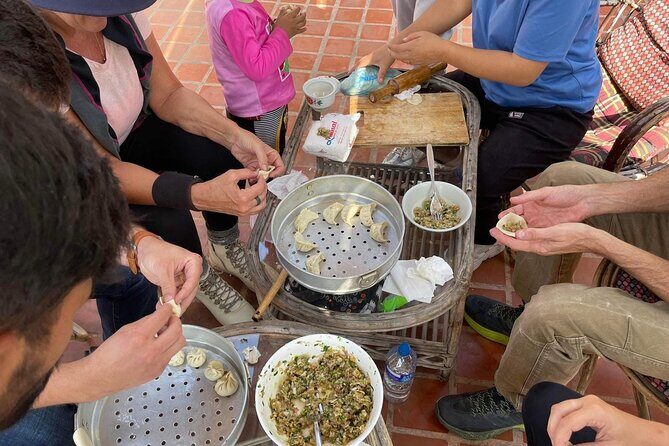
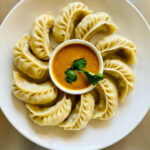
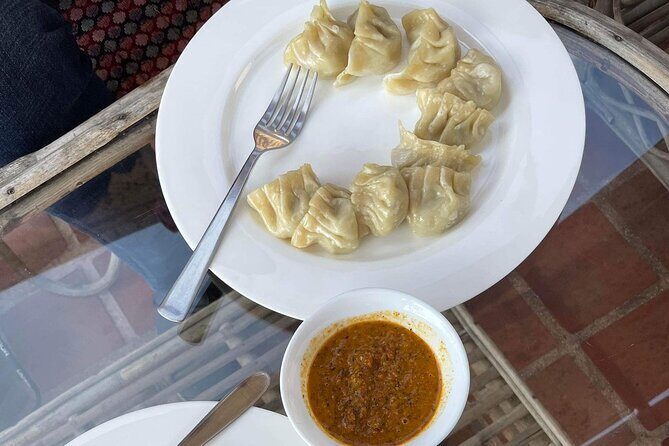
Momo is the dish people associate with Nepal, and it’s a perfect class topic because it rewards hands-on practice. You’ll learn how to make momo and then cook it as part of the full meal.
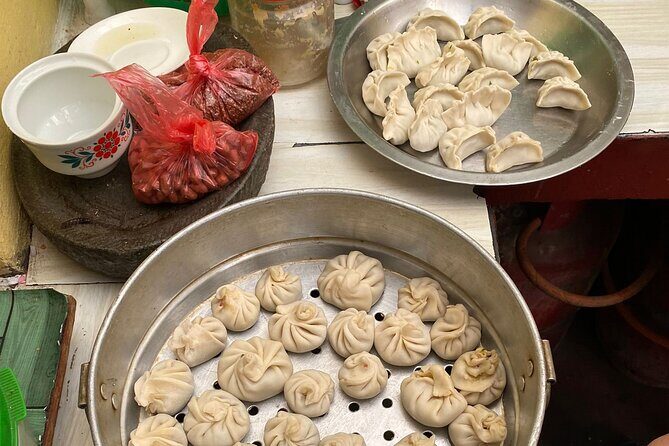
What you’re really learning here isn’t just the recipe. It’s texture and technique: how dough behaves, what filling should feel like, and how shaping affects cooking. Those tiny decisions are exactly why homemade momo tastes different from what you get in a quick bite elsewhere.
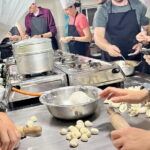
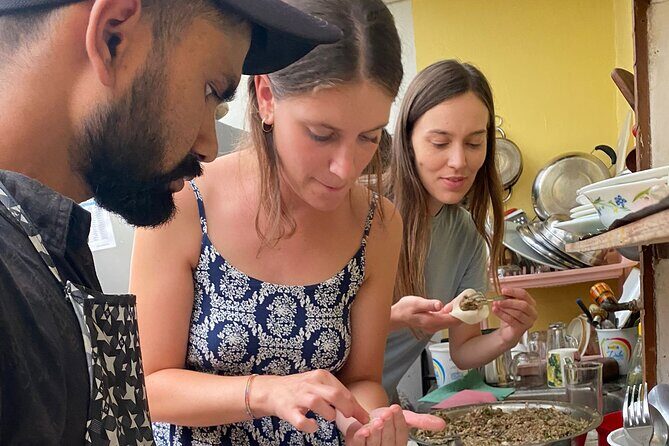
A nice detail: the class is designed around doing, not watching from the sidelines. I like that because momo is hard to learn from theory alone. It’s also more fun—when you’re folding and sealing dumplings, you’re naturally paying attention.
One note: some early prep may already be done for you. That can be a relief if you’re not into food prep stress. If you were hoping for a fully from-scratch journey (every step), you might feel less hands-on than you imagined. Still, the core experience stays active.
You can also read our reviews of more tours and experiences in Kathmandu
Dhalbhat lesson: understanding Nepal’s everyday plate
Dhalbhat is the comfort-food center of Nepali eating, and learning it gives you a baseline for how flavors work. You’ll practice making dhalbhat as part of the class menu.
The big value here is how the meal comes together as a plate, not as isolated dishes. You’re not only making something tasty—you’re learning the logic of an everyday combination: staples, sauces, and the role of spices in making food feel complete.
In the class, menu options can follow your request. You might end up with variations that include things like chicken curry alongside dal bhat style elements, depending on what’s selected for the session. That flexibility is useful if you have dietary preferences or if you want the meal to match what you’ve been hearing about while in Nepal.
If you care about eating like a local, this is the dish that best teaches you that habit. A simple plate, executed well, beats a fancy plate you can’t repeat at home.
Thukpa: soup learning that sticks
Thukpa rounds out the menu and gives you something warmer and more comforting after dumpling shaping. You’ll learn how to make thukpa in the same 3-hour framework.
What I appreciate about thukpa as a teaching dish is that it’s forgiving enough to learn quickly, but still sensitive to seasoning. When soup tastes right, it means the spices and cooking balance are working. When it tastes flat, you know exactly what to adjust next time.
This matters for you if you want more than a one-time meal memory. The flavors in thukpa teach a transferable skill: adjusting seasoning to make food feel finished, not just cooked.
Also, thukpa gives the meal pacing. Momo and dhalbhat can feel heavy and dense in different ways. Thukpa adds a different texture and helps everything feel like one unified Nepali meal.
Where you cook: close to Patan Durbar Square, but not trapped in Thamel
One of the best parts of this class is the location. The cooking area is described as about a short walk (around 5 minutes) from Patan Durbar Square, which makes the area feel real and walkable instead of like an isolated activity bubble.
That’s a practical win for you, because you can plan your day without losing time. You don’t need to be stuck in one neighborhood for hours before or after. You can also pair this class with your own sightseeing rhythm around Patan.
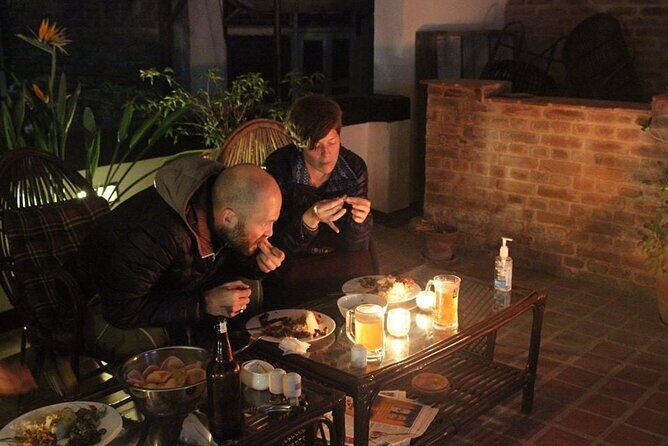
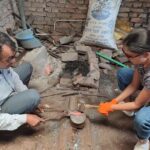
Cooking on a rooftop setting also changes the experience. You’re in the open air enough to feel connected to the neighborhood, but still sheltered enough to focus on cooking. And when you’re eating what you made, that setting makes it feel more like a shared moment than a transaction.
Value check: is $25 worth it?
At $25 per person for about 3 hours, this class is priced in a way that makes sense for what you actually do. You’re paying for three things at once:
- A market visit with ingredient gathering and local interaction
- Hands-on instruction for multiple dishes
- A full meal that you eat immediately after cooking
The small group size (max 10) also supports better learning. If you’ve ever taken a class where you’re one of many people in a long line, you know how much that kills hands-on progress. A limit like this helps you ask questions and get unstuck faster.
There’s also a practical detail: the menu can be handled based on guest requests. That means you’re not locked into one rigid outcome. If you want more or less of something in the three-dish structure, it’s more likely you can shape the meal.
In short: for $25, you’re not buying a ticket to watch cooking. You’re buying time in the kitchen, plus the ingredients and context that make the food make sense.
What the experience feels like in real time
From start to finish, the flow is built to keep you moving and learning. You begin with the meeting point in Lalitpur, then head out for the Golden Temple and Patan context. After that, the market part pulls you into the ingredient story.
Then it’s cooking: learning momo, dhalbhat, and thukpa as part of one session. Finally, you eat what you’ve made.
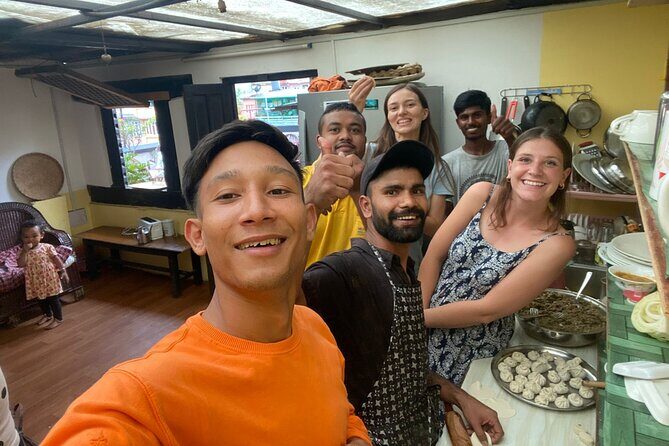
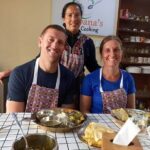
The vibe, based on the way this is described and the names involved, is welcoming. Esther Rai is the lead instructor, and Amos is mentioned as part of the team. When a class is organized around a family-style approach and a shared meal, it tends to feel less formal and more like you’re being taught by people who care that you understand the food.
Just note the cooking intensity level. Some prep might be done in advance, so you’ll spend more time shaping, seasoning, and cooking rather than tackling every step like a food production line.
Tips for you before you book
A few things will help you get the most out of the class:
- Plan for good weather since it needs it. If weather is poor, you’ll be offered a different date or a full refund.
- Wear something comfortable and practical for moving and cooking. You’ll be active in the market and then in the cooking space.
- Bring curiosity for spices and ingredients. The class is designed to make you ask why, not only how.
- If you have preferences, speak up. The menu can be arranged based on your requests.
If you like cooking classes, you’ll probably enjoy this. If you’ve never cooked Nepali food before, this is also a strong starting point because you learn three anchors: momo, dhalbhat, and thukpa.
Who this class is best for
This is a great fit if you want:
- A real taste of Nepali home-style cooking, not just restaurant dishes
- A short activity that still includes culture and context
- A small group format where you can ask questions and work with your hands
It may not be perfect if you want a fully raw, no-prep-done-for-you experience. If you’re the type who wants to do every single chopping step from scratch, you might feel a bit limited.
Should you book the Momo, Dhalbhat & Thukpa Cooking Class?
I think you should book it if you want a compact Kathmandu experience that connects food to place. The market start is a big deal, and the fact that you cook and then eat the full meal keeps the whole thing grounded. With Esther Rai leading and Amos helping, plus a max 10-person group and a 3-hour time window, it’s an efficient way to learn Nepali comfort food.
I’d skip it only if you strongly dislike hands-on cooking or if you’re traveling with very limited time and can’t handle a weather-dependent activity. Otherwise, this is the kind of class that leaves you with something you can actually use: the flavors, the steps, and the confidence to recreate at least part of a Nepali meal back home.
FAQ
How long does the Momo, Dhalbhat & Thukpa Cooking Class take?
It lasts about 3 hours.
What dishes will I learn to make?
You will learn to make momo, dhalbhat, and thukpa. The menu can be done based on guest request.
Do we visit a market before cooking?
Yes. You go to a local vegetable market and interact with vegetable sellers before you start cooking.
Where do we meet, and where does the tour end?
You meet at Nagabahal – Nyadha Galli, Lalitpur 44600, Nepal. The activity ends back at the same meeting point.
How many people are in each class?
The tour has a maximum of 10 travelers.
What if the weather is bad?
This experience requires good weather. If it’s canceled due to poor weather, you’ll be offered a different date or a full refund.
Is there a free cancellation window?
Yes. Free cancellation is available up to 24 hours in advance for a full refund. If you cancel less than 24 hours before the start time, the amount you paid is not refunded.