REVIEW · KATHMANDU
Oldest Local Market Walking Tour With Living Goddess Kumari
Book on GetYourGuide →Operated by Mount Glory Treks · Bookable on GetYourGuide
Kathmandu has a way of making your brain stop and reset, especially around the Kumari. This 2-hour walk pairs the oldest market area in Kathmandu, Ason, with Kathmandu Durbar Square, then connects it all to the living goddess tradition you’ll hear about from your guide. I like that it mixes everyday street life with major sacred sites, and I also like that you get a real explanation of Hinduism and Buddhism while you’re there. One drawback to plan for: Kathmandu Durbar Square entry fees (1000 NPR) aren’t included, so your final cost will be a bit higher than $39.
I also appreciate that the tour is compact. When you only have a short window in Kathmandu, 2 hours can still give you a meaningful hit of culture, not just a photo stop. The meeting point is easy too: the main gate side of the Chhaya Devi Complex in Thamel, so you’re not hunting around the city center for long.
Price-wise, $39 per person is fair for what you get: an English-speaking guide, taxes/VAT included, and a bottled mineral water. Just remember that meals aren’t included, so you may want to eat before or after, depending on your day.
In This Review
- Key things I’d circle before you go
- Ason Market and Kathmandu Durbar Square in one short walk
- The living goddess Kumari: what you’re actually witnessing
- How the 2-hour route keeps it practical (meeting at Chhaya Devi Complex)
- What you’ll likely see at Durbar Square (and why it matters)
- Ason market browsing: the fun part that still teaches something
- Price and logistics: is $39 really good value?
- The guide matters: English narration and clear explanations
- Hinduism and Buddhism you can spot, not just read about
- Tips to make the most of your Kumari day
- Who should book this tour?
- Should you book this Kumari walking tour?
- FAQ
- FAQ
- How long is the walking tour?
- What does the $39 per person price include?
- What isn’t included in the tour price?
- How much is the Kathmandu Durbar Square entry fee?
- Where do we meet the guide?
- What areas are visited during the tour?
- Is there an opportunity to see the living goddess Kumari?
- What language is the tour guide?
- Who is the experience provider?
- What are the cancellation and payment options?
Key things I’d circle before you go
- Old Ason Market: Shop-lined streets where spices, textiles, and souvenirs are the daily language.
- Kathmandu Durbar Square focus: Temples, palaces, and courtyards in one historic square.
- Living goddess Kumari context: You’ll learn who the Kumari is and why she matters.
- Religion connections on the walk: Hinduism and Buddhism show up as part of what you’re seeing.
- English guide + clear narration: Expect explanations that help you understand what you’re looking at.
- Short, focused timing: A 2-hour format that works well for first-time Kathmandu visits.
Ason Market and Kathmandu Durbar Square in one short walk
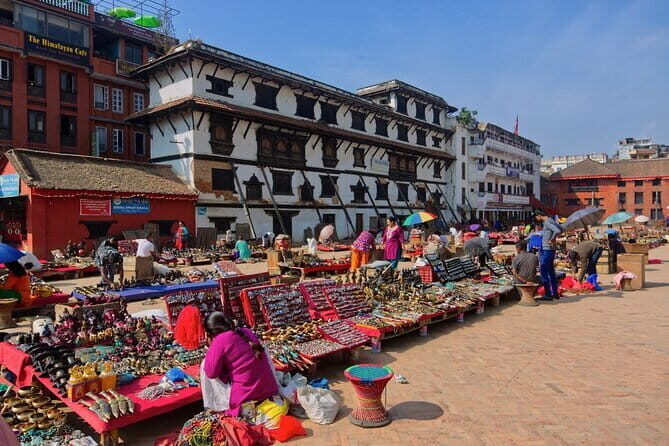
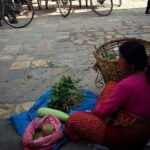
Ason is the kind of place where you quickly understand Kathmandu isn’t staged for visitors. It’s a real local market area with shops, stalls, and traditional architecture doing their normal business. Expect a dense mix of goods such as spices, textiles, and typical souvenir items, and you’ll probably find it easy to ask questions as you walk.
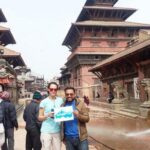
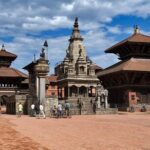
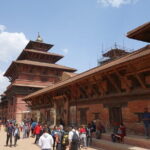
Then the tour shifts into Kathmandu Durbar Square, one of the area’s key historic squares. Here you’re looking at palaces, temples, and courtyards packed into a central zone. Even if you’re not a hardcore architecture person, the sheer concentration of sacred and royal spaces helps you see why Kathmandu became a cultural hub in the first place.
What makes the pairing smart for you: Ason shows the everyday Kathmandu rhythm, while Durbar Square shows the big spiritual and historic gear behind that rhythm. You don’t just see one side of the city.
You can also read our reviews of more walking tours in Kathmandu
The living goddess Kumari: what you’re actually witnessing
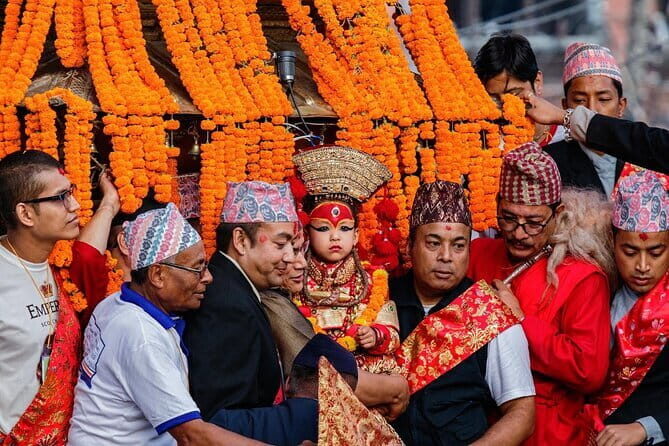
The term living goddess in Kathmandu usually points to the Kumari, a prepubescent girl regarded as the living embodiment of the goddess Taleju in Nepalese tradition. The Kumari is based in the Kumari Ghar, and her role is tied to long-standing religious belief.
So when you come here hoping to see something unusual, you will. But the real value is the meaning around it. A good part of this experience is listening as your guide explains the cultural and religious context of what you’re observing, instead of treating it like a one-time spectacle.
A practical way to approach this moment: keep your attention on the explanation and the setting, not just the photo frame. This is one of those experiences where the understanding you gain makes the visual part more powerful.
How the 2-hour route keeps it practical (meeting at Chhaya Devi Complex)
You start at the main gate side of the Chhaya Devi Complex in Thamel. That’s a helpful detail because Thamel is where many visitors already are, so you’re not crossing half the city just to meet up.
From there, the core of the guided visit is built around Kathmandu Durbar Square, with the living goddess connection tied into the same general area experience. The duration is 2 hours total, which means you won’t burn the whole day stuck in transit or waiting around.
This short format suits you if:
- You’re in Kathmandu for a limited time
- You want a guided story, not a self-guided scavenger hunt
- You prefer walking and explanations over long museum-style pacing
It may be less ideal if you’re the type who wants to linger for hours at every viewpoint or door you pass. With 2 hours, the guide will steer you toward the key moments.
What you’ll likely see at Durbar Square (and why it matters)
Kathmandu Durbar Square is known for cultural and architectural significance, and the tour focuses on the kinds of structures that make it feel like a lived-in historic center. You’ll be looking at palaces, temples, and courtyards, which all reflect the Kathmandu Valley’s past.
Here’s what to pay attention to so the stop doesn’t turn into generic sightseeing:
- Notice the layout of courtyards around key buildings. You’re seeing how space supports ceremony and community life.
- Look at the mix of religious and royal spaces. That blend is part of why Nepalese cities feel spiritually centered rather than separated from everyday life.
One consideration: you’ll need to budget for entry fees. Kathmandu Durbar Square entry is listed as 1000 Nepali Rupee, and that cost isn’t included in the $39 price. If you’re budgeting tightly, add this to your planning early so you don’t get surprised at the gate.
Ason market browsing: the fun part that still teaches something
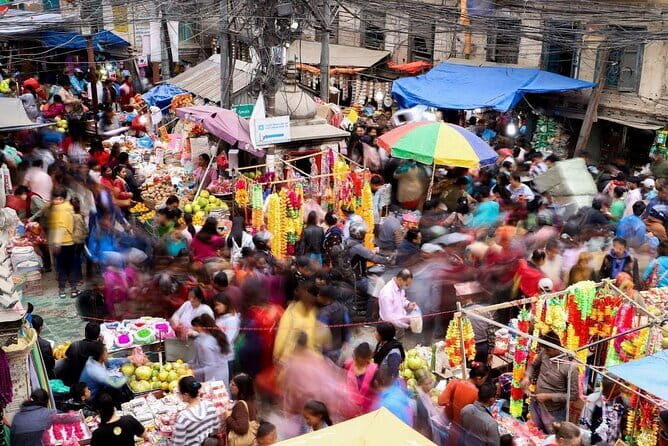
Ason isn’t just a place to shop. It’s a living local market area, which means the sights, smells, and goods are part of the education. You’ll find stalls and shops selling spices, textiles, and souvenirs, so it’s easy to connect what you’re seeing to Nepalese daily life.
If you like markets, this is where the tour gives you easy momentum. You’re not trying to figure out which alley to turn into first. Your guide keeps the walk moving while you get time to observe and ask questions.
If you don’t like markets, don’t panic. You can treat Ason as a warm-up: a lower-stakes, people-and-products section of the tour that makes the Durbar Square stop feel more meaningful by contrast.
You can also read our reviews of more shopping tours in Kathmandu



Price and logistics: is $39 really good value?
At $39 per person for a 2-hour guided experience, the value is mostly about three things you receive up front:
- An English-speaking tour guide
- Government taxes and VAT included
- A bottle of mineral water for the walk
What’s not included matters too. Meals and beverages are not included, and Durbar Square entry fees (1000 NPR) are extra. Personal expenses are, of course, also on you.
So is it worth it? In my view, yes if you want:
- Guided context around the Kumari tradition
- A clear pairing of Ason + Durbar Square
- A compact Kathmandu activity that doesn’t eat your whole day
If you’re the kind of traveler who hates paying entry fees and prefers to wander solo, you might feel the add-on cost more. But if you like having an informed guide translate what you’re seeing, the pricing makes sense.
The guide matters: English narration and clear explanations
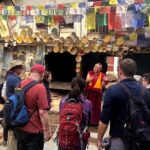
This experience leans on the guide, because the living goddess part isn’t just visual. It’s cultural and religious, and you’ll get much more out of it when someone can explain the meaning clearly.
The tour includes a well English-speaking guide, and names show up in the feedback from past guests. Santos is specifically noted as an excellent communicator and extremely knowledgeable, with explanations that go into detail. That matters for you because Kumari tradition isn’t always intuitive if you’re coming in fresh.
A small tip to maximize this: during the walk, ask one or two questions you genuinely care about, like what the Kumari represents in Nepalese culture or how Hinduism and Buddhism show up in the spaces around Durbar Square. You’ll feel like you’re unlocking the city instead of just passing through it.
Hinduism and Buddhism you can spot, not just read about
The tour’s focus includes exploring Hinduism and Buddhism. That doesn’t mean you’ll sit in a lecture. It means your guide connects what you’re seeing—temples, sacred spaces, and the Kumari tradition—to how these religions are woven into Kathmandu life.
This is the key difference between a checklist tour and a real cultural experience: you’re not just standing near a temple. You’re learning what it represents, so your brain can organize the city while you’re still there.
If you’re curious about how belief systems shape public space, this is where the tour earns its time.
Tips to make the most of your Kumari day
Since this is a walking tour with religious and historic stops, you’ll be happiest if you come prepared for walking and respectful sightseeing. Wear comfortable shoes and keep your phone charged, because you’ll likely want photos, but also want time to look up and listen.
Bring along patience too. Places tied to living religious tradition can feel emotionally intense and visually busy, so the guide’s narration helps you keep your attention on understanding, not just on searching for the perfect shot.
Also, plan your day around food. Meals and beverages aren’t included, so eating beforehand can keep you from feeling rushed later.
Who should book this tour?
This tour is a strong fit if you:
- Want a short, guided introduction to Kathmandu’s culture
- Are interested in the living goddess Kumari and the meaning behind it
- Like the mix of street-level market life (Ason) and major historic-religious space (Kathmandu Durbar Square)
- Prefer English commentary so you can follow what’s going on
It’s probably not the best choice if you want a long, self-paced day with lots of downtime. The format is 2 hours, so you’ll be moving from stop to stop with the guide leading the pace.
Should you book this Kumari walking tour?
If you’re curious about why Kumari tradition is such a big deal in Nepalese culture, and you want a guided walk that connects the living goddess moment to real Kathmandu streets and sacred architecture, I’d book it. The short timing is a plus, and the included English guide plus bottled water makes it easy to fit into a busy itinerary.
The main reason to pause is cost sensitivity: Durbar Square entry fees (1000 NPR) are extra, and you’ll still need meals. If you can handle those costs, this is an efficient, meaningful way to spend part of your Kathmandu time without getting lost in random walking.
FAQ
FAQ
How long is the walking tour?
The tour lasts 2 hours.
What does the $39 per person price include?
It includes an English-speaking tour guide, government taxes and VAT, and bottled mineral water.
What isn’t included in the tour price?
Meals and beverages are not included, and Kathmandu Durbar Square entry fees are not included.
How much is the Kathmandu Durbar Square entry fee?
Kathmandu Durbar Square entry fees are listed as 1000 Nepali Rupee.
Where do we meet the guide?
You meet at the main gate side of the Chhaya Devi Complex at Thamel, Kathmandu.
What areas are visited during the tour?
The tour focuses on the Ason local market area and Kathmandu Durbar Square.
Is there an opportunity to see the living goddess Kumari?
Yes. The tour includes the living goddess Kumari as a highlighted part of the experience.
What language is the tour guide?
The tour is offered in English.
Who is the experience provider?
The provider is Mount Glory Treks.
What are the cancellation and payment options?
There is free cancellation up to 24 hours in advance for a full refund, and you can reserve now and pay later.