REVIEW · KATHMANDU
Walking Street Food Tour and 2 UNESCO Sightseeing in Kathmandu
Book on Viator →Operated by Yakthung Tours and Travels · Bookable on Viator
Kathmandu has a best way to be tasted: on foot. This Walking Street Food Tour + UNESCO sightseeing squeezes two famous sites and a local market walk into about six hours, so you get big views, temple landmarks, and real food culture without wasting your limited time. I especially like the pairing of Swayambhunath’s Monkey Temple with the street food sampler at Asan Market, and I also appreciate how the tour includes a proper lunch plus drinks like lassi and masala tea. One thing to consider: you’ll want to plan around any UNESCO entrance fees that may apply, since the tour notes admission tickets but also lists UNESCO fees as not included.
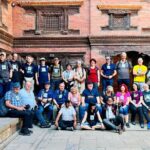
A big part of the value is the guide-led flow. You’ll be taken by private transportation with a professional leader, and you’ll get pacing that makes sense—temples in the morning light, then markets for the flavors, then Kathmandu Durbar Square for the palace-temple atmosphere. In a recent run, a guide named Shova was specifically mentioned as a highlight, and that fits the overall feel: the day works because someone explains what you’re looking at and keeps you moving. If your idea of sightseeing is long solo time at one monument, you may find the schedule a bit tight.
In This Review
- Key Points Before You Go
- Price and Value: What $65 Buys in Kathmandu
- Getting There: Start Time, Pickup, and Meeting Point Reality
- Stop 1: Swayambhunath Monkey Temple and Hilltop Views
- Stop 2: Asan Market Street Food Crawl (Momo, Bara, Yomari, Lassi)
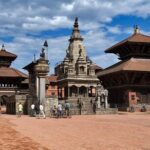
- Stop 3: Kathmandu Durbar Square Old Palace and Temples
- Lunch, Drinks, and the Food-Focused Value
- The Guide Experience: Professional Leaders and Shova’s Impact
- Who This Tour Suits Best (and Who Might Prefer Another Plan)
- Practical Tips for a Smoother Day
- Should You Book This Kathmandu UNESCO + Street Food Combo?
- FAQ
- What is the duration of the Walking Street Food Tour and UNESCO sightseeing?
- How much does the tour cost?
- Where does the tour start, and do you return to the same place?
- Is pickup offered?
- Is the tour private?
- What’s included in the price?
- Can the tour adjust for dietary needs?
Key Points Before You Go
- 6-hour “best-of” structure: two UNESCO stops plus a market food crawl in one day
- Included lunch and drinks: expect masala tea, lassi, fresh juices, soft drinks, and bottled water
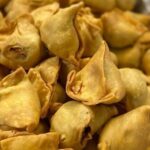
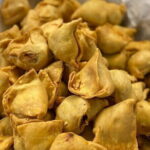
- Asan Market food variety: momo, bara, yomari, lassi, samosa, and more local bites
- Dietary accommodations: vegan, vegetarian, and allergen needs can be adjusted
- Private tour format: only your group, with guided narration and private transport
- Monkey Temple views at Swayambhunath: start with the classic hilltop panorama
Price and Value: What $65 Buys in Kathmandu
At $65 per person for about 6 hours, this tour is aimed at travelers who want maximum payoff for limited time. You’re not just paying for a guide—you’re paying for the whole package rhythm: getting from site to site, entering the key areas, and eating well without having to plan menus or translate what’s on a street sign.
Here’s where the value shows up. The tour includes lunch and a mix of drinks (fresh juices, lassi, masala tea, soft drink, and bottled water). That matters in Kathmandu, where food can be excellent but prices and “what’s included” can vary a lot depending on where you stop. If you would otherwise spend half a day figuring out transit, entrance tickets, and where to eat, this package keeps the day simple.
One caution on cost: the details say admission tickets are included for the UNESCO-related stops, but the “not included” list also calls out UNESCO entrance fees. I’d treat this as a “confirm what’s covered” moment when you book. Even if the main entrances are handled, knowing whether any extra UNESCO fee line appears on the ground can save you a small surprise.
You can also read our reviews of more walking tours in Kathmandu
Getting There: Start Time, Pickup, and Meeting Point Reality
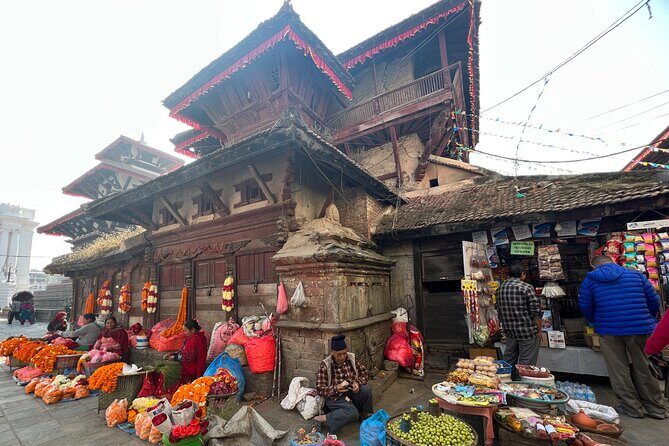
You’ll start at 10:00 AM, and the tour runs roughly 6 hours. The meeting point is Narsingh Chowk Marg, Kathmandu 44600, and the activity ends back at the same meeting spot. That return-to-start detail is practical if you’re using a day plan for other activities afterward.
Pickup is offered, but it’s not described in detail here—so assume you’ll need to confirm where you can be picked up based on your location. The tour also notes private transportation, which is a big deal when Kathmandu’s streets get busy. It reduces the amount of time you spend negotiating traffic and focuses your walking time on the places you actually want: temples and markets.
Also keep your energy in mind. You’ll be active for hours, and a market stop means standing, moving through crowds, and trying multiple small items. If you’re traveling with mobility concerns, the tour says most travelers can participate, but it’s still a walking-focused cultural day, not a slow museum-style route.
Stop 1: Swayambhunath Monkey Temple and Hilltop Views
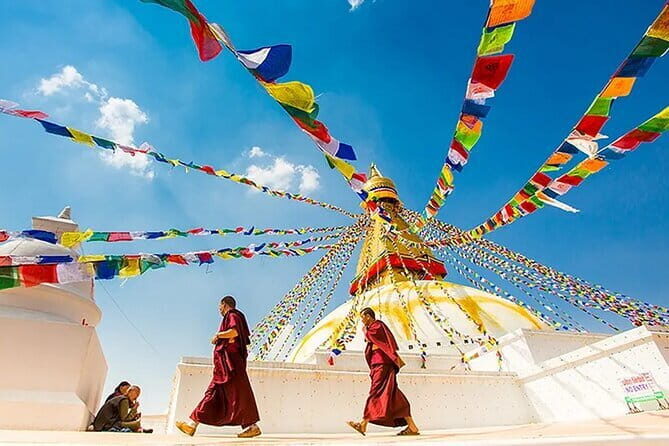
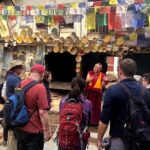
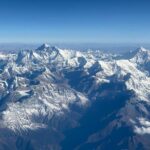
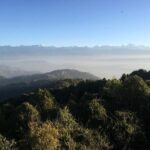
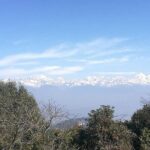
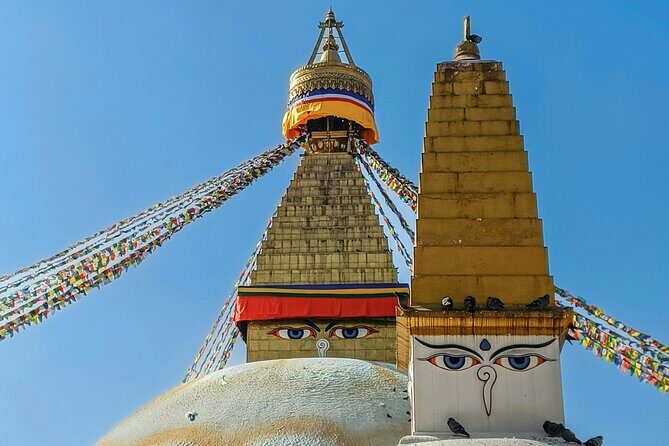
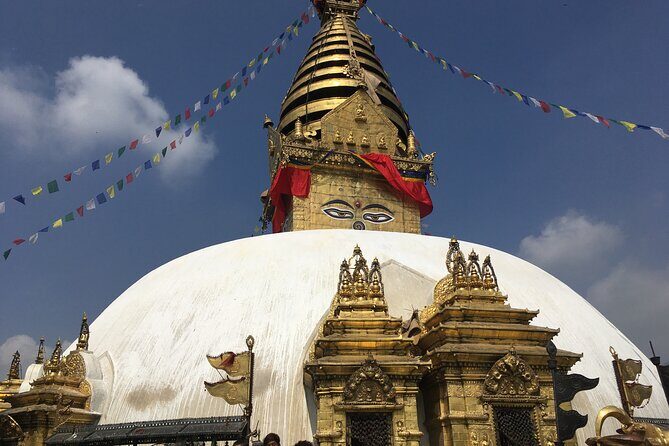
Your day begins at Swayambhunath Temple (the “Monkey Temple”), where you’ll get about 2 hours on-site. This is one of those Kathmandu stops that instantly gives you orientation. You’re up on a hilltop, and from there you can see the wider Kathmandu Valley—exactly the kind of view that helps the rest of the city make sense.
What I like about starting here is the timing. Morning light and fewer crowd surges (at least compared to later in the day) can make the experience feel less rushed. Plus, Swayambhunath is not just a photo stop. It’s described as a 5th-century white stupa on top of the hill. That “old and visible” combination is powerful: you can point at the stupa and then listen to your guide explain what it meant historically and what you should notice when you’re there now.
Practical tip: wear shoes you don’t mind getting dusty. Hilltop temple areas often mean uneven ground and steps. Also, the place is called the Monkey Temple, so you should be ready for monkey activity around temple grounds. That means keep food zipped up and avoid dangling bags or open containers.
Stop 2: Asan Market Street Food Crawl (Momo, Bara, Yomari, Lassi)
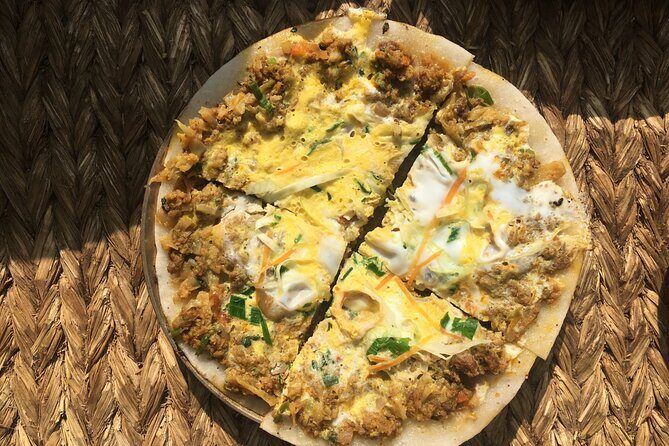
After Swayambhunath, you head into the heart of Kathmandu at Asan Market, with about 2 hours for the street food portion. This is the part where the day turns from sightseeing to eating like a local—on purpose, and with a plan.
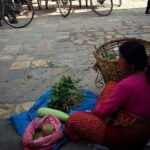
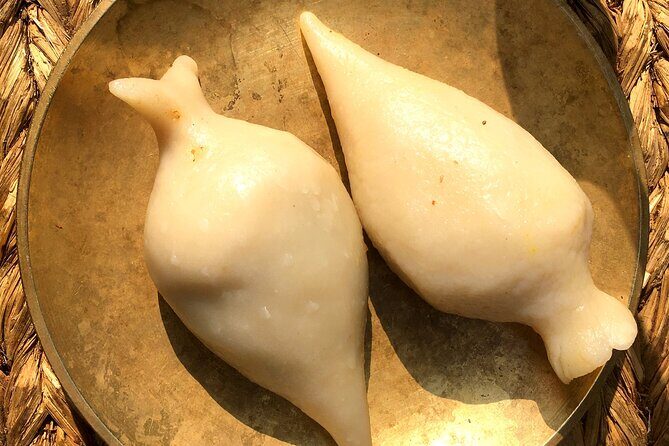
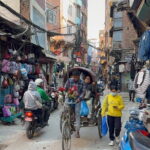
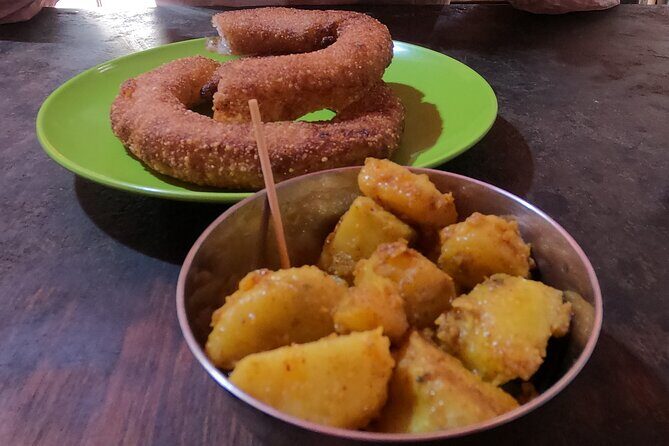
Asan is described as one of Kathmandu’s busiest local streets, and the tour leans into that. The goal isn’t just to eat; it’s to walk the market and try a range of local favorites. You’ll get momo, bara, yomari, lassi, samosa, and other local bites depending on what’s available.
What makes this stop feel worth it is the guide context. Food tastings are great, but they’re even better when you understand what you’re looking at and why certain items are common in Kathmandu street food culture. A good leader also helps you manage spice levels and identify what’s in each item—especially helpful for anyone with allergies.
Speaking of dietary needs: the tour specifically says it can be adjusted for vegan, vegetarian, or allergen requirements. That’s a big deal. Street food is often flexible, but only if the organizer knows what you need before you arrive. So when you book, be clear about your allergy and the words you use locally (if you know them), and don’t be vague. If the tour is willing to adjust, it works best when your needs are spelled out.
One more practical note: you’ll likely do multiple small tastings plus drinks. So yes, you’ll eat—but it’s more like a structured sampler than a single heavy meal. That makes it easier to enjoy Durbar Square afterward without feeling completely stuffed.
Stop 3: Kathmandu Durbar Square Old Palace and Temples
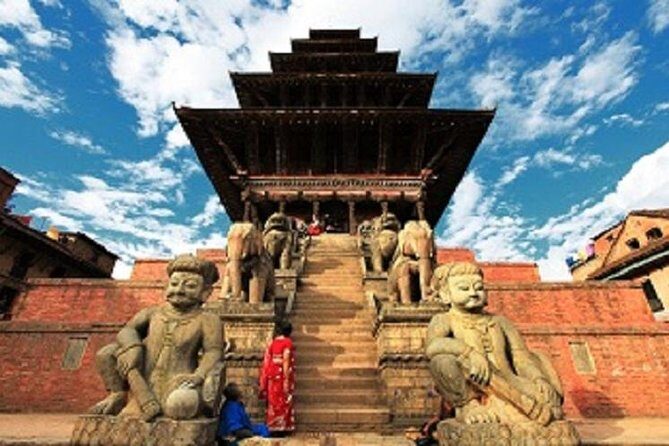
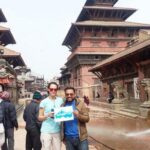
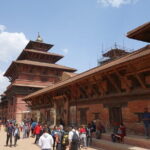
The final cultural stop is Kathmandu Durbar Square, again with about 2 hours. This is described as an old king’s palace area with deep cultural meaning, right in the center of Kathmandu. If Swayambhunath is the hilltop viewpoint and stupa experience, Durbar Square is the “this is what the old power looked like” experience.
You’ll see heritage temples and palace structures, including areas with detailed carving. The tour notes that the carved work is minutely done, and that’s exactly what makes Durbar Square worth slowing down for. Tiny details are the difference between a quick walk-through and actually feeling what the artisans were doing.
You also get an important sense of “living city.” The tour describes it as where you see life of local people. In other words, you’re not only looking at a sealed-off monument. You’re looking at a historic place that still connects to daily Kathmandu rhythms.
A possible drawback here is the usual one with major heritage sites: there’s a lot to see in a relatively short time. Two hours can be enough to hit the major areas, but if you want to linger on carvings and architecture for much longer, you might wish you had a second visit later. Still, as a half-day combo, this stop lands well because it’s large enough to feel meaningful but planned enough to stay on schedule.
You can also read our reviews of more food & drink experiences in Kathmandu

Lunch, Drinks, and the Food-Focused Value
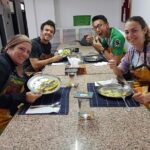
This tour is food-inclusive in a way that doesn’t feel like an add-on. You get lunch, plus fresh juices, lassi, masala tea, soft drink, and bottled water. That set matters because it turns the market portion into a guided tasting rather than a “buy whatever you want” situation.
I like that the drinks are named clearly. It signals the tour isn’t vague about food quality or quantity. Lassi and masala tea are core Kathmandu comfort drinks, and they also help you pace the street food tastings. If you’re trying items that are fried or spicy, a cool lassi can make the flavors feel balanced instead of just overwhelming.
Also, the tour includes private transportation, which reduces the pressure of squeezing food breaks into your travel schedule. If you’re doing other things later in the day, the fact that the day’s biggest meals are built in helps you plan the rest without panic.
The Guide Experience: Professional Leaders and Shova’s Impact
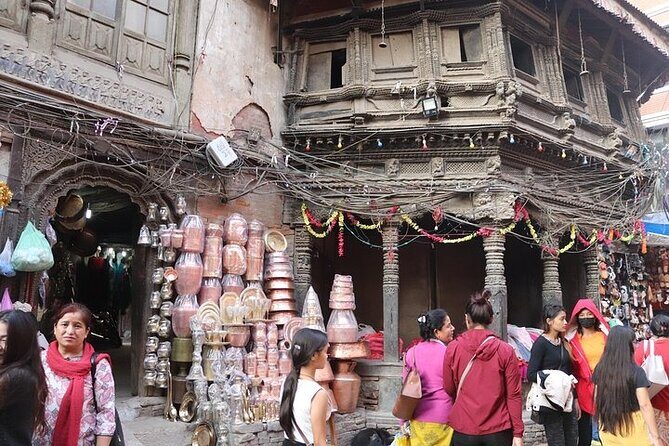
One reason combo tours can feel flat is when the guide just points and moves on. Here, the concept is different: the tour says you’ll learn about Nepal and its history, with explanation of culture and religion across the route. That’s not “extra fluff.” It’s what makes UNESCO stops meaningful rather than just impressive shapes.
A guide named Shova was mentioned as a standout in at least one strong experience note. While I can’t claim every guide has the same style, this gives you a clue about what to expect from the guiding team: people who know how to connect the sites and the food to the larger Kathmandu story.
In a place like Kathmandu, where you can feel religious layers everywhere, a good guide can help you ask the right questions. You’ll get the depth information you can’t easily find from a signboard, and you’ll understand what you’re seeing in Swayambhunath and Durbar Square before you move on.
Who This Tour Suits Best (and Who Might Prefer Another Plan)
This is best for you if:
- You have limited time in Kathmandu and want two major cultural stops plus street food in one day
- You like guided walking routes that include both heritage and everyday city life
- You eat variety, and you want a controlled way to try Kathmandu staples
- You need vegan, vegetarian, or allergen adjustments and want that handled for you
You might skip this if:
- You prefer very slow sightseeing and deep time in one place
- You want to do all dining independently without a set food structure
- You don’t like walking through busy market streets (even though the route is planned)
The private format helps. Since it’s only your group, you’re not stuck in a huge crowd where you can’t hear the guide or where you lose your place when you stop for photos.
Practical Tips for a Smoother Day
- Bring water. You’ll get bottled water, but having a small amount in your own bag helps if you’re out longer than expected.
- Wear comfortable shoes. Temple areas and markets can mean uneven ground and lots of steps.
- Be ready for market smells and spice. If you have an allergy, say it clearly before you start eating.
- Have a light morning. The tour includes lunch plus multiple tastings, so plan your breakfast accordingly.
Also, the tour runs daily within the stated operational window of 10:00 AM to 6:00 PM, so it’s built for a daytime schedule rather than an early-morning push.
Should You Book This Kathmandu UNESCO + Street Food Combo?
I’d book this if you want a “do-it-all” Kathmandu day that still feels grounded in real local life. The big wins are the combination: UNESCO sights that give you context plus an Asan Market street food walk that doesn’t leave you guessing what to order. The included lunch and drinks make the price feel more honest, and the dietary flexibility is a strong plus if you’re not eating everything by default.
Before you pay, do one quick check with the operator about what UNESCO entrance fees are covered versus what you might need to cover on-site. If everything is handled as part of the plan, you’re getting a well-structured half-day that saves you time and helps you eat confidently.
If you’re short on time and want the city in one guided loop, this is a solid choice.
FAQ
What is the duration of the Walking Street Food Tour and UNESCO sightseeing?
It runs for about 6 hours (approx.).
How much does the tour cost?
The price is $65.00 per person.
Where does the tour start, and do you return to the same place?
It starts at Narsingh Chowk Marg, Kathmandu 44600, Nepal, and ends back at the same meeting point.
Is pickup offered?
Yes, pickup is offered.
Is the tour private?
Yes. It’s a private tour/activity, and only your group participates.
What’s included in the price?
Included items are lunch, private transportation, guide service, and drinks such as fresh juices, lassi, masala tea, soft drink, and bottled water. Admission tickets are listed for the stops, but UNESCO entrance fees are listed as not included.
Can the tour adjust for dietary needs?
Yes. It can be adjusted for vegan, vegetarian, and allergen requirements.